


Content Menu
● Why Metal Detection and Magnetic Separation Matter on Aggregate Lines
● How TN77‑Type Conveyor Belt Metal Detectors Work
● The Role of Magnetic Separators in Aggregate Processing
● Why You Need Both: Magnet + Metal Detector Strategy
● Real‑World Performance: TN77 Metal Detectors in Quarries
● Beyond Aggregates: High‑Purity Powder and Specialty Applications
● Step‑by‑Step: Designing an Optimized Metal Control System
● Expert Tips to Maximize Detection and Separation Efficiency
● Where to Place Visuals for Better User Experience
● How Foshan Wandaye Supports High‑Performance Metal Control
● System Components and Benefits
● Action‑Oriented Conclusion and CTA
● FAQ
>> FAQ 1: What size of tramp metal can TN77‑type detectors find?
>> FAQ 2: Do I still need magnets if I install conveyor belt metal detectors?
>> FAQ 3: Where should I install powder magnetic separators?
>> FAQ 4: How often should metal detectors and magnets be tested?
>> FAQ 5: Can one supplier support both aggregate and high‑purity powder applications?
As an engineer who has spent years troubleshooting damaged crushers and blocked screens in quarries and aggregate plants, I can say one thing with confidence: combining conveyor belt metal detectors with high‑performance magnetic separators is no longer optional—it is a frontline protection system for your entire production line. In this guide, I will walk you through how TN77‑type conveyor belt metal detectors and modern powder and permanent magnetic separators work together to remove tramp metal, protect equipment, and improve product quality in aggregates and other bulk material industries. [buntingmagnetics]
Why Metal Detection and Magnetic Separation Matter on Aggregate Lines
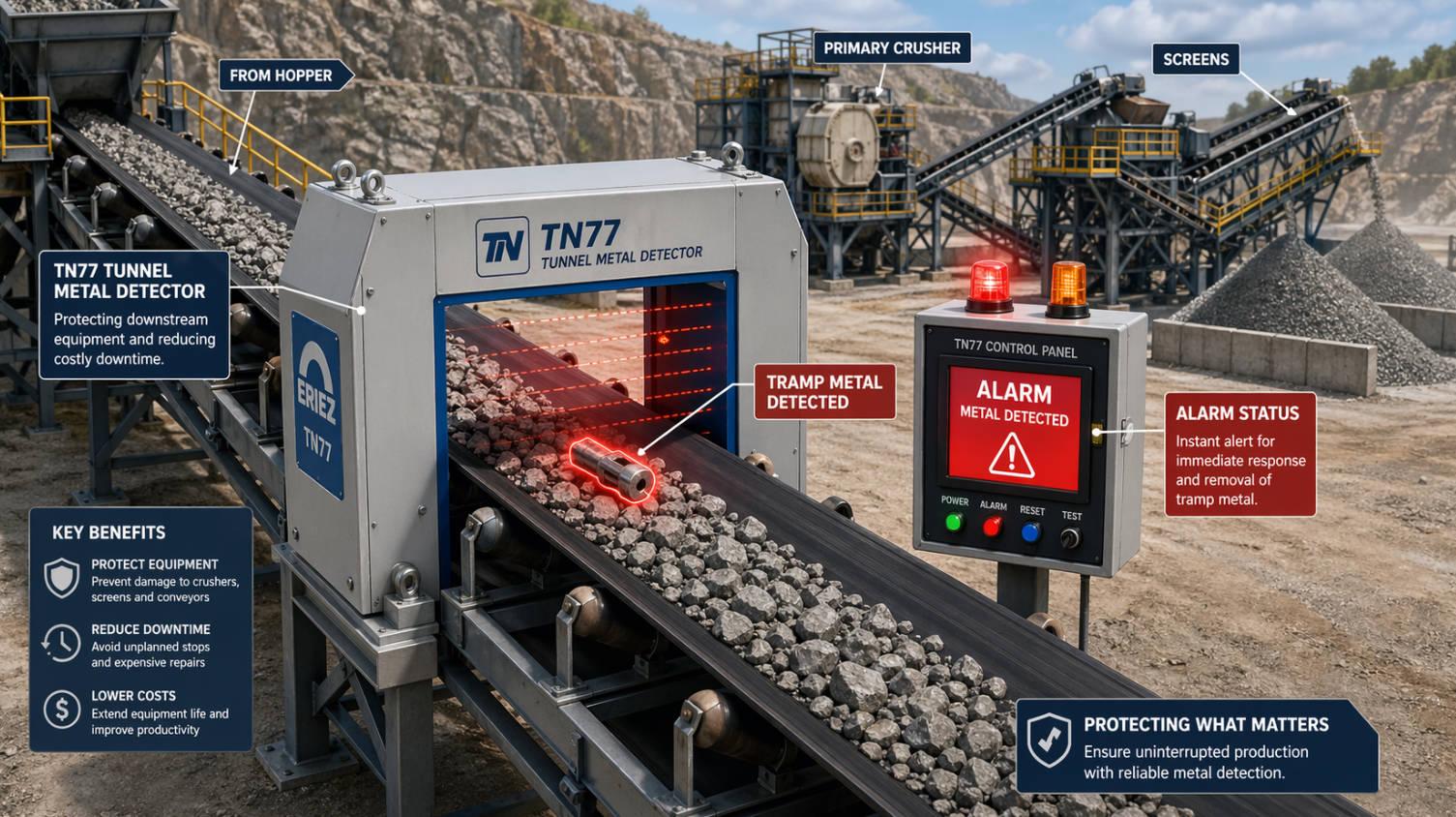
In mining and aggregate processing, even a small piece of tramp metal can crack crusher housings, tear conveyor belts, and cause unplanned shutdowns that cost tens of thousands of dollars per hour. Many plants still rely on a single overband magnet, but that one layer of protection often fails to capture trapped or weakly magnetic contamination, especially when it is buried in thick material beds. [buntingmagnetics]
Modern best practice is to create a multi‑layer defense: powerful magnetic separators to remove free ferrous metal and tunnel‑style conveyor belt metal detectors, such as TN77‑type units, to detect any remaining tramp metal—ferrous or low‑grade manganese steel—that magnets may miss. This approach is now widely used not only in quarries, but also in cement, glass, ceramics, recycling, and high‑purity powder applications. [src.sk]
How TN77‑Type Conveyor Belt Metal Detectors Work
TN77‑style conveyor belt metal detectors are tunnel‑type units mounted around the conveyor belt that continuously monitor the product stream. When metal passes through the detection zone, changes in electromagnetic fields trigger an alarm or stop command. [buntingmagnetics]
Key characteristics typically include: [agg-net]
– Tunnel‑style design that fits around existing conveyor structures
– Ability to detect tramp iron and low‑grade manganese steel while ignoring non‑magnetic belt fasteners
– Simple flat‑pack construction with no need to cut the conveyor belt during installation
– Custom sizing to match belt width and troughing angle
– Control panel indication of single or multiple pieces of tramp metal
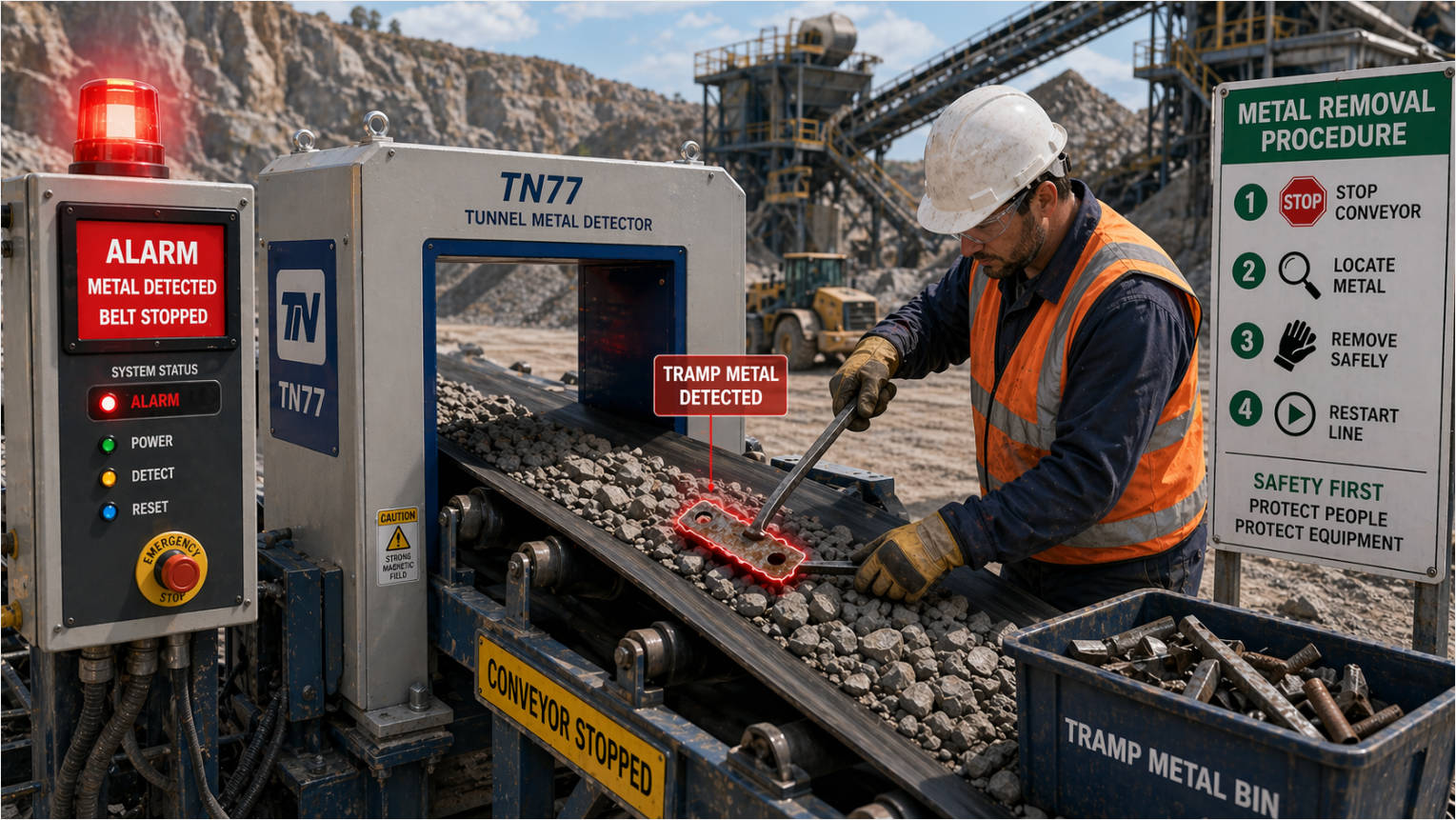
In practice, operators set sensitivity levels based on three factors: belt width, burden depth, and the minimum metal size they need to catch. In one recent clay application, TN77 detectors on 0.8 m wide conveyors were tuned to catch tramp metal that would damage an extruder, with each alarm stopping the belt and activating visual and audible alerts for the maintenance team. [buntingmagnetics]
The Role of Magnetic Separators in Aggregate Processing
While metal detectors “see” metal, magnetic separators physically remove it from the material flow. In aggregates and minerals processing, they are typically installed over or around conveyors to capture ferrous contamination before it reaches crushers, screens, or fine grinding equipment. [greatmagtech]
Common types in these lines include: [powderbulksolids]
– Permanent magnetic separators for continuous removal of ferrous tramp metal with minimal energy consumption
– Suspended magnets or overband magnets over conveyors for coarse removal before critical machinery
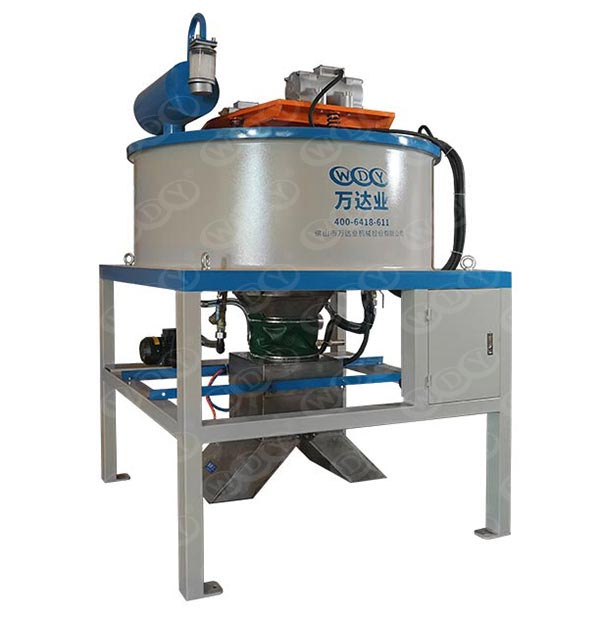
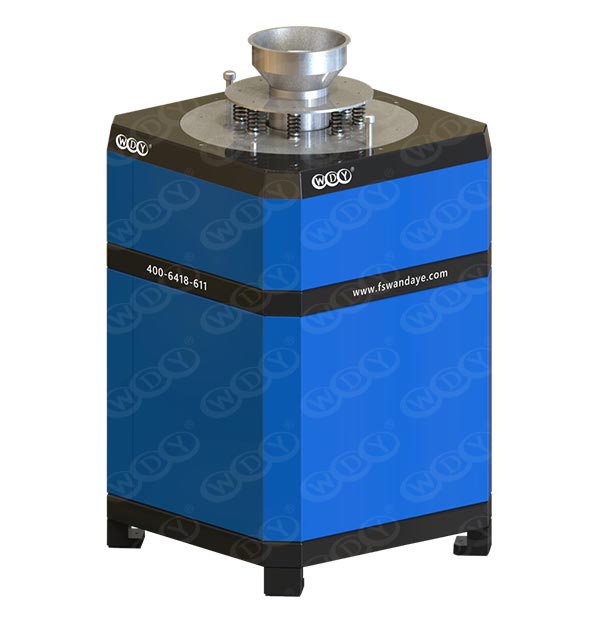
– Powder magnetic separators for finer, often high‑purity applications such as ceramics, glass powders, or battery materials
Industry experience shows that positioning and maintenance are critical: separators must sit at optimal points in the process and be inspected regularly to avoid performance degradation over time. When designed correctly, magnetic separation is both energy‑efficient and highly scalable for large‑volume mineral and aggregate streams. [src.sk]
Why You Need Both: Magnet + Metal Detector Strategy
Many incidents I have investigated share a similar pattern: a plant relies on a magnet alone, a trapped or shielded piece of metal slips through, and the first sign of trouble is catastrophic equipment damage. This is exactly where TN77‑type detectors complement magnetic separators. [africanmagnets]
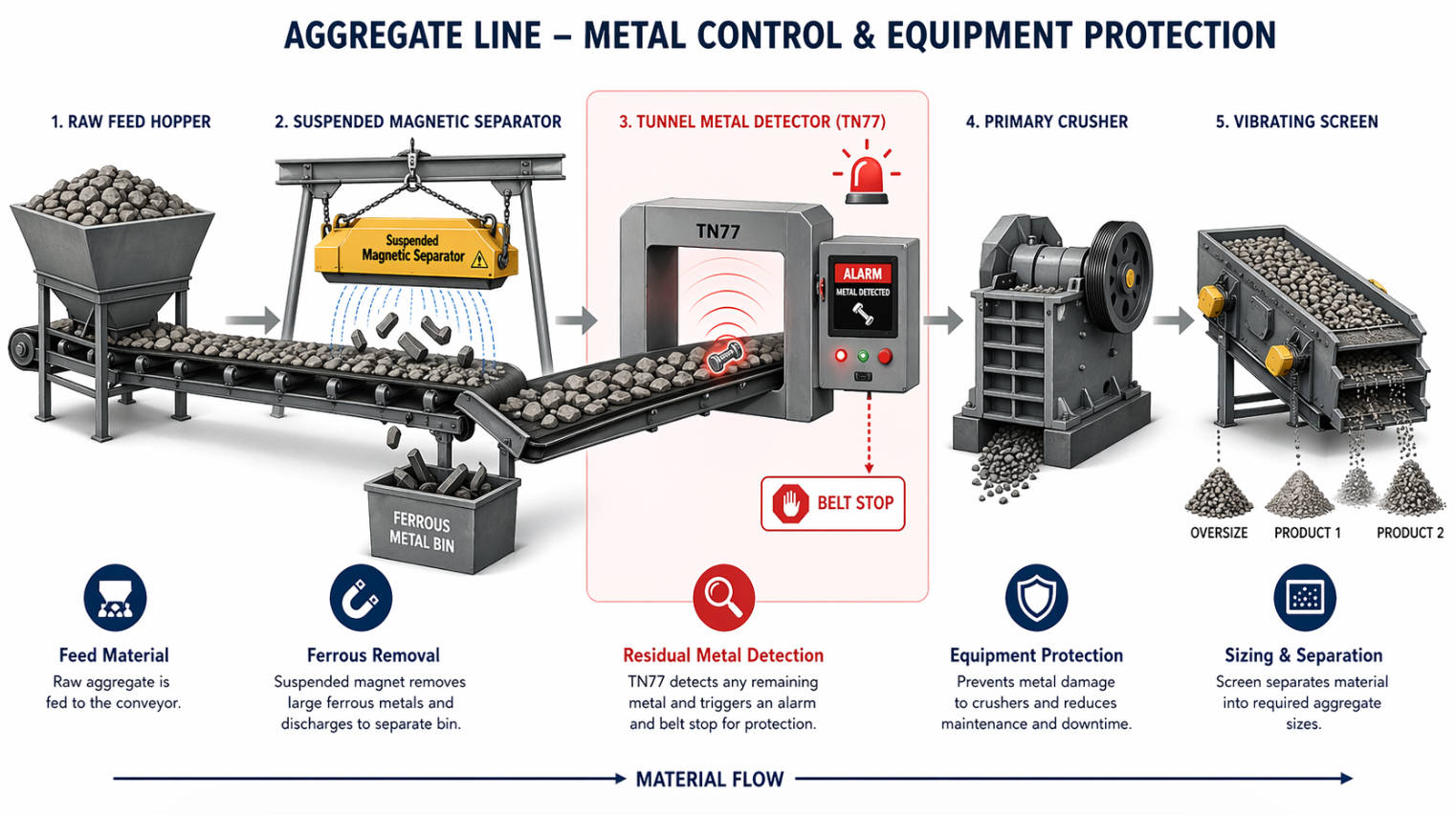
Magnetic separators:
– Remove free, strongly magnetic metals efficiently
– Work continuously without stopping the conveyor
– Perform best when installed at correctly chosen points and kept well maintained [buntingmagnetics]
Conveyor belt metal detectors (TN77‑type):
– Detect ferrous and low‑grade manganese steel, including pieces embedded in the product burden [buntingmagnetics]
– Catch contamination that is restrained or shielded from magnetic fields [africanmagnets]
– Provide a measurable alarm event for quality and safety documentation [agg-net]
From a risk‑management perspective, the combination of both technologies creates a multi‑layer defense that significantly reduces residual metal risk. This strategy is now recognized as a best‑practice approach in mining, aggregate, recycling, and other bulk processing industries. [powderbulksolids]
Real‑World Performance: TN77 Metal Detectors in Quarries
Public case studies from quarries offer practical insight into what plants can expect from TN77‑type systems. [buntingmagnetics]
In American quarry operations, TN77 detectors have been installed on aggregate conveyors handling non‑metallic or non‑conductive materials, where they reliably detect tramp metal that would otherwise damage crushers and screens. The flat‑pack design keeps shipping costs low and makes installation straightforward, often without any modification to the belt. [buntingmagnetics]
Another example comes from clay processing, where three TN77 units were installed on 0.8 m wide conveyors carrying around 15 tonnes per hour each. There, sensitivity was tuned specifically to find tramp metal large enough to damage the extruder, and each detection event automatically stopped the conveyor and triggered alarms for the maintenance team to remove the contamination. [agg-net]
For plants running abrasive materials such as crushed rock, sand and gravel, or recycled aggregates, these real‑world deployments demonstrate how TN77‑type detectors integrate into day‑to‑day operations without introducing unnecessary complexity, while significantly reducing unplanned downtime. [buntingmagnetics]
Beyond Aggregates: High‑Purity Powder and Specialty Applications
Although aggregate conveyors are a major use case, the same principles apply in industries handling fine powders and high‑purity materials, where product contamination risks are even more sensitive. Sectors such as ceramics, glass, environmental materials, powder coatings, rubber, plastics, pharmaceuticals, food, and battery cathode and anode materials all rely on precise magnetic separation and metal detection to meet quality and regulatory standards. [wdymagnetic]
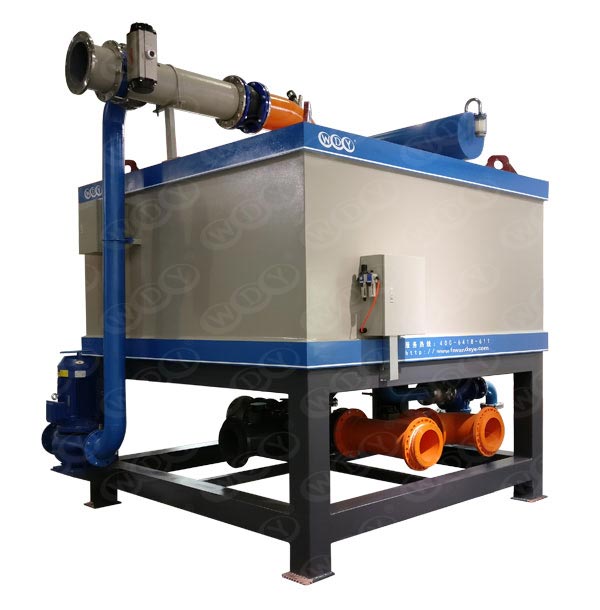
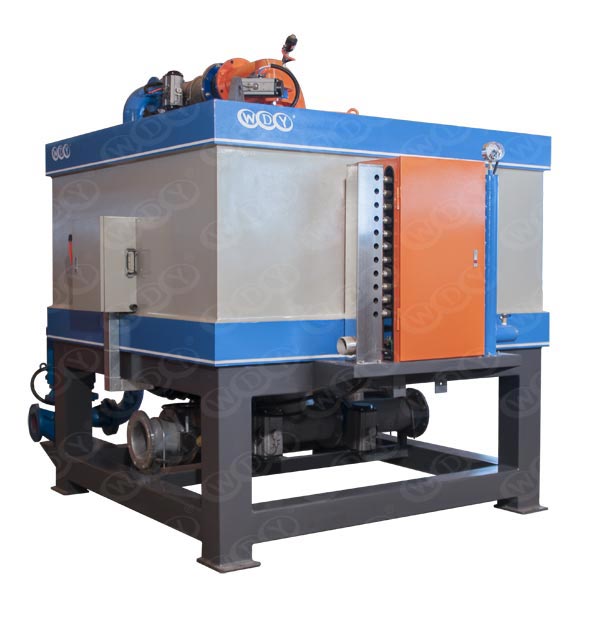
Manufacturers like Foshan Wandaye Technology Co., Ltd. specialize in powder magnetic separators and permanent magnetic separators tailored to these demanding processes, supported by in‑house engineering, line design, installation, and commissioning services. For engineers upgrading both aggregate and powder lines in one facility—such as combined cement, ceramic, or glass plants—working with such a specialist simplifies standardization and maintenance across different production areas. [wdymagnetic]

Step‑by‑Step: Designing an Optimized Metal Control System
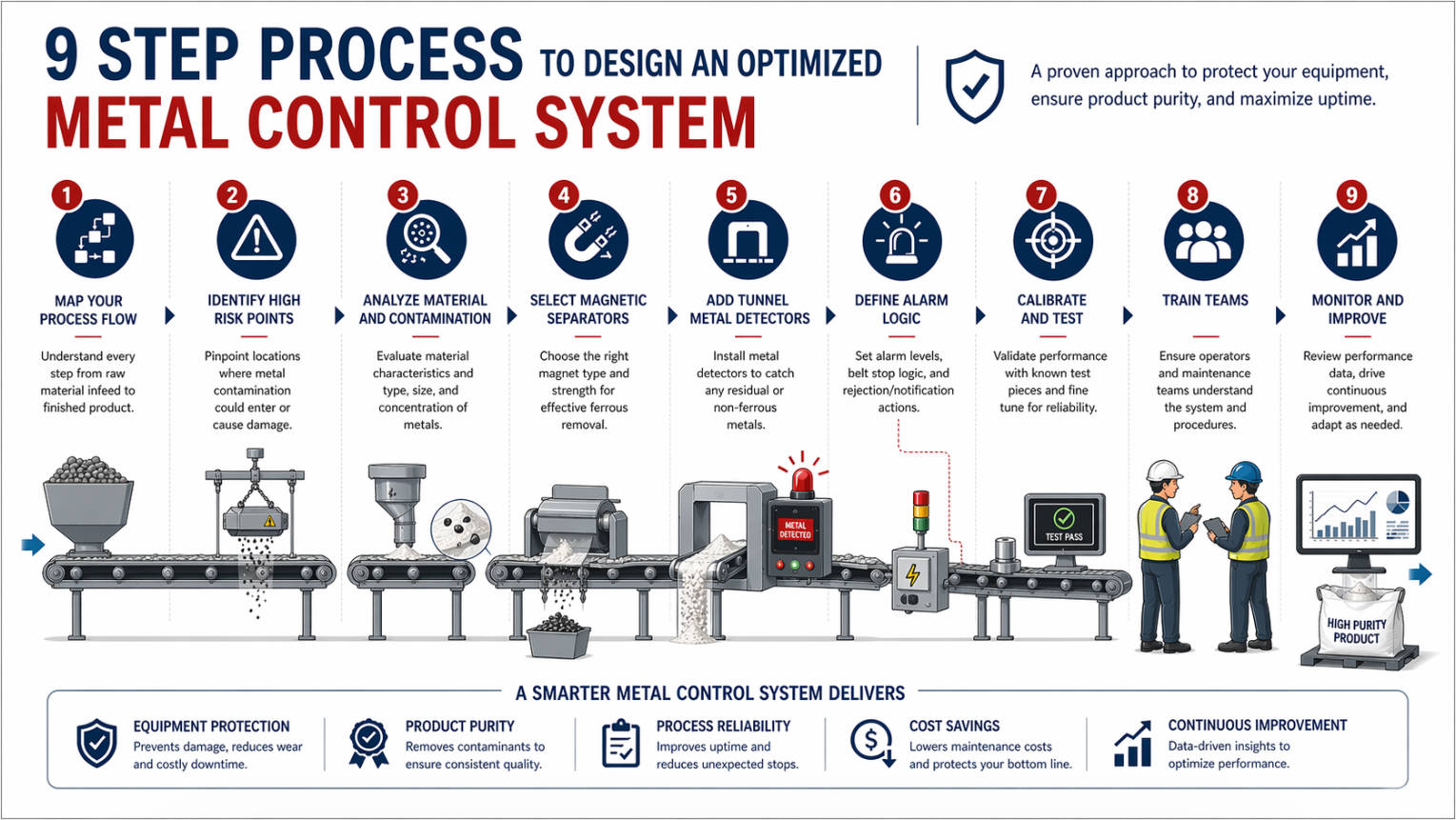
From an industry practitioner’s standpoint, designing or upgrading your metal control strategy should follow a structured process. Based on current best practices in magnetic separation and metal detection, a robust approach usually includes these steps: [greatmagtech]
1. Map your process flow
Identify all conveyors, transfer points, crushers, screens, mills, and storage areas.
2. Locate high‑risk points
Focus on in‑feed conveyors to crushers, screens, and critical processing equipment where metal would cause the most damage.
3. Analyze material and contamination risks
Consider particle size, moisture, bulk density, and typical contamination sources (loader teeth, rebar, tools, wire, etc.).
4. Select magnetic separators
– Overband/suspended magnets before primary crushers
– Drum or pulley magnets where material is thinly spread
– Powder magnetic separators for fine or high‑purity streams [src.sk]
5. Add tunnel‑style metal detectors (TN77‑type)
Install around the belt at points where remaining contamination must be detected, usually downstream of magnets but upstream of critical equipment. [africanmagnets]
6. Define alarm and stop logic
Decide when the system will stop the belt, trip a diverter, or simply alarm, based on material value and process criticality. [buntingmagnetics]
7. Calibrate and test
Use standardized test pieces to verify sensitivity across belt width and burden depth, and document results for audits.
8. Train operators and maintenance teams
Explain what to do when an alarm occurs, how to clear tramp metal, and how to carry out routine inspections.
9. Monitor and continuously improve
Track detection events, near misses, and downtime to refine sensitivity, system placement, and maintenance schedules over time.
Expert Tips to Maximize Detection and Separation Efficiency
From both field experience and published industry guidance, several high‑impact optimizations consistently improve system performance: [greatmagtech]
– Keep burden depth consistent and moderate so detectors can “see” metal across the belt width.
– Install separators and detectors where material is well spread and not clumped, such as just after transfer chutes.
– Maintain adequate distance between magnets and metal detectors to avoid interference.
– Implement regular cleaning and inspection schedules for magnetic separators to prevent build‑up and reduced magnetic field strength. [powderbulksolids]
– Periodically re‑test detector sensitivity with certified test pieces and document results for quality and safety programs. [agg-net]
When plants apply these optimization steps, the combination of TN77‑type metal detection and robust magnetic separation becomes a predictable, measurable quality‑assurance tool rather than a last‑minute safeguard. [src.sk]
Where to Place Visuals for Better User Experience
To help plant managers, engineers, and maintenance teams quickly understand and act on this information, I strongly recommend integrating visuals at key points:
– Near the section “How TN77‑Type Conveyor Belt Metal Detectors Work”: insert a diagram or photo of a tunnel‑style detector installed on a conveyor belt, labeling detection zone and control panel.
– In the “Why You Need Both” section: add a simple flow diagram showing magnets and detectors in sequence along an aggregate line.
– Next to “Step‑by‑Step: Designing an Optimized Metal Control System”: provide a flowchart or checklist graphic summarizing the 9 steps.
– In the “Real‑World Performance” section: use a table or infographic showing reductions in downtime or repaired equipment after installation.
These visuals not only make the article easier to digest, they also increase time on page and scannability, two important behavioral signals for search performance. [africanmagnets]
How Foshan Wandaye Supports High‑Performance Metal Control
As a specialist in magnetic separation technology, Foshan Wandaye Technology Co., Ltd. offers powder magnetic separators, permanent magnetic separators, and complete engineering services—from process design to installation and commissioning—for a wide range of industries. Our solutions are particularly suited for: [wdymagnetic]
– Mining and aggregates (primary and secondary conveyors, final product belts)
– Ceramics, glass, and building materials (powder lines, glaze, and raw material preparation)
– Environmental protection, rubber, and plastics (recycling and compounding lines)
– Pharmaceuticals, food, and battery materials (high‑purity, high‑value powders) [wdymagnetic]
By combining application‑specific powder magnetic separators and permanent magnetic separators with TN77‑type conveyor metal detection, we help operators build a comprehensive contamination control strategy tailored to their process, risk tolerance, and regulatory environment. [wdymagnetic]
System Components and Benefits
A concise table in your article can help users compare key protection options at a glance:
This table can be placed just after the “Why You Need Both” section to reinforce the layered‑defense concept.
Action‑Oriented Conclusion and CTA
In today’s aggregates and bulk materials industry, the real competitive advantage lies not only in throughput, but in predictable uptime and consistent product quality. By combining TN77‑type conveyor belt metal detectors with well‑designed powder and permanent magnetic separators, operators can systematically reduce tramp metal risks, extend equipment life, and meet ever‑stricter quality expectations in markets from construction aggregates to advanced battery materials. [wdymagnetic]
If you are planning a new line or upgrading an existing one, we recommend starting with a free process review: map your current conveyors, identify high‑risk points, and evaluate where magnetic separation and TN77‑type detectors can deliver the greatest return. Then, collaborate with a specialist team like Foshan Wandaye to design, supply, and commission a tailored metal control solution that protects both your equipment and your reputation. [wdymagnetic]
FAQ
FAQ 1: What size of tramp metal can TN77‑type detectors find?
TN77‑style detectors can be adjusted to detect different sizes of tramp metal based on belt width, material depth, and sensitivity settings. In practice, quarries tune sensitivity to reliably catch pieces large enough to damage crushers, screens, or extruders, while minimizing nuisance alarms. [buntingmagnetics]
FAQ 2: Do I still need magnets if I install conveyor belt metal detectors?
Yes. Magnetic separators and metal detectors perform different but complementary roles. Magnets remove free ferrous metal continuously, while detectors identify remaining or shielded contaminants and trigger alarms or belt stops to prevent damage. [greatmagtech]
FAQ 3: Where should I install powder magnetic separators?
Powder magnetic separators are best installed where powders are well dispersed and flowing steadily, such as at feeder outlets, classification discharge points, or before final packaging. Placing them close to the final product stream maximizes product purity and reduces the risk of contaminated batches reaching customers. [wdymagnetic]
FAQ 4: How often should metal detectors and magnets be tested?
You should conduct regular verification testing with certified test pieces and follow manufacturer or site‑specific QA schedules, often weekly or monthly depending on risk and regulatory requirements. Documenting each test result is important for audits, customer requirements, and continuous improvement programs. [powderbulksolids]
FAQ 5: Can one supplier support both aggregate and high‑purity powder applications?
Yes. Suppliers like Foshan Wandaye Technology Co., Ltd. focus on magnetic separation across multiple industries, from aggregates and mining to ceramics, glass, environmental materials, and advanced powders. Working with a single specialist simplifies engineering, integration, and long‑term maintenance across your entire portfolio of production lines. [wdymagnetic]
References
1. TN77 Conveyor Belt Metal Detectors – Bunting Magnetics (Purify Your Aggregates Line with TN77 Conveyor Belt Metal Detectors)
<https://buntingmagnetics.com/blog/purify-your-aggregates-line-with-tn77-conveyor-belt-metal-detectors> [buntingmagnetics]
2. Magnetic Separators & Metal Detection for Aggregate Conveyors – Bunting
<https://buntingmagnetics.com/blog/remove-tramp-metal-from-aggregate-conveyors-with-metal-detectors-and-magnetic-separators> [buntingmagnetics]
3. American Quarries Install TN77 Metal Detectors – Bunting
<https://buntingmagnetics.com/blog/quarries-install-tn77-detectors> [buntingmagnetics]
4. A Trio of Bunting Metal Detectors for Plasmor – Agg‑Net
<https://www.agg-net.com/news/a-trio-of-bunting-metal-detectors-for-plasmor> [agg-net]
5. How Magnetic Separation Optimizes Sorting and Process Design – SRC
<https://www.src.sk.ca/blog/how-magnetic-separation-optimizes-sorting-and-process-design> [src.sk]
6. How Magnetic Separation Optimizes Mineral Processing – GreatMagtech
<https://www.greatmagtech.com/info/how-magnetic-separation-optimizes-mineral-proc-102871050.html> [greatmagtech]
7. Magnetic Separation Technology Safeguards Aggregate Quality & Equipment
<https://www.powderbulksolids.com/screening-separation/magnetic-separation-technology-safeguards-aggregate-quality-equipment> [powderbulksolids]
8. Conveyor Belt Cleaning and Metal Detection – African Magnets
<https://africanmagnets.com/conveyor-belt-cleaning-and-metal-detection/> [africanmagnets]
9. Industry Information – Foshan Wandaye Technology Co., Ltd.
<https://www.wdymagnetic.com/ru/news/industry-information/page/7> [wdymagnetic]
10. News – Foshan Wandaye Technology Co., Ltd.
<https://www.wdymagnetic.com/news/page/3> [wdymagnetic]
Hot Tags: Metal Detector Conveyor Belt, Manufacturers, Customized, Custom, Suppliers, Buy, Cheap, Quality, Advanced, Durable, in Stock, Made in China, Price, Quotation