


Content Menu
● Why Metal Separation Matters in Wood Recycling
● The Four Core Stages of Metal Separation in Wood Recycling
>> Stage 1: Overband Magnet for Coarse Ferrous Metal
>> Stage 2: Drum Magnet for Fine Ferrous Recovery
>> Stage 3: Eddy Current Separator for Non‑Ferrous Metals
>> Stage 4: Metal Detection for Final Quality Control
● Understanding Magnetic Separators: Types and Working Principles
>> Permanent Magnetic Separator
>> Electromagnetic and High‑Gradient Separators
>> Powder Magnetic Separator vs. Wood Recycling Equipment
● Real‑World Benefits: What Operators Actually Experience
● Designing an Optimized Metal Separation Line for Wood
● Where Powder and Permanent Magnetic Separators Fit Beyond Wood
● Latest Market and Technology Trends in Magnetic Separation
>> Trend 1: Automation and Smart Monitoring
>> Trend 2: High‑Gradient and Rare‑Earth Magnet Technologies
>> Trend 3: Circular Economy and Regulatory Pressures
● Practical Checklist for Evaluating Your Wood Metal Separation Line
● How Foshan Wandaye Supports Wood Recyclers
● Call to Action: Upgrade Your Wood Metal Separation Strategy
>> 1. Why is metal separation so important in wood recycling?
>> 2. What is the difference between a permanent magnet and an electromagnetic separator?
>> 3. Do I really need both a drum magnet and an eddy current separator?
>> 4. How can I tell if my current metal separation line is underperforming?
>> 5. What support does Foshan Wandaye provide for wood recycling projects?
Recycling wood safely and profitably starts with one critical step: reliable metal removal. As someone who has worked with recyclers, panel board plants, and biomass fuel producers across multiple projects, I have seen how the right magnetic separation system can completely transform yield, equipment uptime, and product quality. [buntingmagnetics]
Why Metal Separation Matters in Wood Recycling
Metal contamination in waste wood is not a minor issue; it is often the main barrier between low‑value scrap and a premium recycled product. [p2infohouse]
Common metal contaminants in wood recycling lines include: [buntingmagnetics]
– Nails, screws, wire, and staples
– Bolts, brackets, hinges, and plates
– Aluminum profiles, foil, and non‑ferrous fragments
– Straps, cans, and small tools accidentally mixed in
Even small pieces of metal can: [p2infohouse]
– Damage shredders, chippers, mills, and pellet presses
– Cause sparks and fire risks in dryers and silos
– Reduce product value by contaminating panels, pellets, or mulch
– Lead to downstream equipment shutdowns and expensive downtime
From an operational perspective, consistent metal removal is one of the highest‑ROI investments a wood recycler can make because it boosts safety, improves product quality, and protects every machine downstream. [buntingmagnetics]
The Four Core Stages of Metal Separation in Wood Recycling
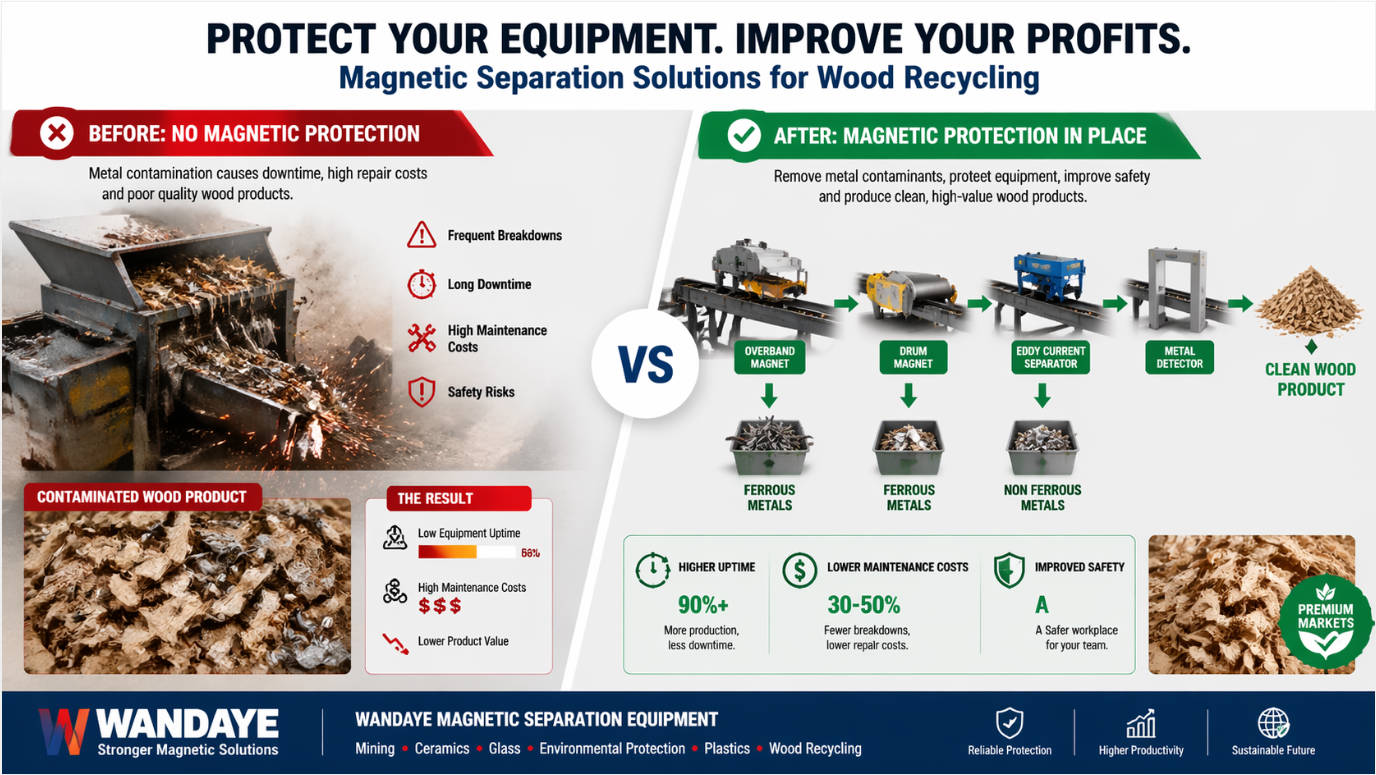
Most modern wood recycling plants now adopt a multi‑stage metal separation strategy, rather than relying on a single magnet. In my experience, a robust system usually includes four key stages after the primary shredder. [p2infohouse]
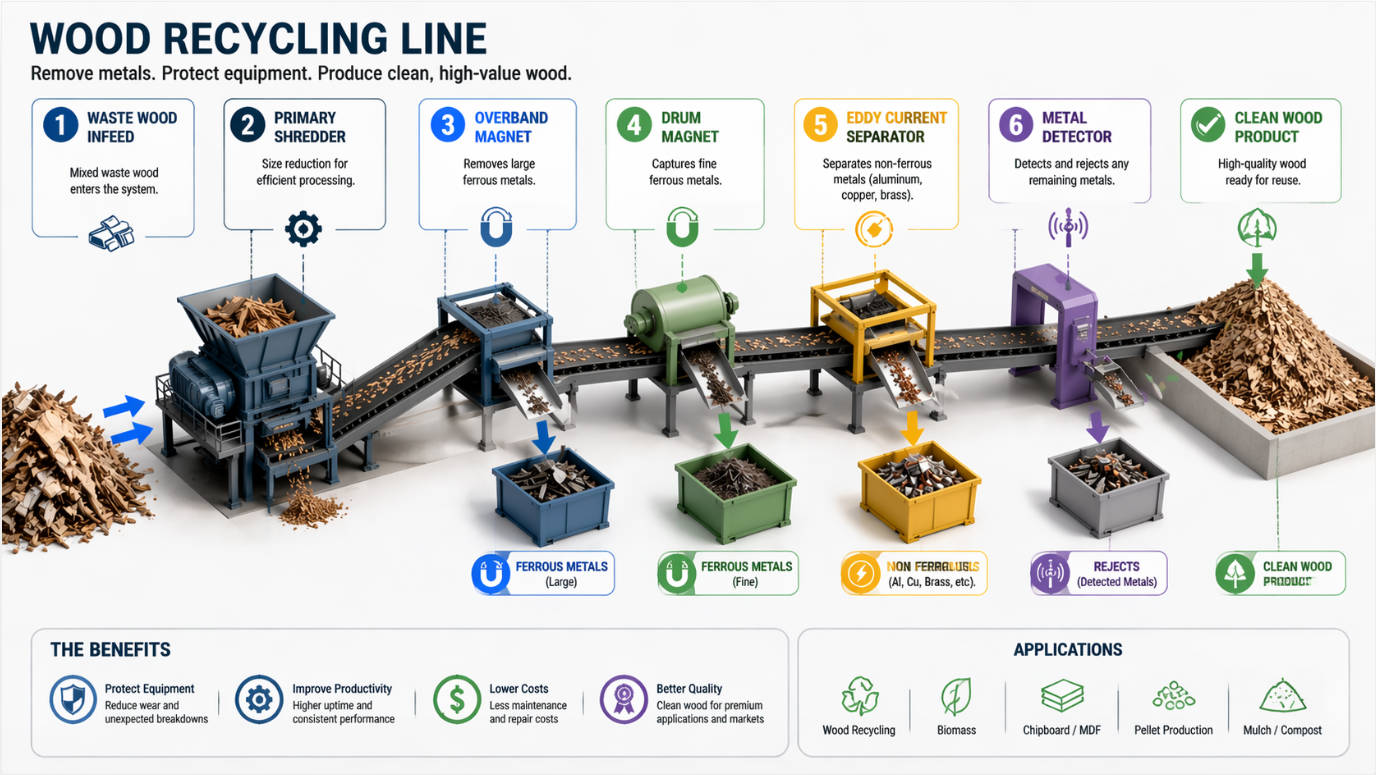
Stage 1: Overband Magnet for Coarse Ferrous Metal
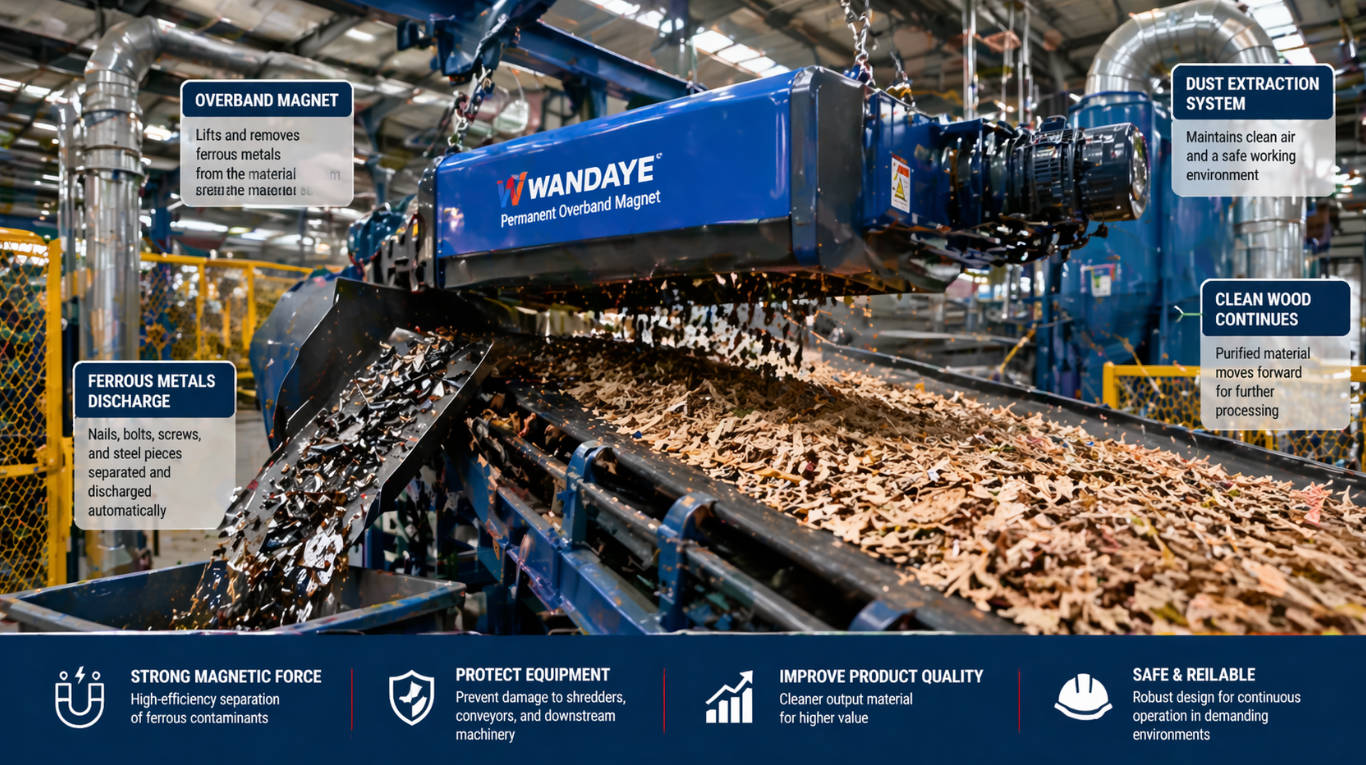
Immediately after the primary shredder, an overband magnet (or suspended magnet) is placed above a conveyor carrying shredded wood. [buntingmagnetics]
Its main jobs are to: [p2infohouse]
– Remove large ferrous items (hammer heads, big bolts, thick nails)
– Protect secondary shredders, screens, and granulators
– Reduce the risk of catastrophic mechanical damage
In practice, I recommend: [buntingmagnetics]
– Positioning the magnet where material is in a thin, even layer
– Adjusting belt speed so heavy metal has time to be attracted and discharged
– Using a self‑cleaning belt to maintain consistent performance
Stage 2: Drum Magnet for Fine Ferrous Recovery
Once the bulk ferrous pieces are removed, a drum magnet is often installed at the end of a conveyor or under a vibrating feeder. [youtube]
This stage focuses on: [youtube]
– Capturing smaller nails, screws, and thin ferrous fragments
– Achieving a higher overall ferrous recovery rate
– Providing a cleaner wood stream before further classification
For dense or dusty material, I have seen significant improvements using high‑gradient drum designs that maintain strong fields across the full working width. [p2infohouse]
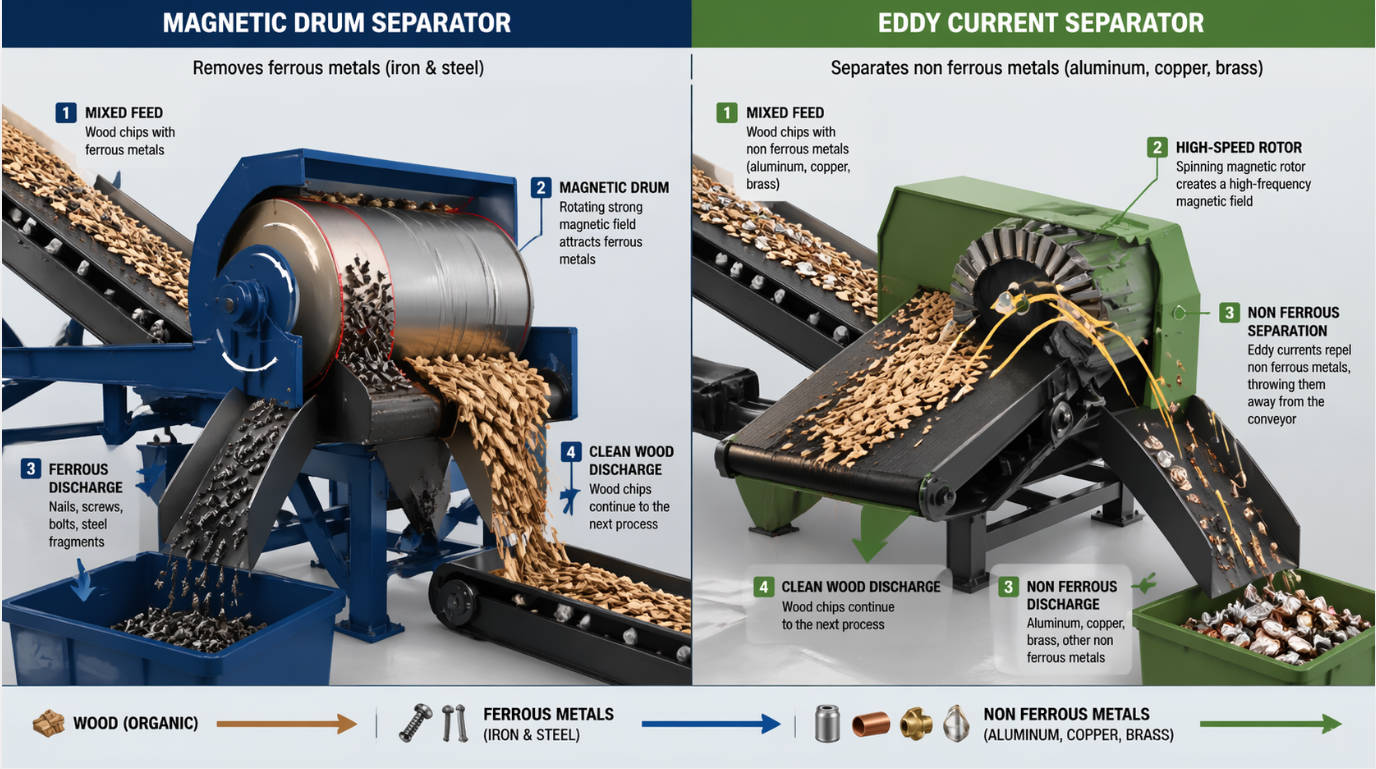
Stage 3: Eddy Current Separator for Non‑Ferrous Metals
Once ferrous metals are largely removed, an eddy current separator (ECS) is used to separate conductive non‑ferrous metals such as aluminum, copper, and brass. [youtube]
Key advantages of this stage include: [okonrecycling]
– High recovery of aluminum cans, profiles, and small non‑ferrous chips
– Increased value of recovered metal fractions
– Cleaner wood fuel or panel feedstock with higher market prices
Advanced eddy current systems can recover over 90% of non‑ferrous metals from mixed waste streams in modern facilities. [okonrecycling]
Stage 4: Metal Detection for Final Quality Control
Even after multiple separation stages, many high‑value lines add a metal detector on a final conveyor feeding critical equipment such as chippers, pellet mills, or panel presses. [buntingmagnetics]
This final checkpoint is used to: [p2infohouse]
– Detect any remaining ferrous or non‑ferrous metal
– Automatically stop the belt or activate a reject gate
– Protect mission‑critical machinery and ensure end‑product quality
By combining these four stages, plants can achieve clean wood products that meet strict quality requirements for panel board, biomass fuel, and animal bedding markets. [okonrecycling]
Understanding Magnetic Separators: Types and Working Principles
To design a high‑performing system, you first need to understand the main categories of magnetic separators and where they best fit in a wood recycling line. [en.fswandaye]
Permanent Magnetic Separator
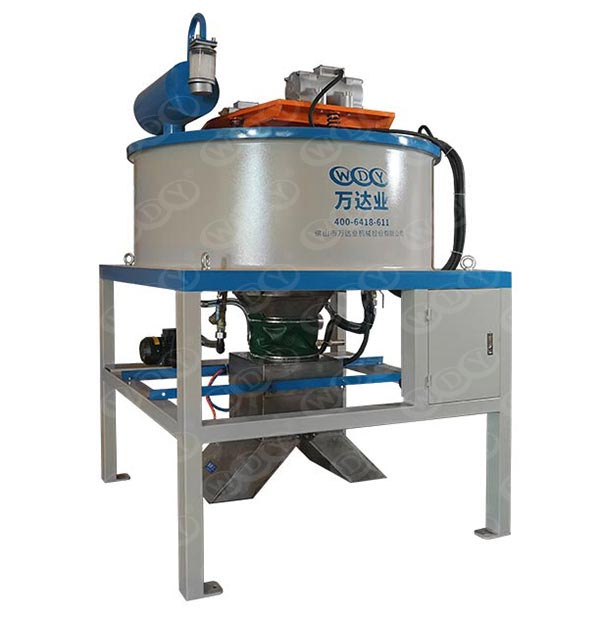
Permanent magnetic separators use fixed permanent magnet blocks to generate a stable magnetic field without external power. [en.fswandaye]
They are ideal when you need: [en.fswandaye]
– Low energy consumption
– Simple, reliable operation
– Long‑term, maintenance‑light performance
In many wood and biomass applications, permanent overband magnets and drum magnets are the first choice for coarse ferrous removal, especially where operating costs must be tightly controlled. [en.fswandaye]
Electromagnetic and High‑Gradient Separators
Electromagnetic separators rely on an energized coil to create a powerful magnetic field; high‑gradient designs intensify the field in a narrow working area. [wdymagnetic]
These systems are particularly valuable when: [linkedin]
– You need adjustable magnetic intensity for different materials
– Very fine or weakly magnetic particles must be removed
– Space is limited but high performance is essential
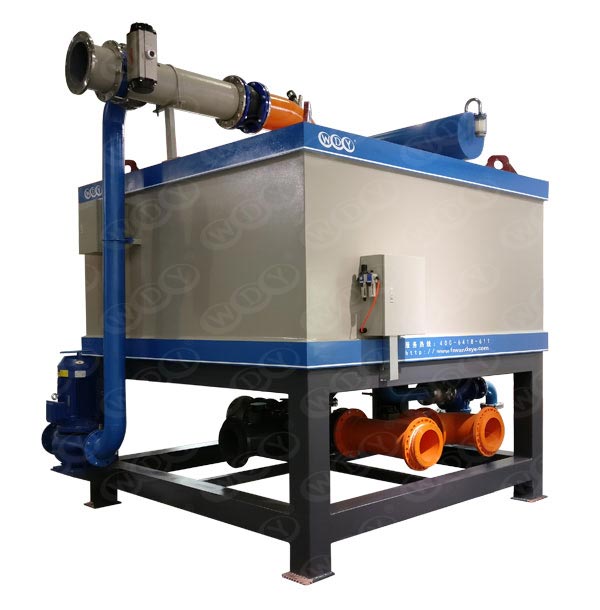
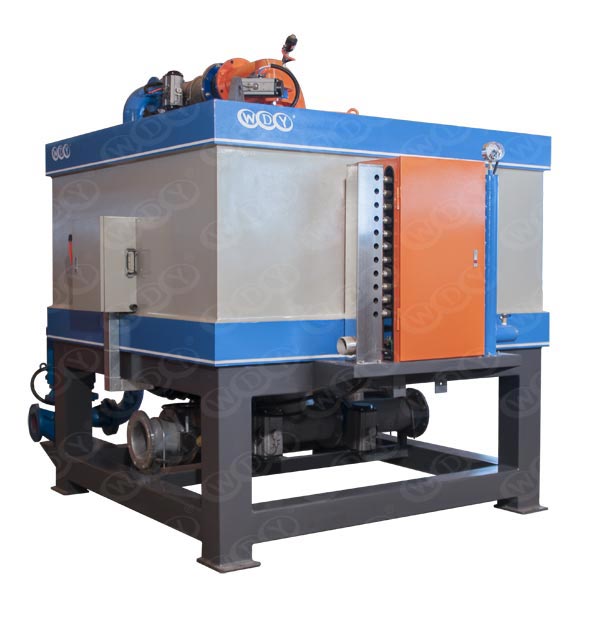
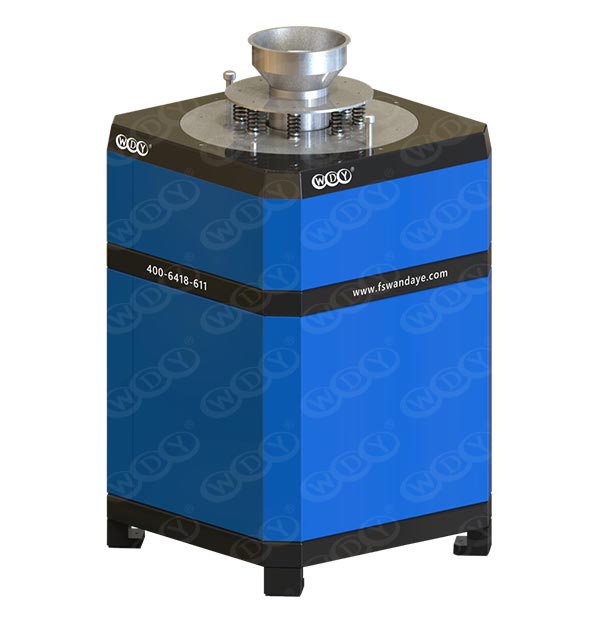
For example, Foshan Wandaye’s electromagnetic powder magnetic separator series is designed for fine powder materials, achieving high gradient separation in compact footprints. While powder lines differ from wood chips, the same engineering principles—high gradient, controlled feed, and optimized field distribution—apply to fine contaminants in many industries. [wdymagnetic]
Powder Magnetic Separator vs. Wood Recycling Equipment
As a manufacturer of powder magnetic separators and permanent magnetic separators, we typically deploy powder models for ultrafine raw materials in ceramics, battery cathode and anode materials, and high‑purity mineral powders. [wdymagnetic]
In contrast, for wood recycling we recommend: [youtube]
– Overband magnets for coarse ferrous removal
– Drum magnets for fine ferrous contaminants
– Eddy current separators for non‑ferrous metals
– Metal detectors for final quality assurance
This combination reflects industry best practices for handling irregular, bulky wood fragments while maintaining high throughput. [buntingmagnetics]
Real‑World Benefits: What Operators Actually Experience
When you walk a working wood recycling plant, you quickly see how metal separation impacts every part of the operation. [okonrecycling]
Based on industry data and field experience, effective magnetic separation delivers: [linkedin]
– Higher equipment uptime – Fewer breakdowns in shredders, chippers, and pellet presses
– Lower maintenance costs – Reduced tool wear, fewer blade changes, longer overhaul intervals
– Improved safety – Lower fire risk from sparks and reduced risk of catastrophic failures
– Better product quality – Cleaner chips, pellets, or panels with fewer customer complaints
– Higher metal recovery revenue – Ferrous and non‑ferrous fractions can be sold as secondary raw materials
Some modern recycling operations report over 90% recovery of ferrous metals from mixed waste streams by combining multiple magnetic stages with automated systems. At the same time, ferrous removal rates above 95% are increasingly common in advanced plants targeting premium product grades. [linkedin]
Designing an Optimized Metal Separation Line for Wood
From a process engineering perspective, an optimized wood metal separation line should consider material flow, particle size, throughput, and risk profile. [linkedin]
Key Design Principles
– Start as early as possible
Place the first magnet immediately after the primary shredder to remove large ferrous items before they cause secondary damage. [p2infohouse]
– Use multiple separation stages
Combine overband magnets, drum magnets, eddy current separators, and metal detectors to progressively improve cleanliness. [okonrecycling]
– Match equipment to material size
Larger particles require stronger fields and wider gaps, while finer fractions benefit from high‑gradient or closely positioned systems. [wdymagnetic]
– Control the material layer
Thin, even layers on belts or feeders dramatically improve magnetic capture rates and detection accuracy. [buntingmagnetics]
– Plan for maintenance access
Design layouts so operators can safely clean, inspect, and maintain magnets and detectors without extended shutdowns. [p2infohouse]
Example Layout
| Stage | Equipment Type | Main Purpose |
|---|---|---|
| 1 | Overband magnet (permanent) | Remove large ferrous items and protect equipment buntingmagnetics |
| 2 | Drum magnet | Capture small nails and screws buntingmagnetics |
| 3 | Eddy current separator | Recover non‑ferrous metals like aluminum buntingmagnetics |
| 4 | Metal detector | Final safety check before sensitive machines buntingmagnetics |
This kind of layered defense design balances cost, performance, and risk mitigation across different plant sizes. [okonrecycling]
Where Powder and Permanent Magnetic Separators Fit Beyond Wood
Many wood recyclers also handle other streams such as glass cullet, plastics, ceramics, or battery materials in integrated facilities. In these cases, equipment such as powder magnetic separators and high‑gradient systems become essential for fine, dry materials. [wdymagnetic]
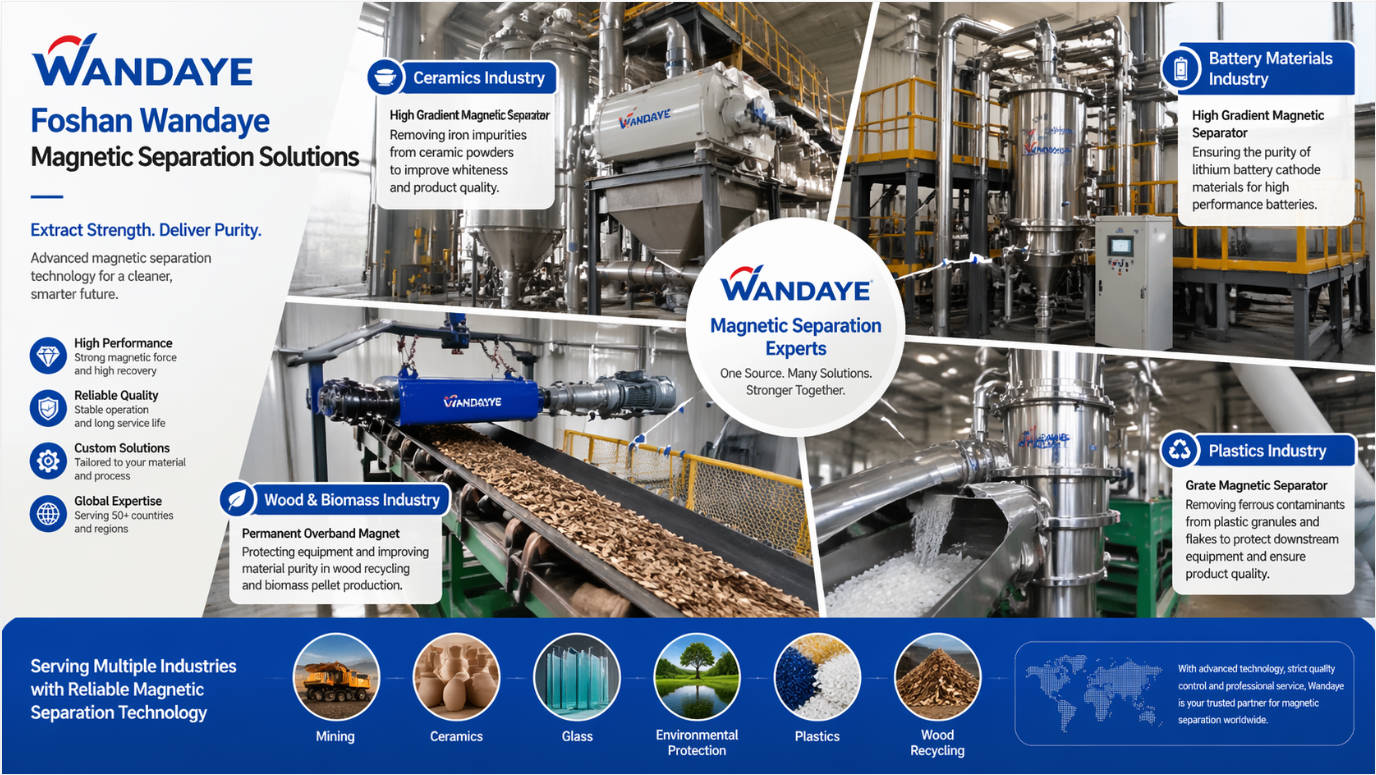
Foshan Wandaye Technology Co., Ltd. provides solutions across: [wdymagnetic]
– Mining and mineral processing
– Ceramics and glass
– Electric power and building materials
– Environmental protection and plastics
– Rubber, pharmaceuticals, and food
– Positive and negative electrode materials for batteries
This broad cross‑industry experience allows us to transfer best practices from high‑purity powder and slurry applications into complex recycling environments, including wood, where precision, uptime, and product quality are equally critical. [wdymagnetic]
Latest Market and Technology Trends in Magnetic Separation
The magnetic separator market is evolving quickly, driven by sustainability goals and stricter product quality standards. [buntingmagnetics]
Trend 1: Automation and Smart Monitoring
Recycling plants are increasingly integrating magnetic separators into automated, sensor‑driven lines. [buntingmagnetics]
Key developments include: [buntingmagnetics]
– Automatic belt speed and splitter adjustments based on sensor feedback
– Integration with SCADA or MES systems for performance monitoring
– Remote diagnostics and predictive maintenance alerts
These capabilities help plants maintain consistently high separation efficiency while reducing manual intervention and labor costs. [linkedin]
Trend 2: High‑Gradient and Rare‑Earth Magnet Technologies
Advances in high‑gradient designs and rare‑earth magnet materials are boosting separation performance, especially for fine particles and weakly magnetic contaminants. [buntingmagnetics]
For wood and biomass recyclers, this translates into: [wdymagnetic]
– Higher recovery of small, thin ferrous fragments
– Improved cleanliness of high‑value product streams
– More compact equipment with stronger fields in smaller footprints
Trend 3: Circular Economy and Regulatory Pressures
Global emphasis on circular economy models and stricter waste regulations are pushing recyclers to achieve higher recovery and purity rates. [buntingmagnetics]
As a result: [buntingmagnetics]
– Magnetic separation is now a core technology in modern recycling plants
– Operators are upgrading legacy magnets to higher‑efficiency systems
– More facilities are targeting premium grades for wood fuel and panel feedstocks
Practical Checklist for Evaluating Your Wood Metal Separation Line
If you already operate a wood recycling facility, here is a quick practical checklist I use when visiting customer plants:
1. Do you have at least one magnet installed immediately after the primary shredder? [buntingmagnetics]
2. Are you combining overband and drum magnets for both coarse and fine ferrous removal? [youtube]
3. Have you considered eddy current separation for aluminum and other non‑ferrous metals? [youtube]
4. Is there a final metal detector before your most critical equipment (pellet mill, chipper, panel press)? [p2infohouse]
5. Are belt speeds, burden depths, and splitter positions optimized and regularly checked? [buntingmagnetics]
6. Do you have a planned maintenance and inspection schedule for magnets and detectors? [p2infohouse]
7. When did you last review newer high‑gradient or rare‑earth systems against your current setup? [wdymagnetic]
If you answered “no” or “not sure” to several of these questions, there is likely hidden performance potential in your line that can be unlocked with targeted upgrades.
How Foshan Wandaye Supports Wood Recyclers
As a specialized magnetic separator manufacturer, Foshan Wandaye Technology Co., Ltd. combines R&D, engineering design, production‑line installation, and commissioning services under one roof. [en.fswandaye]
For wood recycling and related industries, our team typically supports customers by: [wdymagnetic]
– Analyzing existing process flows and contamination risks
– Recommending combinations of permanent and electromagnetic separators
– Providing custom‑engineered solutions for powder, chips, and mixed streams
– Assisting with onsite installation, tuning, and operator training
Our experience across mining, ceramics, glass, environmental protection, rubber, plastics, pharmaceuticals, food, and battery materials enables us to design robust systems that meet both production and regulatory demands. [wdymagnetic]
Call to Action: Upgrade Your Wood Metal Separation Strategy
If you are planning a new wood recycling line or want to improve an existing system, now is the right time to review your metal separation strategy. [okonrecycling]
Our engineering team at Foshan Wandaye can: [wdymagnetic]
– Analyze your current flow and contamination levels
– Propose an optimized configuration of magnetic separators and detectors
– Help you balance investment, performance, and future expansion needs
Contact us today to discuss your wood recycling project, request a technical evaluation, or schedule an onsite assessment of your existing line. [wdymagnetic]
Frequently Asked Questions
1. Why is metal separation so important in wood recycling?
Metal separation protects shredders, chippers, and pellet mills from damage, reduces fire risk, and improves the quality and value of the final wood product. It also enables the recovery and sale of ferrous and non‑ferrous metals as secondary raw materials, enhancing overall plant profitability. [linkedin]
2. What is the difference between a permanent magnet and an electromagnetic separator?
Permanent magnetic separators use fixed magnets to create a constant field with no power consumption, making them simple and energy‑efficient. Electromagnetic and high‑gradient separators use energized coils to generate stronger, adjustable fields, which are useful for fine or difficult contaminants and high‑precision applications. [en.fswandaye]
3. Do I really need both a drum magnet and an eddy current separator?
Yes, in most modern plants, drum magnets remove fine ferrous fragments, while eddy current separators recover non‑ferrous metals like aluminum and copper. Using both stages significantly increases overall metal recovery and ensures cleaner wood output. [okonrecycling]
4. How can I tell if my current metal separation line is underperforming?
Warning signs include frequent equipment damage, high maintenance costs, visible metal in finished products, and uncollected metals in waste streams. A structured audit comparing your setup against current best practices—overband magnets, drum magnets, eddy current separators, and final metal detection—will quickly reveal improvement areas. [linkedin]
5. What support does Foshan Wandaye provide for wood recycling projects?
Foshan Wandaye offers process analysis, custom engineering design, equipment selection, production‑line installation, and commissioning for magnetic separation systems. Our team leverages cross‑industry experience (mining, ceramics, glass, battery materials, and more) to deliver reliable, high‑performance solutions for wood recyclers. [wdymagnetic]
References
1. Bunting Magnetics – “Separating Metal When Recycling Wood”
<https://buntingmagnetics.com/blog/separating-metal-when-recycling-wood> [buntingmagnetics]
2. P2 InfoHouse – “Magnetic Removal of Ferrous Metals” (Best Practice for wood waste recovery)
<https://p2infohouse.org/ref/14/13483.pdf> [p2infohouse]
3. Okon Recycling – “How Are Magnetic Separators Transforming Recycling in Texas?”
<https://www.okonrecycling.com/magnet-recycling-and-applications/magnet-technology/magnetic-separators-transforming-recycling-texas> [okonrecycling]
4. Foshan Wandaye Technology Co., Ltd. – New Type Electromagnetic Powder Magnetic Separator Series
<https://www.wdymagnetic.com/products/new_type_electromagnetic_powder_magnetic_separator_series> [wdymagnetic]
5. Foshan Wandaye Machinery Equipment Co., Ltd. – Company and product overview
<http://en.fswandaye.com> [en.fswandaye]
6. Foshan Wandaye Technology Co., Ltd. – News and application updates
<https://www.wdymagnetic.com/news/page/3> [wdymagnetic]
7. Bunting – “Metal Separation Technology at E‑Waste World”
<https://buntingmagnetics.com/blog/metal-separation-technology-at-e-waste-world> [buntingmagnetics]
8. LinkedIn – “Global Magnetic Separator Market Analysis: Trends, Forecasts, and Opportunities”
<https://www.linkedin.com/pulse/global-magnetic-separator-market-analysis-trends-forecasts-ijgfe> [linkedin]
9. YouTube – “Metal Separation from Recycled Wood using a Drum Magnet and Eddy Current Separator”
<https://www.youtube.com/watch?v=8t2n8UdkLc8> [youtube]
Hot Tags: Metal Wood Recycling, Manufacturers, Customized, Custom, Suppliers, Buy, Cheap, Quality, Advanced, Durable, in Stock, Made in China, Price, Quotation