


Content Menu
● What Is A Magnetic Conveyor?
● How Does A Magnetic Conveyor Work?
>> Basic Working Principle (Step‑By‑Step)
● Key Components Of A Magnetic Conveyor
● Factors That Affect Magnetic Conveyor Performance
● Types Of Magnetic Conveyors And Typical Applications
>> Common Magnetic Conveyor Configurations
● Integrating Magnetic Conveyors With Magnetic Separators
● Latest Industry Trends In Magnetic Conveyor Technology
● Practical Design And Selection Tips
>> 2. Mining And Mineral Processing
>> 3. Battery Positive/Negative Electrode Materials
● User‑Oriented Benefits Of Magnetic Conveyors
● Call To Action: Design Your Magnetic Conveying And Separation Line
● FAQ
>> 1. How is a magnetic conveyor different from a standard belt conveyor?
>> 2. Can magnetic conveyors handle non‑metallic materials?
>> 3. Do magnetic conveyors require a lot of maintenance?
>> 4. Are magnetic conveyors safe for food and pharmaceutical applications?
Magnetic conveyors quietly power modern factories by moving and controlling ferrous parts with precision, safety, and very low maintenance. From my experience working with magnetic separation projects in ceramics, mining, plastics, and battery materials, the best systems are not just conveyors – they are integrated solutions combining magnetic conveying and high‑performance separators to protect product purity and process stability. [africanmagnets]
What Is A Magnetic Conveyor?
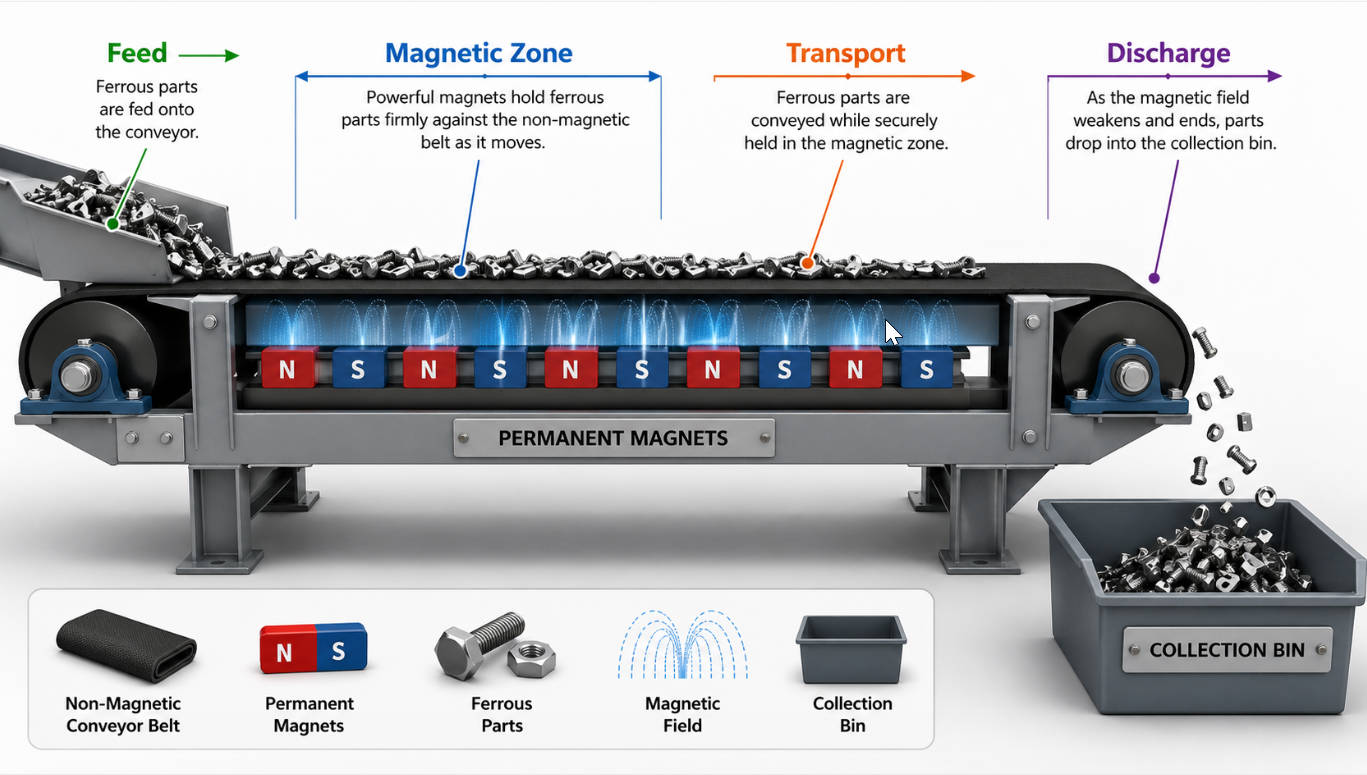
A magnetic conveyor is a material handling system that uses permanent magnets or electromagnetic assemblies to move, elevate, or hold ferrous parts and metal contaminants along a defined path. Unlike standard belt conveyors that rely only on friction, magnetic conveyors use an invisible magnetic field to grip and control the metal while the belt or sliders move. [greatmagtech]
In practical industrial lines, magnetic conveyors are widely used to handle small steel parts, stampings, screws, chips, and ferrous impurities in industries such as mining, ceramics, glass, plastics, food, electronics, and battery materials. When combined with Powder Magnetic Separators and Permanent Magnetic Separators, they become a core part of a contamination control and product‑purity strategy. [wdymagnetic]
How Does A Magnetic Conveyor Work?
Basic Working Principle (Step‑By‑Step)
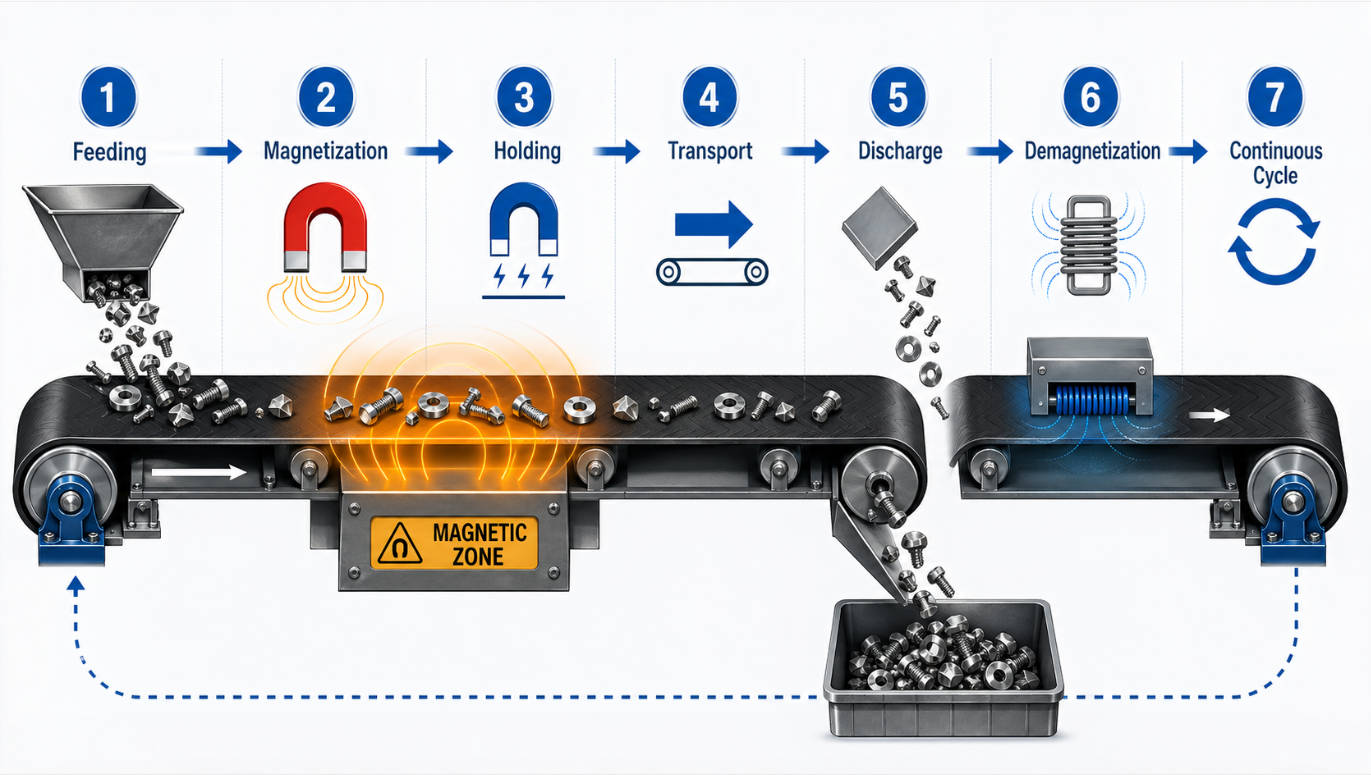
Most magnetic conveyors follow a simple but powerful working sequence: [africanmagnets]
1. Feeding – A feeder (hopper, chute, or upstream machine) loads ferrous parts or material onto the conveyor inlet. [greatmagtech]
2. Magnetization – Strong magnets embedded under or inside the belt create a magnetic field that magnetizes ferrous parts, aligning their magnetic domains. [africanmagnets]
3. Holding – The parts experience attraction forces and are pulled firmly against the belt or conveying surface, even when moving vertically or inclined. [greatmagtech]
4. Transport – As the belt or chain moves, the magnetically held parts move with it through the conveyor length. [youtube]
5. Discharge – At the outlet, the magnetic influence decreases or a mechanical separator (scraper, diverter, chute) allows parts to release and drop into bins, process equipment, or further separators. [youtube]
6. Demagnetization – Once outside the field, parts lose most of the induced magnetization and are ready for the next process. [greatmagtech]
7. Continuous Cycle – The belt continues running, ready to handle the next batch of material. [greatmagtech]
From an engineering perspective, the real art lies in balancing magnetic force, belt speed, and material characteristics so that parts are held securely but also released reliably at the right point. [africanmagnets]
Key Components Of A Magnetic Conveyor
As someone used to reviewing actual plant layouts, I always analyze these core design elements before recommending a system:
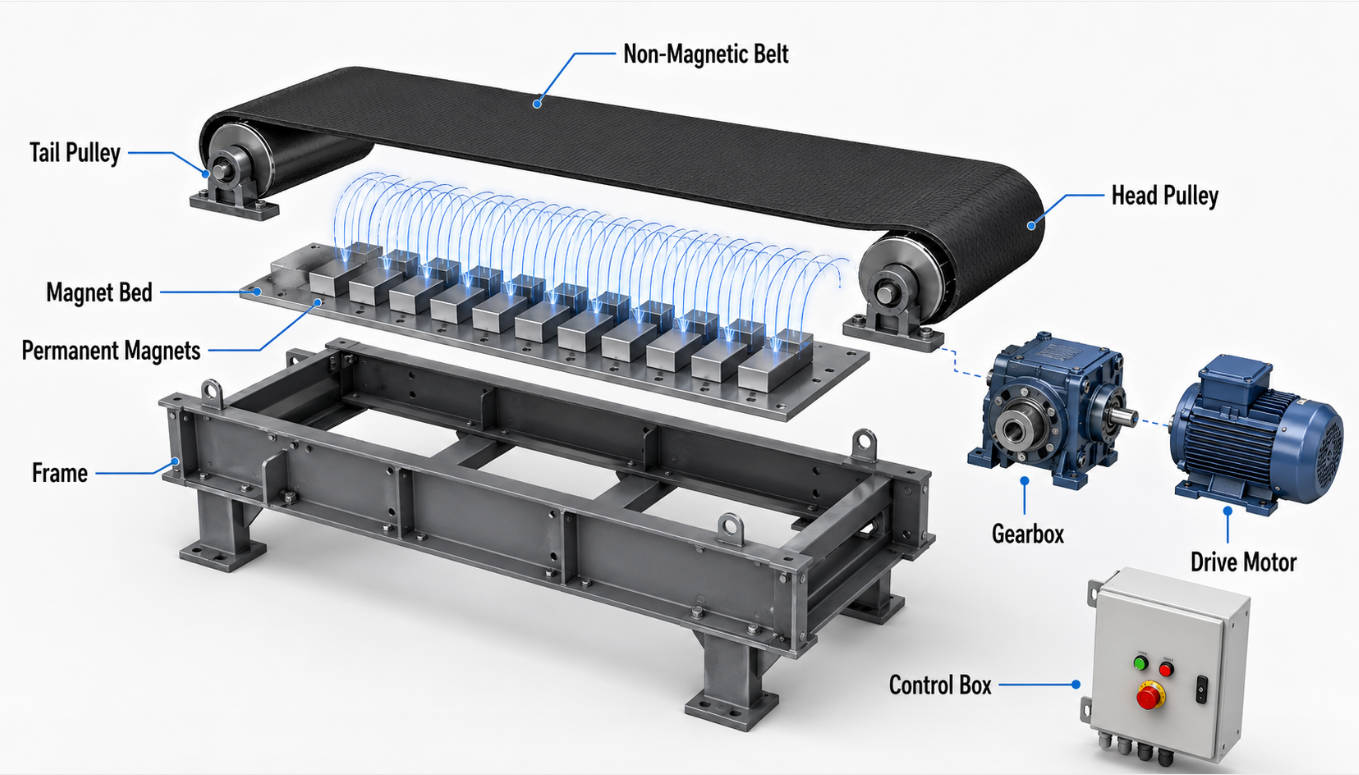
– Magnet Assembly –
Uses permanent magnets (often rare‑earth for high strength) or electromagnets placed beneath or inside the belt to generate the field. [africanmagnets]
– Conveyor Belt / Slider Bed –
A non‑magnetic belt (often stainless or specialized polymer) runs over the magnets, carrying parts while allowing the magnetic field to pass through. [africanmagnets]
– Drive System –
Motor, gearbox, and drive pulleys or chains set the conveying speed; modern systems often adopt variable‑speed drives for better process control. [datainsightsmarket]
– Structure & Frame –
A rigid, non‑magnetic frame supports the magnets and belt while minimizing vibration and deflection. [africanmagnets]
– Controls & Sensors (In Advanced Lines) –
IoT sensors, metal detectors, and automation controls can monitor load, belt speed, temperature, and blockages to optimize performance. [datainsightsmarket]
Factors That Affect Magnetic Conveyor Performance
Field experience shows that conveyor performance depends heavily on several technical variables: [africanmagnets]
– Material Type –
High‑permeability materials (carbon steel, iron) respond more strongly to the magnetic field than low‑permeability alloys.
– Part Size & Shape –
Thin chips, long strips, and compact parts behave differently; small or thin pieces may require higher magnetic intensity or closer distance.
– Air Gap / Distance –
The magnetic force drops rapidly with distance; thicker belts, product layers, or build‑up can reduce holding force.
– Belt Speed –
Higher speeds can reduce the time the magnetic field acts on parts and may require stronger magnets or modified geometry.
– Temperature & Environment –
High temperatures can affect magnet performance, while dust, moisture, or corrosive atmospheres drive material and sealing choices.
In many projects, we fine‑tune these parameters together with Powder Magnetic Separators and Permanent Magnetic Separators to achieve both stable transport and reliable impurity removal in powders, slurries, or bulk solids. [en.fswandaye]
Types Of Magnetic Conveyors And Typical Applications
Common Magnetic Conveyor Configurations
| Conveyor Type | Key Feature | Typical Uses (Examples) |
|---|---|---|
| Cross‑belt magnetic conveyor | Magnet positioned across or above main belt. africanmagnets | Mining, aggregate, recycling – remove tramp iron from bulk flows. africanmagnets |
| Magnetic belt conveyor | Magnets under a continuous belt. africanmagnets | Machining chips, stamped parts, general metal transport. africanmagnets |
| Magnetic slide conveyor | Enclosed housing with internal magnets and sliders. africanmagnets | Oily chips, small parts in machine tools and presses. africanmagnets |
| Magnetic elevator / Z‑type | Steep incline or vertical lift of metal parts. africanmagnets | Lifting screws, nuts, or scrap vertically to hoppers or presses. africanmagnets |
| Magnetic drum / pulley | Rotating magnetic drum at conveyor head. africanmagnets | Continuous metal separation in minerals, sand, and granules. africanmagnets |
Magnetic conveyors are especially powerful when installed upstream or downstream of magnetic separators, creating a closed, automated purity and safety loop for critical production lines. [en.fswandaye]
Integrating Magnetic Conveyors With Magnetic Separators
From an industry expert standpoint, the real performance gains happen when magnetic conveyors are integrated with specialized separators such as:
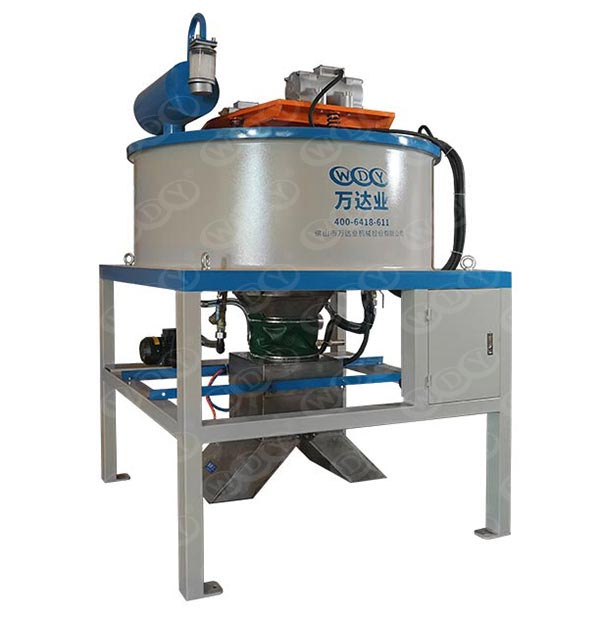
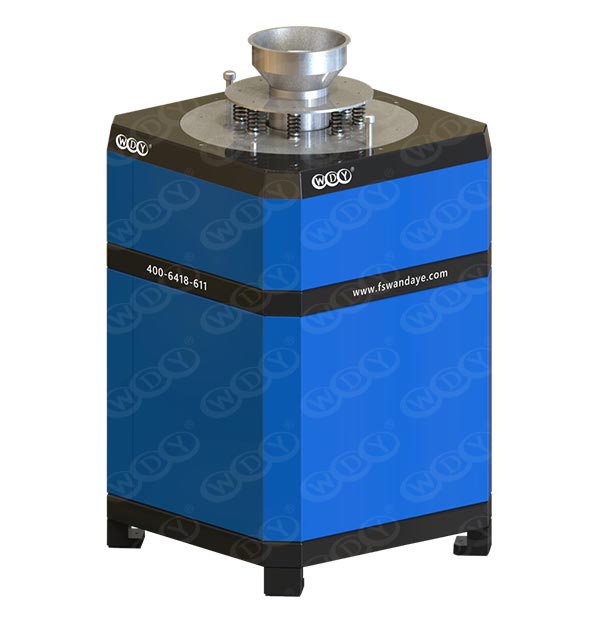
– Powder Magnetic Separator – For fine powders like ceramics, silica, glass, plastics, and battery cathode/anode materials, where even trace iron can cause product defects. [wdymagnetic]
– Permanent Magnetic Separator – For continuous removal of ferrous impurities from bulk solids, slurries, and process flows in mining, building materials, environmental protection, and food processing. [en.fswandaye]
A typical optimized line might look like this: [en.fswandaye]
1. Raw material enters via hoppers or feeders.
2. A magnetic conveyor lifts or transfers ferrous‑containing material while removing larger metallic pieces.
3. The material then passes through a Powder Magnetic Separator for fine‑grade iron removal.
4. A Permanent Magnetic Separator downstream ensures residual or reintroduced ferrous contaminants are captured before packaging or high‑value processing.
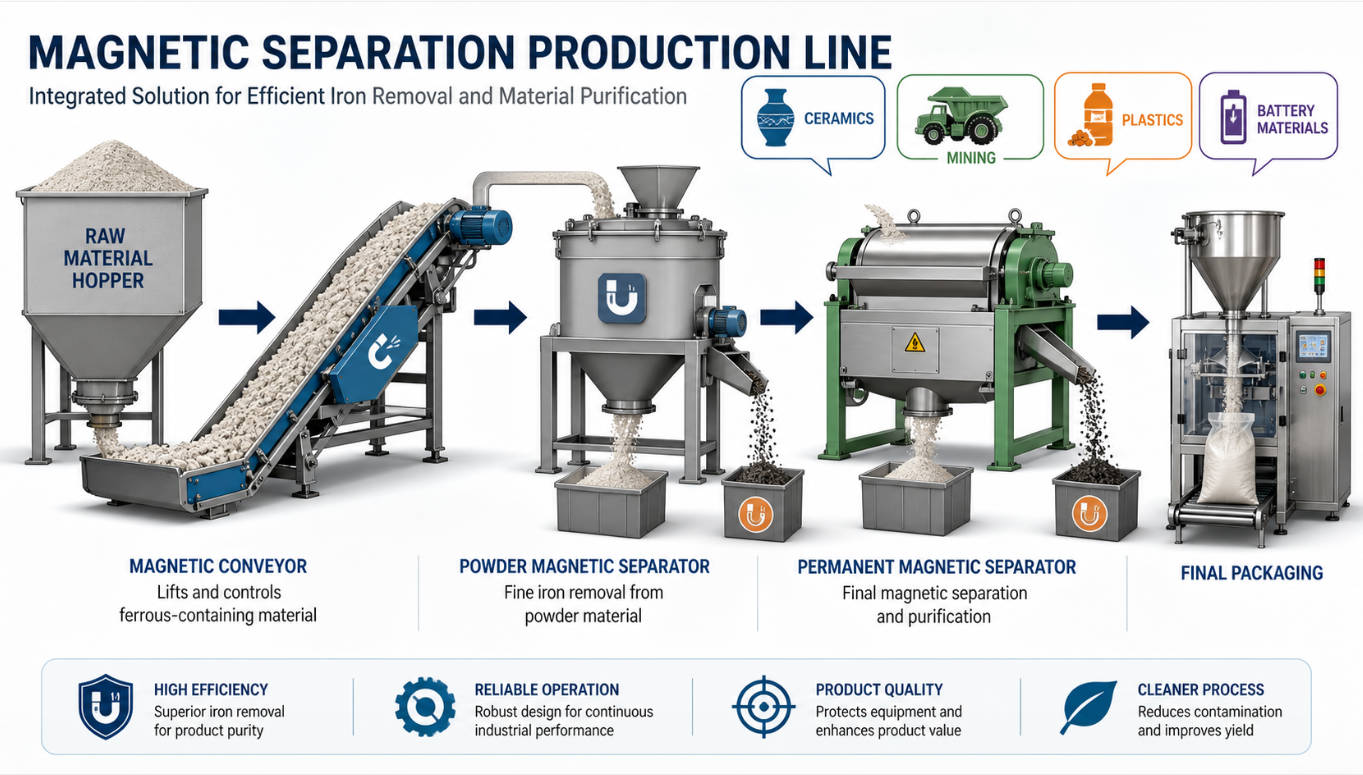
This kind of system design is especially valuable in sectors like ceramics, glass, plastics, rubber, pharmaceuticals, food, and battery positive/negative electrode materials, where product purity directly affects mechanical strength, electrical performance, and downstream process yields. [wdymagnetic]
Latest Industry Trends In Magnetic Conveyor Technology
Recent market research and industry reports highlight several key trends: [datainsightsmarket]
– Automation & Smart Monitoring –
Integration of IoT sensors, real‑time condition monitoring, and predictive maintenance to detect blockages, overloads, and abnormal vibrations.
– Energy‑Efficient Designs –
Use of high‑efficiency motors, optimized magnet circuits, and better shielding to reduce energy consumption.
– Modular & Customizable Systems –
Modular magnetic modules and conveyor sections that can be configured for different angles, capacities, and layouts with minimal structural changes. [africanmagnets]
– Higher Magnetic Performance –
Adoption of advanced rare‑earth magnets and optimized magnetic circuits to handle finer particles at higher throughput. [africanmagnets]
For a manufacturer that already provides high‑gradient electromagnetic slurry machines, powder magnetic separators, and permanent magnetic separators, staying aligned with these trends means offering customers not only equipment but also system‑level solutions that are ready for future automation and smart factories. [en.fswandaye]
Practical Design And Selection Tips
Based on typical engineering reviews for customers in mining, ceramics, plastics, and battery materials, here are practical steps when selecting a magnetic conveyor:
1. Define Your Material Precisely
– Particle size distribution, bulk density, temperature, moisture level, and whether it contains oils or binders.
2. Clarify The Process Objective
– Part transport, elevation, chip removal, tramp iron protection, or fine‑grade iron removal in combination with separators.
3. Set Performance Targets
– Required throughput, purity level (ppm or mg/kg iron), allowable downtime, and integration points with upstream/downstream equipment.
4. Select Magnet Type And Layout
– Permanent magnets for low‑power, continuous duty; electromagnets where adjustable field strength is needed.
5. Integrate With Magnetic Separators
– Place Powder Magnetic Separators and Permanent Magnetic Separators at critical control points: raw material intake, pre‑milling, pre‑firing, or before final packaging. [en.fswandaye]
6. Plan For Maintenance & Cleaning
– Access doors, wear‑resistant liners, and easy‑clean magnet designs reduce downtime and contamination risk.
From my perspective, projects are most successful when the engineering team and the equipment supplier collaborate early on layout, magnet sizing, and line balance instead of treating conveyors and separators as stand‑alone purchases.
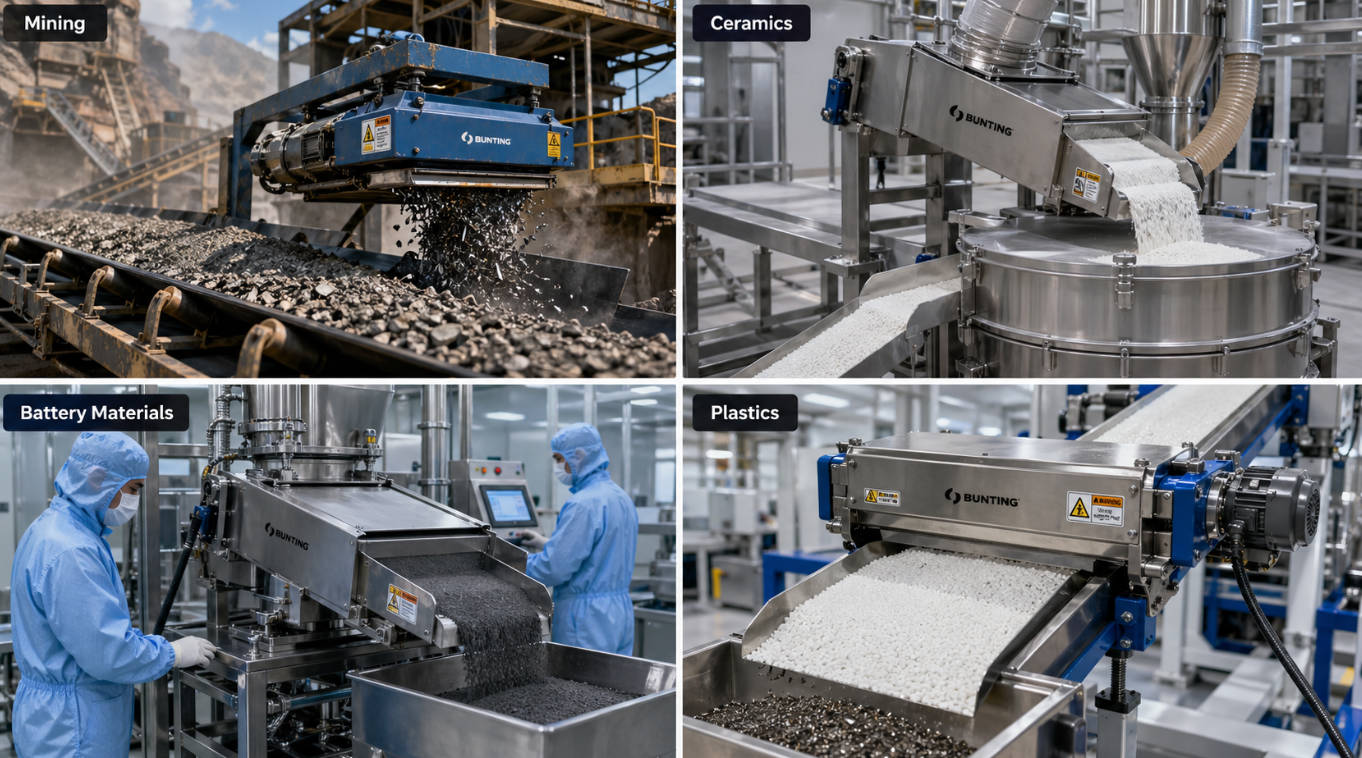
Application Examples
1. Ceramics And Porcelain
In ceramic tile and sanitaryware production, metallic contamination can cause firing defects, color issues, and surface pinholes. A typical solution uses: [tymagnets]
– Magnetic conveyors to transfer raw minerals and recycled material.
– Powder Magnetic Separators to remove fine iron from clay and glaze powders before milling and spraying.
– Permanent Magnetic Separators on slurry lines to protect spray‑drying and pressing equipment. [tymagnets]
2. Mining And Mineral Processing
Mining operations use magnetic conveyors and cross‑belt separators to protect crushers and mills by removing tramp iron from ores and aggregates. Downstream, stronger separators and magnetic drums handle finer fractions to improve mineral concentrate quality. [africanmagnets]
3. Battery Positive/Negative Electrode Materials
For lithium battery cathode and anode powders, trace iron can severely impact electrical performance and safety. Here, carefully engineered Powder Magnetic Separators combined with controlled magnetic conveying are used to keep metal contamination at extremely low levels, supporting stable cell performance and longer cycle life. [wdymagnetic]
User‑Oriented Benefits Of Magnetic Conveyors
From the end user’s point of view, the main value drivers of a well‑designed magnetic conveyor system are:
– Improved product purity – Reduced ferrous contamination in powders, granules, and finished goods.
– Equipment protection – Less damage to crushers, mills, presses, and packaging equipment from tramp metal.
– Higher safety – Automatic handling of sharps, chips, and heavy metal parts reduces manual contact and accident risk. [youtube]
– Stable productivity – Continuous, controlled material flow with fewer unplanned stoppages.
– Lower operating cost – Minimal contact wear on parts, low maintenance needs, and energy‑efficient permanent magnet designs. [datainsightsmarket]
For manufacturers that supply both magnetic conveyors and advanced magnetic separators, this translates into a stronger ability to deliver measurable improvements in yield, quality, and cost per ton processed. [en.fswandaye]
Call To Action: Design Your Magnetic Conveying And Separation Line
If you are planning to upgrade material handling or reduce ferrous contamination in powders, slurries, or bulk solids, it is far more effective to design conveyors and separators together rather than as isolated pieces of equipment. [en.fswandaye]
You can share your material data (type, size, moisture, temperature), process flow diagram, and purity targets with a specialized magnetic separation manufacturer so they can propose a tailored solution combining Powder Magnetic Separators, Permanent Magnetic Separators, and magnetic conveyors matched to your industry and capacity. [wdymagnetic]
FAQ
1. How is a magnetic conveyor different from a standard belt conveyor?
A magnetic conveyor uses a magnetic field to hold ferrous parts against the belt or sliding surface, while a standard belt conveyor relies only on friction and gravity. This allows magnetic conveyors to lift, incline, or invert metal parts securely, and to remove ferrous contaminants more effectively. [greatmagtech]
2. Can magnetic conveyors handle non‑metallic materials?
Magnetic conveyors are designed to act on ferrous materials, so non‑magnetic materials pass over them unaffected. However, when integrated into a line, they can still transport mixed streams while selectively controlling and extracting metallic content. [africanmagnets]
3. Do magnetic conveyors require a lot of maintenance?
Most designs based on permanent magnets have very low maintenance requirements because there are no coils, brushes, or moving magnetic components to replace. Maintenance is usually limited to belt tracking, lubrication of mechanical parts, and periodic cleaning of metal build‑up. [datainsightsmarket]
4. Are magnetic conveyors safe for food and pharmaceutical applications?
With the right materials (stainless steel contact surfaces, food‑grade belts) and hygienic design, magnetic conveyors and magnetic separators can be suitable for food and pharmaceutical lines. In these sectors, they are often used to capture metal shavings, broken screens, or tool fragments to protect consumers and comply with safety standards. [en.fswandaye]
5. How do I choose between a Powder Magnetic Separator and a Permanent Magnetic Separator in my line?
In general, Powder Magnetic Separators are used for dry fine powders where you need high‑precision removal of tiny ferrous particles, especially in ceramics, glass, plastics, and battery materials. Permanent Magnetic Separators are often used on bulk solids or slurries where continuous, robust tramp‑iron removal and low operating cost are priorities. [en.fswandaye]
References
1. Great Magtech. “How Does a Magnetic Conveyor Work?” Knowledge Article. 2023. – <https://www.greatmagtech.com/info/how-does-a-magnetic-conveyor-work-87912941.html> [greatmagtech]
2. African Magnets. “Cross Belt Magnetic Conveyors Explained.” 2025. – <https://africanmagnets.com/cross-belt-magnetic-conveyors-explained/> [africanmagnets]
3. Data Insights Market. “Magnetic Conveyor 2026–2034 Overview: Trends, Competitor Analysis.” 2024. – <https://www.datainsightsmarket.com/reports/magnetic-conveyor-645293> [datainsightsmarket]
4. African Magnets. “How Magnetic Conveyor Systems Improve Productivity in Mining Operations.” 2025. – <https://africanmagnets.com/how-magnetic-conveyor-systems-improve-productivity-in-mining-operations/> [africanmagnets]
5. Foshan Wandaye Machinery Equipment Co., Ltd. “About Us” and main product pages: powder magnetic separator, permanent magnetic separator, and related magnetic separation equipment. – <http://en.fswandaye.com> [wdymagnetic]
Hot Tags: Magnetic Conveyor, Manufacturers, Customized, Custom, Suppliers, Buy, Cheap, Quality, Advanced, Durable, in Stock, Made in China, Price, Quotation