


Content Menu
● Understanding Permanent Magnets
● Main Types of Permanent Magnets
● Where Permanent Magnets Excel
● How Electromagnets Work in Separation
● Advantages of Electromagnets in Industry
● Permanent Magnet vs Electromagnet: Core Differences
● Which Is Stronger: Permanent or Electromagnet?
● How to Choose Between Permanent and Electromagnetic Separators
>> 1. Magnetic Field Strength and Controllability
>> 2. Energy Consumption and Operational Efficiency
>> 3. Environmental Adaptability
>> 4. Cost and Maintenance Strategy
● High‑Gradient Electromagnetic Slurry Machines: A Process Engineer’s View
● Practical Case Insights from Slurry Applications
● Key Design Features of Advanced Electromagnetic Slurry Separators
● Environmental and Sustainability Considerations
● When to Use Permanent Magnets, Electromagnets, or a Hybrid
● Action‑Oriented Conclusion and CTA
● FAQs
>> 1. Can permanent magnets and electromagnets be used together in one system?
>> 2. Are electromagnets always stronger than permanent magnets?
>> 3. What are the main maintenance points for electromagnetic slurry separators?
>> 4. When should I choose a permanent magnetic separator instead of an electromagnetic one?
In industries like ceramics, battery materials, and mineral processing, choosing between permanent magnetic separators and electromagnetic (high‑gradient) slurry machines is no longer a purely theoretical question—it directly determines product purity, energy consumption, and long‑term ROI. From my experience working with magnetic separation projects, the “right answer” is not which magnet is stronger in the lab, but which solution is more controllable, stable, and profitable on your actual production line. [dingsmagnets]
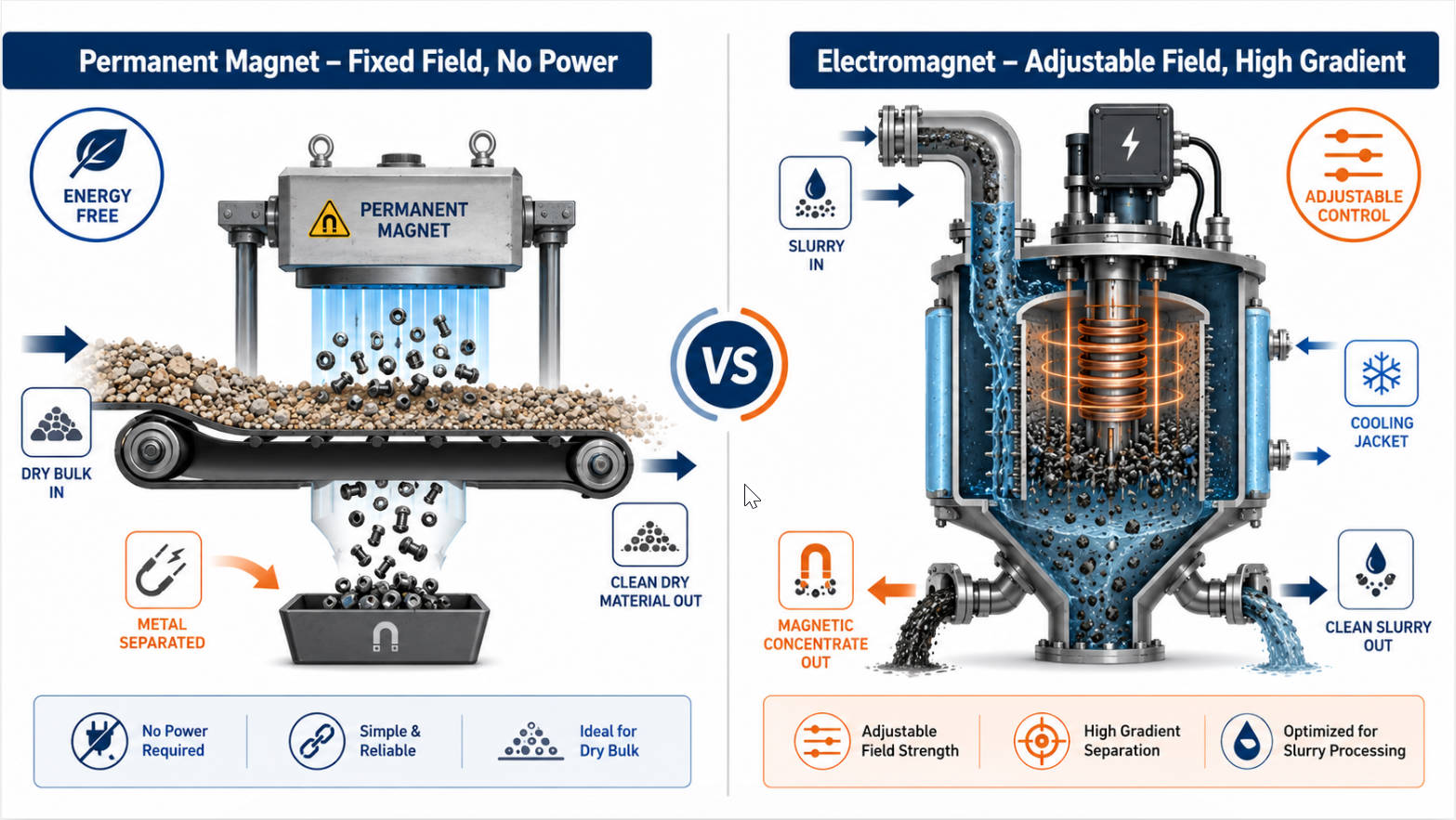
Understanding Permanent Magnets
Permanent magnets are made from materials like iron, nickel, cobalt, and rare‑earth elements, and can maintain magnetism for a long time without an external power supply. Their magnetic domains are aligned during magnetization and “locked in” by the material’s high coercivity, so they continue to generate a stable magnetic field from the north pole to the south pole even after the external field is removed. [elcanindustries]
In industrial practice, I see permanent magnets used wherever stable, passive magnetic fields are needed—motors, generators, magnetic separation of relatively coarse contaminants, and many everyday devices where energy efficiency and simplicity matter more than fine controllability. [eclipsemagnetics]
Main Types of Permanent Magnets
Different permanent magnet families behave very differently on a production line, especially under heat and vibration. Selecting the right type is a basic but often overlooked part of engineering a reliable separator.
– NdFeB (Neodymium) magnets
Extremely high magnetic energy product and coercivity, widely used in high‑performance motors, new energy vehicles, and precision equipment where strong magnetic fields in compact spaces are required. [elcanindustries]
– Samarium cobalt magnets
High coercivity with excellent temperature stability (up to around 350°C) and strong radiation resistance, though with significantly higher material cost.
– Alnico magnets
High remanence but low coercivity, weak resistance to demagnetization, yet excellent temperature stability from about −60°C to 500°C, making them useful in instruments and sensors that experience large temperature swings.
– Ferrite magnets
Low cost, medium magnetic performance, and wide use in home appliances, toys, and small motors where budget is critical and magnetic requirements are moderate.
From an engineering viewpoint, NdFeB and ferrite are the workhorses in magnetic separation for non‑metallic minerals and general industrial iron removal, while SmCo and Alnico are reserved for harsher thermal or radiation environments. [buntingmagnetics]
Where Permanent Magnets Excel
Permanent magnets shine in simple, continuous, low‑maintenance scenarios. Typical use cases include:
– Industrial manufacturing:
Motors, generators, simple magnetic separation devices, sensors, and automation components that benefit from a stable field without power. [eclipsemagnetics]
– Medical devices:
Dental magnetic attachments, hearing aids, and certain instruments that require compact form factors and predictable magnetic behavior.
– Transportation:
Permanent magnet synchronous motors (PMSM) in electric vehicles and traction applications where high efficiency and power density are crucial.
– Everyday life:
Household fixtures such as fridge magnets, closures, and small fixtures where reliability and low cost matter more than adjustable field strength.
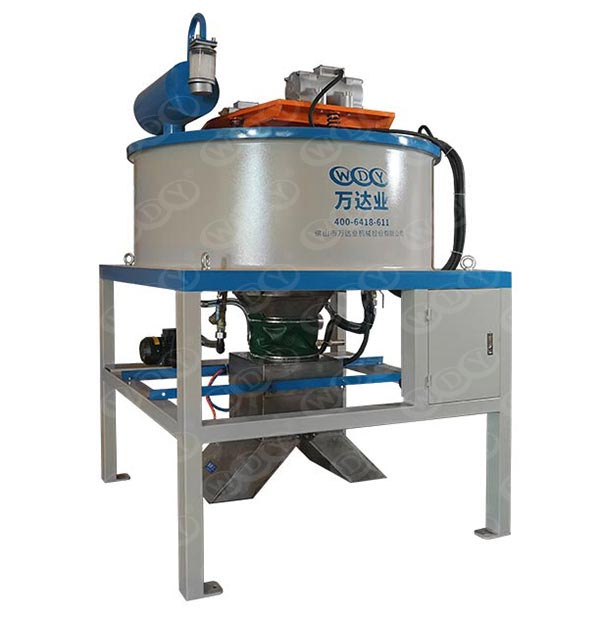
In separation systems, permanent magnetic separators are especially attractive when feed conditions are relatively stable and you prioritize zero energy consumption and minimal operator intervention. [eclipsemagnetics]
What Is an Electromagnet?
An electromagnet is formed by a conductive coil wound around an iron core; when current flows through the coil, it magnetizes the core and creates a strong magnetic field, which disappears once power is switched off. This means the presence, strength, and sometimes direction of the magnetic field can be precisely controlled via current and coil design. [elcanindustries]
In practice, this “switchable and tunable” behavior is what makes electromagnets indispensable in high‑gradient slurry separators, magnetic cranes, MRI systems, and advanced process lines that must adapt to varying materials. [buntingmagnetics]
How Electromagnets Work in Separation
When current passes through the coil, a magnetic field is generated; adding a ferromagnetic core (like soft iron) concentrates and magnifies this field by aligning the core’s magnetic domains. Once power is removed, the core demagnetizes quickly and the magnetic force collapses, allowing controlled release of captured ferrous material. [elcanindustries]
The magnetic field strength can be adjusted by changing current, number of turns, or core material, which is particularly valuable for high‑gradient systems treating fine slurry where the balance between capture and release is very delicate. [minejxsc]
Advantages of Electromagnets in Industry
From an engineer’s standpoint, electromagnets provide several advantages that directly translate into process control benefits:
– Adjustable magnetic strength:
Operators can tune the field to match different ores, glaze recipes, or battery material formulations. [elcanindustries]
– On/off control:
Magnetism can be activated only when needed, simplifying cleaning and maintenance cycles.
– Fast response:
Rapid switching supports automated cycles and high‑frequency magnetic separation in modern plants. [buntingmagnetics]
– High field intensity and gradient:
When combined with specialized magnetic circuits, electromagnets can deliver the very high gradients needed for weakly magnetic contaminants in fine slurry. [dingsmagnets]
In short, electromagnets trade ongoing power consumption for superior controllability and high‑intensity performance, which is often exactly what is required in advanced mineral processing, ceramics, and battery material lines. [minejxsc]
Permanent Magnet vs Electromagnet: Core Differences
From a design and operations perspective, the key differences between permanent magnets and electromagnets are summarized below. [elcanindustries]
| Aspect | Permanent magnets | Electromagnets |
|---|---|---|
| Source of magnetism | Material’s intrinsic magnetic properties | Electric current through a coil and core |
| Power requirement | No power to maintain field | Continuous power supply (except superconducting systems) |
| Field strength | Fixed by material and geometry | Adjustable via current and coil design |
| Control flexibility | Very limited | High: on/off and precise strength control |
| Temperature behavior | Subject to demagnetization at high temperatures (e.g. Curie points around 310°C for NdFeB, 450°C for ferrite) | Coil resistance changes with temperature but recovers after cooling |
| Service life | Long if not overheated or demagnetized | Dependent on thermal management and insulation aging |
| Cost profile | Higher initial material cost, low operating cost | Lower hardware cost, higher energy and maintenance cost |
In practice, I advise customers to regard permanent magnets as “fit‑and‑forget” energy‑free solutions, while electromagnets act as “precision tools” for demanding or variable processes. [elcanindustries]
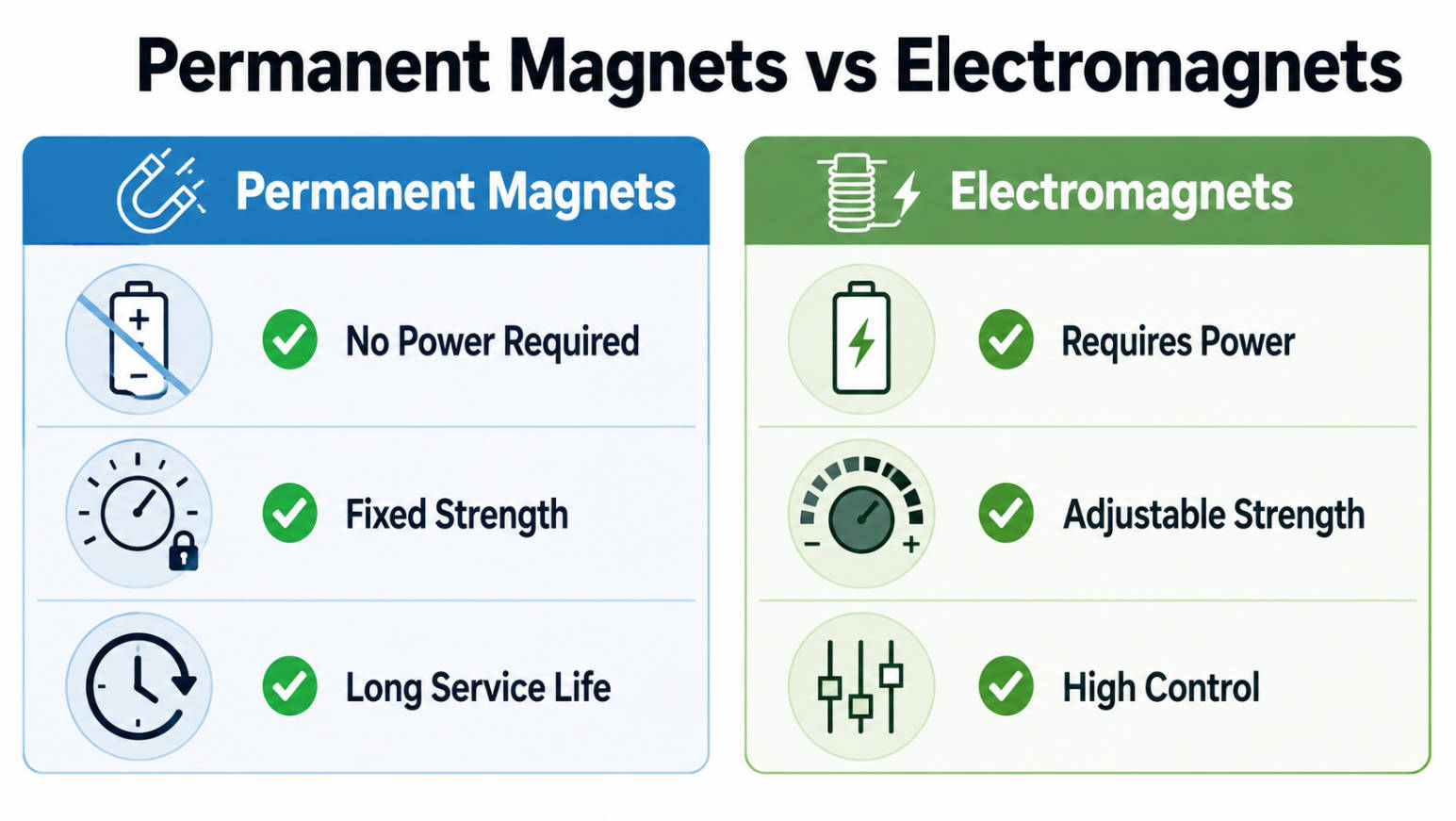
Which Is Stronger: Permanent or Electromagnet?
Technically, electromagnets can achieve higher peak field strengths, particularly in high‑current coils with optimized cores, making them suitable for applications that require extremely strong or highly focused magnetic fields. Permanent magnets, by contrast, provide a fixed but stable field whose strength is determined by material and geometry, not by adjustable parameters. [elcanindustries]
However, for real‑world magnetic separation, “strength” alone is not enough: what matters is field gradient, coverage, and consistency over time. High‑gradient electromagnetic systems, for instance, can generate strong local gradients that capture fine iron and weakly magnetic particles from slurry streams that would pass through low‑gradient permanent systems. [dingsmagnets]
How to Choose Between Permanent and Electromagnetic Separators
When I design or audit a magnetic separation line, I usually consider four main decision dimensions. [eclipsemagnetics]
1. Magnetic Field Strength and Controllability
If your process requires a stable magnetic field with little variation in feed material, permanent magnets are often ideal: they are simple, reliable, and energy‑free. Where you need dynamic control—for example, changing ore blends, new ceramic recipes, or different battery cathode/anode materials—electromagnets and high‑gradient systems are generally more suitable. [minejxsc]
2. Energy Consumption and Operational Efficiency
Permanent magnets have virtually zero operating energy cost, which is attractive for continuous, long‑term use. Electromagnets consume power whenever they are energized, so lifecycle assessments must factor in electricity, cooling, and maintenance—but in return you gain adjustable strength and higher achievable field intensities. [minejxsc]
Many plants now look at total cost of ownership (TCO) rather than hardware price alone, evaluating energy, downtime, and scrap reduction over several years. [buntingmagnetics]
3. Environmental Adaptability
High temperatures, vibration, and reverse fields can gradually demagnetize permanent magnets, especially near or above their Curie temperatures. Electromagnets are less prone to permanent demagnetization but require careful design of cooling, insulation, and corrosion protection, particularly in humid or chemically aggressive slurry environments. [buntingmagnetics]
For harsh, power‑limited environments, permanent solutions may still win; for well‑controlled plants with reliable utilities, electromagnets unlock higher performance. [buntingmagnetics]
4. Cost and Maintenance Strategy
Permanent magnet systems typically involve a higher upfront cost for rare‑earth materials, but their near‑zero energy and low maintenance can deliver strong long‑term savings. Electromagnets have more modest hardware costs but require ongoing spending on power, cooling, inspections, and coil replacements, especially on 24/7 lines. [buntingmagnetics]
Strategically, I often recommend permanent magnets for simple iron removal and electromagnets for high‑value, purity‑critical lines where the cost of contamination far exceeds extra energy use. [buntingmagnetics]
High‑Gradient Electromagnetic Slurry Machines: A Process Engineer’s View
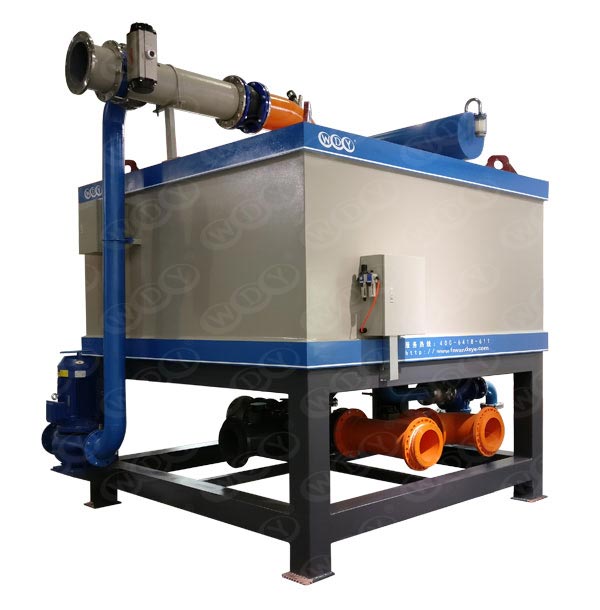
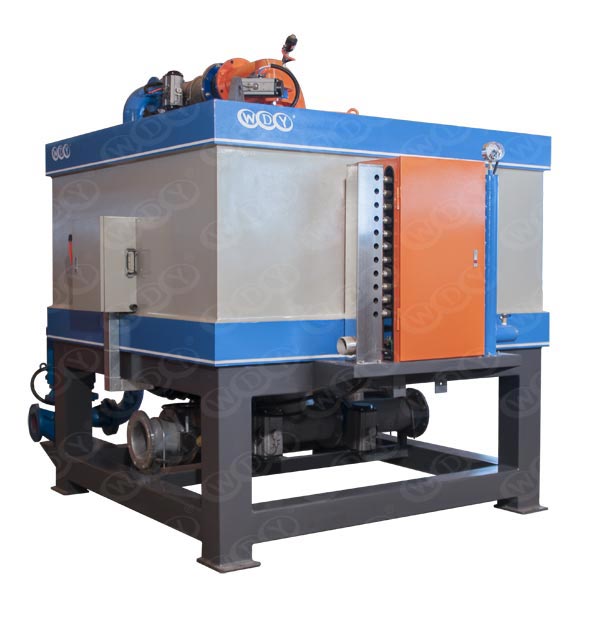
For industries such as ceramics, glass, electronics, and battery materials, high‑gradient electromagnetic slurry separators are now a central technology for achieving ultra‑low iron content. [dingsmagnets]
A modern electromagnetic slurry separator typically offers:
– High and uniform magnetic field with steep gradient, enabling efficient removal of fine magnetic and weakly magnetic impurities from viscous slurry. [dingsmagnets]
– Advanced cooling systems, such as water–oil dual cooling, to maintain stable temperature and extend coil life. [dingsmagnets]
– Intelligent control and automation, enabling full‑automatic operation without manual guarding, with repeatable separation cycles. [buntingmagnetics]
– Efficient cleaning mechanisms, for example, vibration combined with high‑pressure water flushing to completely remove trapped iron and prevent residual accumulation. [dingsmagnets]
When properly selected and commissioned, such systems can simultaneously improve product quality, reduce labor, and enhance line throughput, especially in high‑value sectors like lithium battery materials and high‑grade kaolin. [buntingmagnetics]
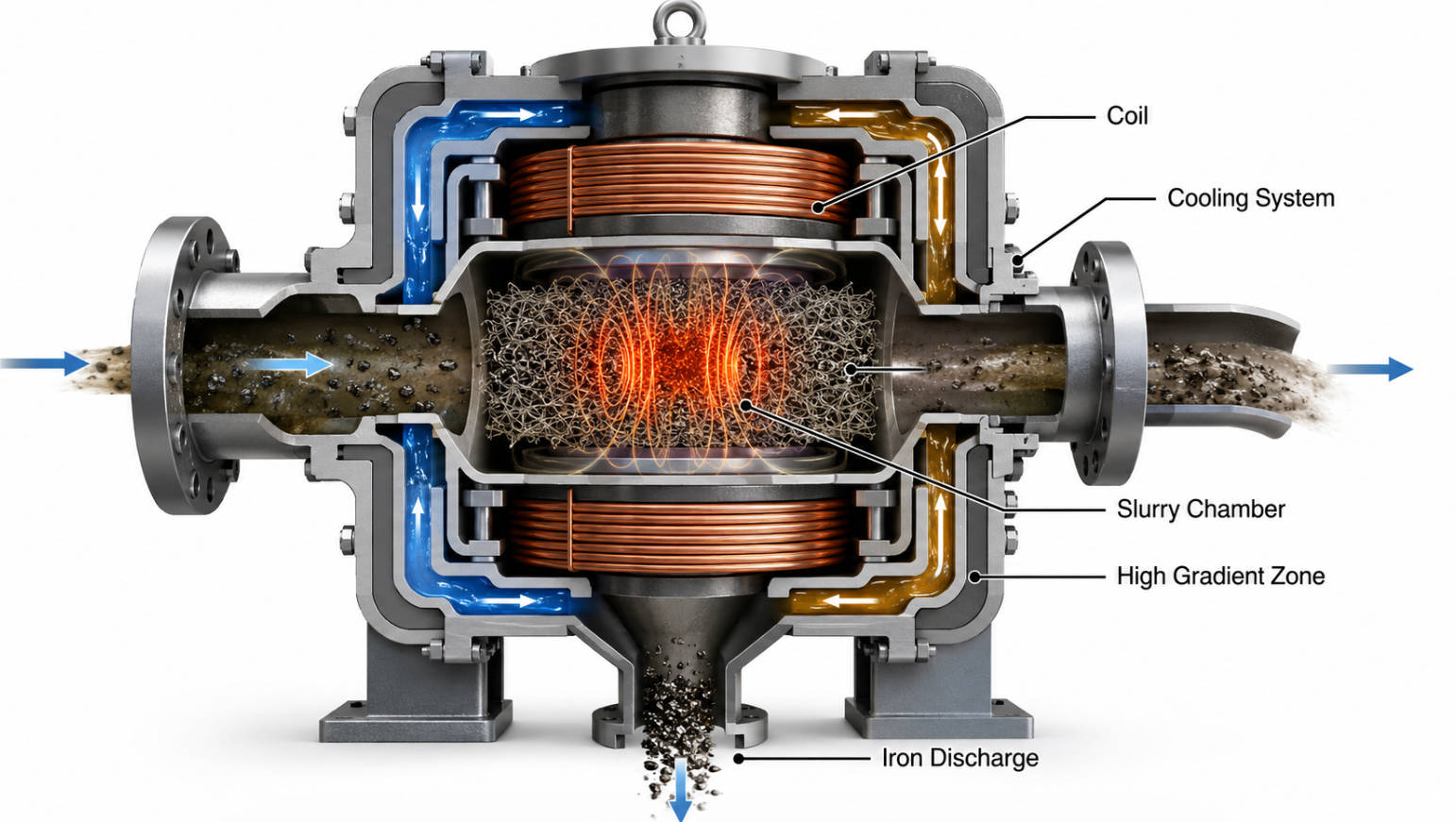
Practical Case Insights from Slurry Applications
Real‑world cases show how electromagnetic slurry machines perform in different industries. [buntingmagnetics]
– Ceramics and porcelain (e.g., kaolin for tile and slab)
Plants in regions such as Hunan and Fujian deploy electromagnetic slurry separators to remove iron from kaolin slurries used in large ceramic slabs, improving whiteness and reducing firing defects. [minejxsc]
– Battery materials (cathode and anode)
In battery material processing—such as in Xiamen—electromagnetic slurry separators help remove ferrous contaminants from high‑value powders and slurries, protecting downstream equipment and preventing performance‑killing metal particles in finished cells. [buntingmagnetics]
– High‑purity minerals (e.g., zircon, quartz)
Plants processing zircon and quartz use high‑gradient systems to achieve premium purity grades for glass, electronics, and solar applications, where even trace iron significantly affects optical and electrical performance. [eclipsemagnetics]
Across these cases, the common thread is fine particles in slurry form and very strict quality requirements—conditions under which high‑gradient electromagnetic systems consistently outperform simpler magnetic solutions. [minejxsc]
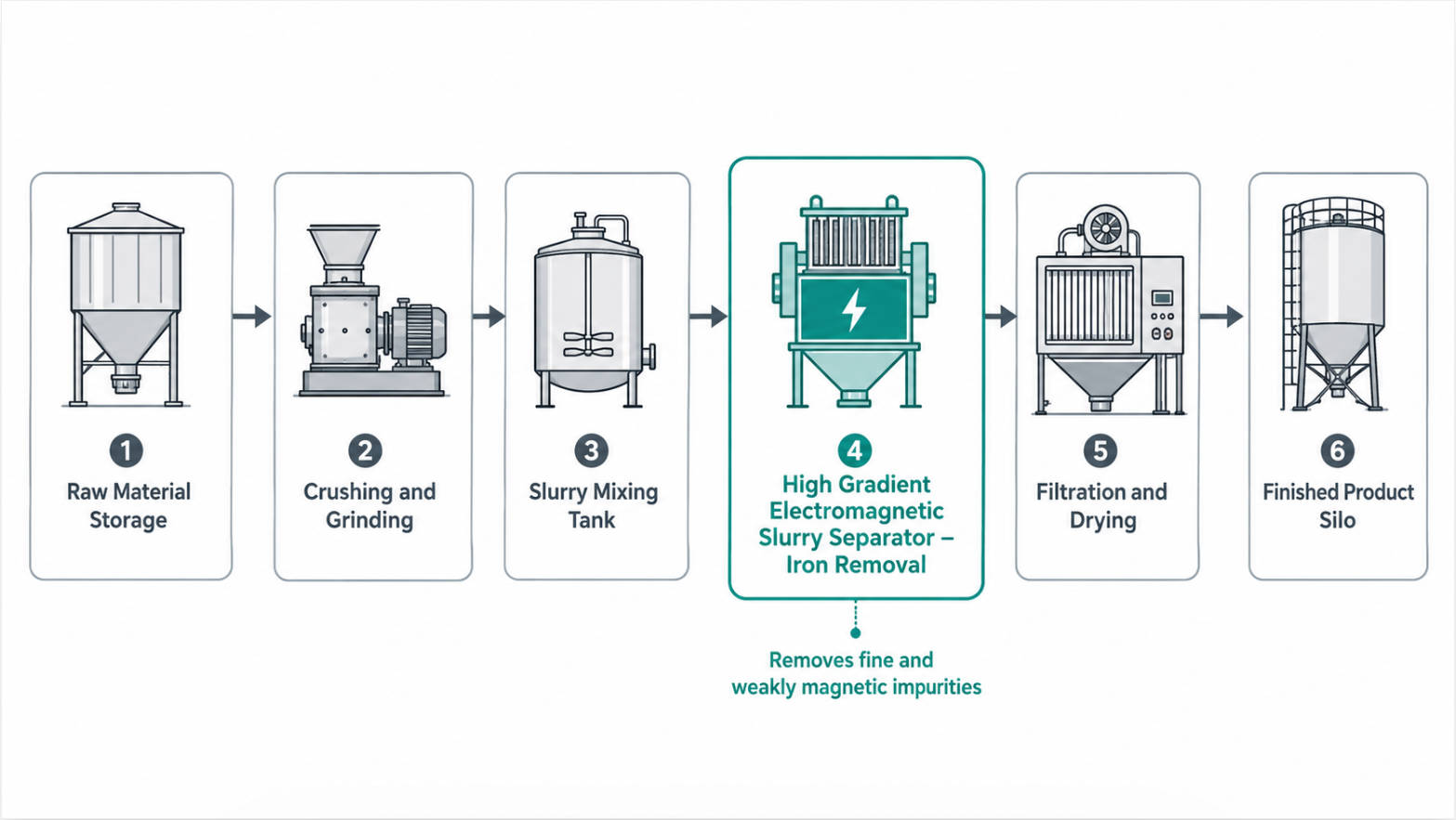
Key Design Features of Advanced Electromagnetic Slurry Separators
From an engineering design standpoint, several features are critical to achieving stable, high‑performance operation. [buntingmagnetics]
– Water–oil dual cooling
Dual cooling keeps coil temperatures more stable than single‑mode cooling, reducing thermal stress and extending service life. [dingsmagnets]
– Optimized magnetic circuit
Scientific magnetic circuit design raises both field strength and gradient in the working zone, directly improving separation efficiency on weakly magnetic particles. [minejxsc]
– No‑residual‑magnetism mesh and valves
Special materials and structures ensure minimal residual magnetism once excitation is off, making demagnetization and iron release faster and more complete. [dingsmagnets]
– Automatic, unattended operation
Integrated intelligent control allows fully automatic iron removal cycles, reducing reliance on operator skill and lowering labor costs. [buntingmagnetics]
These engineering choices are crucial to aligning field theory with production reality, especially in 24/7 operations where small design flaws quickly translate into downtime. [buntingmagnetics]
Environmental and Sustainability Considerations
From a sustainability perspective, permanent magnets and electromagnets each carry different trade‑offs.
Permanent magnets do not require a continuous power supply, giving them a clear advantage in operational energy consumption. However, the mining and processing of rare‑earth materials—especially for NdFeB—come with environmental and social impacts that must be considered over the full lifecycle. [elcanindustries]
Electromagnets consume more energy during operation, but when they are powered by clean electricity and designed for long service life, they can still form part of a sustainable production strategy, especially where they prevent waste, scrap, and rework in high‑value products. Hybrid systems that combine permanent magnets with electromagnets can also reduce energy use while maintaining controllability. [buntingmagnetics]
When to Use Permanent Magnets, Electromagnets, or a Hybrid
In practice, the best choice often involves combining both technologies across different stages of a process line. [eclipsemagnetics]
– Use permanent magnets for:
– First‑stage tramp iron removal before crushers or mills.
– Simple, robust protection of downstream equipment.
– Low‑cost applications with relatively coarse contaminants.
– Use high‑gradient electromagnets for:
– Fine slurry purification (ceramic glaze, battery slurries, high‑purity minerals).
– Lines where product purity directly affects product pricing or safety.
– Situations requiring frequent recipes or material changes.
– Consider hybrid solutions when:
– You want permanent magnets to provide baseline field, with electromagnets “boosting” or modulating the field only when needed. [elcanindustries]
– You aim to balance energy savings with process flexibility, especially in multi‑product plants.
Action‑Oriented Conclusion and CTA
For many plants, the main risk is under‑specifying magnetic separation and discovering later that product quality or throughput is limited by iron contamination that could have been removed earlier. Choosing and configuring the right combination of permanent and electromagnetic separators is therefore a strategic decision, not just an equipment purchase. [buntingmagnetics]
If you are evaluating high‑gradient electromagnetic slurry machines or permanent magnetic separators for ceramics, battery materials, mining, glass, or other high‑purity applications, it is essential to review your current feed characteristics, capacity targets, and purity specifications with an expert team.
Call to action:
If you need support selecting or upgrading magnetic separation equipment for slurry or powder lines, you can consult a specialized magnetic separator manufacturer to obtain application‑specific design, model selection, and on‑site commissioning guidance based on your actual materials and process conditions. [eclipsemagnetics]
FAQs
1. Can permanent magnets and electromagnets be used together in one system?
Yes. Permanent magnets can provide a baseline, energy‑free magnetic field, while electromagnets are used to fine‑tune or temporarily boost the field when higher separation performance is required. This hybrid approach is common in advanced motors and some high‑performance separation systems where both energy efficiency and controllability are critical. [minejxsc]
2. Are electromagnets always stronger than permanent magnets?
Electromagnets can generally reach higher peak field strengths because their magnetism is generated by current and can be increased by design changes, but this requires power and appropriate cooling. Permanent magnets have fixed strength determined by material and geometry; they are not necessarily weak, but they cannot be dynamically adjusted or easily pushed beyond their material limits. [elcanindustries]
3. What are the main maintenance points for electromagnetic slurry separators?
Key tasks include monitoring coil temperature, ensuring the cooling system (water–oil circuit) is functioning correctly, checking insulation and wiring, and keeping flushing and vibration systems clean and responsive. Regular checks prevent overheating, extend coil life, and ensure that iron removal and demagnetization remain efficient over time. [buntingmagnetics]
4. When should I choose a permanent magnetic separator instead of an electromagnetic one?
Choose permanent magnetic separators when your process is stable, iron contaminants are relatively coarse, and you want low operating cost with minimal control complexity. They are ideal for tramp iron removal, basic protection of crushers and conveyors, and simple purification stages where ultra‑low ppm iron levels are not mandatory. [eclipsemagnetics]
5. Why are high‑gradient electromagnetic separators preferred for ceramic glaze and battery slurries?
Ceramic glazes and battery materials often contain fine particles and weakly magnetic impurities that require high field gradients for effective separation. High‑gradient electromagnetic separators provide the necessary intensity, gradient, and controllability to achieve stringent purity targets while handling viscous slurries in a continuous, automated process. [minejxsc]
References
1. Great Magtech. “How To Choose Permanent Magnets and Electromagnets (Permanent Magnet vs Electromagnet).”
<https://www.greatmagtech.com/info/the-difference-between-permanent-magnet-and-el-102885098.html>
2. Foshan Wandaye Technology Co., Ltd. “Electromagnetic Slurry Separator Series (产品中心).”
<http://www.fswandaye.com/product/dcjl/> [dingsmagnets]
3. Eclipse Magnetics. “Guide to Magnetic Separation.”
<https://www.eclipsemagnetics.com/products/magnetic-separation-and-metal-detection/magnetic-separation/> [eclipsemagnetics]
4. Elcan Industries. “What Are the Differences Between Permanent Magnets and Electromagnetic Separators?”
<https://elcanindustries.com/blog_posts/what-are-the-differences-between-permanent-magnets-and-electromagnetic-separators/> [elcanindustries]
5. JXSC. “Magnetic Separation in Mineral Processing.”
<https://www.minejxsc.com/blog/magnetic-separation-in-mineral-processing/> [minejxsc]
6. Bunting. “Magnetic Separation in Mining and Mineral Processing (Updated for 2026).”
<https://buntingmagnetics.com/blog/magnetic-separation-in-mining-and-mineral-processing> [buntingmagnetics]
Hot Tags: Permanent Magnet, Electromagnet, Manufacturers, Customized, Custom, Suppliers, Buy, Cheap, Quality, Advanced, Durable, in Stock, Made in China, Price, Quotation