


Content Menu
● What Are High-Intensity Magnetic Separation Conveyors?
● Why They Are Crucial to the Auto Recycling Industry
● Key Applications in Auto Recycling Lines
>> ICW Wire Cleaning Before and After Chopping
>> ASR Zurik Stainless Recovery
>> WEEE and Appliance Recycling
● How High-Intensity Magnetic Separation Works
● Where Powder and Permanent Magnetic Separators Fit In
● Practical Implementation Steps for Auto Recyclers
● ROI, Sustainability, and Future Trends
● FAQs About High-Intensity Magnetic Separation Conveyors
>> Q2: Can high-intensity magnetic separation conveyors replace eddy current separators?
>> Q3: Where should I install a high-intensity separation conveyor in my auto recycling line?
>> Q4: How do powder magnetic separators support auto recycling operations?
>> Q5: What industries besides auto recycling benefit from high-intensity magnetic separation?
As an engineer who has walked through dozens of shredding plants and wire-chopping lines over the past decade, I’ve seen one pattern repeat itself: the most profitable auto recyclers all invest early in high‑intensity magnetic separation conveyors and precision powder / permanent magnetic separators. They do this not because magnets are “nice to have,” but because clean metal streams, longer equipment life, and higher recovery rates are now the baseline for staying competitive in a tightening scrap market. [buntingmagnetics]
What Are High-Intensity Magnetic Separation Conveyors?
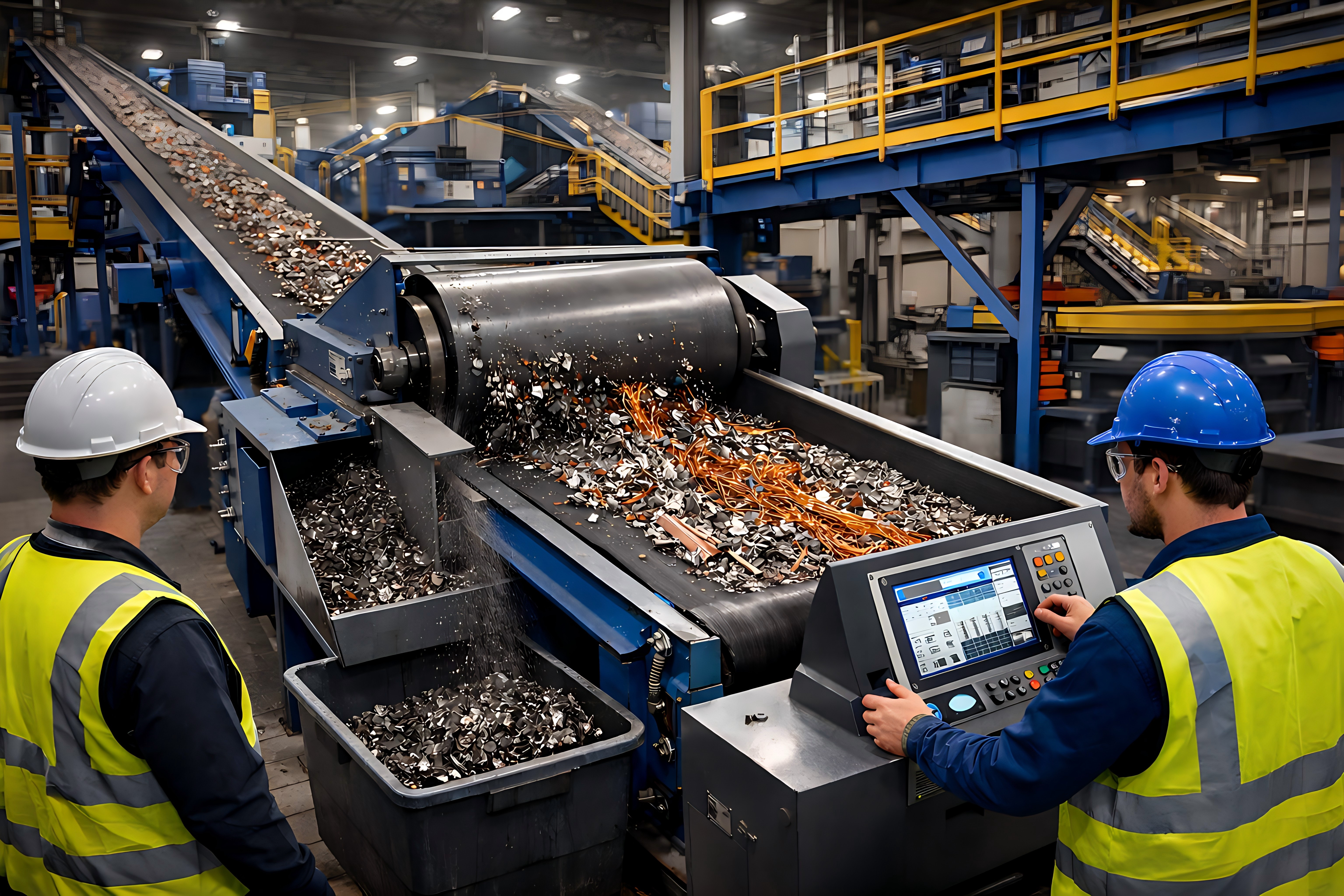
High‑intensity separation conveyors (often called HISC® in the industry) are engineered conveyors that integrate extremely high gauss magnetic fields at the head pulley to pull out fine ferrous and weakly magnetic metals, including work‑hardened stainless steel, from mixed streams. Unlike standard magnetic head pulleys, these systems use neodymium rare earth magnets and magnetic designs optimized with finite element analysis to maximize the depth and strength of the magnetic field. [adamsengineers]
In an auto recycling line, these conveyors are typically installed pre‑chopping to clean insulated copper wire (ICW) or post‑chopping to upgrade the purity of shredded metal fractions such as ASR Zurik. The result is higher metal recovery, less contamination, and better pricing from downstream buyers who increasingly penalize impurities. [buntingmagnetics]
Why They Are Crucial to the Auto Recycling Industry
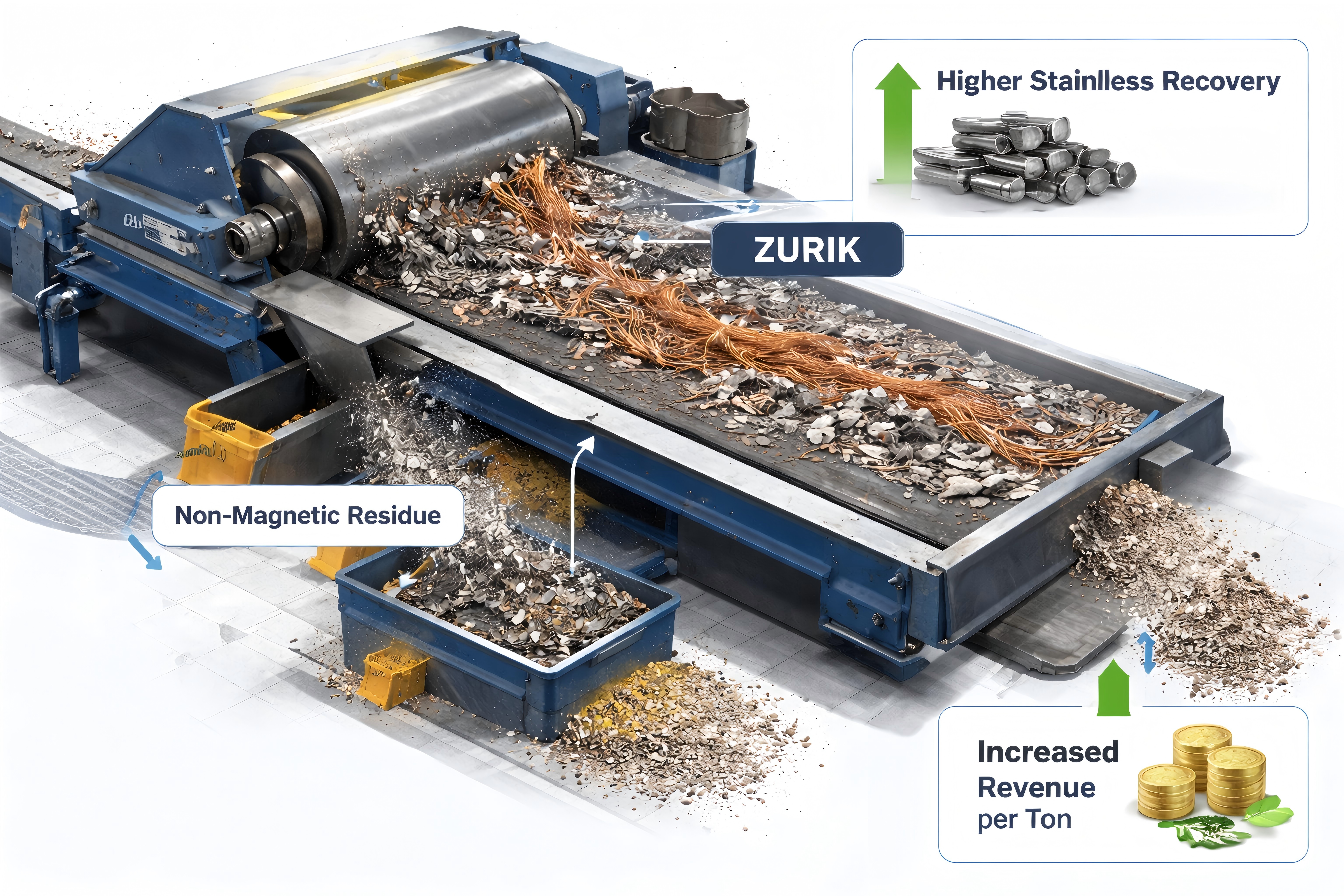
Auto recycling today is not just about volume; it is about value per ton. High‑intensity magnetic separation conveyors directly influence that value in three ways: [goudsmitmagnetics]
– Boosting metal recovery – Capturing the small and weakly magnetic pieces that standard magnets and eddy currents leave behind, especially work‑hardened 300‑series stainless and fine ferrous dust. [ejetmagnet]
– Improving purity – Producing cleaner copper, aluminum, and stainless steel fractions that command premium prices on global markets. [buntingmagnetics]
– Protecting downstream equipment – Removing grit and fines that chew up chopper knives and wear parts, reducing maintenance costs and unplanned downtime. [buntingmagnetics]
From a plant‑wide perspective, these conveyors upgrade the economics of auto shredder residue (ASR) processing, ICW chopping, appliance recycling and waste electronic and electrical equipment (WEEE) recycling. As OEMs push for more recycled content and policymakers tighten waste regulations, such high‑intensity separation stages are quickly becoming standard rather than optional. [magneticsmag]
Key Applications in Auto Recycling Lines
ICW Wire Cleaning Before and After Chopping
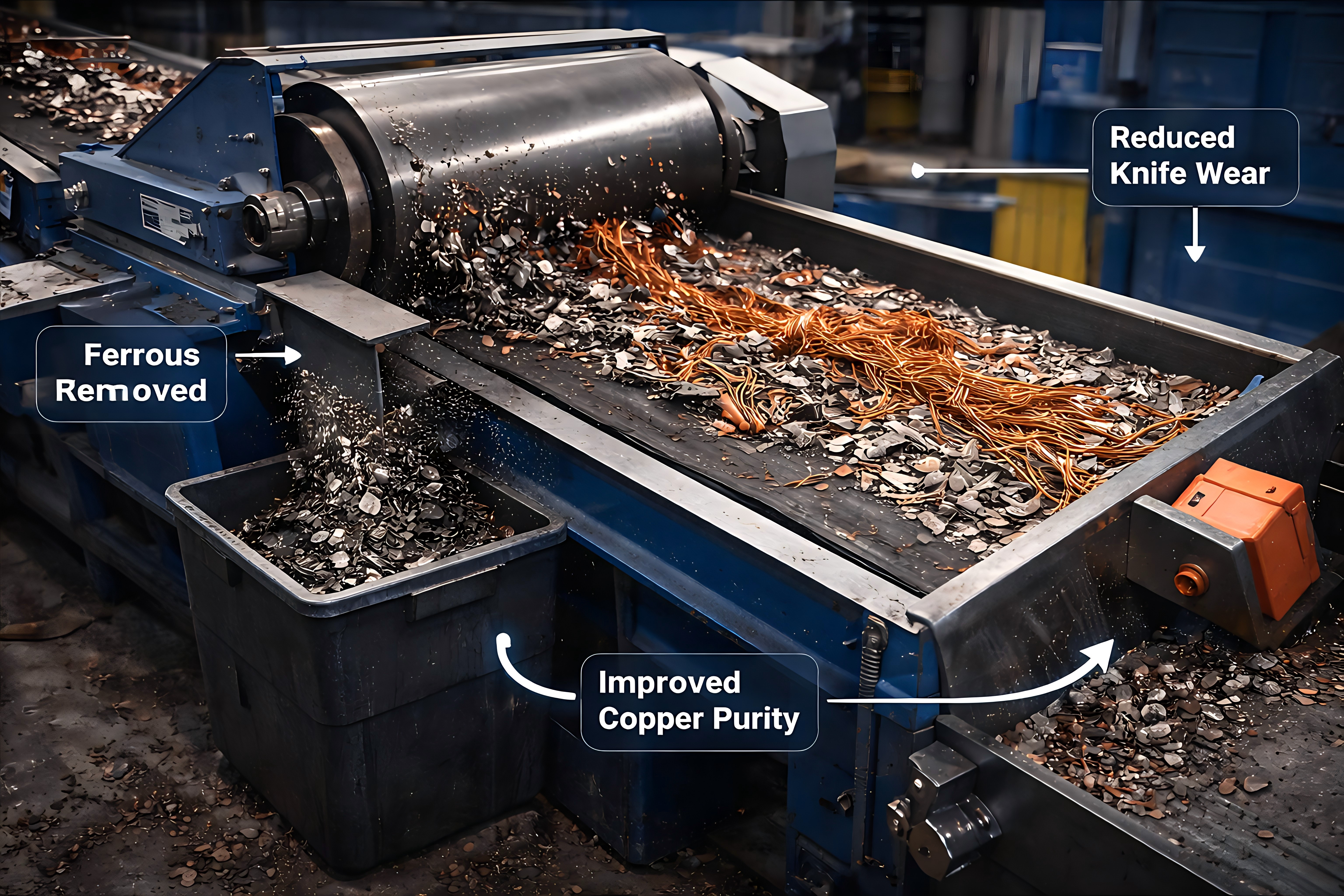
In ICW processing, ferrous dirt and stainless particles mixed with wire drastically shorten chopper knife life and reduce throughput. By installing a high‑intensity magnetic separation conveyor: [buntingmagnetics]
– Pre‑chopping: You strip out ferrous fines and lightly magnetic particles, feeding the chopper with cleaner wire. [adamsengineers]
– Post‑chopping: You upgrade chopped copper (and other metals) by removing residual stainless and fine ferrous contaminants. [buntingmagnetics]
This two‑step approach is how many top‑performing plants achieve higher copper purity with fewer knife changes per month. [buntingmagnetics]
ASR Zurik Stainless Recovery
Auto shredder residue still contains high‑value small fraction stainless steel that is notoriously hard to recover. High‑intensity separation conveyors generate magnetic fields strong enough to attract work‑hardened stainless, creating a cleaner Zurik product and diverting valuable stainless from the landfill. This directly increases revenue per ton of processed ASR. [buntingmagnetics]
WEEE and Appliance Recycling
In WEEE and appliance recycling, streams are highly heterogeneous and include small metal pieces mixed with plastics, insulation, and glass. High‑intensity conveyors: [magneticsmag]
– Pull out lightly magnetic tramp metal fines that escape standard magnets. [magneticsmag]
– Recover work‑hardened stainless from electronics, medical devices, and appliances, improving the overall recovery rate. [goudsmitmagnetics]
These improvements help recyclers meet stricter environmental targets and customer specifications for recycled raw materials. [goudsmitmagnetics]
How High-Intensity Magnetic Separation Works
From a design standpoint, the head pulley of a high‑intensity conveyor is the core of its performance. OEMs use finite element analysis to shape and position neodymium rare earth magnets such that the magnetic field is concentrated where the material leaves the belt, creating a strong, focused field gradient. [buntingmagnetics]
This allows the system to:
– Attract very small ferrous particles and even weakly magnetic or paramagnetic materials.
– Hold them against the belt long enough for separation before discharge.
– Minimize magnetic leakage into surrounding components.
Compared with traditional permanent magnetic separators, newer high‑intensity electromagnetic designs can achieve higher background magnetic fields and multiple capture points in the matrix, especially for powders and slurries. These developments are now crossing over from ceramic and mineral processing into recycling and battery material purification. [buntingmagnetics]
Where Powder and Permanent Magnetic Separators Fit In
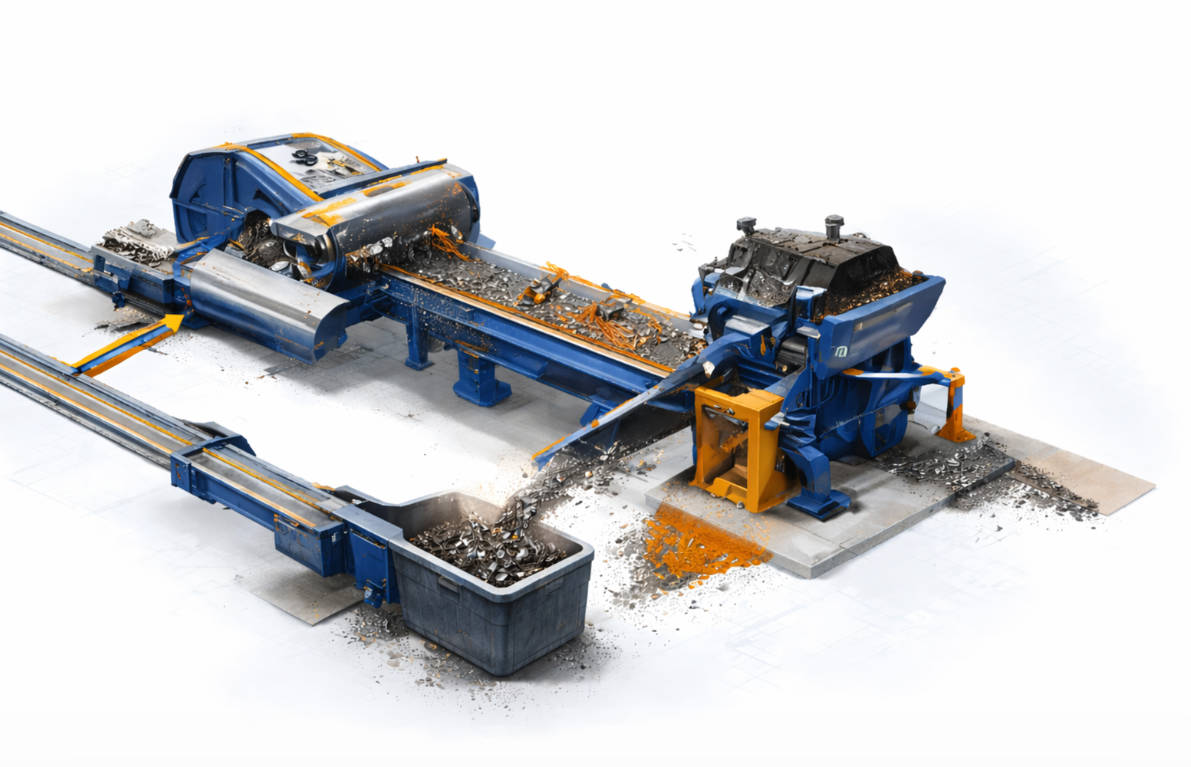
Auto recycling plants that process powders, fine dust, or battery materials increasingly combine high‑intensity conveyors with powder magnetic separators and permanent magnetic separators. [buntingmagnetics]
Foshan Wandaye, for example, provides:
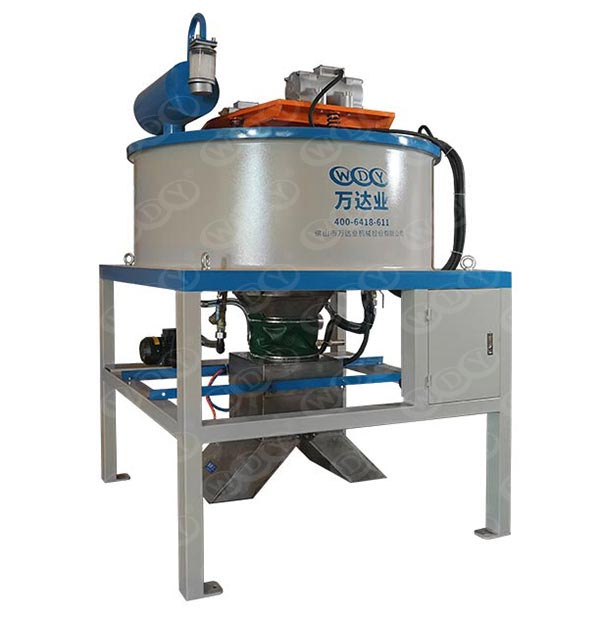
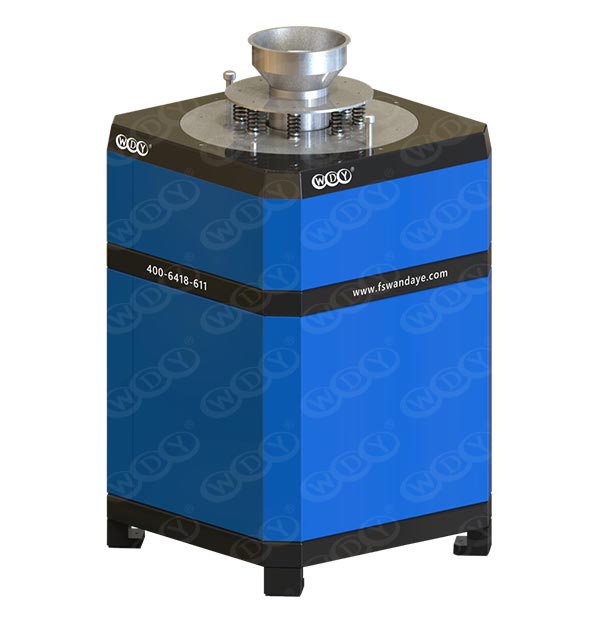
– Dry powder magnetic separators – For removing iron and magnetic contaminants from dry powders in ceramics, mineral processing, and battery cathode/anode materials. [en.fswandaye]
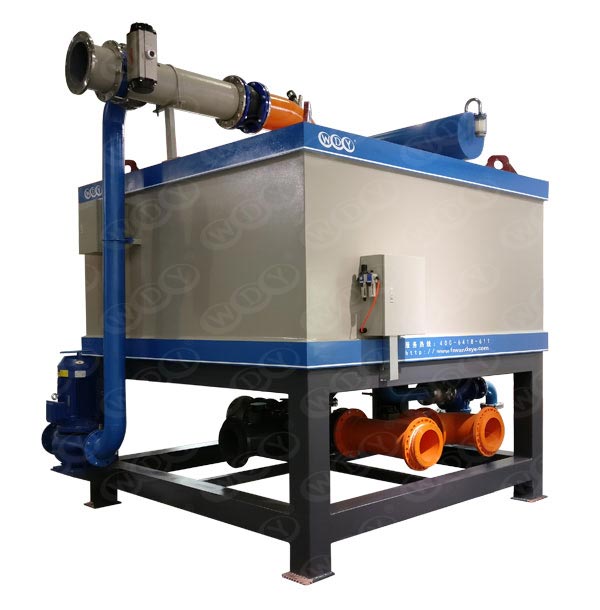
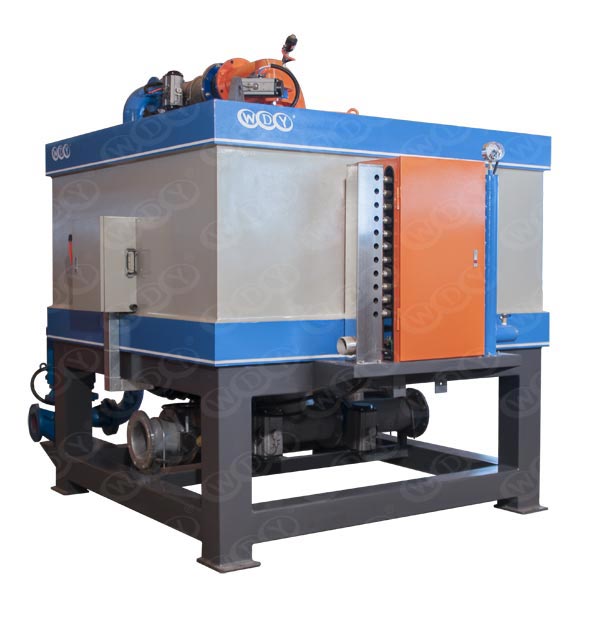
– Slurry / wet high‑intensity magnetic separators – For fine paramagnetic particles in slurries used in ceramics, mining, and environmental applications. [magneticseparatormachine.sell.everychina]
– Permanent magnetic separators – Robust solutions for continuous tramp iron removal on conveyors, chutes, and hoppers in industries from mining to food. [tinsleycompany]
In an auto recycling context, these technologies help clean fines, dust, and auxiliary streams, enabling recyclers to monetize powder‑rich fractions that used to be treated as waste.
Practical Implementation Steps for Auto Recyclers
From my work with plant teams, the recyclers who succeed with high‑intensity magnetic separation typically follow a structured approach:
1. Map your material flows
Identify where metals are lost, where contamination is highest, and which fractions have the greatest revenue potential (e.g., ICW, ASR fines, WEEE streams). [buntingmagnetics]
2. Define separation goals
Decide whether your priority is maximum recovery, highest purity, equipment protection, or a balanced combination; this guides equipment selection and line layout. [tinsleycompany]
3. Select appropriate magnetic stages
Combine high‑intensity separation conveyors with permanent magnets, eddy current separators, and, where relevant, powder or slurry separators for fines. [en.fswandaye]
4. Optimize positioning and belt speed
Work with your OEM to set belt speed, splitter positions, and burden depth so the magnetic field can act effectively on individual particles. [ejetmagnet]
5. Monitor performance and adjust
Track purity, recovery, and maintenance data before and after installation, and fine‑tune equipment settings to maximize ROI. [tinsleycompany]
ROI, Sustainability, and Future Trends
High‑intensity magnetic separation is not just a technical upgrade; it is a business and sustainability decision. Plants that adopt these technologies see:
– Higher margins per ton thanks to better metal recovery and cleaner products. [goudsmitmagnetics]
– Lower operating costs due to reduced wear on choppers and downstream machinery. [buntingmagnetics]
– Improved environmental performance, with more metals recovered and less material sent to landfill. [goudsmitmagnetics]
Looking ahead, we are seeing rapid development of ultra‑high‑intensity electromagnetic filters capable of capturing extremely fine magnetic and paramagnetic particles in powders and slurries. This trend is particularly relevant for battery recycling and advanced materials, where Foshan Wandaye and other manufacturers are already deploying specialized magnetic separation systems at scale. [en.fswandaye]
Call to Action
If you are planning to upgrade your auto recycling, ICW chopping, or ASR processing line, now is the time to evaluate high‑intensity magnetic separation conveyors together with powder and permanent magnetic separators tailored to your specific material streams. Share your current line layout and purity targets with our engineering team, and we will provide a data‑driven proposal to help you increase recovery, improve purity, and protect your critical equipment end‑to‑end.
Contact us to get more information!
FAQs About High-Intensity Magnetic Separation Conveyors
Q1: What is the difference between a high-intensity separation conveyor and a standard magnetic conveyor?
A high‑intensity separation conveyor uses rare earth magnets and optimized magnetic circuit design to generate much stronger fields, enabling the capture of small, weakly magnetic, and work‑hardened stainless particles that standard magnetic head pulleys cannot reliably remove. [adamsengineers]
Q2: Can high-intensity magnetic separation conveyors replace eddy current separators?
No, they are complementary technologies; high‑intensity magnetic separation targets ferrous and weakly magnetic materials, while eddy current separators focus on conductive nonferrous metals like aluminum and copper. Most advanced auto recycling plants use both. [buntingmagnetics]
Q3: Where should I install a high-intensity separation conveyor in my auto recycling line?
The most common locations are pre‑chopping ICW cleaning to protect knives and post‑chopping or post‑shredding to upgrade metal purity, as well as on ASR Zurik and specific WEEE streams. [adamsengineers]
Q4: How do powder magnetic separators support auto recycling operations?
Powder magnetic separators remove fine iron and magnetic contaminants from powder‑rich fractions, slurries, and auxiliary materials, enabling recyclers to monetize previously low‑value fines and meet higher cleanliness standards in downstream processes. [buntingmagnetics]
Q5: What industries besides auto recycling benefit from high-intensity magnetic separation?
High‑intensity magnetic separation is widely used in ceramics, mining, glass, environmental treatment, plastics, food, pharmaceuticals, and battery material production, where it improves product purity and equipment protection. [buntingmagnetics]
References
1. Bunting. “High Intensity Magnetic Separation Conveyors are Crucial to Auto Recycling Industry.” [https://buntingmagnetics.com/blog/high-intensity-magnetic-separation-conveyors-are-crucial-to-the-auto-recycling-industry] [buntingmagnetics]
2. Adams Engineers. “HISC® High Intensity Separation Conveyor®.” [https://www.adamsengineers.com/products/product/recycling-conveyors/hisc-high-intensity-separation-conveyor] [adamsengineers]
3. EJET Magnet. “High Intensity Separation Conveyor.” [https://ejetmagnet.com/products/high-intensity-separation-conveyor] [ejetmagnet]
4. Bunting. “Increase Auto Recycling Profits with Bunting Equipment.” [https://buntingmagnetics.com/blog/increase-auto-recycling-profits-with-bunting-equipment] [buntingmagnetics]
5. Magnetics Magazine. “New High-Intensity Separation Conveyor Line.” [https://magneticsmag.com/new-high-intensity-separation-conveyor-line] [magneticsmag]
6. Bunting. “High Intensity Magnetic Separator Optimises Copper Recycling.” [https://buntingmagnetics.com/blog/high-intensity-magnetic-separator-optimises-copper-recycling] [buntingmagnetics]
7. Foshan Wandaye. “Magnetic Separator | Magnetic Separation Equipment.” [http://en.fswandaye.com] [en.fswandaye]
8. Foshan Wandaye. “WDY Magnetic Separation Equipment – Product List.” [http://en.fswandaye.com/Products] [en.fswandaye]
9. Bunting. “Bunting Develops High-Intensity Electromagnetic Dry Filter.” [https://buntingmagnetics.com/blog/bunting-develops-high-intensity-electromagnetic-dry-filter] [buntingmagnetics]
10. Bunting. “Bunting Develops High-Intensity Electromagnetic Wet Filter.” [https://buntingmagnetics.com/blog/bunting-develops-high-intensity-electromagnetic-wet-filter] [buntingmagnetics]
11. EJET / EveryChina. “Wet High Intensity Magnetic Separation Equipment for Kaolin (Brand: WANDAYE).” [https://magneticseparatormachine.sell.everychina.com/p-110633075-wet-high-intensity-magnetic-separation-equipment-for-kaolin.html] [magneticseparatormachine.sell.everychina]
12. Goudsmit. “Magnetic Separators for the Recycling Industry.” [https://www.goudsmitmagnetics.com/en-us/magnets-for-the-recycling-industry] [goudsmitmagnetics]
13. Tinsley Equipment Company. “Magnetic Separators.” [https://www.tinsleycompany.com/equipment-systems/magnetic-separators] [tinsleycompany]
14. Bunting Redditch. “High Intensity Separation Conveyor – YouTube Video.” [https://www.youtube.com/watch?v=9BiwwNltgcQ] [youtube]
Hot Tags: High-Intensity Magnetic Separation Conveyors, Manufacturers, Customized, Custom, Suppliers, Buy, Cheap, Quality, Advanced, Durable, in Stock, Made in China, Price, Quotation