


Content Menu
● What Is Magnetic Separation In Mineral Processing?
● Core Magnetic Properties That Control Separation
● Step‑By‑Step: How Magnetic Separation Fits The Flowsheet
● Types Of Magnetic Separators And Where They Work Best
>> Low‑Intensity Magnetic Separators (LIMS)
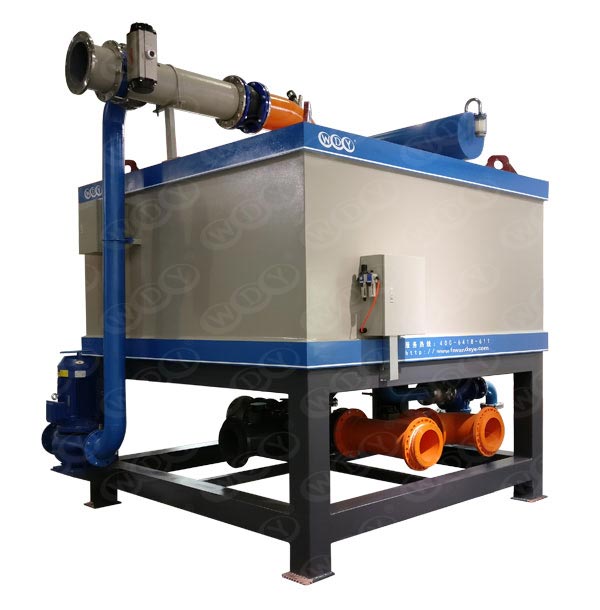
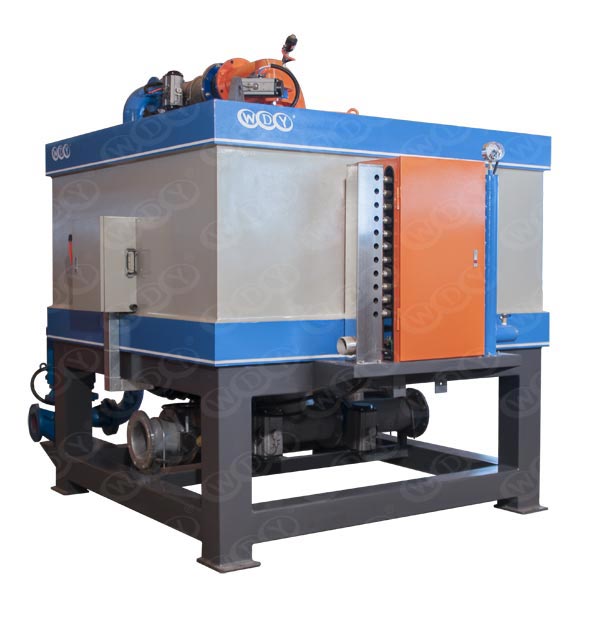
>> High‑Intensity Magnetic Separators (HIMS)
>> High‑Gradient Magnetic Separators (HGMS)
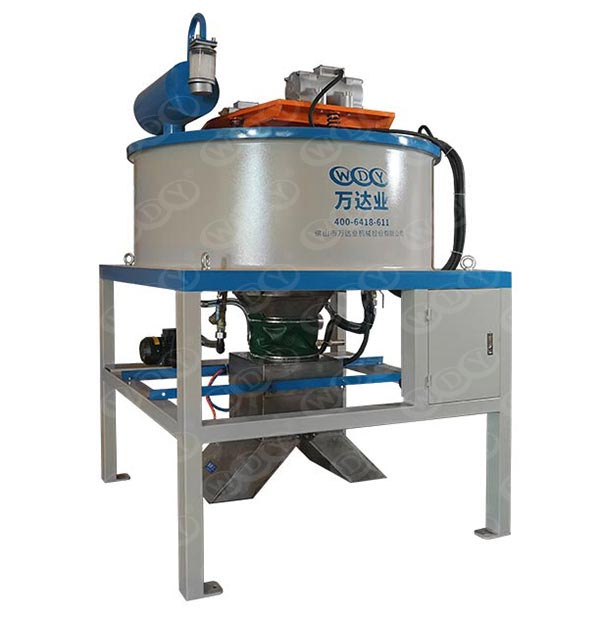
>> Permanent Magnetic Separators
● Key Factors That Control Magnetic Separation Efficiency
● Where Powder And Permanent Magnetic Separators Add The Most Value
● Latest Industry Trends You Should Be Watching
● Practical Optimization Framework From The Field
● Comparison Table: Magnetic Separator Types
● Call To Action: Design A Magnetic Circuit That Fits Your Ore
>> FAQ
>> 1. How does magnetic separation improve overall plant profitability?
>> 2. When should a plant use powder magnetic separators instead of wet separators?
>> 3. What are signs that a magnetic separation circuit is underperforming?
>> 4. Can magnetic separation replace flotation or gravity separation?
>> 5. How should a plant choose between conventional and intelligent IoT‑enabled separators?
>> References
Magnetic separation has quietly become one of the most decisive technologies in modern mineral and industrial materials processing, and in my role working with powder and permanent magnetic separator projects, I’ve seen how the right circuit can turn marginal ores and challenging powders into clean, high‑value products. In this in‑depth guide, I’ll walk through how magnetic separation really works in mineral processing, where powder and permanent magnetic separators fit, and what today’s best operations are doing differently to boost recovery, purity, and sustainability. [finance.yahoo]
What Is Magnetic Separation In Mineral Processing?
In mineral processing, magnetic separation uses differences in magnetic properties to split magnetic or weakly magnetic minerals from non‑magnetic gangue. When an ore stream passes through a magnetic field, magnetic particles are attracted and retained while non‑magnetic particles continue along their path, forming separate product and tailings streams.
From a processing engineer’s perspective, magnetic separation acts as both a recovery tool (for iron‑bearing minerals) and a purification tool (for removing iron contamination from non‑metallic industrial minerals and battery materials). Typical applications include: [buntingmagnetics]
– Upgrading iron ores containing magnetite and hematite. [buntingmagnetics]
– Removing tramp iron before crushing and grinding to protect equipment. [finance.yahoo]
– Purifying quartz, feldspar, kaolin, ceramics, glass, and battery materials by removing iron contaminants. [finance.yahoo]
When designed well, magnetic separation becomes a plant’s silent insurance policy, continuously protecting equipment, stabilizing product quality, and improving yields shift after shift. [finance.yahoo]
Core Magnetic Properties That Control Separation
Every mineral responds differently to a magnetic field, and understanding this is the foundation of effective circuit design. Practically, minerals fall into three broad categories in mineral processing:
– Ferromagnetic: Strongly magnetic (for example, magnetite, pyrrhotite); easily recovered with low‑intensity separators.
– Paramagnetic: Weakly magnetic (for example, hematite, ilmenite, garnet); require higher‑intensity or high‑gradient separators. [sciencedirect]
– Diamagnetic: Essentially non‑magnetic or weakly repelled (for example, quartz, feldspar); usually report to tails unless contaminated by iron.
From field experience, I treat magnetic susceptibility as the practical metric that tells me how “hard” a mineral will be to separate. High‑susceptibility minerals are straightforward, while ultra‑fine, weakly magnetic impurities in powders demand specialized high‑gradient or powder separators and careful process control. [sciencedirect]
Step‑By‑Step: How Magnetic Separation Fits The Flowsheet
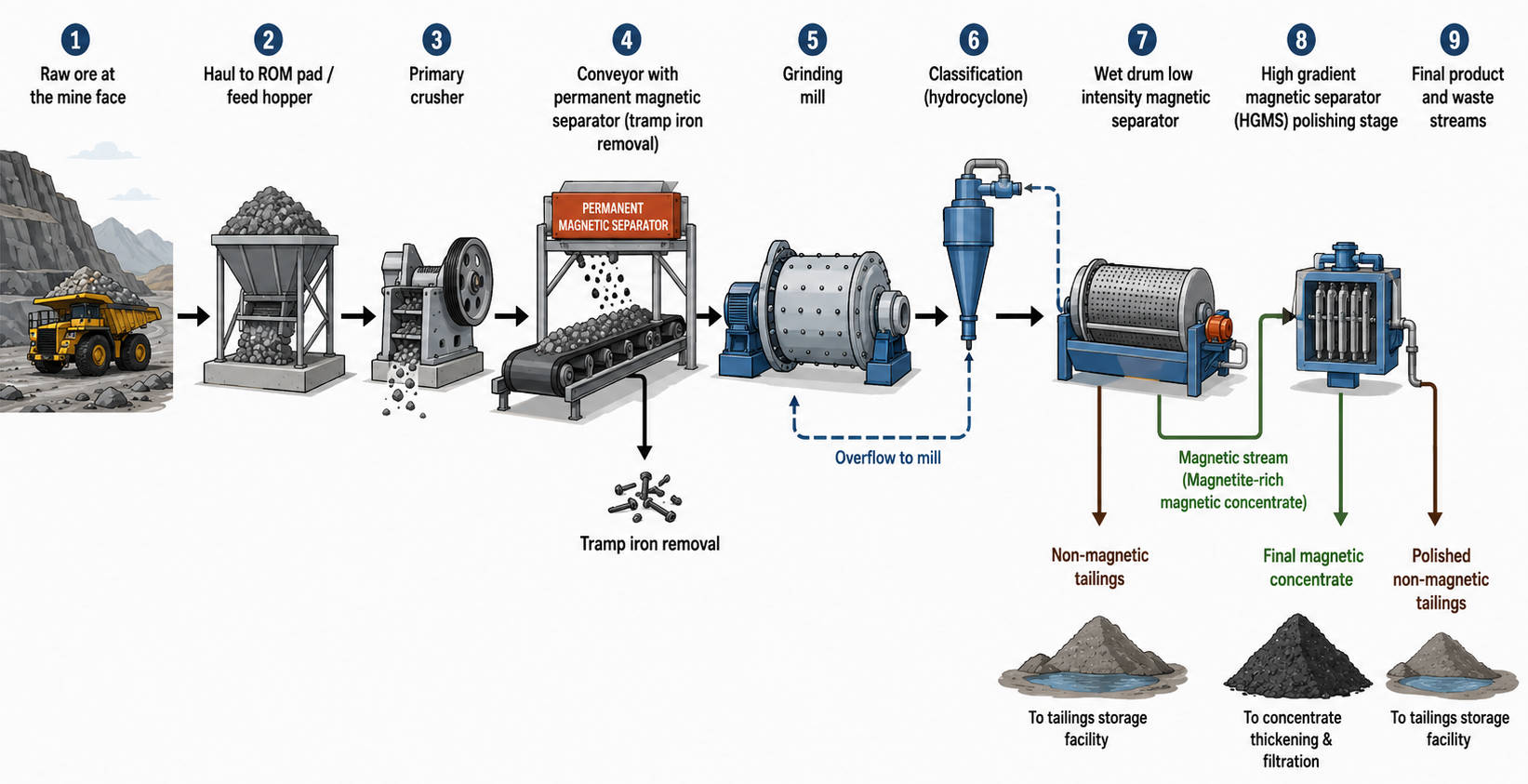
In real plants, magnetic separation is never an isolated operation; it sits inside a broader flowsheet that starts at the mine face and ends at saleable product. A typical layout in mining and mineral processing looks like this: [buntingmagnetics]
1. ROM (Run‑of‑Mine) feed
– Raw ore arrives with rock, clay, and metallic debris such as drill steel, loader teeth, and broken liners. [finance.yahoo]
2. Primary crushing and screening
– Overhead permanent magnets or electromagnetic separators intercept tramp steel before or after the primary crusher, preventing catastrophic damage. [finance.yahoo]
3. Secondary / tertiary crushing and grinding
– Additional permanent or electromagnetic separators may be installed on key conveyors or mill feeds to catch remaining tramp metal and worn media. [finance.yahoo]
4. Classification (cyclones or screens)
– Ore is split into size ranges and slurry densities suitable for downstream wet or dry magnetic separation. [buntingmagnetics]
5. Magnetic separation circuit
– Wet drum or low‑intensity magnetic separators (LIMS) recover strongly magnetic minerals such as magnetite and ferrosilicon. [finance.yahoo]
– High‑intensity and high‑gradient magnetic separators (HIMS/HGMS) or powder separators remove weakly magnetic impurities and upgrade high‑value industrial minerals or battery powders. [greatmagtech]
6. Concentrate and tailings handling
– Magnetic concentrates are dewatered and sent to pelletizing, sintering, or direct sale. [buntingmagnetics]
– Non‑magnetic tailings may be discarded or processed via gravity or flotation to recover additional value. [buntingmagnetics]
In my project work, plants that map this flowsheet carefully and position magnetic separation at key “risk points” routinely report lower downtime, higher recovery, and more stable product specifications. [buntingmagnetics]
Types Of Magnetic Separators And Where They Work Best
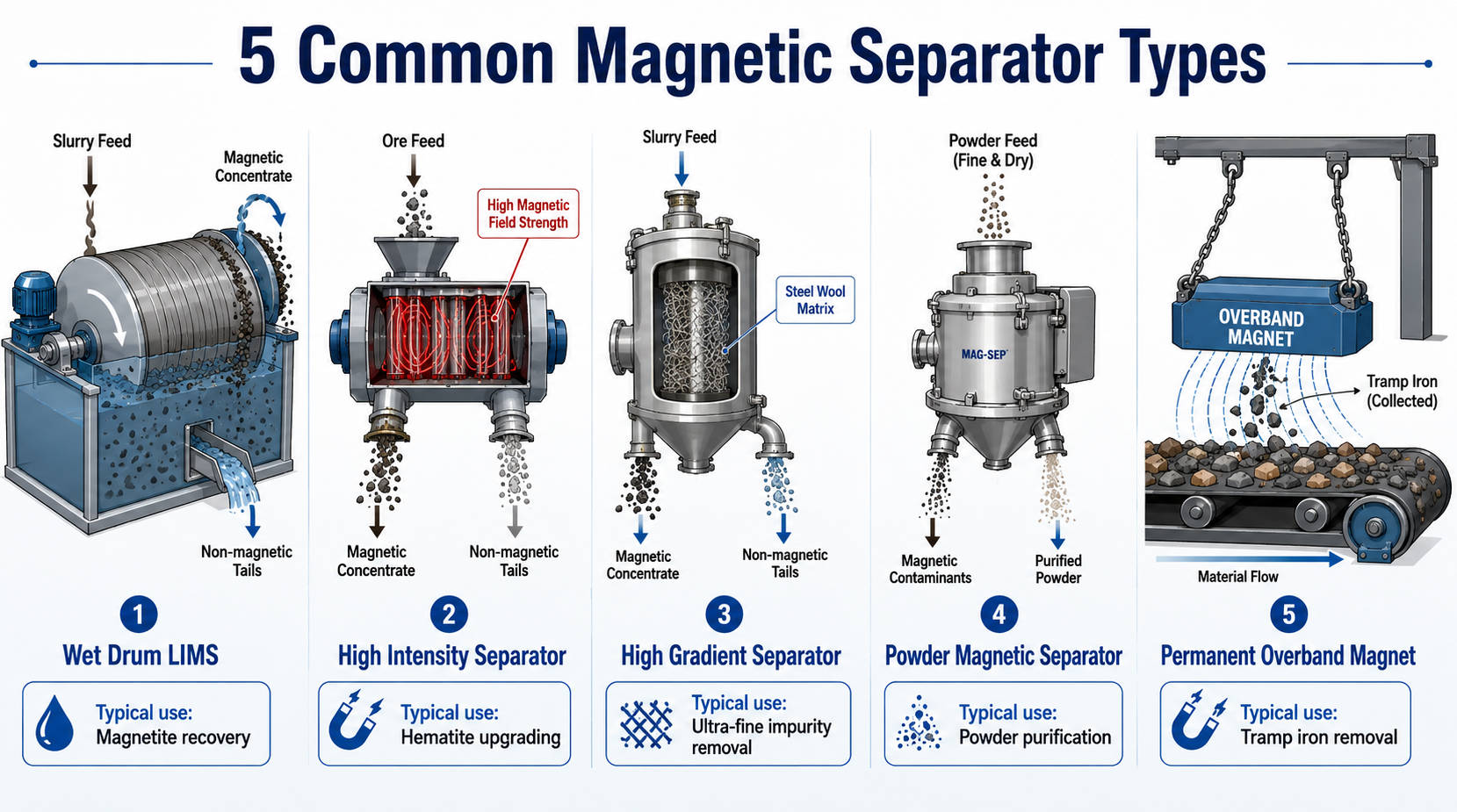
From an engineering and operator standpoint, choosing the right separator type is more important than focusing on brands. Below is a practical overview of the main options and how they are typically deployed. [buntingmagnetics]
Low‑Intensity Magnetic Separators (LIMS)
LIMS are designed for strongly magnetic minerals and are widely used in iron ore beneficiation. [buntingmagnetics]
Key points from plant practice:
– Work best with magnetite‑rich slurries in primary and secondary recovery stages. [buntingmagnetics]
– Operate at relatively low field strengths, making them energy‑efficient for bulk magnetite and ferrosilicon recovery. [greatmagtech]
– Commonly configured as wet drum separators handling dense slurry streams. [finance.yahoo]
High‑Intensity Magnetic Separators (HIMS)
HIMS generate a stronger magnetic field than LIMS and are aimed at weakly magnetic minerals. [sciencedirect]
In practice, they are used to:
– Separate hematite from non‑magnetic silica in finely ground ores. [greatmagtech]
– Recover weakly magnetic rare earth minerals and upgrade low‑grade resources. [sciencedirect]
– Target impurities in industrial mineral streams where minor iron contamination is critical. [finance.yahoo]
High‑Gradient Magnetic Separators (HGMS)
HGMS are a more advanced form of HIMS, using a magnetic matrix (for example, steel wool, expanded mesh) to create extremely high local field gradients. [greatmagtech]
Expert‑level advantages include:
– Efficient capture of ultra‑fine, weakly magnetic particles that would bypass conventional equipment. [greatmagtech]
– Essential in circuits for kaolin, feldspar, silica sand, and quartz where high whiteness and low iron are mandatory. [finance.yahoo]
– Ideal for tailings re‑processing and low‑grade ore upgrading where every marginal gain in recovery matters. [sciencedirect]
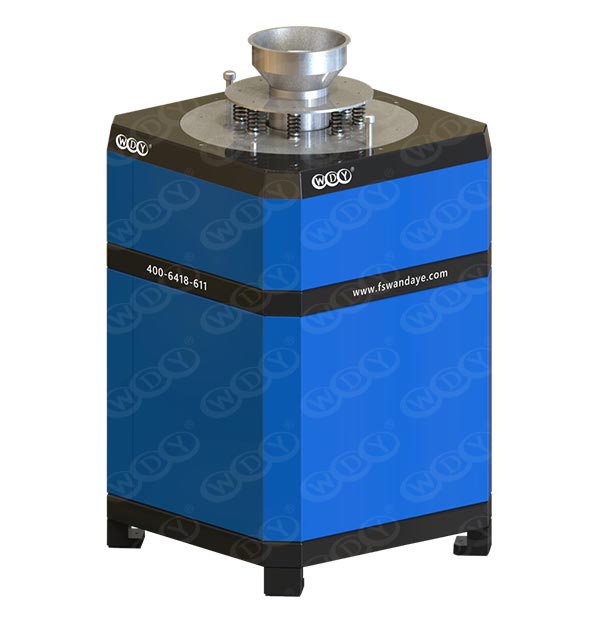
Powder Magnetic Separators
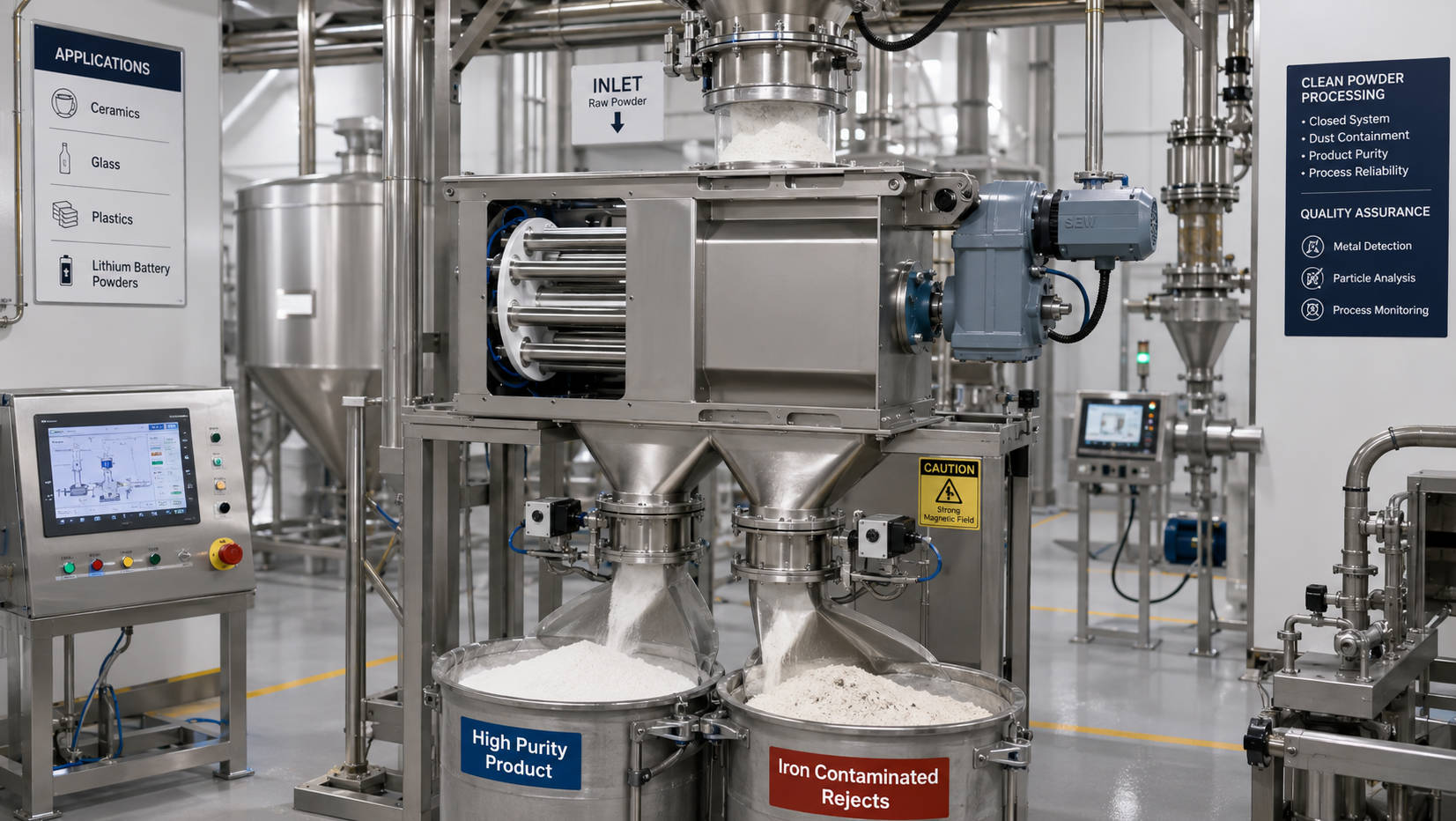
Powder magnetic separators are engineered specifically for dry, fine powders rather than slurry streams. Foshan Wandaye, for example, supplies electromagnetic dried‑powder separators and new‑type electromagnetic powder machines for high‑purity applications. [finance.yahoo]
From current industrial usage:
– Applied to quartz, feldspar, kaolin, ceramics, plastics, rubber, and battery material powders to achieve ultra‑low iron content. [buntingmagnetics]
– Use high‑intensity fields and optimized matrix structures to capture micron and sub‑micron iron particles. [greatmagtech]
– Often installed in closed, dust‑controlled systems to protect both product purity and worker safety. [finance.yahoo]
Permanent Magnetic Separators
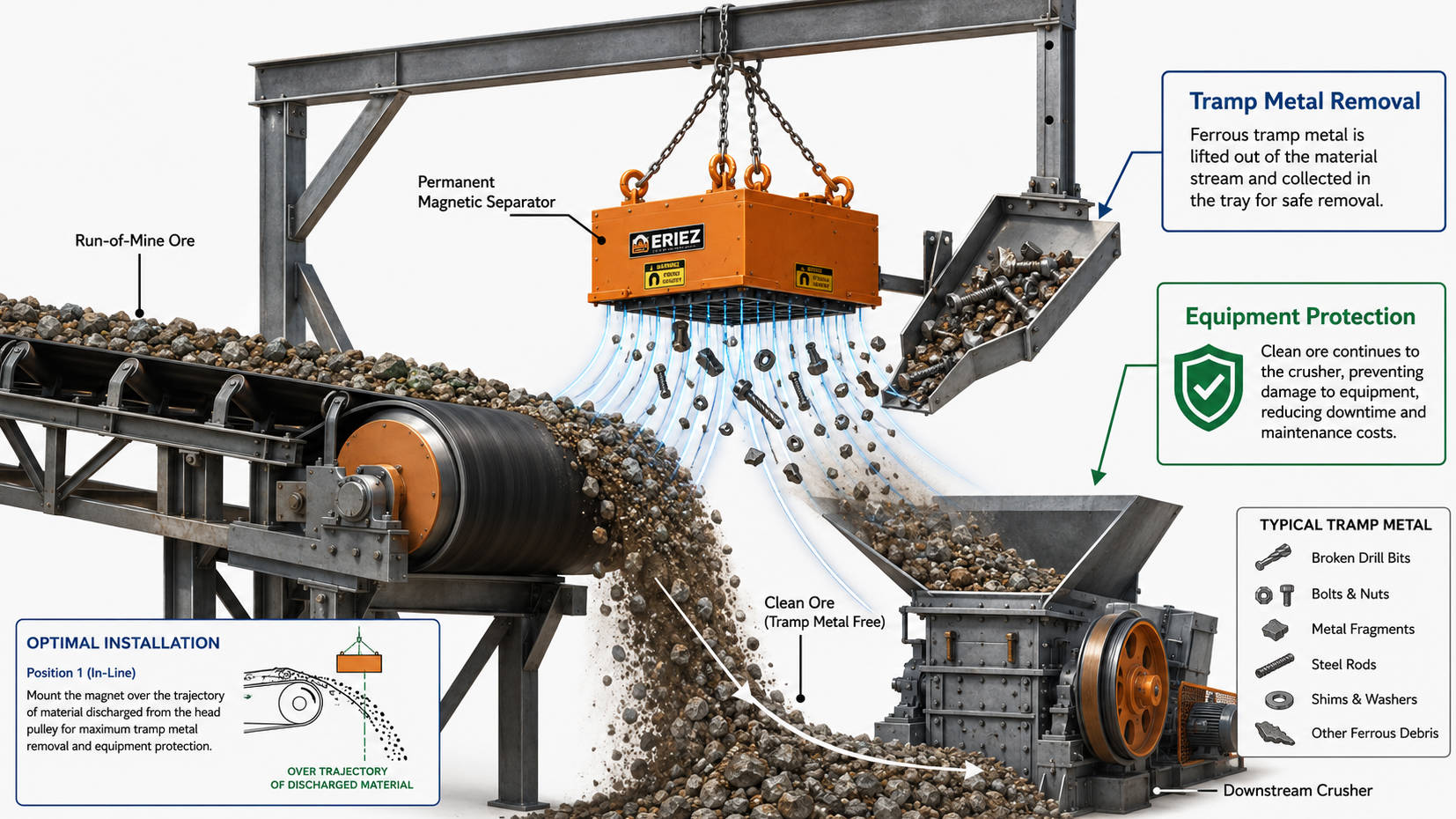
Permanent magnetic separators rely on high‑performance permanent magnets and do not require continuous electrical power. [buntingmagnetics]
In real plants, they are primarily used for:
– Tramp metal removal on conveyors and chutes upstream of crushers, mills, and sensitive equipment. [finance.yahoo]
– Simple, robust protection duties in mining, aggregates, cement, and bulk handling. [buntingmagnetics]
– Situations where reliability, low operating cost, and minimal maintenance are crucial. [buntingmagnetics]
Modern permanent magnetic separators, especially those using rare‑earth materials, maintain strength over long periods when correctly designed and maintained, with periodic audits recommended to verify performance. [buntingmagnetics]
Key Factors That Control Magnetic Separation Efficiency
Even the best separator will underperform if core operating variables are not controlled. In my commissioning work, five factors most often explain gaps between expected and actual performance: [finance.yahoo]
– Particle size: Very fine particles are subject to Brownian motion and may not interact effectively with the magnetic field, while overly coarse feed can reduce liberation. [sciencedirect]
– Magnetic susceptibility: Minerals with low susceptibility require higher intensity or high‑gradient equipment and slower, more controlled feed conditions. [sciencedirect]
– Magnetic field strength and gradient: Stronger fields capture weaker minerals but increase energy use; high‑gradient matrices concentrate the field where it matters most. [greatmagtech]
– Feed rate and loading: Overloading belts or matrices reduces residence time and leads to carry‑over, especially in powder and HGMS applications. [finance.yahoo]
– Degree of liberation: If valuable minerals remain locked within non‑magnetic gangue, separation will never reach design targets, regardless of magnet strength. [sciencedirect]
Well‑run plants monitor these variables continuously and adjust feed conditions, matrix cleaning cycles, and field settings to keep separation efficiency at or near design levels. [buntingmagnetics]
Where Powder And Permanent Magnetic Separators Add The Most Value
For modern processing lines that serve both mining and downstream industries such as ceramics, glass, environmental protection, plastics, rubber, and battery materials, powder and permanent magnetic separators are now core technology. [buntingmagnetics]
From an expert process perspective, their primary roles are:
– Precision purification of powders: High‑gradient powder separators remove trace iron and magnetic contaminants that would otherwise affect color, dielectric properties, firing behavior, or electrochemical performance. [buntingmagnetics]
– Equipment protection and uptime: Permanent tramp separators prevent severe damage to crushers, mills, classifiers, and packaging equipment, reducing unscheduled downtime. [finance.yahoo]
– Multi‑industry flexibility: One mining or materials platform can serve ceramics, glass, environmental media, and battery supply chains by tailoring powder magnetic separation stages to each product’s purity specification. [buntingmagnetics]
Companies like Foshan Wandaye Technology Co., Ltd. combine R&D, engineering design, production‑line installation, and commissioning services, supplying high‑gradient slurry machines, powder separators, permanent separators, and magnetic components such as plates and rods. That integrated approach is particularly valuable when a customer needs both process design support and turnkey implementation. [en.fswandaye]
Latest Industry Trends You Should Be Watching
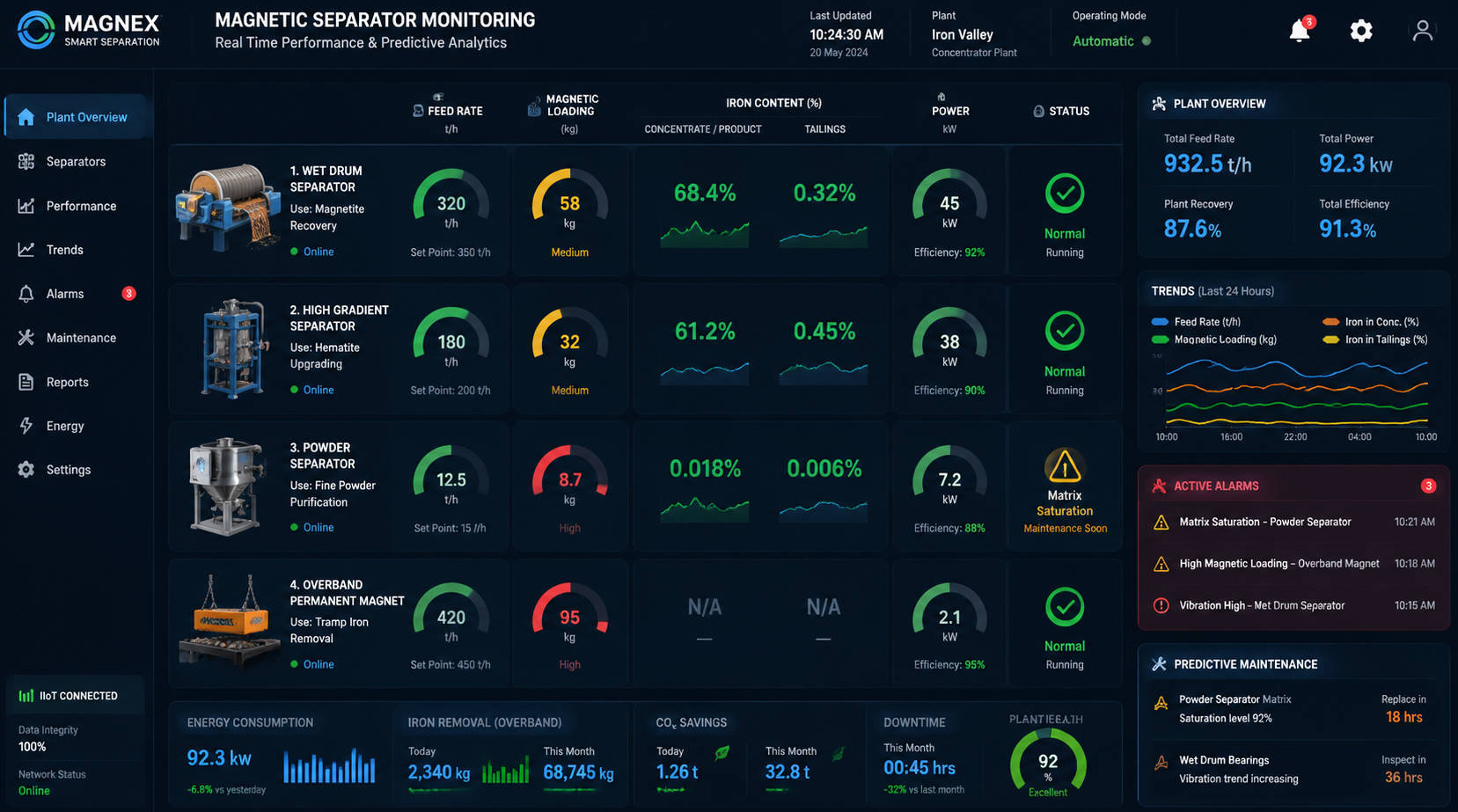
Recent market and technology reports highlight several trends that are reshaping magnetic separation in mining and high‑value materials. Based on these and current project experience, three trends stand out: [grandviewresearch]
1. High‑gradient and rare‑earth systems
– New magnetic materials and advanced matrix designs enable the recovery of weakly magnetic minerals and lower residual iron levels in industrial minerals and battery materials. [greatmagtech]
– These systems support finer particle separation at improved energy efficiency compared with older designs. [buntingmagnetics]
2. Intelligent, IoT‑enabled separators
– Sensors and smart controls monitor feed rate, magnetic loading, matrix saturation, energy consumption, and separation efficiency in real time. [linkedin]
– By feeding data into plant control systems, operators can automatically adjust parameters and move toward predictive maintenance, reducing downtime and optimizing separation performance. [linkedin]
3. Sustainability‑driven design
– Magnetic separation helps reduce reagent consumption by improving upstream purity and thus trimming downstream chemical demand. [finance.yahoo]
– By removing metal early, it lowers energy usage in grinding and decreases wear on downstream equipment, contributing to ESG and low‑carbon goals. [buntingmagnetics]
– The global magnetic separation in mining market is projected to grow steadily, driven by demand for critical minerals and higher‑purity products for energy transition applications. [grandviewresearch]
For producers targeting battery materials, solar glass, and advanced ceramics, these trends are no longer optional—they are quickly becoming baseline expectations from customers and regulators. [finance.yahoo]
Practical Optimization Framework From The Field
Drawing on commissioning work across iron ore, ceramics, and battery‑material projects, the following five‑step framework consistently improves magnetic separation performance. [finance.yahoo]
1. Analyze your ore and impurities
– Test magnetic susceptibility across sizes and map which impurities (for example, iron oxides, stainless steel, scale) cause the most value loss. [sciencedirect]
2. Map the flowsheet and risk points
– Identify where tramp metal can enter and which process steps are most sensitive to contamination or equipment damage. [buntingmagnetics]
3. Select the right separator combination
– Use permanent separators for tramp protection; apply LIMS for bulk recovery; use powder and HGMS units for fine, high‑value products and ultra‑low impurity targets. [finance.yahoo]
4. Optimize operating parameters
– Adjust feed rate, layer thickness, field strength, matrix type, and flushing cycles, supported by lab and pilot testing. [greatmagtech]
5. Maintain, monitor, and upgrade
– Perform regular inspections and audits of magnetic performance, and plan upgrades to high‑gradient or intelligent separators where the ROI is clear. [buntingmagnetics]
Plants that adopt this structured, data‑driven approach typically see measurable gains in recovery, product quality, and overall plant stability within one or two optimization cycles. [finance.yahoo]
Comparison Table: Magnetic Separator Types
| Separator type | Typical feed | Target minerals/impurities | Key advantages | Typical industries |
|---|---|---|---|---|
| LIMS (wet drum) | Slurry with coarse to medium particles | Strongly magnetic (magnetite, ferrosilicon) | Energy‑efficient bulk recovery; robust operation buntingmagnetics | Iron ore, dense media circuits, coal prep buntingmagnetics |
| HIMS | Slurry, finer sizes | Weakly magnetic (hematite, some rare earths) | Higher field strength; handles lower susceptibility minerals greatmagtech | Iron ore upgrading, rare earths, mineral sands greatmagtech |
| HGMS | Slurry, very fine particles | Ultra‑fine weakly magnetic impurities | High gradient matrix; ultra‑low impurity levels greatmagtech | Kaolin, feldspar, silica sand, high‑purity quartz buntingmagnetics |
| Powder separators | Dry fine powders | Iron contamination in non‑metallics and battery powders | Precision powder purification; high‑intensity fields finance.yahoo | Ceramics, glass, plastics, rubber, battery materials finance.yahoo |
| Permanent separators | Bulk solids on conveyors | Tramp iron and steel debris | No power consumption; simple, reliable protection finance.yahoo | Mining, aggregates, cement, recycling buntingmagnetics |
Call To Action: Design A Magnetic Circuit That Fits Your Ore
If your mine or processing plant is facing excessive equipment wear, unstable product quality, or marginal recovery, now is the time to reassess your magnetic separation strategy with a more integrated, data‑driven approach. Working with a specialized magnetic separator manufacturer that combines R&D, engineering design, and turnkey line installation—such as Foshan Wandaye Technology Co., Ltd.—allows you to evaluate your ore in the lab, model alternative separator configurations, and implement a circuit that delivers higher yields and cleaner products across mining, ceramics, glass, environmental materials, plastics, rubber, and battery applications. [fswandaye]
FAQ
1. How does magnetic separation improve overall plant profitability?
Magnetic separation improves profitability by recovering valuable magnetic minerals, protecting critical equipment from tramp metal, and increasing product purity, which supports higher selling prices and lower downstream costs. Plants that integrate both tramp protection and fine purification stages typically see lower downtime and more consistent quality. [buntingmagnetics]
2. When should a plant use powder magnetic separators instead of wet separators?
Powder magnetic separators are the preferred choice when handling dry, fine powders where trace iron contamination impacts color, dielectric properties, or electrochemical performance, as in ceramics, glass, plastics, and battery materials. Wet separators are more suitable for bulk slurry streams such as iron ore concentrators and dense media circuits. [buntingmagnetics]
3. What are signs that a magnetic separation circuit is underperforming?
Common symptoms include frequent equipment damage from tramp metal, rising iron content in products, unstable recovery rates, and visible carry‑over of magnetic material into tailings. Routine audits of magnetic field strength, matrix condition, and performance indicators like Fe in product and magnetics in tails help identify underperformance early. [buntingmagnetics]
4. Can magnetic separation replace flotation or gravity separation?
In most cases, magnetic separation complements rather than replaces flotation and gravity methods. By removing magnetic impurities and recovering part of the value early, it reduces reagent consumption, stabilizes downstream circuits, and improves final concentrates from flotation or gravity stages. [buntingmagnetics]
5. How should a plant choose between conventional and intelligent IoT‑enabled separators?
Plants with tight purity specs, variable ore characteristics, or strong ESG and efficiency targets benefit most from intelligent IoT‑enabled separators that monitor performance in real time and support predictive maintenance. Small, stable operations with modest purity requirements may find conventional designs sufficient, provided they maintain regular inspection and testing practices. [linkedin]
References
1. Great Magtech – “Magnetic Separation in Mineral Processing – Knowledge”. [Link]
2. Wandaye Magnetics – “How Magnetic Separation Is Transforming Modern Mining – An Expert’s Perspective”. [Link] [finance.yahoo]
3. Foshan Wandaye Machinery Equipment Co., Ltd. – Company and product information (high‑gradient slurry machines, powder and permanent magnetic separators). [Link] [en.fswandaye]
4. Foshan Wandaye Technology Co., Ltd. – Chinese product and company overview for magnetic separators and iron‑removal equipment. [Link] [fswandaye]
5. Bunting Magnetics – “Magnetic Separators for Mineral Processing – Types & Applications (Updated for 2026)”. [Link] [buntingmagnetics]
6. Grand View Research – “Magnetic Separation in Mining Market – Industry Report 2033”. [Link] [grandviewresearch]
7. High‑gradient magnetic separation applications in kaolin, feldspar, and silica sand (industry case summaries). [Link] [greatmagtech]
8. Innovative Magnetic Technologies – “Innovations in Magnetic Technology and Smart Separators”. [Link] [futuremarketinsights]
9. Dings Company – “Do Magnetic Separators Lose Strength Over Time? Myth vs Reality”. [Link] [buntingmagnetics]
10. Scientific literature on recent developments in magnetic methods of material separation (ScienceDirect overview). [Link] [sciencedirect]
Hot Tags: Magnetic Separation, Manufacturers, Customized, Custom, Suppliers, Buy, Cheap, Quality, Advanced, Durable, in Stock, Made in China, Price, Quotation