


Content Menu
● What Is Magnetic Separation and Why Is It Critical?
● Core Keyword Focus: Magnetic Separation, Powder Magnetic Separator, Permanent Magnetic Separator
● How Magnetic Separation Protects Product, People, and Profit
>> 2. Equipment Protection and Reduced Downtime
>> 3. Yield, Quality, and Regulatory Compliance
● Types of Magnetic Separators and Where They Work Best
>> Magnet Materials: Choosing the Right Magnetic “Engine”
>> Application‑Focused Equipment Overview
● Where Powder Magnetic Separators Add Unique Value
● Permanent Magnetic Separators vs. Electromagnetic Systems
● Industry Trends: Why Magnetic Separation Is Growing in Strategic Importance
>> 1. Stricter Standards and Customer Expectations
>> 2. Growth in Mining, Recycling, and Renewable Energy
>> 3. Digitalization and Smart Monitoring
● Practical Steps to Design an Effective Magnetic Separation System
● How a Specialist Manufacturer Adds Value
● When You Should Upgrade Your Magnetic Separation
● Clear Call to Action: From Concept to Commissioning
● FAQs About Magnetic Separation
>> 1. How do I know if my existing magnets are strong enough?
>> 2. What is the difference between Powder Magnetic Separators and standard drawer magnets?
>> 3. Can permanent magnets handle high‑temperature products?
>> 4. How often should magnetic separators be cleaned?
>> 5. Are magnetic separators enough on their own to ensure metal‑free product?
As an engineer who has spent years walking dusty plant floors and troubleshooting real-world contamination problems, I can say this with confidence: magnetic separation is no longer a “nice to have” – it is core infrastructure for any serious processing operation. From powder handling in ceramics to lithium battery materials and dairy plants, effective use of Powder Magnetic Separators and Permanent Magnetic Separators is now directly linked to product safety, regulatory compliance, and line profitability. [futuremarketinsights]
What Is Magnetic Separation and Why Is It Critical?
Magnetic separation is the process of using magnetic fields to remove ferrous (and some weakly magnetic) contaminants from raw materials, intermediates, or finished products. In practice, this means capturing everything from rust flakes, iron filings, and nuts and bolts to tiny stainless steel particles before they reach your customer or damage your equipment. [gme-magnet]
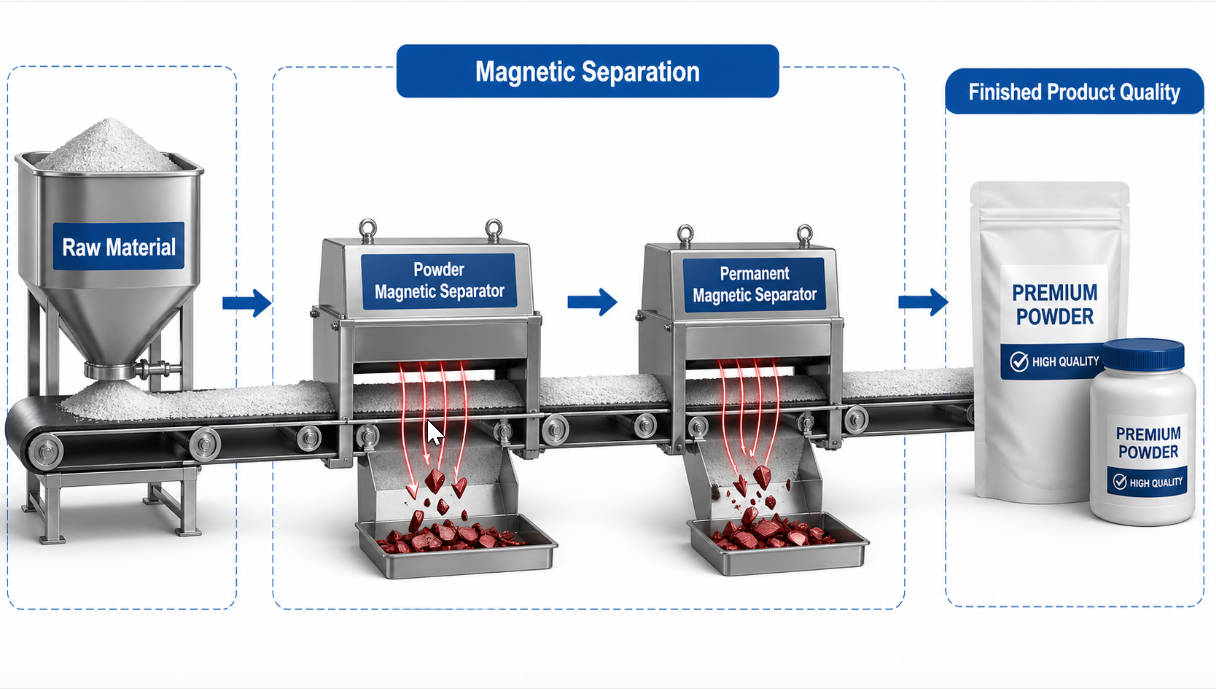
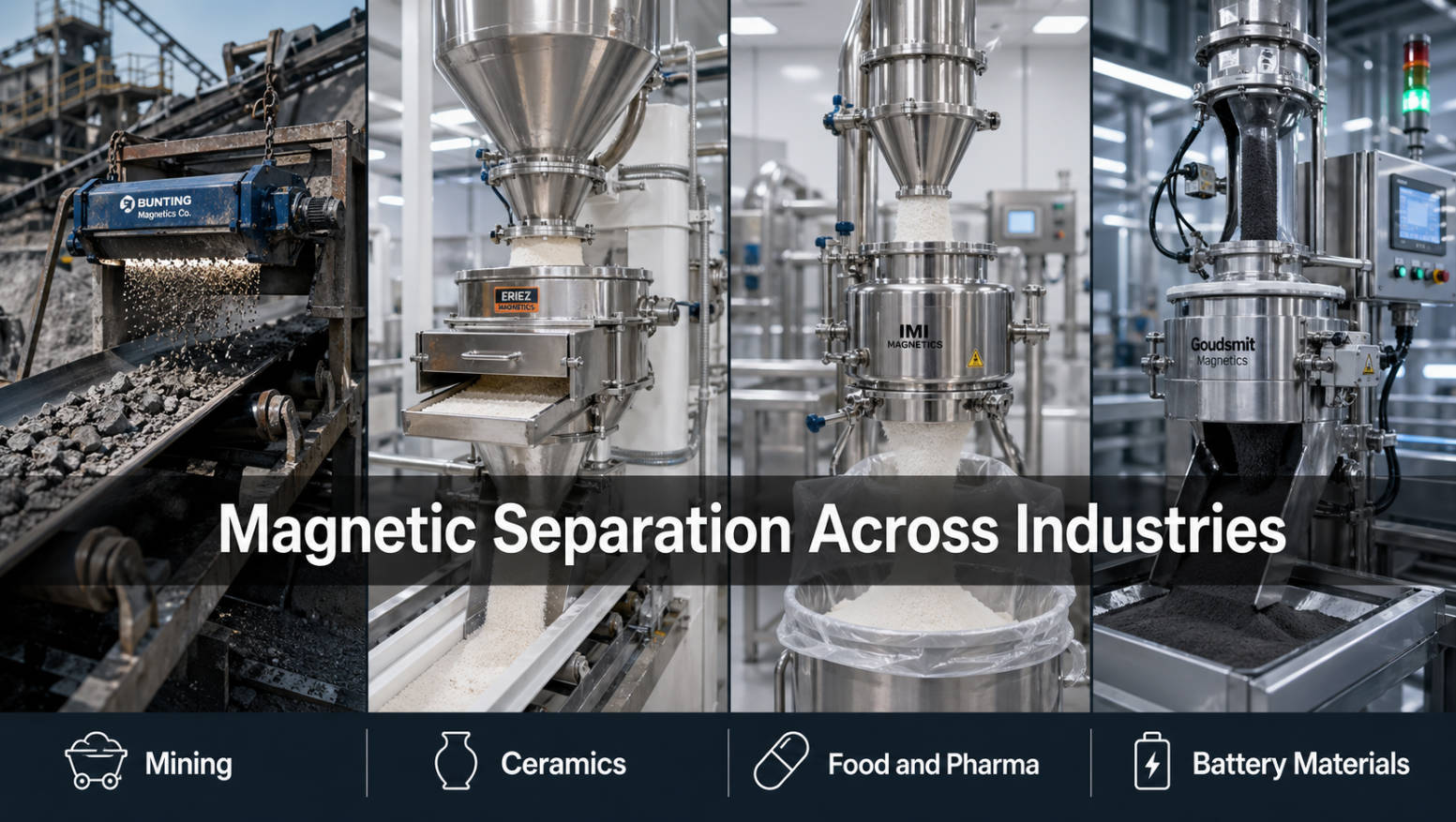
For operators in industries such as food, pharmaceuticals, ceramics, plastics, mining, glass, rubber, and cathode/anode materials, a well‑designed magnetic separation system is now a frontline defense for both quality and safety. It underpins: [electrofluxpvtltd]
– Product purity and brand reputation
– Compliance with food and pharma standards
– Protection of mills, screens, and downstream machinery
– Yield improvement and reduced waste in mining and battery materials [linkedin]
Core Keyword Focus: Magnetic Separation, Powder Magnetic Separator, Permanent Magnetic Separator
If you are evaluating or upgrading your line, three phrases should be central to your thinking and to how you specify equipment:
– Magnetic separation – the overall strategy and process
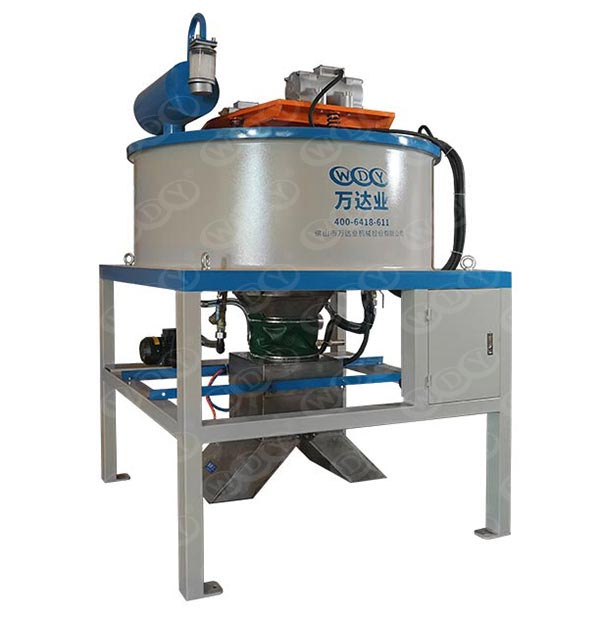
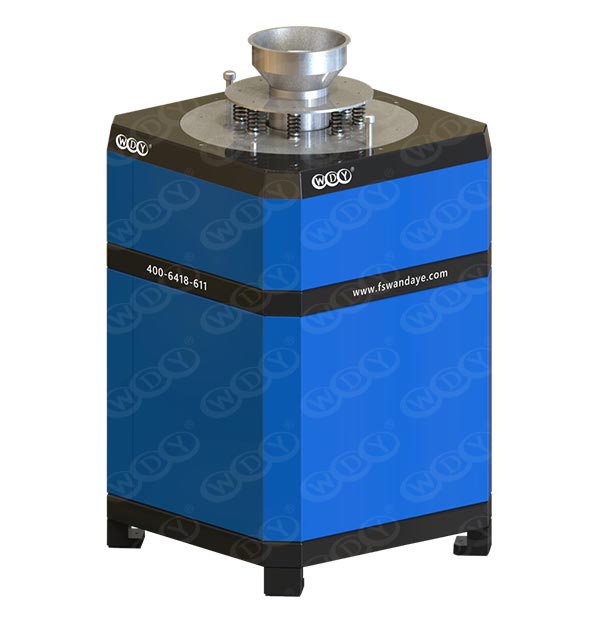
– Powder Magnetic Separator – dry or powder‑handling systems, especially fine powders
– Permanent Magnetic Separator – robust, low‑energy solutions built around permanent magnets [linkedin]
From a practical standpoint, most high‑risk contamination challenges in modern plants involve powders, granules, or slurries. This is exactly where a correctly selected combination of Powder Magnetic Separators and Permanent Magnetic Separators provides the highest ROI in terms of avoided recalls and downtime. [futuremarketinsights]
How Magnetic Separation Protects Product, People, and Profit
1. Product and Food Safety
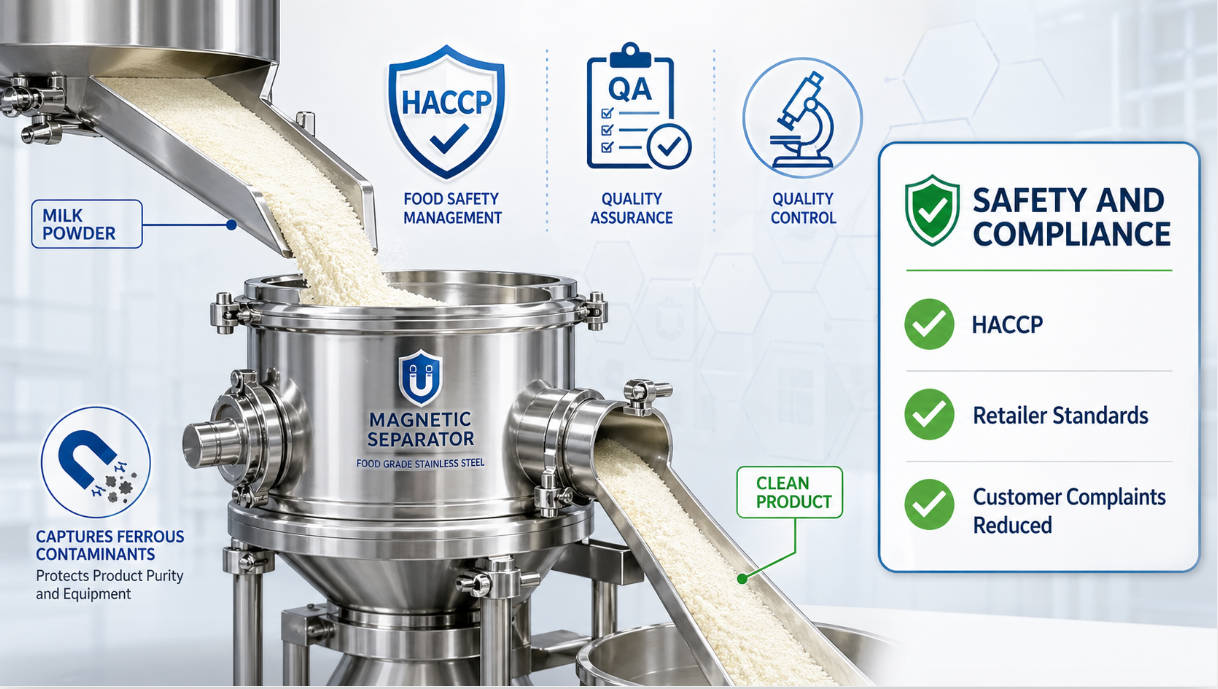
In food, dairy, grain and milling, snacks, and nutritional powders, even a single metal fragment can trigger a costly recall. Modern magnetic separation: [buntingmagnetics]
– Captures ferrous and weakly magnetic contaminants at critical control points
– Helps plants demonstrate due diligence under HACCP, FDA, and retailer audits [magnattackglobal]
– Reduces complaints, returns, and the reputational damage that follows an incident
Operators increasingly deploy magnetic liquid separators in sauces, beverages, and dairy, along with grate and drawer magnets for powders, spices, and premixes to ensure fine metal fragments are removed before filling and packaging. [goudsmitmagnetics]
2. Equipment Protection and Reduced Downtime
Metal fragments that escape incoming inspection often end up where they are most dangerous: in grinders, mixers, mills, and spray dryers. A strategically located Permanent Magnetic Separator: [electrofluxpvtltd]
– Stops tramp metal before it reaches critical, high‑value machinery
– Protects screens, nozzles, and mechanical seals from scoring and fracture
– Reduces unplanned shutdowns, which can cost many times more than the separator itself over its life
In heavy industries such as mining and aggregates, drum magnets and over‑belt permanent separators continuously remove large ferrous pieces that would otherwise damage crushers and conveyors. [buntingmagnetics]
3. Yield, Quality, and Regulatory Compliance
As ore grades fall and regulatory standards tighten, the ability to remove contaminants without sacrificing good product becomes a competitive advantage. Effective magnetic separation: [linkedin]
– Improves mineral recovery by separating valuable ore from gangue
– Ensures battery materials and ceramics meet very tight purity specifications
– Helps satisfy environmental and product safety regulations across the US, EU, and Asia [magnattackglobal]
In sectors like pharmaceuticals and cosmetics, magnetic separators are increasingly used alongside sieving and filtration to deliver the ultra‑clean powders global brands now require. [magnattackglobal]
Types of Magnetic Separators and Where They Work Best
The original Bunting article outlines core equipment types such as drawer magnets, drum magnets, plate magnets, in‑line magnets, magnetic liquid separators, hump magnets, grate magnets, and wedge magnets. Building on that foundation, it is useful to organize selection from an operator’s point of view. [buntingmagnetics]
Magnet Materials: Choosing the Right Magnetic “Engine”
Selecting the magnet material is as important as selecting the housing. The main options are: [buntingmagnetics]
– Ceramic magnets – Lower strength, deep magnetic field, good for typical tramp iron separation in bulk flows.
– Alnico magnets – Moderate strength but excellent at high operating temperatures, suitable for hot product streams.
– Rare earth magnets (Neodymium, Samarium Cobalt) – Highest strength, ideal for capturing fine iron and weakly magnetic stainless particles at higher densities and flow rates. [buntingmagnetics]
In modern Powder Magnetic Separators for fine powders and critical applications, Neodymium is commonly used to achieve the high field strengths needed for sub‑millimeter contamination capture. [gme-magnet]
Application‑Focused Equipment Overview
Below is a practical view of where each separator shines. [goudsmitmagnetics]
| Separator type | Typical media | Key industries | Main purpose |
|---|---|---|---|
| Drawer / grate magnets | Free‑flowing powders | Food, plastics, powder & bulk, grain | Fine tramp metal removal |
| Drum magnets | Granules, bulk solids | Plastics, recycling, mining, aggregates | Continuous ferrous removal at higher throughput |
| Plate magnets | Powdery, moist, lumpy | Grain, food, recycling, powder & bulk | Remove larger ferrous pieces, prevent blockages |
| In‑line magnets | Slightly clumpy flows | Food, plastics, grain, powder & bulk | Unobstructed flow with high capture |
| Magnetic liquid separators | Liquids, slurries | Food, dairy, sauces, beverages, powder slurries | Fine metal removal in viscous products |
| Hump magnets | High‑volume flows | Grain, powder & bulk, non‑woven | Enhanced protection in vertical systems |
| Wedge magnets | Pellets, semi‑solids | Grain and milling | Protect pellet mills and downstream equipment buntingmagnetics |
Where Powder Magnetic Separators Add Unique Value
From a specialist’s standpoint, powder handling is where many plants are still under‑protected. Fine powders behave differently from granules and require equipment optimized for dust, flow characteristics, and very small particle capture. [electrofluxpvtltd]
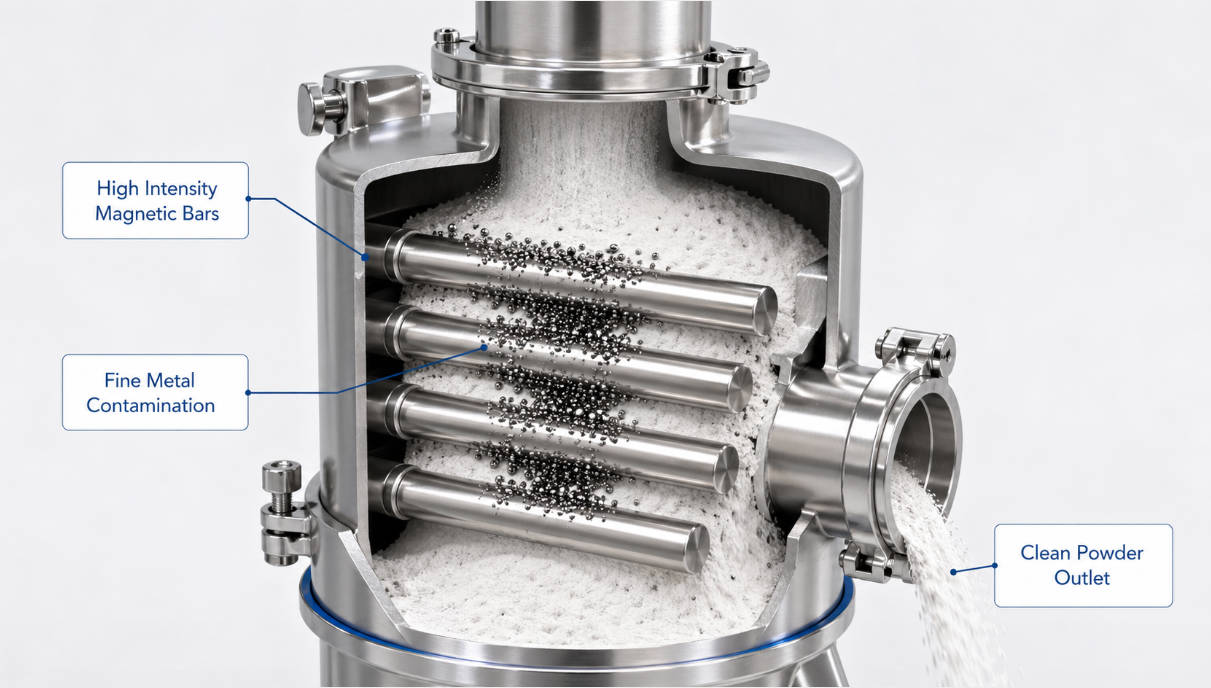
Key advantages of dedicated Powder Magnetic Separators:
– High‑intensity permanent magnets (often Neodymium) to capture ultra‑fine ferrous and stainless contamination [gme-magnet]
– Carefully designed internal geometry to minimize product blockage and maintain stable flow
– Construction options (standard, food‑grade, sanitary) that match hygienic design expectations in food and pharma plants [magnattackglobal]
In battery materials (cathode/anode powders), advanced powder‑focused magnetic separation is now used to protect both product quality and sensitive mixing and coating equipment, as contamination can directly affect cell performance and safety. [linkedin]
Permanent Magnetic Separators vs. Electromagnetic Systems
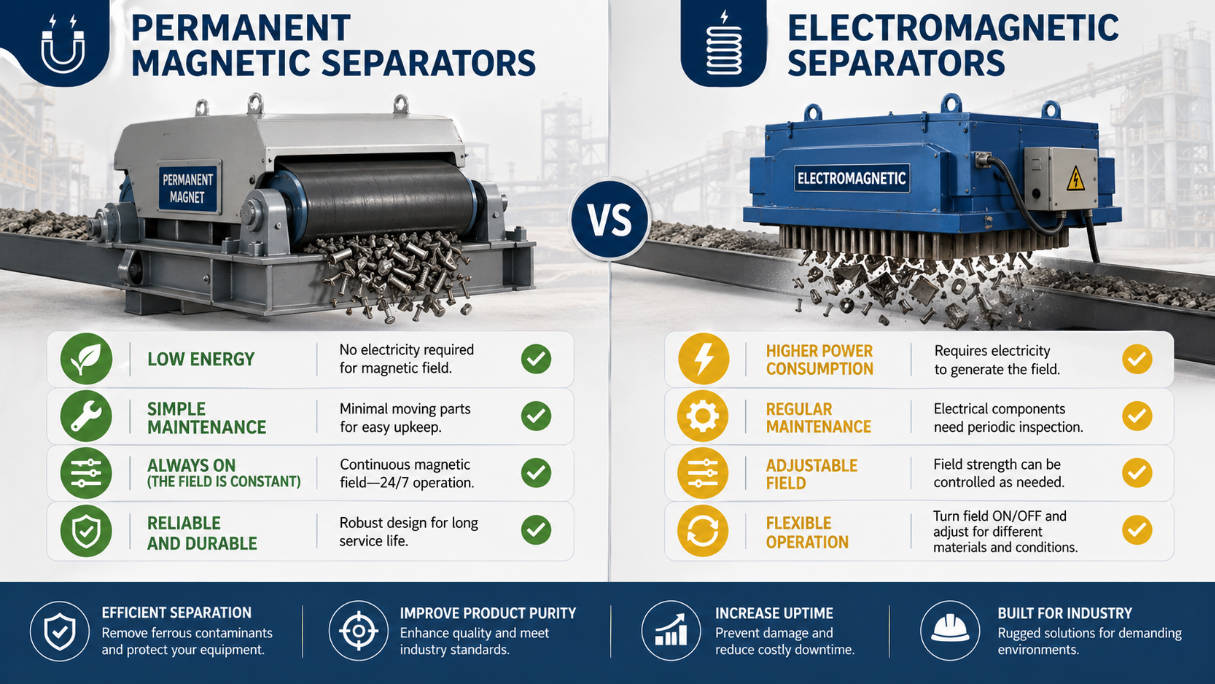
Plant managers often ask whether they should specify permanent magnets or electromagnets. From a user‑experience and lifecycle perspective, Permanent Magnetic Separators are now the default in many lines due to:
– No continuous power requirement, reducing energy consumption and complexity
– Stable field strength over long periods when designed with quality materials
– Lower maintenance and fewer control components compared to electromagnets [baitemagnets]
However, electromagnetic systems still have a role in applications needing:
– Adjustable field strength for different product runs
– Extremely deep fields or very large burden depths
– On‑demand cleaning routines for heavily contaminated streams
In practice, many modern facilities combine both: permanent magnets for everyday protection and energy efficiency, and larger electromagnetic systems at specific, high‑load points. [baitemagnets]
Industry Trends: Why Magnetic Separation Is Growing in Strategic Importance
Magnetic separation is not a static technology; it is evolving in step with broader industry trends.
1. Stricter Standards and Customer Expectations
Regulators, retailers, and end‑users now expect a documented, verifiable approach to metal contamination control, especially in food and pharma. This drives: [futuremarketinsights]
– More magnets per line, at multiple critical control points
– Routine magnet validation and performance testing
– Closer collaboration between QA, engineering, and suppliers
2. Growth in Mining, Recycling, and Renewable Energy
Analysts project strong growth in magnetic separation equipment driven by mining complexity, recycling rates, and the rapid expansion of EV and renewable energy sectors. In practice, this means: [uk.finance.yahoo]
– Higher‑capacity Wet and Dry Magnetic Separators for low‑grade ores
– Specialized systems for WEEE and metal recycling
– Very high‑purity requirements in rare‑earth and battery material supply chains
3. Digitalization and Smart Monitoring
Recent market commentary highlights the rise of automation, AI, and IoT in magnetic separation systems. Operators increasingly want: [linkedin]
– Sensors that monitor magnet performance and contamination loads
– Integration with plant SCADA/MES for alarms and trend analysis
– Data to support continuous improvement and audit readiness
Practical Steps to Design an Effective Magnetic Separation System
Drawing on both field experience and current best practice, a robust approach to specifying Powder Magnetic Separators and Permanent Magnetic Separators typically follows these steps. [baitemagnets]
1. Map your process and risk points
Identify all locations where metal could enter or be generated: raw material intake, grinding, blending, conveying, filling, and packaging.
2. Characterize your product and contaminants
Document particle size, bulk density, temperature, moisture, and known contaminants (type, size, and likely source).
3. Match separator types to each location
Use drawer/grate magnets on gravity‑fed powders, drum or over‑belt magnets on conveyors, and liquid traps on slurries and sauces. [electrofluxpvtltd]
4. Define performance criteria
Set clear expectations for minimum particle size to be captured, acceptable pressure drop or flow restriction, and cleaning frequency.
5. Select magnet materials and construction
Choose rare earth vs ceramic based on risk level and product sensitivity, and ensure constructions (sanitary, CIP‑compatible, pressure‑rated) match your industry’s standards. [magnattackglobal]
6. Plan validation, cleaning, and documentation
Establish inspection schedules, pull‑test routines, and cleaning SOPs. Capture data to satisfy internal QA and external auditors.
How a Specialist Manufacturer Adds Value
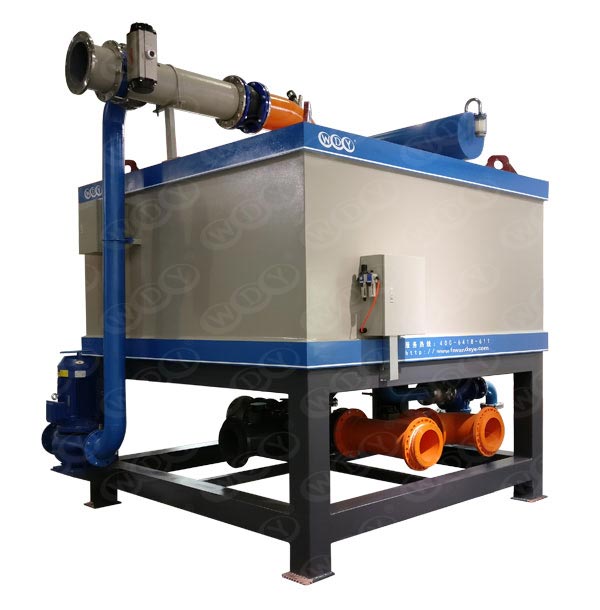
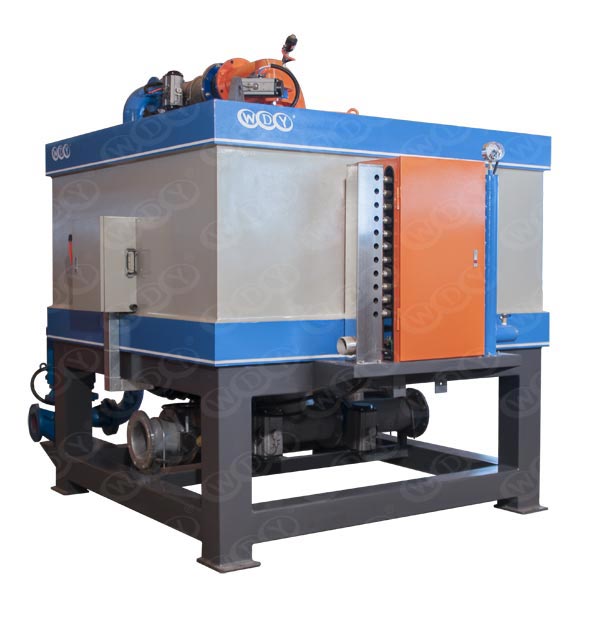
Specialized manufacturers such as Foshan Wandaye Technology Co., Ltd. focus on research, engineering design, production line installation, and commissioning of Powder Magnetic Separators and Permanent Magnetic Separators for sectors including mining, ceramics, power, building materials, glass, environmental protection, rubber, plastics, pharmaceuticals, food, and battery materials. Working with an integrated supplier has three main advantages: [futuremarketinsights]
– Application‑specific engineering – systems tailored to your actual particle size distribution, throughput, and regulatory requirements
– End‑to‑end support – from initial layout and equipment selection through installation, testing, and operator training
– Lifecycle optimization – guidance on maintenance, upgrades, and performance benchmarking as your process or regulations change
When You Should Upgrade Your Magnetic Separation
If any of the following are true, your existing magnets are likely under‑performing:
– Increased customer or internal complaints about metal contamination
– Process changes (higher throughput, new products, added lines) without a re‑evaluation of magnets
– Aging equipment without documented pull‑tests or performance certificates
– Plans to enter export markets with stricter retailer or regulatory standards [futuremarketinsights]
In these situations, a structured audit followed by targeted upgrades to Powder Magnetic Separators and Permanent Magnetic Separators often delivers quick wins in both quality and OEE.
Clear Call to Action: From Concept to Commissioning
If you are designing a new processing line or modernizing an existing one, this is the ideal time to treat magnetic separation as a core design parameter rather than an afterthought. Engage a specialist early, share your flow diagrams and product data, and request a magnet location and specification proposal tailored to your industry, whether you process minerals, ceramics, food powders, plastics, or battery materials. [linkedin]
A focused conversation around Powder Magnetic Separators and Permanent Magnetic Separators typically identifies a small number of high‑impact interventions that can significantly reduce contamination risk and downtime over the entire life of the line. [baitemagnets]
FAQs About Magnetic Separation
1. How do I know if my existing magnets are strong enough?
In practice, you should combine routine pull‑testing with a review of complaints, inspection reports, and foreign body logs. If you are still finding metal downstream of magnets or after sieves, it is a clear sign that they are either underspecified, incorrectly located, or not maintained. [baitemagnets]
2. What is the difference between Powder Magnetic Separators and standard drawer magnets?
Powder‑specialized designs use higher‑intensity permanent magnets, optimized internal geometries, and surface finishes that cope better with fine, dusty, and sometimes cohesive powders. This improves capture of very small ferrous and stainless particles while maintaining acceptable flow and minimizing blockages. [goudsmitmagnetics]
3. Can permanent magnets handle high‑temperature products?
Yes, but magnet material selection is critical. Alnico and Samarium Cobalt magnets handle higher temperatures better than standard Neodymium, so high‑temperature lines often combine different magnet types to balance strength and thermal stability. [buntingmagnetics]
4. How often should magnetic separators be cleaned?
Cleaning frequency depends on contamination load and risk level. High‑risk applications (e.g., infant formula, pharmaceuticals) clean and inspect more frequently, often per shift or per batch, while lower‑risk bulk handling operations may clean on a scheduled preventive maintenance cycle. [electrofluxpvtltd]
5. Are magnetic separators enough on their own to ensure metal‑free product?
No single control is sufficient on its own. Best practice combines magnetic separation with good equipment maintenance, controlled supplier quality, sieving/filtration, metal detection or X‑ray where appropriate, and robust QA systems to manage residual risk. [futuremarketinsights]
References
1. Bunting Magnetics Co. “Importance of Magnetic Separation.” [https://buntingmagnetics.com/blog/why-is-magnetic-separation-important] [buntingmagnetics]
2. Great Magtech. “Why Is Magnetic Separation Important?” [https://www.gme-magnet.com/info/why-is-magnetic-separation-important-102862285.html] [gme-magnet]
3. Electroflux Pvt Ltd. “Magnetic Separators in Food & Industrial Processing – A Full Guide.” [https://electrofluxpvtltd.com/magnetic-separators-in-food-and-industrial-processing-a-full-guide/] [electrofluxpvtltd]
4. Future Market Insights. “United States Magnetic Separator Market Size & Outlook 2026–2036.” [https://www.futuremarketinsights.com/reports/united-states-magnetic-separator-market] [futuremarketinsights]
5. Magnattack Global. “Magnetic Separator Solutions for Pharma and Cosmetics.” [https://www.magnattackglobal.com/industries/pharmaceuticals-cosmetics/] [magnattackglobal]
6. LinkedIn Article. “Mining Magnetic Separation Equipment Market From 2026 Forward.” [https://www.linkedin.com/pulse/mining-magnetic-separation-equipment-market-from-2026-forward-ph2qc] [linkedin]
7. LinkedIn Article. “Top Dry Permanent Magnetic Separator Companies & How to Choose.” [https://www.linkedin.com/pulse/top-dry-permanent-magnetic-separator-companies-fyuzc] [linkedin]
8. Yahoo Finance. “Permanent Magnet Research Report 2026.” [https://uk.finance.yahoo.com/news/permanent-magnet-research-report-2026-101600772.html] [uk.finance.yahoo]
9. LinkedIn Article. “United States Wet Magnetic Separators Market Report 2026 to 2033.” [https://www.linkedin.com/pulse/united-states-wet-magnetic-separators-market-report-2026-2033-wfltf] [linkedin]
10. Goudsmit Magnetics. “Magnetic Separators for Dairy and Milk Powder.” [https://www.goudsmitmagnetics.com/en-us/applications-magnet-separators-for-dairy-and-milk-powder] [goudsmitmagnetics]
11. Baite Magnets. “A Comprehensive Comparison of Magnetic Separator Conveyors for Global Procurement.” [https://www.baitemagnets.com/blog/comparison-of-magnetic-separator-conveyors-for-global-procurement/] [baitemagnets]
Hot Tags: Magnetic Seperation, Manufacturers, Customized, Custom, Suppliers, Buy, Cheap, Quality, Advanced, Durable, in Stock, Made in China, Price, Quotation