


Content Menu
● What Is an Overband Magnet and How Does It Work?
● Why Correct Overband Magnet Installation Matters
● Core Installation Principle 1: Suspension Height
>> Recommended Suspension Height Concept
>> What Happens When You Raise the Magnet?
>> Practical Height Control and Maintenance
● Core Installation Principle 2: Magnet Width vs Conveyor Width
>> Problems Caused by Undersized Magnets
>> Remedial Actions and Upgrade Strategy
● Core Installation Principle 3: Positioning Over the Conveyor
>> Understanding Magnetic Field Distribution
>> Common Mispositioning Mistakes
>> How to Correct Magnet Positioning
● Additional Best Practices for Overband Magnet Performance
>> Routine Inspection and Maintenance Checklist
>> Integrating Overband Magnets into Plant Safety and Reliability
● Case Insight: Overband Magnets in Quarry and Recycling Applications
● How to Evaluate an Existing Overband Magnet Installation
>> Step-by-Step Diagnostic Approach
>> Table: Key Installation Parameters and Typical Issues
● When to Consider a Larger or Different Overband Magnet
● Expert Support and Application Engineering
● Optimize Your Overband Magnet Installation with Foshan Wandaye
● Frequently Asked Questions (FAQ)
>> 1. What is the ideal suspension height for an overband magnet?
>> 2. Can I reuse an overband magnet on a wider conveyor?
>> 3. Why is central positioning of the overband magnet so important?
>> 4. How often should I check overband magnet alignment and height?
>> 5. What signs indicate that my overband magnet is underperforming?
Installing an overband magnet correctly is critical for achieving stable ferrous metal separation efficiency, protecting crushers, and reducing maintenance costs on mining, recycling, and bulk material handling lines. When suspension height, width matching, or position over the conveyor are wrong, plants lose valuable metal and expose downstream equipment to damaging tramp iron.

What Is an Overband Magnet and How Does It Work?
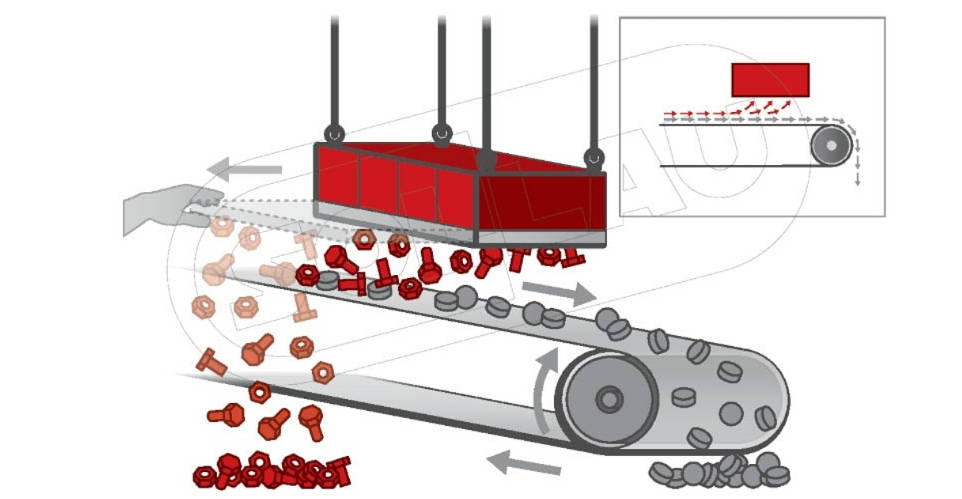
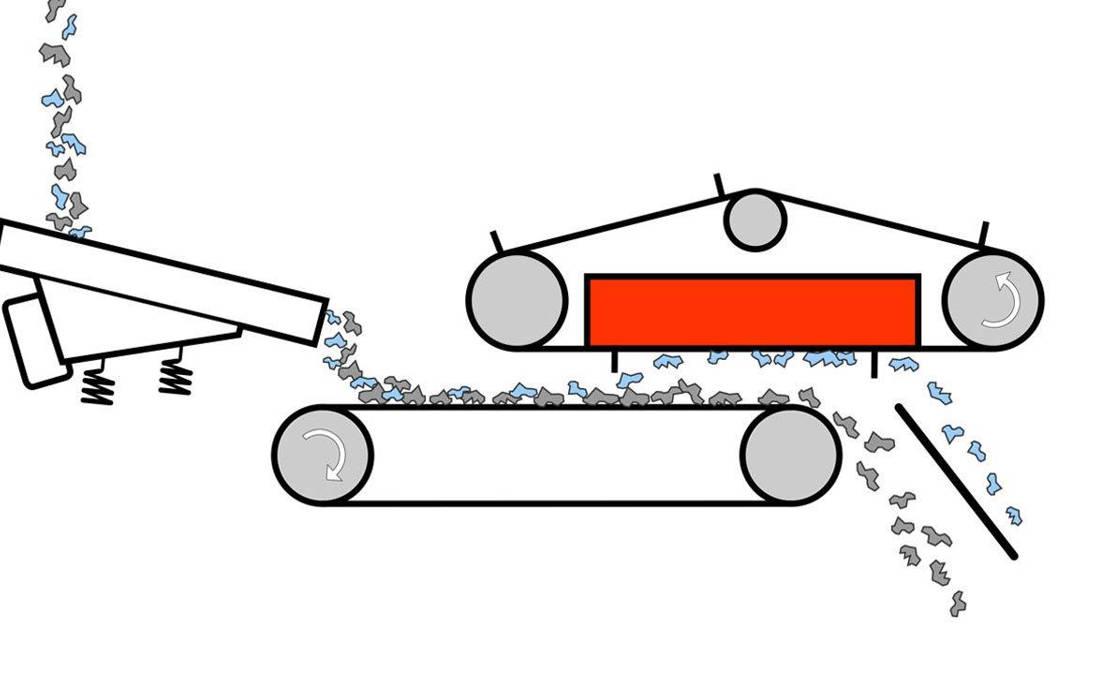
An overband magnet is a self-cleaning magnetic separator installed above a conveyor to automatically remove ferrous contaminants from the material burden. It is widely used in recycling plants, quarries, aggregate operations, and mobile crushing and screening equipment.
The typical overband magnet consists of:
– A permanent magnetic block
– Two pulleys mounted on a frame
– A continuous rubber belt running across the magnet face
– A drive unit and support structure
As material travels along the conveyor, ferrous metal is attracted up toward the magnet block, transferred onto the moving belt, carried away from the main material flow, and discharged into a separate collection area. This automatic extraction protects downstream crushers and screens, reduces unplanned downtime, and improves the purity of the final product.
Why Correct Overband Magnet Installation Matters
Even a high-quality overband magnet will deliver poor performance if installed or maintained incorrectly. Many systems perform well at the start, but small changes over time, such as belt sag, uneven loading, or plant modifications, gradually reduce separation efficiency.
Key risks of incorrect installation include:
– Reduced ferrous recovery rate
– More metal passing into crushers and screens
– Increased wear, damage, and maintenance cost
– Lower product purity and contamination claims
– Higher risk of safety incidents from tramp metal
For plant managers, this means that optimizing installation is one of the fastest and lowest-cost ways to boost metal recovery and equipment protection without buying a new separator.
Core Installation Principle 1: Suspension Height
Recommended Suspension Height Concept
Every overband magnet is designed to operate at a specific suspension height above the conveyor belt, usually defined by the manufacturer in the technical datasheet. The magnetic field strength decays significantly with distance, so small changes in height can have a large impact on pick-up and separation performance.
In normal operation, you want the magnet as close as safely possible to the conveyed material without making physical contact with large lumps or belt splices. The optimum height balances maximum ferrous recovery with safe mechanical clearance for peaks in material burden.
What Happens When You Raise the Magnet?
In many plants, operators raise the overband magnet temporarily to cope with material surges or blockages. Once raised, it is often never returned to the design position, leaving the magnet permanently too high.
Consequences of excessive suspension height include:
– Weak attraction on small, thin, or partially buried ferrous items
– More tramp metal passing under the magnet into downstream equipment
– Reduced recovery rates for steel cans and small fragments
– A misleading perception that the magnet is too weak, when the real issue is installation
For lines where surges are frequent, the better strategy is to select a larger overband magnet designed to operate at a higher suspension height rather than permanently lifting a smaller unit beyond its optimum zone.
Practical Height Control and Maintenance
To maintain correct suspension height over the entire life of the installation:
1. Record the design height at commissioning and mark it clearly on the support structure.
2. Include height checks in daily or weekly maintenance routines.
3. Use mechanical stops or gauges so operators can quickly verify and restore the correct height after cleaning or maintenance.
4. Train operators to treat height deviation as a performance-critical issue, not a cosmetic adjustment.
Core Installation Principle 2: Magnet Width vs Conveyor Width
Why Magnet Width Matters
Each overband magnet model has a fixed magnet block size, and its width must be correctly matched to the conveyor belt and discharge point. If the magnet is too narrow for the belt, metal picked from outer edges may fall back onto the conveyor, bypassing the collection area.
During application evaluation, professional suppliers take into account:
– Conveyor belt width
– Burden depth and loading pattern
– Discharge position and transfer chute geometry
– Required separation efficiency and target ferrous size range
When the magnet block is appropriately wider than the material flow, ferrous items from across the full belt width can be lifted, transferred, and discharged reliably into the collection area.
Problems Caused by Undersized Magnets
Using an overband magnet that is too narrow for the conveyor leads to: – Ferrous fragments being attracted off the belt and then dropping back into the material stream before reaching the collection area
– Poor separation on one or both belt edges
– Inconsistent performance as loading patterns change across shifts
This issue is common when plants reposition an existing overband magnet onto a wider conveyor or into a location where the discharge point is further away than originally designed.
Remedial Actions and Upgrade Strategy
If you identify that the magnet is narrower than ideal for the current conveyor:
– Consider purchasing a wider overband magnet for that section.
– Relocate the undersized unit to a similar-width conveyor closer to its original design conditions.
– Review all conveyors in the line to ensure each magnet is correctly matched to belt width and loading.
Core Installation Principle 3: Positioning Over the Conveyor
Understanding Magnetic Field Distribution
Most overband magnets have a centrally located single magnetic pole that projects the strongest magnetic field directly beneath the center line of the magnet block. Attraction strength drops progressively toward both sides away from this center line.
Therefore, central positioning of the magnet over the conveyor is critical to achieve a uniform separation effect across the full belt width.
Common Mispositioning Mistakes
In practice, some installations shift the magnet towards one side of the belt, usually closer to the discharge point or chute. This is especially common when the magnet is too narrow and operators try to favor the side where material falls off.
However, this strategy creates a new problem:
– Ferrous items on the opposite side of the belt sit in a much weaker part of the field.
– These items remain in the burden, bypassing the magnet and entering downstream equipment.
– Overall recovery suffers, and performance becomes highly sensitive to small changes in loading pattern.
How to Correct Magnet Positioning
To restore optimal separation:
– Reposition the overband magnet so that its center line is exactly above the center of the conveyor belt.
– Re-check alignment after any maintenance work on the support structure.
– Combine central positioning with the correct suspension height and suitable magnet width for the best overall performance.
Even without any hardware upgrades, simply re-aligning the magnet to sit centrally can significantly improve ferrous metal recovery.
Additional Best Practices for Overband Magnet Performance
To go beyond the three core installation mistakes and further optimize performance, plants should implement a systematic approach to operation and maintenance.
Routine Inspection and Maintenance Checklist
A practical checklist for operators and maintenance teams could include:
– Check suspension height against design marks and adjust if necessary.
– Inspect the belt condition, including wear, cuts, tracking, and splice integrity.
– Verify belt tension and tracking across the pulleys.
– Confirm central alignment of the magnet over the conveyor.
– Clean excessive build-up of material around the magnet and structure.
– Check for unusual vibration or noise from the drive unit.
Short, standardized checklists help make sure that overband magnets are treated as critical separation equipment rather than passive accessories.
Integrating Overband Magnets into Plant Safety and Reliability
Correctly installed overband magnets do more than recover valuable metal; they are a key protective device for crushers and high-value process equipment. Effective tramp metal removal can extend machine life, reduce catastrophic failures, and support a safer working environment.For high-risk applications such as quarries, mining, or large recycling lines, plant operators should:
– Treat magnet performance indicators, such as ferrous collected per shift, as part of their asset reliability KPIs.
– Investigate sudden drops in recovered metal as a potential sign of installation or process problems.
– Integrate magnet checks into lockout-tagout and maintenance procedures.
Case Insight: Overband Magnets in Quarry and Recycling Applications
Overband magnets are now standard on many quarry and recycling lines where tramp metal and steel cans are common contaminants. Correct installation ensures that the magnet can operate reliably despite abrasive materials, variable moisture, and fluctuating loading conditions.
Quarry operations often use overband magnets above primary or secondary crusher feed conveyors to remove rebar, bucket teeth, and broken tools that would otherwise cause serious damage. Recycling plants use them after shredders or trommels to recover steel cans and ferrous fragments, improving the value of the output stream.
How to Evaluate an Existing Overband Magnet Installation
Step-by-Step Diagnostic Approach
If your current overband magnet does not seem to be performing well, follow this structured approach:
1. Document current settings
– Measure suspension height at multiple points.
– Note magnet width versus belt width.
– Check whether the magnet is centered over the belt.
2. Observe actual operation
– Watch the discharge point to see how much ferrous is captured.
– Inspect the burden after the magnet for visible metallic items.
– Ask operators about recent changes, such as a new crusher, new belt, or altered flow.
3. Compare to design data
– Review original supplier documentation for recommended height and position.
– Check whether the current application, including belt width, discharge point, and burden depth, matches the original design.
4. Implement quick wins
– Restore correct suspension height.
– Re-center the magnet over the conveyor.
– Clean and tighten the belt, and confirm proper tracking.
5. Decide on upgrade needs
– If the magnet is clearly undersized for the belt or material conditions, plan for a properly sized unit and relocate the existing magnet to a suitable line.
Table: Key Installation Parameters and Typical Issues
| Parameter | Ideal Condition | Common Problem | Likely Effect on Performance |
|---|---|---|---|
| Suspension height | At manufacturer’s specified operating height | Magnet raised and never returned | Weak pick-up, low recovery |
| Magnet width | Equal to or wider than belt or burden | Magnet narrower than belt | Edge ferrous drops back onto conveyor |
| Position over conveyor | Magnet centered over belt center line | Magnet shifted to one side | Poor recovery on opposite belt side |
| Belt tracking and tension | Belt running true and correctly tensioned | Belt off-center or slack | Inconsistent discharge, mechanical wear |
| Application matching | Magnet sized for belt width and discharge distance | Reused magnet on wider belt or new transfer | Chronic under-performance, metal carry-over |
When to Consider a Larger or Different Overband Magnet
In some cases, installation optimization alone is not enough. You may need to upgrade or change the type of overband magnet if:
– Conveyor width increased significantly after plant modifications.
– Material burden is much deeper than in the original design.
– Tramp metal size has changed, for example more large pieces or thicker plate.
– Operating height or process layout cannot be changed due to mechanical constraints.
In such situations, consulting a specialist manufacturer or application engineer is the most efficient way to define a solution tailored to your line. They can recommend a larger magnet or an alternative separation configuration that fits your actual conditions.
Expert Support and Application Engineering
Manufacturers with extensive experience in overband magnets typically design and build many units per year for different industries. Their application engineers can review your process layout, material characteristics, and performance goals to specify the correct magnet size, type, and installation arrangement.Professional support can include:
– Reviewing conveyor drawings and process flow diagrams
– Recommending optimum magnet height, width, and position
– Advising on transfer point design and ferrous discharge chutes
– Helping create maintenance and inspection procedures for site teams
For plants in mining, ceramics, pharmaceuticals, and other sectors that require consistent removal of ferrous contamination, partnering with a specialized magnetic separation supplier ensures long-term reliability and regulatory compliance.
Visual suggestion: Place a photo here of an engineer inspecting or commissioning an overband magnet on a production line, reinforcing the idea of expert technical support.
Optimize Your Overband Magnet Installation with Foshan Wandaye
If you are experiencing low ferrous recovery, unexpected damage to crushers, or uncertainty about whether your overband magnet is correctly installed, now is the best time to review your system. Foshan Wandaye Technology Co., Ltd. focuses on research, development, and production of a wide range of magnetic separation and iron removal equipment for mining, ceramics, pharmaceuticals, and other demanding industries.
Our engineers can help you audit existing overband magnet installations, recommend optimal suspension height, width, and positioning, and design complete magnetic separation solutions tailored to your material and process.
Contact Foshan Wandaye today to share your conveyor layout, material characteristics, and performance targets, and receive a customized optimization plan that maximizes ferrous metal recovery and protects your critical production equipment.
Contact us to get more information!
Frequently Asked Questions (FAQ)
1. What is the ideal suspension height for an overband magnet?
The ideal suspension height is the distance above the conveyor belt specified by the magnet manufacturer for your particular model and application. Operating significantly above this height reduces magnetic field strength at the burden and lowers ferrous recovery.
2. Can I reuse an overband magnet on a wider conveyor?
You can reuse an overband magnet on a wider conveyor only if its magnet block still provides adequate coverage over the effective burden width. If the magnet is too narrow, ferrous items near the belt edges may be lifted and then dropped back onto the conveyor, reducing overall separation efficiency.
3. Why is central positioning of the overband magnet so important?
Central positioning ensures that the strongest part of the magnetic field, directly below the magnet’s center line, covers the center of the conveyor belt where much of the material burden flows. If the magnet is offset to one side, ferrous items on the opposite side sit in a weaker field and are more likely to pass through to downstream equipment.
4. How often should I check overband magnet alignment and height?
It is best practice to check suspension height and alignment at least as part of your weekly maintenance routine, and after any major cleaning or mechanical work around the conveyor. Some plants include quick visual checks in daily walk-throughs to detect any deviation early.
5. What signs indicate that my overband magnet is underperforming?
Common warning signs include increased tramp metal in downstream equipment, more crusher blockages, visible ferrous items remaining in the conveyed material after the magnet, and a sudden drop in the amount of metal collected in the ferrous discharge area. If you observe these issues, review height, width matching, and positioning before assuming the magnet itself has failed.
Citations:
1. https://buntingmagnetics.com/blog/3-overband-magnet-installation-problems/
Hot Tags: Overband Magnet Installation Problems, Overband Magnet Setup Issues, Overband Magnet Installation Guide, Overband Magnetic Separator Installation, Conveyor Overband Magnet Mounting, Overband Magnet Alignment Problems, Overbelt Magnet Installation Steps, Industrial Overband Magnet Troubleshooting, Overband Magnet Installation Best Practices, Overband Magnet Maintenance And Repair