


Content Menu
● How we evaluate high‑quality suppliers
● Indonesia’s position in magnetic separator manufacturing
● Selection criteria for this “Top Manufacturers & Suppliers” list
● Leading magnetic roller separator manufacturers & suppliers serving Indonesia
>> 1. Permanent Magnet Ltd. (PML) – India
>> 2. Kumar Magnet Industries – India (Supplying Indonesia)
>> 3. Foshan Wandaye Technology Co., Ltd. – China (High‑value OEM partner)
>> 4. Chinese OEM suppliers via project export and platforms
>> 5. Global and regional engineering & trading companies active in Indonesia
● Comparison of key suppliers serving Indonesia
● Technical considerations for magnetic roller separators
● Industry pain points and how to avoid them
● Practical buyer’s guide for Indonesian projects
>> Verifying factory and certifications
>> Sampling and testing process
>> Logistics and project execution
● Frequently asked high‑level buyer questions (FAQ)
>> 1. How can I verify whether an overseas supplier’s ISO 9001 certificate is genuine and not expired?
>> 3. What is a realistic lead time for customized magnetic roller separators supplied to Indonesia?
>> 4. How do I compare quotations from different suppliers beyond unit price?
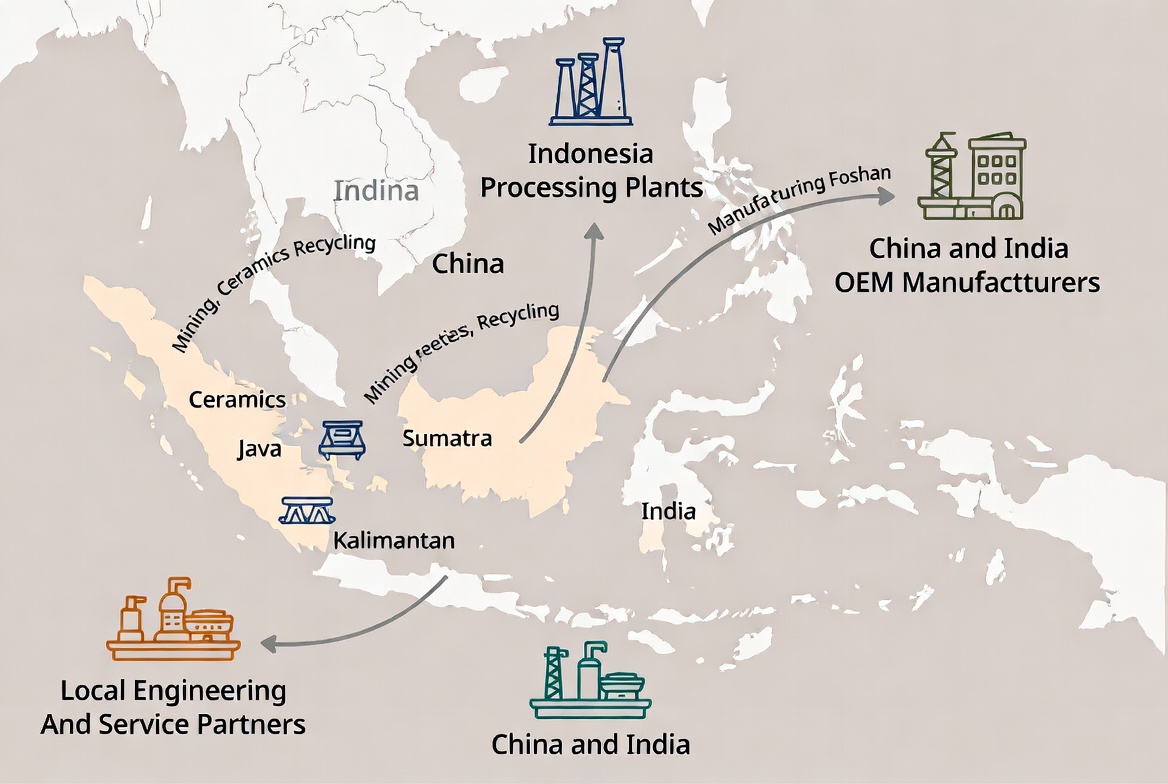
Top magnetic roller separator manufacturers and suppliers serving Indonesia include a mix of local trading/engineering companies and overseas OEMs that actively supply into the Indonesian market, with China and India remaining the main production hubs for high‑performance magnetic roller separators used in mining, ceramics, plastics and recycling lines. For buyers who prioritize stable quality, certified QC systems and flexible OEM support, partnering with a technically strong Asian manufacturer (while using Indonesian distributors or agents) is often the most practical route. [persistencemarketresearch]
How we evaluate high‑quality suppliers
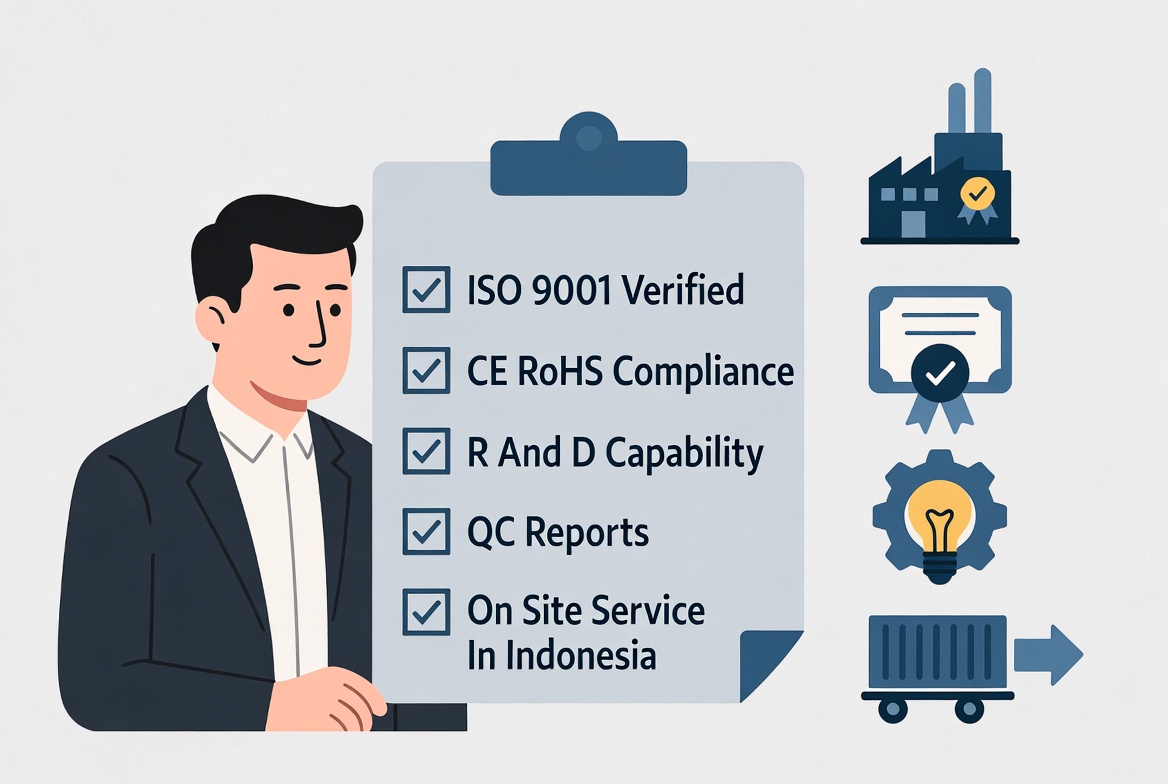
Before listing manufacturers, it is important to clarify how a professional buyer should evaluate magnetic roller separator suppliers for long‑term cooperation. Key dimensions include: [isoindia]
– Factory certifications and compliance
– ISO 9001, ISO 14001 and ISO 45001 indicate that the factory has structured systems for quality, environmental and occupational safety management. [wdymagnetic]
– CE, RoHS and sometimes ATEX (for explosive dust environments) are relevant for equipment exported to the EU, while many buyers in Southeast Asia now also treat them as reference standards to benchmark suppliers. [researchandmarkets]
– Buyers should verify that the ISO certificates are real and still valid by checking them on accredited portals such as IAF CertSearch or by writing directly to the certification body. [vdearwatch]
– R&D capability and engineering depth
– Mature suppliers offer different magnetic material grades (for example high‑performance rare‑earth magnets for 12,000–15,000 Gauss surface intensity) and can calculate required field strength, pole configuration and roller diameter based on the customer’s particle size and throughput data. [pmlindia]
– Strong engineering teams can also simulate product flow and design multi‑stage roller arrangements for ultra‑fine mineral purification, battery material refining and high‑purity ceramics. [wdymagnetic]
– QC processes and traceability
– Reliable plants maintain detailed incoming material inspection records (magnet grade certificates, steel mill certificates), in‑process inspections, magnetization testing, and final test reports including no‑load test, temperature‑rise, noise and insulation checks for electrified equipment. [pmlindia]
– They can share sample QC reports and, where needed, allow third‑party inspection before shipment.
– Delivery reliability and project execution
– For capital equipment like magnetic roller separators, delivery reliability depends on in‑house machining, standardization of modules and experience with complete line projects. [wdymagnetic]
– Buyers should review past project references, typical lead times (for example 30–45 days for standard machines, 60–90 days for fully customized systems) and on‑site commissioning capability in Indonesia or nearby countries. [pmlindia]
Indonesia’s position in magnetic separator manufacturing
Indonesia is one of Southeast Asia’s most important resource and processing hubs, with strong demand for magnetic separation equipment from mining, coal, cement, ceramics, food and recycling industries. While the country imports a significant share of high‑end magnetic separators from China, India, Japan and Europe, local engineering firms and distributors play a critical role in system integration, after‑sales service and regulatory compliance. [6wresearch]
According to global market research, the magnetic separator market is expected to reach roughly 1.2–1.24 billion USD around 2025–2026, with Asia–Pacific accounting for about one‑third of demand thanks to rapid industrialization and expansion of mineral processing and infrastructure projects. Indonesian export statistics also show that industrial products make up a growing share of the country’s exports, illustrating the maturing industrial ecosystem where separation equipment is deployed. For overseas manufacturers, Indonesia is therefore both a key sales destination and a base where agents and service partners are increasingly active. [persistencemarketresearch]
Selection criteria for this “Top Manufacturers & Suppliers” list
This guide focuses on manufacturers and major suppliers that can reliably serve Indonesian buyers with magnetic roller separators or closely related high‑intensity magnetic separation systems. The following criteria were used: [kumarmagnet]
– Product scope
– The company must design or manufacture magnetic separators, with clear capability in high‑intensity roller or drum‑type separators suitable for fine mineral, ceramics or plastics applications. [indonesian.magneticseparatormachine]
– Export and Indonesia‑related experience
– The supplier should either explicitly offer products and services “in Indonesia” or have an evident track record of exporting to Southeast Asia, including Indonesia, via projects, agents or trading platforms. [kumarmagnet]
– Technical and compliance capability
– Preference is given to suppliers that mention ISO 9001 or similar certifications, and that show awareness of CE/RoHS or food‑grade design requirements where relevant. [aizenz]
– Engineering support and OEM/ODM
– Ability to customize designs, provide OEM or private‑label manufacturing, and support full‑line engineering (layout design, installation, commissioning) is a key factor because Indonesian buyers often integrate separators into broader processing lines. [indonesian.magneticseparatormachine]
– Transparency of information
– Companies that provide clear contact details, product specifications, and application cases are prioritized, as this directly affects how easily a foreign buyer can evaluate them. [kumarmagnet]
Leading magnetic roller separator manufacturers & suppliers serving Indonesia
Below is a curated list of prominent manufacturers and suppliers that regularly serve customers in Indonesia or are widely used by Indonesian buyers. The list combines global OEMs, specialized Indian manufacturers and high‑value Chinese suppliers such as Wandaye Technology. [kumarmagnet]
1. Permanent Magnet Ltd. (PML) – India
Permanent Magnet Ltd. (PML), founded in 1960, is a long‑established Indian manufacturer that supplies a wide range of magnetic separators, including magnetic roller separators, to customers in Indonesia and across Asia. Its portfolio covers magnetic pulleys, plates, grills, rods, filters, cross‑belt separators and high‑intensity roller units for mineral and industrial processing. [pmlindia]
Core strengths for Indonesian buyers:
– Extensive magnetic product range, allowing buyers to source different separator types from a single vendor (roller, drum, grid, plate, pulley). [pmlindia]
– Strong engineering experience and ability to design custom separators according to specific throughput and particle size requirements. [pmlindia]
– Established export footprint, which helps with documentation, packaging and logistics to Southeast Asia.
Typical positioning: medium‑to‑high technical complexity projects where a global reference brand is required, such as integrated mineral processing plants or large‑scale recycling facilities.
2. Kumar Magnet Industries – India (Supplying Indonesia)
Kumar Magnet Industries presents itself as one of the key magnetic separator manufacturers supplying the Indonesian market, providing wet and dry separators, coolant separators, permanent drum separators and other magnet solutions. The company promotes its magnetic separators in Indonesia with an emphasis on versatile designs for food, textile, chemical, plastics, grains, oil and recycling industries. [kumarmagnetind]
Core strengths for Indonesian buyers:
– Broad product catalog covering wet and dry separators, allowing matching of equipment to local raw material characteristics. [kumarmagnetind]
– Experience servicing diverse sectors such as dairy, food and recycling, which is relevant for Indonesia’s growing processing industries. [kumarmagnet]
– Ability to supply at “industry‑leading prices” with standard packaging suitable for sea shipment. [kumarmagnet]
Typical positioning: buyers needing reliable mid‑range equipment with strong cost control, especially for OEM projects led by local Indonesian engineering companies.
3. Foshan Wandaye Technology Co., Ltd. – China (High‑value OEM partner)
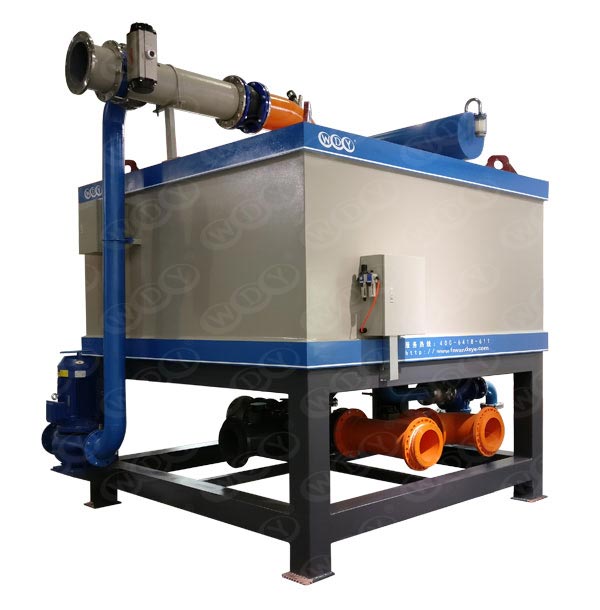
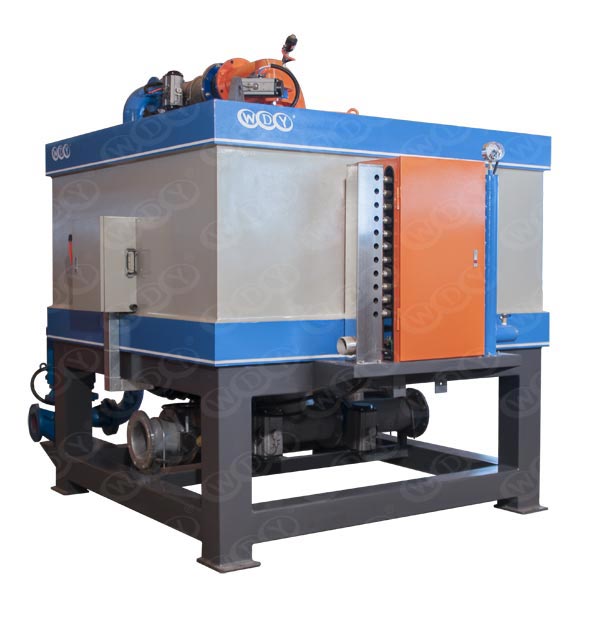
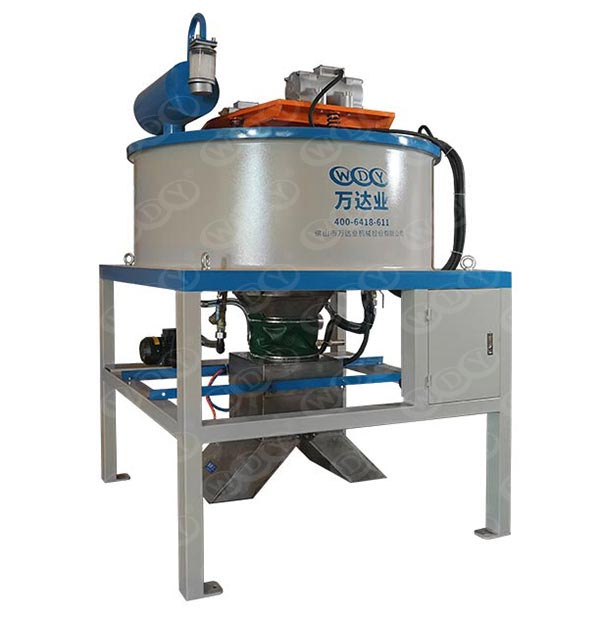
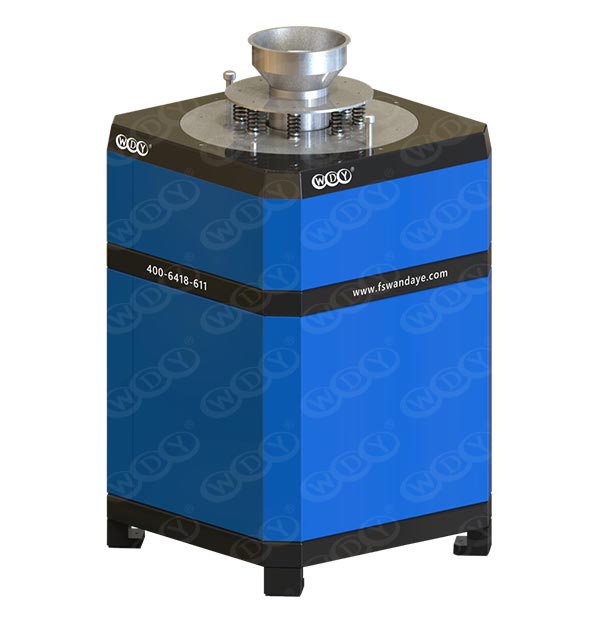
Foshan Wandaye Technology is a specialized magnetic separator manufacturer that integrates R&D, engineering design, production‑line installation and commissioning services, supplying to mines, ceramics, electricity, building materials, glass, environmental protection, rubber, plastics, pharmaceuticals, food, and battery cathode/anode materials. The company offers high gradient electromagnetic slurry machines, powder magnetic separators, permanent magnetic separators, vertical ring machines and related magnetic components. [kumarmagnet]
Key strengths relevant to Indonesian buyers and mid‑sized brands:
– Strong R&D and engineering capability
– Wandaye positions itself as a national innovative high‑tech enterprise, leading a local magnetic equipment industry standard league and working with industry experts and professors on next‑generation separators. [kumarmagnet]
– The company developed high‑efficiency magnetic separators that achieve around 25% energy savings compared with previous generations, with the goal of reaching 30%. [kumarmagnet]
– Quality and certification
– Wandaye holds ISO 9001 quality management certification and OHSAS 18001/ISO 45001 occupational health and safety certifications, underlining its structured approach to quality and worker safety. [kumarmagnet]
– Flexible OEM/ODM and line‑level services
– The firm provides ore beneficiation tests, process design and complete plant erection for non‑metallic minerals like kaolin, feldspar and quartz sand, and can design integrated utilization solutions for tailings and environmental reconstruction. [kumarmagnet]
– For overseas buyers, this translates into strong support for co‑developing customized magnetic roller separators or integrating them into turnkey lines under the buyer’s own brand.
Positioning: Wandaye is particularly suitable for small to medium‑sized brands, local distributors and engineering firms in Indonesia that need high‑performance, energy‑efficient equipment plus deep OEM customization and responsive communication.
4. Chinese OEM suppliers via project export and platforms
In addition to branded manufacturers like Wandaye, several Chinese OEMs supply magnetic roller separators and related machines into Indonesia through project exports and platforms such as Alibaba and Made‑in‑China. These suppliers often target mining and fine mineral separation projects, offering multi‑roller high‑strength separators with customized configurations. [jiaozuohanfamachine.en.made-in-china]
Key takeaways for buyers:
– On major platforms, you can find industrial high‑strength multi‑roller magnetic separators explicitly advertised for fine wet mineral separation and shipped globally, including to Indonesia. [indonesian.alibaba]
– Some product listings highlight permanent magnetic roller designs for mining along with door‑to‑door after‑sales service by engineers, indicating at least some level of field support capability. [indonesian.magneticseparatormachine]
Because the quality level among OEMs is heterogeneous, professional buyers should apply stricter due diligence: checking factory location, real project references, certification documents and the actual entity name behind the platform storefront.
5. Global and regional engineering & trading companies active in Indonesia
While not always the original manufacturers, several regional engineering houses and trading companies source magnetic roller separators from established OEMs (India, China, Europe) and integrate them into processing lines for Indonesian end‑users. These firms typically focus on: [en.indotrading]
– Local engineering design, installation and commissioning of complete systems, such as mineral processing plants or food production lines.
– Spare parts stocking, on‑site troubleshooting and warranty coordination with overseas OEMs.
For buyers whose main concern is local service responsiveness and Bahasa Indonesia communication, working with such integrators can be attractive—provided the OEM source and specifications are transparent.
Comparison of key suppliers serving Indonesia
The table below summarizes indicative differences across several representative suppliers. Values are generalized ranges based on public information about capabilities and typical order patterns; buyers should verify exact figures in quotations. [indonesian.alibaba]
| Supplier / Origin | Typical magnetic roller capacity range (tph, fine minerals) | Typical MOQ for OEM projects (sets) | Key certifications mentioned | Main markets served | OEM/ODM focus |
|---|---|---|---|---|---|
| Permanent Magnet Ltd. (India) | Approx. 1–50 tph depending on model and particle size, with custom designs for higher capacities. pmlindia | Often 1 set for standard models; higher for custom OEM series. pmlindia | Emphasis on magnetic engineering expertise; buyers should request ISO/CE evidence case‑by‑case. pmlindia | Global exports across Asia, Middle East and Africa, with supply into Indonesia. pmlindia | Custom‑engineered separators tailored to application; supports modifications rather than full private‑label branding. pmlindia |
| Kumar Magnet Industries (India) | Wide range from small line capacities in food/textile to larger industrial lines; multiple drum and roller sizes. kumarmagnetind | Typically low MOQ (1–2 sets) due to standard models. kumarmagnet | Promotes quality‑oriented manufacturing; certification details should be confirmed with the factory. kumarmagnetind | Supplies many sectors in Indonesia and other countries, including food, recycling and plastics. kumarmagnet | Offers customization of dimensions and mounting; OEM branding on request via negotiation. kumarmagnet |
| Foshan Wandaye Technology (China) | Covers small lab/pilot units up to complete lines for non‑metallic ore plants; multi‑tonnes per hour for kaolin, feldspar, quartz. kumarmagnet | Very flexible MOQ, often starting from a single set for customized projects, especially for small and medium brands. kumarmagnet | ISO 9001, OHSAS 18001/ISO 45001; focus on high‑efficiency, energy‑saving and intelligent control. kumarmagnet | Strong presence in China’s Pearl River Delta, with exports to Vietnam, India, Iran, Egypt, Malaysia and other regions—experience that translates well for Indonesian projects. kumarmagnet | Strong OEM/ODM and engineering support—process testing, full‑line design, custom control systems and remote monitoring for overseas partners. kumarmagnet |
| Chinese OEMs on platforms (China) | Range from small 1–5 tph machines up to multi‑roller industrial units; data must be checked in each spec sheet. indonesian.magneticseparatormachine | Usually 1 set for standard catalog models; higher for bespoke designs or private‑label series. indonesian.alibaba | Some list CE, ISO and SGS; authenticity must be independently verified. indonesian.alibaba | Global exports via online platforms, including to Indonesia through traders and direct buyers. indonesian.alibaba | Often open to private‑label OEM if volumes allow; engineering depth varies widely between suppliers. indonesian.magneticseparatormachine |
Technical considerations for magnetic roller separators
When narrowing down suppliers, purchasing managers should go beyond basic price comparison and examine the technical suitability of each roller separator for their process. Important technical factors include:
– Magnetic material and field strength
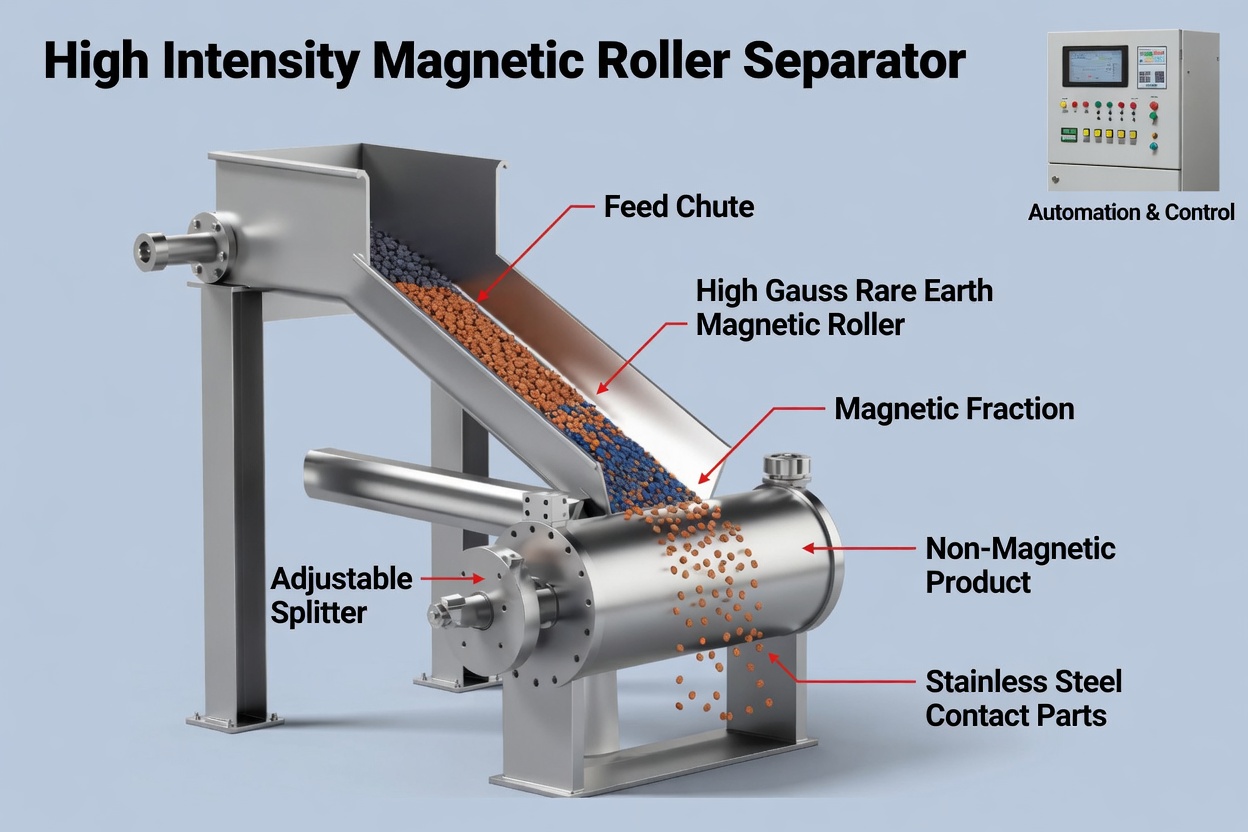
– High‑intensity magnetic roller separators often use rare‑earth magnets to achieve surface field strengths up to the 12,000–15,000 Gauss class, allowing efficient capture of weakly magnetic contaminants in fine particle streams. [indonesian.alibaba]
– For standard iron removal from coarser material, lower field strengths may be adequate and more economical.
– Roller configuration and pole design
– Multi‑roller separators and special pole configurations can significantly improve recovery rates for very fine or weakly magnetic minerals, but increase mechanical complexity. [indonesian.alibaba]
– Buyers should insist on application‑specific design based on feed PSD (particle size distribution), throughput and target purity rather than accepting generic “one‑size‑fits‑all” proposals.
– Build quality and materials
– For food and pharmaceutical use, stainless steel contact parts, sanitary welds and easy‑clean designs are essential to meet hygiene regulations. [kumarmagnet]
– In high‑wear mining environments, wear‑resistant liners and robust bearings reduce lifetime cost.
– Automation, monitoring and energy efficiency
– Advanced suppliers like Wandaye incorporate intelligent monitoring, remote diagnostics and energy‑saving designs into their equipment to reduce operating costs and unplanned downtime. [kumarmagnet]
Industry pain points and how to avoid them
Experienced buyers in the magnetic separation industry observe several recurring “traps” that new buyers often miss. A few of the most important:
– Overstated Gauss values
– Some suppliers quote peak Gauss measured at a single point in the air gap rather than at the working surface under realistic load, which leads to over‑optimistic performance expectations. [indonesian.alibaba]
– Counter‑measure: ask for standardized test methods and, if possible, third‑party test reports or references from similar plants.
– Under‑specified steel and magnet grades
– Substituting lower‑grade magnet materials or cheaper steel can reduce cost but causes faster demagnetization, warping or fatigue failures, which only become visible months after commissioning.
– Counter‑measure: require detailed BOM and material certificates for critical components; verify whether the supplier uses recognized magnet manufacturers.
– Inadequate corrosion & wear protection
– In tropical climates like Indonesia’s, high humidity accelerates corrosion of unprotected magnets and steel surfaces. In mining, abrasive ores can quickly wear down roller covers.
– Counter‑measure: specify corrosion‑resistant coatings, stainless steel housings where needed, and wear‑resistant sleeves or liners; inspect actual surface treatment in factory acceptance tests.
– Hidden limits in after‑sales service
– Some exporters rely entirely on remote support and do not have any partner in Southeast Asia, which can lead to long downtime if major repairs are needed.
– Counter‑measure (insider tip that many experienced buyers follow but rarely publish): always ask who will physically come to your site in Indonesia if a major fault occurs, and include on‑site response time and spare‑parts stocking level as explicit clauses in the purchase contract. This conversation often reveals whether the supplier has real regional commitment or is simply “shipping boxes.”
Practical buyer’s guide for Indonesian projects
Verifying factory and certifications
– Check ISO status and certification body
– Use international accreditation portals such as IAF CertSearch to verify whether the stated ISO certificate number and company name are valid and current. [isoindia]
– Confirm that the certification body itself is accredited and recognized; suspicious or unknown bodies can be a red flag. [vdearwatch]
– Review actual scope of certification
– Ensure the ISO certificate scope explicitly covers “design and manufacture of magnetic separation equipment” rather than a generic “trading of machinery.”
– Validate local compliance expectations
– For installations in Indonesia, coordinate with local authorities or engineering partners regarding requirements for electrical safety, pressure vessels (if applicable), and occupational safety, which may reference international norms such as ISO and CE. [iso-certification-indonesia]
Sampling and testing process
– Request material‑specific testing
– Tier‑1 suppliers like Wandaye maintain laboratories capable of running ore beneficiation tests, chemical analysis and physical property measurements to propose the right separator configuration. [kumarmagnet]
– Send representative samples from your Indonesian plant to the factory for trial runs; ask for a short test report with feed and product analysis to quantify iron reduction or purity improvement.
– Pilot or trial machines
– For high‑value projects, consider leasing or purchasing a pilot‑scale magnetic roller separator to test performance on‑site before committing to large‑scale installations.
Logistics and project execution
– Shipping and customs
– Confirm Incoterms (e.g., CIF Jakarta / Surabaya), packing method (wooden crates, rust protection) and documentation package (commercial invoice, packing list, certificate of origin, test reports). [eximtradedata]
– Check whether the supplier has past experience shipping heavy machinery to Indonesian ports to minimize delays due to documentation errors.
– Installation and commissioning
– Ensure that either the manufacturer’s engineers or trained local partners will supervise installation, alignment and test runs, and that O&M manuals are available in English (and, ideally, partially in Bahasa Indonesia).
Conclusion & call to action
Choosing the right magnetic roller separator supplier for Indonesian projects requires balancing technical performance, compliance, after‑sales support and total cost of ownership rather than focusing solely on initial price. Established manufacturers from India and China, such as Permanent Magnet Ltd., Kumar Magnet Industries and Foshan Wandaye Technology, offer proven equipment and deep engineering support, while local Indonesian partners provide integration and service on the ground. [6wresearch]
For buyers who value flexible OEM cooperation, strong R&D support and energy‑efficient designs suited to fine mineral and ceramics applications, engaging with a high‑tech supplier like Wandaye as a core equipment partner—while coordinating with Indonesian engineering firms for on‑site execution—can be a particularly effective strategy. If you share more details about your target application in Indonesia (for example minerals vs food vs plastics), I can help you draft a more specific vendor short‑list and technical specification template. [wdymagnetic]
Frequently asked high‑level buyer questions (FAQ)
1. How can I verify whether an overseas supplier’s ISO 9001 certificate is genuine and not expired?
– Use the certificate number and company name to search on accredited portals such as IAF CertSearch, or contact the stated certification body directly via its official website. Check issue and expiry dates on the PDF and confirm that the scope matches magnetic equipment manufacturing. [isoindia]
2. When should I choose a high‑intensity rare‑earth magnetic roller separator instead of a standard drum separator?
– High‑intensity rollers are suitable for fine particles and weakly magnetic minerals (for example removing iron impurities from ultra‑fine quartz or feldspar used in ceramics and glass), while standard drums are adequate for coarser, strongly magnetic contaminants. Detailed laboratory testing on your actual material is recommended before deciding. [indonesian.alibaba]
3. What is a realistic lead time for customized magnetic roller separators supplied to Indonesia?
– For experienced manufacturers, typical lead times are around 30–45 days for standard models and up to 60–90 days for fully customized lines, plus sea freight time to Indonesian ports. Complex projects involving multiple units, control systems and on‑site commissioning may take longer. [wdymagnetic]
4. How do I compare quotations from different suppliers beyond unit price?
– In addition to price, compare magnetic field strength at the working surface, roller dimensions and configuration, materials of construction, certifications, energy consumption, after‑sales support terms, and availability of spare parts. Life‑cycle cost (purchase plus maintenance plus energy) is a more realistic benchmark than initial price alone. [wdymagnetic]
5. Can I rely on platform ratings and reviews when selecting a Chinese OEM for my Indonesian project?
– Platform ratings are a useful first filter but not sufficient for capital equipment. Request factory registration documents, certification copies, reference projects, and where possible, arrange a third‑party factory audit or visit. Combine online feedback with formal due diligence before committing to large orders. [indonesian.magneticseparatormachine]
References
1. – Global magnetic separator market forecasts and Asia–Pacific share. [researchandmarkets]
2. – Indonesia magnetic separator market and import trends. [6wresearch]
3. – Indonesia export statistics for industrial products (BPS‑Statistics Indonesia).
4. – Indonesia export data and trading partners. [eximtradedata]
5. – Permanent Magnet Ltd. – magnetic separator product range and presence in Indonesia. [pmlindia]
6. – Kumar Magnet Industries – magnetic separator offering and Indonesian focus. [kumarmagnetind]
7. – Foshan Wandaye Technology – company profile, products, certifications and R&D strength. [fswandaye]
8. – Chinese OEM product examples and multi‑roller magnetic separator listings. [jiaozuohanfamachine.en.made-in-china]
9. – ISO certification landscape in Indonesia and popular standards. [aizenz]
10. – Guidance on verifying ISO certification validity and accreditation. [vdearwatch]
11. – Indonesia magnetic separator overview on local trading platforms. [en.indotrading]
Hot Tags: Magnetic Roller Separator, Manufacturers, Customized, Custom, Suppliers, Buy, Cheap, Quality, Advanced, Durable, in Stock, Made in China, Price, Quotation