


Content Menu
● How to Evaluate a Magnetic Roller Separator Supplier
● Why Source Magnetic Roller Separators for the Philippines
● Our Selection Criteria for Top Suppliers
● Leading Magnetic Roller Separator Manufacturers Serving the Philippines
>> 1. Kumar Magnet Industries (India) – Dedicated Magnetic Roller Separator Lines for Philippines
>> 2. Permanent Magnet Ltd. (PML, India) – Large Product Range Including Magnetic Roller Separators
>> 4. Regional and Global Players Serving Philippine Demand
● Capacity, MOQ and Certification Snapshot
● Technical Considerations for Magnetic Roller Separators
● Common Pitfalls When Sourcing Magnetic Roller Separators (Insider Notes)
● Practical Buyer’s Guide for Philippine Projects
>> Verifying factory legitimacy and certifications
>> Sampling and performance validation
>> Logistics and project execution for the Philippines
● FAQs
>> 3. How do I ensure magnets will not demagnetize quickly in hot Philippine plant environments?
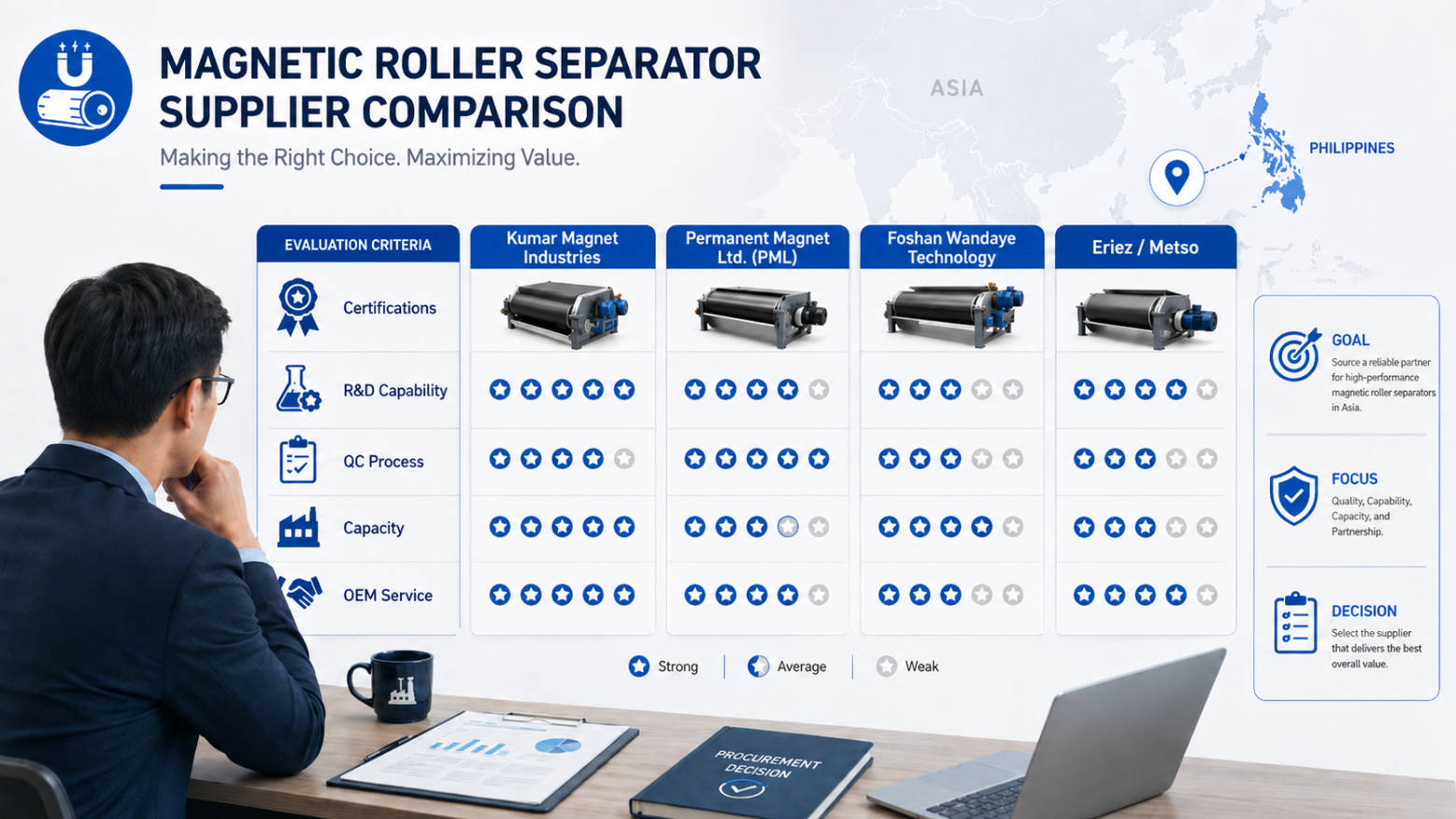
How to Evaluate a Magnetic Roller Separator Supplier
Before looking at specific manufacturers, procurement managers should define clear, auditable criteria for magnetic roller separator suppliers that serve projects in the Philippines and wider ASEAN. These criteria should combine factory hard indicators (certifications, capacity, QC) with softer service factors (engineering support, responsiveness). [persistencemarketresearch]
Key evaluation dimensions that experienced buyers usually focus on:
– Factory certifications and compliance
– Prioritize ISO 9001 for quality management and, where applicable, ISO 14001 for environmental management and ISO 45001/OHSAS 18001 for occupational health and safety. [kumarmagnet]
– For export projects into EU or North America, check CE, RoHS and food‑grade compliance where separators are used in food, pharma or lithium battery lines. [futuremarketinsights]
– Always verify that certificates are current and match the legal entity, not just a group brand name. [hyperbots]
– R&D capability and engineering depth
– Look for suppliers that do in‑house design of high‑gradient and rare‑earth roll separators, not only resell generic OEM machines. [kumarmagnet]
– Evidence includes patents, participation in industry standard committees, and the ability to customize roller size, magnetic intensity and feed systems for Philippine mineral or ceramic applications. [persistencemarketresearch]
– QC process and production control
– Mature suppliers have documented incoming‑material inspection (magnet grade, stainless steel grade), in‑process gauss testing and final performance testing with standard test media. [elitesalesinc]
– Ask for sample QC records for past export batches, especially for harsh mining and cement environments common in the Philippines. [exportgenius]
– Capacity, lead time and delivery stability
– Check annual production capacity in sets/year and typical lead time for standard vs. customized magnetic roller separators. [futuremarketinsights]
– For projects in the Philippines, evaluate whether the supplier can keep stable lead times during peak seasons and offer buffer stock or regional warehousing through local partners. [ensun]
– Service, OEM/ODM capability and communication
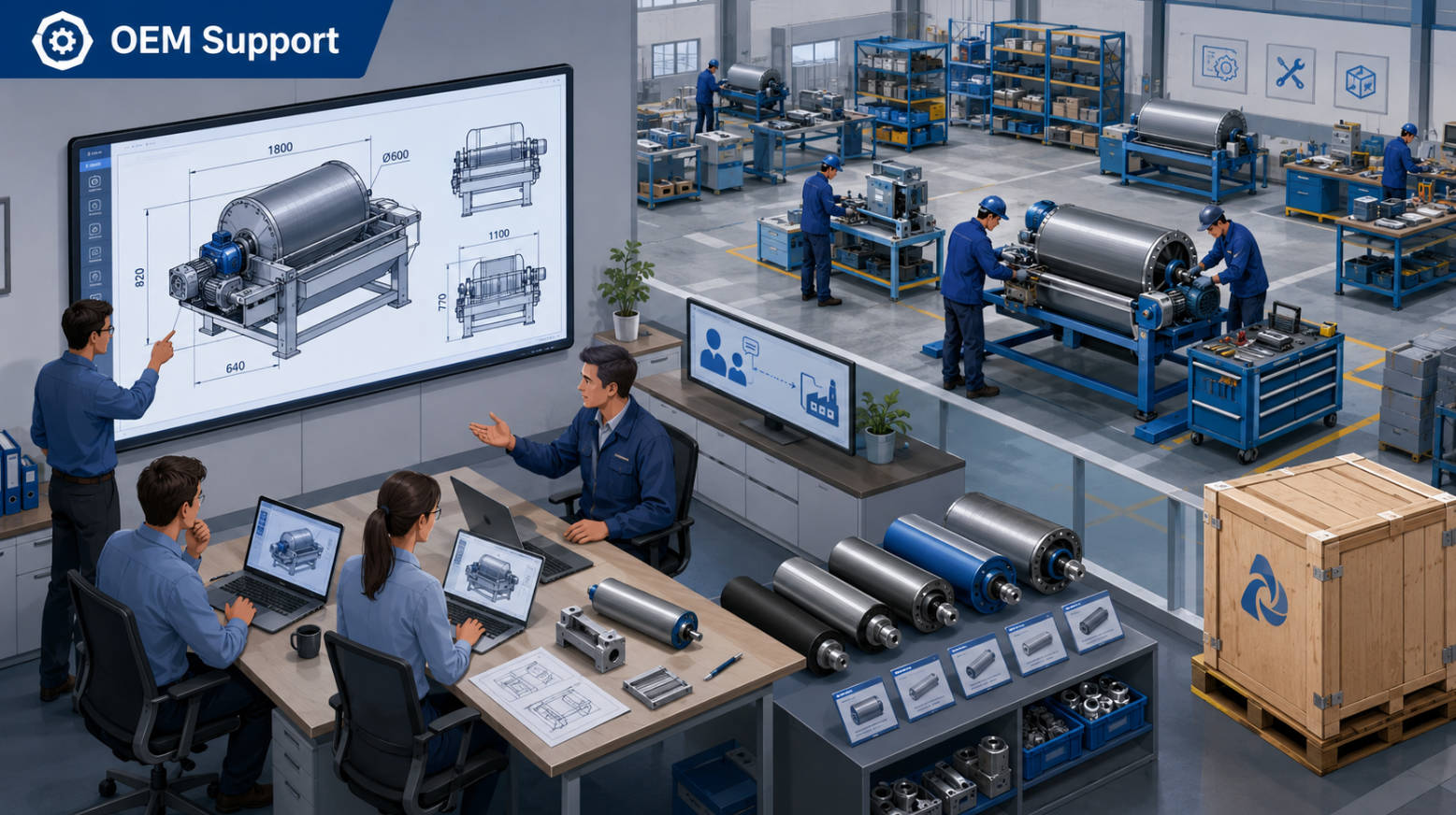
– Strong export‑oriented factories provide English‑language engineering support, CAD drawings, installation guidance and remote commissioning assistance. [kumarmagnet]
– For OEM/ODM, confirm if they can customize branding, color, control panels and integration with existing Philippine plant automation standards. [kumarmagnet]
Why Source Magnetic Roller Separators for the Philippines
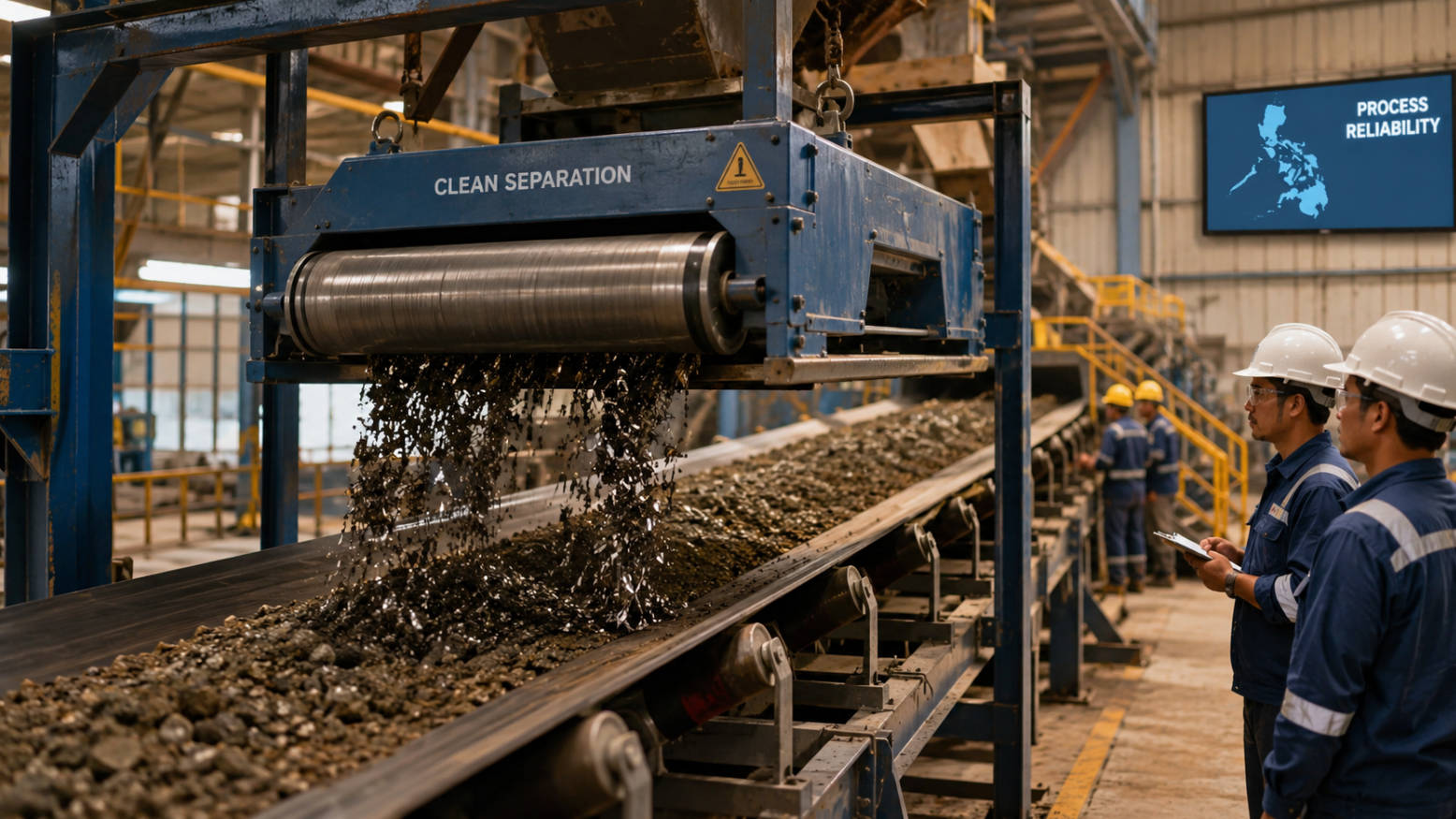
The Philippines is a fast‑developing market for mineral processing, building materials, food, and recycling lines, and many of these projects rely on imported magnetic roller separators from regional manufacturing clusters. Asia‑Pacific already accounts for about one‑third of the global magnetic separator market, with demand driven by mining, construction materials and food processing in countries including the Philippines. [exportgenius]
Global market research shows the magnetic separator market reaching roughly USD 1.2 billion around 2025 and growing at about 5–5.6% CAGR towards 2032, which implies sustained investment in separation equipment in ASEAN over the next decade. Because the Philippines imports much of its heavy magnetic equipment, buyers often combine Indian, Chinese and other international suppliers that can ship competitively into Manila, Cebu and Mindanao ports. [pmlindia]
Sourcing from established clusters in China and India offers advantages in cost, R&D depth and product variety, while local Philippine engineering companies focus more on integration, after‑sales and turnkey system supply. Many buyers therefore select an overseas separator manufacturer plus a local Philippine partner for installation, compliance and maintenance. [ensun]
Our Selection Criteria for Top Suppliers
For this 2026 short list of magnetic roller separator manufacturers serving the Philippine market, we applied transparent and procurement‑oriented criteria based on public information and export track records. [pmlindia]
We considered suppliers that:
– Offer dedicated magnetic roller separator product lines suitable for mineral, ceramic, food or recycling applications relevant to Philippine industry. [ensun]
– Demonstrate export capability to Southeast Asia (including the Philippines) through dedicated country pages, distributor networks or project case references. [pmlindia]
– Hold or reference key quality and safety certifications such as ISO 9001 and other management system accreditations. [elitesalesinc]
– Provide engineering customization or OEM/ODM services (e.g., different roller diameters, multi‑stage separation, special housings or materials). [kumarmagnet]
– Have a multi‑industry footprint, serving at least mining, ceramics, building materials or food sectors that are active in the Philippines. [ensun]
This list is not exhaustive, but it focuses on manufacturers with demonstrable capabilities and export‑friendly structures rather than trading companies. Buyers should still carry out full vendor qualification and due diligence.
Leading Magnetic Roller Separator Manufacturers Serving the Philippines
1. Kumar Magnet Industries (India) – Dedicated Magnetic Roller Separator Lines for Philippines
Kumar Magnet Industries positions itself as one of the notable magnetic roller separator manufacturers and suppliers specifically targeting the Philippines, with products tailored for solid and liquid applications. Their magnetic roller separators are promoted as meeting international quality standards and serving industries such as food, textile, chemical, plastics, grain & milling, oil and recycling, all of which are relevant to Philippine demand. [ensun]
Founded as a specialist magnetics producer in India, Kumar Magnet highlights premium materials, high structural durability and the ability to supply in multiple specifications to match different throughput and particle size ranges. The company markets itself as a reliable exporter to the Philippines, with an emphasis on competitive pricing, transit protection packaging and adherence to agreed delivery windows. [kumarmagnet]
Core strengths for Philippine buyers:
– Focused product page for “Magnetic Roller Separator in Philippines,” indicating familiarity with local shipment and documentation requirements. [ensun]
– Wide application coverage from food and grain to recycling, aligned with growth sectors in the Philippine economy. [persistencemarketresearch]
– Capability to adapt technical specifications to customer processes rather than offering a single standard model. [ensun]
2. Permanent Magnet Ltd. (PML, India) – Large Product Range Including Magnetic Roller Separators
Permanent Magnet Ltd. (PML), founded in 1960, is one of India’s long‑established magnetic separator manufacturers and offers a broad product portfolio including magnetic pulleys, plates, grills, rods, filters, drum separators and magnetic roller separators. PML promotes itself as a leading manufacturer of magnetic separators and explicitly lists magnetic roller separators among its core offerings for customers in the Philippines. [pmlindia]
The company designs and manufactures separators for customer‑specific requirements, which is valuable for Philippine projects needing adaptation to local ore characteristics or food safety standards. With more than six decades of history, PML brings institutional experience in magnet design, high‑volume production and compliance with international norms. [pmlindia]
Core strengths for Philippine buyers:
– Long operating history (since 1960) and broad global customer base, which supports long‑term spare‑parts availability. [pmlindia]
– Full range of magnet products, enabling one‑stop sourcing for multiple separation tasks in a Philippine plant. [pmlindia]
– Custom design capability, which is important for integration into existing conveyors and chutes at Philippine mines and cement plants. [pmlindia]
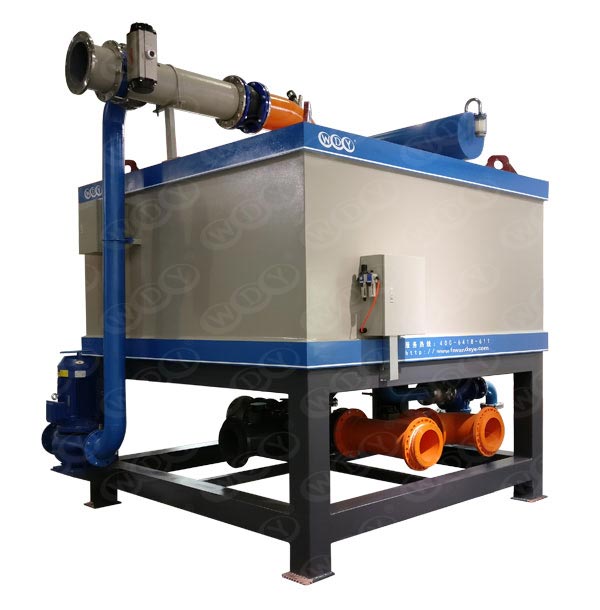
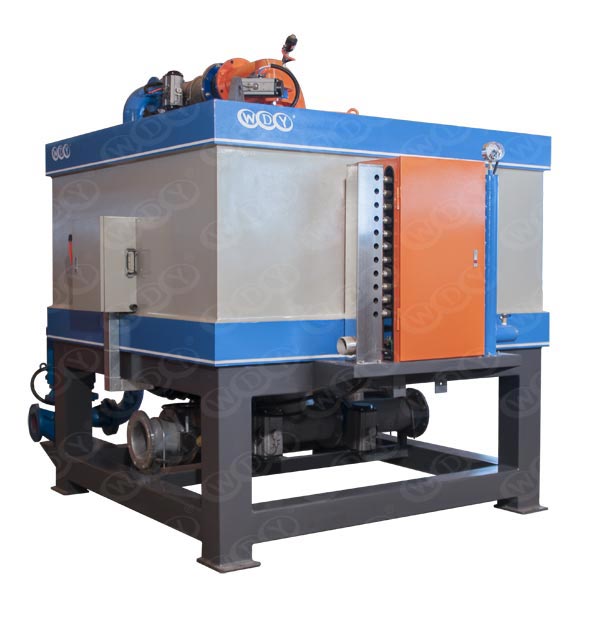
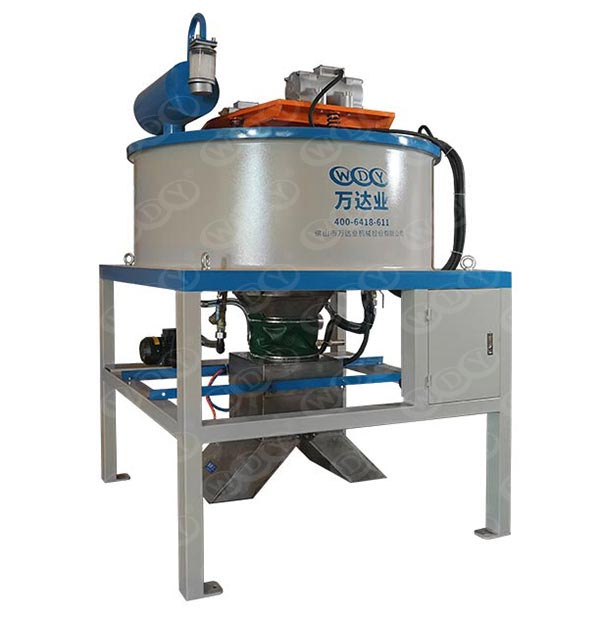
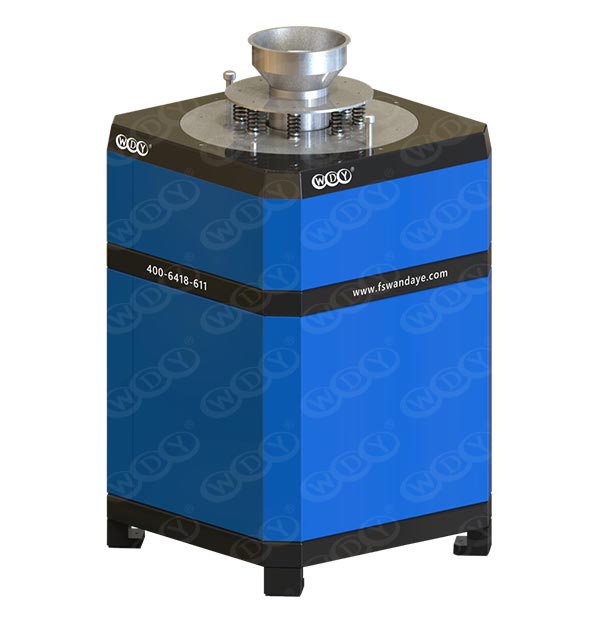
3. Foshan Wandaye Technology Co., Ltd. (China) – R&D‑Driven, High‑Value OEM Partner for Small and Mid‑Size Brands
Foshan Wandaye Technology is a specialized magnetic separator manufacturer that integrates R&D, engineering design, production‑line installation and commissioning, with product lines spanning high‑gradient electromagnetic slurry machines, powder magnetic separators, permanent magnetic separators and related components. Its equipment is widely used in mining, ceramics, building materials, glass, environmental protection, rubber, plastics, medicine, food and battery materials, many of which are growing export sectors linked to Philippine supply chains. [kumarmagnet]
Wandaye holds ISO 9001 quality management certification and OHSAS 18001/ISO 45001 occupational health and safety certifications, underlining a structured approach to quality and employee safety. The company is recognized as a national innovative high‑tech enterprise and serves as secretary of the Foshan Magnetic Equipment Industry Standard League, indicating involvement in setting and interpreting industry standards in China’s Pearl River Delta cluster. [kumarmagnet]
Positioning for global buyers and Philippine projects:
– High cost‑performance: Wandaye positions its equipment as energy‑saving and high‑efficiency, having developed magnetic separators that reduce energy consumption by around 25% versus previous generations, with a roadmap toward 30% savings. [kumarmagnet]
– R&D‑centric OEM/ODM: The company collaborates with industry experts and professors, offers laboratory testing, mineral analysis, process design and full plant erection services for non‑metallic ores such as kaolin, feldspar and quartz sand. [kumarmagnet]
– Flexibility and communication: With project experience across Vietnam, India, Iran, Egypt, Malaysia and other regions, Wandaye is accustomed to mid‑size overseas customers who require closer engineering communication, rapid customization and collaborative process optimization rather than off‑the‑shelf machines. [kumarmagnet]
For Philippine buyers—particularly trading companies, EPC contractors and emerging local brands—Wandaye fits well as a flexible OEM/ODM partner that can customize magnetic roller and related separators and support them with testing, process design and remote monitoring/maintenance features. [kumarmagnet]
4. Regional and Global Players Serving Philippine Demand
Besides India‑ and China‑based specialists, several global magnetic separator manufacturers have the scale and portfolio to support large‑scale Philippine projects, even when not always branding specific “Philippines” pages. Market research lists companies such as Eriez, Goudsmit Magnetics, Industrial Magnetics, Eclipse Magnetics, Metso, Bunting Magnetics, LONGi Magnet and Shandong Huate among key global magnetic separator producers. These suppliers often work through regional distributors or EPC partners to serve Southeast Asia, including the Philippines. [marketsandmarkets]
Eriez and Metso, in particular, are recognized for strong footprints in mining and mineral processing, which aligns with the Philippine focus on nickel, copper and gold projects. Large‑scale buyers that prioritize brand track record, advanced process modeling and global service networks may shortlist such companies for complex concentrator plants or integrated processing lines. [rmis.jrc.ec.europa]
Capacity, MOQ and Certification Snapshot
The table below summarizes typical positioning of the highlighted manufacturers for buyers sourcing for the Philippines. Exact figures should be confirmed directly during RFQ since they vary by model and project.
| Manufacturer / Region | Typical positioning for Philippines | Indicative MOQ for custom roller models | Key certifications / strengths (to verify) |
|---|---|---|---|
| Kumar Magnet Industries (India) | Export‑oriented, multiple specs for food, recycling, general use | Often 1–3 sets for OEM; higher for standard series | Focus on international quality compliance and custom sizing. ensun |
| Permanent Magnet Ltd. – PML (India) | Large portfolio, long history, broad industry coverage | Project‑based; small‑batch customization possible | Established manufacturer (since 1960) with design capability. pmlindia |
| Foshan Wandaye Technology (China) | R&D‑driven, high‑efficiency designs, strong in non‑metallic ores | Flexible for small and mid‑size OEM orders | ISO 9001 and OHSAS 18001/ISO 45001; high‑tech enterprise; energy‑saving designs. kumarmagnet |
| Global majors (Eriez, Metso, etc.) | Large mining and process plants, premium engineering and brands | Typically project packages, not small lots | Global certifications; strong simulation and process support. marketsandmarkets |
Technical Considerations for Magnetic Roller Separators
From a technical perspective, buyers should look beyond basic “magnetic separator” labels and examine the specification fit for Philippine raw materials and process steps. Key aspects include: [futuremarketinsights]
– Magnet material and grade
– High‑intensity applications (e.g., removing weakly magnetic contaminants from quartz or feldspar) usually require rare‑earth (NdFeB) rollers with high surface gauss. [persistencemarketresearch]
– For primary tramp iron removal in mining conveyors, ferrite‑based designs may be sufficient and more cost‑effective.
– Configuration and stage design
– Single‑stage vs multi‑stage magnetic roller arrangements determine separation efficiency for fine and ultra‑fine particles. [marketsandmarkets]
– Adjustable splitter positions and belt speed control help tune separation for specific Philippine ores or recycled materials.
– Mechanical construction and hygiene
– For food or pharma applications, stainless steel housings, smooth welds and CIP‑friendly designs are crucial, along with relevant hygiene approvals. [persistencemarketresearch]
– In mining and cement, heavy‑duty bearings, protective covers and dust control interfaces should be assessed.
– Control and digital features
– Some newer separators integrate remote monitoring, diagnostics and cloud‑based performance tracking, which can reduce downtime in remote Philippine plants. [kumarmagnet]
– Check compatibility with local control standards and available technical skill on site.
Common Pitfalls When Sourcing Magnetic Roller Separators (Insider Notes)
Experienced buyers in the magnetic separation industry often encounter recurring issues that are not always fully discussed in public marketing materials. Below are some insider “avoid‑the‑trap” tips: [futuremarketinsights]
– Overstated gauss levels
– A common issue is quoting peak surface gauss under ideal lab conditions, which can be significantly higher than effective gauss under operating air gaps and layer thickness. [marketsandmarkets]
– Ask for test reports showing performance with representative Philippine materials and realistic feed rates, not just peak gauss numbers.
– Magnet grade substitution
– In tight cost situations, some suppliers may quietly downgrade magnet grade or reduce magnet volume while keeping similar nameplate gauss ratings. [marketsandmarkets]
– Mitigation: require detailed BOM with magnet grade, magnet dimensions and weight, and include random inspection with a third‑party inspector before shipment.
– Stainless steel mis‑specification
– In food and battery materials, using lower stainless grades than agreed (e.g., 201 instead of 304/316) can lead to corrosion and compliance issues. [persistencemarketresearch]
– Mitigation: request material certificates and, for strategic projects, PMI (Positive Material Identification) reports.
– Hidden capacity constraints
– Smaller factories may accept Philippine projects but subcontract critical components, making real lead times and QC more fragile than expected. [persistencemarketresearch]
– Mitigation: ask for a production schedule, main process flow and whether the core magnet assembly is in‑house.
– Internal industry tip many experienced buyers know but is rarely written:
– When you request “equivalent” designs from different factories, ensure that you standardize the *magnetization direction and pattern* (e.g., multi‑pole vs fewer strong poles) during RFQ.
– Suppliers sometimes optimize pole configuration differently; a design with fewer, stronger poles can look better in spec sheets but perform worse for very fine Philippine ores than a design with more, evenly distributed poles.
– To avoid this, provide a standardized test material and separation target and have all potential suppliers test under identical conditions and report recovery and purity, not just gauss and power.
Practical Buyer’s Guide for Philippine Projects
Verifying factory legitimacy and certifications
– Check certifications directly with issuing bodies
– Use ISO registries or certification body websites to confirm that ISO 9001/14001/45001 certificates are valid, not expired, and match the full legal company name and address. [hyperbots]
– Cross‑check that the certification scope includes design and manufacture of magnetic separation equipment, not only “metal products” in general. [hyperbots]
– Evaluate governance and industry role
– Give extra weight to suppliers that hold roles in industry associations or standard‑setting groups, such as Wandaye’s secretary role in a magnetic equipment industry standard league. [kumarmagnet]
– This often correlates with more systematic R&D and compliance practices.
Sampling and performance validation
– Request application‑specific samples or test runs
– Send representative Philippine ore, ceramic slip, or food product samples to shortlisted suppliers and request detailed separation test reports. [persistencemarketresearch]
– Review parameters such as feed rate, particle size distribution, moisture, gauss profile, recovery rate and product purity.
– Use structured FAT (Factory Acceptance Test) protocols
– For mid‑ to large‑scale orders, define FAT procedures including mechanical checks, no‑load running, and test with standard ferrous contaminants. [futuremarketinsights]
– Consider third‑party inspection in China or India before shipment to the Philippines.
Logistics and project execution for the Philippines
– Shipping and packaging
– Ensure separators are packaged with corrosion protection and robust crating suitable for sea freight to Philippine ports. [ensun]
– Clarify incoterms (FOB, CIF, DAP) and responsibilities for local customs clearance and inland transport.
– Installation and commissioning support
– Confirm availability of remote commissioning guidance, local partners, or the possibility of sending engineers to the Philippines for larger projects. [kumarmagnet]
– Ask for electrical and mechanical drawings early to coordinate with local contractors.
Conclusion and Next Steps
For procurement managers sourcing magnetic roller separators into the Philippines, combining a structured evaluation framework with a short list of export‑oriented manufacturers can significantly reduce project risk and lifecycle cost. Suppliers such as Kumar Magnet Industries, Permanent Magnet Ltd. and Foshan Wandaye Technology each bring different strengths—from broad portfolios and long histories to R&D‑driven, high‑value OEM support for small and mid‑size brands—while global majors support very large, complex projects. [marketsandmarkets]
A practical approach is to shortlist 3–4 suppliers, run standardized material tests, verify certifications and governance, and then negotiate not only price but also service scope, energy efficiency and long‑term support for Philippine operations. If you share more about your target industries in the Philippines (e.g., mining vs. ceramics vs. food), we can refine this list and provide a more focused RFQ checklist tailored to your exact buyer persona. [futuremarketinsights]
FAQs
1. How can I verify that an ISO certificate from a separator manufacturer is genuine and not expired?
– Use the certificate number to check on the issuing certification body’s official website or via the IAF (International Accreditation Forum) database, confirming validity dates and scope. [elitesalesinc]
– Compare the legal entity name and address on the certificate with the business license and contract documents; if they differ, require clarification and updated certificates. [hyperbots]
2. What is the best way to compare offers when different suppliers quote different gauss levels and pole configurations?
– Standardize test conditions by asking all suppliers to run separation tests on the same material sample with defined feed rate and target purity, and compare recovery/purity results. [marketsandmarkets]
– Treat gauss and power as secondary indicators; prioritize actual performance data and energy consumption per ton of product.
3. How do I ensure magnets will not demagnetize quickly in hot Philippine plant environments?
– Specify maximum operating temperature and magnet grade (e.g., high‑temperature NdFeB) in the contract, and verify the design margin over expected line temperature. [futuremarketinsights]
– For high‑temperature points, ask if the supplier has reference installations in similar climates and request performance feedback.
4. When is it worth paying extra for energy‑efficient or “smart” magnetic rollers with remote monitoring?
– For continuous‑duty lines with high energy costs or difficult access (remote mines, island facilities), the long‑term savings and reduced unscheduled downtime can offset higher upfront prices. [persistencemarketresearch]
– If your Philippine operation runs intermittent shifts or small capacity, a simpler design may be more economical, with manual inspection protocols.
5. How can I structure contracts to avoid quality downgrades (e.g., lower magnet grades or thinner housings) between sample and mass production?
– Include detailed technical annexes specifying magnet grade, dimensions, housing material, thickness, and QC procedures, plus right of random third‑party inspection before shipment. [marketsandmarkets]
– Tie final payment milestones to successful FAT and conformity of mass‑production units with approved samples and drawings.
References
1. Kumar Magnet Industries – Magnetic Roller Separator in Philippines (manufacturer product page). [ensun]
2. Permanent Magnet Ltd. – Magnetic Separator in Philippines and product portfolio (manufacturer page). [pmlindia]
3. Foshan Wandaye Technology Co., Ltd. – Company profile, certifications, R&D and applications. [kumarmagnet]
4. Persistence Market Research – “Magnetic Separator Market Forecast 2025–2032” (global market size and APAC share). [persistencemarketresearch]
5. Future Market Insights – “Magnetic Separator Market Share Analysis and Size Forecast (2025–2035)” (market growth data). [futuremarketinsights]
6. MarketsandMarkets – “Top Companies List of Magnetic Separator Industry” (overview of key global manufacturers). [marketsandmarkets]
7. Elite Sales Inc. – Explanation of ISO 9001 certification purpose and quality management framework. [elitesalesinc]
8. Hyperbots – “What is ISO Certification Verification?” (process and best practices for verifying ISO certificates). [hyperbots]
9. Export Genius – Philippine mining equipment importers list (evidence of import‑driven equipment supply). [exportgenius]
10. European Commission JRC – “Mining equipment exports” scoreboard document (context on global mining equipment trade). [rmis.jrc.ec.europa]
Hot Tags: Magnetic Roller Separator, Manufacturers, Customized, Custom, Suppliers, Buy, Cheap, Quality, Advanced, Durable, in Stock, Made in China, Price, Quotation