


Content Menu
● What Is a Magnetic Drum Separator?
● Key Components and Working Principle
>> Step‑by‑step working process
● Main Types of Magnetic Drum Separators
>> Wet drum magnetic separators
>> Dry drum magnetic separators
>> Permanent vs. electromagnetic drum separators
● Where Magnetic Drum Separators Are Used Today
>> Mining and mineral processing
>> Recycling and metal recovery
>> Manufacturing, food and pharmaceuticals
● Powder Magnetic Separators vs Drum Separators
>> What is a Powder Magnetic Separator?
● Why Permanent Magnetic Separators Matter for Modern Plants
● How to Choose the Right Magnetic Drum Separator
● Why Choose Foshan Wandaye for Powder and Drum Magnetic Separation
● Installation, Operation and Maintenance Best Practices
● Example Specification Scenario: Ceramic Powder Line
● Quick Comparison Table of Magnetic Separator Options
● Call to Action: Optimize Your Powder or Drum Separation Line
>> 1. What is the main purpose of a magnetic drum separator?
>> 2. How do I know if I need a wet or dry drum separator?
>> 3. Can magnetic drum separators remove non‑magnetic metals like aluminum?
>> 4. What maintenance do permanent magnetic drum separators require?
>> 5. Why should I consider Foshan Wandaye for my separator project?
If you run a plant where metal contamination in powders, slurries or bulk materials can damage equipment or ruin product quality, understanding modern magnetic drum separators is not optional – it is business‑critical. As an engineer who has evaluated and specified magnetic systems in ceramics, mining and battery material lines, I’ve seen both the cost of choosing the wrong separator and the upside of using the right drum, powder, or permanent solution from a specialist like Foshan Wandaye Technology Co., Ltd. [wdymagnetic]
What Is a Magnetic Drum Separator?
A magnetic drum separator is a continuous, self‑cleaning device that removes ferrous metals from a flowing material stream using a rotating drum with a stationary magnetic core. It is widely used in mining, recycling, ceramics, plastics, glass, power generation, building materials, and food processing where metallic contamination must be minimized. [okonrecycling]
In practice, drum separators are installed under a vibratory feeder or conveyor so that materials pass over the drum surface while magnets inside the drum attract iron particles, which are then carried out of the product stream and discharged into a separate chute. [tinsleycompany]
Key Components and Working Principle
From a process engineer’s point of view, a well‑designed magnetic drum separator is simple but very precise in how it controls material flow and magnetic exposure. [greatmagtech]
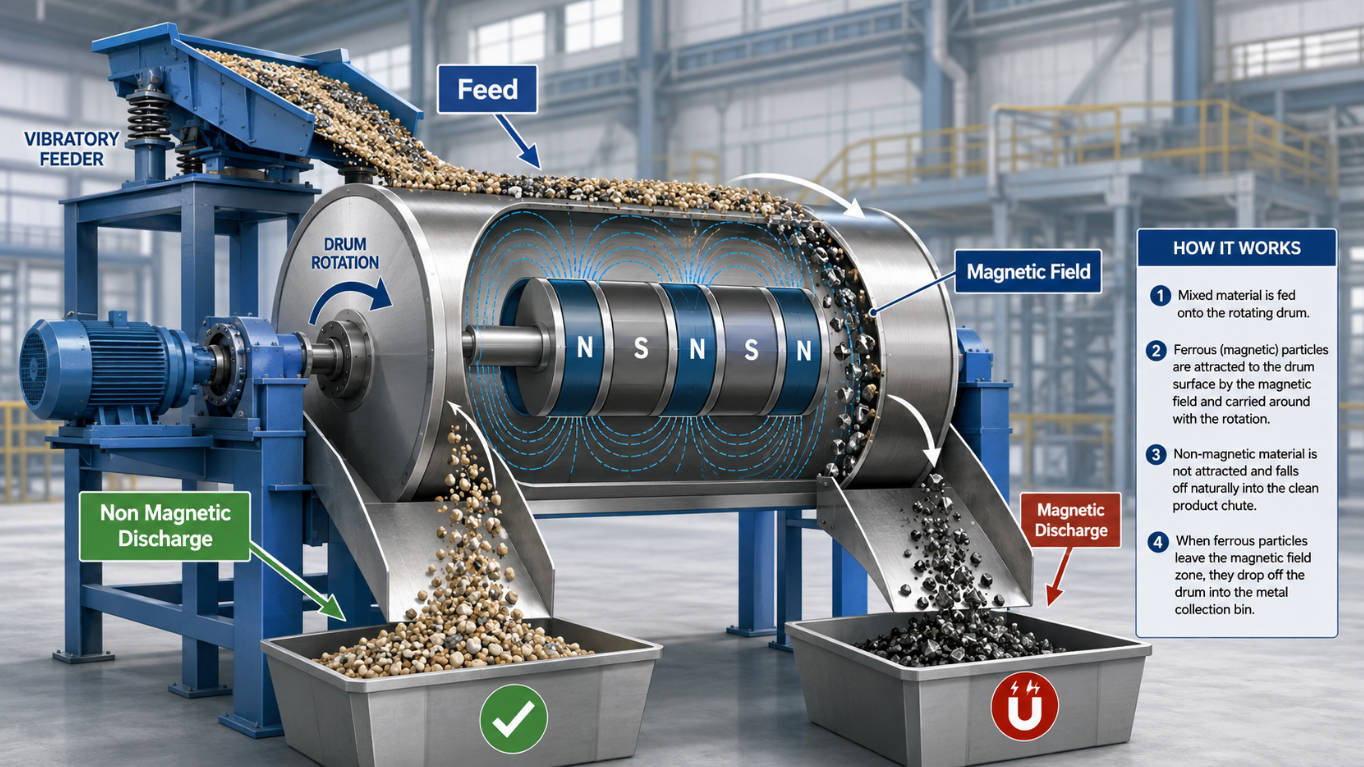
Core components
Non‑magnetic rotating drum shell, usually stainless steel or manganese steel. [okonrecycling]
– Stationary internal magnetic system (permanent magnets or electromagnets). [greatmagtech]
– Feed system (vibratory feeder or conveyor) to create a uniform burden depth. [tinsleycompany]
– Adjustable splitter or discharge chute to separate “magnetic” and “clean” fractions. [greatmagtech]
Step‑by‑step working process
. Feeding: Bulk material, powder, or slurry is delivered onto the rotating drum through a feeder, forming a thin, even layer. [tinsleycompany]
2. Magnetic capture: As particles contact the drum surface, ferrous contaminants are attracted to, and held by, the strong magnetic field from the internal magnet system. [okonrecycling]
3. Transport: The rotating drum shell carries the captured metal around its circumference, away from the main product flow. [okonrecycling]
4. Discharge: Once the metal particles move out of the magnetic zone, the magnetic force drops off, gravity takes over, and ferrous material falls into a separate collection bin, while non‑magnetic material follows the main trajectory. [tinsleycompany]
This continuous action makes drum separators ideal for high‑volume, 24/7 operations in mining, recycling, and large powder processing lines. [elcanindustries]
Main Types of Magnetic Drum Separators
Different drum designs exist because no single configuration can handle all materials and process conditions. [greatmagtech]
Wet drum magnetic separators
et drum separators use water as the separation medium and are common in mineral processing and coal preparation. The drum rotates in slurry, capturing magnetic minerals like magnetite while non‑magnetic gangue flows past and is discharged. [greatmagtech]
– Best for: Iron ore beneficiation, coal desliming, dense media recovery. [greatmagtech]
– Advantages: High recovery of fine magnetic particles and good control over product grade. [greatmagtech]
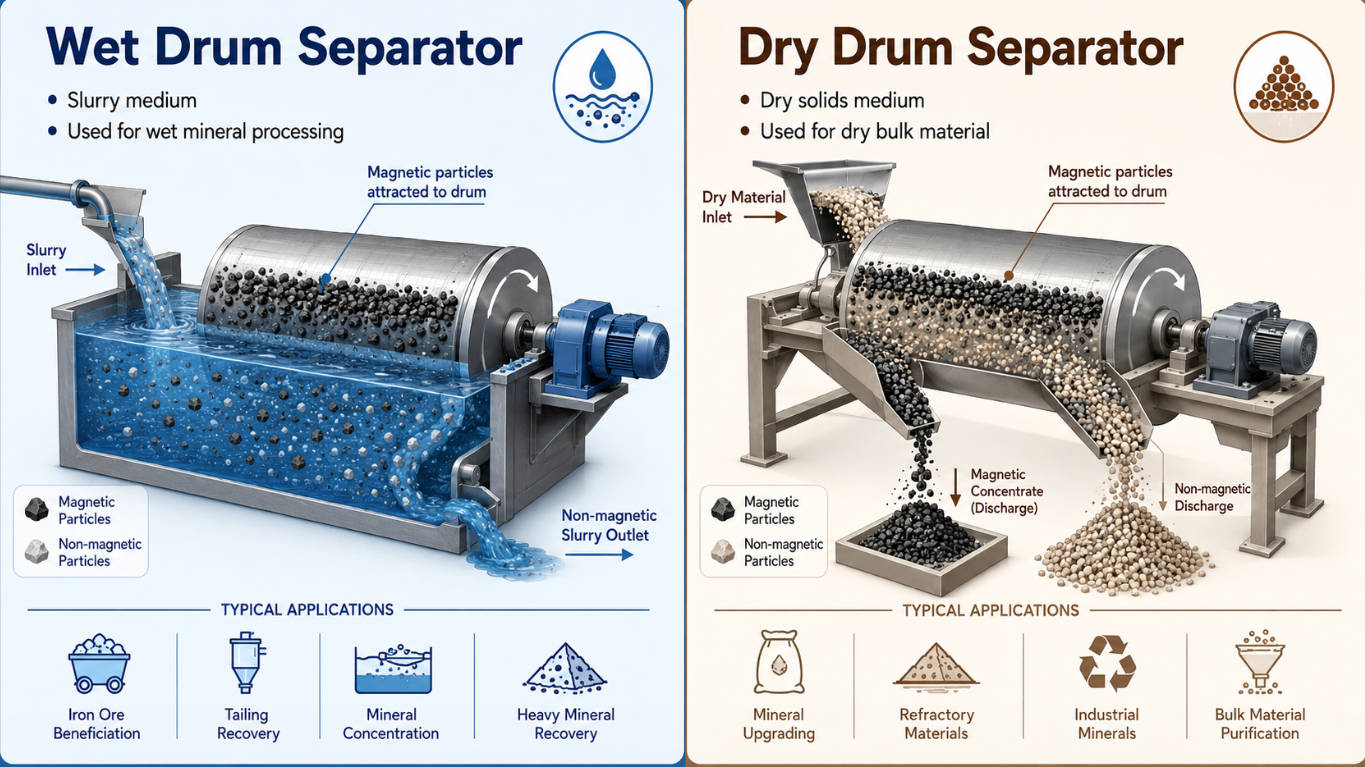
Dry drum magnetic separators
ry drum separators use air as the medium and treat dry, free‑flowing solids such as grain, sugar, plastics or mineral sands. The rotating drum passes through a stationary magnetic field, attracting iron filings, scale and tramp metal from the product. [elcanindustries]
– Best for: Grain, sugar, free‑flowing minerals, plastics pellets, and dry powders when moisture must be avoided. [elcanindustries]
– Advantages: Simple installation, low operating cost, and easy maintenance for low‑to‑medium throughput duties. [elcanindustries]
Permanent vs. electromagnetic drum separators
*Permanent drum separators** use rare‑earth or ferrite permanent magnets that require no external power, providing a stable magnetic field for the life of the equipment. They are widely applied in plastics, chemical powders, and food processing because of their efficiency and reliability. [machinerylubrication]
Electromagnetic drum separators rely on coils energized with DC current to generate the magnetic field, and can be tuned to different field strengths for different products and contaminant levels. This flexibility makes them popular in mining and heavy recycling, where feed characteristics vary and deep magnetic reach is needed. [machinerylubrication]
Where Magnetic Drum Separators Are Used Today
Modern drum separators are deployed across an unusually broad range of industries because they solve three universal problems: product purity, equipment protection, and regulatory compliance. [okonrecycling]
Mining and mineral processing
n mining, drum separators extract magnetic minerals such as magnetite from non‑magnetic gangue or from valuable non‑ferrous ores (like gold and copper). Installed over or under conveyors, they reduce downstream load on grinding, flotation and refining equipment by pre‑removing ferrous content. [greatmagtech]
Recycling and metal recovery
ecycling plants use drum separators to recover iron and steel from mixed waste streams, including automotive shred, construction debris, and electronic scrap. By cleaning recyclables and concentrating ferrous fractions, operators increase recovered metal value and improve the quality of glass, plastics and non‑ferrous products. [okonrecycling]
Manufacturing, food and pharmaceuticals
n manufacturing, magnetic drum separators remove metallic fines and tramp metals from raw materials before processing, preventing machine damage and product defects. The pharmaceutical industry uses magnetic separation to remove metal contaminants from medications and equipment surfaces, improving patient safety and compliance with strict quality standards. [elcanindustries]
Powder Magnetic Separators vs Drum Separators
For powder‑intensive industries, powder magnetic separators and drum separators often work together, not in competition. [linkedin]
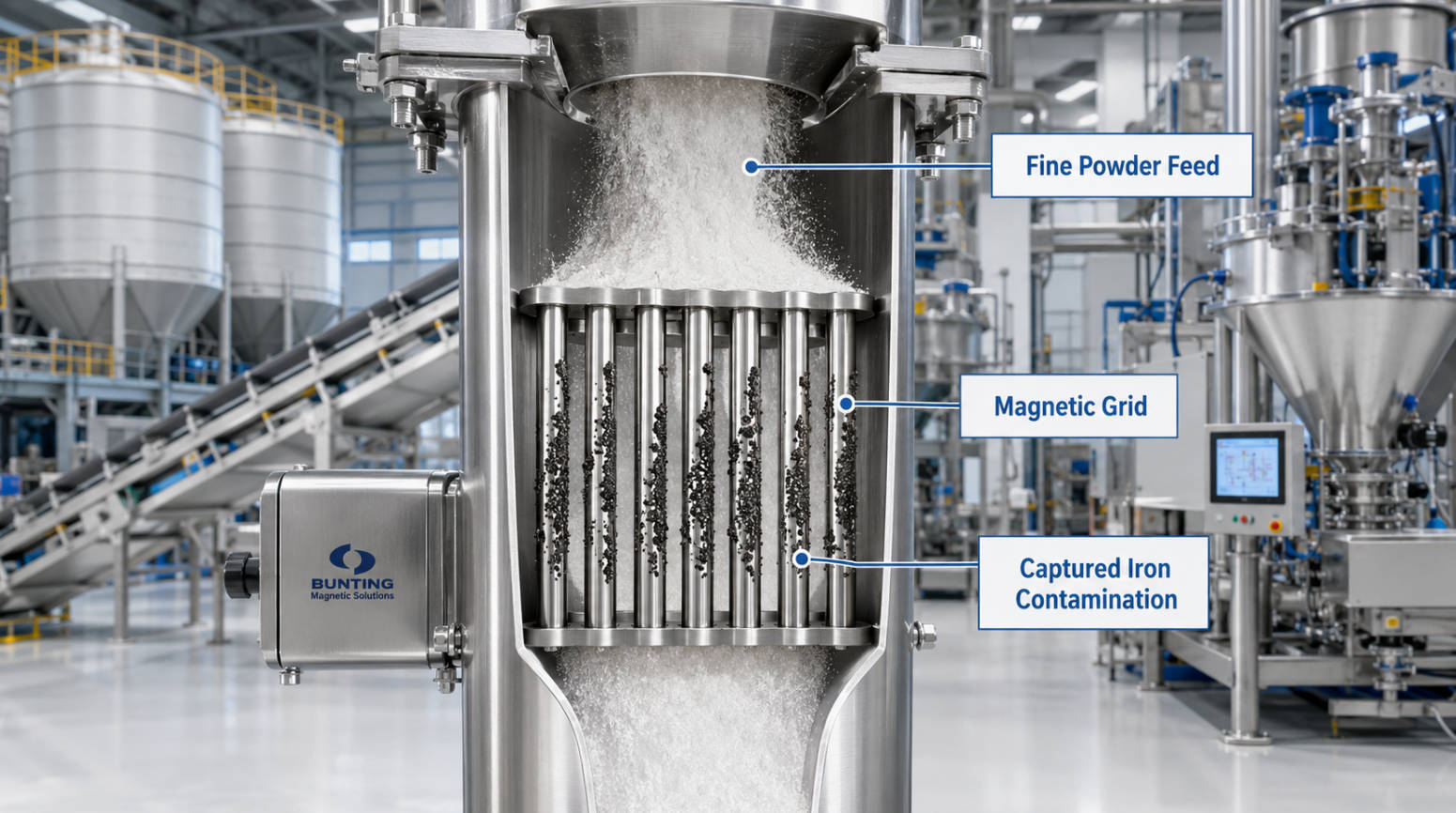
What is a Powder Magnetic Separator?
powder magnetic separator is designed for fine powders and granules, using magnetic grids, tubes, or dedicated powder units to capture iron from free‑falling or pneumatic conveying lines. Industries such as food processing, pharmaceuticals, chemicals and advanced materials rely on this technology to ensure product purity and meet global safety standards. [linkedin]
When to use powder vs drum
Use powder magnetic separators when material is very fine, free‑flowing, and handled in gravity or pneumatic lines, such as flour, ceramic powders, battery cathode/anode powders, pigments and polymer additives. [wdymagnetic]
– Use drum separators when material is coarser, or when you need continuous separation from a conveyor or vibrating feeder, such as in mining, waste recycling, or bulk solids handling. [okonrecycling]
In many ceramic and lithium‑battery plants, I have seen powder separators installed upstream for fine polishing, with drum separators positioned at critical transfer points to intercept larger tramp metal before it reaches high‑value equipment.
Why Permanent Magnetic Separators Matter for Modern Plants
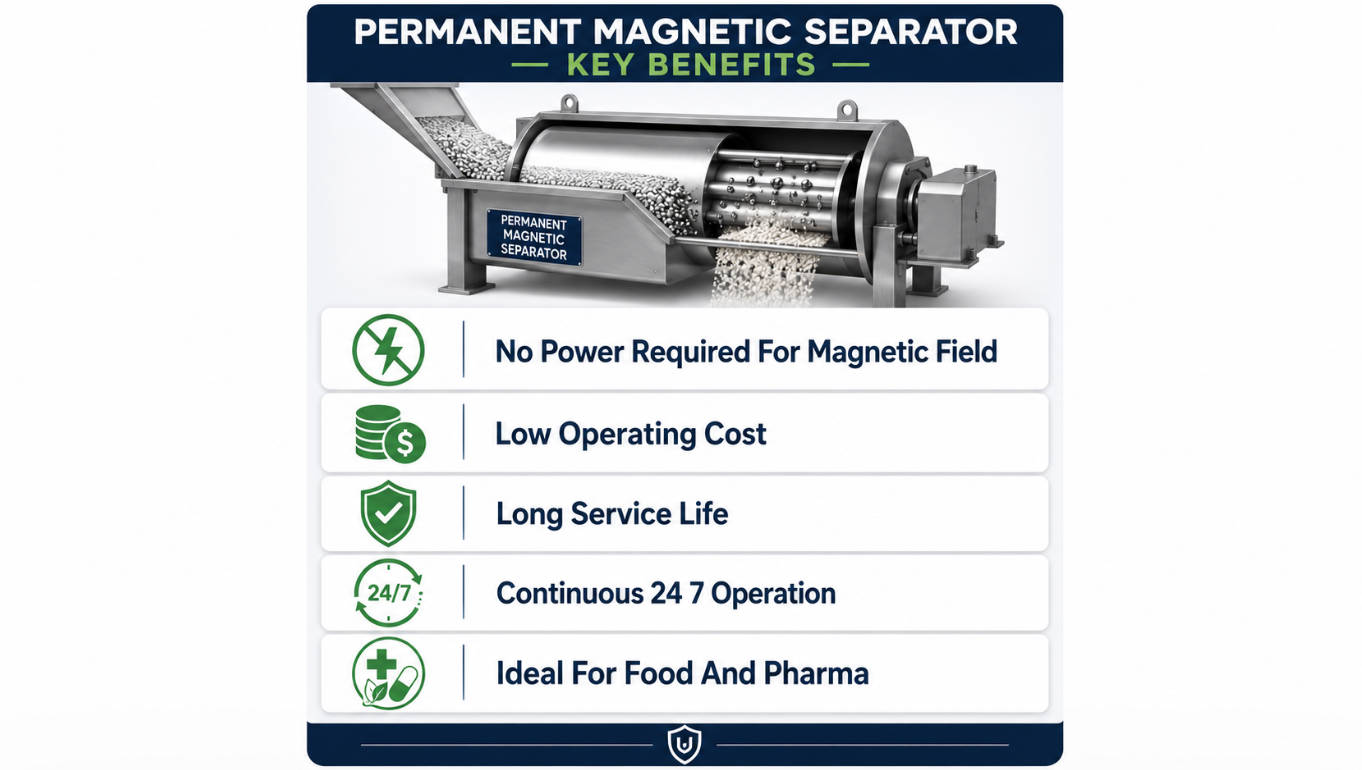
Permanent magnetic separators – including permanent magnetic drums, plates, bars and grids – have become the backbone of low‑maintenance, energy‑efficient separation lines. [wdymagnetic]
– They do not require power to generate the magnetic field, cutting operating costs and simplifying wiring. [greatmagtech]
– With modern rare‑earth designs, they maintain strong magnetic performance for 10 years or more under typical industrial conditions. [machinerylubrication]
– They are ideal for continuous duty in high‑purity applications such as food, pharmaceuticals, plastics and chemical powders. [elcanindustries]
For an equipment supplier like Foshan Wandaye, permanent magnetic drum and powder separators are often the first recommendation when customers want robust separation without adding complexity to their control system. [fswandaye]
How to Choose the Right Magnetic Drum Separator
From an engineering design perspective, selecting the right drum separator is about matching magnet strength, configuration and handling method to your specific application. [elcanindustries]
Critical selection factors
Material type: Powder, granules, chips, slurry or bulk solids. [elcanindustries]
– Particle size and shape: Fine dust behaves very differently from large bolts or steel scraps. [greatmagtech]
– Required purity: Food and pharmaceutical lines have much stricter limits than construction aggregates or some recycling streams. [elcanindustries]
– Contaminant characteristics: Size, concentration, and whether contaminants are weakly or strongly magnetic. [greatmagtech]
– Throughput and layout: Available installation space, conveyor speed, and target tonnage per hour. [elcanindustries]
Practical selection steps
. Define your incoming contamination level and target residual metal level at the outlet.
2. Analyze the material (moisture, temperature, particle size distribution, bulk density).
3. Decide between wet vs dry operation based on the process route.
4. Choose permanent vs electromagnetic based on flexibility needs and power availability.
5. Work with a specialist manufacturer to test representative samples and fine‑tune magnet strength and splitter settings. [wdymagnetic]
In my experience, pilot testing with the actual feed material is often where hidden issues (like product sticking, poor flow, or unexpected fine metallic dust) are discovered and solved before full‑scale investment.
Advantages and Limitations
Key advantages
Improved product quality: Removing ferrous contaminants protects brand reputation and reduces customer complaints. [elcanindustries]
– Equipment protection: Less damage to mills, extruders, crushers, and packaging machinery from stray metal. [greatmagtech]
– Regulatory compliance: Easier to meet food, pharma and environmental standards when metals are reliably removed. [linkedin]
– Cost and energy savings: Permanent drums, in particular, operate with low power (only for rotation) and minimal maintenance. [machinerylubrication]
Typical limitations
Magnetic drum separators cannot capture non‑magnetic metals such as pure aluminum, copper or stainless steels that are not magnetically responsive. [okonrecycling]
– Very fine non‑ferromagnetic dust, even if metallic, will pass through unless combined with other separation technologies. [elcanindustries]
– Incorrect setup (poor feeding, wrong magnet strength, or misaligned splitter) can sharply reduce efficiency, which is why expert configuration and commissioning are crucial. [en.fswandaye]
Why Choose Foshan Wandaye for Powder and Drum Magnetic Separation
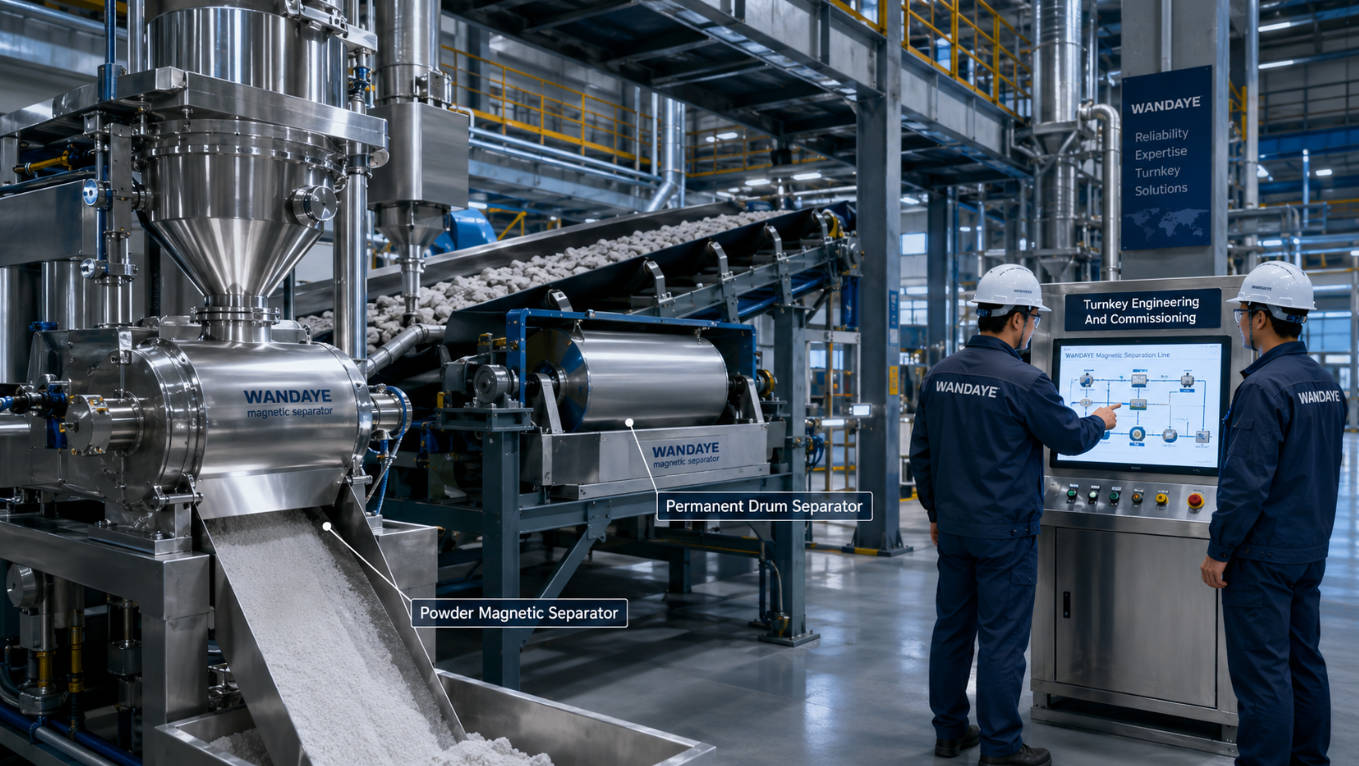
Foshan Wandaye Technology Co., Ltd. is a specialized magnetic separator manufacturer that integrates R&D, engineering design, production‑line installation and commissioning into a single service offering. The company focuses on powder magnetic separators, permanent magnetic separators, high‑gradient electromagnetic separators, and supporting magnetic bars, plates and boxes for complex industrial environments. [fswandaye]
Wandaye’s equipment is used in mineral processing, ceramics, electric power, building materials, glass, environmental protection, rubber, plastics, pharmaceuticals, food and cathode/anode materials for batteries, where fine powder purity and long‑term reliability are essential. As a high‑tech enterprise holding ISO 9001 and occupational health and safety certifications, Wandaye supports customers from early process consultation through on‑site installation and line optimization. [en.fswandaye]
Installation, Operation and Maintenance Best Practices
From the field, successful magnetic drum installations share several practical habits that protect performance and uptime. [tinsleycompany]
Installation tips
Position the drum so the material layer is thin and evenly distributed across the drum surface.
– Ensure stable, vibration‑controlled mounting to keep air gaps and alignments within design limits.
– Provide safe access around the drum for inspection, cleaning and adjustment of the splitter.
Operating guidelines
Keep feed rate consistent; sudden surges can cause bypass of ferrous material.
– Periodically verify discharge trajectories and tweak splitter placement for optimal separation.
– Monitor collected metal quantity over time; unexpected changes can signal upstream or magnet issues.
Maintenance essentials
Regularly clean the drum shell to prevent build‑up that can shield the magnetic field.
– Inspect bearings, drive components and covers according to manufacturer’s schedule.
– For electromagnets, check electrical connections, cooling and power supply stability.
Working with a supplier experienced in engineering design, line installation and commissioning, such as Wandaye, sharply reduces the learning curve and ensures that these maintenance practices are built into your SOPs from day one. [en.fswandaye]
Example Specification Scenario: Ceramic Powder Line
Consider a ceramic tile factory processing feldspar and kaolin powders for high‑white tiles:
– Upstream, a powder magnetic separator is installed in a gravity chute to capture fine iron from ground mineral powders, protecting whiteness and reducing specks in the glaze. [linkedin]
– At a major conveyor transfer to the silo, a permanent magnetic drum separator intercepts coarser ferrous pieces (bolts, tools, liner fragments) before they enter storage and blending. [wdymagnetic]
– Both units are supplied, installed and commissioned as a package by Wandaye, allowing the plant to achieve stable whiteness, fewer line stops, and better control of export‑grade quality. [fswandaye]
This kind of system design shows why a combined powder and drum solution is often the most cost‑effective path to high‑purity powder production.
Quick Comparison Table of Magnetic Separator Options
| Separator type | Medium | Typical materials | Key advantages | Typical industries |
|---|---|---|---|---|
| Wet drum separator | Water slurry | Magnetite ore, coal, iron ore fines | High recovery of fine magnetics; stable grades | Mining, mineral processing greatmagtech |
| Dry drum separator | Air / dry solids | Grain, sugar, minerals, plastics | Simple, low maintenance; good for dry lines | Food, plastics, minerals greatmagtech |
| Permanent drum separator | Dry or slurry (with design) | Plastics, chemical powders, food products | No power for magnet; long life | Food, pharma, plastics greatmagtech |
| Electromagnetic drum separator | Dry or slurry | Wood chips, construction waste, variable ore feeds | Adjustable field strength; deep reach | Mining, heavy recycling greatmagtech |
| Powder magnetic separator | Dry powders | Food powders, pharmaceuticals, fine chemicals | High purity in fine powders; compact | Food, pharma, battery materials linkedin |
Call to Action: Optimize Your Powder or Drum Separation Line
If you are designing or upgrading a line for powders, slurries or bulk solids and want to control ferrous contamination without over‑engineering the system, this is the right moment to engage a specialist. By working with a dedicated manufacturer like Foshan Wandaye Technology Co., Ltd., you can select the optimal combination of powder magnetic separators, permanent magnetic separators and drum solutions that match your material, throughput and purity targets. [en.fswandaye]
You can bring a sample of your material, request a magnetic separation assessment, and let application engineers recommend a tailored solution – from R&D‑grade trials all the way to full production‑line design and on‑site commissioning. [en.fswandaye]
Frequently Asked Questions
1. What is the main purpose of a magnetic drum separator?
The primary purpose of a magnetic drum separator is to continuously remove ferrous contaminants such as iron filings, scale, nuts and bolts from a flowing material stream, improving product purity and protecting downstream equipment. [tinsleycompany]
2. How do I know if I need a wet or dry drum separator?
If your process already handles material as a slurry (for example, in mineral processing or coal preparation), a wet drum separator is usually preferred. If your material is a dry, free‑flowing solid like grain, sugar, pellets or mineral sands, a dry drum separator will be more suitable. [greatmagtech]
3. Can magnetic drum separators remove non‑magnetic metals like aluminum?
Standard drum separators are designed to capture magnetic materials and cannot effectively remove non‑magnetic metals such as pure aluminum or copper. For non‑magnetic metals, you typically combine magnetic separation with other technologies such as eddy current separators. [okonrecycling]
4. What maintenance do permanent magnetic drum separators require?
Permanent magnetic drum separators require routine mechanical maintenance such as cleaning the drum surface, checking bearings, and inspecting housings, but they do not need power‑related maintenance for the magnet itself. The permanent magnets are designed to maintain their field strength for many years under normal operating conditions. [machinerylubrication]
5. Why should I consider Foshan Wandaye for my separator project?
Foshan Wandaye Technology Co., Ltd. offers integrated services from magnetic separator R&D and engineering design to production‑line installation and commissioning, with a strong focus on powder and permanent magnetic separators. This combination of product depth and application experience helps you shorten project cycles and achieve more reliable, efficient separation results. [fswandaye]
References
1. Great Magtech – “How Magnetic Drum Separators Work” (English edition) – [https://www.greatmagtech.com/info/how-magnetic-drum-separators-work-84145656.html]
2. Great Magtech – “Как работают магнитно-барабанные сепараторы” (Russian edition) – [https://ru.greatmagtech.com/info/how-magnetic-drum-separators-work-84619017.html]
3. Tinsley Company – “How does a magnetic drum separator work?” – [https://www.tinsleycompany.com/magnetic-drum-separator/] [tinsleycompany]
4. Okon Recycling – “Magnetic Drum Separator: A Guide to Ferrous Metal Recovery and Recycling” – [https://www.okonrecycling.com/magnet-recycling-and-applications/sustainability-and-magnets/magnetic-drum-separator-recycling/] [okonrecycling]
5. Elcan Industries – “Magnetic Separation Equipment for Dry Powders” – [https://elcanindustries.com/toll-processing/magnetic-separation/] [elcanindustries]
6. Machinery Lubrication – “Magnetic Separator Technology Is Solution for Black Powder” – [https://www.machinerylubrication.com/Read/2120/magnetic-separator-technology-is-solution-for-black-powder] [machinerylubrication]
7. Foshan Wandaye Technology Co., Ltd. – Official site (CN) – [http://www.fswandaye.com] [fswandaye]
8. Wandaye Magnetics – Company and product overview – [https://www.wdymagnetic.com] [wdymagnetic]
9. Foshan Wandaye – About Us – [http://en.fswandaye.com/About-Us/] [en.fswandaye]
10. LinkedIn – “Powder Magnetic Separator Industry Report Examines Recent Innovations” – [https://www.linkedin.com/pulse/powder-magnetic-separator-industry-report-examines-recent-innovations-du1ke] [linkedin]
Hot Tags: Magnetic Separator, Manufacturers, Customized, Custom, Suppliers, Buy, Cheap, Quality, Advanced, Durable, in Stock, Made in China, Price, Quotation