


Content Menu
● What Is Magnetic Separation In Mining?
● Core Magnetic Separator Types Used In Mining
>> Electromagnetic vs Permanent Magnetic Separators
>> Key Configurations In Mining
● Step‑By‑Step: How Magnetic Separation Works On Site
● Where Magnetic Separation Adds The Most Value In Mining
>> 2. Base And Precious Metals
>> 3. Non‑Metallic Minerals And Industrial Materials
● Why High‑Gradient Slurry Separators Matter
>> What High‑Gradient Slurry Systems Do Differently
>> Where Foshan Wandaye’s Systems Fit
● New Industry Trends In Magnetic Separation For Mining
>> 1. Stronger And Smarter Magnets
>> 2. IoT‑Enabled, Data‑Driven Separation
>> 3. Sustainability And Resource Efficiency
● Practical Design Tips From The Plant Floor
>> Match Separator Type To Ore And Duty
>> Plan For Maintenance And Cleaning
● FAQs
>> 1. How do I choose the right magnetic separator for my mine?
>> 2. Can magnetic separation replace flotation or gravity completely?
>> 3. What maintenance do magnetic separators need?
>> 4. Are high‑gradient electromagnetic slurry machines worth the investment?
>> 5. In which industries beyond mining are magnetic separators widely used?
As an engineer who has spent years walking dusty concentrator floors and fine‑tuning high gradient electromagnetic slurry machines, I can say this with confidence: magnetic separation is one of the quiet workhorses that makes modern mining profitable, efficient, and safer. Yet many decision‑makers still treat it as a “black box” instead of a strategic lever for recovery and cost control. [buntingmagnetics]
What Is Magnetic Separation In Mining?
In mining and mineral processing, magnetic separation uses controlled magnetic fields to pull magnetic or weakly magnetic particles out of an ore stream, leaving non‑magnetic gangue behind. This difference in response to a magnetic field is defined by magnetic susceptibility, which varies widely between minerals. [greatmagtech]
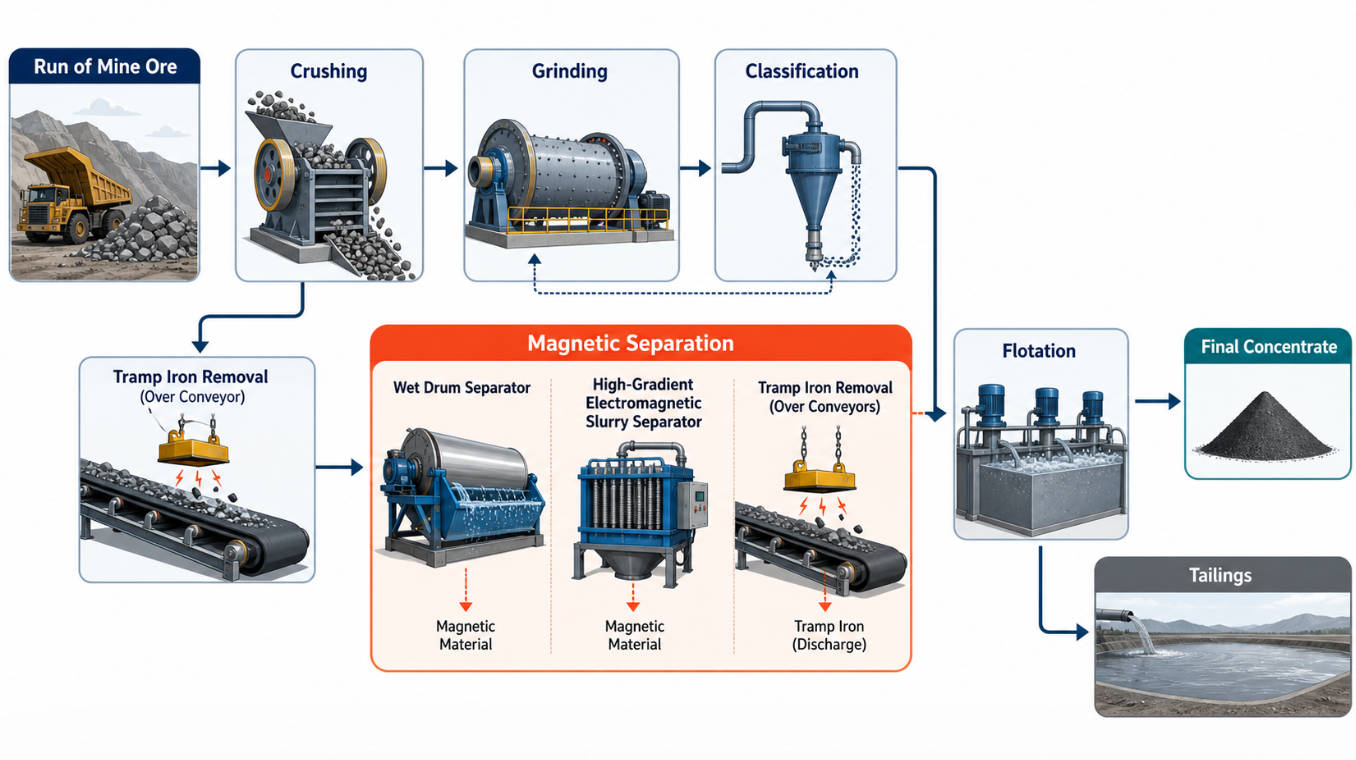
From an industry standpoint, magnetic separation is:
– A primary beneficiation tool for iron‑bearing ores such as magnetite and hematite. [gme-magnet]
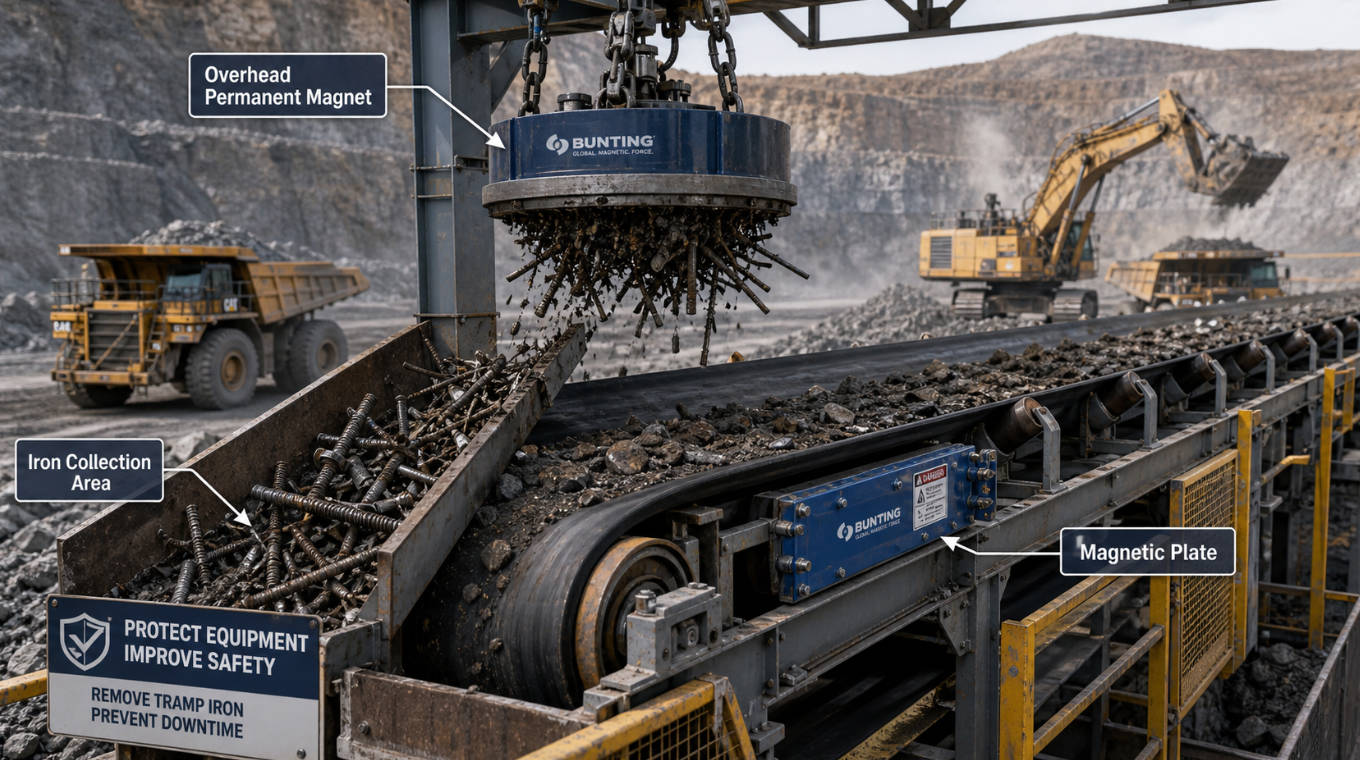
– A protection system to remove tramp iron before crushers, mills, and sensitive downstream equipment. [dingsmagnets]
– A quality control stage that removes iron contamination from non‑metallic minerals, battery materials, ceramics, glass, and more. [africanmagnets]
Mining operations rely on this process because it is energy‑efficient, scalable from lab to plant, and compatible with both wet slurries and dry powders. [prominetech]
Core Magnetic Separator Types Used In Mining
From a process engineer’s perspective, choosing the right separator is less about brand names and more about magnetic field strength, gradient, and duty (wet vs dry). [greatmagtech]
Electromagnetic vs Permanent Magnetic Separators
Most mining flowsheets use a mix of:
– Electromagnetic separators – Coils generate a strong, controllable magnetic field, ideal for high‑gradient systems that target weakly magnetic particles in slurries. [gme-magnet]
– Permanent magnetic separators – Use rare‑earth or ferrite magnets for robust, low‑maintenance separation of strongly magnetic or tramp metals in both wet and dry circuits. [dingsmagnets]
Electromagnetic designs dominate where flexibility and high intensity are needed (for example, fine hematite in non‑metallic slurries), while permanent units are preferred where simplicity and reliability matter more than adjustability. [africanmagnets]
Key Configurations In Mining
Common mining configurations include: [imt-inc]
– Wet high‑intensity magnetic separators (WHIMS / HGMS) – High gradient fields treat fine, weakly magnetic minerals in slurry form (e.g., hematite, manganese). [gme-magnet]
– Wet drum separators – Recover magnetite and other strongly magnetic minerals from dense media and grinding circuits. [prominetech]
– Dry drum and roll separators – Handle dry, granular ores and remove ferrous contamination from bulk materials. [greatmagtech]
– Overhead and pulley magnets – Protect belts and crushers by capturing tramp iron from conveyed ore. [buntingmagnetics]
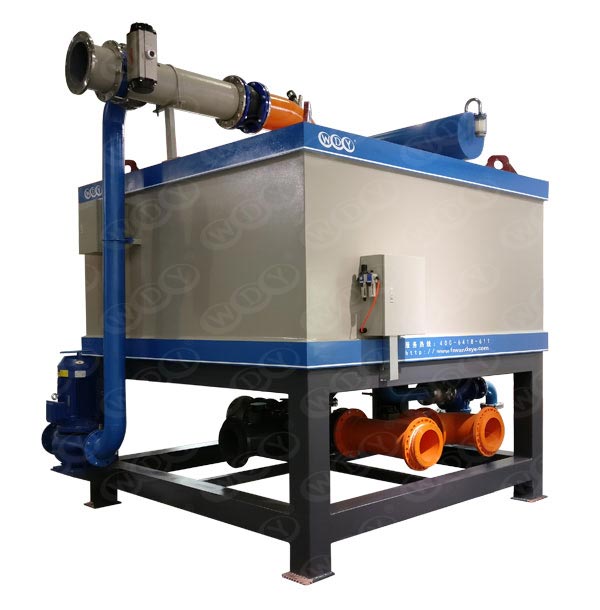
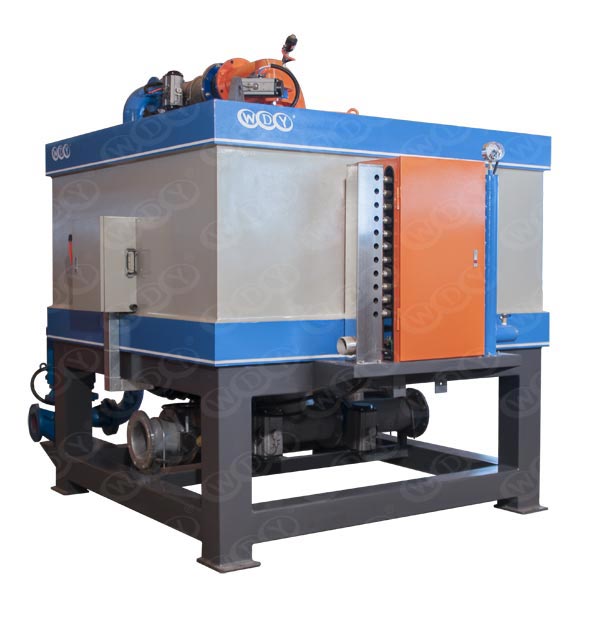
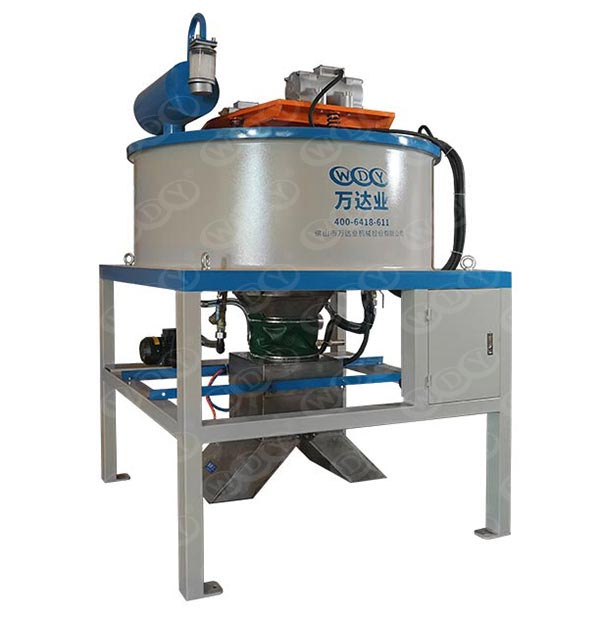
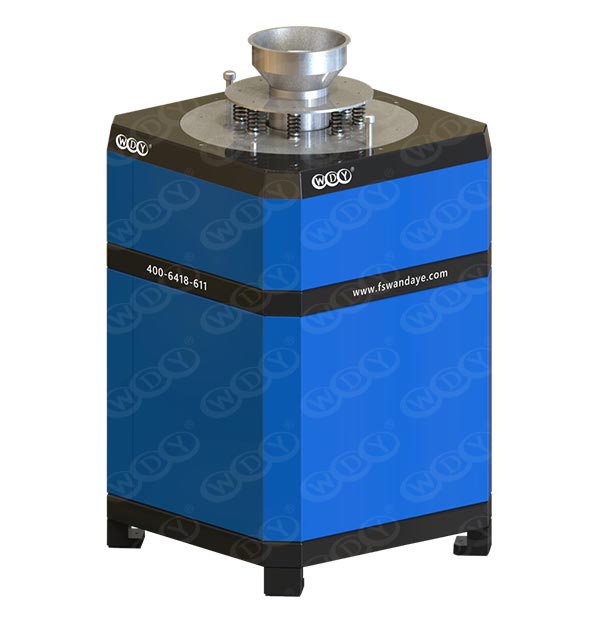
As a specialist manufacturer, Foshan Wandaye’s portfolio — High Gradient Electromagnetic Slurry Machines, Powder Magnetic Separators, Permanent Magnetic Separators, Magnetic Plates, Iron‑Removal Cabinets, and Magnetic Rods — aligns with these core industrial configurations and allows targeted solutions from wet slurry purification to fine powder iron removal. [wdymagnetic]
Step‑By‑Step: How Magnetic Separation Works On Site
On a real mine site, magnetic separation is not abstract theory; it is a sequence of tightly coordinated steps embedded in the flowsheet. [prominetech]
1. Feeding the material
Crushed or ground ore is presented to the separator as a wet slurry or dry feed on a belt, chute, or vibrating feeder. [greatmagtech]
2. Exposure to a magnetic field
As particles pass through or over the magnetic zone, magnetic and weakly magnetic grains are attracted, while non‑magnetic particles follow gravity or inertia. [gme-magnet]
3. Separation of fractions
– Magnetic concentrate adheres to drums, rolls, or matrix elements and is discharged as a separate stream.
– Non‑magnetic tailings continue on their original path. [prominetech]
4. Cleaning and refining
Multi‑stage separation (rougher–cleaner–scavenger) improves grade and recovery, often combined with gravity or flotation. [africanmagnets]
5. Tramp metal protection
Overhead magnets, magnetic plates, and iron‑removal cabinets capture dangerous metal fragments before they reach crushers or mills, significantly cutting downtime and repair costs. [wdymagnetic]
From the control room’s perspective, operators continuously adjust magnetic field strength, feed rate, and slurry density to stabilize recovery and concentrate quality. This is where modern high‑gradient electromagnetic systems and intelligent control deliver measurable value. [greatmagtech]
Where Magnetic Separation Adds The Most Value In Mining
Across mining operations, magnetic separation is applied at multiple points to lift recovery, product quality, and equipment safety. [minejxsc]
1. Iron Ore Beneficiation
For magnetite and certain hematite ores:
– Low‑intensity magnetic separators (LIMS) recover strongly magnetic magnetite after grinding. [africanmagnets]
– High‑intensity or high‑gradient units upgrade weakly magnetic hematite and goethite. [gme-magnet]
Well‑designed circuits improve concentrate Fe grade while reducing energy and reagents in downstream stages. [africanmagnets]
2. Base And Precious Metals
In polymetallic deposits, magnetic separation:
– Removes magnetite or pyrrhotite before flotation to improve flotation selectivity.
– Protects mills from wear and damage caused by grinding media and steel fragments. [buntingmagnetics]
3. Non‑Metallic Minerals And Industrial Materials
In sectors such as ceramics, glass, fillers, plastics, rubber, and battery materials, magnetic separators primarily deliver purity and whiteness improvements: [minejxsc]
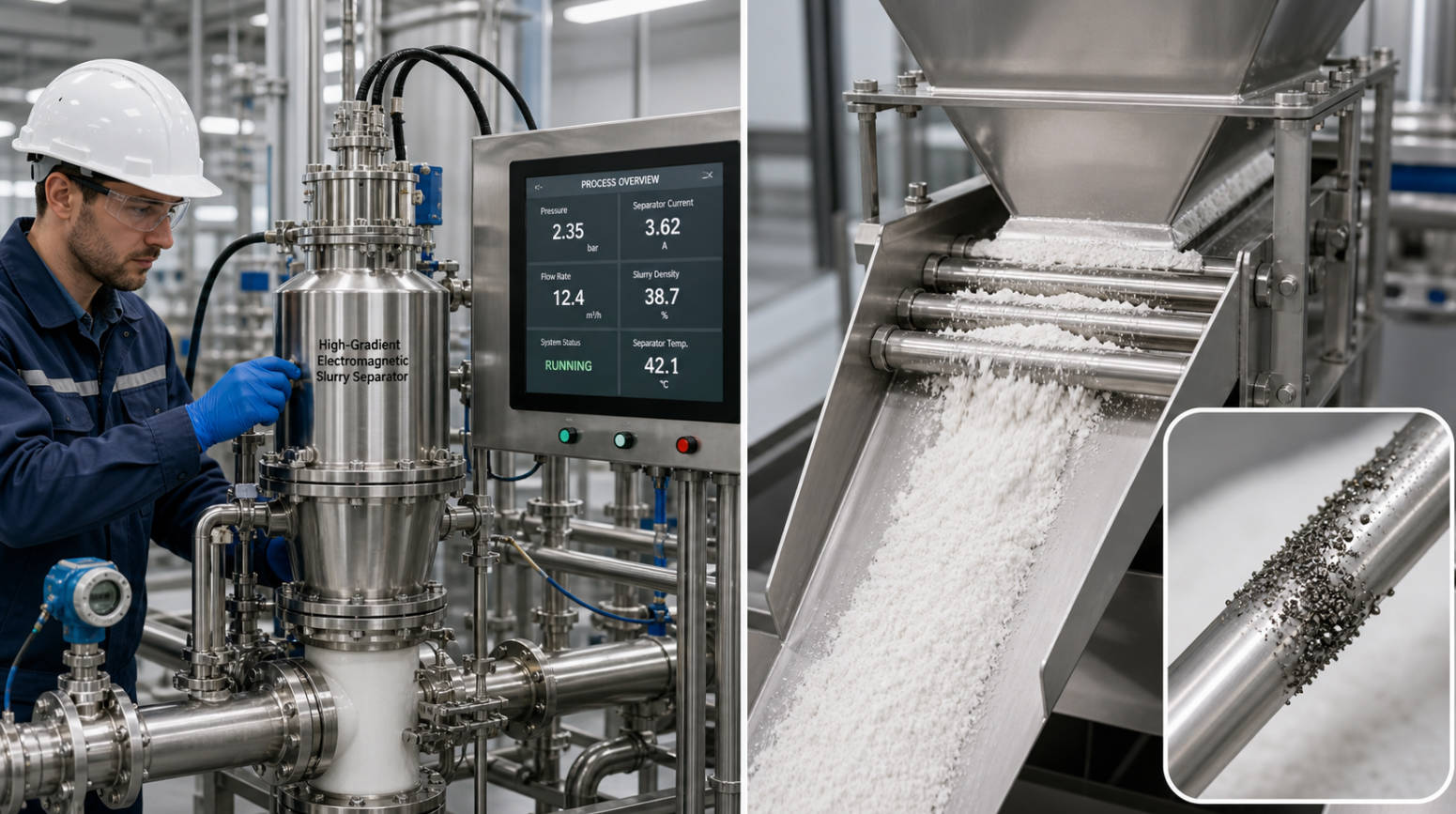
– High gradient electromagnetic slurry machines filter fine iron from kaolin, quartz sand, feldspar, and similar slurries.
– Powder magnetic separators, magnetic rods, and plates remove iron from dry powders such as quartz, talc, silica, and cathode/anode materials. [wdymagnetic]
These upgrades translate directly into higher selling prices, fewer customer complaints, and better equipment life in downstream kilns and reactors.
Why High‑Gradient Slurry Separators Matter
From the vantage point of a plant engineer responsible for non‑metallic minerals or battery materials, traditional low‑intensity magnets are no longer enough. High Gradient Electromagnetic Slurry Machines are reshaping what is technically and commercially possible.
What High‑Gradient Slurry Systems Do Differently
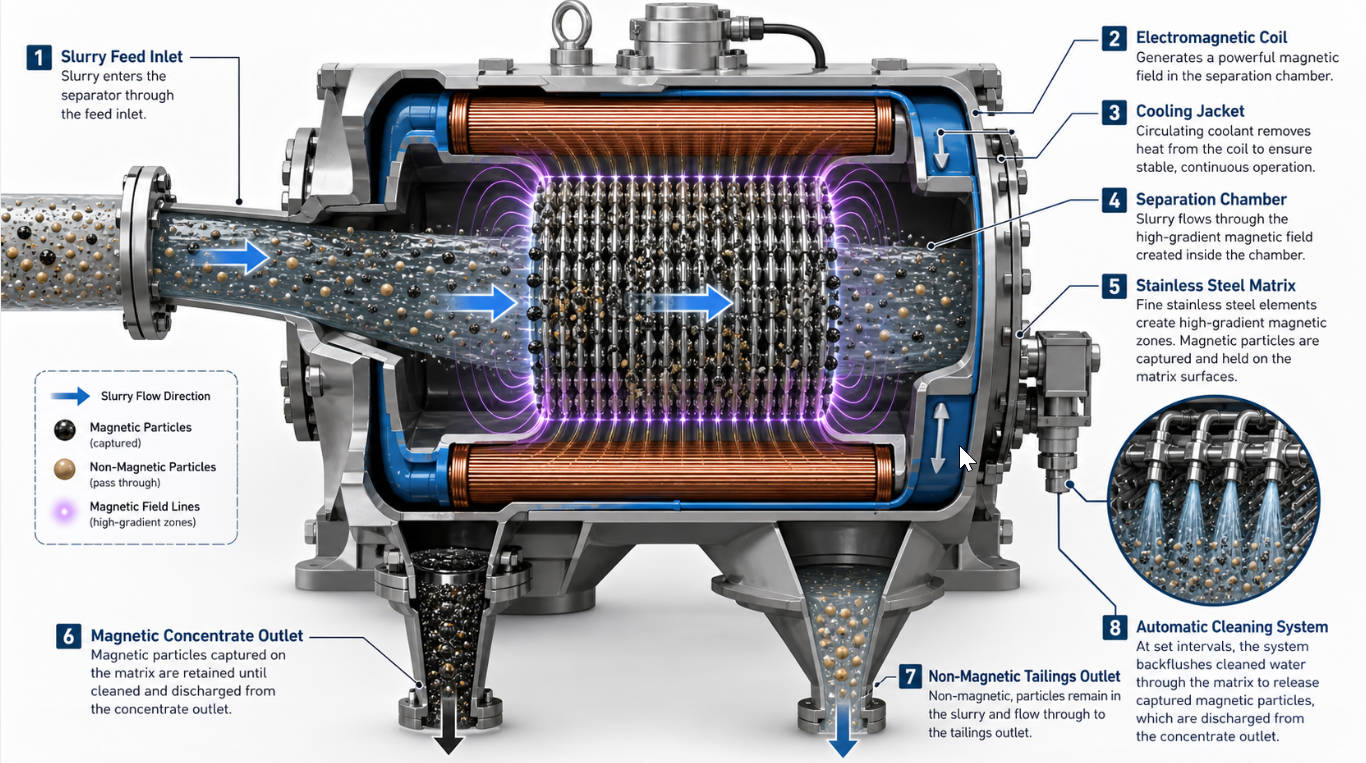
High‑gradient designs combine: [imt-inc]
– Intense electromagnetic fields to attract even weakly magnetic contamination.
– Fine stainless‑steel matrix elements that create a dense web of high‑gradient zones.
– Continuous or automatic cleaning cycles to sustain performance without constant shutdowns.
Practically, this means they can pull out extremely fine iron impurities from slurries such as ceramic slip, silica sand pulp, and lithium battery precursor slurries — contamination that conventional magnets simply cannot capture. [minejxsc]
Where Foshan Wandaye’s Systems Fit
Foshan Wandaye’s program‑controlled, automatic oil‑cooling electromagnetic slurry separator series is designed precisely for these demanding applications, focusing on: [wdymagnetic]
– Non‑metallic mineral purification (ceramics, glass, quartz, feldspar).
– Battery positive and negative electrode materials, where trace iron can trigger safety and performance issues.
– High‑purity process lines that cannot tolerate frequent manual cleaning or downtime.
In my experience, mines and processing plants that upgrade from basic magnets to properly sized HGMS slurry units often see rapid payback through reduced product rejects, fewer customer claims, and lower filtration or polishing costs.
New Industry Trends In Magnetic Separation For Mining
Magnetic separation is no longer a static technology. The last few years have brought several trends that smart mine operators are already exploiting.
1. Stronger And Smarter Magnets
– Rare‑earth magnet materials and refined coil designs have significantly increased field strengths and selectivity, improving recovery of fine or weakly magnetic particles. [imt-inc]
– High‑gradient and high‑intensity separators now routinely achieve higher purity and throughput than older-generation equipment. [sematicmagnet.com]
2. IoT‑Enabled, Data‑Driven Separation
Manufacturers are integrating sensors and IoT connectivity into magnetic separators, enabling: [magnetact]
– Real‑time monitoring of magnet temperature, vibration, and load.
– Automated alerts when cleaning is required or performance drops.
– Better integration with plant SCADA systems to optimize energy use and uptime.
IoT‑enabled systems not only reduce manual checks but also support predictive maintenance, which is critical for continuous operations.
3. Sustainability And Resource Efficiency
Magnetic separation supports decarbonization and ESG goals by: [sematicmagnet.com]
– Reducing reagent consumption when combined with or partially replacing chemical processes.
– Improving metal recovery, lowering the volume of tailings.
– Enabling recycling of ferrous metals from waste streams and tailings.
As environmental regulations tighten, plants that can demonstrate higher recovery and lower waste through advanced magnetic separation gain a compliance and branding advantage.
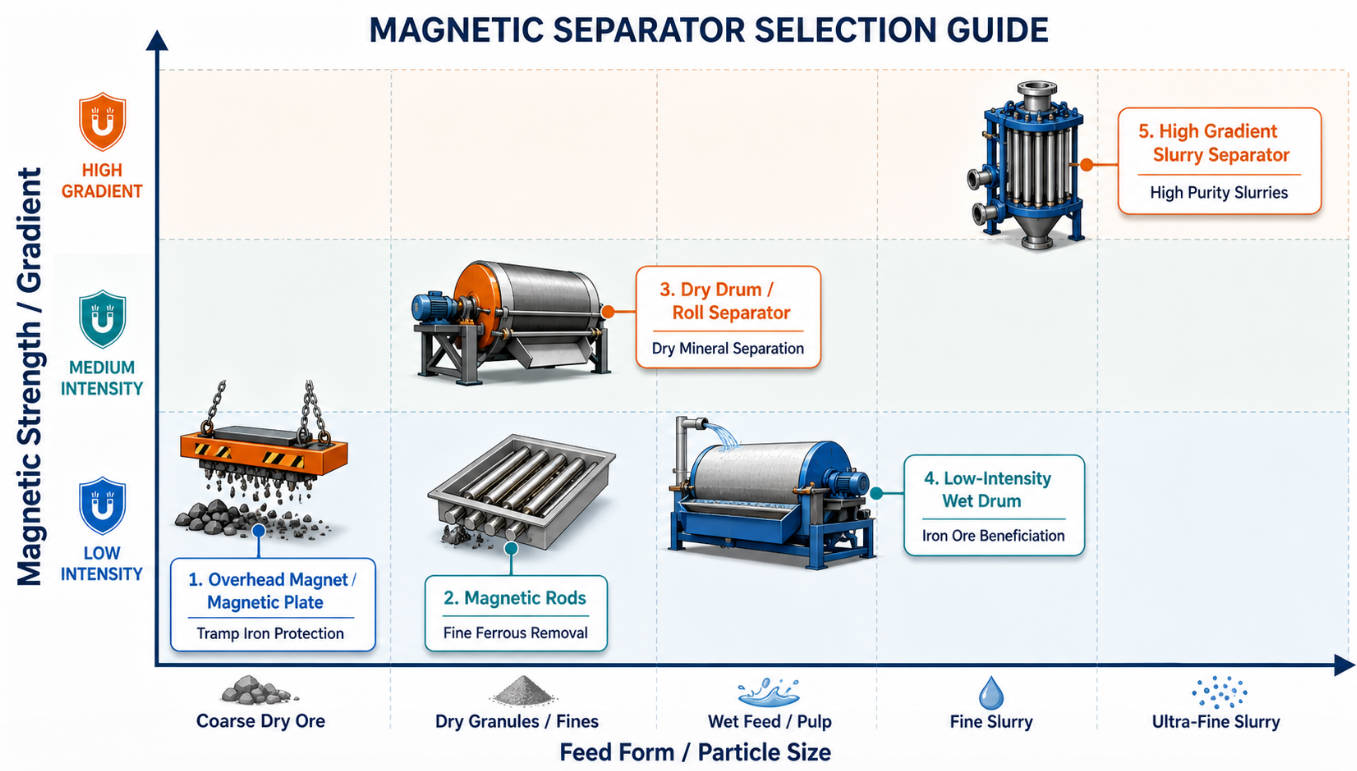
Practical Design Tips From The Plant Floor
From commissioning and troubleshooting dozens of lines, several practical lessons keep recurring.
Match Separator Type To Ore And Duty
Engineers should align separator selection with ore characteristics and circuit position: [greatmagtech]
– Use LIMS and wet drums for bulk magnetite recovery.
– Deploy HGMS / WHIMS for fine, weakly magnetic minerals or ultra‑low contamination specs.
– Install overhead magnets, plates, and iron‑removal cabinets early in the line for equipment protection.
– Rely on powder separators and magnetic rods for final polishing of dry, high‑value products.
Control The Feed
Even the best magnetic separator performs poorly with unstable feed: [prominetech]
– Keep slurry density and flow rate within specified ranges.
– Maintain particle size distribution appropriate for the chosen separator.
– Ensure vibrating feeders and belts deliver a uniform layer across the magnetic zone.
Plan For Maintenance And Cleaning
A high‑gradient separator that is never cleaned is effectively a low‑gradient separator: [imt-inc]
– Specify automatic cleaning where uptime is critical.
– Integrate cleaning cycles into the plant control system.
– Monitor performance trends to schedule inspections before failures occur.
Manufacturers such as Foshan Wandaye incorporate program control and forced‑oil cooling to keep electromagnetic coils running at stable temperatures and performance over long campaigns. [wdymagnetic]
Comparison Table
| Separator Type | Typical Medium | Target Materials | Key Mining Uses | Wandaye‑Relevant Products |
|---|---|---|---|---|
| Low‑Intensity Wet Drum | Slurry | Strongly magnetic (magnetite) | Iron ore beneficiation, dense media recovery gme-magnet | Wet drum / custom permanent separators |
| High‑Gradient Electromagnetic Slurry | Slurry | Weakly magnetic fines, iron contamination | Non‑metallic minerals, battery materials, high‑purity slurries gme-magnet | High Gradient Electromagnetic Slurry Machines wdymagnetic |
| Dry Drum / Roll | Dry ore or powder | Strongly magnetic and tramp metals | Dry beneficiation, bulk ore cleaning greatmagtech | Powder Magnetic Separators wdymagnetic |
| Overhead Magnet / Plate / Iron‑Removal Cabinet | Conveyors and chutes | Tramp iron, steel fragments | Belt protection, crusher safety buntingmagnetics | Magnetic Plate, Iron‑Removal Cabinet wdymagnetic |
| Magnetic Rods / Grids | Hoppers, pipelines | Fine iron contamination | Final product polishing, powders and granules africanmagnets | Magnetic Rods wdymagnetic |
FAQs
1. How do I choose the right magnetic separator for my mine?
You need to start with ore mineralogy, particle size, feed form (wet or dry), and your quality/recovery targets. Strongly magnetic ores often use low‑intensity wet drums, while weakly magnetic fines require high‑gradient or high‑intensity electromagnetic systems. For tramp metal protection, permanent overhead magnets, plates, and iron‑removal cabinets are usually sufficient. [dingsmagnets]
2. Can magnetic separation replace flotation or gravity completely?
In most operations, magnetic separation complements rather than replaces gravity and flotation. It is especially effective upstream to remove magnetic gangue or downstream to polish products, but complex ores still require multi‑stage processing. [minejxsc]
3. What maintenance do magnetic separators need?
Maintenance focuses on inspecting magnets or coils, cleaning matrix and surfaces, and checking feeders and belts. Modern high‑gradient and IoT‑enabled systems use automatic cleaning and condition monitoring to reduce manual interventions and unplanned downtime. [magnetact]
4. Are high‑gradient electromagnetic slurry machines worth the investment?
For plants targeting high purity, ultra‑low iron, or weakly magnetic contaminants, high‑gradient slurry separators are often one of the fastest ROI upgrades. They unlock product grades impossible with standard magnets and reduce scrap, rework, and downstream polishing costs. [sematicmagnet.com]
5. In which industries beyond mining are magnetic separators widely used?
Magnetic separation is critical in ceramics, glass, plastics, rubber, food, pharmaceuticals, power, construction materials, and positive/negative battery materials, where iron contamination directly affects quality, safety, and equipment life. [buntingmagnetics]
References
1. Great Magtech. “How Does Magnetic Separation Work in Mining?” [link]
2. Bunting. “Magnetic Separation in Mining and Mineral Processing.” [link]
3. GME Magnet. “How Does Magnetic Separation Use in Mining Work.” [link]
4. African Magnets. “Applications of Magnetic Separation in Mining.” [link]
5. IMT. “Innovations in Magnetic Technology.” [link]
6. Prominer. “How Does Magnetic Separation Work in Mineral Processing?” [link]
7. IMT. “Wet Drum Magnetic Separators Explained.” [link]
8. JXSC. “The Role of Magnetic Separation in Diverse Industries.” [link]
9. Dings. “Magnetic Separation for Mining and Aggregate Production.” [link]
10. Magnetact. “7 Must‑Know Trends Shaping The Future Of Magnetic Separation.” [link]
11. Sematic Magnet. “Advanced Magnetic Separation: New Ways to Boost Efficiency.” [link]
12. Foshan Wandaye Technology Co., Ltd. “Products.” [link]
Hot Tags: Mining Separation, Manufacturers, Customized, Custom, Suppliers, Buy, Cheap, Quality, Advanced, Durable, in Stock, Made in China, Price, Quotation