


Content Menu
● Understanding Magnetic Behavior in Ceramic Minerals
● Key Types of Ceramic Minerals and Their Magnetic Issues
● Why Magnetic Contamination Is So Damaging in Ceramics
● Magnetic Separation Technologies Used in Ceramic Processing
● How Foshan Wandaye Approaches Ceramic Magnetic Separation
● Practical Workflow: Designing a Magnetic Separation Scheme for Ceramic Plants
● New Developments and Trends in Magnetic Separation for Ceramics
● Beyond Ceramics: Other Industries That Benefit From Ceramic Mineral Magnetic Control
● Choosing a Magnetic Separation Partner
● Call to Action: Assess Your Ceramic Line’s Magnetic Readiness
● FAQ
>> 1. How do magnetic properties of ceramic minerals affect product quality?
>> 2. Which ceramic raw materials benefit most from magnetic separation?
>> 3. What is the difference between low‑intensity and high‑intensity magnetic separators?
>> 4. Why involve an integrated magnetic separator manufacturer instead of buying stand‑alone units?
>> 5. Can magnetic separation improve processes beyond ceramics?
As a ceramic plant engineer, I learned very quickly that magnetic minerals are not an abstract physics topic—they are what stand between you and flawless tiles, sanitaryware, or battery-grade powders. Fine iron specks, iron‑stained quartz, and weakly magnetic micas can turn a beautiful glaze into a reject pile, and the only reliable way I have found to control them at scale is well‑designed magnetic separation integrated into the process. [buntingmagnetics]
Understanding Magnetic Behavior in Ceramic Minerals
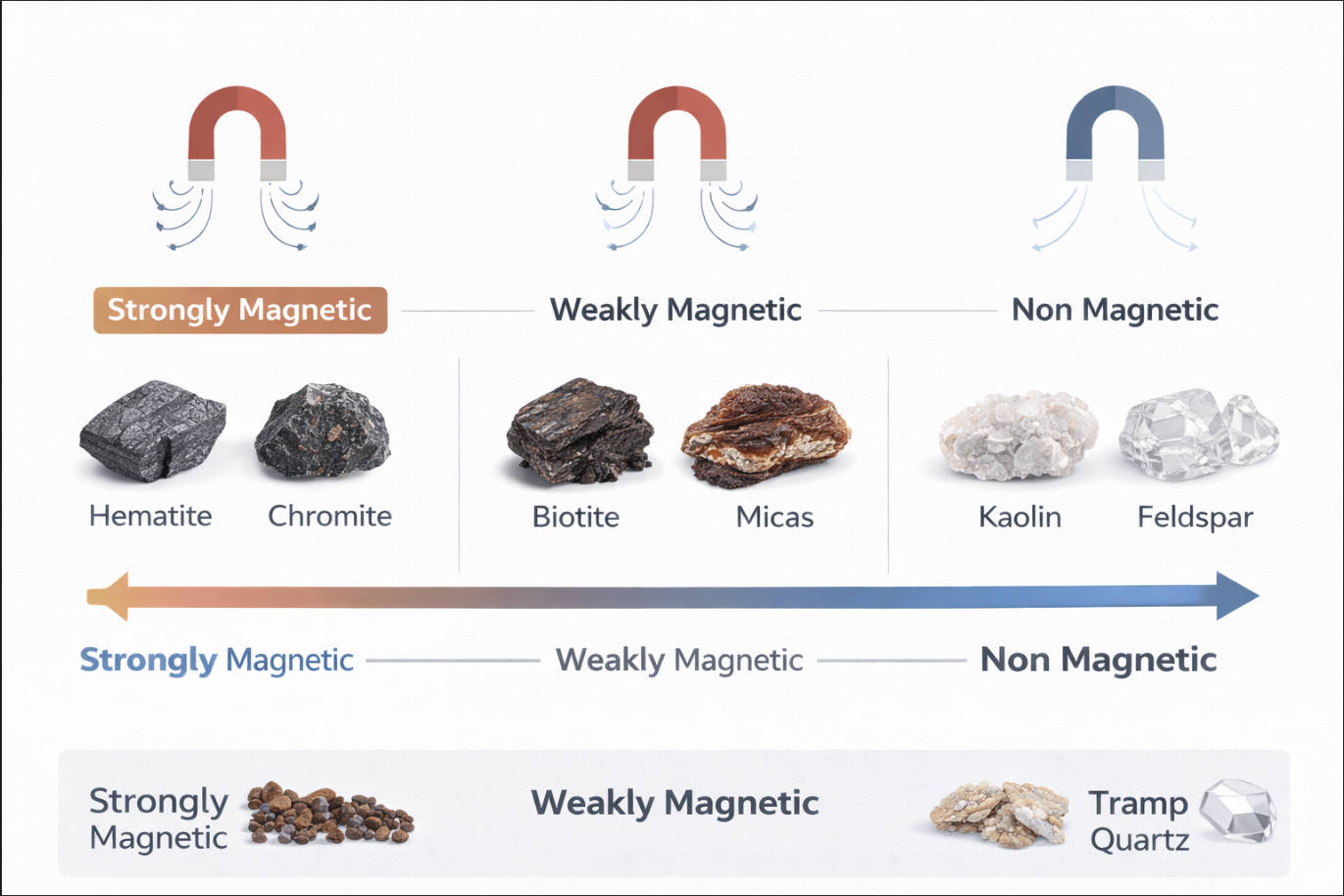
When ceramic raw materials like feldspar, kaolin, quartz sand, ball clay, or silica sand come out of the ground, they often contain a mix of magnetic and non‑magnetic minerals that directly affect product quality. In practice, we pay most attention to minerals such as hematite, chromite, iron‑stained quartz, and micas (muscovite, biotite) because even low concentrations can cause discoloration and pinholes in fired products. [buntingmagnetics]
At the microscopic level, the magnetic behavior of a mineral is governed by the electrons in its atoms and ions and how their magnetic moments align (or fail to align) with an external field. When a crystal is exposed to a non‑uniform magnetic field, the atomic magnetic moments attempt to align, creating a net magnetic moment for the crystal; the ratio of that moment \(M\) to the applied field strength \(H\) is called magnetic susceptibility \(\chi\). In production, we translate this theory into simple categories—ferromagnetic, paramagnetic, and diamagnetic behavior—because these categories determine what type of magnetic separator we need and where to install it. [buntingmagnetics]
Key Types of Ceramic Minerals and Their Magnetic Issues
In ceramic and glass plants, the same few mineral families cause most of the trouble, especially when customers demand ultra‑white or high‑purity materials. When I audit a line, I usually start by mapping four key raw materials and their typical contaminants: [academia]
| Raw material | Typical magnetic contaminants | Typical impact on product quality |
|---|---|---|
| Kaolin | Iron oxides, titanium minerals, iron‑stained quartz buntingmagnetics | Yellowing, specks, reduced brightness |
| Feldspar | Hematite, biotite, chromite, Fe/Ti phases buntingmagnetics | Glaze defects, glass seed formation, color variation |
| Quartz sand | Iron‑stained quartz, micas, heavy minerals buntingmagnetics | Optical defects, opacity, lower glass clarity |
| Ball clay | Micas, iron oxides, accessory heavy minerals buntingmagnetics | Fired color shift, pinholes, reduced mechanical strength |
Bench‑scale studies on quartz–feldspar systems for glass and ceramics have shown that combining high‑intensity magnetic separation with other cleaning steps significantly improves removal of Fe‑ and Ti‑bearing minerals, often using fields around 14,000 gauss on dry high‑intensity separators. In my experience, this matches plant reality: when customers change from low‑intensity iron removal to high‑gradient systems, measurable whiteness and Fe2O3 levels respond first, followed quickly by fewer glaze and body defects. [academia]
Why Magnetic Contamination Is So Damaging in Ceramics
Magnetic contamination is not just an aesthetic problem; it is a process and reliability problem that travels through the entire plant. [buntingmagnetics]
– It originates in the deposit (natural hematite, chromite, micas) and from mechanical wear or failure of handling equipment that sheds free iron. [buntingmagnetics]
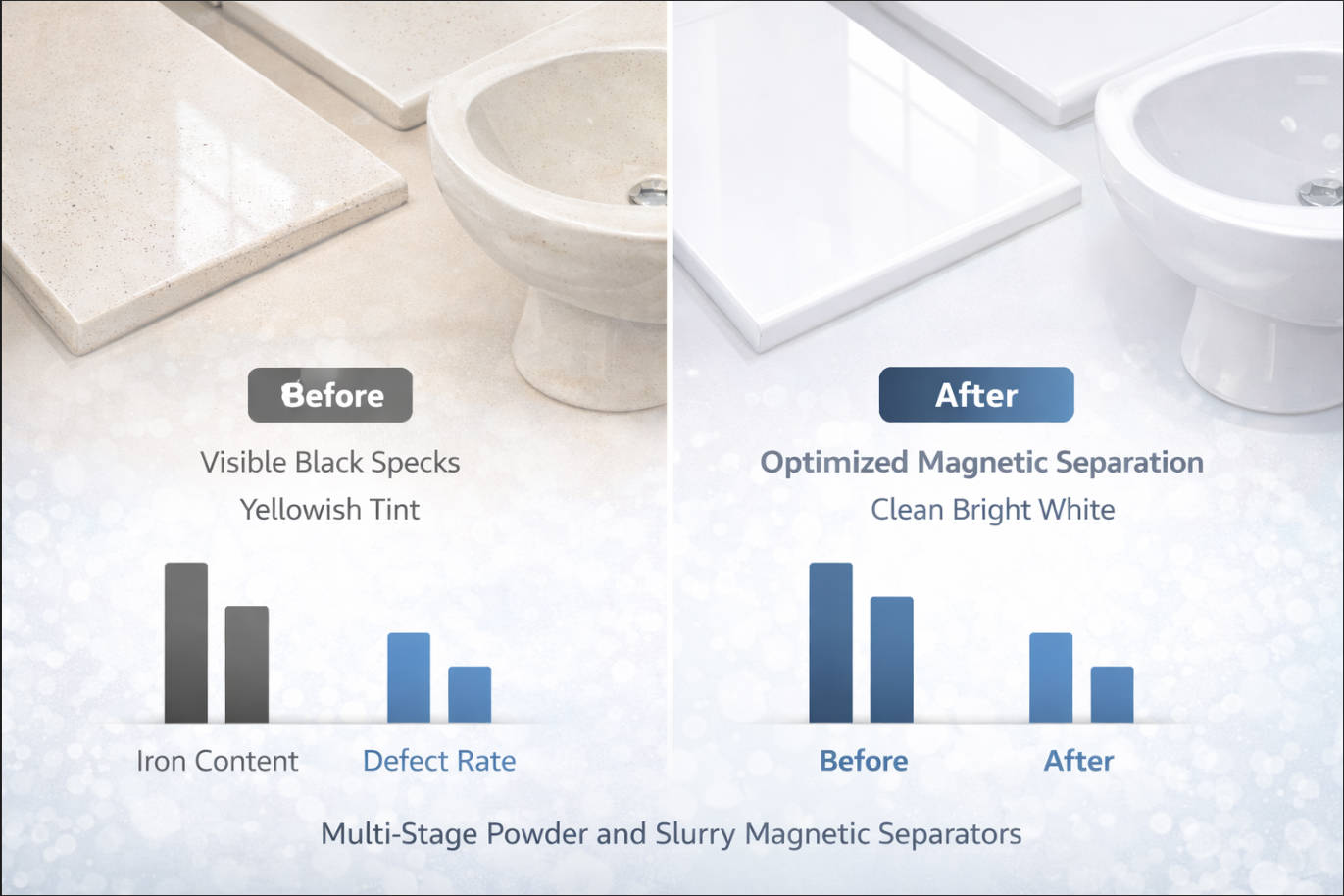
– It shows up as black specks, streaks, or tinting in glazes, bodies, engobes, and frits, particularly in high‑value white products. [buntingmagnetics]
– It forces frequent quality complaints, rework, and downgrading, which erodes margins and capacity utilization. [buntingmagnetics]
In plants where magnetic separation is absent or poorly maintained, I often see a pattern: operators compensate with tighter visual inspection and more manual sorting instead of attacking the root cause. Once high‑performance separators are installed and tuned, defect maps and customer claims usually improve within weeks, even before any other process optimization. [buntingmagnetics]
Magnetic Separation Technologies Used in Ceramic Processing
For ceramic and related industries, we generally apply several classes of magnetic separation technology depending on material state and target minerals. [gtekmagnet]
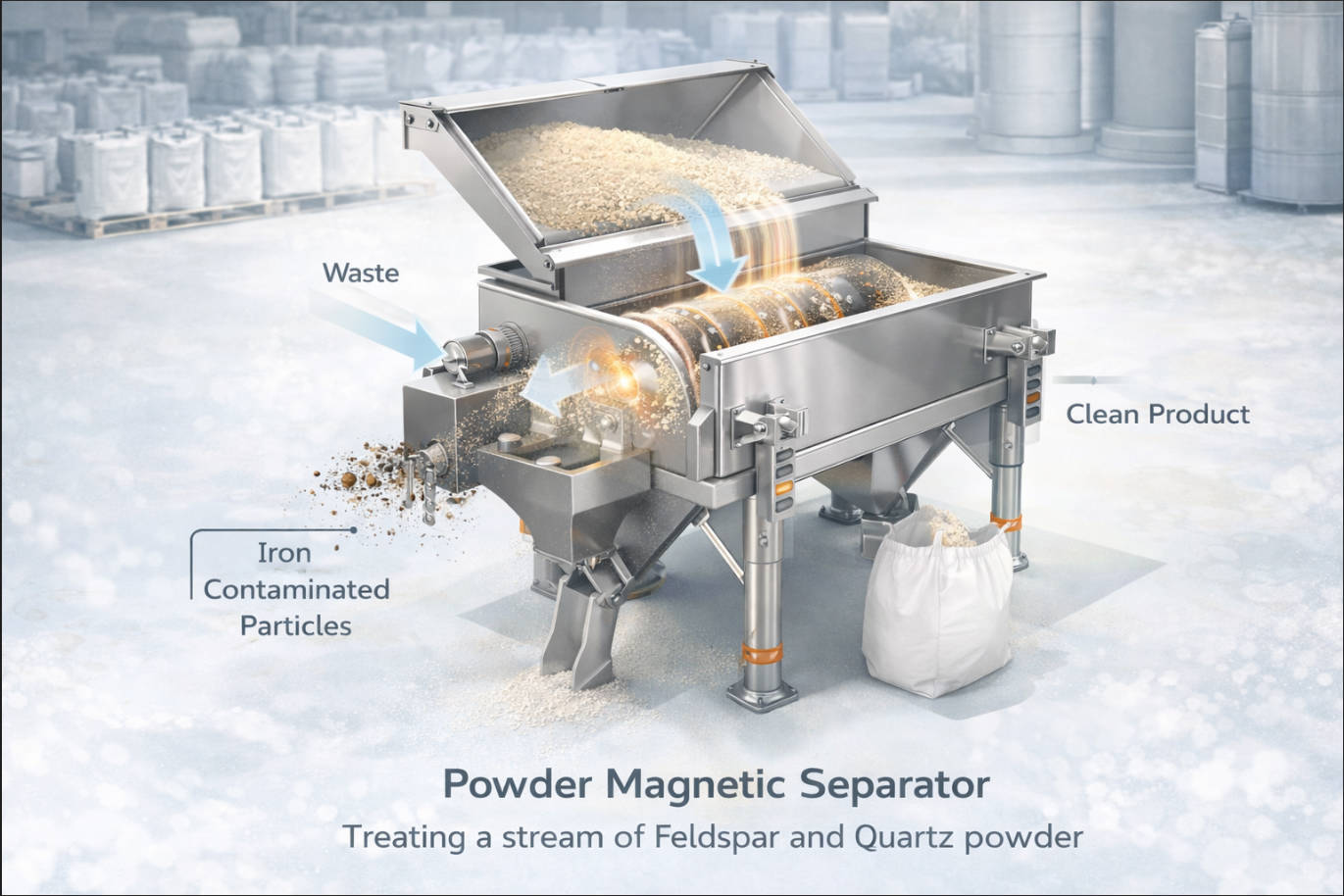
– Dry powder magnetic separators
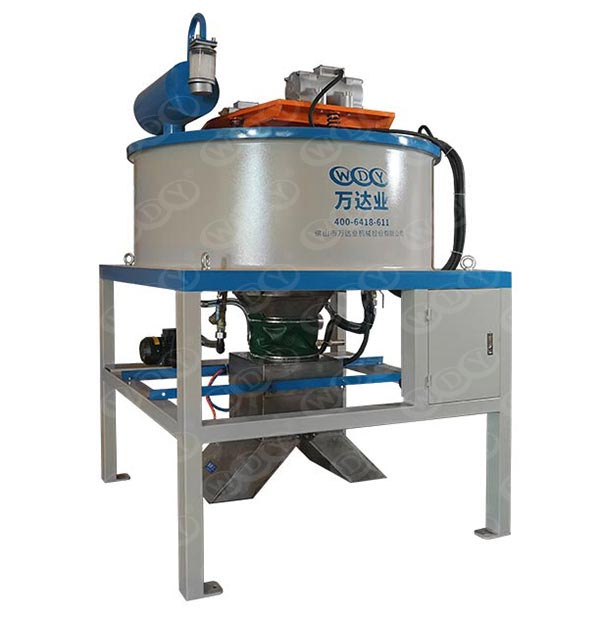
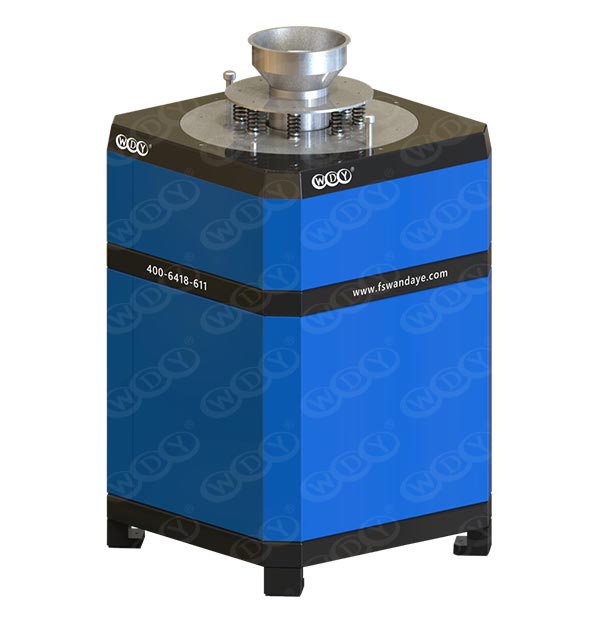
Applied to free‑flowing powders such as feldspar, quartz sand, and calcined kaolin to remove weakly magnetic contaminants at high throughput. [en.fswandaye]
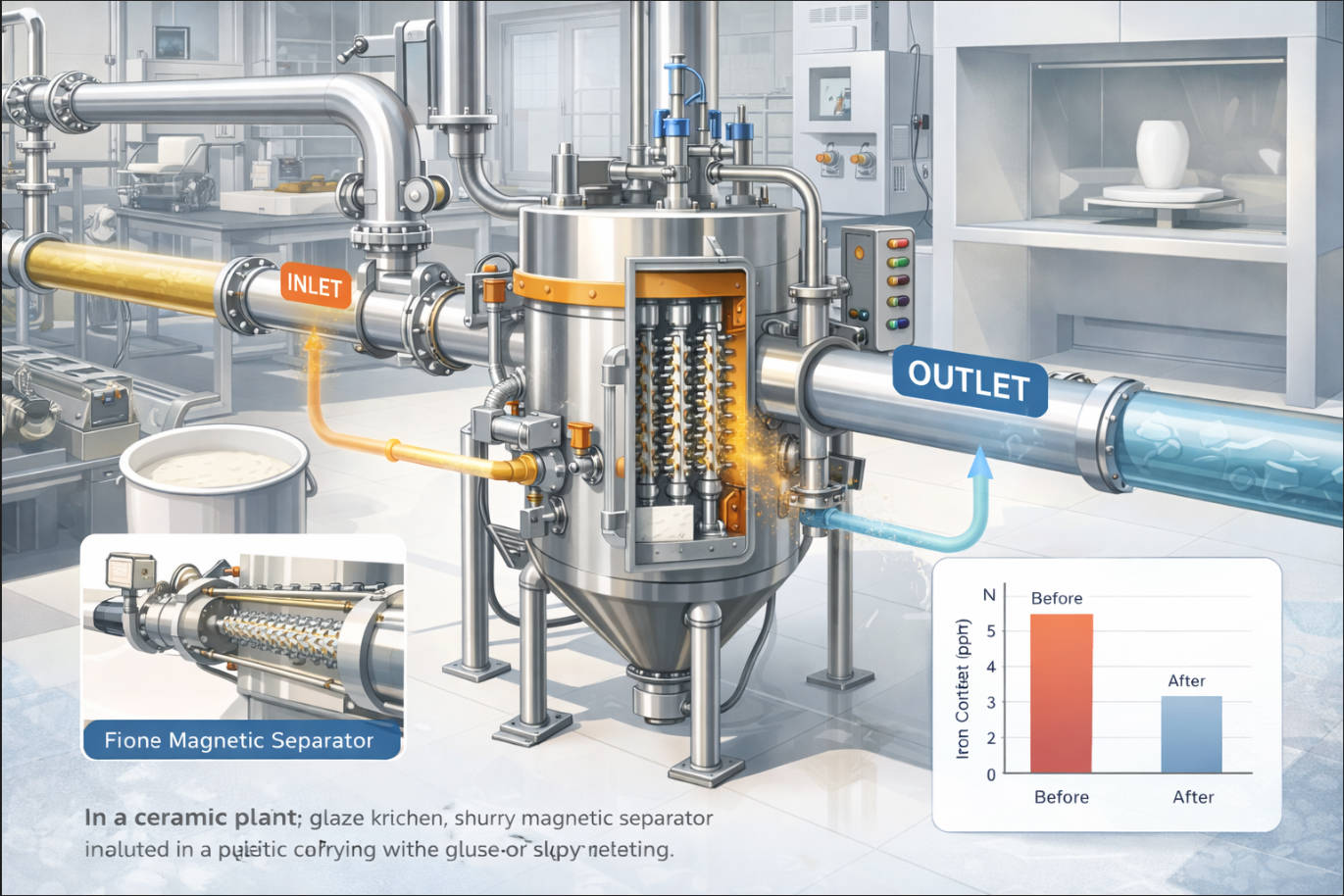
– Slurry magnetic separators
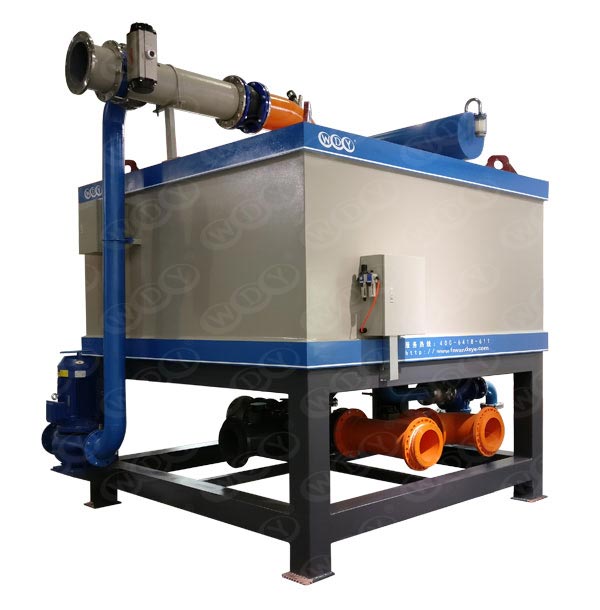
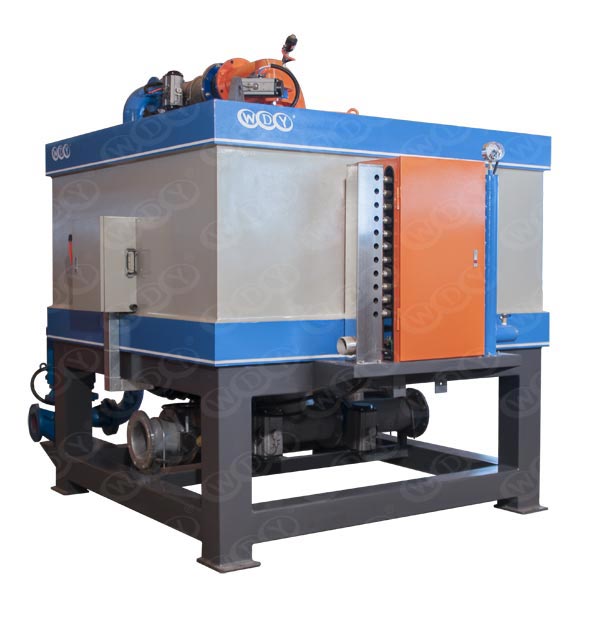
Installed in wet grinding, slip preparation, or glaze lines to capture fine iron and weakly magnetic particles from slurries and slips before spray drying or application. [en.fswandaye]
– Permanent magnetic separators
Used for continuous, energy‑efficient removal of tramp iron and medium‑strength magnetic minerals, often in the form of drums, grids, or over‑band units. [wdymagnetic]
– High‑gradient / high‑intensity separators
Employed when we need to treat weakly magnetic minerals in fine particle size ranges or when Fe2O3 specifications are extremely tight, such as for high‑brightness kaolin or glass sand. [gtekmagnet]
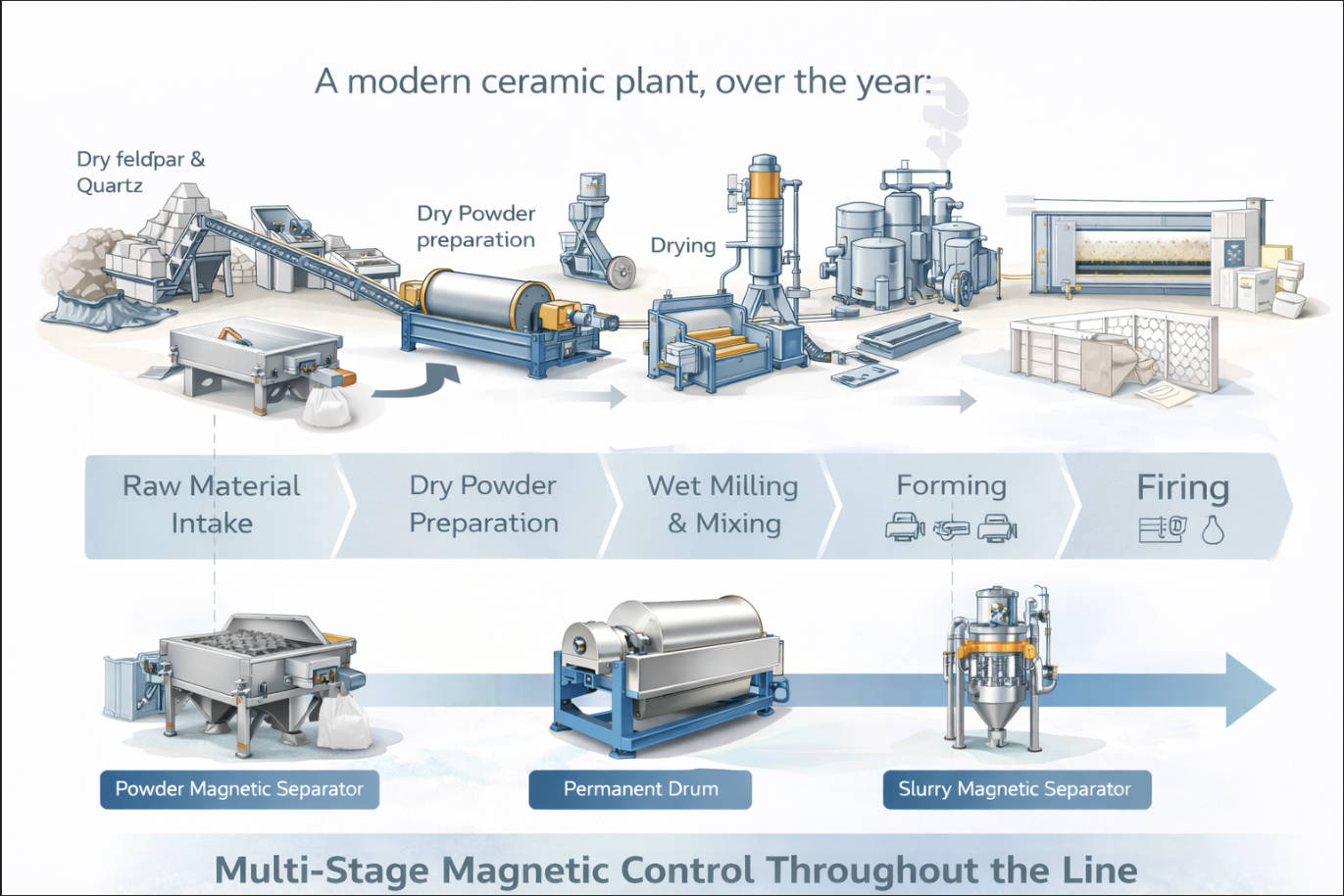
From an engineering design perspective, the most effective ceramic lines combine multiple stages: for example, a permanent drum for coarse tramp iron, followed by a high‑gradient system for fine weakly magnetic contaminants, integrated both in dry and wet process steps. [buntingmagnetics]
How Foshan Wandaye Approaches Ceramic Magnetic Separation
Foshan Wandaye Technology Co., Ltd. focuses on powder magnetic separators, slurry magnetic separators, permanent magnetic separators, and customized systems that integrate research, engineering design, production‑line installation, and commissioning, particularly for non‑metallic minerals such as kaolin and quartz sand. From a project perspective, this end‑to‑end model is crucial: the same team that understands the physics of magnetic susceptibility also designs the piping layout, selects the pump, and sets up the PLC logic so that the separator performs in real operating conditions, not just on paper. [en.fswandaye]
In projects for ceramics, glass, and battery materials, high‑gradient rotary drum systems are increasingly used to meet stringent iron removal targets while maintaining throughput and energy efficiency. For example, in battery material magnetic separation projects in Xiamen, systems are configured to capture ultra‑fine iron and weakly magnetic particles, a performance standard that easily translates into high‑end ceramic processing where speck‑free, high‑whiteness products are essential. [en.fswandaye]
Practical Workflow: Designing a Magnetic Separation Scheme for Ceramic Plants
When I help a ceramic plant upgrade its magnetic separation, I treat it as a process design project, not just an equipment purchase. A typical workflow looks like this: [buntingmagnetics]
1. Raw material characterization
– Sample each key raw material (kaolin, feldspar, quartz sand, ball clay) and relevant intermediates.
– Analyze Fe2O3, TiO2, and trace heavy minerals along with particle size distribution. [buntingmagnetics]
2. Magnetic response testing
– Run bench‑scale tests with low‑intensity and high‑intensity magnetic separators to classify how each contaminant responds. [academia]
– Determine whether contaminants are strongly magnetic or only weakly magnetic and what field strengths are effective. [buntingmagnetics]
3. Process mapping and critical control points
– Map the entire process from raw material reception through grinding, classification, slip preparation, forming, and glazing. [gtekmagnet]
– Identify where contamination is introduced (e.g., conveyor transfer points, mills, pumps) and where it is easiest to remove. [buntingmagnetics]
4. Equipment selection and configuration
– Select between dry powder, slurry, and high‑gradient separators based on material state and target. [en.fswandaye]
– Specify magnetic field strength, matrix design, flow rate, and cleaning mechanism for each stage. [buntingmagnetics]
5. Integration, commissioning, and training
– Integrate controls so separators operate in sync with upstream and downstream equipment, with alarms for cleaning and performance drift. [en.fswandaye]
– Train operators on routine checks, magnet surface inspection, and response to quality deviations. [buntingmagnetics]
By following this structured approach, ceramic producers move from reactive defect control to a preventive, data‑driven strategy that improves both yield and product consistency. [academia]
New Developments and Trends in Magnetic Separation for Ceramics
Ceramic and magnet technology have not stood still, and several trends are reshaping expectations for magnetic separation performance across industries. [ceramics]
– Higher magnetic field strengths and stability
Advances in magnet materials and superconducting systems have enabled record‑strength magnets (e.g., 32 tesla superconducting magnets), demonstrating what is possible in extremely high field applications, even though these are currently used in research rather than routine ceramic processing. [ceramics]
– Improved ferrite and ceramic magnet performance
Modern ceramic and ferrite magnets remain hard and brittle but have improved energy characteristics and stability, offering robust, cost‑effective magnetic sources for permanent separator designs. [mpcomagnetics]
– Targeting ultra‑fine weakly magnetic particles
For kaolin, quartz sand, and battery materials, customers increasingly demand lower Fe and Ti levels, pushing separator designs toward higher gradients and optimized matrices that capture particles below 5 mm and often in the sub‑100 µm range. [gtekmagnet]
Manufacturers like Foshan Wandaye integrate these trends into rotary drum and other separator designs, focusing on energy efficiency and long‑term stability—an important factor for plants running 24/7 under tough operating conditions. [wdymagnetic]
Beyond Ceramics: Other Industries That Benefit From Ceramic Mineral Magnetic Control
Although this discussion focuses on ceramic minerals, the same contaminants and separation principles apply across several adjacent industries. [wdymagnetic]
– Glass and ultra‑clear glass
Glass producers use high‑intensity magnetic separation to reduce Fe‑bearing minerals in silica sand and feldspar, improving clarity and color stability. [buntingmagnetics]
– Battery cathode and anode materials
Strict limits on metallic impurities drive the adoption of advanced slurry and powder magnetic separators similar to those used in ultra‑white ceramic applications. [en.fswandaye]
– Plastics, rubber, food, and pharmaceuticals
Magnetic separators protect downstream equipment and product integrity by removing tramp iron and fine metallic particles from powders, flakes, and granules. [en.fswandaye]
For producers that operate across ceramics, glass, and battery sectors, consolidating on a unified magnetic separation strategy and partner simplifies maintenance, training, and spare parts management. [wdymagnetic]
Choosing a Magnetic Separation Partner
From an industry perspective, the most successful magnetic separation projects share a few practical characteristics. [buntingmagnetics]
– The supplier has deep experience in non‑metallic minerals, especially kaolin, quartz, feldspar, and battery materials.
– They offer integrated services: R&D, equipment design, engineering layout, installation, commissioning, and after‑sales optimization. [en.fswandaye]
– They can provide project case histories in ceramics and related sectors, with before‑and‑after quality data and long‑term operating records. [en.fswandaye]
Foshan Wandaye’s portfolio in kaolin, quartz sand, ceramic raw materials, and battery material magnetic separation illustrates this type of integrated, application‑driven approach, which is essential when your business depends on consistent color and defect‑free surfaces. [wdymagnetic]
Call to Action: Assess Your Ceramic Line’s Magnetic Readiness
If your ceramic or glass plant is facing persistent issues with specks, color variation, or rising customer claims, one of the most effective steps you can take is a structured magnetic contamination audit. Start by reviewing where and how you currently remove magnetic particles, and map this against your most critical quality failures and Fe2O3 specifications. [buntingmagnetics]
For plants seeking expert support, working with a specialized magnetic separation manufacturer like Foshan Wandaye Technology can accelerate the process—from laboratory testing and equipment selection to turnkey installation and commissioning in ceramics, glass, battery materials, plastics, and food lines. A focused discussion with process engineers who understand both magnetic theory and real‑world plant constraints often reveals quick wins that can pay back the investment in separation equipment in a surprisingly short period. [en.fswandaye]
FAQ
1. How do magnetic properties of ceramic minerals affect product quality?
Magnetic properties determine how easily iron‑bearing and weakly magnetic minerals can be removed from ceramic raw materials using magnetic separators. If these minerals are not adequately removed, they cause specks, discoloration, and surface defects in tiles, sanitaryware, and glazes, leading to higher rejection and rework rates. [buntingmagnetics]
2. Which ceramic raw materials benefit most from magnetic separation?
Raw materials such as kaolin, feldspar, quartz sand, and ball clay typically benefit the most because they often contain hematite, chromite, iron‑stained quartz, and micas. These contaminants can be significantly reduced by appropriate combinations of dry and wet magnetic separation, improving brightness and reducing defects. [gtekmagnet]
3. What is the difference between low‑intensity and high‑intensity magnetic separators?
Low‑intensity separators typically target strongly magnetic particles and tramp iron using relatively modest magnetic fields, commonly with permanent magnets. High‑intensity or high‑gradient separators use much stronger fields and engineered matrices to capture weakly magnetic particles, which is critical for ultra‑white kaolin, high‑purity quartz, and high‑specification ceramics. [buntingmagnetics]
4. Why involve an integrated magnetic separator manufacturer instead of buying stand‑alone units?
An integrated manufacturer combines R&D, equipment design, and engineering services, allowing them to design separators that match your specific raw materials, process layout, and quality targets. This end‑to‑end approach improves separation efficiency, reduces energy use, and ensures the equipment is properly installed, commissioned, and supported over its life cycle. [wdymagnetic]
5. Can magnetic separation improve processes beyond ceramics?
Yes, the same magnetic separation principles and equipment are used in glass, battery materials, plastics, rubber, food, environmental protection, and other sectors where metallic contamination and trace magnetic minerals must be controlled. Plants operating across multiple industries often standardize on similar separator families to simplify maintenance and training while meeting sector‑specific purity requirements. [gtekmagnet]
References
1. Bunting‑Newton. “Magnetic Properties of Ceramic Minerals.” https://buntingmagnetics.com/blog/magnetic-properties-of-ceramic-minerals [buntingmagnetics]
2. Bunting‑Newton. “An Introduction to Magnetic Properties of Ceramic Minerals: Part One.” https://buntingmagnetics.com/blog/an-introduction-to-magnetic-properties-of-ceramic-minerals-part-one [buntingmagnetics]
3. Bunting‑Newton. “An Introduction to Magnetic Properties of Ceramic Minerals: Part Two.” https://buntingmagnetics.com/blog/an-introduction-to-magnetic-properties-of-ceramic-minerals-part-two [buntingmagnetics]
4. Bunting‑Newton. “An Introduction to Magnetic Properties of Ceramic Minerals: Part Three.” https://buntingmagnetics.com/blog/an-introduction-to-magnetic-properties-of-ceramic-minerals-part-three [buntingmagnetics]
5. Bunting‑Newton. “Magnetic Separation in Ceramics Processing (Part Four).” https://buntingmagnetics.com/blog/an-introduction-to-magnetic-properties-of-ceramic-minerals-part-four [buntingmagnetics]
6. Foshan Wandaye Machinery Equipment Co., Ltd. “Magnetic Separator | Magnetic Separation Equipment | Iron Removal.” http://en.fswandaye.com [en.fswandaye]
7. Foshan Wandaye Machinery Equipment Co., Ltd. “WDY Magnetic Separation Equipment – Products.” http://en.fswandaye.com/Products/ [en.fswandaye]
8. GTEK Magnet. “Magnetic Separator For Kaolin Clay.” https://gtekmagnet.com/magnetic-separator-for-kaolin/ [gtekmagnet]
9. M. A. A. El‑Rahi et al. “Quartz–feldspar separation for the glass and ceramics industries.” https://www.academia.edu/84208782/Quartz_feldspar_separation_for_the_glass_and_ceramics_industries [academia]
10. Ceramic Tech Today. “Super ceramic material builds superconducting magnet, setting new world record strength.” https://ceramics.org/ceramic-tech-today/super-ceramic-material-builds-superconducting-magnet-setting-new-world-record-strength-o [ceramics]
11. MPCO Magnetics. “Introduction to the Strength of Ceramic Magnet.” https://mpcomagnetics.com/blog/introduction-to-the-strength-of-ceramic-magnet/ [mpcomagnetics]
12. Foshan Wandaye Technology Co., Ltd. “Top 10 Permanent Magnetic Separator Manufacturers in China.” https://www.wdymagnetic.com/top-10-permanent-magnetic-separator-manufacturers-in-china-2.html [wdymagnetic]
Hot Tags: Is Mica Magnetic, Manufacturers, Customized, Custom, Suppliers, Buy, Cheap, Quality, Advanced, Durable, in Stock, Made in China, Price, Quotation