


Content Menu
● What Is a Suspended Conveyor Magnet?
● How Suspended Conveyor Magnets Work
>> Permanent vs Electromagnetic Designs
● Key Design Parameters Plant Engineers Must Get Right
>> 3. Magnet Face Area and Belt Coverage
>> 4. Field Strength (Gauss) and Depth of Field
>> 5. Cleaning Method: Manual vs Self‑Cleaning
>> 6. Mounting Configuration: Cross‑Belt vs In‑Line
● Where Suspended Conveyor Magnets Deliver the Biggest Impact
>> Mining and Mineral Processing
>> Cement, Aggregates, and Construction Materials
>> Food, Pharmaceuticals, and Fine Chemicals
>> Ceramics, Glass, Plastics, and Rubber
>> Power Generation, Coal, and Waste‑to‑Energy
● Quantifiable Business Benefits for B2B Buyers
● New Industry Trends in Suspended Magnet Technology
>> Market Growth and Technology Upgrades
>> Smart Conveyors and Condition Monitoring
● Practical Selection Checklist for Engineers
● Comparing Core Options for Suspended Conveyor Magnets
● Expert Maintenance and Compliance Tips
● Why Partner With a Specialist Manufacturer Like Foshan Wandaye
● Step‑by‑Step Implementation Roadmap
● Call to Action: Design Your Next Line Around Reliable Iron Removal
● FAQ
>> FAQ 1: What is the main difference between a suspended magnet and other magnetic separators?
>> FAQ 2: How do I know if I need a permanent or electromagnetic suspended magnet?
>> FAQ 3: How often should suspended magnets be inspected and tested?
>> FAQ 4: Can suspended conveyor magnets be retrofitted to existing conveyors?
>> FAQ 5: What information should I prepare before requesting a quotation for a suspended magnet?
As someone who has spent years walking dusty conveyor lines and sitting in OEM design meetings, I’ve seen one pattern repeat: plants that treat suspended conveyor magnets as “optional extras” pay for it later in breakdowns, contamination claims, and frustrated customers. In this guide, I’ll unpack how modern suspended conveyor magnets really work, where they deliver the biggest ROI, and how manufacturers like Foshan Wandaye turn theory into reliable, day‑in‑day‑out performance. [linkedin]
What Is a Suspended Conveyor Magnet?
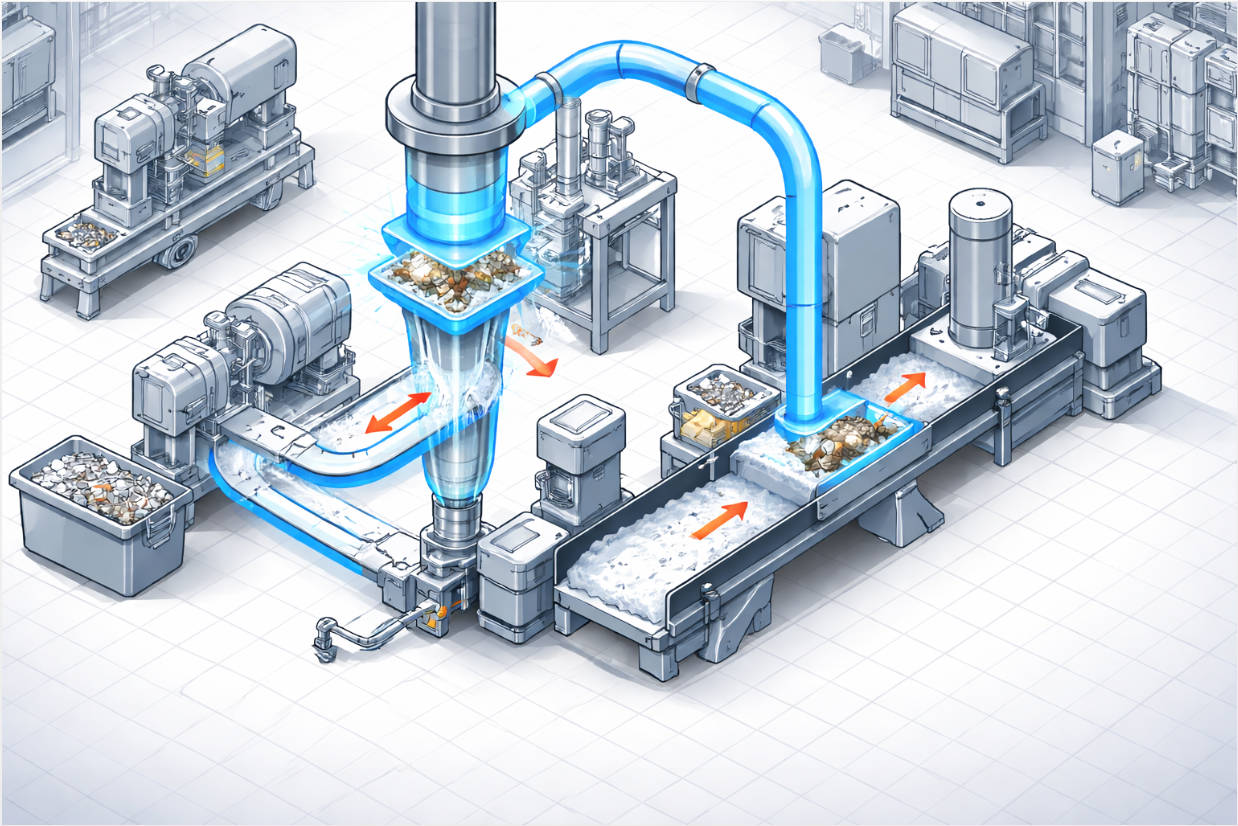
A suspended conveyor magnet is a magnetic separator mounted above a belt or chute that continuously pulls out ferrous contaminants—nuts, bolts, rebar, wire, tools—from a moving material stream without stopping the conveyor. By removing iron before it hits crushers, grinders, kilns, or packaging lines, it protects downstream equipment and stabilizes product quality. [buntingmagnetics]
In practice, you see these units sitting above quarry belts, coal feeders, bagging lines, or ceramic batch conveyors, quietly catching metallic “surprises” that would otherwise become a maintenance ticket. From an operator’s standpoint, a well‑sized suspended magnet is one of the most cost‑effective risk controls in the whole plant. [futuremarketinsights]
How Suspended Conveyor Magnets Work
The Basic Principle
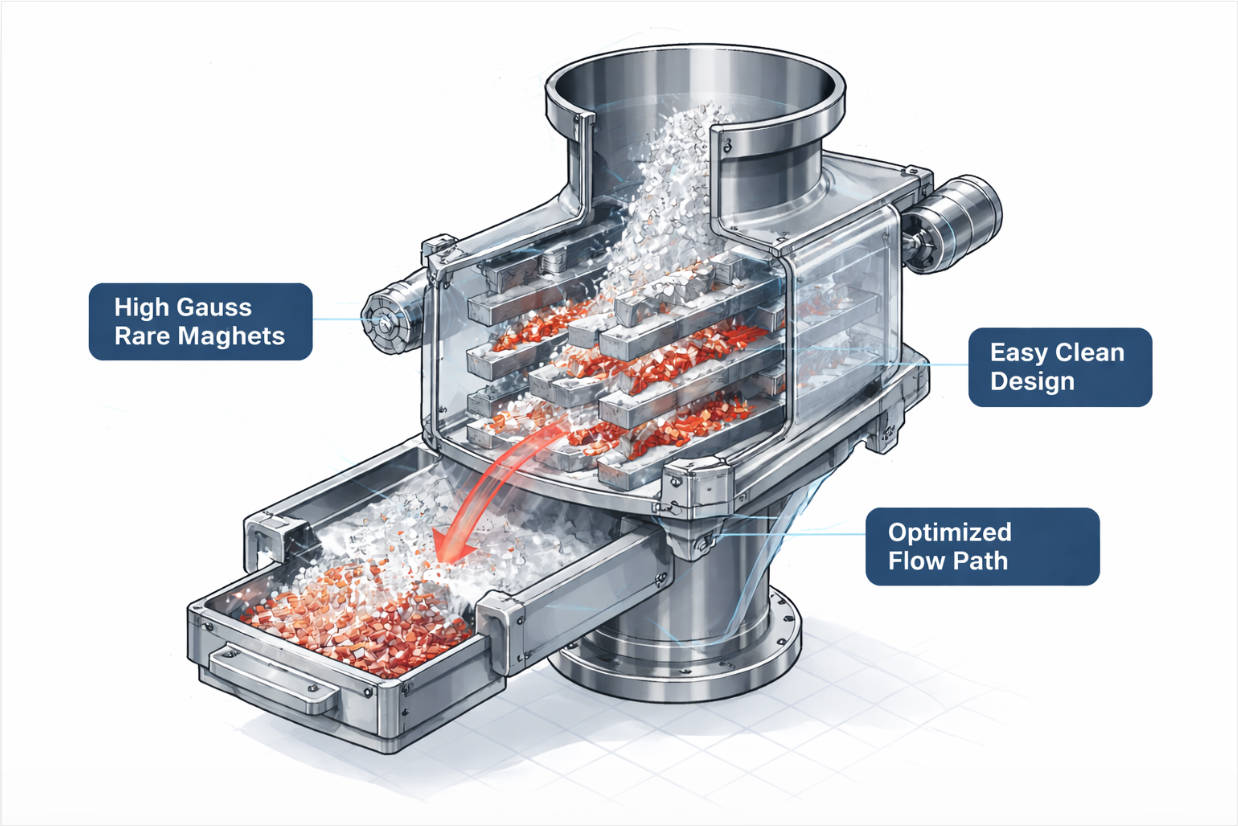
As bulk material passes under the magnet, ferromagnetic particles experience a magnetic force strong enough to lift them out of the burden and hold or carry them away from the good product. In a properly engineered system, this applies to both surface metal and metal buried deep in the material bed, as long as you match magnet strength and suspension height to belt load. [mpimagnet]
From an engineering view, the magnet’s performance depends on three interacting factors: field strength (Gauss), suspension height, and material depth/particle size. Under‑estimating any of these is one of the most common reasons real‑world units “don’t catch enough metal.” [linkedin]
Permanent vs Electromagnetic Designs
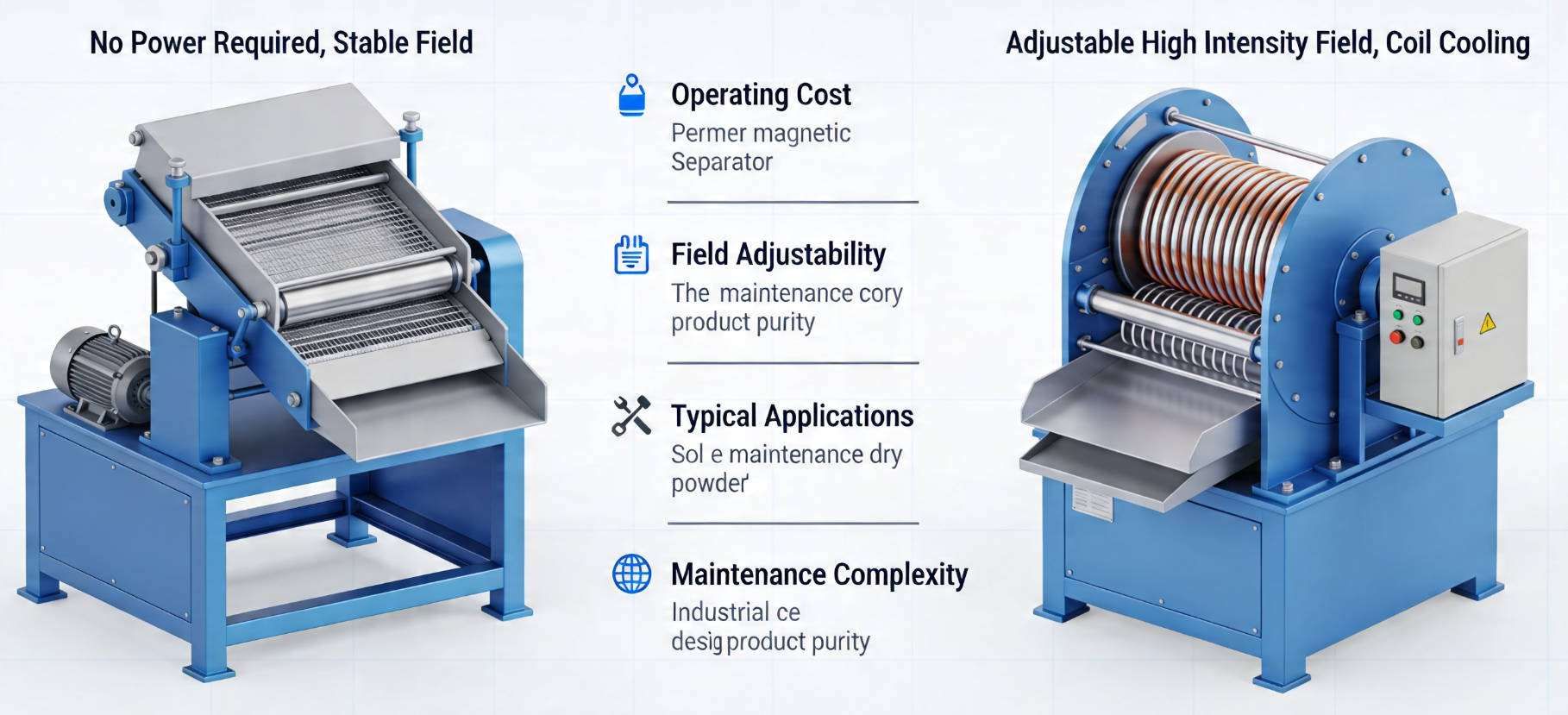
Most industrial suspended magnets fall into two families: [mpimagnet]
– Permanent suspended magnets
– Built from ferrite or rare‑earth materials such as neodymium, producing a stable field without power. [linkedin]
– Ideal for small tramp metal, moderate burden depths, and locations where power is limited or uptime is critical.
– Lower operating cost and simpler maintenance, often used in food, plastics, ceramics, and light minerals. [mpimagnet]
– Electromagnetic suspended magnets
– Use energized coils to generate a high‑intensity field that can be adjusted to suit material conditions. [buntingmagnetics]
– Better for heavy burden depths, higher conveyor speeds, and large tramp metal in mining, coal handling, and heavy recycling. [futuremarketinsights]
– Require air or oil cooling and electrical inspections but provide exceptional reach into deep product beds. [buntingmagnetics]
In my experience, plants often default to electromagnets “for safety,” but a correctly specified permanent magnet can handle many lines at a fraction of total lifecycle cost—especially on secondary or tertiary conveyors.
Key Design Parameters Plant Engineers Must Get Right
When I’m asked to troubleshoot a “weak” suspended magnet in the field, the problem is usually not the magnet itself but one of the following design choices. [linkedin]
1. Type of Magnet
Choosing between permanent and electromagnetic units should start from:
– Material type and bulk density
– Maximum tramp size and shape (e.g., M16 bolts vs. long rebar)
– Burden depth on the belt
– Duty cycle and ambient temperature
A light ceramic line and a primary crusher feed simply do not belong on the same magnet specification sheet. [buntingmagnetics]
2. Suspension Height
Suspension height is the distance from the magnet face to the top of the material bed. If you raise the magnet “just to fit a chute,” you dramatically reduce the magnetic force at the material and start missing buried tramp. [linkedin]
Good practice is to design the magnet to operate at a defined working height, with adjustment capability to compensate for belt wear and loading changes. [buntingmagnetics]
3. Magnet Face Area and Belt Coverage
The face area must cover the full conveyor width plus a safety margin to account for belt tracking variances. Undersized magnets lead to edge spillage of tramp metal—a classic hidden failure mode. [mpimagnet]
Face size is also linked to burden depth: deeper beds need longer magnetic exposure time, which often means a physically larger magnet or a different configuration.
4. Field Strength (Gauss) and Depth of Field
Industrial suspended magnets commonly operate in the 5,000–15,000 Gauss range, depending on design and application. The usable “reach” of the field falls off rapidly with distance, so the goal is not just the peak Gauss at the surface, but the effective field at your operating suspension height and material thickness. [linkedin]
5. Cleaning Method: Manual vs Self‑Cleaning
– Manual‑cleaning magnets hold tramp on the face until a shutdown, when operators manually clean the magnet. [linkedin]
– Self‑cleaning (overband) magnets use a moving belt to carry ferrous material off to a dedicated discharge point, allowing continuous operation. [futuremarketinsights]
For high‑throughput lines, a self‑cleaning design is no longer a “nice‑to‑have” but a necessity, or you’ll end up with magnets so buried in metal that they stop working effectively.
6. Mounting Configuration: Cross‑Belt vs In‑Line
Two configurations dominate suspended conveyor magnet installations: [mpimagnet]
– Cross‑belt (perpendicular to belt travel)
– Magnet spans the belt; tramp is pulled up and carried off the side.
– Simple to retrofit, widely used for general tramp removal in quarries, recycling, and aggregate handling.
– In‑line (over the head pulley, pointing along belt travel)
– Aligns with the conveyor direction, often above the discharge pulley, where material is more fluidized and easier to clean.
– Better for deeper separation and applications needing higher capture efficiency.
In practice, in‑line mounts usually offer stronger performance for difficult applications, but cross‑belt is easier in cramped plants or when retrofitting under existing structures. [futuremarketinsights]
Where Suspended Conveyor Magnets Deliver the Biggest Impact
Mining and Mineral Processing
In mining, stray metal can crack crusher housings, damage screens, and wreak havoc on grinding circuits. Suspended magnets above primary and secondary conveyors remove rebar, drill bits, bucket teeth, and other tramp metal before it enters high‑value equipment. [buntingmagnetics]
When combined with high‑gradient magnetic separators further downstream, plants improve recovery, uptime, and energy efficiency across the entire flowsheet. [buntingmagnetics]

Cement, Aggregates, and Construction Materials
Before raw materials like limestone and sandstone enter kilns or crushers, suspended magnets remove leaf springs, wire, and reinforcing steel from recycled aggregates. This directly reduces refractory damage, kiln ring formation, and unscheduled shutdowns. [futuremarketinsights]
Given the tight margins in cement and aggregate plants, this relatively simple device often delivers one of the highest paybacks per capital dollar spent. [futuremarketinsights]
Food, Pharmaceuticals, and Fine Chemicals
In food processing, even tiny ferrous fragments can trigger HACCP nonconformities, product recalls, and brand damage. Suspended magnets, typically permanent rare‑earth designs, act as a first line of defense over conveyors handling grain, flour, sugar, spices, and powders. [magnattackglobal]
They are often combined with downstream magnetic grates, traps, or filters to achieve the multi‑stage protection required by modern retailer and regulatory standards. [magnattackglobal]
Ceramics, Glass, Plastics, and Rubber
Metal contamination in ceramic body or glass batch leads to firing defects, surface blemishes, and reject rates that kill profitability. Over‑belt magnets protect mills, mixers, and presses in ceramics, glass, plastics, and rubber by removing nails, screws, and tool fragments before they enter the process. [fswandaye]
For high‑purity non‑metallic minerals like quartz and feldspar, suspended magnets are often paired with high‑gradient units to reach demanding iron content specifications. [fswandaye]
Power Generation, Coal, and Waste‑to‑Energy
Coal‑handling and biomass lines rely on suspended electromagnets to pull steel out of fuel streams, protecting pulverizers, feeders, and boiler inlets. The result is more stable fuel delivery, fewer fires sparked by metal‑on‑metal impact, and higher overall thermal efficiency. [universalchain]
In waste‑to‑energy and municipal solid waste plants, magnets also help pre‑clean fuel while generating a secondary metal recovery stream. [futuremarketinsights]
Quantifiable Business Benefits for B2B Buyers
When we sit down with plant managers and finance teams, the conversation quickly moves from “does it work” to “does it pay back.” On real projects, suspended conveyor magnets routinely deliver benefits in four clear buckets: [linkedin]
– Reduced unplanned downtime – Fewer catastrophic failures in crushers, mills, and conveyors caused by tramp metal.
– Lower maintenance costs – Less damage to belts, bearings, and wearing parts, longer service intervals.
– Improved product quality – Fewer contamination incidents, higher yield of on‑spec material, and more stable customer relationships. [magnattackglobal]
– Energy savings – Permanent magnets consume no power; optimized electromagnetic systems avoid over‑magnetizing and unnecessary energy consumption. [linkedin]
A 2025 market study estimated the U.S. magnetic separator market at about USD 0.5 billion in 2026, with over‑band and cross‑belt separators leading demand precisely because they keep high‑capacity conveyor systems running reliably. [futuremarketinsights]
New Industry Trends in Suspended Magnet Technology
Market Growth and Technology Upgrades
Global demand for magnetic separation equipment continues to grow, driven by stricter quality standards, recycling targets, and higher throughput plants. Suspended permanent magnet systems are projected to grow at close to double‑digit CAGR in the coming years as operators upgrade legacy lines with higher‑intensity units and smart monitoring. [universalchain]
From an engineer’s standpoint, the big shift is toward integrated, data‑aware systems that no longer treat magnets as static hardware but as part of a monitored, optimized process.
Smart Conveyors and Condition Monitoring
By 2026, modular conveyor systems with built‑in sensors for speed, vibration, belt alignment, and temperature have become mainstream in many manufacturing sectors. Suspended magnets are increasingly integrated into these smart lines, with: [universalchain]
– Temperature and current monitoring on electromagnets
– Status feedback on self‑cleaning belts
– Alarms for abnormal metal load or cleaning failures
This connectivity supports predictive maintenance strategies and helps plants demonstrate compliance during audits.
Practical Selection Checklist for Engineers
When advising plants, I often reduce the magnet selection process to a simple checklist. Below is a concise version you can adapt in your own RFQs. [mpimagnet]
Before you specify a suspended conveyor magnet, define:
1. Material characteristics – Type, bulk density, particle size range, moisture.
2. Tramp metal profile – Expected size, shape, and source (rebar, wire, bolts, tools).
3. Conveyor data – Belt width, speed, burden depth, troughing angle, head pulley diameter.
4. Process criticality – Food‑grade vs non‑food, primary crusher vs transfer point, safety implications.
5. Space and structure – Available headroom, surrounding steel structures, access for maintenance.
6. Electrical and cooling – Power availability and preference for permanent vs electromagnetic design.
Comparing Core Options for Suspended Conveyor Magnets
A clear comparison helps non‑specialists make better decisions at the budgeting stage.
| Option | Typical Use Cases linkedin | Advantages linkedin | Limitations linkedin |
|---|---|---|---|
| Permanent suspended magnet | Food, plastics, ceramics, light minerals | No power, low operating cost, simple design | Limited field adjustability, less suited to very deep burdens |
| Electromagnetic suspended magnet | Mining, coal, heavy recycling, primary crushers | Adjustable field, strong reach into deep burden | Needs power and cooling, higher maintenance |
| Manual‑cleaning configuration | Low throughput, intermittent operation | Lower capital cost, simple mechanics | Requires downtime for cleaning, risk of metal buildup |
| Self‑cleaning (overband) | High‑throughput, continuous operation | Continuous separation, safer and more efficient | Higher initial cost, needs belt maintenance |
| Cross‑belt mounting | Retrofits, limited headroom, general tramp removal | Easy fit on existing conveyors | Slightly lower capture efficiency in some cases |
| In‑line mounting over head pulley | Critical lines, deeper separation needs | Better exposure and capture, especially for buried metal | More demanding structural and layout requirements |
Expert Maintenance and Compliance Tips
From a compliance perspective—especially in food, pharma, and high‑risk applications—regular verification of magnetic separators is now mandatory rather than optional. [magnattackglobal]
Key maintenance practices include: [magnattackglobal]
– Regular magnet strength testing using calibrated test pieces or Gauss meters to detect demagnetization.
– Suspension height checks to confirm nothing has sagged, and the burden depth is still within design limits. [linkedin]
– Inspection of electromagnetic coils and insulation to avoid overheating or shorts.
– Cooling system performance checks on oil‑ or air‑cooled electromagnets.
– Cleaning mechanism inspections to prevent jamming or belt tracking issues that reduce effectiveness. [magnattackglobal]
Third‑party endorsed testing and reporting programs are increasingly used to prove compliance with contemporary magnet standards and retailer codes of practice. [magnattackglobal]
Why Partner With a Specialist Manufacturer Like Foshan Wandaye
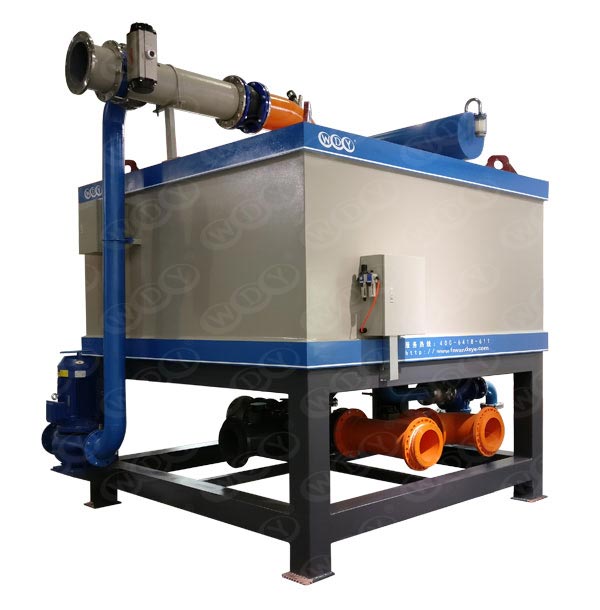
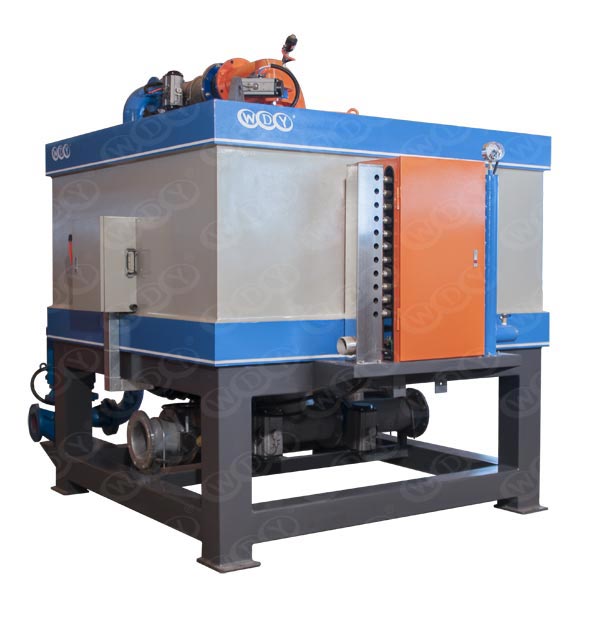
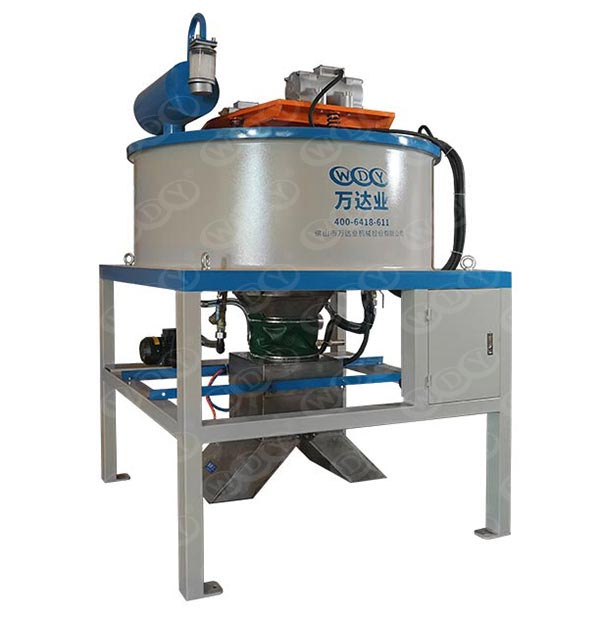
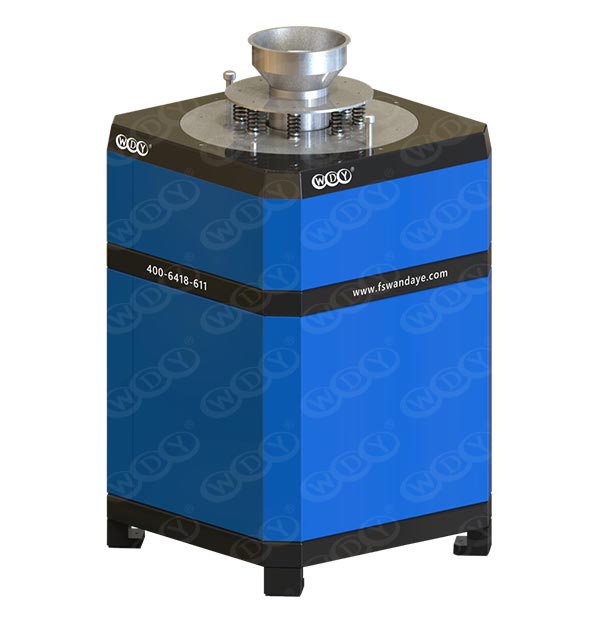
Foshan Wandaye Technology Co., Ltd. is a specialized magnetic separation equipment manufacturer integrating R&D, engineering design, production line installation, and commissioning services. The company focuses on high‑gradient electromagnetic separators, powder iron‑removal devices, permanent magnetic separators, vertical ring iron removers, and components such as magnetic plates, iron‑removal cabinets, and magnetic bars. [magnetii.goldsupplier]
From a buyer’s viewpoint, working with a full‑stack supplier means you get more than a catalog product—you get application engineering, circuit design, and onsite support to tune the separator to your actual material, not just theoretical data. For industries ranging from mining and ceramics to batteries, plastics, pharmaceuticals, and food, this integration significantly reduces commissioning time and lifetime risk. [magnetii.goldsupplier]
Step‑by‑Step Implementation Roadmap
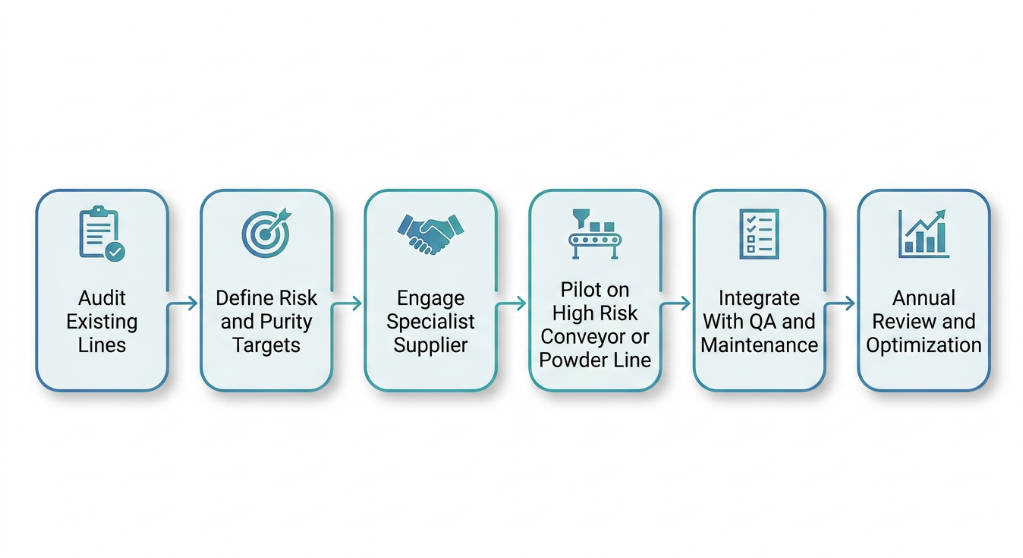
For plants planning to upgrade or add suspended conveyor magnets, a staged approach helps minimize disruption:
1. Audit existing lines
– Map critical conveyors, current metal incidents, and equipment failure history. [futuremarketinsights]
2. Define risk and quality targets
– For example, “zero metal claims on food line A” or “no crusher trips from tramp metal on line B.”
3. Engage a specialist supplier early
– Share real material samples, plant drawings, and historical issues so they can model the right magnet geometry and placement. [magnetii.goldsupplier]
4. Pilot on a high‑risk conveyor
– Start with the line that causes the most downtime or quality complaints, then expand to secondary points.
5. Integrate with maintenance and QA
– Add magnet inspection and testing to your preventive maintenance schedule and HACCP plans. [magnattackglobal]
6. Review performance annually
– Track near‑miss events, captured metal volume, and equipment failure rates to validate ROI and adjust as needed. [futuremarketinsights]
Call to Action: Design Your Next Line Around Reliable Iron Removal
If your plant still treats magnetic separation as an afterthought, now is the time to rethink that approach. A correctly engineered suspended conveyor magnet, built and commissioned by a dedicated magnetic equipment specialist, is one of the simplest ways to protect assets, stabilize quality, and satisfy modern compliance expectations. [magnattackglobal]
To discuss a specific conveyor line, material challenge, or industry application, connect with the engineering team at Foshan Wandaye Technology Co., Ltd. and review options for suspended magnets, high‑gradient separators, and iron‑removal cabinets tailored to your process. [fswandaye]
FAQ
FAQ 1: What is the main difference between a suspended magnet and other magnetic separators?
Suspended conveyor magnets mount above belts or chutes to remove tramp metal from free‑falling or conveyed material streams without interrupting flow. Other separators—such as drum, roll, or magnetic filters—are usually installed in contact with the material or in pipeline systems to refine product purity at later stages. [mpimagnet]
FAQ 2: How do I know if I need a permanent or electromagnetic suspended magnet?
If your process handles shallow burdens, smaller tramp metal, and has limited access to power, a permanent suspended magnet is often sufficient and more economical. For deep burden, large tramp, high belt speeds, or very critical duty (e.g., primary crusher feeds, coal lines), adjustable‑strength electromagnetic units usually provide more reliable capture. [buntingmagnetics]
FAQ 3: How often should suspended magnets be inspected and tested?
At minimum, magnets in regulated environments like food and pharmaceuticals should be tested at least annually, with more frequent checks for high‑risk lines or critical control points. Routine inspections should include strength testing, suspension height checks, cleaning system function, and (for electromagnets) coil insulation and cooling performance. [magnattackglobal]
FAQ 4: Can suspended conveyor magnets be retrofitted to existing conveyors?
Yes, most suspended magnets can be retrofitted using cross‑belt mounting with steel frames, adjustable brackets, or chains, provided there is sufficient headroom. In‑line installations over head pulleys may require structural modifications but can deliver higher performance in some applications. [mpimagnet]
FAQ 5: What information should I prepare before requesting a quotation for a suspended magnet?
Suppliers will typically ask for material type, bulk density, particle size, expected tramp metal profile, belt width and speed, burden depth, and any space constraints or regulatory requirements. Providing plant layout drawings, process flow diagrams, and historical incident data helps engineers design a magnet system that actually solves your real‑world problems. [magnetii.goldsupplier]
References
1. Great Magtech – “Essential Suspended Conveyor Magnets for Industry – Knowledge” (technical description of suspended magnets, design and application).[page:1]
2. Bunting Magnetics – “Magnetic Separation in Mining and Mineral Processing” (design principles and disc separator operation).[Bunting Magnetics]
3. MPI – “The Complete Beginner’s Guide to Magnetic Separators” (overview of separator types and applications).[MPI]
4. Magnattack Global – “How To Ensure Magnetic Separators Meet Compliance Standards” (testing, validation, and compliance guidance).[Magnattack Global]
5. Future Market Insights – “United States Magnetic Separator Market Size & Outlook 2026–2036” (market size, over‑band/cross‑belt usage trends).[Future Market Insights]
6. Suspended Permanent Magnet Market growth analysis article (CAGR and key players in suspended magnets).[CAGR]
7. Universal Chain – “Conveyor System Trends in 2026” (smart conveyor and condition‑monitoring trends).[conveyor]
8. Foshan Wandaye Technology Co., Ltd. – company site and product overview (magnetic separators, iron‑removal equipment, integrated services).[site] [separators]