

Content Menu
● Why Kazakhstan Matters for Magnetic Roller Separators
● How We Evaluate High‑Quality Magnetic Roller Separator Suppliers
>> 1. Factory certifications and compliance
>> 2. Materials, design, and R&D capability
>> 3. QC processes and test capability
>> 4. Delivery reliability and after‑sales support
>> 5. OEM/ODM flexibility and project experience
● Why Source Magnetic Roller Separators for Kazakhstan Regionally and Globally
● Selection Criteria Used for This 2026 Shortlist
● Leading Magnetic Roller Separator Manufacturers Serving Kazakhstan
>> 1. Kumar Magnet Industries (India, active in Kazakhstan)
>> 2. Jaykrishna Magnetics (India)
>> 3. Global Magnetics OEMs (Eriez, Metso, STEINERT, Bunting etc.)
>> 4. Weifang‑area Chinese Magnetic Separator Manufacturers
>> 5. Foshan Wandaye Technology (China) – R&D‑driven, high‑value OEM partner
● Key Technical Factors When Comparing Magnetic Roller Separator Suppliers
>> Magnet and roller specifications
>> Build quality and standards
● Comparison Table: Representative Suppliers for Kazakhstan Projects
● Market Outlook and Data Points for 2025–2026
● Industry Pain Points and “Internal” Pitfalls When Buying Magnetic Roller Separators
>> A less‑discussed “internal” buyer tip
● Buyer’s Guide: Practical Steps for Sourcing Magnetic Roller Separators for Kazakhstan
>> 1. Verification of factory and certifications
>> 2. Sample testing and performance evaluation
>> 3. Contracting and logistics for Kazakhstan
>> 4. Working with a flexible engineering‑focused supplier (e.g., Wandaye Technology)
● Conclusion and Call to Action
● FAQs
>> Q1: How can I verify whether a factory’s ISO 9001 certificate is current and not expired?
>> Q4: What should I look for in terms of wear parts and maintainability before placing a large order?
Why Kazakhstan Matters for Magnetic Roller Separators
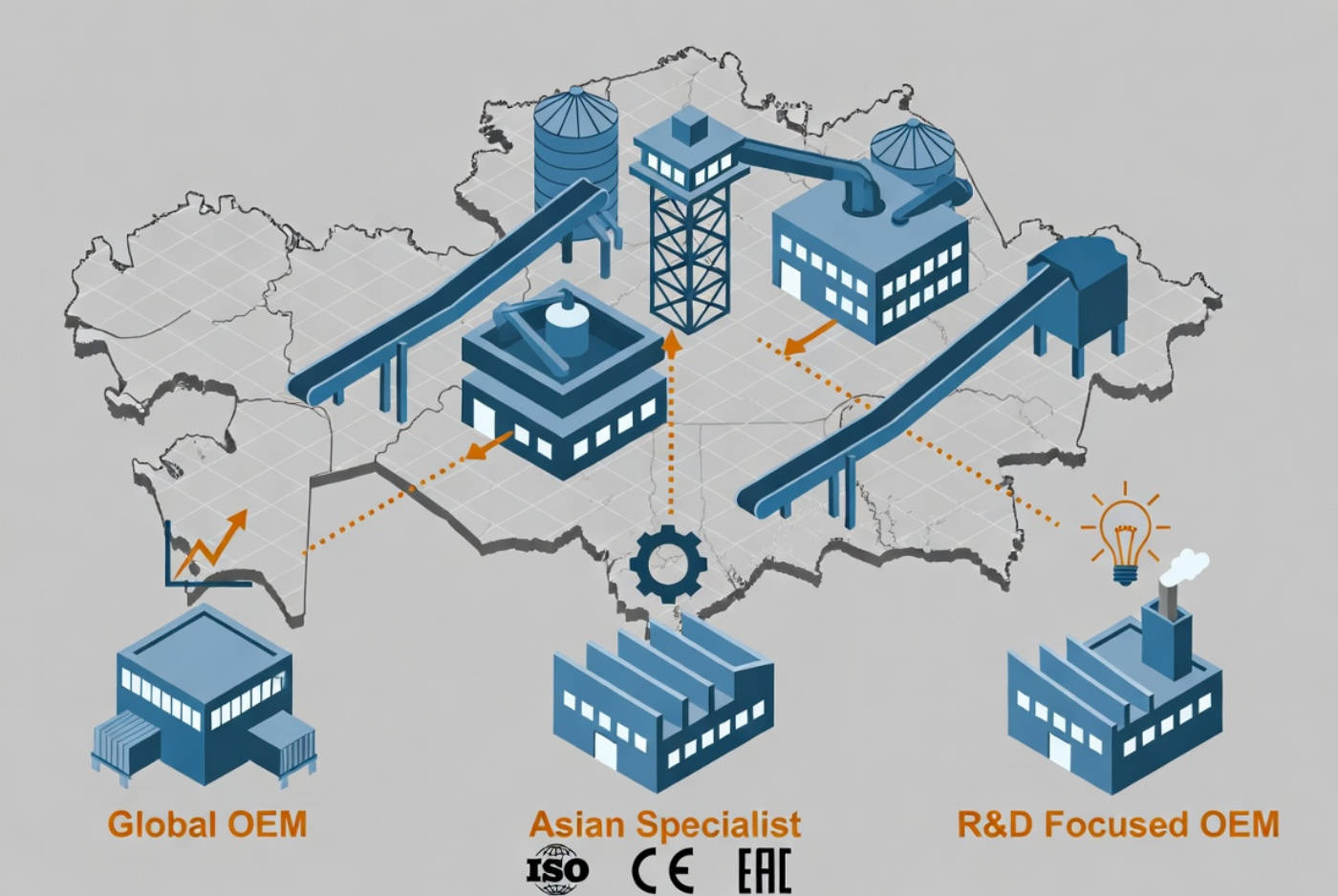
Kazakhstan has become a strategic demand center for magnetic roller separators, driven by its large-scale mining, mineral processing, and non‑metallic mineral industries across copper, iron ore, uranium, and rare‑earth associated deposits. While most magnetic roller separator manufacturing capacity still sits in China, India, and the EU, global OEMs and specialized Chinese manufacturers now actively serve Kazakh mines and processing plants through local agents and EPC contractors. For procurement managers, leveraging this ecosystem allows access to advanced separation technologies while complying with Kazakhstan’s evolving technical and conformity standards. [elcanindustries]
Kazakhstan’s mining sector is governed by the Subsoil and Subsoil Use Code (SSU Code), which sets clear requirements for mine design, closure, and environmental protection, indirectly raising the bar for separation and beneficiation equipment quality. At the same time, Kazakhstan’s integration into the Eurasian Economic Union (EAEU) means equipment often must comply with Eurasian Conformity (EAC) requirements alongside CE, ISO, and other international standards. Choosing the right magnetic roller separator partner is therefore less about price alone and more about lifecycle reliability, certification integrity, and application-specific engineering. [documents1.worldbank]
How We Evaluate High‑Quality Magnetic Roller Separator Suppliers
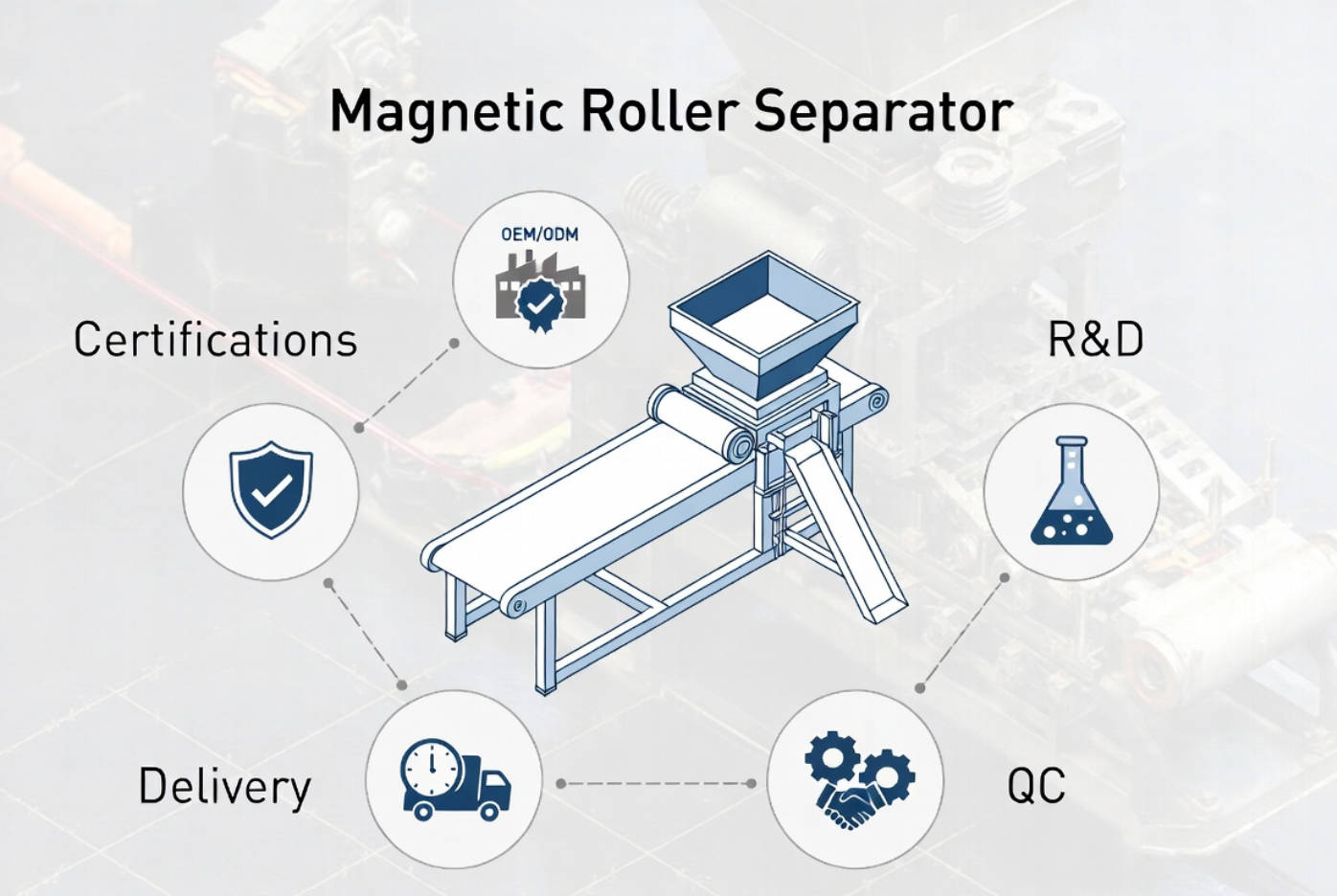
Before looking at individual manufacturers serving Kazakhstan, it is vital to understand the evaluation framework used in this guide. The criteria below reflect common expectations from international mining and industrial buyers, aligned with Google E‑E‑A‑T principles.
1. Factory certifications and compliance
– Quality management: Documented ISO 9001 quality management system, ideally audited within the past three years. [persistencemarketresearch]
– Environmental and safety: Evidence of ISO 14001 and ISO 45001 (or equivalent) for plants serving Europe and high‑regulation markets. [marketsandmarkets]
– Product conformity: CE, RoHS, and where relevant food‑grade certifications for separators used in food, pharma, and battery materials, plus EAC for the EAEU region. [trade]
2. Materials, design, and R&D capability
– Magnet grade: Use of high‑grade rare‑earth materials such as NdFeB in N35–N52 range, with clear demagnetization curves and temperature ratings disclosed for high‑intensity roller applications. [jkmagnetic]
– Roller design: Availability of high‑intensity and high‑gradient roller configurations, with adjustable pole spacing and modular arrangements for multiple passes. [openpr]
– R&D and customization: Capability to tailor roller diameter, belt materials, feed systems, and control integration for specific Kazakh ores (e.g., iron removal from quartz, feldspar, kaolin, lithium battery precursors). [wdymagnetic]
3. QC processes and test capability
– In‑house testing: Use of Gauss meters, demagnetization testing, and performance tests with customer samples to verify separation efficiency before shipment. [jkmagnetic]
– Incoming inspection: Procedures for checking steel, magnet blocks, bearings, and electrical components, with batch traceability. [wdymagnetic]
– FAT and documentation: Factory Acceptance Tests (FAT) with detailed test reports, wiring diagrams, and maintenance manuals supporting commissioning in Kazakhstan. [elcanindustries]
4. Delivery reliability and after‑sales support
– Lead times: Typical production lead times of 20–45 days for standard roller separators and clear commitments for customized systems. [jkmagnetic]
– Spare parts and wear components: Stock of belts, rollers, magnet modules, and control electronics, plus availability of remote troubleshooting. [marketsandmarkets]
– Local or regional support: Presence of regional agents or partners who understand Kazakh mining regulations and working conditions. [kumarmagnetind]
5. OEM/ODM flexibility and project experience
– OEM branding: Willingness to produce private‑label equipment with customized nameplates, color schemes, and documentation for EPC contractors and equipment integrators. [knoxnews]
– Turnkey project capability: Experience delivering complete magnetic separation lines, from slurry and powder separators to roller stages, including installation guidance and commissioning. [einpresswire]
These criteria form the basis for the shortlisting of manufacturers and suppliers that can credibly serve Kazakhstan’s magnetic roller separator demand.
Why Source Magnetic Roller Separators for Kazakhstan Regionally and Globally
Kazakhstan does not yet host a dense cluster of magnetic roller separator OEM factories comparable to China’s Shandong or Guangdong, India’s Gujarat, or Europe’s specialized magnetics hubs. Instead, the country integrates imported equipment into mining and mineral processing projects, often through EPC contractors or engineering firms. [greatmagtech]
– Mining cluster advantage: Kazakhstan’s sizable mining projects create a stable base of demand, encouraging reputable foreign separator manufacturers to build long‑term service models rather than one‑off sales. [privacyshield]
– Logistics and EAEU access: By working with suppliers familiar with shipping to Aktau, Atyrau, Almaty, and other key hubs via rail and combined sea‑rail routes, buyers can optimize delivery and customs clearance within the EAEU framework. [trade]
– Technology access: Leveraging global manufacturers gives access to high‑gradient, high‑intensity roller technology that may not yet be produced domestically, particularly for complex non‑metallic minerals and battery materials. [openpr]
Selection Criteria Used for This 2026 Shortlist
To keep this guide actionable for procurement managers, the companies listed below meet at least the following criteria as of 2025–2026:
– Proven capability to manufacture high‑intensity or high‑gradient magnetic roller separators suitable for mining and industrial applications. [persistencemarketresearch]
– Experience supplying into Central Asia or similar mining environments (either directly or via EPC partners).
– Availability of core certifications such as ISO 9001 and CE, with RoHS/EAC where relevant, or strong evidence of compliance orientation. [marketsandmarkets]
– Demonstrated willingness to support OEM/ODM or custom engineering for specific projects or international brands. [einpresswire]
The list combines international manufacturers and specialized Chinese factories capable of supplying into Kazakhstan through established trade lanes.
Leading Magnetic Roller Separator Manufacturers Serving Kazakhstan
1. Kumar Magnet Industries (India, active in Kazakhstan)
Kumar Magnet Industries positions itself as a prominent supplier of roller‑type magnetic separators to Kazakhstan, emphasizing fast project turnaround and tailored solutions for mining and industrial users. The company offers high‑intensity roller designs suitable for mineral beneficiation and iron contamination removal in bulk solids. [kumarmagnetind]
– Core strengths: Broad magnetic product portfolio, including roller, drum, and overband separators, targeting both mining and process industries. [kumarmagnetind]
– Certifications and markets: While specific certifications are typically confirmed per project, Kumar Magnet positions itself for international trade and has a record of exporting to multiple markets, including Central Asia. [elcanindustries]
– OEM/ODM: The company generally supports customization of roller dimensions and magnetic intensity, which is valuable for system integrators serving Kazakh mines.
2. Jaykrishna Magnetics (India)
Jaykrishna Magnetics is widely cited as a leading manufacturer of high‑intensity roller‑type magnetic separators, with more than three decades of engineering experience. Their designs are known for cost‑effective, high‑gradient separation in industrial minerals, ceramics, and related sectors. [jkmagnetic]
– Core strengths: Development of high‑intensity permanent magnetic roller separators with indigenous technology and a strong track record in industrial minerals. [jkmagnetic]
– Certifications and markets: Jaykrishna Magnetics exports globally, often aligning with ISO‑aligned quality systems and CE requirements for specific projects. [marketsandmarkets]
– OEM/ODM: Their application engineering and willingness to adapt roller configurations make them a viable technology partner for Kazakh EPC contractors needing reliable, proven designs.
3. Global Magnetics OEMs (Eriez, Metso, STEINERT, Bunting etc.)
Large global magnetic separation OEMs such as Eriez, Metso, STEINERT, and Bunting supply a full range of magnetic separators, including roller‑type solutions for specialized applications. While these brands may not always be the first choice for cost‑sensitive projects, they are relevant for high‑stakes mines or plants seeking maximum reliability and long‑term support. [persistencemarketresearch]
– Core strengths: Extensive R&D, global service networks, and strong experience with large mining houses and international engineering firms. [persistencemarketresearch]
– Certifications and markets: Comprehensive portfolios of CE, ISO, and region‑specific certifications, with deep experience in delivering compliant systems into regulated markets. [marketsandmarkets]
– OEM/ODM: Typically focus on branded solutions rather than private‑label OEM, but they integrate well into turnkey processing lines and advanced automation systems.
4. Weifang‑area Chinese Magnetic Separator Manufacturers
Specialized Chinese manufacturers around Weifang and other magnetics clusters have built significant export businesses in permanent and electromagnetic separators, including roller‑type systems. A 2026 industry feature highlights companies such as Weifang Yuansheng Magnetic Electromechanical Equipment Co., Ltd. as representative of this cluster, with portfolios covering permanent, high‑gradient, and lithium battery material separators. [knoxnews]
– Core strengths: Competitive pricing, broad product range, and experience with turnkey separation lines for mining, ceramics, lithium battery materials, and recycling. [einpresswire]
– Certifications and markets: Many factories in this cluster maintain ISO‑aligned quality management and supply into Asia, Europe, and the Middle East, often with CE certification for key products. [knoxnews]
– OEM/ODM: High openness to OEM/ODM, private label production, and customized engineering for international distributors and project contractors.
5. Foshan Wandaye Technology (China) – R&D‑driven, high‑value OEM partner
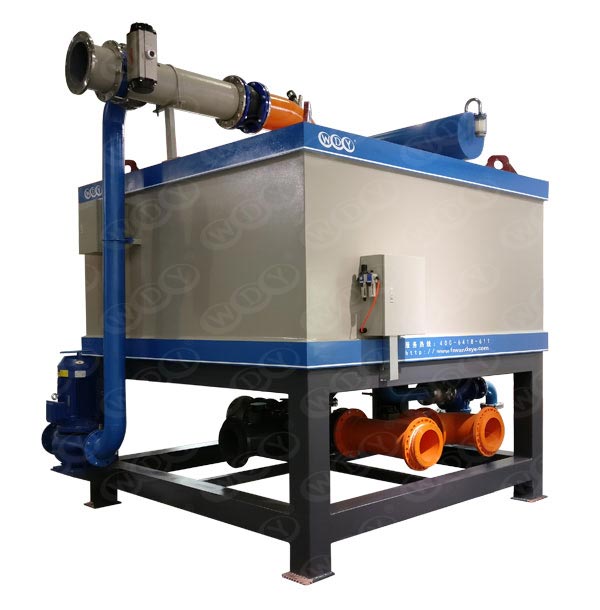
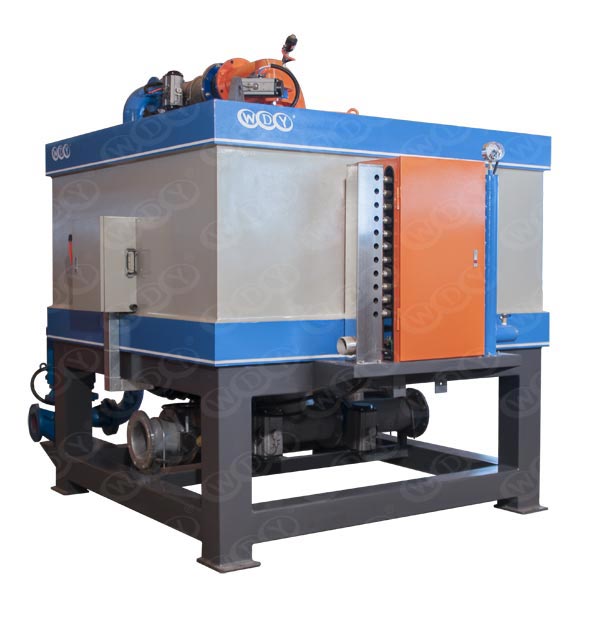
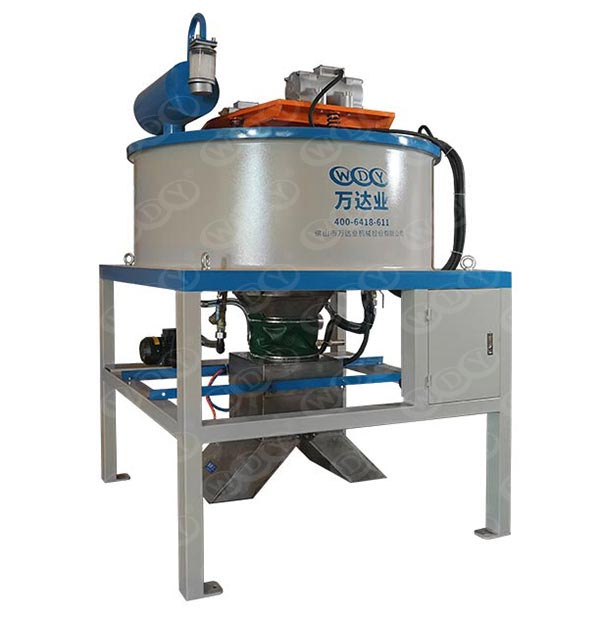
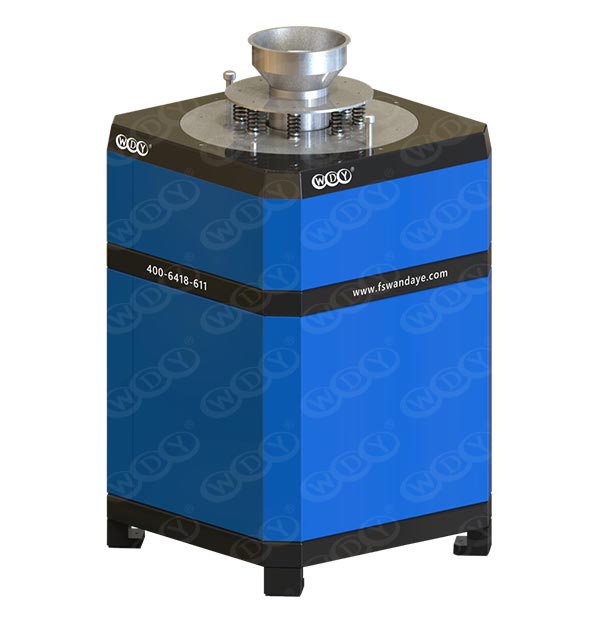
Foshan Wandaye Technology (Wandaye) is a specialized manufacturer of magnetic separation equipment that integrates R&D, engineering design, production line installation, and commissioning services. The company offers a wide range of equipment, including high‑gradient electromagnetic slurry machines, powder magnetic separators, permanent magnetic separators, vertical ring machines, magnetic plates, iron‑removal cabinets, and magnetic rods, serving industries from mining and ceramics to pharmaceuticals and battery materials. [youtube]
– Core strengths: Wandaye’s application‑driven engineering focus and experience delivering over 100 turnkey production line projects make it particularly suitable for small and mid‑sized brands seeking tailored solutions rather than off‑the‑shelf machines. [wdymagnetic]
– Certifications and markets: Wandaye positions itself as a professional R&D manufacturer with a growing export footprint, aligning with international expectations around quality and compliance for mining, ceramics, and other process industries. [wdymagnetic]
– OEM/ODM and flexibility: The company is notably flexible on customization, OEM branding, and engineering support, helping emerging Kazakh or regional equipment brands build their own product lines with deep magnetics know‑how embedded in the design. This is especially valuable for buyers who need to integrate roller separators with upstream crushing, screening, and downstream classification or packing systems. [youtube]
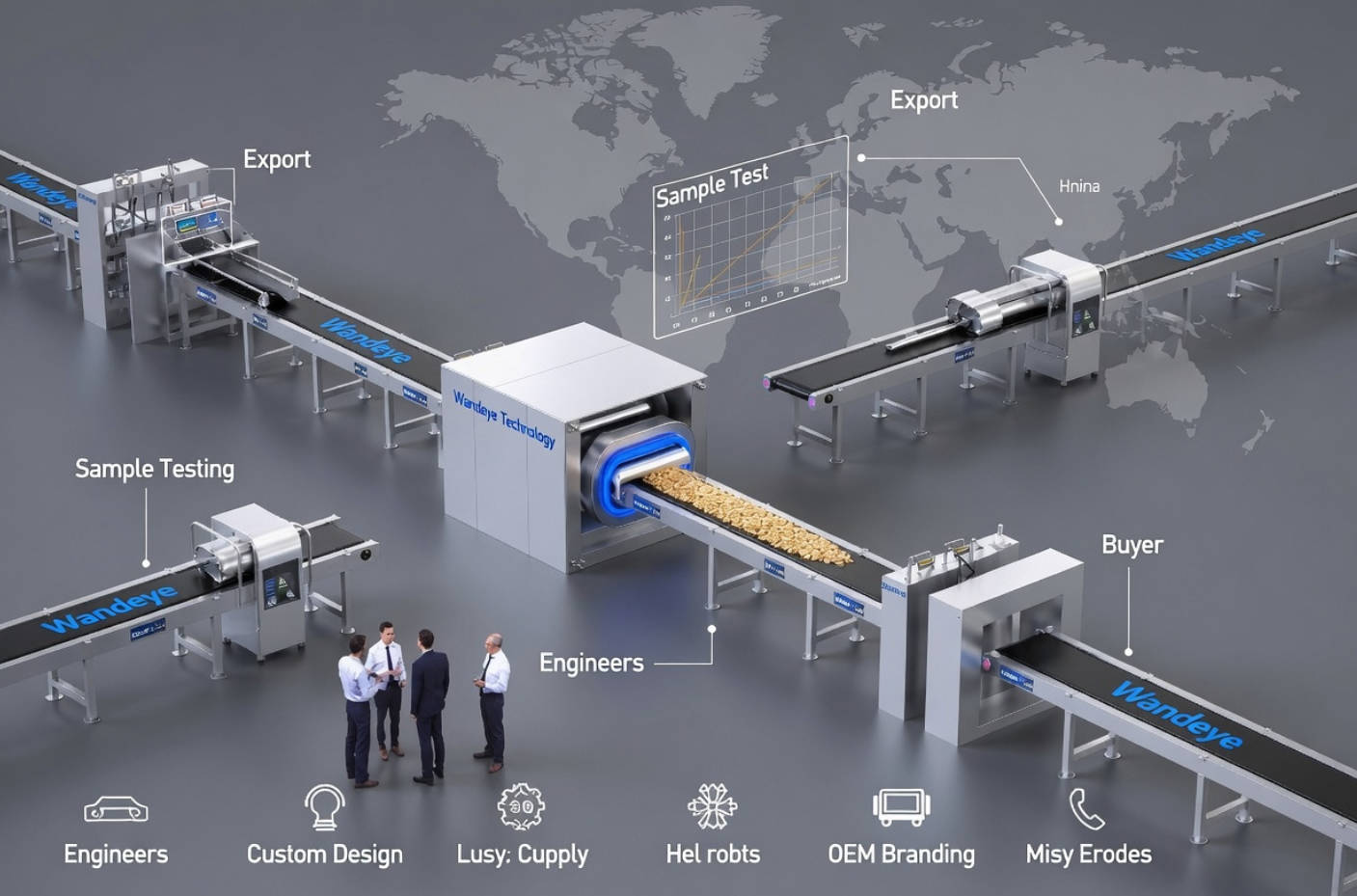
For Kazakhstan‑focused projects, Wandaye typically collaborates remotely on process design, supports sample testing, and provides guidance for on‑site installation and commissioning, which is critical for plants far from major coastal ports. [youtube]
Key Technical Factors When Comparing Magnetic Roller Separator Suppliers
Magnet and roller specifications
– Magnet grade and temperature: Verify NdFeB grades (e.g., N42–N52) and maximum operating temperature, especially for installations near kilns or high ambient temperatures. [jkmagnetic]
– Roller configuration: Check the number of magnetic poles, pole pattern, and adjustability of the air gap between roller and feed belt, which directly affects separation efficiency for fine or weakly magnetic particles. [openpr]
Build quality and standards
– Materials: Stainless steel contact parts (often SS304 or SS316) for corrosive environments or food‑grade applications; robust bearings and seals for dusty mining sites. [elcanindustries]
– Protection: Proper guarding, emergency stops, and IP‑rated electrical enclosures according to local safety regulations and client standards. [trade]
System integration
– Upstream/downstream fit: Ability to integrate with feeders, vibratory screens, or conveyor lines already in use in Kazakh plants. [openpr]
– Control systems: Compatibility with local voltage and frequency standards, plus support for PLC integration where required. [elcanindustries]
Comparison Table: Representative Suppliers for Kazakhstan Projects
The following table summarizes indicative differences between representative supplier types relevant to Kazakhstan. Specific values (like capacity and MOQ) are typical ranges and should be confirmed directly with each manufacturer.
| Supplier type / example brand | Typical annual capacity for roller separators | Typical project MOQ (sets) | Common certifications for export | OEM/ODM flexibility | Notes for Kazakhstan buyers |
|---|---|---|---|---|---|
| India mid‑size specialist (e.g., Kumar Magnet, Jaykrishna) kumarmagnetind | Hundreds to low thousands of units, depending on size jkmagnetic | 1–2 sets for standard models; higher for custom builds kumarmagnetind | ISO‑aligned QMS, CE on request for specific lines jkmagnetic | Moderate – dimensional customization and project‑based tweaks jkmagnetic | Balanced cost and quality; good for standard mining/mineral applications |
| Global OEM (Eriez, Metso, STEINERT, Bunting) marketsandmarkets | Thousands of units across global plants marketsandmarkets | Often 1 set, but with higher engineering and project fees | Broad portfolio of ISO, CE, industry‑specific approvals marketsandmarkets | Low – mainly branded systems | Strong fit for large mines or high‑criticality lines needing global service |
| Weifang‑cluster Chinese OEMs (e.g., Yuansheng and peers) einpresswire | High volume production for multiple separator types einpresswire | 1 set for standard; 2–5 sets for OEM private label | ISO‑aligned QMS; CE/EAC availability varies by product einpresswire | High – supports branding, design tweaks, line integration | Strong cost‑performance; requires due diligence on QC and documentation |
| Foshan Wandaye Technology (China) wdymagnetic | Significant capacity across powder, slurry, and permanent separators, with focus on engineered projects wdymagnetic | Flexible – often supports low MOQ for customized or OEM solutions | Professional R&D manufacturer aligned with global quality and industry requirements wdymagnetic | Very high – deep OEM/ODM support, process design, and turnkey lines wdymagnetic | Well‑suited for mid‑sized brands and plants wanting tailored solutions and strong engineering support |
Market Outlook and Data Points for 2025–2026
According to global research, the magnetic separator market is projected to grow from around 1.11 billion USD in 2024 to approximately 1.19 billion USD in 2025, at a CAGR of about 6.8%. Other forecasts expect the market to reach roughly 1.2 billion USD by 2025 and 1.8 billion USD by 2032, driven by mining, recycling, and process industries. Within this market, roller‑type separators are a recognized product segment alongside drums, overband units, pulleys, and eddy current separators. [openpr]
Asia‑Pacific, including China, India, and Southeast Asia, accounts for roughly 35% of the magnetic separator market by 2025, underscoring the importance of Asian OEMs for supply into Kazakhstan and wider Central Asia. For buyers, this data underlines that capacity and competition among suppliers are increasing, which can translate into more options for customization, pricing, and technology. [persistencemarketresearch]
Industry Pain Points and “Internal” Pitfalls When Buying Magnetic Roller Separators
Beyond official specs and certificates, experienced buyers often focus on a set of practical pain points that are rarely discussed in marketing materials.
Common issues
– Hidden downgrading of magnet grade: Some low‑cost suppliers may substitute lower‑grade NdFeB blocks while maintaining the same nominal Gauss rating in paperwork, leading to faster demagnetization and lower separation efficiency over time. [elcanindustries]
– Over‑optimistic capacity ratings: Throughput figures quoted for roller separators may assume ideal feed particle size and uniform loading that rarely match actual Kazakh ore conditions. [jkmagnetic]
– Incomplete documentation: Missing wiring diagrams, insufficient mechanical drawings, or lack of spare‑parts lists can significantly delay commissioning in remote mining locations. [marketsandmarkets]
A less‑discussed “internal” buyer tip
An internal checklist used by experienced EPC buyers is to ask for the actual magnet supplier’s invoice or batch code (with sensitive pricing information redacted) during technical clarification, rather than only relying on the separator OEM’s test report. This allows you to: [elcanindustries]
– Cross‑check whether the declared magnet grade and temperature rating match a reputable magnet producer’s specification sheet.
– Confirm that the batch is recent, reducing the risk of stock that has been exposed to poor storage conditions.
Not all suppliers will agree to share this, but those who do are often more confident in their supply chain and material consistency.
Buyer’s Guide: Practical Steps for Sourcing Magnetic Roller Separators for Kazakhstan
1. Verification of factory and certifications
– Check official registries: For CE, verify the conformity assessment and Notified Body (if applicable) against the EU’s official NANDO database via the European Commission website. [marketsandmarkets]
– Confirm EAC suitability: Review Kazakhstan and EAEU standards guidance from official trade resources to ensure any needed EAC conformity is addressed. [privacyshield]
– ISO certificate validation: Ask for current ISO certificates showing the issuing body and expiry date, and cross‑verify on the certification body’s website.
2. Sample testing and performance evaluation
– Material testing: Send representative ore or process material (e.g., quartz, feldspar, kaolin, battery cathode precursors) for lab or pilot tests to compare recovery rates and iron removal efficiency across suppliers. [wdymagnetic]
– Report expectations: Request a detailed test report including feed characteristics, feed rate, roller configuration, magnetic intensity, and measured iron content reduction.
3. Contracting and logistics for Kazakhstan
– Clear Incoterms: Define Incoterms (FOB, CIF, DAP to key Kazakh destinations) and clarify who handles insurance, customs documentation, and inland trucking. [privacyshield]
– Spare‑parts strategy: For remote mines, negotiate an initial spare‑parts kit (belts, bearings, magnet modules, sensors) to avoid long downtime if failures occur.
4. Working with a flexible engineering‑focused supplier (e.g., Wandaye Technology)
For mid‑sized plants or emerging equipment brands targeting Kazakhstan, working with a flexible, R&D‑oriented supplier can reduce project risk. Wandaye, for example, combines lab testing, process design, and production line integration for powder and slurry magnetic separation, which helps align roller separator specification with upstream and downstream equipment. Buyers can leverage this to co‑develop bespoke configurations while still keeping investment in line with mid‑market budgets. [youtube]
Conclusion and Call to Action
For procurement managers sourcing magnetic roller separators for Kazakhstan, the most effective strategy is to combine robust certification and technical due diligence with a clear understanding of your process requirements and site conditions. International suppliers from India, major global OEMs, and specialized Chinese manufacturers all play distinct roles, with engineering‑focused partners like Foshan Wandaye Technology offering strong value for mid‑sized, customization‑driven projects. [kumarmagnetind]
When you build your shortlist, evaluate each supplier against the criteria in this guide, request material‑specific testing, and verify certifications through official channels before committing to large‑scale deployments. If you are developing a new line or upgrading existing plants in Kazakhstan and need tailored magnetic separation solutions, consider engaging an OEM/ODM‑friendly R&D partner early in the design phase to de‑risk the project and secure better lifecycle costs. [einpresswire]
FAQs
Q1: How can I verify whether a factory’s ISO 9001 certificate is current and not expired?
You should request a digital copy of the ISO certificate, identify the issuing certification body, and cross‑check the certificate number and expiry date on the certification body’s official database or customer portal. If the certificate is not listed, ask for written confirmation or a re‑scan; as a rule, avoid large contracts with factories whose certification cannot be verified independently. [trade]
Q2: What is the most reliable way to compare the true magnetic intensity of roller separators from different suppliers?
Instead of relying solely on advertised Gauss values, ask suppliers to measure magnetic intensity at a defined distance from the roller surface using a calibrated Gauss meter and to share the calibration certificate and test conditions. When possible, perform an independent test with a third‑party lab or during FAT, using the same measuring equipment and procedure across all candidate machines. [openpr]
Q3: How do I ensure a roller separator is suitable for Kazakhstan’s environmental and safety regulations?
Review Kazakhstan standards and technical regulations for imported equipment, and verify that the separator complies with relevant EAEU and national conformity requirements, including labeling and documentation. This may involve aligning the separator’s electrical and safety design with both EAC and any internal HSE standards your mining company uses globally. [privacyshield]
Q4: What should I look for in terms of wear parts and maintainability before placing a large order?
Inspect or request detailed drawings for belt routing, roller access, and bearing replacement procedures, and ensure that common wear parts are standard sizes that can be sourced locally if needed. A good supplier will provide recommended spare‑parts lists and maintenance intervals, plus remote support or video guidance for plant technicians in Kazakhstan. [elcanindustries]
Q5: How can I assess whether a supplier’s claimed application experience (e.g., lithium battery materials, ceramics) is real?
Ask for anonymized case studies or project references indicating material type, capacity, and achieved performance, and compare these against industry benchmarks from neutral sources such as market reports. You can also request to speak with a reference customer (even outside Kazakhstan) and cross‑check whether the separator design and control philosophy match your own process requirements. [persistencemarketresearch]
References
1. Kumar Magnet Industries – Roller Type Magnetic Separator in Kazakhstan. [kumarmagnetind]
2. Jaykrishna Magnetics – Roller Type Magnetic Separators, manufacturer overview and industrial minerals focus. [jkmagnetic]
3. “Magnetic Separator Market worth $928 million by 2025” – MarketsandMarkets global forecast and leading OEM list. [marketsandmarkets]
4. Persistence Market Research – Magnetic Separator Market Forecast 2025–2032 (market size and regional shares). [persistencemarketresearch]
5. Magnetic separator market growth analysis and segmentation by product, including magnetic roller separators. [openpr]
6. World Bank – Mining Sector Diagnostic, Kazakhstan: mining code and sector governance. [documents1.worldbank]
7. U.S. International Trade Administration / related resources – Kazakhstan standards for trade and conformity assessment. [trade]
8. Privacy Shield / trade guidance – Kazakhstan import, labeling, and documentation context. [privacyshield]
9. Foshan Wandaye Technology – Company profile and capabilities in magnetic separation equipment and turnkey lines. [wdymagnetic]
10. Foshan Wandaye company video – Overview of products and integrated R&D, engineering, and commissioning services. [youtube]
11. Industry feature on three reputable Chinese magnetic separator manufacturers, including Weifang Yuansheng. [knoxnews]
12. Elcan Industries – Overview of top magnetic separator manufacturers and suppliers in the USA (context on OEM practices). [elcanindustries]
13. Great Magtech – Article on top magnetic separator manufacturers in the UK (illustrating European magnetics clusters). [greatmagtech]
Hot Tags: Magnetic Roller Separator, Manufacturers, Customized, Custom, Suppliers, Buy, Cheap, Quality, Advanced, Durable, in Stock, Made in China, Price, Quotation