


Content Menu
● Why Singapore Matters for Magnetic Roller Separators
● How to Evaluate High‑Quality Magnetic Roller Separator Suppliers
● Technical Essentials of Magnetic Roller Separators
● Selection Criteria Used for This Top List
● Top Magnetic Roller Separator Manufacturers and Suppliers Serving Singapore
>> 3. Jaykrishna Magnetics (High‑Intensity Roller Type)
>> 5. Wandaye Technology (Foshan Wandaye Machinery Equipment Co., Ltd.)
>> 6. Other Global Brands Frequently Specified in Singapore Projects
● Comparison of Key Suppliers for Singapore‑Focused Buyers
>> Indicative Supplier Comparison (Capacity, MOQ, Certifications)
● Market Outlook and Data Points Procurement Managers Should Know
● Industry Pain Points and Common Pitfalls
>> Internal “Insider” Avoid‑Pitfall Tip
● Practical Buyer’s Guide for Singapore‑Oriented Procurement
>> 1. Verify the Factory and Its Certifications
>> 2. Sample and Pilot Testing
>> 3. Contracting and Logistics for Singapore
>> 4. After‑Sales Support and Spare Parts
● Conclusion and Call to Action
● FAQs
>> Q1: How can I verify whether a supplier’s ISO certification is genuine and not expired?
>> Q2: What data should I request to compare magnetic roller performance objectively between suppliers?
Top magnetic roller separator manufacturers and suppliers in Singapore are mainly global magnetic equipment brands, regional distributors, and specialized OEM factories serving Southeast Asia’s mining, ceramics, food, plastics, and battery-material sectors. For long‑term, high‑value projects, buyers usually combine Singapore‑based trading/engineering partners with experienced Asian manufacturers such as Wandaye Technology to balance technical capability, cost, and supply‑chain reliability. [futuremarketinsights]
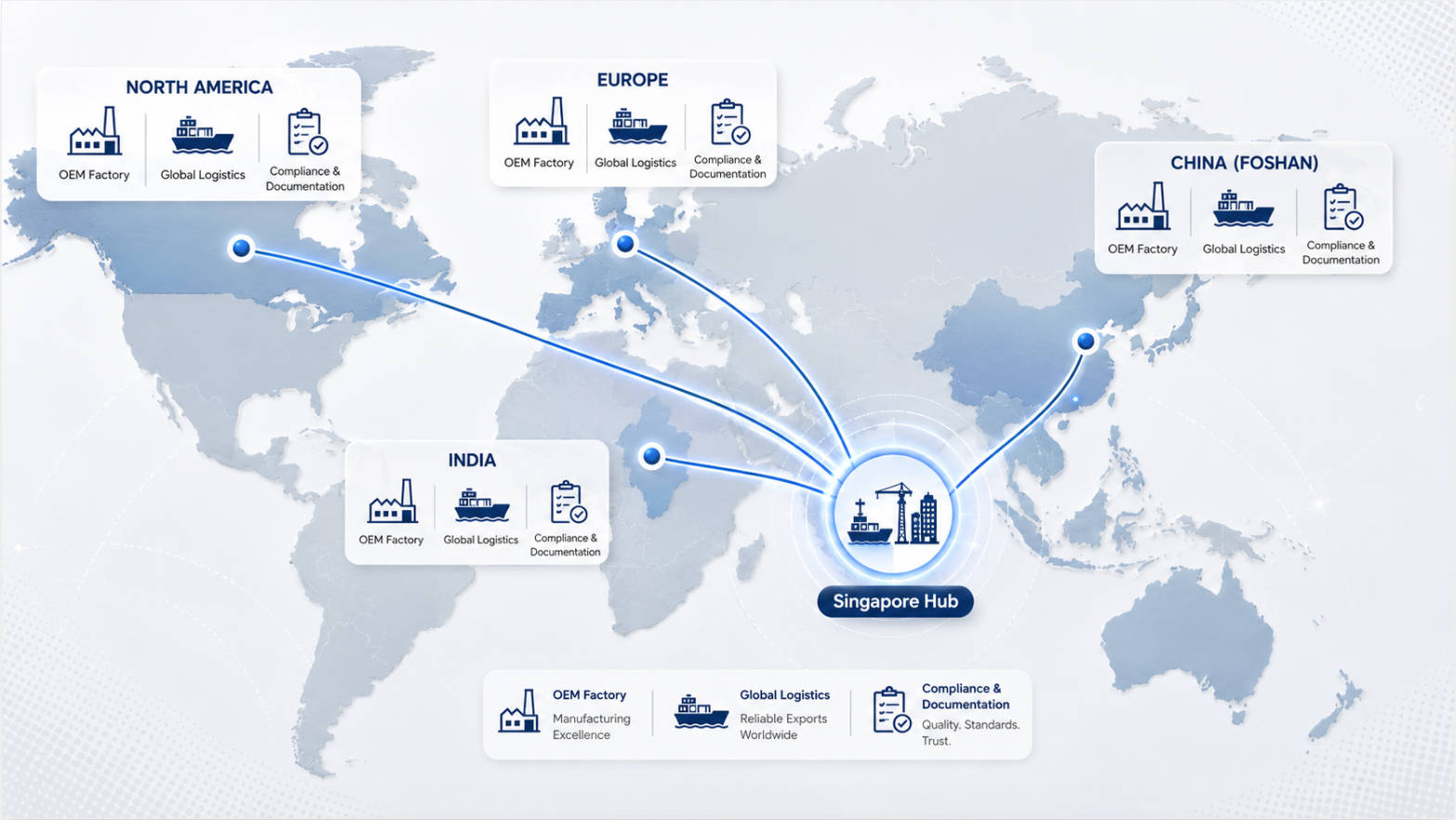
Why Singapore Matters for Magnetic Roller Separators
Singapore is a strategic hub for ASEAN industrial projects and regional logistics rather than a large‑scale magnet manufacturing base itself. Many magnetic roller separators used in Singapore are sourced from established manufacturers in China, India, Europe, and Japan, then distributed by local engineering and trading firms. [kumarmagnetind]
For international buyers, working with Singapore‑based suppliers and integrators offers advantages in contract law, finance, and regional project management while still leveraging cost‑competitive production from surrounding manufacturing clusters. These suppliers often combine imported magnetic roller separators with local engineering, installation, and after‑sales services for sectors such as mining, construction materials, food processing, waste recycling, and battery materials. [globalspec]
How to Evaluate High‑Quality Magnetic Roller Separator Suppliers
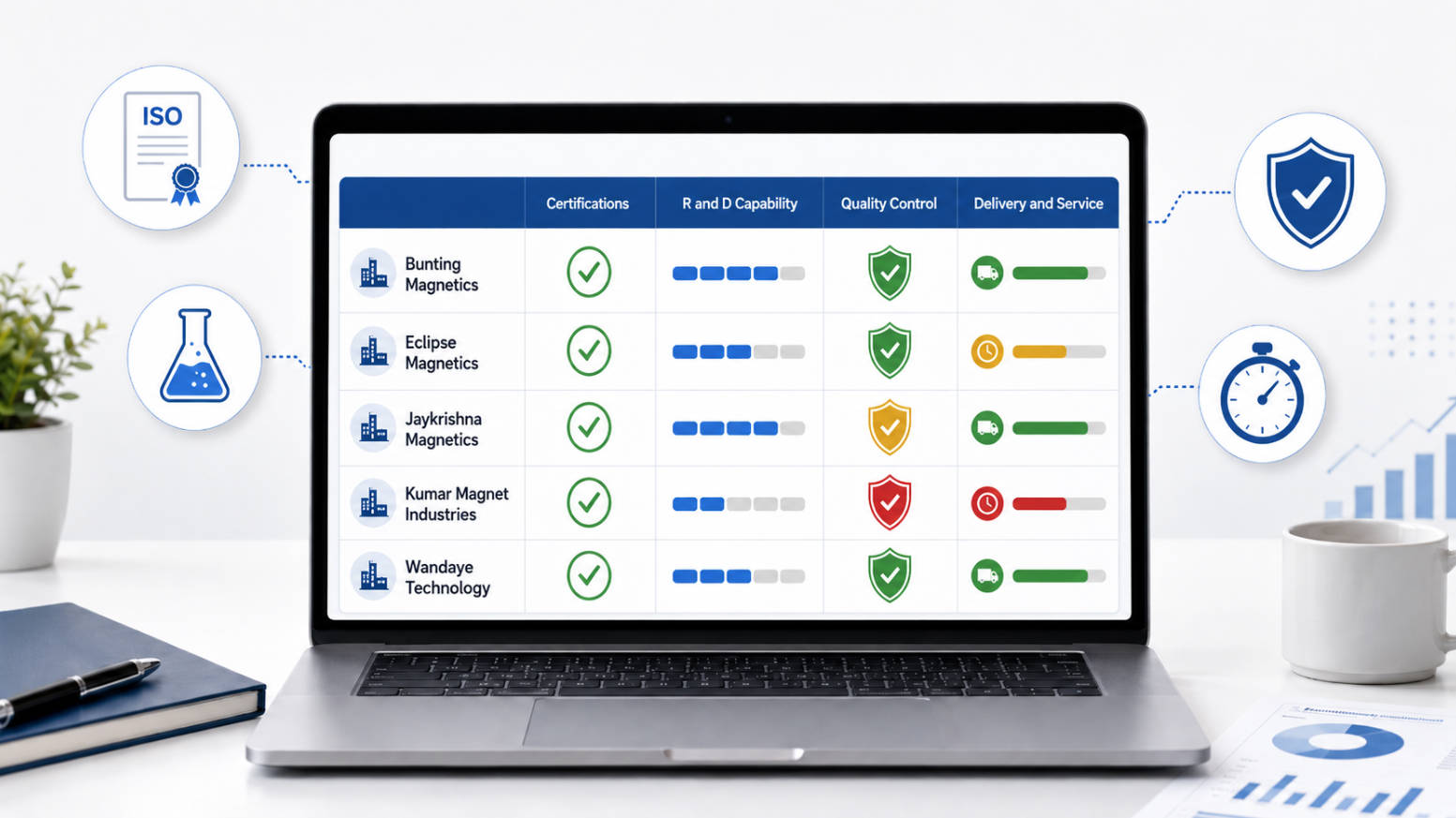
Before choosing a long‑term partner, experienced procurement managers typically assess suppliers along four core dimensions: certifications, R&D and engineering, quality control, and delivery/after‑sales performance. [en.fswandaye]
1. Factory and System Certifications
– ISO 9001 for quality management, ISO 14001 for environmental management, and, where relevant, ISO 45001 for occupational health and safety demonstrate systematic control over processes. [marketsandmarkets]
– Product‑level compliance (CE, UKCA) and materials‑level compliance (RoHS, REACH) are critical if separators are integrated into export‑oriented equipment or food‑grade lines. [futuremarketinsights]
2. R&D, Design Depth, and Customization
– Strong suppliers design rollers using high‑grade rare‑earth magnets (e.g., NdFeB grades like N35–N52) and optimize pole configuration, magnetic field intensity, and cooling/heat‑resistance for specific applications. [linuxmagnetics]
– Look for evidence of application‑specific projects: fine kaolin, feldspar, battery cathode/anode materials, or food‑grade metal removal, rather than only generic “magnetic separator” offerings. [en.fswandaye]
3. Quality Control (QC) and Process Transparency
– Mature factories document incoming magnet inspection (remanence, coercivity), demagnetization‑curve checks, high‑temperature aging tests, and 100% performance testing of assembled rollers. [linuxmagnetics]
– For export orders, expect traceable lot records, serialized equipment, and QC inspection reports attached to each shipment. [futuremarketinsights]
4. Delivery Reliability and After‑Sales Support
– On‑time delivery metrics, buffer capacity, and spare‑parts stock levels are critical for continuous operations in mining, ceramics, food, or chemical plants. [marketdataforecast]
– Strong partners provide clear installation guidelines, remote commissioning support, and local/third‑party service options in Southeast Asia. [en.fswandaye]
Technical Essentials of Magnetic Roller Separators
Magnetic roller separators (also called magnetic roll or magnetic head roller separators) are designed for high‑intensity separation of fine to medium‑sized ferromagnetic or paramagnetic particles from dry or occasionally moist material streams. They are widely used in mineral processing, ceramics, plastics, recycling, and battery materials where very low residual iron levels are required. [dovemining]
Key technical parameters you should compare across suppliers include:
– Magnet System
– Rare‑earth (NdFeB) magnetic rolls deliver high surface field strengths suited for fine paramagnetic particles, while ferrite‑based rolls serve lower‑intensity tasks. [linuxmagnetics]
– Multi‑pole designs increase gradient and capture efficiency but require careful belt selection and maintenance. [futuremarketinsights]
– Magnetic Field Intensity and Gradient
– Typical surface field strengths can reach up to several Tesla for high‑intensity rare‑earth roller designs used in fine mineral and battery materials separation. [dovemining]
– High gradient is essential when separating weakly magnetic oxides in kaolin, feldspar, lithium, and cathode/anode materials. [dovemining]
– Mechanical Design and Materials
– Wear‑resistant lagging, food‑grade stainless steel, and high‑temperature adhesives are important for abrasive or high‑temperature streams. [eclipsemagnetics]
– Stable belt tracking, adjustable splitter systems, and variable‑speed drives help tune separation efficiency for different feed compositions. [eclipsemagnetics]
– Compliance and Safety
– CE marking, machine‑safety guards, interlocks, and clearly marked magnetic hazard zones are essential for compliance with EU and many international standards. [marketsandmarkets]
– RoHS‑compliant materials are often required when equipment is integrated into broader systems shipped into the EU or similar regulatory markets. [marketsandmarkets]
Selection Criteria Used for This Top List
Because Singapore itself has a limited base of dedicated magnetic roller separator OEM factories, this list combines:
– Global manufacturers with magnetic roller separator product lines,
– Regional or global brands actively supplying the Singapore market, and
– High‑value OEM/ODM manufacturers in Asia whose products are commonly specified by Singapore‑based integrators and buyers. [kumarmagnetind]
The inclusion criteria are:
1. Product Scope and Technical Depth
– The company must manufacture or supply magnetic roller/roll/head roller separator products suitable for industrial use. [eclipsemagnetics]
2. Certifications and Compliance Capability
– Demonstrated experience with CE, ISO 9001, and application‑specific standards (e.g., food‑grade, ATEX when relevant) is preferred. [marketsandmarkets]
3. Track Record in Asia and Singapore‑Serving Markets
– Evidence of sales or distribution into Southeast Asia or Singapore, or a history of exporting separators used by project integrators in the region. [globalspec]
4. OEM/ODM and Custom Engineering Ability
– Ability to customize magnet grade, roller diameter/length, belt type, housing, and control integration, particularly for ceramics, mining, and battery materials projects. [en.fswandaye]
5. Transparency and Responsiveness
– Availability of product documentation, datasheets, and responsive communication for technical questions and after‑sales support. [linuxmagnetics]
Top Magnetic Roller Separator Manufacturers and Suppliers Serving Singapore
1. Bunting Magnetics Co.
Bunting Magnetics is a well‑known global supplier of magnetic separation equipment, including magnetic head pulleys and high‑intensity roll separators used in recycling, aggregates, and plastics. Their products are widely exported and frequently integrated into systems sold in Asia‑Pacific, including Singapore‑based material‑handling and recycling projects. [einpresswire]
– Approximate founding: mid‑20th century as a North American magnetics specialist. [marketsandmarkets]
– Strengths: broad range of standard and custom head rollers, strong engineering support, and extensive experience with CE and food/recycling standards. [einpresswire]
– Main markets: North America, Europe, Asia‑Pacific, with strong presence in recycling and process industries. [marketdataforecast]
– OEM/ODM: typically works via system integrators for customized conveyors, chutes, and separation lines using their magnetic rollers. [einpresswire]
2. Eclipse Magnetics
Eclipse Magnetics, based in the UK, supplies magnetic head rollers and separation solutions used in conveying systems for wood, biomass, aggregates, coal, and plastics. Their products are commonly specified by European and Asian OEM conveyor system builders and can be sourced into Singapore via distributors and project integrators. [globalspec]
– Approximate founding: early 20th century, with long history in magnetics. [eclipsemagnetics]
– Strengths: strong engineering capability, food and pharma‑grade solutions, and proven designs for harsh conveying environments. [eclipsemagnetics]
– Main markets: Europe, Middle East, Asia‑Pacific, including supply routes to Singapore through channel partners. [marketdataforecast]
– OEM/ODM: offers customized roller designs, shell materials, and mounting arrangements for OEM conveyor applications. [eclipsemagnetics]
3. Jaykrishna Magnetics (High‑Intensity Roller Type)
Jaykrishna Magnetics in India is a leading manufacturer of high‑intensity roller‑type magnetic separators with several decades of experience. Their induced‑roll and multi‑roll high‑gradient designs are widely used for minerals, ceramics, and recycling applications across Asia and Africa. [jkmagnetic]
– Experience: over 37 years focused on magnetic separation equipment. [jkmagnetic]
– Strengths: high‑intensity rare‑earth roller designs, extensive reference projects, and competitive pricing attractive to Singapore‑based buyers serving regional plants. [jkmagnetic]
– Main markets: India, Middle East, Africa, Southeast Asia. [jkmagnetic]
– OEM/ODM: able to tailor roll size, arrangement, and field strength based on feed characteristics, which suits integrators designing process lines for Singapore and neighboring countries. [futuremarketinsights]
4. Kumar Magnet Industries
Kumar Magnet Industries promotes itself as a magnetic separator and belt‑type magnetic separator manufacturer actively serving Singapore. While they focus on belt‑type and destoner solutions, they also manufacture magnetic roller and roll‑based systems for mineral and food applications. [kumarmagnet]
– Experience: established Indian magnetic equipment manufacturer with global exports. [kumarmagnet]
– Strengths: flexible product mix, ability to support standard and customized belt‑and‑roller combinations, and direct marketing to the Singapore market. [kumarmagnet]
– Main markets: India, Middle East, Southeast Asia, including Singapore buyers in food, grain, and material‑handling sectors. [kumarmagnetind]
– OEM/ODM: supports application‑specific configurations (belt width, magnet strength, housing) for OEM conveyor builders and project contractors. [kumarmagnet]
5. Wandaye Technology (Foshan Wandaye Machinery Equipment Co., Ltd.)
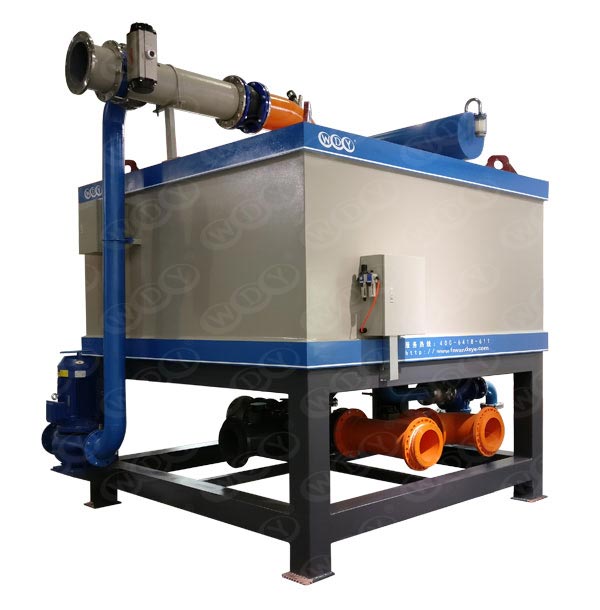
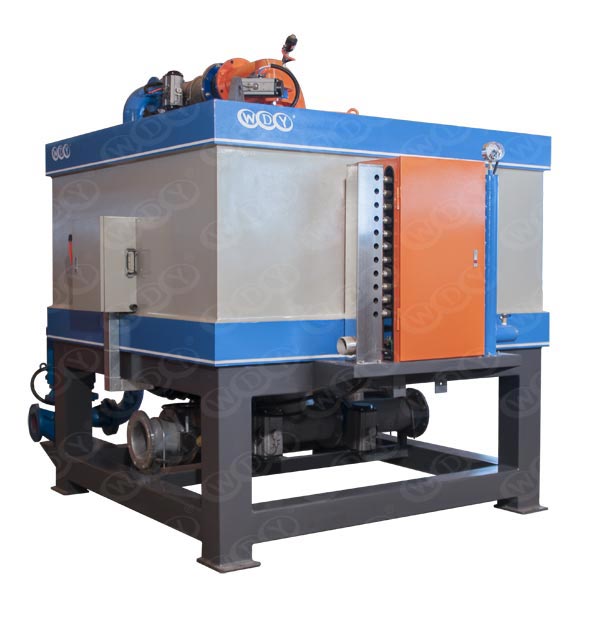
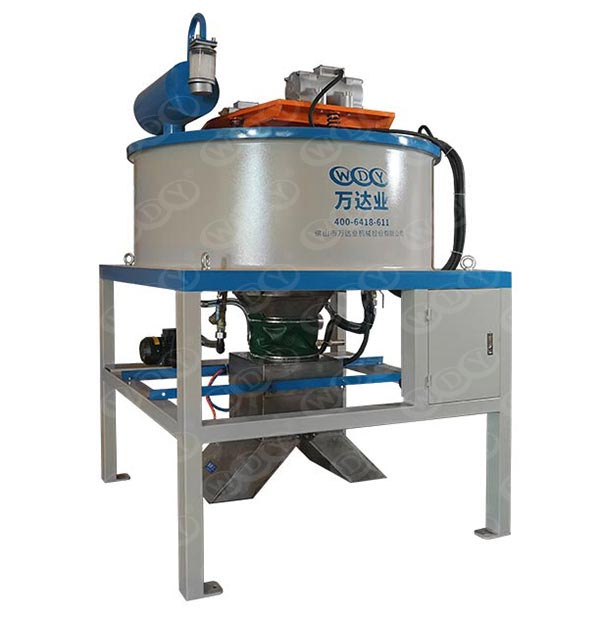
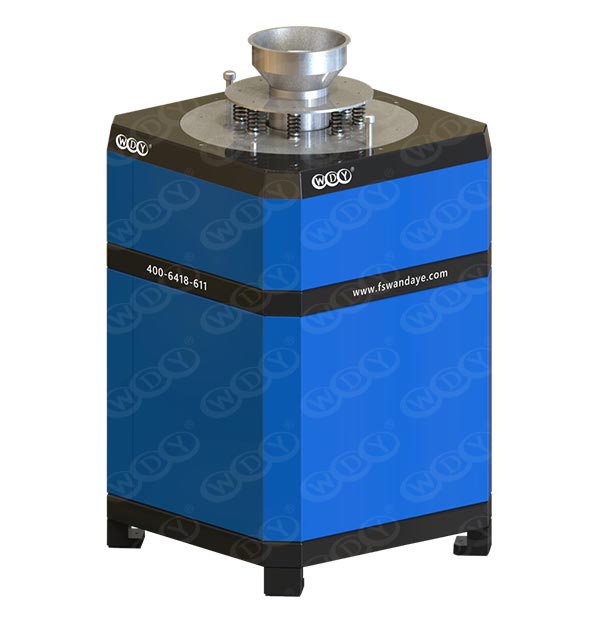
Wandaye Technology, based in Foshan, China, is a specialized magnetic separator manufacturer integrating R&D, engineering design, production‑line installation, and commissioning services. The company focuses on high‑gradient electromagnetic and permanent magnetic separators, including magnetic separators suitable for dry powders and fine materials—key use cases for magnetic roller separator solutions. [wdymagnetic]
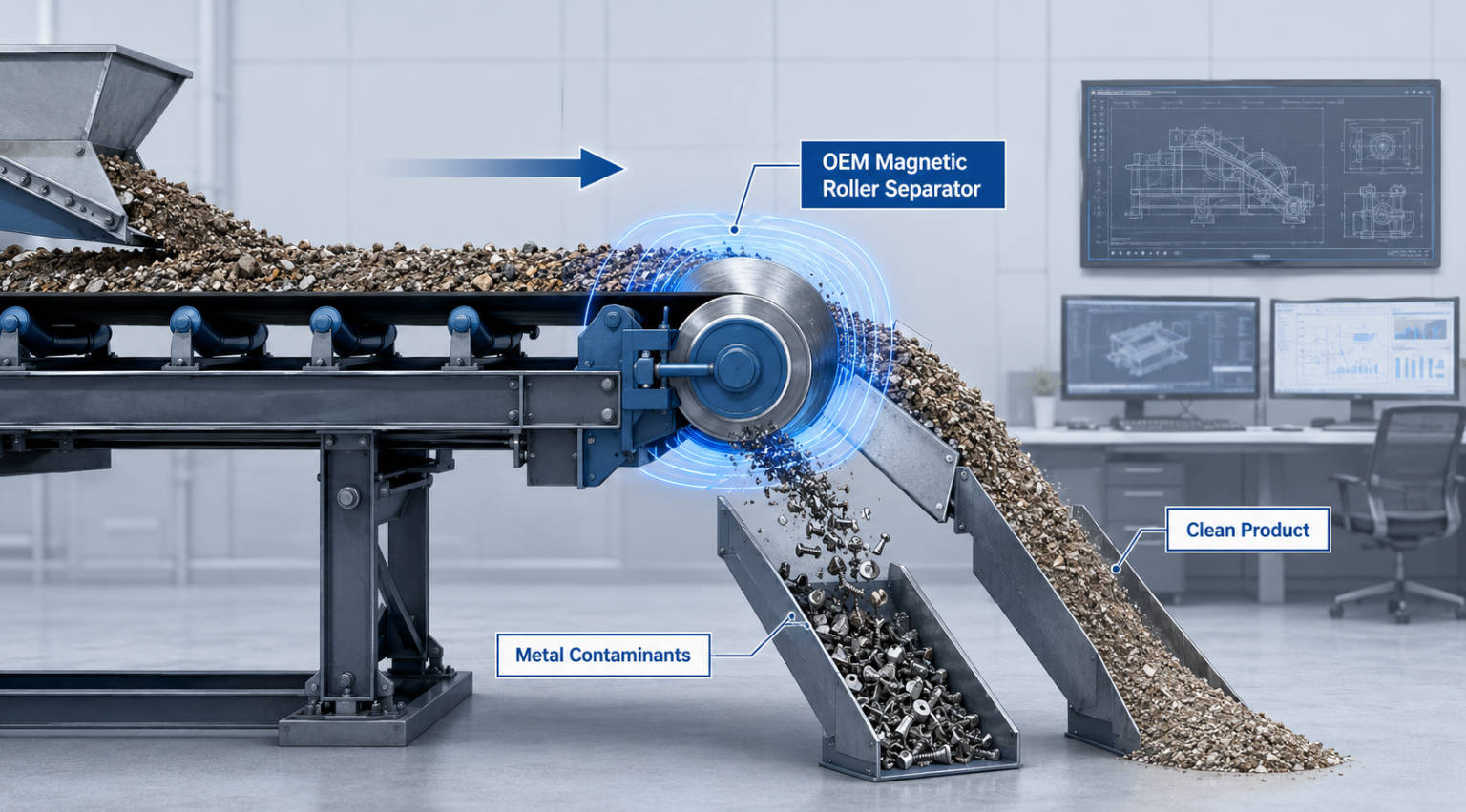
– Experience and Projects: Wandaye has delivered more than 100 turnkey production‑line projects, including kaolin, feldspar, gold tailings, battery materials, and ceramic raw materials, in China and overseas. [wdymagnetic]
– Strengths:
– Strong R&D capability and application engineering, with experience in high‑precision iron removal for non‑metallic minerals and battery materials. [wdymagnetic]
– High cost‑performance positioning, making Wandaye particularly attractive for small to medium brands and regional integrators needing reliable yet economical equipment. [wdymagnetic]
– Ability to provide end‑to‑end services from lab testing and process design to on‑site commissioning. [en.fswandaye]
– Main markets: China (Foshan ceramics, non‑metallic minerals), India, Iran, and other overseas markets for minerals and battery materials; equipment is suitable for Singapore‑linked projects via trading and engineering partners. [wdymagnetic]
– OEM/ODM:
– Offers deep customization for OEM clients, including magnet system design, structural customization for specific plant layouts, and integration with upstream/downstream equipment. [en.fswandaye]
– Particularly well‑suited to buyers who need flexible engineering support, fast communication, and iterative optimization for new products or new material lines rather than only off‑the‑shelf models. [wdymagnetic]
For procurement managers focusing on Singapore or Southeast Asia, Wandaye is often positioned as a high‑value OEM/ODM partner behind local trading or engineering companies, combining strong technical know‑how with competitive pricing and practical, project‑oriented service. [en.fswandaye]
6. Other Global Brands Frequently Specified in Singapore Projects
Several other global magnetic separation brands—such as Eriez, Metso (Outotec), Goudsmit, and Kanetec—supply magnetic drums, overband, and roller‑type separators globally and are often integrated into systems used in Singapore. [marketresearchfuture]
– These suppliers typically serve Singapore through regional offices or channel partners, providing high‑end, often higher‑priced solutions for mining, recycling, and large process plants. [einpresswire]
– They are preferred when buyers prioritize alignment with global standards, corporate vendor lists, and extensive reference projects, but may not always match the flexibility or cost structure of specialized OEMs like Wandaye or Indian manufacturers. [marketdataforecast]
Comparison of Key Suppliers for Singapore‑Focused Buyers
Below is a simplified comparison to help procurement managers shortlist suitable partners. Values are indicative, based on typical offerings and positioning in the market.
Indicative Supplier Comparison (Capacity, MOQ, Certifications)
| Supplier | Typical Capacity Range (t/h) | Indicative MOQ (sets) | Key Certifications / Capabilities |
|---|---|---|---|
| Bunting Magnetics | From small lines to large process‑plant capacities depending on roller and conveyor configuration. einpresswire | Often 1 set for standard models via distributors. einpresswire | CE, ISO‑aligned systems, strong experience in recycling and food compliance. einpresswire |
| Eclipse Magnetics | Broad range for light to heavy materials (wood, biomass, aggregates, plastics). eclipsemagnetics | 1 set for standard head rollers, higher for OEM specials. eclipsemagnetics | CE, food‑grade designs, strong documentation for EU/UK standards. eclipsemagnetics |
| Jaykrishna Magnetics | From pilot‑scale to full mineral processing lines, especially high‑intensity fine‑particle applications. jkmagnetic | Often 1–2 sets, with flexibility for export projects. jkmagnetic | ISO‑based systems, high‑intensity rare‑earth roller expertise. jkmagnetic |
| Kumar Magnet Industries | Small to medium process lines for grain, food, and minerals. kumarmagnet | Typically 1 set for standard models; MOQs for custom belt‑roller units. kumarmagnet | ISO‑aligned manufacturing, CE on selected models, experience exporting to Singapore. kumarmagnet |
| Wandaye Technology | Lab‑scale to large‑scale mineral and battery‑material lines, with several complete production‑line references. wdymagnetic | Highly flexible; supports low MOQs for customized solutions aimed at SMEs and new projects. wdymagnetic | Focus on ISO‑style quality systems, application‑specific compliance (e.g., CE/RoHS via project design), strong engineering and process‑design capabilities. wdymagnetic |
For early‑stage or mid‑sized projects, Wandaye’s combination of low MOQ, strong engineering, and competitive pricing can be particularly attractive, especially when paired with Singapore‑based integrators handling local contracts and support. [globalspec]
Market Outlook and Data Points Procurement Managers Should Know
Industry data indicate that the global magnetic separator market—including roller‑type separators—is growing steadily, supported by mining, recycling, food safety, and advanced material applications. [marketresearchfuture]
– One 2025 analysis projects the global magnetic separator market to grow from about USD 5.56 billion in 2024 to around USD 8.90 billion by 2035, at a CAGR of roughly 4.37%. [marketresearchfuture]
– Another 2026 forecast estimates the market at roughly USD 854.77 million in 2025 with growth to about USD 1.36 billion by 2034, suggesting a CAGR above 5% for certain segments. [marketdataforecast]
For magnetic roller separators specifically, specialized market reports anticipate strong growth, with one source projecting the segment to rise from approximately USD 549.1 million to USD 1.5 billion by 2035 at a CAGR of around 10.6% between 2026 and 2035. [wiseguyreports]
This growth is reinforced by:
– Increasing demand for high‑purity non‑metallic minerals and ceramics,
– Rapid expansion of lithium‑ion battery and EV‑related material production, and
– Stricter metal contamination standards in food, pharma, and chemical sectors. [wiseguyreports]
Industry Pain Points and Common Pitfalls
When purchasing magnetic roller separators, experienced buyers often highlight several recurring problems.
1. Magnet Quality and Hidden Downgrading
– Some low‑cost suppliers quietly switch from specified high‑grade rare‑earth magnets to lower‑grade materials, reducing field strength and long‑term stability. [linuxmagnetics]
– This can lead to poor separation performance, unexplained contamination issues, and early loss of magnetization, especially at elevated temperatures. [dovemining]
2. Over‑Promised Field Strength Data
– Advertised surface field strengths are sometimes measured under ideal or non‑standard testing conditions and are not representative of actual installed performance. [futuremarketinsights]
– Lack of standardized test reports or third‑party verification makes it difficult to compare vendors objectively. [futuremarketinsights]
3. Inadequate Mechanical Design for Real Operating Conditions
– Undersized shafts, poor sealing, and low‑quality bearings can cause roller run‑out or failure in harsh mining or ceramic environments. [dovemining]
– Incorrect belt selection or tensioning leads to tracking problems, high wear, and loss of separation efficiency. [dovemining]
4. Documentation and Compliance Gaps
– Some factories cannot provide complete documentation sets (CE, RoHS declarations, risk assessments, IQ/OQ protocols), delaying turnkey projects and inspections. [marketsandmarkets]
Internal “Insider” Avoid‑Pitfall Tip
One industry “unwritten rule” that experienced buyers often follow—but which is rarely stated online—is to always cross‑check magnet degradation curves and high‑temperature aging tests against the actual operating temperature of your process before finalizing the purchase.
– For example, a roller specified with N52 NdFeB magnets may appear very strong on paper, but without proper high‑temperature rating and aging tests, its field strength can drop significantly after months of operation near the upper temperature limit. [linuxmagnetics]
– Professional buyers typically request not only initial field‑strength data but also long‑term demagnetization performance at the expected operating temperature (e.g., 80–120 °C), and they may ask for small‑batch accelerated aging test results or third‑party magnet test certificates. [dovemining]
This additional check helps filter out suppliers who optimize only for initial test results rather than lifecycle performance—especially important in battery‑materials and high‑purity mineral lines where downtime is costly. [futuremarketinsights]
Practical Buyer’s Guide for Singapore‑Oriented Procurement
1. Verify the Factory and Its Certifications
– Request clear copies of ISO 9001 and ISO 14001 certificates, stamped and with validity dates, and verify them on the registrar’s official website or via email. [marketsandmarkets]
– For CE: ask for the Declaration of Conformity referencing relevant EN standards and ensure the notified body or documentation is legitimate for the risk category involved. [marketsandmarkets]
– In Singapore‑linked food or pharma projects, verify any HACCP or food‑grade claims against recognized schemes and ask for proof of previous food‑industry installations. [futuremarketinsights]
2. Sample and Pilot Testing
– Always start with a material evaluation: send real samples of your feed to shortlisted suppliers (or their partners) and request detailed test reports with separation efficiency, sample conditions, and photos. [en.fswandaye]
– Consider small pilot or lab‑scale units first, especially for new battery materials, fine ceramics, or high‑value powders; Wandaye and similar R&D‑oriented suppliers commonly offer such services. [wdymagnetic]
3. Contracting and Logistics for Singapore
– For large projects, many buyers structure contracts with a Singapore‑based integrator or trading company, which then sources equipment from OEMs in China, India, or Europe. [globalspec]
– Incoterms (e.g., FOB, CIF Singapore) and responsibilities for customs clearance, installation, and commissioning should be clearly defined in the contract. [marketdataforecast]
– Ask for packing specifications suitable for ocean or air freight—including moisture protection, crate design, and lifting points—especially for large rollers and complete separation modules. [marketdataforecast]
4. After‑Sales Support and Spare Parts
– Clarify response times for technical inquiries, availability of remote troubleshooting, and whether there are local partners or service centers in Singapore or nearby countries. [marketdataforecast]
– Confirm lead times and minimum order quantities for spare parts such as belts, bearings, housings, and protective covers. [futuremarketinsights]
Conclusion and Call to Action
Selecting magnetic roller separator suppliers for Singapore‑focused projects is less about finding a factory physically located in Singapore, and more about building a robust ecosystem of OEM manufacturers, regional distributors, and integrators who can deliver reliable performance, documentation, and support across the equipment lifecycle. Global brands, regional manufacturers like Jaykrishna and Kumar Magnet, and R&D‑driven OEMs such as Wandaye Technology each play complementary roles, allowing buyers to balance cost, technical risk, and long‑term maintainability. [kumarmagnetind]
If you’re planning a new project or upgrading existing lines serving the Singapore market, consider shortlisting 2–3 technically strong OEMs (including a flexible, R&D‑oriented partner like Wandaye) and pairing them with a reliable local integrator or trading company capable of handling contracts, compliance, and after‑sales support. You can then run comparative material tests and commercial evaluations to converge on a long‑term partnership that aligns with your quality, capacity, and regulatory requirements. [globalspec]
FAQs
Q1: How can I verify whether a supplier’s ISO certification is genuine and not expired?
You can check the certificate number, issue date, and issuing body, then cross‑verify on the certification body’s official website or accredited registrars’ databases, or contact them directly via email. Many reputable bodies provide online certificate‑verification tools; certificates that cannot be verified should be treated as red flags. [marketsandmarkets]
Q2: What data should I request to compare magnetic roller performance objectively between suppliers?
Ask for standardized surface field‑strength measurements (with defined distance and test method), magnet grade, pole configuration, and separation test reports using your actual material (including feed, middling, and tailing analyses). Also request high‑temperature aging or demagnetization data for the magnet material at the expected operating temperature. [linuxmagnetics]
Q3: For battery materials or ultra‑fine minerals, how do I ensure the roller separator can achieve the required residual iron content?
Request lab or pilot tests using your real feed, with quantitative measurement of Fe2O3 or total Fe before and after separation, and require the supplier to specify process parameters (belt speed, roll speed, splitter position, feed rate) used in testing. Suppliers like Wandaye with experience in kaolin, feldspar, and battery‑material projects can often provide detailed process recommendations based on similar reference cases. [dovemining]
Q4: How do I evaluate whether an OEM/ODM supplier can handle customized integration into my existing line?
Ask for previous project examples where they customized equipment to match specific layout constraints, control systems, or upstream/downstream machinery. Verify whether they can supply 3D models, wiring diagrams, and PLC integration documents, and whether they support joint design reviews with your engineering team or integrator. [linuxmagnetics]
Q5: What’s the best way to manage technical risk when working with a cost‑competitive OEM for a Singapore‑based project?
Use a staged approach: lab tests → pilot unit → first commercial line with clear KPIs and acceptance tests written into the contract. Combine the OEM’s technical strengths (e.g., Wandaye for magnetic separation process design) with a Singapore‑based integrator handling local engineering, compliance documentation, and onsite support. [globalspec]
References
1. – Magnetic separator market share and applications overview. [futuremarketinsights]
2. – Magnetic roller separator segment growth forecast 2026–2035. [wiseguyreports]
3. – Global magnetic separator market size and CAGR projections. [marketresearchfuture]
4. – Updated global magnetic separator market size and forecast to 2034. [marketdataforecast]
5. – Bunting and other key players mentioned in magnetic separator market reports. [einpresswire]
6. – Kumar Magnet Industries information and Singapore‑focused pages. [kumarmagnet]
7. – Jaykrishna Magnetics high‑intensity roller‑type separator information. [jkmagnetic]
8. – Eclipse Magnetics magnetic head roller solutions. [eclipsemagnetics]
9. – Wandaye Technology/Wandaye Magnetics company information and project references. [wdymagnetic]
10. – Industrial magnet suppliers and mapping resources in Singapore. [globalspec]
Hot Tags: Magnetic Roller Separator, Manufacturers, Customized, Custom, Suppliers, Buy, Cheap, Quality, Advanced, Durable, in Stock, Made in China, Price, Quotation