


Content Menu
● What Is a Crossbelt (Overband) Magnet and How Does It Work?
● Ferrite vs Rare Earth Crossbelt Magnets: Core Differences
● How Ferrite Crossbelt Magnets Work in Real Plant Conditions
● How Rare Earth Crossbelt Magnets Work and Their Limitations
● Application‑Driven Selection: When to Choose Ferrite or Rare Earth
>> When a Ferrite Crossbelt Magnet Is Usually the Better Choice
>> When a Rare Earth Crossbelt Magnet Is Usually the Better Choice
● Step‑by‑Step Selection Checklist for Crossbelt Magnets
● Installation and Positioning Tips for Better Separation
● Safety, Maintenance, and Common Pitfalls
● Alternative Magnetic Separators to Consider
● Expert Support for Specifying and Optimizing Crossbelt Magnets
● Call to Action: Get the Right Crossbelt Magnet for Your Application
● Summary
● Frequently Asked Questions (FAQ)
>> 1. Is a rare earth crossbelt magnet always better than a ferrite crossbelt magnet?
>> 2. How do I know if my burden depth is too high for a rare earth crossbelt magnet?
>> 3. Can I retrofit a ferrite crossbelt magnet with rare earth blocks to improve performance?
>> 4. What maintenance does a crossbelt magnet require?
Crossbelt magnets, also called overband magnets, are critical for removing tramp iron, protecting crushers and screens, and maximizing metal recovery in mining, quarrying, recycling, and bulk material handling applications.
Choosing between a ferrite crossbelt magnet and a rare earth crossbelt magnet directly affects separation efficiency, suspension height, energy use, and long‑term operating cost in any conveyor‑based process line.
What Is a Crossbelt (Overband) Magnet and How Does It Work?
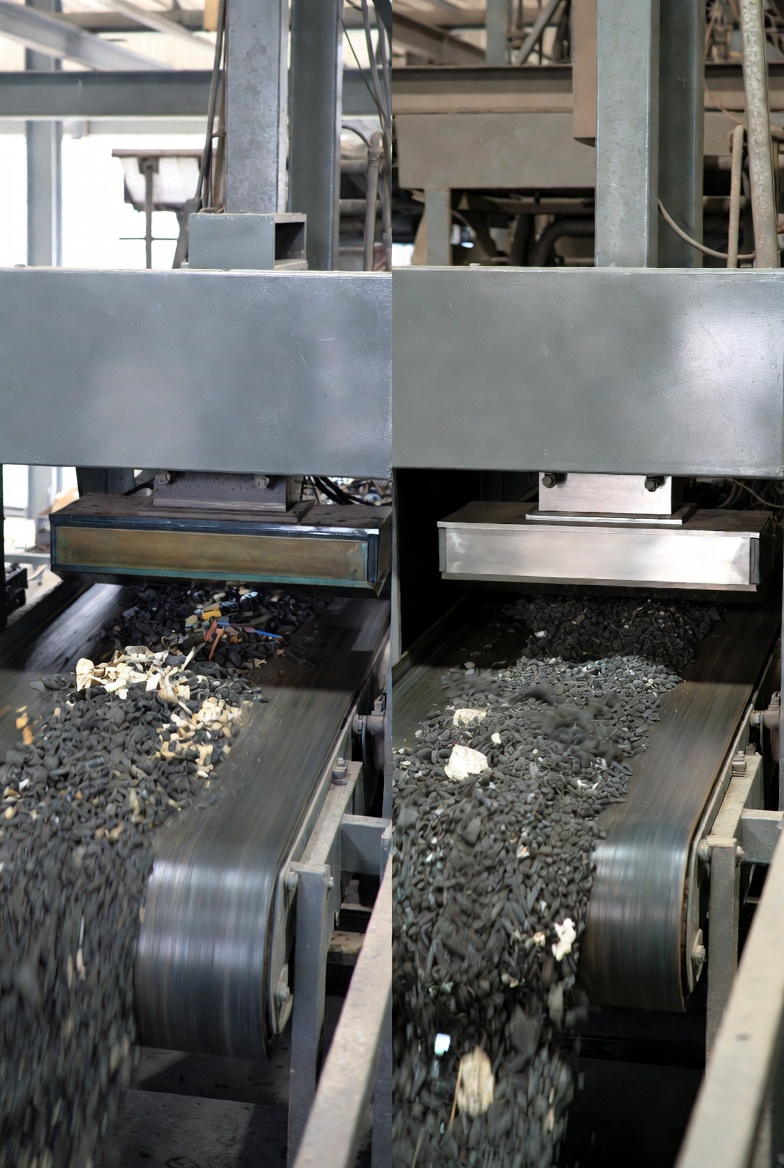
A crossbelt magnet is a self‑cleaning magnetic separator installed above a conveyor to automatically lift and discharge ferrous metals from the material stream.
A permanent magnetic block is mounted between two pulleys, around which a continuous belt runs to carry captured metal away to a discharge chute or bin located to the side or at the end of the conveyor.
When ferrous metal enters the magnetic field, it is attracted upward and held against the moving belt until it is carried beyond the magnetic zone and released into a separate collection area.
This non‑contact removal protects downstream equipment, reduces unscheduled shutdowns, and improves the purity of the final product or intermediate material.
Typical applications for crossbelt magnets include mining and quarrying, construction and demolition recycling, municipal solid waste treatment, scrap recycling, aggregate, cement, coal, and other bulk material terminals.
Ferrite vs Rare Earth Crossbelt Magnets: Core Differences
Ferrite and rare earth crossbelt magnets share the same basic mechanical design but use different magnetic materials and field characteristics.
Understanding how each behaves under real plant conditions is essential before specifying a unit for a new or existing conveyor line.
– Ferrite crossbelt magnets use hard ferrite magnet blocks assembled in steel and stainless steel casings and then magnetized to create a deep, stable magnetic field.
– Rare earth crossbelt magnets use compact, high‑energy neodymium iron boron blocks, which provide very high surface magnetic force in a smaller and lighter package.
Key differences include field depth, suspension height, weight, cost, and how easily the belt can discharge large pieces of tramp iron.
How Ferrite Crossbelt Magnets Work in Real Plant Conditions
Ferrite crossbelt magnets rely on robust ceramic magnet blocks assembled into a steel housing and magnetized as a complete circuit.
This creates a deep and relatively wide magnetic field that can penetrate thicker material burdens and maintain effective separation at greater suspension heights above the belt.
Because the magnetic intensity at the surface is moderate compared with rare earth designs, the self‑cleaning belt can more easily discharge larger tramp iron without jamming or stalling.
This makes ferrite crossbelt magnets a reliable choice for large or mixed‑size ferrous contamination, for example at primary crushers, heavy‑duty screening stations, and high‑throughput recycling lines.
Ferrite units are also generally more economical than rare earth designs, with more stable raw material pricing and lower risk of cost spikes driven by rare earth supply chain volatility.
They are well suited to fixed plants where structural weight is less critical and where long‑term durability and predictable performance are more important than minimizing magnet mass.
Typical scenarios where ferrite crossbelt magnets excel include deep and variable burden depth with large rock or waste surges, large tramp objects such as hammer heads, plates, pipes, and excavator teeth, mounting positions requiring generous suspension height, and applications where equipment protection is the main objective.
How Rare Earth Crossbelt Magnets Work and Their Limitations
Rare earth crossbelt magnets use high‑energy neodymium iron boron magnet blocks that deliver much higher surface magnetic force than ferrite in a compact volume.
The magnet blocks are typically assembled in a live state, so the entire circuit is magnetized as soon as the unit is built, resulting in an extremely strong magnetic field near the surface.
This design was developed for applications that demand stronger but lighter overband magnets, especially for mobile crushers, mobile screens, and compact recycling systems where structural load and space are limited.
Because rare earth materials provide very high magnetic energy density, the overall weight and footprint of the crossbelt magnet can be reduced while still achieving strong attraction at close range.
However, strength alone does not guarantee better performance in every application.
Rare earth crossbelt magnets often have a shallower magnetic field reach, which limits penetration into deep burdens and forces installation at a closer suspension height over the conveyor.
The very strong surface attraction can also cause large ferrous items to cling so firmly to the belt that the self‑cleaning mechanism struggles to release them, creating a risk of belt jamming, drive overload, or increased wear.
In some plants, operators may be forced to stop the line and remove large pieces manually, creating safety hazards and additional downtime.
Rare earth crossbelt magnets therefore work best in controlled conditions where burden depth is moderate and consistent, ferrous contamination is predominantly small or medium‑sized, and the magnet can be mounted close to the material surface.
Application‑Driven Selection: When to Choose Ferrite or Rare Earth
Effective selection of a crossbelt magnet starts from the process conditions rather than from the magnet material itself.
The most important variables include burden depth, particle size distribution, tramp iron size and shape, conveyor geometry, available installation space, and whether the line is fixed or mobile.
When a Ferrite Crossbelt Magnet Is Usually the Better Choice
Ferrite crossbelt magnets are usually recommended when process conditions are demanding and protection against large tramp iron is the main priority.
Typical situations where ferrite is preferred include the following.
– The tramp metal is large or mixed‑size, such as long bolts, rebar, plates, tools, or excavator teeth.
– Burden depth is high or variable, and surges or peaks are common on the conveyor belt.
– The conveyor layout requires a higher suspension height to clear tall peaks, belt splices, or structural components.
– The primary goal is equipment protection rather than maximum recovery of small ferrous fines.
– The plant requires a cost‑effective solution with predictable long‑term operating cost and minimal sensitivity to rare earth raw material prices.
When a Rare Earth Crossbelt Magnet Is Usually the Better Choice
Rare earth crossbelt magnets can be the better option when the key drivers are compact size, low weight, and high surface intensity applied to relatively shallow and uniform burdens.
Typical situations where rare earth crossbelt magnets perform well include the following.
– The burden depth is small and consistent, allowing the magnet to be installed very close to the surface of the conveyed material.
– Ferrous contamination consists mainly of smaller pieces, offcuts, or fines that benefit from high surface attraction.
– The magnet is installed on mobile crushers, mobile screens, or compact plants where low weight and small footprint are critical design constraints.
– The process demands higher separation intensity in a limited space, and the tramp metal size does not include very large or bulky items.
In some cases where the main objective is very fine ferrous removal, other types of separators such as drum magnets, magnetic head pulleys, or high‑intensity rare earth rolls may be more efficient than either ferrite or rare earth crossbelt magnets.
Step‑by‑Step Selection Checklist for Crossbelt Magnets
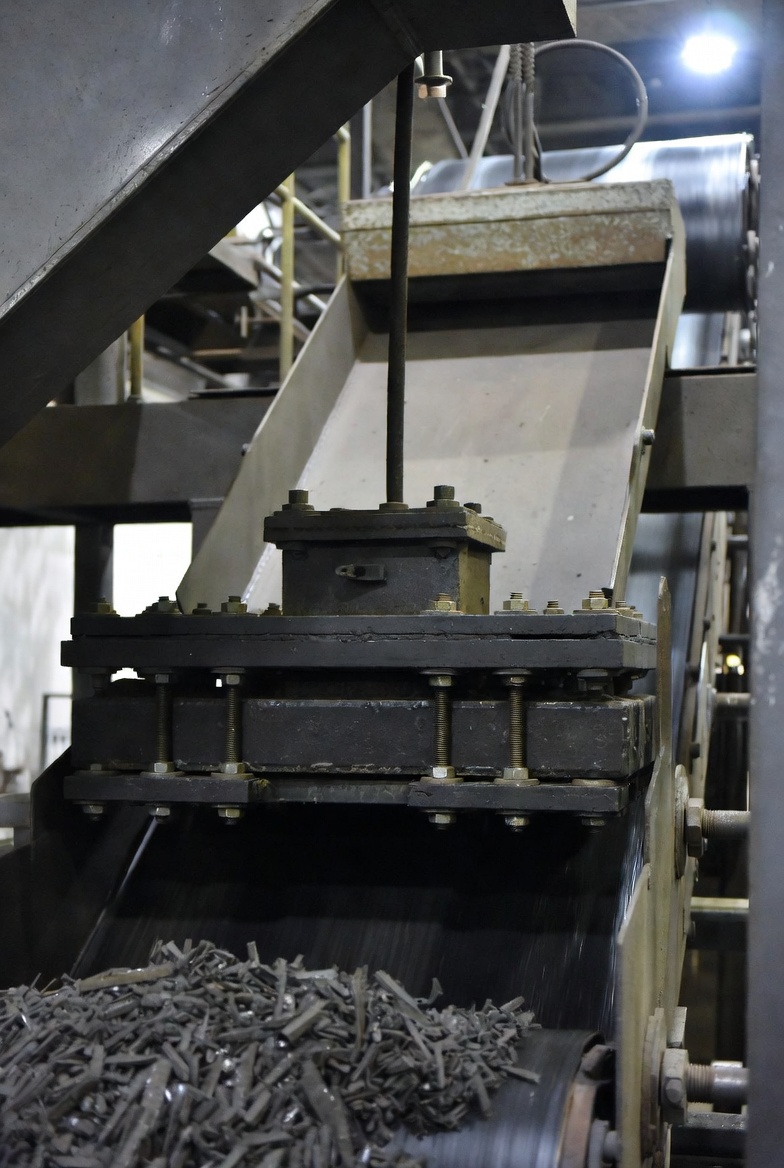
To align with best practice in mining, aggregate, and recycling design, engineers can follow a structured checklist when specifying a crossbelt magnet.
1. Define process objectives clearly.
Is your top priority equipment protection, ferrous metal recovery for resale, or final product purity?
This choice influences the required magnet size, field strength, and positioning over the conveyor.
2. Measure conveyor and burden parameters.
Record belt width, trough angle, centerline height, typical burden depth, and maximum surge depth during peak loading conditions.
These parameters determine the minimum field penetration and the practical suspension height for a ferrite or rare earth crossbelt magnet.
3. Characterize tramp metal.
Estimate the size range, shape, and approximate mass of the ferrous contaminants you need to capture, including any especially hazardous items like large tools or crushing media.
Large plates, bars, and long pieces usually favor ferrite crossbelt magnets, while small chips and fines may be better handled by high‑intensity rare earth designs or alternative separator types.
4. Assess operating environment.
Consider ambient temperature, vibration, dust levels, moisture, wash‑down requirements, and any risk of corrosive atmospheres.
These factors affect magnet design, belt and lagging materials, sealing, and guarding details.
5. Evaluate installation constraints.
Check the available vertical and horizontal space above and around the conveyor for transverse cross‑belt or inline mounting.
Limited vertical clearance can favor compact rare earth crossbelt magnets on shallow burdens, whereas ample height above a deep burden often supports a ferrite crossbelt magnet with generous reach.
6. Balance lifecycle cost versus performance.
Compare not only purchase price but also expected maintenance needs, downtime risk, and potential prevention of catastrophic damage to crushers, screens, or downstream equipment over the life of the plant.
A slightly higher upfront cost for the right magnet can be justified by the avoided cost of even a single major equipment failure.
7. Consult a specialist manufacturer.
Provide process data, layout drawings, photographs, and contamination samples so that an experienced supplier can recommend a ferrite or rare earth crossbelt configuration tailored to your plant.
This approach minimizes trial‑and‑error and reduces the risk of under‑performing installations.
Installation and Positioning Tips for Better Separation
Even a well‑selected crossbelt magnet will under‑perform if it is installed incorrectly.
Optimal suspension height, positioning relative to the burden, and orientation over the conveyor are critical to achieving the intended capture efficiency and clean metal discharge.
Important installation tips include the following.
– Use transverse cross‑belt mounting whenever possible so ferrous metal is discharged to the side into a bin or secondary conveyor, away from the main product stream.
– Maintain the manufacturer’s recommended suspension height above the belt for the specific magnet model and burden depth, instead of guessing or setting the magnet arbitrarily high or low.
– Center the magnet over the conveyor and ensure the self‑cleaning belt tracks correctly, with appropriate alignment and tension to prevent edge wear and tracking failures.
– Keep the area under and around the magnet free of material build‑up, as accumulated product effectively increases the working gap and reduces field strength at the burden surface.
– Verify that the discharge trajectory of extracted ferrous materials reliably lands in the intended collection area without rebounding into the main product flow.
Safety, Maintenance, and Common Pitfalls
Crossbelt magnets work with high magnetic forces and moving belts, so they must be treated as critical safety equipment.
Regular inspections and strict safety procedures help prevent workplace accidents and unplanned downtime.
Key safety and maintenance practices include the following.
– Implement lock‑out and tag‑out procedures before personnel enter the magnet zone or attempt to remove lodged ferrous items by hand.
– Train operators and maintenance staff on safe distances, pinch points, and the risks of strong magnetic attraction to tools, devices, and medical implants.
– Inspect the belt, rollers, bearings, and drive components regularly for wear, misalignment, or contamination, and correct issues promptly.
– Check the structural supports, lifting lugs, and fasteners to ensure the magnet remains securely mounted above the conveyor.
– Keep guards and inspection covers in place during normal operation to prevent accidental contact with moving components.
Common pitfalls to avoid include selecting a rare earth crossbelt magnet for very large tramp metal and then experiencing belt jamming or motor overload, installing any crossbelt magnet too far from the burden and expecting higher power to compensate for poor geometry, and neglecting periodic inspection of self‑cleaning belts and scrapers.
Alternative Magnetic Separators to Consider
In many process lines, a crossbelt magnet is only one component in a multi‑stage magnetic separation system.
Depending on material type, particle size, and cleanliness targets, other separators may be more efficient or may complement the crossbelt magnet.
Common alternatives and complements include the following.
– Magnetic head pulleys, which replace the drive pulley at the end of the conveyor and continuously pull ferrous material under the belt at the discharge point.
– Drum magnets, which provide large magnetic area coverage and are ideal for bulk flows or for cleaning magnetic fraction after an overband magnet.
– Suspended electromagnets, which use powered coils to create adjustable or switchable fields and are often used over wide or high‑capacity conveyors where permanent magnets may be too heavy or inflexible.
– High‑intensity rare earth rolls or drums, which are deployed downstream for fine ferrous and weakly magnetic mineral separation in more controlled feed conditions.
A specialist supplier can help you design a staged separation layout, in which a ferrite crossbelt magnet protects the primary crusher and additional magnetic devices downstream refine the product to meet quality specifications.
Expert Support for Specifying and Optimizing Crossbelt Magnets
Every conveyor line, plant layout, and feed material is different, so the most reliable route to the right choice is a combination of accurate process data and deep application experience.
By sharing detailed information about your plant, you enable magnetic separation experts to propose a ferrite or rare earth crossbelt magnet, or a hybrid solution, that matches your operating and safety requirements.
If you are designing a new line, upgrading protection for critical equipment, or troubleshooting an under‑performing installation, early engagement with an experienced separator manufacturer will help you avoid costly trial‑and‑error decisions.
You gain the benefit of proven reference cases, optimized designs, and clear guidance on installation and maintenance best practices.
Call to Action: Get the Right Crossbelt Magnet for Your Application
Selecting between a ferrite crossbelt magnet and a rare earth crossbelt magnet is not a one‑size‑fits‑all decision.
Your burden depth, tramp metal profile, conveyor layout, and space constraints all play an important role in the final specification.
To achieve the most reliable combination of equipment protection, metal recovery, and lifecycle cost, work directly with magnet specialists who understand both magnetic design and real process conditions in mining, recycling, aggregates, and other bulk handling industries.
Prepare your conveyor data and contamination information, and then request a technical assessment and tailored crossbelt proposal from a trusted magnetic separation manufacturer.
Summary
Ferrite and rare earth crossbelt magnets both play important roles in modern bulk material handling, but they are not interchangeable solutions.
Ferrite crossbelt magnets provide a deeper, more forgiving magnetic field for large tramp metal and deep burdens, while rare earth crossbelt magnets deliver high surface intensity in compact, lightweight designs for controlled conditions and smaller ferrous pieces.
By analyzing process objectives, burden depth, tramp size, and installation constraints, and by following clear selection and installation guidelines, plant engineers can choose the right overband magnet and integrate it into a staged separation strategy.
Working closely with experienced magnet manufacturers ensures safer operation, fewer equipment failures, and more efficient recovery of valuable ferrous materials.
Contact us to get more information!
Frequently Asked Questions (FAQ)
1. Is a rare earth crossbelt magnet always better than a ferrite crossbelt magnet?
A rare earth crossbelt magnet is not always better than a ferrite crossbelt magnet, even though its surface magnetic force is higher.
Rare earth crossbelt magnets can have a shallower magnetic field reach and a very strong surface hold, which may cause large ferrous items to stick and overload the belt or drive.
Ferrite crossbelt magnets often perform better in heavy‑duty protection roles because their deeper field is more forgiving with high or variable burdens and because the belt can discharge large tramp iron more reliably.
2. How do I know if my burden depth is too high for a rare earth crossbelt magnet?
Your burden depth is likely too high for a rare earth crossbelt magnet if the conveyed material regularly forms peaks, has a deep trough, or experiences large surges that force the magnet to be mounted far from the material surface.
If you cannot maintain the close suspension height recommended for a rare earth magnet, the shallow field may not penetrate the entire burden, and large pieces may pass under the magnet unrecovered.
In such situations, a ferrite crossbelt magnet with greater field reach or an alternative layout is usually the safer and more effective option.
3. Can I retrofit a ferrite crossbelt magnet with rare earth blocks to improve performance?
Retrofitting a ferrite crossbelt magnet by replacing its ferrite blocks with rare earth blocks is generally not recommended.
The magnetic circuit, field geometry, and mechanical structure are designed as a system, and swapping magnet materials without redesign can create unsafe forces, unexpected field patterns, or mechanical weaknesses.
If you want to upgrade to a rare earth crossbelt magnet, it is better to specify a complete engineered unit designed for rare earth materials rather than modifying an existing ferrite device.
4. What maintenance does a crossbelt magnet require?
Most maintenance on a crossbelt magnet focuses on the self‑cleaning belt and mechanical components rather than on the permanent magnet itself.
You should regularly check belt tension, tracking, roller condition, and drive components, and remove any build‑up of material around the magnet and discharge area.
It is also important to verify that guards are in place, structural supports are sound, and lock‑out procedures are followed during inspection and repair.
5. When should I consider an electromagnetic overband magnet instead of a permanent ferrite or rare earth unit?
You should consider an electromagnetic overband magnet when you need adjustable field strength, on and off control, or very high power across wide conveyors and large burden depths.
Electromagnets require a power supply and cooling system, but they provide flexibility to tune the magnetic field as material conditions or process requirements change over time.
Where process conditions are stable and power availability is limited, permanent ferrite or rare earth crossbelt magnets may still be more economical.
Citations:
1. https://buntingmagnetics.com/blog/do-you-need-a-ferrite-or-rare-earth-crossbelt-magnet
2. https://buntingmagnetics.com/product/magnetic-separation/overband-magnets
3. https://recyclinginside.com/recycling-technology/separation-and-sorting-technology/single-twin-and-tri-pole-overband-magnet-development
4. https://www.911metallurgist.com/equipments/magnetic-separators
5. https://www.apexmagnets.com/news-how-tos/comparing-ferrite-alnico-and-rare-earth-magnets-apex-magnets
6. https://hsmagnet.com/2026/01/12/rare-earth-magnets-vs-ferrite-magnets-which-should-you-choose
Hot Tags: Ferrite Vs Rare Earth Crossbelt Magnet, Crossbelt Magnet Selection Guide, Ferrite Crossbelt Magnet Applications, Rare Earth Crossbelt Magnet Advantages, Overband Magnetic Separator Systems, Conveyor Belt Crossbelt Magnet, Industrial Iron Removal Magnets, Permanent Magnet Crossbelt Separator, Mining Magnetic Separation Equipment, Recycling Metal Separation Magnets