


Content Menu
● What Is a Bullet Magnet Separator?
● Why Bullet Magnets Matter for Industrial Iron Removal
● How Bullet Magnets Work in Industrial Pipelines
>> Step‑by‑Step Working Process
● Key Design and Shape Factors That Impact Bullet Magnet Performance
>> Cone Design of the Inner Core
>> Diameter and Length of the Bullet Magnet
>> Construction of the Housing
>> Strength of the Magnetic Field
● Industrial Applications of Bullet Magnet Separators
>> Minerals, Ceramics, and Chemicals
● Bullet Magnets Compared with Other Magnetic Separators
● Benefits of Bullet Magnet Separators for Industrial Users
>> 1. Protection of Critical Equipment
>> 2. Improved Product Quality and Safety
>> 3. Stable Product Flow and Easy Integration
>> 4. Simple Operation and Maintenance
● Practical Guide: How to Choose the Right Bullet Magnet
>> Step‑by‑Step Selection Process
● Installation Best Practices for Inline Magnetic Separators
>> Recommended Installation Guidelines
● Operation and Maintenance: Keeping Bullet Magnets at Peak Performance
>> Routine Cleaning Procedures
>> Inspection and Performance Monitoring
● Real‑World Industry Use Scenario
● How Foshan Wandaye Supports Bullet Magnet and Magnetic Separation Projects
● Summary
● FAQ
>> Q1. What is the main purpose of a bullet magnet separator?
>> Q2. Can bullet magnets handle both fine iron dust and larger metal pieces?
>> Q3. How often should I clean a bullet magnet in normal industrial use?
>> Q4. Is a bullet magnet suitable for food and pharmaceutical applications?
>> Q5. How do I know what magnetic strength and design I need for my process?
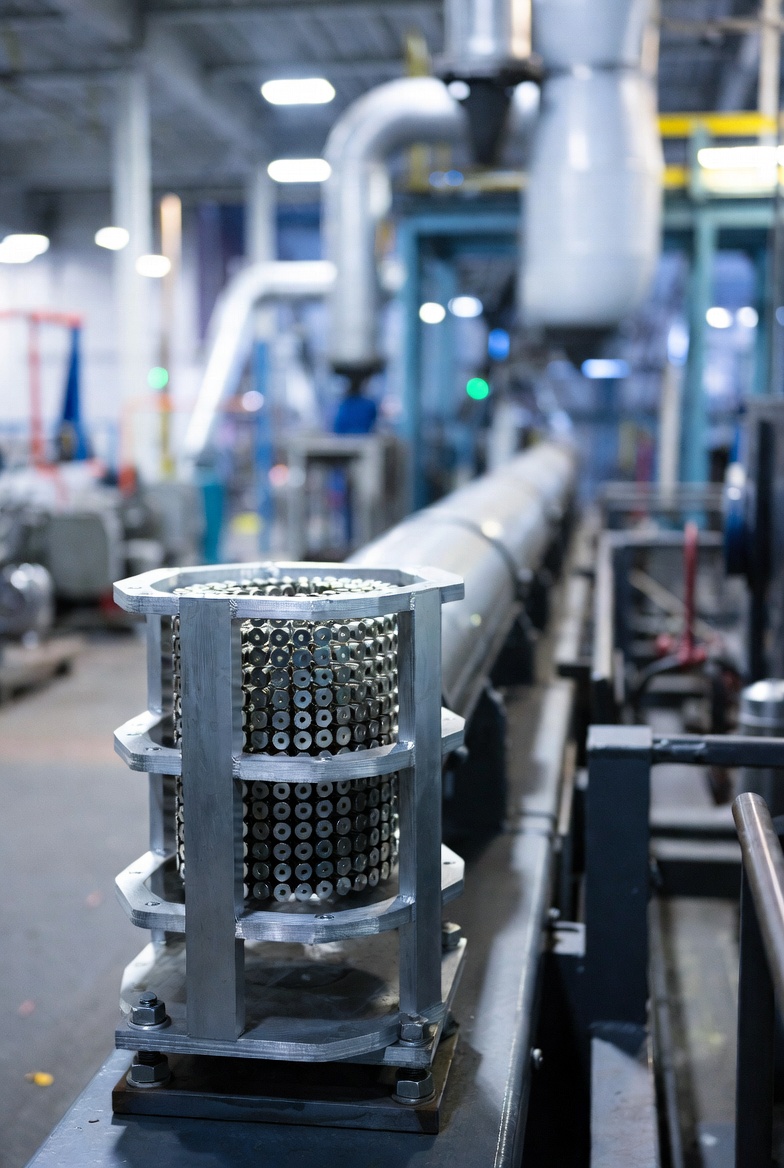
Bullet magnets, also called inline magnetic separators or pipeline magnetic separators, are critical safety and quality control devices for removing ferrous contaminants from powders and granules in industrial processing lines.
By capturing iron particles before they reach downstream equipment, bullet magnet separators protect machinery, ensure product purity, and help manufacturers comply with increasingly strict industry standards in sectors such as mining, ceramics, food, plastics, and pharmaceuticals.
What Is a Bullet Magnet Separator?
A bullet magnet is a high‑intensity magnetic separator installed in gravity pipelines or pneumatic conveying lines to remove iron and steel contaminants such as bolts, screws, rust, and metal flakes from free‑flowing materials in powder or granular form.
Its characteristic bullet‑ or cone‑shaped magnetic core sits directly in the product stream, maximizing contact between the material flow and the magnetic field for efficient separation while maintaining a stable, low‑resistance flow path.
A bullet magnet separator is widely applicable in multiple industries to remove iron‑based impurities and is usually used in the first phase of industrial processing to make sure that harmful ferrous impurities are removed before the material reaches high‑value equipment or final packaging.
Without effective magnetic separation, metal contamination can damage expensive machinery, trigger unplanned downtime, and pose serious risks to consumer health and regulatory compliance.
Why Bullet Magnets Matter for Industrial Iron Removal
In industrial separation and iron removal applications, a bullet magnet separator offers an efficient inline solution for capturing ferrous contaminants at an early stage of the process, reducing maintenance costs and production losses.
By integrating bullet magnets into gravity or pneumatic pipelines, manufacturers achieve continuous, low‑resistance product flow while maintaining strict metal‑free requirements for powders and granular materials used in mining, ceramics, pharmaceuticals, food processing, plastics, and chemical production.
How Bullet Magnets Work in Industrial Pipelines
The working principle of a bullet magnet separator is closely linked to its internal design and construction, which typically consists of an inner magnetic core and an outer stainless steel housing that installs directly in a pipeline system.
The inner core is usually a cone‑ or bullet‑shaped structure filled with a strong magnet that generates an intense magnetic field, while the outer housing guides the product flow through this field and provides access for inspection and cleaning.
Step‑by‑Step Working Process
1. Material entry Bulk material in powdered or granular form enters the stainless steel housing through a gravity chute or pneumatic line connection; the flow is directed toward the bullet‑shaped core to maximize exposure to the magnetic field.
2. Flow guidance over the magnetic core The streamlined bullet or cone shape ensures that the material can easily pass around the core without bridging or clogging, while maintaining close proximity to the magnetized surface where iron particles can be captured.
3. Capture of ferrous contaminants As the material passes the bullet magnet separator, ferrous contaminants such as bolts, staples, nuts, rust, washers, and other iron‑based fragments are attracted to the magnetic field and firmly held on the surface of the inner core due to their inherent magnetic domains.
4. Discharge of purified product The now‑purified product continues downstream to subsequent processes such as grinding, mixing, conveying, or packaging, where the absence of metal reduces wear on equipment and supports product quality and safety targets.
5. Manual cleaning of the inner core Once a batch or production run is complete, the operator opens the housing, removes the magnetic core, and cleans off the accumulated ferrous particles by wiping or sandblasting before re‑assembling the separator and restarting the line.
Key Design and Shape Factors That Impact Bullet Magnet Performance
The shape and construction of a bullet magnet play a vital role in its efficiency and effectiveness as a magnetic separator, because they determine both the strength of the magnetic field and the quality of the material flow through the device.
Several design parameters must be selected according to the characteristics of the process, the required separation performance, and the physical properties of the product being handled.
Cone Design of the Inner Core
The cone‑shaped design on the inner core is highly effective because it allows powdered or granular substances to flow smoothly around the magnet without excessive resistance or product build‑up.
At the same time, the cone geometry concentrates and strengthens the magnetic field in the areas of highest product velocity, ensuring that ferrous contaminants are pulled out of the stream and captured securely on the core surface.
Diameter and Length of the Bullet Magnet
The diameter and length of the bullet magnet are essential design parameters that directly influence both capacity and separation efficiency.
A larger diameter provides more cross‑sectional area for product flow and reduces pressure drop, while a longer length increases the available magnetic surface area and contact time, improving the probability of capturing iron‑based impurities; the optimal values depend on the industry, throughput, and contamination level.
Construction of the Housing
The outer housing that contains the core magnetic device must be designed to enhance the overall performance of the bullet magnet by providing a smooth, obstruction‑free path for the product.
The entry and exit sections should be wide enough to let the substance flow easily without blockage, and the internal surfaces should be smooth, crevice‑free, and easy to clean, especially in sanitary applications such as food and pharmaceuticals where stainless steel 304 or 316 is commonly used.
Strength of the Magnetic Field
The most important performance factor is the strength and distribution of the magnetic field generated by the magnet inside the core, which determines how effectively ferrous contamination is captured from the moving stream.
Higher‑intensity magnets, including modern rare‑earth technologies, produce deeper and stronger fields that are especially effective at capturing fine iron particles, while ferrite magnets can be sufficient for coarser contaminants and less demanding applications.
Industrial Applications of Bullet Magnet Separators
Bullet magnets are widely used in multiple industries to remove iron‑based impurities from powders and granular products, contributing both to equipment protection and product quality assurance.
They are often installed at the beginning of the process, in the first stage of pneumatic or gravity conveying systems, to stop ferrous materials before they reach high‑investment machinery such as screw conveyors, grinders, mixers, mills, or packaging lines.
Pharmaceutical Industry
In the pharmaceutical industry, bullet magnets are used to remove unwanted ferrous particles from medicines, active ingredients, powder blends, and tablets in order to prevent harmful contamination that could impact patient health.
Hygienic designs with stainless steel housings, polished surfaces, and easy‑to‑clean cores help manufacturers meet stringent regulatory requirements and maintain high levels of quality control in their production lines.
Food Processing
In food processing, bullet magnets can purify sugar, spices, flour, grain, and other dry powders and granules, capturing tramp metal such as broken screens, wire, and fasteners that may enter the process from upstream equipment or raw materials.
These separators are an important part of many HACCP plans and retailer specifications, helping to reduce the risk of foreign bodies in finished products and avoid costly recalls or brand damage.
Plastics and Polymers
In the plastics industry, bullet magnets help purify flakes, granules, and other plastic components by removing steel contamination that might otherwise damage extruders, injection molding machines, or pelletizers.
They are especially useful when processing recycled material and regrind, where the risk of tramp metal is higher and the consequences of equipment damage can be severe in terms of downtime and maintenance cost.
Minerals, Ceramics, and Chemicals
In the minerals sector, bullet magnets can be used to purify dry mineral products such as kaolin, quartz, feldspar, and similar materials, either in gravity or pneumatic conveying systems.
In ceramics and chemical production, they reduce metallic inclusions that could cause product defects, quality variation, or process instability, contributing to more consistent and reliable output.
Bullet Magnets Compared with Other Magnetic Separators
Different magnetic separators are available for dry material processing, and understanding where bullet magnets fit among them helps you choose the best solution for each point in the process line.
The main comparison is usually between bullet magnets, magnetic grates or grids, and suspended magnets positioned above conveyors or feeders.
| Feature | Bullet magnet separator | Magnetic grate / grid | Suspended magnet |
|---|---|---|---|
| Main installation | Inline in gravity or pneumatic pipelines | Inside chutes, hoppers, or small feeders | Above belt conveyors or vibratory feeders |
| Best for materials | Free‑flowing powders and granules | Fine powders with slower or controlled flow | Bulk materials on belts (ore, coal, aggregate) |
| Flow resistance | Low, with streamlined bullet core | Higher, with greater risk of bridging or clogging | No direct contact with product stream |
| Typical contaminants | Bolts, nuts, screws, rust, medium to large iron pieces | Fine ferrous particles and small fragments | Large tramp iron such as tools, bars, and plates |
| Cleaning method | Manual removal of inner core and wiping or sandblasting | Manual wiping or automatic cleaning variants | Manual or automatic discharge via scraper or self‑cleaning belt |
This comparison highlights the strengths of bullet magnet separators in inline applications where low flow resistance, compact installation, and easy maintenance are needed alongside reliable removal of medium to large ferrous contaminants.
Benefits of Bullet Magnet Separators for Industrial Users
Modern manufacturers invest in bullet magnets not only to meet external standards but also to improve internal reliability, cost control, and customer satisfaction across their production lines.
When properly selected and installed, inline bullet magnet separators deliver a range of practical benefits that quickly justify their investment in most dry processing applications.
1. Protection of Critical Equipment
Bullet magnets capture metal pieces before they reach grinders, mixers, extruders, compressors, and packaging machines, significantly reducing the risk of unexpected breakdowns, mechanical damage, and high‑cost repairs.
By preventing hard ferrous objects from entering sensitive equipment, plants can extend asset life, stabilize maintenance schedules, and avoid the cascading consequences of sudden mechanical failures.
2. Improved Product Quality and Safety
Metal contamination is a critical safety and quality issue in many industries, especially food, pharmaceuticals, and specialty chemicals, where even small fragments can pose hazards or cause product rejection.
Bullet magnet separators help maintain low metal counts, support compliance with internal quality standards and external certifications, and reduce the likelihood of recalls or customer complaints related to foreign bodies.
3. Stable Product Flow and Easy Integration
The streamlined bullet design provides low pressure drop and minimizes the risk of bridging, making it suitable for many free‑flowing powders, pellets, and granules that might clog more restrictive separator types.
With a choice of connection sizes and housings, bullet magnets can be integrated into new or existing gravity and pneumatic pipelines with relatively little modification, supporting incremental upgrades to existing plants.
4. Simple Operation and Maintenance
Most bullet magnet separators are equipped with easy‑access housings and covers that allow operators to open the device, remove the inner core, and clean accumulated metal quickly and safely.
A straightforward cleaning routine keeps magnetic performance high, limits maintenance time, and allows production planners to coordinate separation maintenance with regular process stops.
Practical Guide: How to Choose the Right Bullet Magnet
Choosing the correct bullet magnet separator involves matching its magnetic performance, mechanical design, and construction materials to your process conditions and product characteristics.
A structured selection approach helps ensure that the final solution delivers the required separation efficiency without creating unnecessary pressure drop or maintenance burdens.
Key Selection Criteria
1. Product type and flow characteristics Consider whether your product is a fine powder, granule, flake, or mixed material, and note flowability, bulk density, and tendency to bridge or segregate.
2. Throughput and pipeline size Select a housing diameter and length that match your pipeline and capacity; higher throughput typically requires larger diameters and may need higher‑intensity magnets to maintain efficiency at higher velocities.
3. Contaminant size and loading Define the expected size range and quantity of ferrous contamination, because applications dominated by fine iron dust may demand stronger rare‑earth cores and longer contact times than those dominated by larger tramp metal.
4. Operating environment Take into account temperature, humidity, abrasive properties, cleaning chemicals, and any potential corrosion, and choose appropriate stainless steel grades, seals, and surface finishes to ensure long‑term reliability.
5. Hygienic and regulatory requirements For food and pharmaceutical processes, look for designs with smooth welds, polished surfaces, minimal dead zones, and documented material traceability that support HACCP or GMP compliance and facilitate auditing.
Step‑by‑Step Selection Process
1. Define the target contaminants in terms of type, size, and expected frequency or loading levels.
2. Confirm pipeline orientation, diameter, and conveying method, including whether the line is gravity‑fed or pneumatic and what typical velocities are.
3. Determine the required magnetic strength and select the magnet type, balancing rare‑earth performance against cost and temperature limits where necessary.
4. Specify the housing material, connection type, and surface finish in line with industry, hygienic, and maintenance requirements.
5. Review maintenance capabilities and set realistic cleaning intervals so that the selected separator can be effectively operated and kept at peak performance over time.
Installation Best Practices for Inline Magnetic Separators
Correct installation is essential to obtain maximum separation efficiency from a bullet magnet and to avoid unintended issues such as product build‑up or difficult access for cleaning.
Good installation practice considers both process behavior and operator safety, ensuring that the separator functions effectively within the wider production system.
Recommended Installation Guidelines
– Install the bullet magnet in a vertical or near‑vertical section of the pipeline where the product flows freely and is evenly distributed across the cross‑section.
– Avoid installing the separator directly after sharp bends or flow disturbances that may concentrate the material to one side or reduce contact with the core.
– Ensure sufficient physical access around the housing so that operators can open covers, remove the core, and perform inspections and cleaning without unsafe working positions.
– Use connection methods such as flanges, quick‑release clamps, or sanitary couplings that match your process standards and make it easy to disassemble the unit for maintenance.
Operation and Maintenance: Keeping Bullet Magnets at Peak Performance
Even high‑performance bullet magnets require regular inspection and cleaning to maintain their separation efficiency, because accumulated ferrous material can partially shield the magnetic field and reduce effectiveness.
A well‑designed maintenance plan balances production continuity with the need to remove captured metal and verify the condition of the separator’s mechanical and magnetic components.
Routine Cleaning Procedures
– Establish cleaning intervals based on the level of contamination, the criticality of the process, and the operating hours; heavily contaminated lines may require more frequent cleaning than cleaner processes.
– Stop product flow through the separator, open the housing according to manufacturer instructions, and carefully remove the inner bullet core while following all safety procedures.
– Manually wipe or gently sandblast the collected ferrous particles from the magnetic surface, taking care not to scratch or damage the protective shell surrounding the magnet.
– Inspect seals, gaskets, hinges, and latches for signs of wear or damage, then reinstall the core securely and close the housing before restarting the system.
Inspection and Performance Monitoring
Regular inspection of the bullet magnet allows early detection of wear, corrosion, misalignment, or other issues that could affect separation performance or mechanical integrity.
Monitoring downstream metal detector alarms, product rejections, or abnormal equipment wear can also provide useful feedback on whether the bullet magnet system is functioning as expected or requires adjustment or upgrade.
Real‑World Industry Use Scenario
Consider a food processing plant that produces flour‑based products using several pneumatic conveying lines to feed mixers and packaging machines from central storage silos.
Before installing bullet magnets, occasional metal fragments from upstream conveying equipment would reach the metal detectors at the end of the line, causing frequent stoppages, rework, and concerns about consumer safety.
By installing high‑intensity bullet magnet separators at the inlet of each pneumatic line, the plant captured ferrous contamination before it reached sensitive equipment and final inspection points.
As a result, metal detector alarms decreased, unplanned downtime related to foreign metal contamination dropped, and the plant was better able to demonstrate effective contamination control during audits and customer visits.
How Foshan Wandaye Supports Bullet Magnet and Magnetic Separation Projects
Foshan Wandaye Technology Co., Ltd. is a specialized manufacturer of magnetic separation and iron removal equipment, integrating scientific research, engineering design, production, and whole‑line technical services.
With a strong R&D team and extensive project experience, Wandaye has completed numerous turnkey production line projects, helping customers achieve stable, large‑scale, and energy‑efficient industrial operations in mining, ceramics, pharmaceuticals, and other sectors.
Our product portfolio includes program‑controlled automatic oil‑cooling and water‑cooling electromagnetic slurry separators, electromagnetic dried‑powder separators, new‑type electromagnetic powder and slurry separators, belt conveyor type magnetic separators, vertical ring high gradient magnetic separators, and customized solutions for complex separation tasks.
By combining bullet magnet separators with these advanced systems, we can design integrated iron removal schemes that cover every stage of the process, from raw material feeding to final product packaging.
For customers seeking to implement or upgrade bullet magnet applications, Wandaye can provide process analysis, mineral or material testing, separator selection, pipeline layout recommendations, on‑site installation guidance, commissioning, and long‑term after‑sales support.
This end‑to‑end service approach ensures that bullet magnets are properly sized, installed, and maintained, delivering reliable separation performance and strong return on investment over the life of the equipment.
Summary
Bullet magnet separators are a powerful inline magnetic separation solution for removing ferrous contaminants from free‑flowing powders and granules in gravity and pneumatic pipelines across a wide range of industries.
By understanding their design, working principles, application areas, installation guidelines, and maintenance requirements, industrial users can select and operate bullet magnets that protect critical equipment, enhance product quality and safety, and support long‑term process efficiency and regulatory compliance.
Contact us to get more information!
FAQ
Q1. What is the main purpose of a bullet magnet separator?
The main purpose of a bullet magnet separator is to remove ferrous contaminants such as bolts, nuts, screws, rust, and metal fragments from powders and granules as they move through gravity or pneumatic pipelines.
By capturing these metal particles inline, bullet magnets protect downstream equipment from damage and help ensure that the final product meets quality and safety requirements.
Q2. Can bullet magnets handle both fine iron dust and larger metal pieces?
Bullet magnets are effective at capturing medium to large ferrous contaminants and, when equipped with high‑intensity rare‑earth cores, can also remove a significant portion of finer iron particles from the product stream.
However, in applications dominated by extremely fine metal dust, they are often used in combination with other separation technologies such as magnetic grids, drum separators, or metal detectors to achieve the best overall result.
Q3. How often should I clean a bullet magnet in normal industrial use?
The optimal cleaning interval for a bullet magnet depends on the level of contamination, the product value, and the criticality of the process, but many plants align cleaning with routine production pauses or shift changes.
If large amounts of metal are captured or if the process is highly sensitive to contamination, more frequent inspections and cleaning may be necessary to prevent build‑up that could shield the magnetic field and reduce efficiency.
Q4. Is a bullet magnet suitable for food and pharmaceutical applications?
Bullet magnets are widely used in food and pharmaceutical applications when they are manufactured from appropriate grades of stainless steel, feature smooth and hygienic product contact surfaces, and use construction methods that minimize crevices and retention zones.
When integrated into a validated control plan and maintained regularly, they can support HACCP, GMP, and other regulatory and customer requirements related to metal contamination control.
Q5. How do I know what magnetic strength and design I need for my process?
Determining the right magnetic strength and design begins with understanding your product characteristics, flow conditions, and contamination profile, including whether you are dealing primarily with coarse tramp metal or fine iron particles.
Working with an experienced magnetic separation supplier, such as Foshan Wandaye, allows you to evaluate different bullet magnet configurations, select appropriate magnet materials and housing designs, and verify performance through testing or on‑site trials before full‑scale implementation.
Citations:
1. https://www.greatmagtech.com/info/bullet-magnet-a-lifesaving-device-for-industr-84686827.html
2. https://www.greatmagtech.com/info/bullet-magnet-efficient-industrial-iron-remov-102927943.html
3. https://www.aanalmagnet.com/bullet-magnet.html
4. https://gtekmagnet.com/products/magnetic-filter/bullet-magnet/
5. https://www.eclipsemagnetics.com/products/magnetic-separation-and-metal-detection/housed-bullet-magnet/
6. https://www.goudsmitmagnetics.com/en-us/products/free-fall-magnetic-separators/permanent-bullet-magnets
7. https://www.sollau.com/bullet-magnets-mt
8. https://www.magnetics.com/products/bullet-magnet
9. https://www.wdymagnetic.com
Hot Tags: Bullet Magnet Lifesaving Device, Bullet Magnets, Industrial Bullet Magnet Separator, Bullet Magnet For Metal Removal, Pipeline Magnetic Separator Bullet Type, Magnetic Bullet Separator For Powders, Food Grade Bullet Magnet Systems, Inline Magnetic Filtration Equipment, Rare Earth Bullet Magnet Assembly, Industrial Magnetic Separation Solutions