



Content Menu
● Introduction to Neodymium Magnets and Their Strength
● Understanding How Magnets Interact with Electronic Devices
● How Do Neodymium Magnets Affect Cell Phones?
>> Can Neodymium Magnets Damage a Cell Phone’s Screen?
>> Do Neodymium Magnets Affect a Phone’s Internal Components?
>> Can Neodymium Magnets Erase or Corrupt Data on a Smartphone?
>> Is It Safe to Keep Neodymium Magnets Near Wireless Charging Phones?
>> What About Magnetic Cases and Accessories? Are They Harmful?
>> What Precautions Should You Take When Using Neodymium Magnets?
● Practical Safety Guidelines for Using Neodymium Magnets Around Phones
● Real‑World Scenarios: How Risky Are They?
● Industry Perspective: Magnet Safety in Mining, Ceramics, and Pharma
● How to Choose Safer Magnetic Accessories and Magnets
● Where Can You Find High‑Quality Neodymium Magnets for Your Needs?
● Key Takeaways and Recommended Actions
● Summary
● FAQs
>> 1. Can a neodymium magnet permanently damage my phone?
>> 2. Can magnets erase photos, apps, or messages on my smartphone?
>> 3. Why do my maps or navigation apps behave strangely after using a magnetic car mount?
>> 4. Are magnetic phone cases and wireless‑charging accessories safe in the long term?
>> 5. Should workers carry smartphones near industrial magnetic separation equipment?
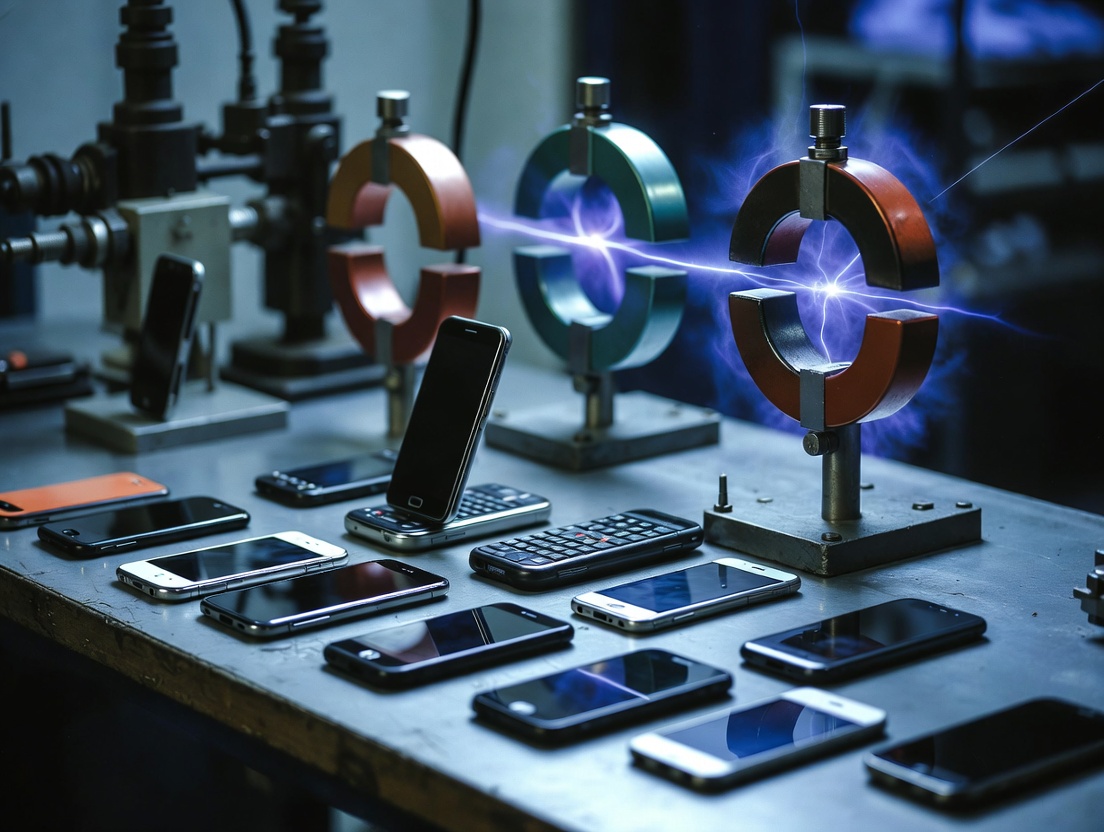
Neodymium magnets are highly powerful, and this has raised questions about their effects on smartphones. Some people worry they might delete information, crack screens, or block normal phone operations, especially when used in magnetic cases, car mounts, or industrial environments.
At the same time, magnets are widely used inside phones and in phone accessories, which makes the real risk harder to judge. Are these magnets genuinely dangerous for today’s smartphones, or is this mostly a leftover concern from older technologies?
This updated guide combines practical tests, engineering principles, and real‑world use cases to explain when neodymium magnets are safe, when they can cause problems, and how to use them correctly around modern smartphones. You will also find best practices for users, engineers, and buyers in industries that rely on strong magnetic separation and iron removal equipment.
Introduction to Neodymium Magnets and Their Strength
Neodymium magnets are rare‑earth magnets made from neodymium, iron, and boron (NdFeB). They are widely regarded as the strongest commercially available permanent magnets, offering extremely high magnetic energy in a compact size.
Their powerful magnetic fields come from their crystal structure, which allows a very high degree of magnetization. This is why even a small neodymium magnet can attract metal objects or clamp onto steel surfaces with surprising force.
In industrial uses, neodymium magnets are applied in electric motors, generators, and magnetic separators, where high strength and compact size are crucial. They play a key role in mining, ceramics, and pharmaceutical production, especially where magnetic separation and iron removal are required for product purity and process safety.
In the medical field, neodymium magnets appear in certain instruments and specialized equipment. Other consumer electronics, such as headphones, earphones, smartphone speakers, and some hard drives, also incorporate neodymium magnets to improve efficiency and performance.
For manufacturers and engineers, this unique combination of small size and high strength makes neodymium magnets ideal for compact product designs. For everyday users, however, it raises the question: can such strong magnets damage delicate electronics like smartphones?
Understanding How Magnets Interact with Electronic Devices
Magnetic fields can affect electronic devices in several ways, but the real impact depends heavily on the technology inside the device. Not all parts of an electronic system respond to magnetic fields in the same way.
In general, there are three main categories of interaction:
– Data storage that uses magnetism, such as traditional hard disk drives or magnetic tape, can be corrupted by strong external magnets.
– Magnetic sensors, such as compasses and some motion or position sensors, can have their readings distorted or temporarily saturated by external fields.
– Electromagnetic systems, such as inductive charging coils or certain types of power electronics, can be disturbed by strong, poorly controlled fields near them.
Most current smartphones and laptops use flash storage (NAND) that is not magnetically based. This type of storage holds data as electric charge rather than magnetized domains, so it is not directly affected by static magnetic fields in normal consumer environments.
However, these same devices usually contain sensitive internal sensors like magnetometers (compasses), as well as wireless charging coils and small built‑in magnets in speakers and camera modules. This combination explains why magnets can sometimes influence how a phone behaves without actually deleting its data or breaking its hardware.
Older technologies such as CRT monitors, devices with magnetic stripe media, or legacy hard drives are much more vulnerable to strong external magnets. This is where many of the classic warnings about magnets and electronics originally came from, and why some confusion still exists today.
How Do Neodymium Magnets Affect Cell Phones?
Neodymium magnets can interact with smartphones in several ways, but the effects are different for screens, internal components, sensors, and wireless charging systems. Understanding these differences helps you use magnets safely around your devices.
Can Neodymium Magnets Damage a Cell Phone’s Screen?
For modern smartphones using LCD, OLED, or other flat‑panel touchscreen technologies, neodymium magnets are generally considered safe for the screen itself. These displays are controlled by electric fields and semiconductor components, not by magnetic deflection like the old CRT monitors once used.
In a CRT monitor, external magnetic fields could distort or permanently damage the image by altering the path of electron beams. In contrast, smartphone screens operate with liquid crystals or organic light‑emitting diodes that respond to voltage rather than magnetism. As a result, a neodymium magnet placed near the screen will not directly damage pixels or permanently discolor the display.
In practice, strong magnets do not create “magnetic stains” or color patches on modern smartphone screens. They will not cause dead pixels or burn‑in, and they do not erase or distort the display content in the way many people fear from older experiences.
However, there are still indirect risks to the screen. Large or very strong magnets can snap toward metal surfaces or other magnets with great force. If the phone is caught between the magnet and a hard surface, the impact can crack the glass, deform the frame, or scratch the display. This is a mechanical impact problem, not a magnetic‑field problem.
From a user standpoint, the main screen‑related risk with neodymium magnets comes from sudden impact, poor mounting design, or lack of protective padding on mounts and cases, rather than from the magnetic field itself.
Do Neodymium Magnets Affect a Phone’s Internal Components?
Neodymium magnets do not pose a significant threat to most of a phone’s internal components, especially those built with modern semiconductor and solid‑state technologies. The battery, processor, and flash memory are not based on magnetic data storage and therefore are not easily influenced by static magnetic fields of the kind most users encounter.
Modern smartphone batteries are chemical energy storage devices. Their performance and safety are governed by electrochemistry, temperature, and charging conditions, not typical external static magnets. Similarly, processors and logic circuits are built from CMOS transistors and are not magnetically sensitive under normal conditions.
The key internal components that can be affected are the sensors designed to respond to magnetic or positional changes. These include:
– The magnetometer, which acts as the digital compass and helps determine the phone’s orientation relative to Earth’s magnetic field.
– Certain motion sensors and gyroscope systems that can be influenced if extreme fields distort nearby structures or calibration.
– Hall sensors, used in some devices for detecting cover positions, fold angles, or internal component alignment.
When a strong neodymium magnet is brought very close to these sensors, their readings can be thrown off. For example, the compass may point in the wrong direction, or orientation‑dependent features may become unreliable until the phone recalibrates.
In most cases, this interference is temporary. Once the magnet is removed, the device can recalibrate its sensors, either automatically or through a user‑triggered calibration process in the settings or map application. The hardware itself is not permanently damaged by brief exposure under normal consumer conditions.
Can Neodymium Magnets Erase or Corrupt Data on a Smartphone?
Neodymium magnets cannot erase or corrupt data on a modern smartphone because the data is not stored magnetically. Instead, smartphones use NAND flash memory or similar solid‑state storage, which holds information as electrical charges trapped in tiny transistor structures.
Traditional hard disks used spinning platters coated with magnetic material, where data was stored as patterns of magnetized regions. Strong external magnets could override these patterns, potentially causing data loss. That older scenario is still widely remembered, which is why many people worry about magnets around digital devices.
In a smartphone, there is no such magnetic recording surface for a permanent magnet to erase. Neodymium magnets placed near the phone, even fairly strong ones, do not clear photos, messages, apps, or system files. They do not behave like a “giant eraser” for digital data.
At the same time, magnets can interfere with how some software behaves by affecting sensors that apps rely on. For example, navigation or augmented reality apps may not work properly if the magnetometer is disturbed. But this is a temporary functional issue, not true data corruption.
It is also important to remember that smartphone designers already include internal magnets in speakers, camera mechanisms, and in some brand‑specific features such as magnetic accessory systems. These are placed and shielded in ways that avoid harmful interaction with storage or sensitive electronics. This design experience is a strong indicator that magnets and smartphone data can coexist safely when used correctly.
Is It Safe to Keep Neodymium Magnets Near Wireless Charging Phones?
Wireless charging phones rely on electromagnetic induction between a charging pad coil and a receiving coil in the phone. The system operates at specific frequencies and power levels to transfer energy efficiently and safely. Strong external magnets can influence this system if placed too close or directly on top of the charging area.
If a high‑strength neodymium magnet is positioned near the wireless charging coil, it may disturb the magnetic field needed for induction. This can reduce charging efficiency, cause the device to charge more slowly, or in some cases, trigger protective cutoffs that stop charging altogether.
In addition, certain magnet and metal combinations near the charging zone can concentrate heat, especially during fast charging. Excess heat is undesirable for battery health and can make the phone uncomfortable to touch. It may also cause the system to throttle charging speed for safety.
On the other hand, many wireless charging systems and accessories, including well‑known magnetic alignment systems, use embedded magnets intentionally. These magnets are positioned and sized carefully so that they help align the phone without disturbing the charging process or overheating the device.
To stay safe, you should avoid placing very strong loose neodymium magnets directly over the wireless charging area on the back of the phone. When using magnetic phone cases or car mounts, choose products specifically labeled as wireless‑charging compatible, because they are designed with appropriate spacing and materials.
What About Magnetic Cases and Accessories? Are They Harmful?
In most everyday cases, magnetic phone cases and accessories are not harmful to smartphones. The magnets used in typical consumer products are relatively small and are positioned at distances that avoid critical sensor and charging zones.
Modern smartphones incorporate various shielding techniques and careful component layouts that help them tolerate the modest magnetic fields generated by quality accessories. When magnets are integrated into the device ecosystem by major brands, they are tested extensively for long‑term safety and compatibility.
That said, some risks emerge when accessories use very strong magnets or poor designs. Overly powerful magnets placed too close to sensitive areas can increase the likelihood of:
– Temporary compass or sensor interference that affects navigation or orientation‑dependent apps.
– Increased heat during charging if metal plates or magnets block or distort the wireless charging field.
– Scratches or cosmetic damage to the phone’s back or frame if hard magnetic surfaces are not properly padded or coated.
When selecting magnetic cases, mounts, or wallet accessories, it is best to choose products from reputable brands that clearly state compatibility with your phone model and with wireless charging. This reduces the risk of poorly controlled field strength or dangerous design shortcuts.
What Precautions Should You Take When Using Neodymium Magnets?
When using neodymium magnets near smartphones or other electronics, a few simple precautions greatly reduce the chance of problems:
– Keep high‑strength magnets away from smartphones, credit cards, old hard drives, and other magnet‑sensitive items whenever possible.
– Avoid placing strong magnets directly over the wireless charging coil area on the back of the phone during charging.
– Handle neodymium magnets with care, because they are brittle and can shatter or chip on impact, creating sharp fragments.
– Store magnets separately and at a reasonable distance from electronic devices to prevent accidental attraction or damage.
– Be cautious around people with pacemakers, implanted medical devices, or other equipment sensitive to magnetic fields, and follow relevant safety guidelines.
Following these steps lets you enjoy the benefits of strong magnets in mounts, cases, and industrial tools, without exposing your phone or other devices to unnecessary risk.
Practical Safety Guidelines for Using Neodymium Magnets Around Phones
To combine strong magnets and smartphones safely in daily life or work environments, it helps to follow a set of practical, easy‑to‑remember rules:
1. Avoid prolonged direct contact between very strong neodymium magnets and your phone, especially around the top edge and the center of the back where key sensors and coils are often located.
2. Keep magnets away from your wireless charging pad or from the phone while it is charging wirelessly, unless the system is specifically designed with built‑in magnets.
3. If you notice navigation issues, strange compass behavior, or AR apps drifting after using a magnetic mount, recalibrate the compass or restart your phone to reset the sensors.
4. Choose magnetic accessories that explicitly mention compatibility with your phone brand and wireless charging standard, and avoid no‑name products that do not disclose magnet details.
5. In workplaces that use large magnetic separation or iron removal systems, establish clear rules about where employees can carry phones and where they must be stored away from strong fields.
These habits help both everyday users and professionals reduce interference, avoid accidents, and maintain device performance over the long term.
Real‑World Scenarios: How Risky Are They?
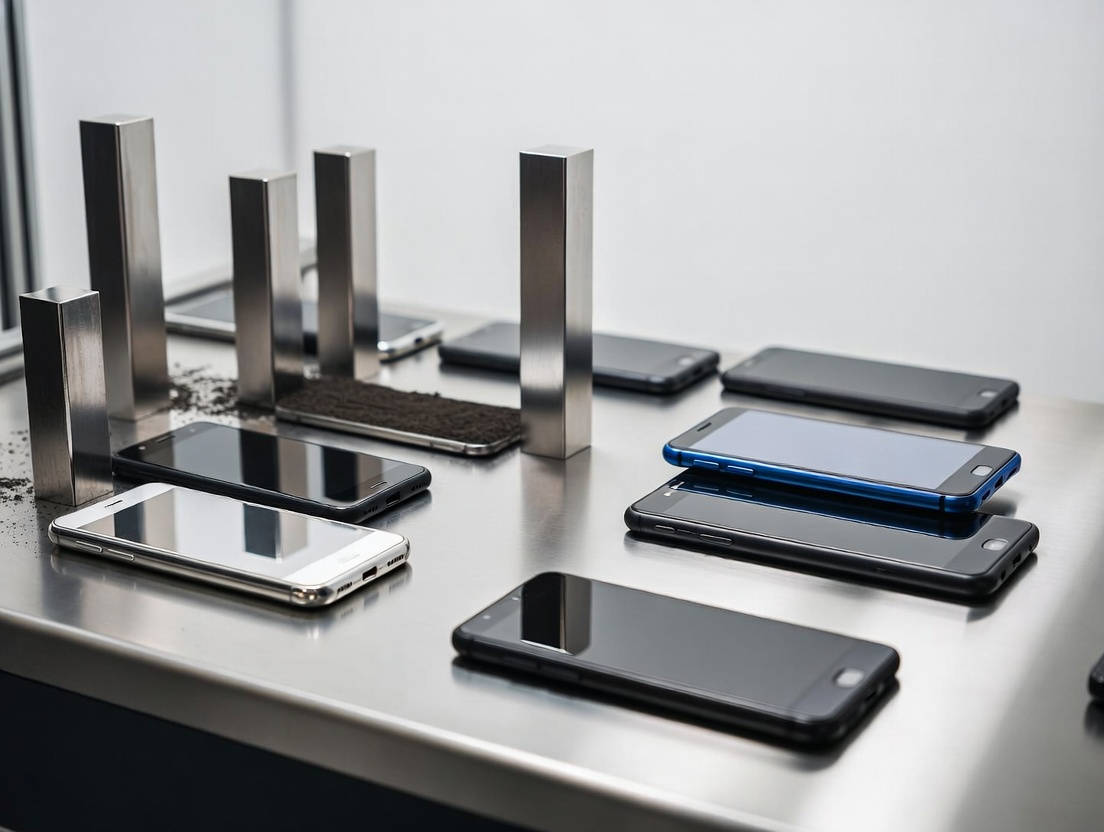
Not every situation involving a magnet and a phone carries the same level of risk. Looking at common real‑world scenarios helps illustrate where caution is most needed.
For a small magnetic car mount that uses a thin internal disc magnet and a metal plate behind the case, interference is usually low. The phone may experience minor compass deviation while attached, but once removed, navigation typically returns to normal after brief recalibration.
For modern magnetic alignment and charging systems designed by smartphone manufacturers, magnets are part of the official ecosystem. They are positioned carefully to work with the charging coil and sensor layout. When original or certified accessories are used, long‑term safety margins are built in and widely verified by large user bases.
In industrial settings such as mining, ceramics, or pharmaceutical lines, the picture changes. Large magnetic separators and iron removal devices can generate much stronger localized fields than consumer products. In such environments, phones carried too close to the equipment may experience heavy sensor disturbance, sudden attraction to metal, or, in extreme cases, device shutdown as a safety response.
In workshops where loose N52 block magnets are used, placing a phone directly beside or between magnets and steel surfaces is risky. Sudden snapping forces can crack screens, bend frames, or pull the phone from a worker’s hand unexpectedly. Maintaining distance and using protective housings greatly reduces these risks.
By matching the level of caution to the strength and design of the magnet involved, users and engineers can manage smartphone risks in a targeted, practical way instead of treating all magnets as equally dangerous.
Industry Perspective: Magnet Safety in Mining, Ceramics, and Pharma
In industries such as mining, ceramics, and pharmaceutical manufacturing, neodymium magnets are fundamental to magnetic separation and iron removal processes. These systems protect equipment, improve product quality, and help meet safety and purity standards.
Industrial magnetic equipment often uses large arrays of high‑grade neodymium magnets arranged in drums, grids, or plates. The goal is to concentrate the magnetic field in the process area, where contamination is captured and removed from raw materials or product flows.
From a safety standpoint, designers pay close attention to how far the strong field extends beyond the housing. Proper shielding and enclosure design help keep the external field at levels that are safe for operators and nearby electronics.
Many plants establish controlled zones around powerful magnetic separators where personal devices, including smartphones, are restricted or prohibited. This protects the phones themselves and reduces the chance that metal tools or objects will be suddenly attracted in a way that could injure workers.
Clear signage, training, and written procedures support safe behavior in these areas. By combining engineering controls with operational rules, facilities can use strong neodymium magnets to their full advantage without exposing staff or their personal electronics to unnecessary risk.
How to Choose Safer Magnetic Accessories and Magnets
Whether you are buying a magnetic phone mount for your car or specifying magnets for an industrial application, careful selection makes a big difference to safety and performance.
For consumer accessories, look for:
– Clear labeling that indicates compatibility with your phone model and wireless charging standard.
– Designs where magnets are arranged in rings or patterns that avoid direct overlap with sensitive components.
– Soft or coated surfaces where the accessory touches the phone to prevent scratching and reduce impact forces.
– Products from reputable brands that provide technical information about magnet strength and design intent.
For industrial and engineering use, focus on:
– Selecting appropriate magnet grade and size so the field is strong enough for separation tasks but not unnecessarily intense outside the process zone.
– Choosing geometries, housings, and mounting methods that control the field path and protect magnets from mechanical damage or corrosion.
– Working with suppliers who can offer design support, simulation, and testing for your specific application, including consideration of nearby electronics and worker safety.
Making informed choices at the design and purchasing stages helps ensure that magnets deliver the needed performance while keeping smartphones and other sensitive devices safe in the same environment.
Where Can You Find High‑Quality Neodymium Magnets for Your Needs?
High‑quality neodymium magnets for industrial, commercial, and scientific applications should combine strong, stable performance with robust durability and reliable supply. This is especially important in sectors such as mining, ceramics, and pharmaceuticals, where magnetic separation and iron removal systems operate continuously under demanding conditions.
When evaluating potential suppliers, consider factors such as:
– Use of high‑grade raw materials and strict quality control processes to ensure consistent magnetic properties.
– Availability of multiple shapes and sizes, including block, disc, ring, and custom forms tailored to separation, filtration, or accessory designs.
– Options for protective coatings such as nickel, epoxy, rubber, or plastic to enhance corrosion resistance and mechanical durability in harsh environments.
– The ability to deliver both small trial batches and large production orders on schedule, supporting line expansions and maintenance planning.
– Technical support that helps integrate magnets into complete systems, balancing performance, safety, and compatibility with other electronics, including smartphones used by staff on site.
By partnering with a specialized magnet manufacturer or magnetic‑separation equipment provider, you can build solutions that achieve high separation efficiency while maintaining safe conditions for workers and their devices.
Key Takeaways and Recommended Actions
For everyday smartphone users, the main points are straightforward. Neodymium magnets do not erase data or permanently damage modern smartphone screens under normal conditions. The most likely issues you might notice involve temporary sensor interference or mechanical damage caused by sudden magnetic attraction rather than by the magnetic field itself.
For engineers, safety managers, and purchasing teams, the challenge is to integrate strong magnets into products and processes without compromising device compatibility or worker safety. This involves careful equipment design, clear operational rules, and collaboration with specialized magnet and magnetic‑separation experts.
If your work or lifestyle involves frequent use of strong magnets, now is a good time to review how you store, handle, and position them relative to smartphones and other electronics. Simple steps such as keeping phones away from high‑field zones, using certified accessories, and recalibrating sensors when necessary can eliminate most practical problems.
Summary
Neodymium magnets are among the strongest permanent magnets available and are used across consumer, industrial, and scientific applications. Modern smartphones, however, are designed with technologies and layouts that make them largely resistant to permanent magnetic damage under normal use conditions.
While neodymium magnets can temporarily disturb sensors such as the magnetometer and can interfere with wireless charging when placed incorrectly, they do not erase phone data or directly harm LCD or OLED screens. The biggest everyday risks come from poor accessory design and accidental mechanical impact, especially with very strong, unshielded magnets.
In industrial environments that use powerful magnetic separation or iron removal systems, additional precautions are needed. Controlled zones, shielding, and clear guidelines for phone use near strong fields help protect both workers and their devices while keeping processes efficient.
By understanding how magnets and smartphones interact, users and professionals can safely combine strong magnetic technology with the mobile devices they rely on every day.
Contact us to get more information!

FAQs
1. Can a neodymium magnet permanently damage my phone?
In normal consumer scenarios, a neodymium magnet is unlikely to cause permanent damage to a modern smartphone. The screen, processor, and flash storage are not easily affected by static magnetic fields. The main concern is temporary interference with sensors like the compass or accidental impact damage if the magnet snaps against the phone or nearby metal surfaces.
2. Can magnets erase photos, apps, or messages on my smartphone?
No, magnets cannot erase photos, apps, or messages stored on a modern smartphone. These devices use flash memory, which stores information as electric charges rather than magnetic patterns. Even strong neodymium magnets used in consumer accessories do not act like the “magnet over a floppy disk” scenario from older storage technologies.
3. Why do my maps or navigation apps behave strangely after using a magnetic car mount?
If your maps or navigation apps behave strangely after using a magnetic mount, it is usually because the magnet has temporarily affected the phone’s magnetometer. The compass reading may be offset, causing the map to show incorrect directions or heading. Removing the phone from the mount and performing a compass calibration or restarting the device typically restores normal function.
4. Are magnetic phone cases and wireless‑charging accessories safe in the long term?
Properly designed magnetic phone cases and wireless‑charging accessories are generally safe for long‑term use with compatible phones. Manufacturers position magnets and coils carefully to ensure that charging remains efficient and that sensors continue to operate normally. Problems are more likely when using poorly designed or very strong third‑party accessories that do not follow recommended spacing and shielding practices.
5. Should workers carry smartphones near industrial magnetic separation equipment?
In areas where large, powerful magnetic separation or iron removal systems are operating, it is safer to limit or restrict the use of smartphones near the strongest fields. The magnets can significantly disturb sensors and may cause sudden attraction of metal objects. Many facilities establish no‑phone zones or require phones to be stored in lockers when entering high‑field areas to protect both workers and devices.
Citations:
1. https://www.greatmagtech.com/info/can-neodymium-magnets-damage-cell-phones-the-102840897.html
2. https://www.goudsmit.co.uk/will-magnets-ruin-your-smartphone-goudsmit-uk/
3. https://mobilebeat.com.au/blogs/mobile-accessories/reasons-a-magnetic-phone-mount-is-safe-for-phones
4. https://www.wzmagnetics.com/can-neodymium-magnets-damage-electronics%EF%BC%9F/
5. https://www.moft.us/blogs/news/are-magnets-bad-for-phones
6. https://www.magfine.ca/blogs/general/are-magnet-phone-cases-safe
7. https://www.rokform.com/blogs/rokform-blog/magnets-are-still-safe-to-use-with-your-smartphone
8. https://discussions.apple.com/thread/251015250
9. https://www.magfine.ca/blogs/general/can-neodymium-magnets-damage-your-smartphone-here-s-the-truth
Hot Tags: Do Magnets Affect Mobile Phones, Magnets and Smartphone Safety, Magnetic Interference with Cell Phones, Can Magnets Damage Phone Screens, Magnetic Field Effects on Electronics, Do Magnets Affect iPhone Performance, Smartphone Compass Magnetic Interference, Are Magnets Safe Near Electronics, Magnet Impact on Phone Sensors, Magnetic Shielding for Mobile Devices