


Content Menu
● Why Metal Detection in Meat Processing Matters More Than Ever
● Core Keyword Focus and Target Audience
● Common Sources of Metal Contamination in Meat Processing
>> Upstream and Slaughter-Related Sources
>> Processing and Grinding Operations
>> Packaging and Final Handling
● Regulatory Expectations and Food Safety Standards
● How Inline Meat Metal Detection Systems Work
● Key Features of Modern Meatline-Style Metal Detectors
>> High Sensitivity for All Metal Types
>> Hygienic, Wash-Down-Ready Construction
>> User-Friendly Operation and Quick Changeovers
● Inline Meat Metal Detection vs. Traditional Tunnel Detectors
● Combining Magnets and Metal Detectors in Meat Processing
● Designing a Metal Detection Strategy for Meat Plants
>> Map the Process and Identify High-Risk Points
>> Select Appropriate Detection and Separation Devices
>> Define Sensitivity and Critical Limits
● Practical Example: Preventing a Ground Meat Recall
● Latest Trends in Meat Metal Detection and Inspection
>> Integration with Checkweighers and Vision Systems
>> Smarter Data, Remote Monitoring, and Traceability
>> Hygienic Design Aligned with Updated Standards
● Practical Installation Tips for Inline Meat Metal Detectors
● How Foshan Wandaye Supports Meat Processors
● Step-by-Step Checklist for Implementing Meat Metal Detection
● Clear Call to Action: Build a Safer Meat Line Today
● Summary
● Frequently Asked Questions (FAQ)
>> 1. What size metal fragments should a meat metal detector be able to detect?
>> 2. Do I still need magnets if I install metal detectors?
>> 3. Where is the best place to install an inline meat metal detector?
>> 4. How often should I test my meat metal detectors?
>> 5. Can inline meat metal detectors handle high-viscosity or chunky products?
Metal contamination is one of the most serious and costly risks in modern meat processing, and advanced inline meat metal detection systems are now a critical line of defense for food brands and processors.
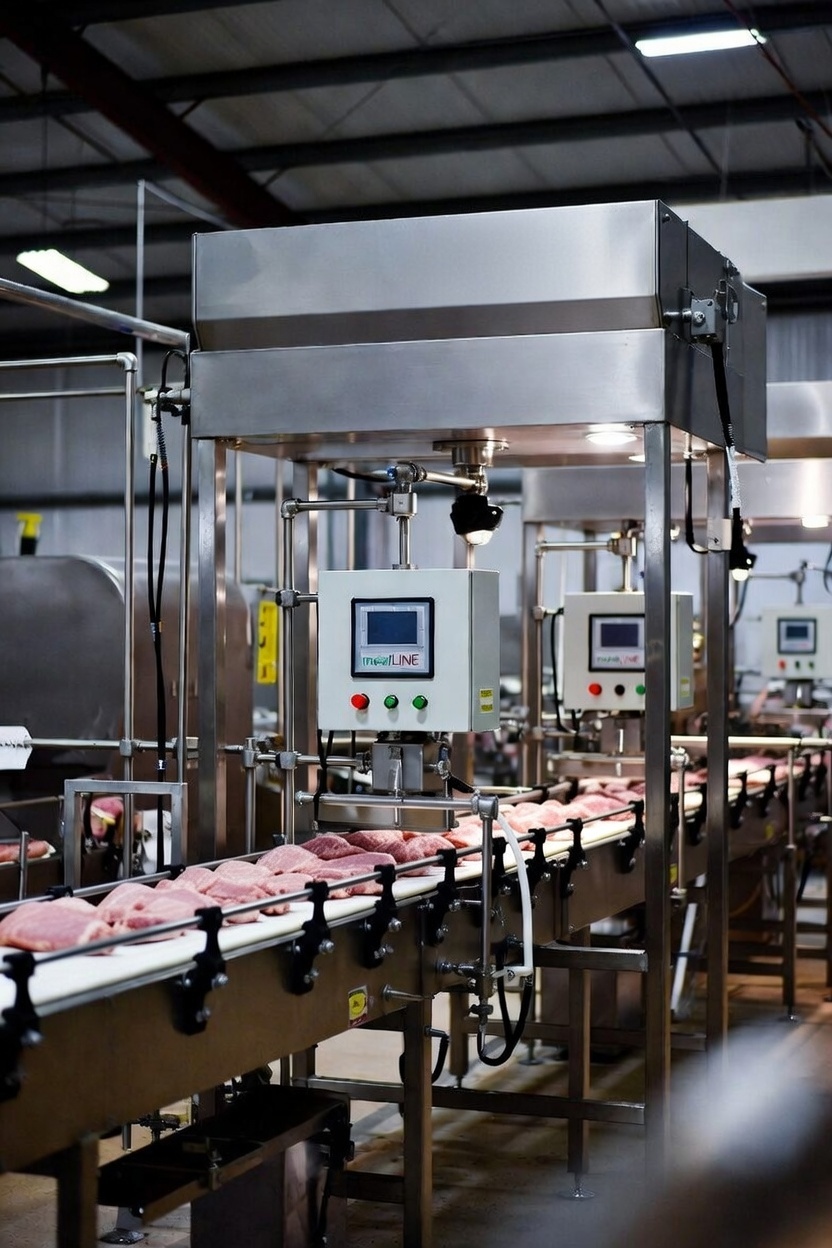
Why Metal Detection in Meat Processing Matters More Than Ever
Meat products are especially vulnerable to metal contamination at multiple stages, from slaughter to grinding, mixing, filling, and packaging.
Even small fragments can cause injuries, trigger recalls, and permanently damage consumer trust.
– Incoming animals may already contain foreign material from farms or slaughter equipment.
– Grinding, cutting, and mixing equipment can shed bolts, shavings, and wire fragments.
– Packaging lines, can openers, and mesh belts introduce additional contamination risks.
Recent years have seen multiple high-profile recalls where consumers found sharp foreign bodies in chicken, beef, and ready-to-eat products, highlighting the need for robust inline detection before products reach the shelf.
Core Keyword Focus and Target Audience
This guide is designed for QA managers, production engineers, and plant owners searching for meat metal detection, inline metal detectors for meat, and metal contamination control in meat processing.
It explains how modern systems like meatline-style metal detectors work, where to install them, and how they integrate with magnets and HACCP programs.
Common Sources of Metal Contamination in Meat Processing
Understanding where metal enters the process is the first step in designing an effective detection strategy.
Upstream and Slaughter-Related Sources
Animals can arrive at the plant already containing foreign objects from farm environments or previous handling.
Slaughter and dressing equipment, hooks, and cutting tools can generate stainless steel and ferrous fragments that move downstream with the carcass.
Processing and Grinding Operations
High-load equipment such as grinders, mixers, pump systems, and vacuum fillers are high-risk points for metal loss.
Typical sources include:
– Loose bolts, nuts, and fasteners from vibrating equipment.
– Metal-to-metal contact surfaces creating shavings and burrs.
– Broken pieces from wire mesh belts and screens.
In ground meat, these fragments become dispersed and are harder to spot visually, making inline metal separation essential.
Packaging and Final Handling
Even after thermal processing, additional contamination can appear from:
– Can opener systems generating rim shavings.
– Clips, staples, or packaging fasteners entering the product stream.
– Wear on conveyors and transfer points near the pack-off area.
This is why food safety standards recommend metal detection as a critical control point close to final packaging.
Regulatory Expectations and Food Safety Standards
Global food safety frameworks, including USDA, FDA, and GFSI schemes like BRCGS and SQF, expect meat processors to have validated controls for physical hazards such as metal.
Key expectations include:
– Integrating metal detection and/or magnetic separation into the plant HACCP plan as a CCP.
– Defining critical limits based on achievable detection sensitivity for ferrous, non-ferrous, and stainless steel.
– Regularly validating and verifying detector performance with test pieces and documented checks.
Food safety regulators expect each facility to demonstrate that no detectable metal fragments pass through metal detection or separation devices at the defined critical control points.
How Inline Meat Metal Detection Systems Work
Inline meatline metal detectors are designed to inspect pumped or vacuum-filled meat products during transfer, rather than after packaging.
Typical system elements include:
– A detection coil mounted in the product pipeline or on a vacuum filler outlet.
– A fast pneumatic reject valve that isolates contaminated slugs without stopping product flow.
– A control unit with a touch screen interface to configure products, sensitivity, and logging.
By inspecting meat while it is under pressure in closed piping, inline detectors reduce the risk of recontamination and allow automatic reject without opening the product stream.
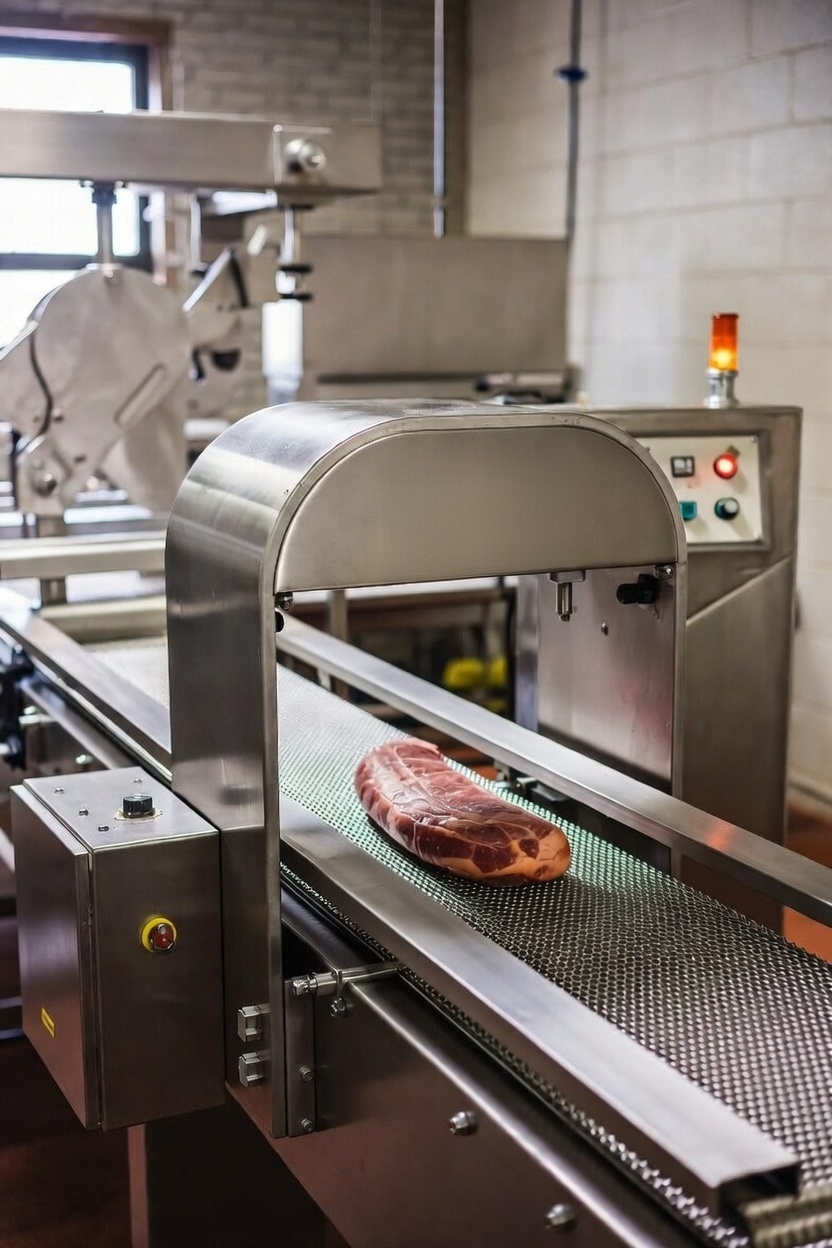
Key Features of Modern Meatline-Style Metal Detectors
High Sensitivity for All Metal Types
Stainless steel, widely used in meat equipment, is harder to detect due to its lower magnetic permeability and orientation effects.
Modern detectors are engineered to detect all metal types, including stainless steel, whether free or encapsulated in the product.
Hygienic, Wash-Down-Ready Construction
To comply with meat plant hygiene standards, detectors use smooth stainless steel frames and food-grade plastics.
Premium systems offer:
– Pressure washer–safe housings for rapid cleanup.
– Tool-free disassembly of the reject mechanism for thorough sanitation.
– Stable frames with lockable casters for safe positioning and wash-down.
User-Friendly Operation and Quick Changeovers
Operators need to switch frequently between products and recipes, so modern systems include:
– Touch screen HMIs with self-explanatory menus and guided setup.
– Product memory for storing optimal settings for different meat types.
– Diagnostic functions and event logging to support troubleshooting and audits.
Inline Meat Metal Detection vs. Traditional Tunnel Detectors
Traditional conveyor tunnel metal detectors are still common, but inline meat detectors offer clear advantages for pumped and ground products.
| Aspect | Inline meat metal detector | Conveyor tunnel metal detector |
|---|---|---|
| Product type | Ground meat, slurries, sausages, liquid and paste foods under pressure. | Packaged or bulk solid products on a belt (boxes, bags, chubs). |
| Installation point | On vacuum fillers or pipelines before or between filling steps. | End-of-line before case packing or palletizing. |
| Reject method | Automatic valve diverts only contaminated slugs, preserving product shape. | Pusher, air blast, or stop-on-detect removes entire packages. |
| Hygiene | Designed for frequent wash-down and clean-in-place-friendly layouts. | Sanitary designs available but less integrated with piping. |
| Typical sensitivity | 1.5–3.0 mm range depending on product density and line conditions. | Similar or better for dry, homogeneous packaged products. |
For many ground meat and sausage applications, a hybrid strategy uses inline detection on the filler plus a final tunnel detector for finished packs, providing two independent control points.
Combining Magnets and Metal Detectors in Meat Processing
For best protection, meat processors increasingly combine magnetic separation and metal detection instead of relying on one technology alone.
– Magnetic separators, such as high-strength grate magnets or pipeline magnets, capture ferrous and some weakly magnetic stainless fragments early in the process.
– Metal detectors identify all conductive metals, including non-ferrous contaminants that magnets cannot attract.
Specialist manufacturers of magnetic separation and iron-removal equipment can design upstream magnetic protection that complements downstream metal detection, helping plants remove contamination early and reduce the load on detectors at critical control points.
Designing a Metal Detection Strategy for Meat Plants
A structured design approach ensures your meat metal detection system delivers consistent, auditable protection across all products and shifts.
Map the Process and Identify High-Risk Points
Start with a detailed process flow diagram from raw intake to shipping.
Highlight the following areas:
– Slaughter and dressing and deboning stages.
– Grinding, mixing, brine injection, and forming steps.
– Filling, clipping, packaging, and metal detection locations.
This mapping supports your hazard analysis and helps you select appropriate critical control points.
Select Appropriate Detection and Separation Devices
Match technologies to each risk point based on product form, line design, and hygiene requirements.
– Upstream: magnets to remove ferrous contamination before grinding and mixing.
– Mid-stream: inline meatline-type metal detectors on vacuum fillers for ground and formed products.
– End-of-line: conveyor tunnel detectors or X-ray systems for packaged items, depending on packaging and target hazards.
Consider product temperature, salt and moisture content, and package format, which all influence metal detection sensitivity and stability.
Define Sensitivity and Critical Limits
Industry practice for meat typically aims for detection of approximately 1.5–3.0 mm ferrous, non-ferrous, and stainless steel, adjusted for product effect and risk profile.
Your HACCP plan should document:
– Target sphere sizes for each metal type and product family.
– Test schedules, such as start, middle, and end of shift, plus product changeovers.
– Corrective actions when detectors fail verification or reject product.
Practical Example: Preventing a Ground Meat Recall
Consider a plant producing frozen ground beef patties and bulk chubs.
Without inline detection, metal from grinder wear might only be discovered at the final pack stage, requiring large-scale destruction of finished goods.
By installing a high-strength pipeline magnet before the grinder, an inline meat detector on the vacuum filler discharge, and a tunnel detector on the frozen pack line, the plant can intercept metal at multiple points.
This multi-stage strategy reduces scrap, protects consumers, and demonstrates strong preventive controls during regulatory or customer audits.
Latest Trends in Meat Metal Detection and Inspection
Food safety technology continues to evolve, and several trends are reshaping meat metal detection strategies and expectations.
Integration with Checkweighers and Vision Systems
Combination systems integrate metal detection with checkweighing, allowing simultaneous weight verification and contaminant inspection in a compact footprint.
Some lines add vision systems to check label accuracy and seal integrity, creating a multi-metric quality checkpoint in one frame.
Smarter Data, Remote Monitoring, and Traceability
Modern detectors log all events, rejects, and parameter changes, supporting digital traceability and remote diagnostics.
Plants are increasingly linking detectors to plant-wide information systems, enabling:
– Live dashboards of reject rates and performance.
– Automated reports for auditors and brand owners.
– Predictive alerts for drift, component wear, or unusual reject patterns.
Hygienic Design Aligned with Updated Standards
Updated hygiene standards for meat processing equipment emphasize cleanable surfaces, sealed electronics, and reduced harbor points.
Newer meat detectors feature rounded frames, minimal horizontal ledges, and IP-rated housings that stand up to aggressive sanitizing chemicals and high-pressure wash-down.
Practical Installation Tips for Inline Meat Metal Detectors
Correct installation is essential to achieve the specified sensitivity and avoid nuisance rejects or unstable performance.
– Keep the detector as far as practical from large metal structures such as support beams and motors.
– Maintain consistent pipe diameter and avoid sharp bends immediately before or after the detector.
– Use flexible connections to reduce vibration transfer from pumps and fillers.
– Design the reject line with adequate drainage and cleaning access to prevent product buildup.
Engaging experienced magnetic separation and detection specialists early in the design process helps ensure the system fits your plant layout, sanitation procedures, and maintenance capabilities.
How Foshan Wandaye Supports Meat Processors
Although Foshan Wandaye is best known for magnetic separation and iron removal equipment in industries such as mining, ceramics, and pharmaceuticals, the same high-intensity magnetic technologies are increasingly applied to food and meat applications.
By combining strong magnets with carefully positioned metal detection points, Wandaye helps processors:
– Reduce ferrous contamination before it reaches grinders, pumps, and fillers.
– Protect expensive downstream metal detectors from overload and extend their service life.
– Improve product quality and support compliance with USDA, FDA, and major retailer standards.
If you are planning a new line or upgrading existing meat processing equipment, partnering with a specialist who understands both magnetic separation and inline detection provides a more reliable, end-to-end solution.
Step-by-Step Checklist for Implementing Meat Metal Detection
Use this practical checklist when designing or upgrading your system to ensure robust and auditable performance.
1. Define objectives: clarify target markets, standards, and acceptable risk levels for each product category.
2. Map the process: identify where contamination can enter and where product is accessible for inspection.
3. Select technologies: choose magnets, inline detectors, tunnel detectors, and X-ray devices for each risk point.
4. Specify sensitivity: set realistic sphere sizes for ferrous, non-ferrous, and stainless steel by product group.
5. Plan hygienic integration: ensure clean-in-place compatibility, wash-down ratings, and tool-free disassembly where needed.
6. Develop procedures: write clear HACCP CCP monitoring, verification, and corrective action steps for metal detection and magnetic separation points.
7. Train your team: cover basic detector operation, test routines, sanitation requirements, and response to rejects or alarms.
8. Review performance: analyze reject data and adjust critical limits, maintenance intervals, or equipment settings based on trends.
Clear Call to Action: Build a Safer Meat Line Today
If you are facing rising customer requirements, frequent equipment wear, or growing concern about recalls, now is the time to strengthen your meat metal detection and magnetic separation strategy.
Contact Foshan Wandaye Technology Co., Ltd. to:
– Review your current meat processing line and contamination risks in detail.
– Get a tailored recommendation for magnetic separators and detection points based on your products and capacity.
– Plan a phased upgrade that aligns with your budget, growth plans, and certification roadmap.
A short technical consultation can help you significantly reduce the risk of dangerous metal fragments reaching consumers, while protecting your brand and improving operational efficiency.
Summary
Modern meat processing demands robust protection against metal contamination, and inline meat metal detection systems combined with upstream magnetic separation provide a powerful, multi-stage defense.
By understanding contamination sources, regulatory expectations, detector technology, and installation best practices, processors can design safer, more efficient lines that meet the requirements of regulators, retailers, and consumers.
With expert support from partners such as Foshan Wandaye, it is possible to build a practical, scalable contamination control strategy that reduces recall risk and strengthens long-term brand reputation.
Contact us to get more information!
Frequently Asked Questions (FAQ)
1. What size metal fragments should a meat metal detector be able to detect?
Most meat processors target detection in the 1.5–3.0 mm range for ferrous, non-ferrous, and stainless steel, depending on product density, moisture, and salt content.
Regulators and certification bodies expect you to define achievable critical limits in your HACCP plan rather than meet a single universal size for all products.
2. Do I still need magnets if I install metal detectors?
Yes, magnets and metal detectors are complementary rather than interchangeable technologies in meat processing.
Magnets remove ferrous and some weakly magnetic stainless contamination early in the process, while detectors find any remaining metal, including non-ferrous fragments, at designated critical control points.
3. Where is the best place to install an inline meat metal detector?
Inline systems are typically installed on the outlet of vacuum fillers, pumps, or pipelines carrying ground meat, sausages, or slurries toward forming or packaging equipment.
Pairing this with a final tunnel detector on finished packs provides layered protection and improves your ability to isolate and investigate contamination events.
4. How often should I test my meat metal detectors?
Most food safety programs require testing at the start and end of each shift, at defined intervals during production, and at every product changeover.
Tests should use calibrated ferrous, non-ferrous, and stainless steel spheres that match your documented critical limits, and all results should be recorded for audit and verification purposes.
5. Can inline meat metal detectors handle high-viscosity or chunky products?
Inline meatline-style detectors are engineered for viscous products and can be specified with suitable pipe diameters, reject valves, and product settings to handle ground meat, chunky soups, sauces, and similar foods.
Proper installation, product learning, and parameter optimization ensure stable performance without excessive false rejects, even with variable textures and fat content.
Citations:
1. https://buntingmagnetics.com/blog/buntings-meatline-is-meeting-new-challenges-in-metal-detection
2. https://buntingmagnetics.com/blog/the-danger-of-metal-contaminated-food-magnetic-separators-and-metal-detectors
3. https://www.newfoodmagazine.com/news/24618/detecting-metal-meat-meatline/
4. https://flexxray.com/how-usda-metal-detection-standards-impact-the-meat-industry/
5. https://www.azom.com/article.aspx?ArticleID=20163
6. https://www.dairyprocessing.com/articles/3289-metal-detection-crucial-line-of-defense-for-dairy-processors
7. https://www.tdipacksys.com/blog/fda-metal-detection-critical-limits/
8. https://blog.ansi.org/ansi/nsf-ansi-3a-14159-1-2024-meat-processing-equipment/
9. http://en.fswandaye.com
10. https://www.wdymagnetic.com
Hot Tags: Bunting MeatLINE Metal Detection, Meat Processing Metal Detection Systems, Food Grade Metal Detectors For Meat, Industrial Meat Inspection Equipment, Metal Contamination Detection In Food, Conveyor Metal Detection For Meat Lines, Bunting Magnetic Separation Solutions, Food Safety Metal Detection Technology, Hygienic Meat Processing Equipment, Automated Metal Detection Systems For Food Industry