


Content Menu
● The common myth – “All magnets get weaker as they get older”
● How permanent magnets in separators really behave over time
● The real reasons magnetic separator magnets lose strength
>> High temperature and thermal demagnetisation
>> External magnetic fields and electrical equipment
>> Mechanical shock, vibration and handling damage
>> Corrosion and coating failure
● Material choices – why NdFeB, ferrite and SmCo age differently
>> Neodymium‑iron‑boron (NdFeB)
● Application‑specific risks – mining, ceramics and pharmaceuticals
>> Mining and minerals processing
>> Pharmaceutical and food‑grade environments
● How to measure whether a magnetic separator has lost strength
>> Gaussmeter (flux density) readings
>> Process‑performance indicators
● Preventing magnet demagnetisation – design and operating best practices
>> Specify the magnet correctly at design stage
>> Protect magnets from heat, shock and corrosion
>> Introduce a structured maintenance and inspection schedule
● Practical case study – ceramic plant improves magnet life
● Step‑by‑step checklist to evaluate aging magnetic separators
● Comparing magnet types for long‑term stability in separators
● Call‑to‑action for industrial users
● Summary
● FAQ – Magnets and Magnetic Separators Losing Strength
>> Q1. How often should I test the strength of my magnetic separator?
>> Q2. Can I restore a demagnetised permanent magnet in my separator?
>> Q3. What is the most common cause of magnet strength loss in magnetic separators?
>> Q4. Do I always need rare‑earth magnets for effective separation?
>> Q5. How can I tell whether poor separation performance is due to magnet aging or process changes?
In modern industrial lines, a well‑designed magnetic separator does not simply “fade away” with age; instead, loss of strength almost always traces back to wrong magnet grade, excessive temperature, strong external fields, corrosion, or mechanical abuse rather than to time itself.
Understanding how and why magnets demagnetise helps you choose the right separator, extend magnet life and keep metal contamination under control in mining, ceramics and pharmaceutical processes.
The common myth – “All magnets get weaker as they get older”
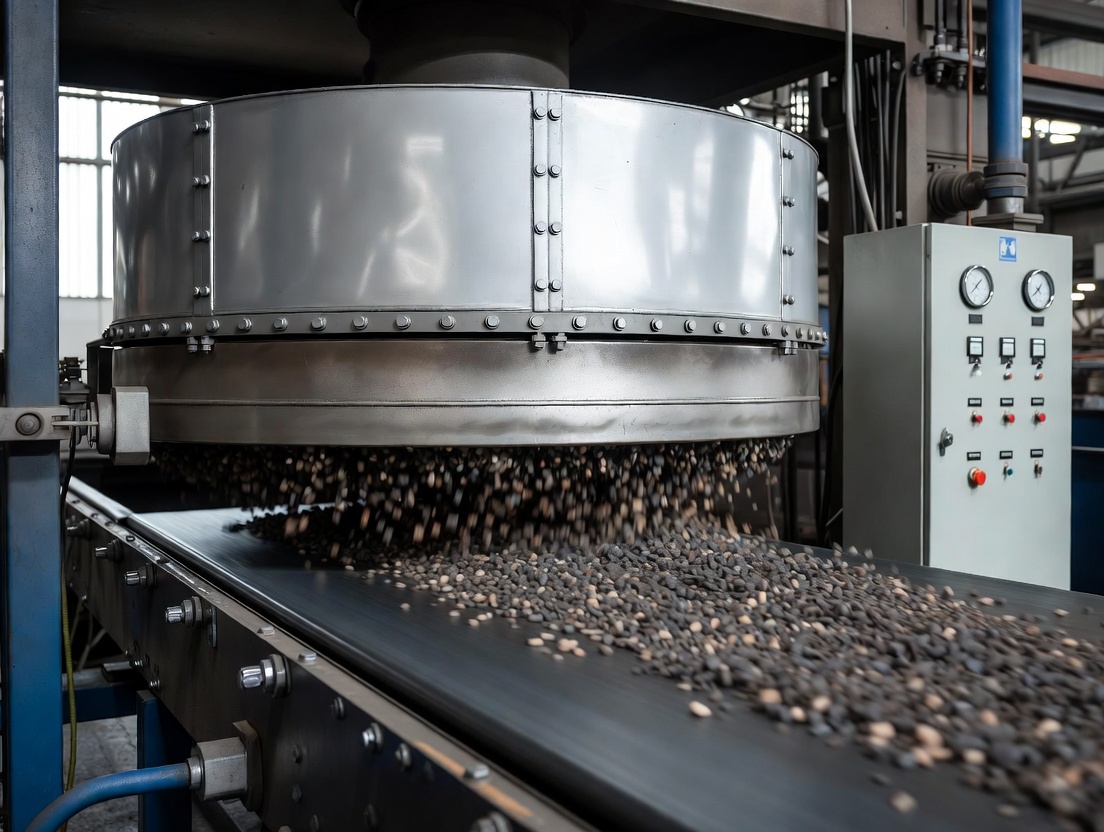
Many plant teams still assume that magnetic separator magnets inevitably lose strength just because years pass, in the same way that bearings wear out or filters clog.
This belief often leads to premature replacement, unnecessary capital spend and under‑diagnosed process problems along the production line.
Key points about the “aging” myth:
– Permanent magnets do not contain a consumable energy source that slowly runs out with time.
– If the magnet’s working conditions stay well below its thermal and mechanical limits, its magnetic field can remain essentially constant for decades.
– Apparent loss of capture performance is frequently caused by increased metal load, higher throughput, or changes in particle size rather than by the magnet itself.
– Many “weak magnet” complaints are actually process issues: higher flow rate, different viscosity, or new raw material sources that carry more contamination.
How permanent magnets in separators really behave over time
When permanent magnets are produced, they undergo an initial stabilisation phase in which very small changes in magnetisation may occur as the material settles into a stable state.
Once stabilised and correctly protected, high‑quality rare‑earth or ferrite magnets exhibit extremely low intrinsic loss over time when kept within their design envelope.
What “time‑related” change really looks like in practice:
– Small initial stabilisation loss, usually anticipated and allowed for in the magnet specification and design.
– Then a long, flat performance plateau, provided temperature, external fields and mechanical conditions are controlled.
– Any sudden drop in pull strength is almost always linked to a specific event: overheating, impact, corrosion breach or exposure to a strong opposing field.
– Gradual performance decline is more often related to fouling, build‑up of contamination on surfaces, or process changes than to true magnet aging.
The real reasons magnetic separator magnets lose strength
To manage magnet performance effectively, it is essential to separate myth from reality and focus on the actual mechanisms that reduce magnet strength in industrial magnetic separators.
High temperature and thermal demagnetisation
Each magnet material has a maximum operating temperature above which its magnetisation can permanently drop.
In high‑gradient magnetic separators and high‑temperature process lines, this is often the primary risk factor for long‑term magnet strength.
– Neodymium‑iron‑boron (NdFeB) offers very high magnetic energy but is sensitive to elevated temperature; pushing it beyond its rated temperature causes irreversible loss of magnetisation.
– Samarium‑cobalt (SmCo) provides lower field strength than NdFeB but withstands much higher temperatures and has excellent stability in hot and demanding environments.
– Even ferrite magnets, which are relatively temperature‑tolerant, can suffer permanent loss if continuously operated far above their design point.
– Rapid temperature cycling can stress joints, housings and bonding agents, indirectly leading to cracks and performance issues over time.
Practical example: a slurry magnetic filter in a ceramics plant is retrofitted with stronger NdFeB tubes but operates close to the kiln outlet, where process temperatures periodically spike well above the magnet rating.
Within months, magnet pull tests show a clear drop, not because time passed, but because the magnets were repeatedly driven beyond their temperature limits during these spikes.
External magnetic fields and electrical equipment
Strong external magnetic fields can partially reverse the orientation of magnet domains and lead to demagnetisation of permanent magnets in separators.
This risk is often overlooked when layouts are changed or new electrical equipment is added near existing magnetic separation systems.
– Proximity to powerful electromagnets, transformers or high‑current busbars can create fields that oppose the separator’s field and gradually reduce its strength.
– Uncontrolled demagnetisation fixtures or degaussing coils used elsewhere in the plant may unintentionally affect stored or spare magnet assemblies.
– Welding cables routed close to magnetic separators can briefly generate strong fields that disturb magnet domains if not properly managed.
– Repeated exposure to such fields gradually reduces holding force, even if the magnet remains mechanically intact and visually undamaged.
Mechanical shock, vibration and handling damage
Repeated impact and severe vibration can disrupt the microstructure of brittle rare‑earth magnets and the assemblies that hold them in place.
Even if external housings appear intact, internal cracks can change how the field is distributed and reduce effective capture strength.
– Dropping magnetic bars onto concrete, striking magnetic grids with tools, or using aggressive mechanical cleaning methods can chip or crack magnet blocks inside the stainless‑steel shell.
– Cracking can locally reduce magnetisation or allow moisture ingress that leads to corrosion and further loss of performance.
– Poorly supported suspended magnets can experience fatigue and shock as conveyed material strikes them, especially with large tramp metal pieces.
– Excessive vibration from nearby equipment can slowly loosen fasteners or shift magnet positions inside housings, altering gap and field distribution.
Corrosion and coating failure
Many rare‑earth magnets are vulnerable to corrosion, especially NdFeB, which needs effective protection for long‑term stability.
In wet, corrosive or hygienic environments, coatings and housings are as important as the magnet material itself.
– If the magnet coating (nickel, epoxy or stainless‑steel encasement) is breached, moisture and chemicals can attack the magnet core and initiate corrosion.
– Corrosion products expand, leading to internal cracking, swelling and progressive demagnetisation, often hidden inside closed housings.
– In wet magnetic separators and magnetic traps, inadequate sealing or pinhole welds accelerate this process and can cause both magnet loss and product contamination.
– Cleaning chemicals and high‑pressure washdowns can erode coatings over time if materials and procedures are not carefully selected.
Tip: inspection of welds on magnetic tubes and housings, combined with periodic surface checks, should be part of any preventive maintenance plan in wet or chemically aggressive environments.
Material choices – why NdFeB, ferrite and SmCo age differently
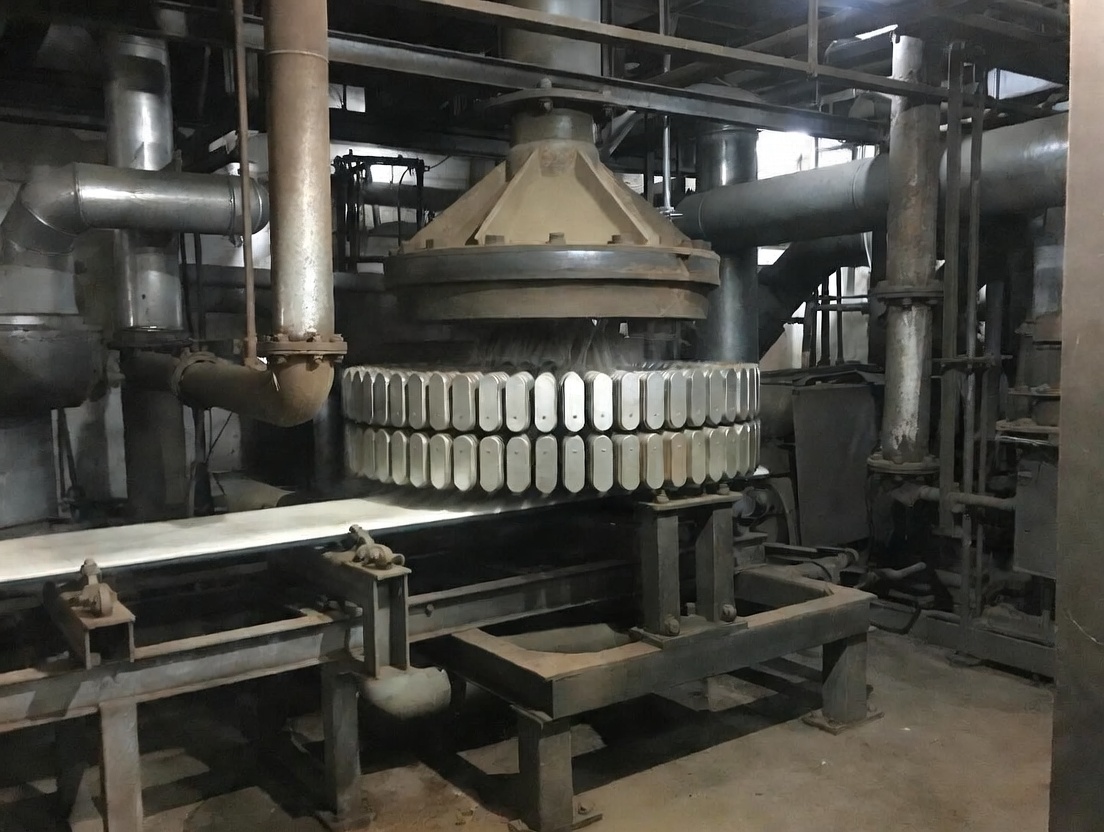
Selecting the right magnet material for your separator is critical to long‑term strength and stability, especially in demanding industries such as mining, ceramics and pharmaceuticals.
Neodymium‑iron‑boron (NdFeB)
NdFeB magnets deliver very high field strength and gradients, making them ideal for capturing fine ferromagnetic particles and weakly magnetic contamination.
They are widely used in high‑intensity magnetic bars, traps and rolls where performance needs to be maximised in a compact footprint.
– Advantages: extremely high energy product, compact size, excellent capture of very fine contamination and weakly magnetic particles.
– Limitations: lower maximum operating temperature than SmCo; more susceptible to corrosion; must be properly coated and thermally derated for hot processes.
– Best suited to clean or well‑controlled environments, or where robust housings and coatings can be provided.
Ferrite (ceramic) magnets
Ferrite magnets are widely used in general‑purpose magnetic separators where ultimate strength is not critical but reliability and cost effectiveness are essential.
They are commonly found in magnetic drums, pulleys and simple tramp iron removal devices in bulk handling systems.
– Advantages: low cost, good corrosion resistance, reasonable temperature tolerance and long‑term stability across a wide range of conditions.
– Limitations: lower field strength, less effective on very fine or weakly magnetic particles compared with rare‑earth options, so not ideal for high‑purity or very fine applications.
– Typically used in primary protection stages to remove larger ferrous contamination before fine polishing stages.
Samarium‑cobalt (SmCo)
SmCo is often chosen for demanding environments with high temperature or aggressive chemistry where stability is critical and space is limited.
It combines high coercivity with strong resistance to demagnetising influences and good intrinsic corrosion resistance.
– Advantages: excellent temperature stability, high coercivity, and very good resistance to external demagnetising fields in harsh operating conditions.
– Limitations: higher cost, slightly lower maximum field than NdFeB, and a brittle nature that requires careful mechanical design and handling.
– Ideal for high‑temperature lines, chemical processing and applications where high‑temperature washdowns are routine.
Application‑specific risks – mining, ceramics and pharmaceuticals
Different industries expose magnetic separators to very different stresses, so understanding application‑specific risks is essential for preserving magnet strength over time.
Mining and minerals processing
In mining and mineral separation, magnetic drums, pulleys and high‑gradient separators often operate outdoors or in harsh process areas with heavy mechanical loads.
Material variability and rough operating practices can accelerate the conditions that lead to demagnetisation or mechanical damage.
– Thermal cycling between daytime heat and cool nights can stress magnet assemblies if materials are poorly matched and joints are not robust.
– Abrasive slurries and coarse tramp metal increase mechanical shock on suspended and inline magnets, sometimes leading to structural damage.
– Dust, moisture and chemicals in beneficiation plants can accelerate corrosion if housings and seals are not robust and properly maintained.
– Process changes, such as increased throughput or shift to finer grinding, can make existing separators appear weaker even when magnet strength is unchanged.
Ceramic production
Ceramic producers rely on magnetic separators to protect glaze and body formulations from iron contamination that causes surface defects and product rejection.
Because ceramic processes involve both wet and high‑temperature environments, magnets face a mix of thermal and corrosion challenges.
– Magnetic filters and bars are often installed in hot slurry lines or near kilns, increasing thermal stress and causing large temperature swings.
– Fine iron and stainless‑steel particles can form dense accumulations on magnetic bars, and rough cleaning methods may damage surfaces and welds over time.
– Processes are increasingly automated, so unnoticed magnet performance loss can impact large production volumes before defects are detected.
– Tight quality standards mean even small changes in magnet performance can translate into visible tile defects and costly claims.
Pharmaceutical and food‑grade environments
In pharmaceutical and food applications, magnets must meet strict hygiene and validation requirements in addition to providing strong separation performance.
Any issue that affects magnet strength or integrity is also a potential regulatory and safety concern.
– Stainless‑steel housings must be fully sealed, smooth and resistant to aggressive cleaning chemicals and repeated washdowns.
– Regular validation using calibrated test pieces or pull‑test devices is often required for audit compliance and documentation.
– Any coating failure or weld defect is both a demagnetisation risk and a source of physical contamination that may breach quality standards.
– Documentation of magnet strength trends over time is often part of HACCP, GMP or related compliance frameworks.
How to measure whether a magnetic separator has lost strength
You cannot inspect magnet strength with the naked eye; instead, you need systematic testing methods and consistent procedures to track performance over time.
Pull‑test measurements
Pull tests measure the force required to detach a standard ferromagnetic test piece from the magnet surface at defined positions on the separator.
They are one of the most practical tools for day‑to‑day verification in industrial environments.
– Results are recorded over time to detect trends and identify sudden changes in performance across lines and equipment types.
– For consistency, always test at defined locations, with the same test piece and under similar environmental conditions such as temperature and cleanliness.
– Establish baseline values for new or refurbished separators to compare against, and set thresholds that trigger maintenance or investigation.
– Use clear records and charts to make trends visible to both maintenance teams and quality managers.
Gaussmeter (flux density) readings
A Gaussmeter measures surface flux density on accessible points of the magnet or separator housing, providing a more direct field measurement.
It is particularly useful during commissioning and after major repairs or modifications.
– Useful for verifying that magnets meet specification at installation, after transport, and after maintenance activities that may affect alignment.
– Helps identify localised demagnetisation or assembly issues if readings are inconsistent across similar locations on the same separator.
– Requires careful probe positioning, repeatable contact points and clear recording procedures to avoid misleading variability.
– Often used in combination with pull tests to give both field strength and practical holding force perspectives.
Process‑performance indicators
Sometimes the best indicator of magnet performance is the process itself rather than the magnet alone.
Monitoring contamination levels and quality outcomes can provide early warning of problems even before test readings change significantly.
– Rising metal counts in downstream screens, filters or product inspections can signal reduced magnet capture performance or changed process conditions.
– Changes in particle size distribution, flow rate or viscosity may reduce effective separation even when magnet strength is unchanged.
– Increased customer complaints, rejected batches or quality deviations often point to separation issues that warrant magnet testing.
– Combining process metrics with magnet test results gives a more complete picture of separation performance and risk.
Preventing magnet demagnetisation – design and operating best practices
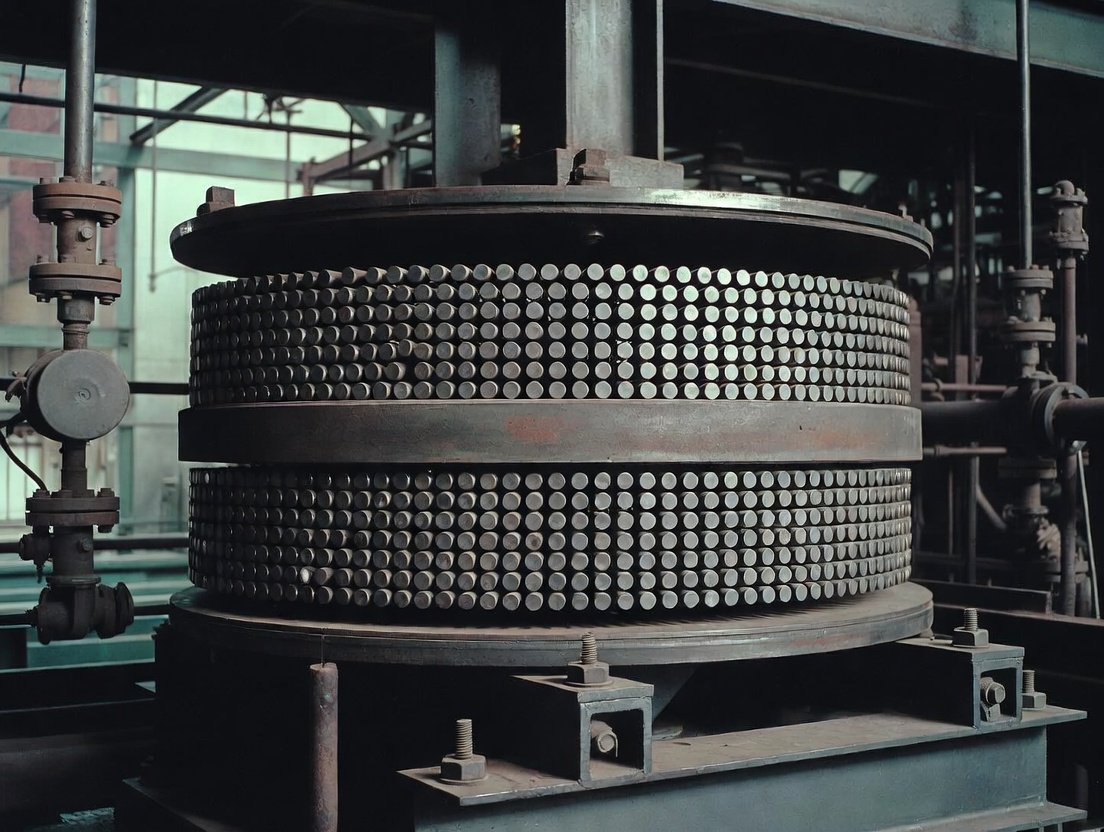
Prevention is always more cost‑effective than emergency replacement, especially in critical control points where downtime is expensive.
Specify the magnet correctly at design stage
A robust separator starts with correct specification that honestly reflects operating conditions and performance expectations.
Early collaboration between process engineers, magnet specialists and equipment suppliers pays off over the entire life of the plant.
– Match magnet material (NdFeB, ferrite, SmCo) to operating temperature, corrosion risk and required capture efficiency for your specific process.
– Define safety margins below the maximum operating temperature of the magnet material, not just nominal process temperatures.
– For high‑temperature lines, consider SmCo or high‑temperature‑grade NdFeB with appropriate derating and robust housings.
– Ensure the mechanical design supports magnets firmly and minimises shock from tramp metal or vibration.
Protect magnets from heat, shock and corrosion
Operational discipline is essential for long‑term strength and reliability across varied industries.
Protective measures should be built into both the physical installation and the operating procedures.
– Avoid installing separators where they will be routinely exposed to temperatures above their rating; use heat shields or relocate equipment where feasible.
– Design supports and housings to minimise shock when large tramp pieces impact the separator, and include suitable guarding where necessary.
– Use high‑integrity coatings and fully welded stainless‑steel encasements in wet or chemically aggressive lines to prevent corrosion.
– Train operators on correct cleaning and handling methods so that magnet surfaces and housings are not damaged during routine maintenance.
Introduce a structured maintenance and inspection schedule
Proactive maintenance prevents small issues from becoming costly failures and ensures that magnets maintain performance over many years.
A structured plan with clear responsibilities and intervals makes it easier to maintain consistent standards.
Basic magnetic separator maintenance checklist:
1. Visually inspect housings, welds and fasteners for damage, corrosion or leaks on a regular schedule.
2. Check for coating damage, dents or pitting on exposed surfaces after cleaning and during shutdowns.
3. Perform pull tests or Gaussmeter measurements at defined test points and compare them with baseline values.
4. Clean magnets using approved procedures that avoid impact, abrasion and use of unapproved tools or chemicals.
5. Document results, investigate deviations quickly and schedule corrective actions when readings or process performance deviate from targets.
Practical case study – ceramic plant improves magnet life
A tile manufacturer experienced recurring complaints about surface specks and glaze defects, despite using rare‑earth magnetic filters on its slurry lines.
The maintenance team believed that the magnets were “wearing out” every 18–24 months and were budgeting for frequent replacements.
Investigation findings showed that the magnets were high‑strength NdFeB tubes located upstream of a high‑temperature process step, where occasional surges pushed temperatures above the magnet rating.
Cleaning was performed with steel tools that sometimes struck and dented tube surfaces, gradually damaging protective shells and coatings.
Corrective actions included relocating the magnetic filter to a cooler section of the line, installing temperature monitoring, and switching to non‑metallic scrapers with a standard cleaning procedure.
The plant also implemented quarterly pull testing with documented baselines and trigger levels for maintenance reviews.
Defects and magnet replacement frequency both dropped significantly, demonstrating that managing heat and handling – not fighting time – was the key to long‑term magnet strength in this ceramic application.
Step‑by‑step checklist to evaluate aging magnetic separators
Plant and quality managers often need a simple, structured way to evaluate existing magnetic separators before budgeting for upgrades or replacements.
The following checklist can be used during audits, shutdown inspections or continuous improvement projects.
Step‑by‑step evaluation:
1. Document operating conditions.
Record process temperature, chemical exposure, flow rate, particle size and metal load so you understand the real environment the magnet sees.
2. Confirm magnet material and grade.
Identify whether separators use NdFeB, ferrite or SmCo and confirm their maximum operating temperature and protective measures.
3. Inspect mechanical and corrosion condition.
Check housings, welds, coatings and seals for damage, cracks, corrosion or leakage that could allow moisture or chemicals to reach the magnets.
4. Perform quantitative magnet tests.
Use pull tests and Gaussmeter readings at standardised test points and compare against historical data or supplier specifications.
5. Assess process performance.
Review metal contamination levels in final product, screens or filters, and compare with historical or target values to detect hidden performance drift.
6. Decide on actions.
Determine whether issues can be addressed by maintenance, repositioning or process changes, or whether upgrade or replacement is required to meet current needs.
Comparing magnet types for long‑term stability in separators
Different magnet materials each bring distinctive advantages and trade‑offs for long‑term stability, cost and performance in magnetic separators.
Understanding these differences helps you match separator design to your process and lifecycle expectations.
Magnet material overview:
– NdFeB rare‑earth magnets are best where maximum strength and fine particle capture are critical, provided temperature and corrosion risks are managed correctly.
– Ferrite magnets are ideal for robust, low‑cost tramp iron removal and primary protection stages with moderate performance requirements.
– SmCo magnets serve high‑temperature or chemically demanding processes where long‑term stability and resistance to demagnetisation are essential.
Call‑to‑action for industrial users
If you operate magnetic separators in mining, ceramic or pharmaceutical lines and are unsure whether your magnets have lost strength, a professional audit can prevent costly downtime and quality issues.
A targeted review of magnet condition, process conditions and test results will often reveal whether you need replacement, redesign or simple maintenance improvements.
Foshan Wandaye Technology Co., Ltd. specialises in the research, development and production of magnetic separation and iron removal equipment in multiple specifications for demanding industrial environments.
Our engineering team can help you audit, test and upgrade your equipment with application‑specific magnetic separation solutions, from high‑gradient rare‑earth separators for ultra‑fine iron removal to robust ferrite systems for heavy‑duty tramp metal capture.
To discuss your current separators, schedule a separator health check or request on‑site testing to verify the real strength of your existing magnets, contact our technical specialists and share your process data and challenges.
Together we can define a magnetic separation strategy that delivers stable, long‑term performance instead of recurring “magnet aging” problems and unplanned replacements.
Summary
Modern permanent magnets used in magnetic separators do not automatically lose strength simply because time passes; instead, real performance loss is driven by heat, mechanical damage, corrosion and external magnetic fields.
By choosing appropriate magnet materials, designing for the actual operating environment, testing magnets routinely and following disciplined maintenance practices, plants in mining, ceramics and pharmaceuticals can maintain separation performance and product quality over many years.
Contact us to get more information!
FAQ – Magnets and Magnetic Separators Losing Strength
Q1. How often should I test the strength of my magnetic separator?
For critical control points in mining, ceramic and pharmaceutical processes, many plants find that testing magnet strength at least quarterly gives a good balance between safety and workload.
In particularly sensitive applications, or when contamination risks are high, more frequent checks may be justified, while low‑risk lines can often be tested less frequently with strong baseline data.
Q2. Can I restore a demagnetised permanent magnet in my separator?
If demagnetisation is partial and caused by a single event, some magnets can technically be re‑magnetised using specialised equipment, but this is not always practical on installed industrial separators.
In many cases it is more reliable and cost‑effective to replace damaged or heavily corroded magnetic elements, especially when product safety or compliance is involved.
Q3. What is the most common cause of magnet strength loss in magnetic separators?
One of the most common causes of irreversible strength loss in rare‑earth magnetic separators is exceeding the magnet’s rated operating temperature, either continuously or through repeated spikes during abnormal conditions.
Other frequent contributors include mechanical shock, damage during cleaning and progressive corrosion when protective coatings or housings are compromised.
Q4. Do I always need rare‑earth magnets for effective separation?
You do not always need rare‑earth magnets for effective separation, especially for larger ferrous particles or primary tramp iron removal where ferrite solutions remain highly effective and economical.
Rare‑earth magnets are essential when you must capture very fine or weakly magnetic contamination or when you are targeting high‑purity, high‑value products with strict quality requirements.
Q5. How can I tell whether poor separation performance is due to magnet aging or process changes?
To distinguish between magnet aging and process changes, compare current pull‑test or Gaussmeter readings with baseline values and review any changes in flow rate, viscosity, particle size, temperature and contamination load over time.
If magnet strength remains within specification while contamination levels change, the problem is likely rooted in process conditions rather than in the magnets themselves.
Citations:
1. https://buntingmagnetics.com/blog/five-magnetic-separator-myths-part-four-do-magnets-lose-strength-over-time
2. https://www.aicshanghai.com/news/why-do-magnets-demagnetise/
3. http://www.magnet-market.com/magnetictrap/
4. https://opentrons.com.cn/news/jiancehehuifucili/
5. https://www.beaverbio.com/products/list/290.html
Hot Tags: Do Magnetic Separators Lose Strength, Magnetic Separator Strength Over Time, Magnetic Separator Demagnetization Causes, Permanent Magnet Strength Loss, How Long Do Magnetic Separators Last, Magnetic Field Decay in Separators, Maintaining Magnetic Separator Efficiency, Magnetic Separator Performance Degradation, Do Permanent Magnets Weaken Over Time, Magnetic Separator Maintenance and Lifespan