


Content Menu
● Introduction to Magnetic Ore Separation
● About Foshan Wandaye Technology Co., Ltd.
● Basic Working Principle of a Magnetic Ore Separator
● Main Process Steps in Magnetic Ore Separation
>> Step 1 – Feeding and Material Preparation
>> Step 2 – Magnetic Capture in the Separation Zone
>> Step 3 – Cleaning and Discharge of Products
● Major Types of Magnetic Separators in Ore and Industrial Processing
>> Wet High Intensity and High Gradient Magnetic Separators
>> Dry Magnetic Drum Separators
>> Belt Conveyor Type Magnetic Separators
>> Vertical Ring High Gradient Magnetic Separators
● Industrial Applications of Magnetic Ore Separators
>> Mining and Mineral Processing
>> Ceramics and Non‑Metallic Minerals
>> Chemicals, Food, and Pharmaceuticals
● Advantages of Choosing Foshan Wandaye Magnetic Separator Solutions
>> Integrated Engineering and Custom Design
>> Broad Product Range and High‑Tech Features
● Practical Tips for Selecting a Magnetic Ore Separator
● FAQ – Magnetic Ore Separator
>> 1. What is a magnetic separator and why is it important?
>> 2. What is the difference between wet and dry magnetic separator equipment?
>> 3. How do I choose the right magnetic separator for my application?
>> 4. Can a magnetic separator remove very fine iron and weakly magnetic particles?
>> 5. Why should I choose Foshan Wandaye Technology Co., Ltd. as my magnetic separator supplier?
Foshan Wandaye Technology Co., Ltd. is a professional enterprise dedicated to the R&D and production of magnetic separator and iron removal equipment, serving mining, ceramics, pharmaceuticals, chemicals, food, and other industries. The company provides integrated solutions that cover laboratory testing, engineering design, production, installation, and commissioning of complete magnetic separator production lines.
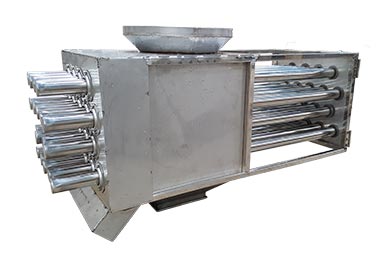
Introduction to Magnetic Ore Separation
A magnetic ore separator is a key piece of mineral processing equipment that uses a magnetic field to separate magnetic minerals from non‑magnetic gangue or to remove iron impurities from raw materials. In many industries, using the right magnetic separator significantly improves product purity, protects downstream equipment, and enhances overall plant efficiency.
The essential idea is simple: different minerals respond differently to a magnetic field. When ore or industrial raw material passes through a magnetic separator, magnetic particles are attracted toward the magnetic field source, while non‑magnetic particles continue on their original path. By controlling the magnetic field strength, gradient, and flow conditions, a magnetic ore separator can continuously split a mixed feed into magnetic and non‑magnetic products.
About Foshan Wandaye Technology Co., Ltd.
Foshan Wandaye Technology Co., Ltd. (often referred to as Wandaye) is a specialized magnetic separator manufacturer based in Foshan, Guangdong, China. The company combines R&D, engineering design, production‑line installation, and commissioning services into one professional platform, offering customers complete magnetic separation solutions rather than just stand‑alone equipment.
Wandaye focuses on high‑tech magnetic separator products and has developed multiple series that are widely used in non‑metallic mineral purification, ceramic raw materials processing, metallic ore beneficiation, and deep iron removal in chemical, food, and pharmaceutical production. Years of experience in domestic and international projects allow Wandaye to accurately match different magnetic separator configurations to specific ore types and process requirements.
The main product portfolio includes:
– High gradient electromagnetic slurry magnetic separator
– Electromagnetic powder magnetic separator
– Permanent magnetic separator
– Electromagnetic vertical ring magnetic separator
– Vertical ring permanent magnetic separator
– Belt conveyor type magnetic separator
– Various magnetic plates, magnetic rods, drawer‑type magnetic separator and iron‑removal cabinets
By combining these products into complete process lines, Foshan Wandaye can design and deliver tailor‑made systems for upgrading iron ore, purifying quartz, feldspar, and kaolin, protecting ceramic glazes from iron contamination, and removing metallic impurities from liquid and powder flows.
Basic Working Principle of a Magnetic Ore Separator
A magnetic ore separator works on the difference in magnetic susceptibility between components in a mixture. Ferromagnetic and some paramagnetic minerals (for example magnetite, hematite, limonite, manganese minerals, and certain metal contaminants) experience an attractive force when they enter a magnetic field. Non‑magnetic or weakly diamagnetic materials do not experience a significant magnetic force and therefore are not captured.
Inside a magnetic separator, a non‑uniform magnetic field is created by permanent magnets or energized electromagnetic coils. When ore or industrial material passes through this field, magnetic particles are pulled toward the region of higher magnetic flux density and gradient. If the magnetic force exceeds the combined resistance of gravity, fluid drag, inertia, and friction, the particles are captured on the surface of a drum, belt, or matrix medium.
Meanwhile, non‑magnetic particles are not significantly affected by the field and continue to move under gravity or carrier forces, ending up in a different discharge zone. By arranging the magnetic separator’s internal structure so that these paths are separated, the equipment delivers two or more distinct products:
– A magnetic fraction (concentrate or removed iron)
– A non‑magnetic fraction (tailings or purified product)
In high gradient designs, a ferromagnetic matrix (such as steel wool or specially shaped plates) is placed in the magnetic field to create intense local field gradients. This greatly improves the ability of a magnetic separator to capture fine and weakly magnetic particles, which is crucial for high‑purity applications in ceramics, quartz, and pharmaceutical raw materials.
Main Process Steps in Magnetic Ore Separation
Step 1 – Feeding and Material Preparation
Before material enters a magnetic separator, it typically goes through crushing, grinding, and classification. The goal is to create a particle size range and distribution suitable for the selected magnetic separator type. For wet separation, ore is mixed with water to form a slurry with controlled density, helping to disperse particles and avoid agglomeration.
In wet magnetic separator processes, slurry pumps or gravity feed channels deliver the material into the separation zone at a controlled flow rate. For dry magnetic separator applications, the material is dried and conveyed using vibratory feeders, screw feeders, or belt conveyors, ensuring a thin, uniform layer as it passes near or around the magnetic field. Proper feeding conditions directly affect the separation efficiency and stability of the magnetic separator.
Step 2 – Magnetic Capture in the Separation Zone
Once in the separation zone of a magnetic separator, particles are exposed to the magnetic field. Magnetic and weakly magnetic particles are attracted to the magnetic poles or to the matrix elements, while non‑magnetic particles are not. If the magnetic field intensity and gradient are high enough, even very fine weakly magnetic particles can be trapped.
Different internal structures create different separation mechanisms:
– In drum magnetic separator units, a rotating drum has magnets inside; magnetic particles adhere to the drum surface while non‑magnetic material falls away.
– In belt magnetic separator systems, magnets are arranged above or below a moving belt so that magnetic particles are lifted out of the bulk flow.
– In high gradient magnetic separator equipment, a stainless‑steel matrix within a strong electromagnetic field provides countless small trapping points for fine magnetic particles.
Residence time in the field, feed velocity, particle size, and slurry density all influence how effectively the magnetic separator can capture target minerals. Proper adjustment of these parameters helps balance concentrate grade and recovery rate.
Step 3 – Cleaning and Discharge of Products
After magnetic particles are captured, they must be transported out of the field and released into the magnetic product outlet. In drum magnetic separator designs, the drum continuously rotates: magnetic particles cling to its surface only while in the high field region and then drop off when they move out of the field or when they are scraped or rinsed away.
In vertical ring high gradient and slurry magnetic separator equipment, the matrix elements enter and leave the high‑intensity zone as the ring rotates. Magnetic particles are captured when the matrix passes through the strong field, and later they are flushed out with water when the matrix exits the field. This self‑cleaning mechanism prevents clogging and allows continuous high‑efficiency operation.
Non‑magnetic material follows a different path. In many magnetic separator designs, simple gravity and flow direction are enough to deliver non‑magnetic particles to a separate discharge chute. Fine tuning of splitter positions, drum or ring speed, magnetic field intensity, and flow rate allows operators to precisely control product quality.
Major Types of Magnetic Separators in Ore and Industrial Processing
Wet High Intensity and High Gradient Magnetic Separators
Wet high intensity magnetic separator (WHIMS) and high gradient magnetic separator designs are used mainly for fine and weakly magnetic materials in slurry form. These include hematite, limonite, manganese ores, and iron contaminants in kaolin, quartz, feldspar, and similar non‑metallic minerals.
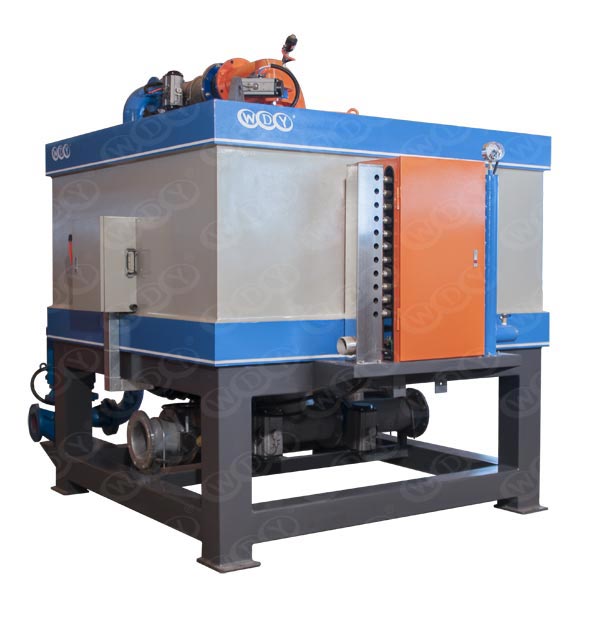
A typical wet high intensity magnetic separator uses strong electromagnetic coils to create fields that may reach tens of thousands of Gauss. A ferromagnetic matrix inside the canister intensifies the field at contact points, producing a high gradient that traps fine magnetic particles. Slurry flows through the matrix, magnetic particles adhere, and the non‑magnetic slurry continues through as the cleaned product.
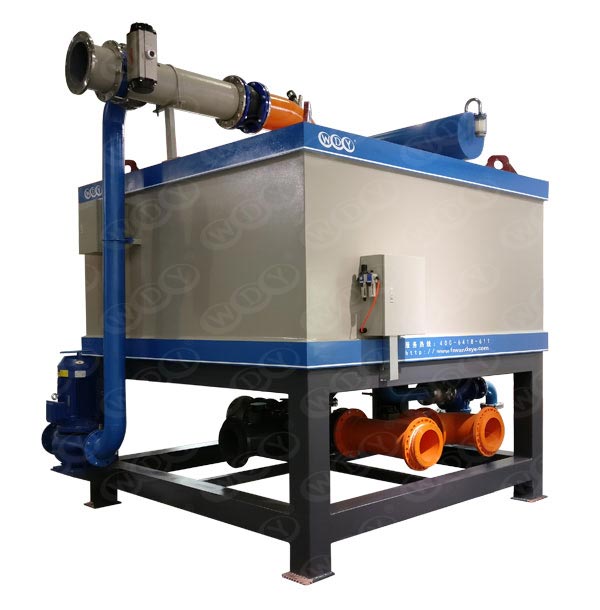
Foshan Wandaye’s electromagnetic slurry magnetic separator and new‑type high gradient slurry magnetic separator are representative products in this category. They are designed for high efficiency, uniform field distribution, stable cooling, and easy cleaning, making them suitable for long‑time continuous operation in ceramic glaze, non‑metallic mineral, and chemical slurry processing.
Dry Magnetic Drum Separators
Dry magnetic drum separator equipment is widely used for processing coarse and medium‑size strongly magnetic minerals in a dry environment. Typical applications include magnetite iron ore processing, removal of iron from industrial minerals, and protection of crushers and mills from tramp iron.
In a dry drum magnetic separator, material is fed onto the surface of a rotating drum that contains permanent magnets or electromagnets. Magnetic particles are attracted to the drum surface and are carried over the top before being released outside the main field. Non‑magnetic particles simply fall off the drum and are collected separately.
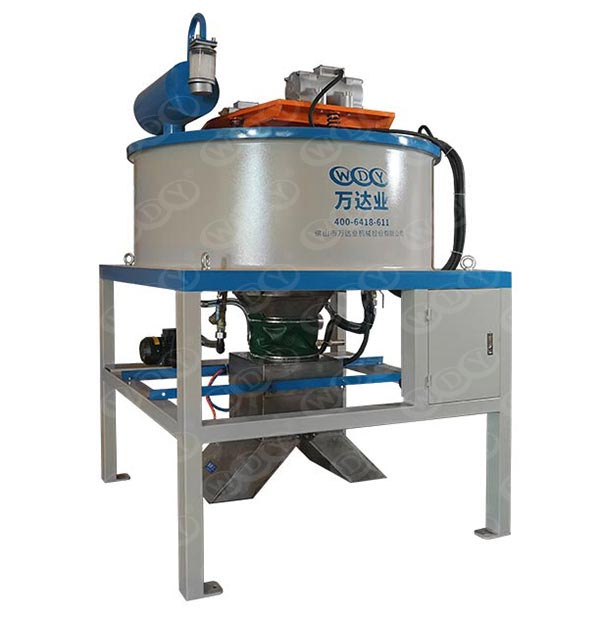
Foshan Wandaye offers electromagnetic dried‑powder magnetic separator and various powder magnetic separator models to remove iron and magnetic contaminants from dry powders such as quartz sand, feldspar, talc, and other industrial materials. These dry magnetic separator products are especially suitable for areas with limited water resources or for processes that must remain moisture‑free.
Belt Conveyor Type Magnetic Separators
Belt conveyor type magnetic separator units are designed to continuously remove tramp iron and magnetic impurities from material streams being transported by conveyors. A magnet—either permanent or electromagnetic—is positioned across or along the conveyor, and an auxiliary belt often carries captured magnetic particles away from the main material flow.
As bulk material passes under the magnet, ferrous objects and magnetic fragments are attracted upward and separated from the main product. The small discharge belt then automatically carries the captured iron to a separate collection area. This type of magnetic separator is widely used in mining, cement, aggregates, coal, and other bulk handling industries.
Wandaye’s belt conveyor magnetic separator products feature strong magnetic force, long service life, automatic iron discharge, and simple operation. They effectively protect crushers, grinders, and other critical equipment from damage due to metallic contaminants.
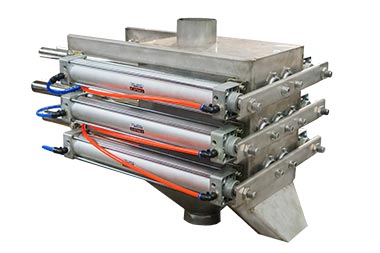
Vertical Ring High Gradient Magnetic Separators
Vertical ring high gradient magnetic separator equipment is an advanced variant of high gradient technology. Its structure reduces matrix clogging and facilitates continuous self‑cleaning. The vertical ring rotates through the magnetic field, and slurry flows through the matrix during the high‑intensity segment of the rotation.
Magnetic particles are captured as they contact the matrix, then released and washed out when the matrix leaves the field. This design supports high throughput, stable performance, and high recovery of fine weakly magnetic minerals. Common applications include upgrading of hematite, limonite, manganese ores, and deep purification of non‑metallic minerals.
Foshan Wandaye’s vertical ring high gradient magnetic separator series is widely used in high‑value mineral processing projects, especially for feldspar, quartz, and kaolin purification, where customers require ultra‑low iron content, improved whiteness, and stable product quality.
Industrial Applications of Magnetic Ore Separators
Mining and Mineral Processing
In the mining industry, a magnetic separator is used first to upgrade magnetic ores such as magnetite and some hematite types by removing non‑magnetic gangue, which increases the iron grade in the concentrate. Magnetic separators can also treat tailings streams to recover valuable magnetic minerals that would otherwise be lost, improving overall resource utilization.
Beyond iron ore, magnetic separator equipment helps process beach sands, ilmenite, chromite, manganese ores, and other materials where magnetic properties differentiate valuable minerals from gangue. By carefully configuring a combination of low‑intensity, medium‑intensity, and high intensity magnetic separators, engineers can design flowsheets that balance recovery, grade, and operating cost.
Ceramics and Non‑Metallic Minerals
In ceramics and glass production, magnetic impurities such as iron can seriously affect color, transparency, and firing behavior. A magnetic separator is therefore crucial for purifying raw materials like quartz, feldspar, kaolin, talc, and zircon. Removing fine iron contamination helps achieve high whiteness and reduces defects in finished ceramic products.
Foshan Wandaye has rich experience in designing magnetic separator systems for ceramic raw materials and glazes. Slurry‑type magnetic separators can be installed in glaze lines to prevent iron spots and improve surface quality, while powder magnetic separators treat dry powders used in various ceramic bodies and glass batches.
Chemicals, Food, and Pharmaceuticals
In chemicals, food, and pharmaceutical industries, even tiny metal fragments can compromise product safety, quality, and regulatory compliance. Magnetic separator equipment is commonly installed at multiple points in these production lines: after milling, before packaging, or in critical transfer sections.
Drawer‑type magnetic separator units, magnetic rods, and high gradient slurry magnetic separators can capture very fine iron and other magnetic particles without adding chemicals or altering the product’s properties. Wandaye provides customized designs for different viscosities, temperatures, and sanitation requirements, ensuring that magnetic separator installations meet strict industry standards.
Advantages of Choosing Foshan Wandaye Magnetic Separator Solutions
Integrated Engineering and Custom Design
A key strength of Foshan Wandaye is its integrated approach. The company not only manufactures magnetic separator equipment but also performs laboratory tests on customer samples, evaluates ore and raw material characteristics, and designs full processing flowsheets. This allows Wandaye to select and combine magnetic separator types and models according to real production data.
Customers can receive complete engineering services, including:
– Laboratory testing and pilot magnetic separator trials
– Process design and equipment selection
– 3D layout and engineering drawings
– On‑site installation and commissioning
– Training and after‑sales technical support
Broad Product Range and High‑Tech Features
Because Wandaye offers multiple categories of magnetic separator equipment—slurry, powder, vertical ring, belt conveyor, permanent and electromagnetic models—it can construct flexible solutions for both large mining plants and small specialized factories. Many products feature advanced technologies such as:
– Water‑oil dual cooling or efficient water cooling for electromagnetic coils
– Intelligent control systems to reduce manual operation
– Energy‑saving designs with high magnetic field intensity and gradient
– Easy cleaning and low residual magnetism for quick demagnetization
These features help maintain stable separation performance, reduce downtime, and extend equipment service life.
Global Project Experience
Foshan Wandaye’s magnetic separator equipment is used not only in China but also in international markets such as Southeast Asia, South Asia, and other regions. Export projects in mining, ceramics, and industrial processing have built the company’s reputation as a reliable partner for magnetic separation and iron removal.
The combination of patented technologies, professional technical teams, and accumulated project experience enables Wandaye to handle complex challenges, including ultra‑fine particle separation, ultra‑low iron control, and large‑scale continuous production lines.
Practical Tips for Selecting a Magnetic Ore Separator
Selecting the right magnetic separator is critical for achieving optimal results. When evaluating options, consider the following factors:
– Material magnetic properties
Identify whether the target minerals are strongly magnetic, weakly magnetic, or non‑magnetic. Strongly magnetic minerals may be treated with low‑ or medium‑intensity magnetic separator units, while weakly magnetic minerals often require high intensity or high gradient separators.
– Particle size distribution
Coarse particles can often be handled with drum or belt magnetic separator equipment, whereas fine particles usually need wet high intensity or vertical ring high gradient separators. Ultra‑fine fractions may require special matrix structures and high field gradients.
– Moisture and process mode
Decide whether the process should be wet or dry. Wet magnetic separator systems are ideal for slurry circuits common in mineral processing and ceramic raw material preparation. Dry magnetic separator equipment is suitable for powder processing or for regions with limited water resources.
– Required product purity and recovery
High‑purity products (for example, high‑whiteness quartz or feldspar) demand more advanced magnetic separator technology, often with multiple separation stages. Balancing concentrate grade and recovery requires careful engineering.
– Capacity and integration
Ensure that the selected magnetic separator can handle the required throughput and can be integrated into existing plant layouts. Consider maintenance access, energy consumption, automation level, and compatibility with upstream and downstream processes.
Working directly with a specialized manufacturer like Foshan Wandaye allows plant designers and operators to test materials in the laboratory, verify magnetic separator performance through pilot trials, and then configure the final industrial system with reliable data support.
Conclusion
A magnetic ore separator is an essential tool for separating magnetic minerals from non‑magnetic components and for removing iron impurities from a wide range of raw materials. By generating a controlled magnetic field and using drums, belts, or high gradient matrices, a magnetic separator captures magnetic particles and produces cleaner products, higher ore grades, and more efficient processing.
Different types of magnetic separators—wet high intensity, high gradient, dry drum, belt conveyor, and vertical ring designs—serve different roles in mining, ceramics, chemicals, food, and pharmaceutical production. Foshan Wandaye Technology Co., Ltd. stands out as a professional provider of integrated magnetic separator solutions, offering complete engineering support, a rich product portfolio, and proven project experience. By selecting appropriate magnetic separator equipment and process design, enterprises can achieve reliable iron removal, improved product quality, and long‑term operational benefits.
Contact us to get more information!
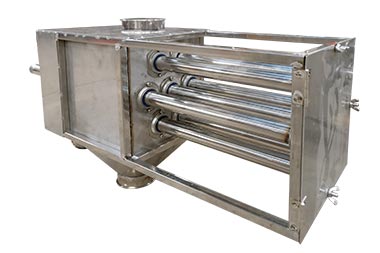
FAQ – Magnetic Ore Separator
1. What is a magnetic separator and why is it important?
A magnetic separator is a device that uses a magnetic field to separate magnetic particles from non‑magnetic material in ore, powders, or slurries. It is important because it upgrades ore quality, reduces impurities in industrial raw materials, protects processing equipment from metal damage, and helps meet strict product specifications in industries such as mining, ceramics, and pharmaceuticals.
2. What is the difference between wet and dry magnetic separator equipment?
Wet magnetic separator equipment works with slurry, where solid particles are suspended in water or process liquid. This mode is ideal for fine particles and weakly magnetic minerals because the liquid helps disperse particles and improves their contact with the magnetic field. Dry magnetic separator systems process material without added liquid, making them suitable for coarse particles, dry powders, or locations with limited water resources. Wet systems are common in mineral processing plants, while dry systems are often used for industrial powders and tramp iron removal on conveyors.
3. How do I choose the right magnetic separator for my application?
To choose the right magnetic separator, you should analyze the magnetic properties of the material, particle size range, throughput requirements, moisture conditions, and desired product purity. For strongly magnetic minerals or tramp iron, low‑ or medium‑intensity drum or belt separators may be sufficient. For fine weakly magnetic minerals or ultra‑clean iron removal, high intensity or high gradient wet separators and vertical ring designs are usually required. Working with a professional supplier such as Foshan Wandaye allows you to conduct laboratory tests and design a customized configuration based on real process data.
4. Can a magnetic separator remove very fine iron and weakly magnetic particles?
Yes. High gradient and high intensity magnetic separator equipment is specifically designed to capture very fine and weakly magnetic particles that ordinary low‑intensity units cannot effectively remove. By using strong electromagnetic coils and a carefully engineered matrix, these separators create dense local magnetic field gradients, allowing them to trap ultra‑fine iron contaminants and weakly magnetic minerals in slurries or fine powders. This capability is crucial for high‑purity quartz, feldspar, kaolin, chemical slurries, and other demanding applications.
5. Why should I choose Foshan Wandaye Technology Co., Ltd. as my magnetic separator supplier?
Foshan Wandaye Technology Co., Ltd. is a dedicated magnetic separator manufacturer that integrates R&D, engineering design, production‑line installation, and commissioning into a single service system. The company offers a broad range of magnetic separator products, including slurry separators, powder separators, vertical ring high gradient units, and belt conveyor separators, which can be combined to form complete processing lines. With professional technical teams, advanced laboratories, and extensive project experience in mining, ceramics, chemicals, food, and pharmaceuticals, Wandaye can provide reliable, customized solutions that improve product quality, enhance recovery, and reduce operational risk.
Citations:
1. http://en.fswandaye.com
2. http://en.fswandaye.com/About-Us/
3. https://www.youtube.com/watch?v=7FvTOgjiRI8
4. https://www.longimagnetics.com/product/wet-high-intensity-magnetic-separator-for-ferrious-material
5. https://www.911metallurgist.com/blog/magnetic-ore-separator/
6. https://buntingmagnetics.com/blog/magnetic-separators-for-mineral-processing
7. https://www.jxscmineral.com/equipment/wet-drum-magnetic-separator/
8. https://www.guangdar.com/guide-to-magnetic-separator-definition-and-working-principle
9. https://buntingmagnetics.com/blog/wet-high-intensity-magnetic-separation-testing
10. https://magnetii.goldsupplier.com/1338406-Wet-Magnetic-Separator/
11. https://www.directindustry.com/prod/foshan-wandaye-machinery-equipment-co-ltd/product-235280-2367707.html
12. https://magnetii.goldsupplier.com/product.html
13. https://ramato.en.ec21.com/
Hot tags: Magnetic Ore Separator Working Principle, Ore Magnetic Separation Process, Magnetic Ore Beneficiation, Iron Ore Magnetic Separator, Mineral Processing Magnetic Separator, Magnetic Separation Of Ores, Mining Magnetic Separation, Magnetic Separator For Ore, Industrial Ore Separation, Magnetic Beneficiation Technology