


Content Menu
● What Magnetic Separation Actually Does in Plastics
● Two Ways Magnets Help “Separate Plastics”
>> 1. Conventional Magnetic Separation in Plastics
>> 2. Magnetic Density and MagLev Separation of Plastics
● How Powder Magnetic Separators Work with Plastic Powders
● Permanent Magnetic Separators in Plastic Recycling
● Comparing Magnetic Separation with Other Plastic Separation Methods
● Latest Research and Trends: Towards Direct Magnetic Plastic Separation
● Practical Design Steps for Using Magnetic Separation with Plastics
● Where Magnetic Separation Shines in Plastic‑Related Industries
● Conclusion: So, Can Magnetic Separation Separate Plastics?
● FAQ
>> 1. Can magnetic separation directly separate different plastic types?
>> 2. Why do plastic recyclers still need magnets if plastics are not magnetic?
>> 3. What types of magnetic separators are most common in plastics processing?
>> 4. How does magnetic density separation work on plastics?
>> 5. What is the role of Foshan Wandaye’s equipment in future plastic recycling lines?
Can magnetic separation separate plastics? The honest answer is: yes, but only indirectly in most industrial lines, and only directly when you combine smart fluid engineering with advanced magnetic systems such as magnetic density separation and MagLev. For a manufacturer like Foshan Wandaye, the real value today is using powder and permanent magnetic separators to purify plastic streams, protect equipment, and prepare plastics for high‑efficiency downstream sorting. [tue]
What Magnetic Separation Actually Does in Plastics
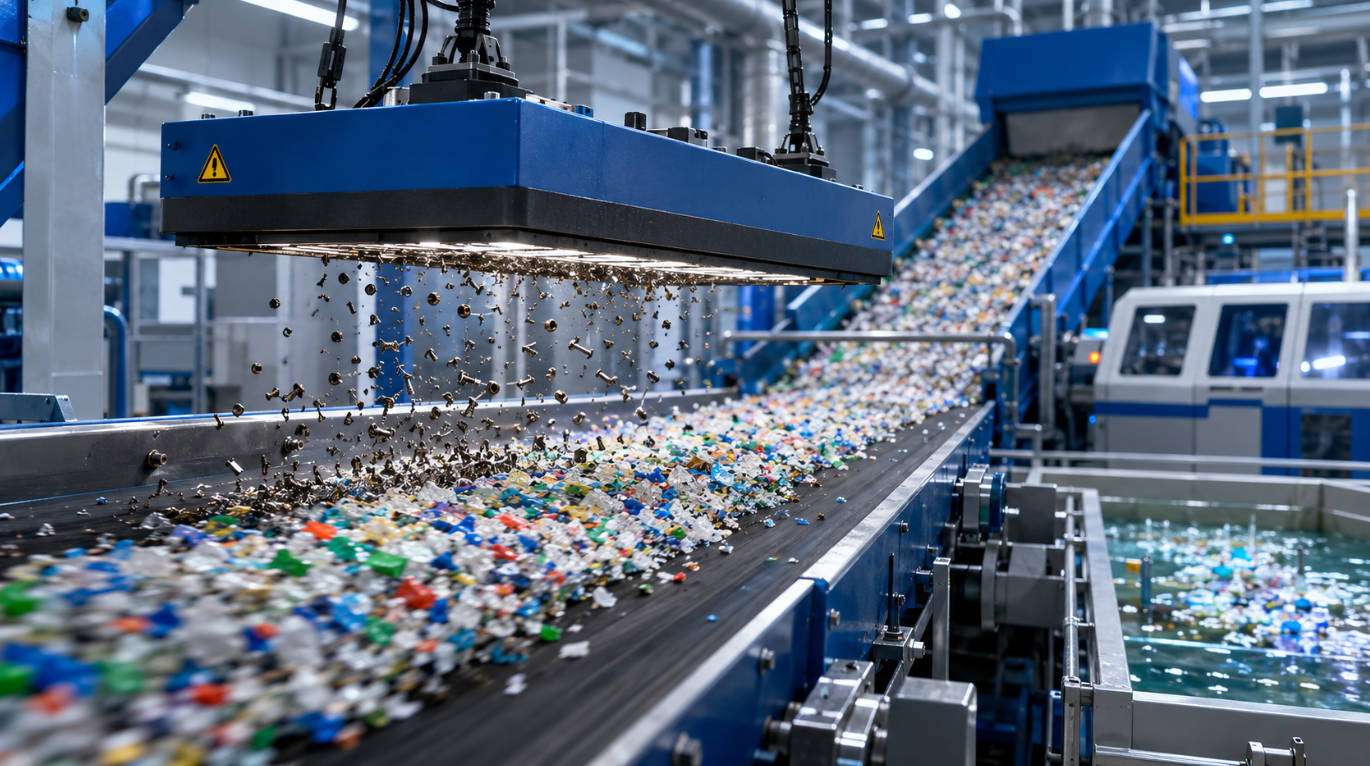
In my work designing magnetic separation steps for plastics processors, the first thing I explain to plant managers is that standard magnetic separation does not “attract” plastic itself, because most plastics are not magnetic. What magnets do extremely well is remove ferrous and some non‑ferrous metal contaminants from plastic pellets, flakes, and powders, which is essential for high‑quality recycling and compounding. [goudsmitmagnetics]
From an industry perspective, you can think of magnetic separation in plastics as serving three core functions:
– Metal‑free plastics: Removing iron, steel, and sometimes weakly magnetic stainless particles from plastic granules and powders. [magnetplastic]
– Equipment protection: Preventing wear and catastrophic damage to extruders, granulators, and injection machines caused by hidden metal pieces. [imamagnets]
– Upgrading recycled plastics: Cleaning post‑consumer flakes so optical sorters, density tanks, and electrostatic separators work with less noise and higher yields. [buntingmagnetics]
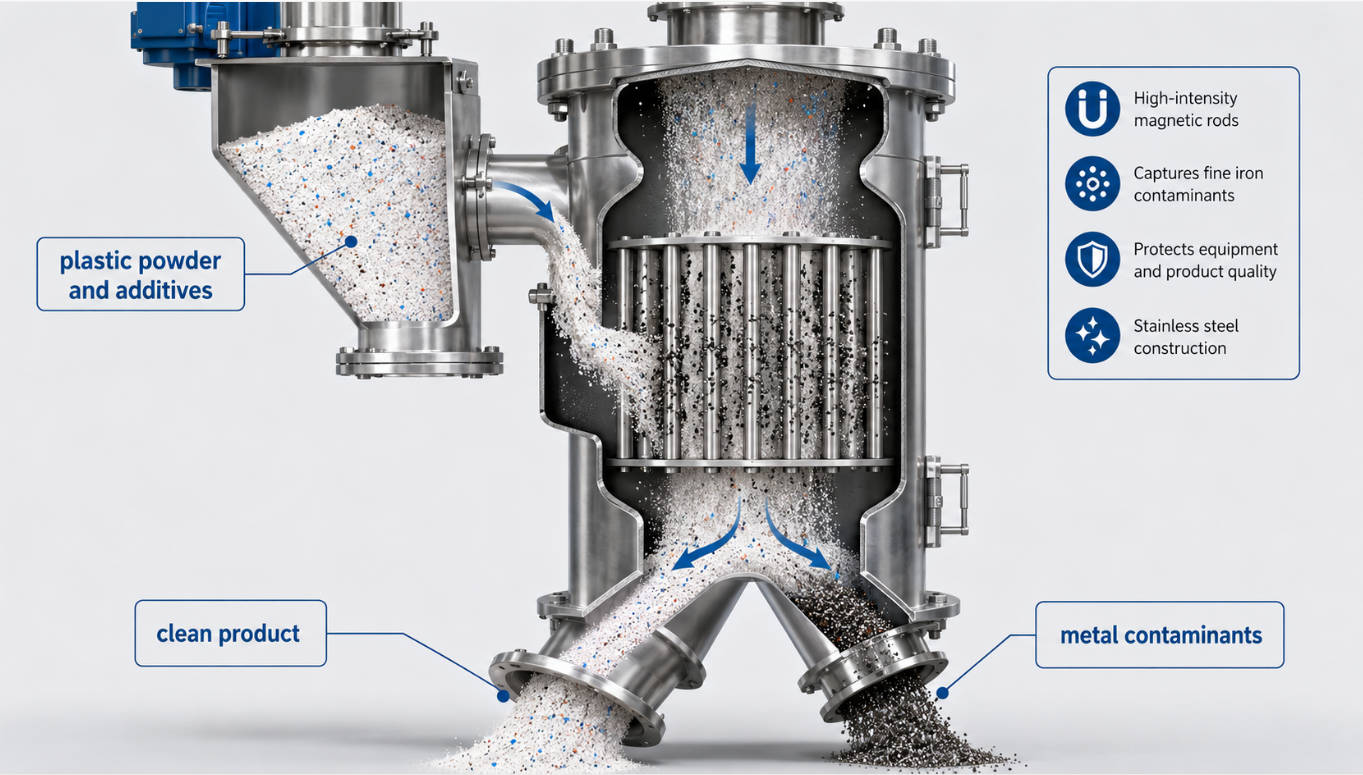
So in a typical plastics line, magnetic separation is not the final step that sorts PET from PP, but the front‑end “gatekeeper” technology that makes precise plastic‑to‑plastic separation possible.
Two Ways Magnets Help “Separate Plastics”
When clients ask me “can magnets separate plastics?”, I always split the answer into two levels:
1. Conventional magnetic separation – magnets remove metals from plastic streams.
2. Magnetic density/levitation systems – fluids plus magnetic fields separate different plastics by density.
1. Conventional Magnetic Separation in Plastics
This is where Foshan Wandaye’s powder magnetic separators and permanent magnetic separators fit naturally into plastic and rubber processing lines. [goudsmitmagnetics]
Typical applications include:
– Injection and extrusion plants: Magnets installed above or before hoppers to capture screws, blades, and filings mixed into pellets. [buntingmagnetics]
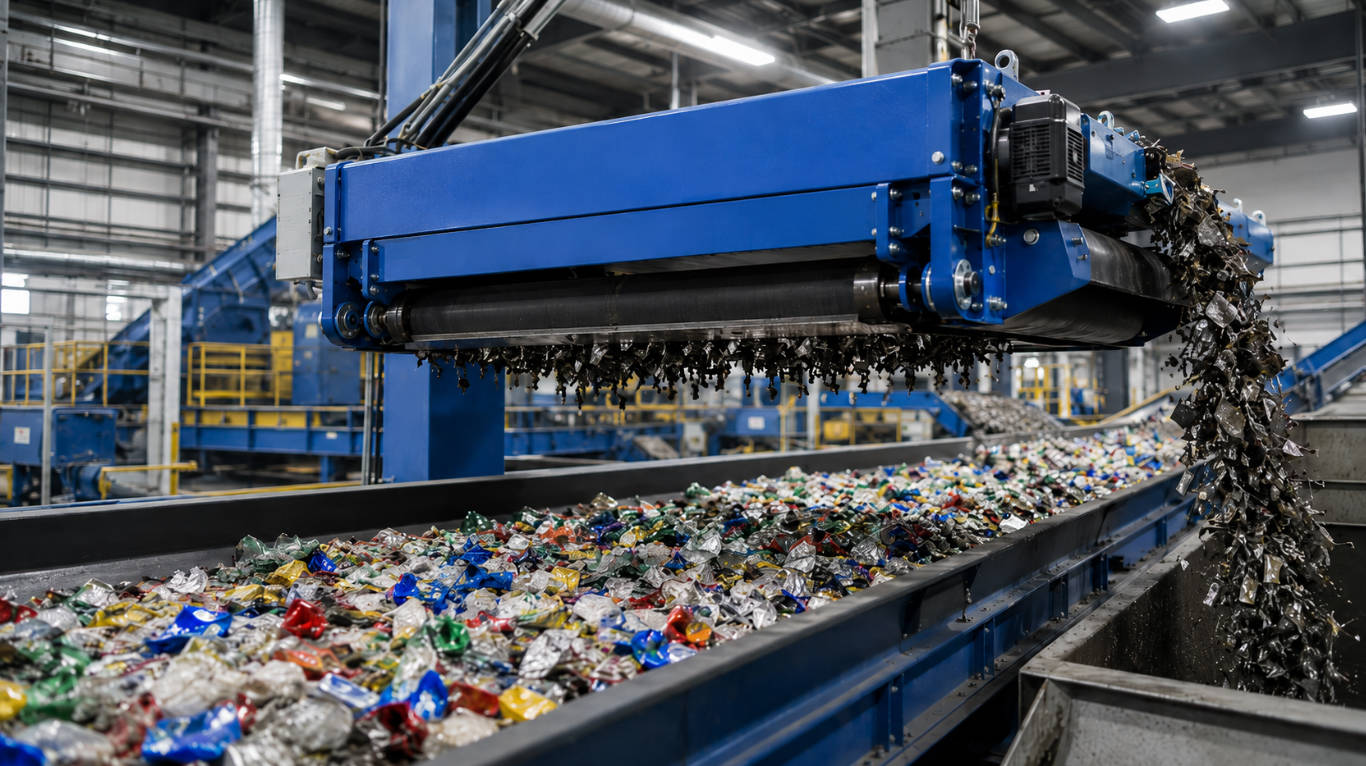
– Recycling facilities: Overband magnets above conveyors pulling steel cans, bolts, and ferrous pieces from mixed plastic waste. [magnetplastic]
– Masterbatch and compounding: High‑intensity powder separators removing ultra‑fine iron from pigments and fillers before compounding into plastics. [imamagnets]
Here, the target is metal, but the result is higher‑quality, more uniform plastic products and safer, more stable production.
2. Magnetic Density and MagLev Separation of Plastics
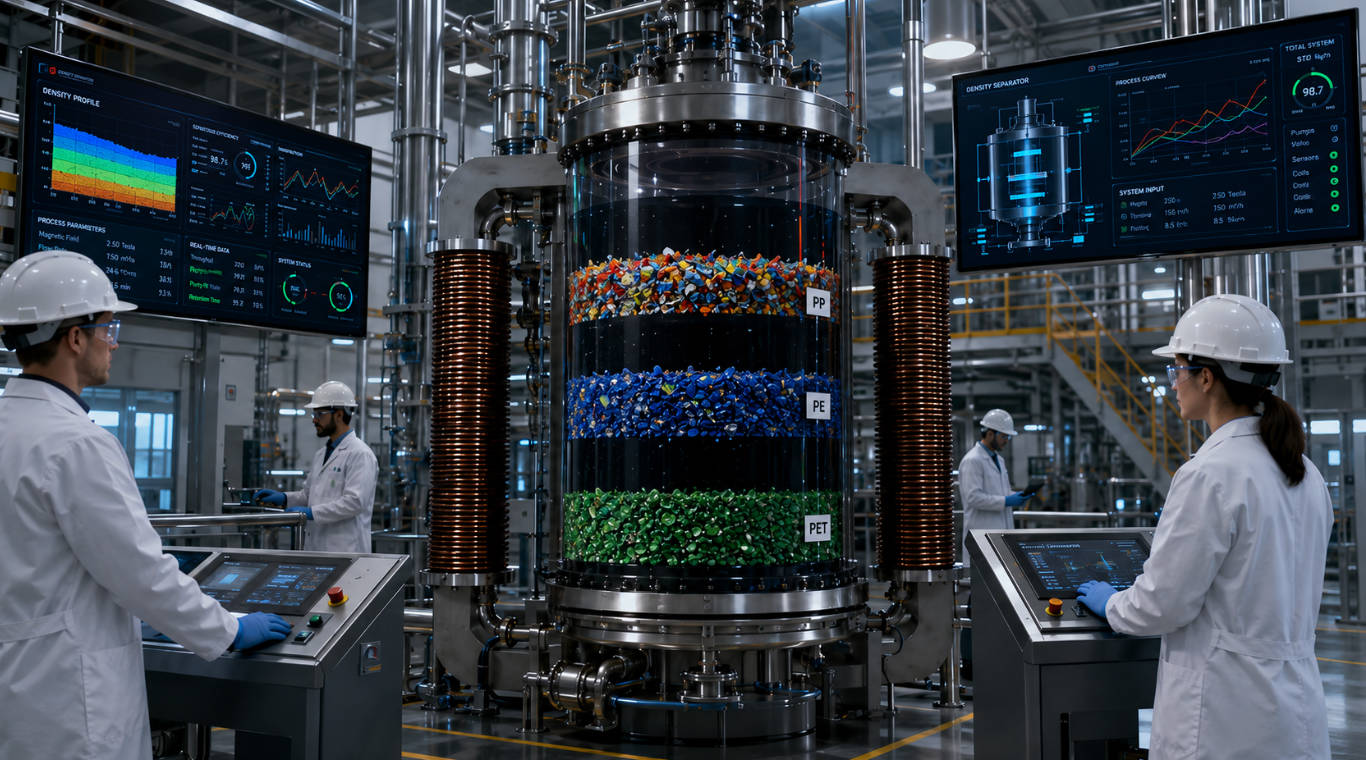
The newer and more research‑driven side of the story is that magnetic fields can help separate different plastics themselves, using specially engineered liquids. [nwo]
Key technologies include:
– Magnetic density separation (MDS): Plastic flakes float at different heights in a tank filled with a magnetizable liquid (often a ferrofluid), inside a magnetic field, and are skimmed off at different levels according to density. [cordis.europa]
– Magnetic levitation (MagLev) separation: Plastics in a paramagnetic solution are levitated to specific, stable heights between magnets, enabling precise density‑based separation of multiple polymers in one device. [sciencedirect]
– Magnetism‑assisted density gradient separation (Mag‑DG‑Sep): For microplastics, gradient density combined with a magnetic field allows efficient separation of different particle types sunk in water. [pubs.acs]
These systems show that magnetic separation can, under the right conditions, physically separate plastics by type, not just clean them. However, they require specialized liquids, process control, and are still in the transition from lab and pilot scale to wider commercial adoption. [sciencedirect]
How Powder Magnetic Separators Work with Plastic Powders
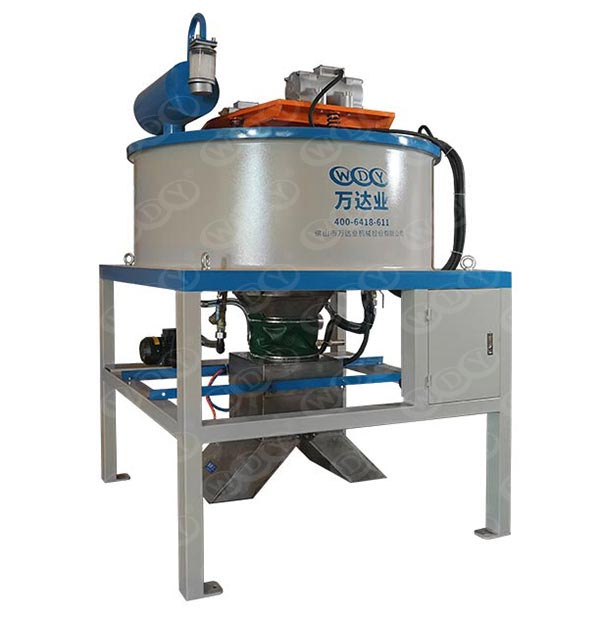
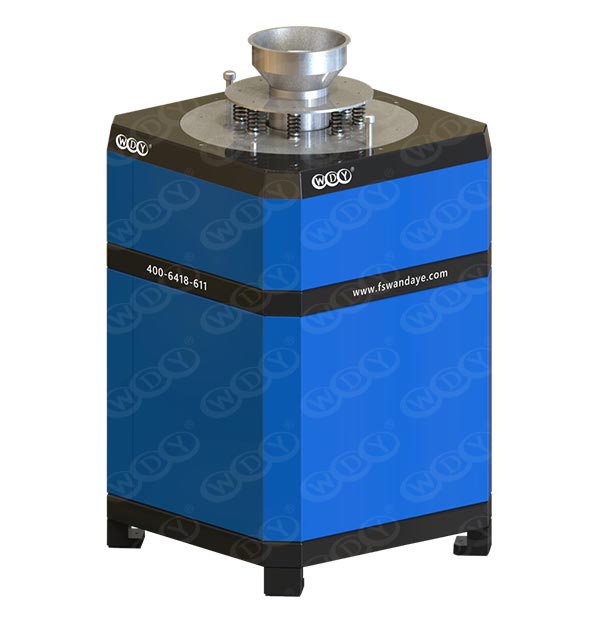
As a manufacturer of Powder Magnetic Separators, your most direct overlap with plastics is in fine powders used for high‑value applications:
– Plastic powders for rotational molding, coatings, and 3D printing feedstock
– Functional powders for anode/cathode materials, where plastics and ceramics are blended in complex systems
– Pigments, fillers, and additives (titanium dioxide, calcium carbonate, carbon black) that later enter plastic formulations
In this segment, I usually focus on three technical points with engineers:
1. Capture of ultra‑fine ferrous particles
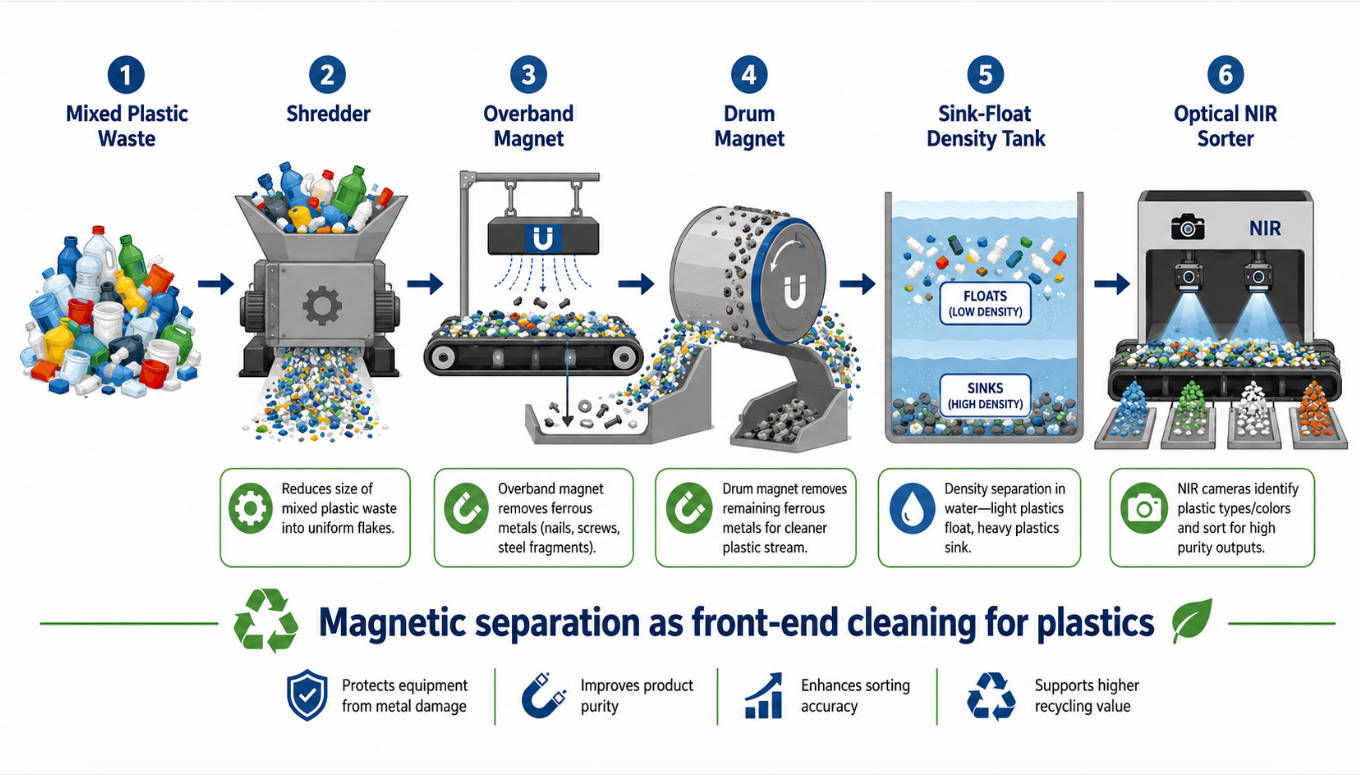
High‑gradient powder separators generate intense magnetic fields in narrow gaps, so they can capture iron particles down to tens of microns, even when they are embedded in soft powder agglomerates. [fsyjjq.en.made-in-china]
2. Stable powder flow
For plastics, consistent flow is critical to avoid dosing errors and coating defects. Well‑designed powder separators maintain smooth, low‑shear channels so powders do not bridge or plug, even at high capture rates.
3. Integration in closed systems
Powder magnetic separators can be installed in pneumatic conveying lines, silo outlets, or dosing systems, ensuring contamination is removed without exposing powders to ambient humidity.
From a marketing angle, this allows Foshan Wandaye to position powder magnetic separators as a quality gate for advanced plastic and battery‑related powders, not just for conventional mineral processing.
Permanent Magnetic Separators in Plastic Recycling
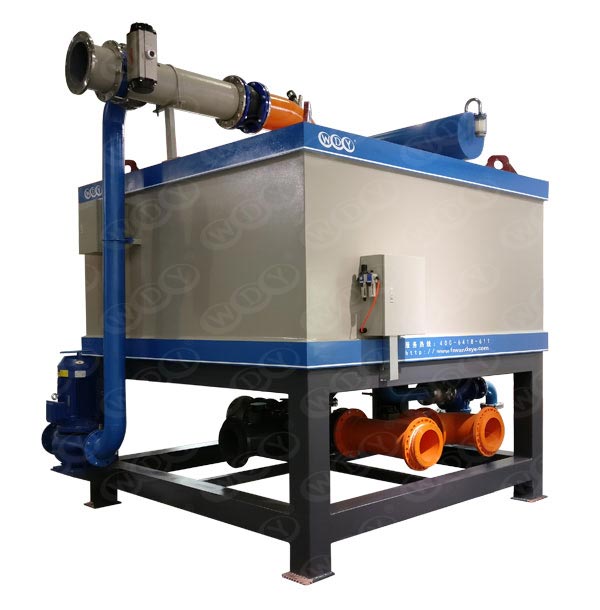
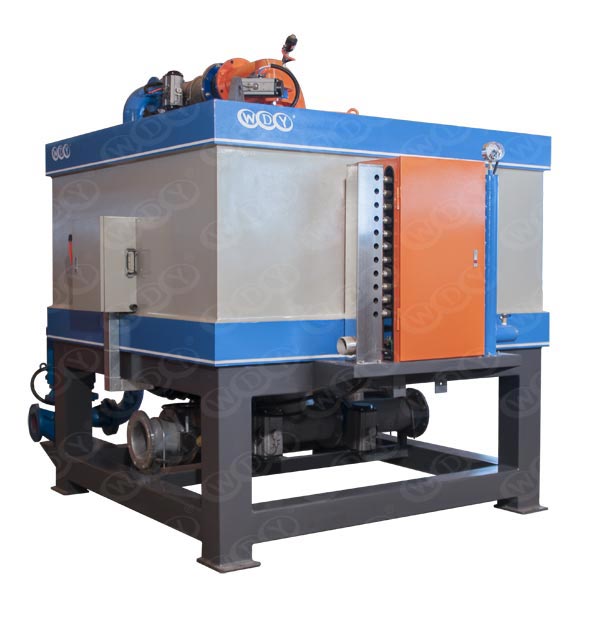
In plastic recycling plants, I typically see a combination of overband magnets, drum magnets, and sometimes magnetic grids integrated at multiple points. These are all types of permanent magnetic separators—your core strength. [goudsmitmagnetics]
Typical roles include:
– Pre‑shredding line: Overband magnets above the conveyor to pull out large ferrous items that would damage shredders. [magnetplastic]
– Post‑shredding cleaning: Drum or head‑pulley magnets removing nails, caps, and metal labels mixed with plastic flakes. [goudsmitmagnetics]
– Pre‑extruder safety: Drawer or grate magnets before melt filtration to catch final fines that could block filters or scratch screws. [buntingmagnetics]
These steps do not classify plastics by type, but they turn a dirty, mixed stream into a cleaner, more predictable input for optical sorters, sink‑float tanks, eddy current separators, and NIR systems. [dingsmagnets]
Comparing Magnetic Separation with Other Plastic Separation Methods
From an industry expert perspective, magnetic separation is one tool in a multi‑technology separation train. The table below summarizes how it compares to other mainstream methods used to separate plastics and contaminants:
| Method | Main target | Works on plastics themselves? | Typical role in a line |
|---|---|---|---|
| Magnetic separation | Ferrous (and some weakly magnetic) metals goudsmitmagnetics | Indirectly via cleaning | Front‑end de‑metal, equipment protection |
| Eddy current separation | Non‑ferrous metals (Al, Cu) sgmmagnetics | No | Recover metals from mixed waste |
| Sink‑float (water/density) | Plastics by density (PP vs PET) | Yes | Bulk plastic‑type separation |
| Optical/NIR sorting | Plastics by polymer signature | Yes | High‑precision sorting of flakes/bottles |
| Magnetic density separation | Plastics by density using ferrofluids tue | Yes (advanced) | High‑purity sorting of multiple polymers |
This is why, when designing lines, I advise clients not to see magnetic and plastic separation as competitors, but as foundational and finishing technologies working together.
Latest Research and Trends: Towards Direct Magnetic Plastic Separation
Recent research shows strong momentum toward using magnetic fields more directly in plastic separation:
– Magnetic density sorting based on ferrofluids has been developed to separate mixed rigid plastics with higher efficiency and lower energy than some conventional density systems. [tue]
– MagLev separation studies demonstrate “total separation” of multi‑plastic wastes using scaled‑up magnetic levitation devices. [sciencedirect]
– Magnetism‑assisted methods enable efficient separation of microplastics from environmental samples, helping laboratories and regulators quantify contamination better. [patents.google]
For a company like Foshan Wandaye, this trend opens two strategic directions:
1. Collaboration with research institutions to supply high‑field permanent magnet modules for MDS or MagLev prototypes.
2. Hybrid systems where your conventional magnetic separators pre‑clean the stream and feed a downstream magnetic density or optical sorting unit, creating a high‑purity, high‑reliability process.
Practical Design Steps for Using Magnetic Separation with Plastics
From a process engineering standpoint, I usually recommend a simple five‑step approach when integrating magnetic separation into plastic processing and recycling lines:
1. Map contamination points
Identify where metals enter the system: incoming bales, grinder output, material handling, and silo loading.
2. Select separator types by form
– Bulk flakes or granules: overband, drum, or head‑pulley magnets.
– Fine powders and fillers: powder magnetic separators and high‑intensity grids.
3. Design for accessibility and cleaning
Make sure magnets can be cleaned quickly, ideally without stopping production. Drawer‑type and automatic‑cleaning designs can dramatically reduce labor.
4. Pair magnets with sensors
Combine magnetic separators with metal detectors to capture both magnetic and non‑magnetic contaminants, maximizing overall protection. [buntingmagnetics]
5. Monitor quality metrics
Track reject fractions, metal counts, and downstream defect rates. Over time, use this data to optimize magnet strength, positions, and cleaning frequency.
These concrete steps give your customers a clear, expert roadmap, and position Foshan Wandaye not only as an equipment supplier but as a process partner.
Where Magnetic Separation Shines in Plastic‑Related Industries
Because Foshan Wandaye already serves mining, ceramics, power, building materials, glass, environmental protection, rubber, plastics, pharmaceuticals, food, and battery materials, you are in a strong position to address cross‑industry plastic challenges. [fsyjjq.en.made-in-china]
High‑value scenarios include:
– Food and pharma plastics: Ensuring plastic packaging materials and medical‑grade components are free of metal contamination.
– Battery and electronics: Cleaning polymer‑coated powders, separators, and casings where metal fines can cause short circuits.
– High‑purity engineering plastics: For automotive, aerospace, and electrical applications, where even tiny metal inclusions can cause failure.
In marketing content, emphasize that your powder magnetic separators and permanent magnetic separators are already proven in strict industries like ceramics and food, which strengthens trust with plastic processors who require similarly high standards. [imamagnets]
Conclusion: So, Can Magnetic Separation Separate Plastics?
From both a practical and research‑driven perspective:
– In everyday industrial use, magnetic separation primarily separates metals from plastics, not plastics from plastics. [magnetplastic]
– In advanced systems, using magnetic liquids and precise fields, magnets can help directly separate different plastic types by density and levitation. [pubs.acs]
For Foshan Wandaye, the immediate opportunity is to position your Powder Magnetic Separator and Permanent Magnetic Separator as essential building blocks in plastic recycling and processing lines, while actively tracking and participating in the next generation of magnetic density and MagLev plastic separation technologies.
FAQ
1. Can magnetic separation directly separate different plastic types?
In standard industrial plants, magnetic separation mainly removes metals from plastic streams; direct plastic‑to‑plastic separation usually relies on density tanks, optical sorting, or electrostatic methods. However, magnetic density separation and MagLev technologies now demonstrate that magnetic fields combined with special liquids can separate plastics by density in pilot and research systems. [nwo]
2. Why do plastic recyclers still need magnets if plastics are not magnetic?
Because most plastic waste streams contain dangerous metal contaminants—screws, blades, caps, and metal labels—that can severely damage shredders, grinders, and extruders. Magnetic separators efficiently remove these ferrous contaminants, significantly improving equipment uptime and the quality of recycled plastics. [goudsmitmagnetics]
3. What types of magnetic separators are most common in plastics processing?
Overband magnets, drum magnets, and drawer or grate magnets are widely used to protect equipment and clean material flows in plastics processing and recycling. For fine powders and additives, high‑intensity powder magnetic separators and grids are preferred, because they can capture very small iron particles in low‑bulk‑density materials. [fsyjjq.en.made-in-china]
4. How does magnetic density separation work on plastics?
Magnetic density separation uses a tank filled with a magnetizable liquid, placed in a magnetic field, so the effective density of the fluid varies with height; plastic flakes float at different levels depending on their density. Mechanical devices then skim or collect the plastics at these specific heights, achieving separation between polymer types with overlapping conventional densities. [cordis.europa]
5. What is the role of Foshan Wandaye’s equipment in future plastic recycling lines?
Foshan Wandaye’s Powder Magnetic Separator and Permanent Magnetic Separator provide the front‑end and in‑line metal removal that every advanced plastic recycling or compounding line requires. As magnetic density separation and MagLev technologies mature, your high‑performance magnets can be integrated as key modules in hybrid systems that combine traditional metal removal with next‑generation plastic‑to‑plastic separation. [tue]
References
1. ScienceDirect – Total separation of multi‑plastic wastes using magnetic levitation separation
[https://www.sciencedirect.com/science/article/abs/pii/S1383586624038577] [sciencedirect]
2. Eindhoven University of Technology – Improving plastic waste separation with magnetic fields
[https://www.tue.nl/en/news-and-events/news-overview/24-11-2021-improving-plastic-waste-separation-with-magnetic-fields] [tue]
3. MagnetPlastic – Magnetic Separation in the Plastics Industry
[https://magnetplastic.com/en/magnets/magnetic-separation-in-the-plastics-industry] [magnetplastic]
4. Goudsmit Magnetics – Magnetic separators for plastics and rubber
[https://www.goudsmitmagnetics.com/en-us/applications-magnet-separators-for-plastic-and-rubber] [goudsmitmagnetics]
5. Bunting Magnetics – Metal Separation & Detection for Plastics Processing
[https://buntingmagnetics.com/industries/plastic-processing-equipment] [buntingmagnetics]
6. ACS Publications – Magnetism-Assisted Density Gradient Separation of Microplastics
[https://pubs.acs.org/doi/10.1021/acs.analchem.2c04001] [pubs.acs]
7. CORDIS – Sorting plastic waste: a magnetic game
[https://cordis.europa.eu/article/id/131208-sorting-plastic-waste-a-magnetic-game] [cordis.europa]
8. NWO – Cost-effective recycling of plastic (and more) with magnetic density separation
[https://www.nwo.nl/sites/nwo/files/media-files/01_PERSPECTIEF_FLYER_IMDS_2023_ENG_DEFDEF.pdf] [nwo]
9. IMA Magnets – Applications of magnets in the plastics industry
[https://imamagnets.com/en/blog/applications-magnets-plastics-industry] [imamagnets]
10. Made‑in‑China – Magnetic Separation Equipment Removes Major Metal Contaminates in…
[https://fsyjjq.en.made-in-china.com/product/CnFrgPwcbYRu] [fsyjjq.en.made-in-china]
Hot Tags: Magnetic Separation, Manufacturers, Customized, Custom, Suppliers, Buy, Cheap, Quality, Advanced, Durable, in Stock, Made in China, Price, Quotation