


Content Menu
● What Is Magnetism and Why It Matters in Industrial Separation
>> Diamagnetism
● Weak vs Strong Magnetic Materials
● Classification of Magnetic Materials: Soft, Hard, and Functional
>> Hard (Permanent) Magnetic Materials
>> Functional Magnetic Materials
● How Magnetic Properties Influence Magnetic Separation Performance
● Industrial Case Example: Mining, Ceramics, and Pharmaceuticals
● Step-by-Step: Matching Magnetic Materials with Separation Equipment
● Latest Trends in Magnetic Materials for Separation Technology
● Call to Action: Optimize Your Magnetic Separation with Expert Support
● Summary
● Frequently Asked Questions (FAQ)
>> 1. Why do some “non-magnetic” materials still respond to strong magnetic fields?
>> 2. What is the difference between soft and hard magnetic materials in equipment design?
>> 3. Can paramagnetic particles be removed as effectively as ferromagnetic particles?
>> 4. How do magnetic properties affect equipment choice in ceramic production?
>> 5. Why is understanding antiferromagnetism important if these materials are not strongly magnetic?
Magnetism is the core physical principle behind magnetic separation and iron removal equipment, and understanding the different types of magnetism and magnetic materials is essential for designing efficient solutions in mining, ceramics, and pharmaceutical production.
This guide explains the main classes of magnetism, how magnetic materials are categorized, and how these properties relate to real-world industrial applications and equipment selection.
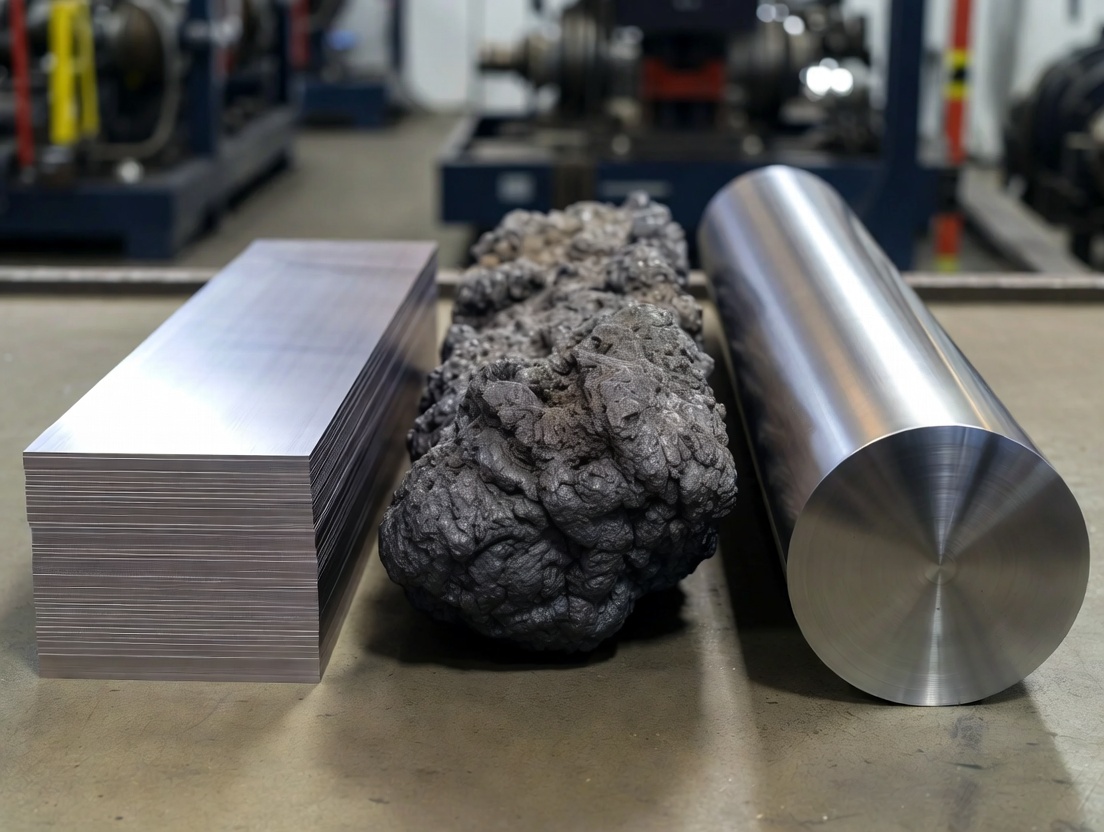
What Is Magnetism and Why It Matters in Industrial Separation
Magnetism is the phenomenon by which materials respond to an external magnetic field, becoming weakly or strongly magnetized depending on their internal electronic structure.
In industrial processes, this response determines whether a material can be removed or recovered using magnetic separation or iron removal devices.
– Magnetic susceptibility describes how strongly a material is magnetized in an applied field and is the basis for classifying materials as diamagnetic, paramagnetic, ferromagnetic, ferrimagnetic, or antiferromagnetic.
– In mineral processing, ceramics glazing, and pharmaceutical filtration, materials with different magnetic behaviors must be handled using appropriately designed magnetic separation and iron removal equipment.
For manufacturers and engineers, a clear understanding of magnetism supports better equipment selection, process optimization, and quality control.
Core Types of Magnetism
Magnetic materials are typically divided into five main classes based on their response to an external magnetic field.
Paramagnetism
A paramagnetic substance can be magnetized according to the direction of the magnetic field when it is moved close to the magnetic field, but the magnetization is weak and often can only be measured with precision instruments.
When the external magnetic field is removed, the internal magnetic field returns to zero and the material no longer exhibits magnetism.
Typical examples of paramagnetic substances include aluminum and oxygen.
From a microscopic perspective, paramagnetic materials contain unpaired electrons that tend to align partially with an external field, generating a small net magnetization.
Because this magnetization disappears immediately when the field is switched off, paramagnetic materials do not retain permanent magnetism and are therefore not suitable as permanent magnets.
In industrial separation, paramagnetic particles can be captured when high-intensity or high-gradient magnetic separators are used, especially in slurry or fine-particle applications where the field can act uniformly on each particle.
Diamagnetism
A diamagnetic substance has a negative magnetic susceptibility.
When subjected to an external magnetic field, induced electron circulation is generated in the atoms or molecules, and the magnetic moment it generates is opposite to the direction of the external magnetic field.
This means the direction of the magnetic field inside the material after magnetization is opposite to the direction of the external magnetic field, so the material is weakly repelled by the field rather than attracted.
All organic compounds have diamagnetic properties, and many common substances such as graphite, lead, and water are diamagnetic.
Because the diamagnetic effect is extremely weak, these materials are usually considered “non-magnetic” in most industrial contexts.
In magnetic separation systems, diamagnetic materials generally behave as the non-magnetic matrix that passes through the separator, while magnetic contaminants are captured.
Ferromagnetism
A ferromagnetic substance can maintain its magnetized state and remains magnetic even after the external magnetic field is removed.
Typical ferromagnetic metals include iron, cobalt, and nickel, as well as many of their alloys.
On the microscopic scale, ferromagnetic materials are composed of domains in which atomic magnetic moments align parallel to each other, resulting in a large net magnetic moment.
Because of this domain structure, ferromagnets exhibit strong attraction to magnetic fields and show hysteresis, meaning the magnetization depends on the history of applied fields.
In industrial separation and iron removal, ferromagnetic particles are the easiest to capture.
Even moderate field strengths and relatively simple permanent magnet or electromagnetic separators can efficiently remove ferromagnetic contaminants from powders, slurries, and bulk materials.
Ferrimagnetism
Ferrimagnetic materials exhibit macroscopic magnetism similar to ferromagnets but with a different internal magnetic structure and generally lower magnetic susceptibility.
The most typical ferrimagnetic materials are ferrites, which are ceramic compounds containing iron oxides combined with other metal ions.
In ferrimagnetic materials, magnetic moments on different sublattices are antiparallel but unequal in magnitude, so they do not completely cancel and a net magnetic moment remains.
This leads to strong magnetization, although typically lower than that of pure ferromagnetic metals.
Ferrites are widely used as permanent magnets and as soft magnetic cores in transformers, inductors, and magnetic separator components.
In separation and iron removal equipment, ferrimagnetic materials are often used to construct magnet assemblies that provide stable magnetic fields while offering good resistance to corrosion and temperature effects compared with some metallic magnets.
Antiferromagnetism
In antiferromagnetic materials, the spins of adjacent valence electrons tend to align in opposite directions, with equal magnitude but opposite orientation.
This results in a net magnetic moment of zero and no macroscopic magnetic field in the ideal case.
Antiferromagnetic materials are relatively uncommon in everyday applications, and many of them only exhibit antiferromagnetism at low temperatures.
When the temperature exceeds a characteristic value called the Néel temperature, the material usually becomes paramagnetic.
Chromium and manganese are examples of elements that can display antiferromagnetic behavior under certain conditions.
Although antiferromagnetism is not directly exploited for traditional magnetic separation, it is crucial in the design of advanced functional magnetic materials and spintronic devices, which can indirectly improve sensing and control technologies in modern production lines.
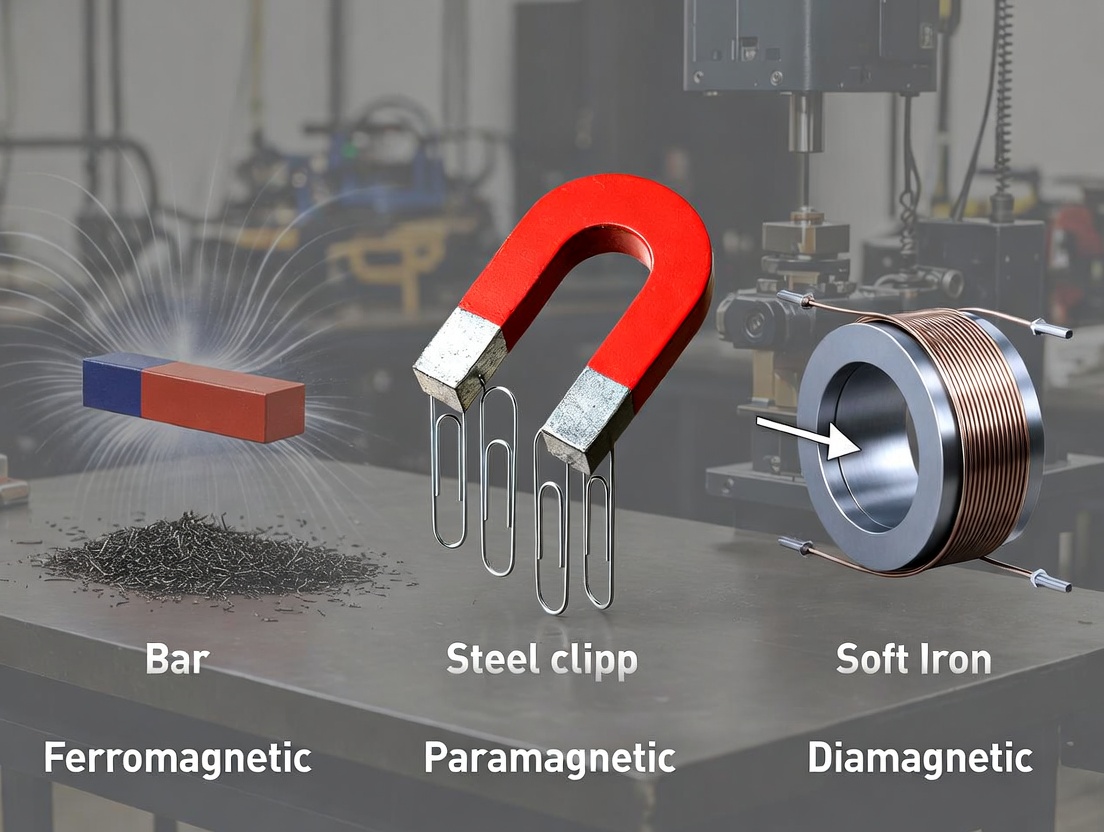
Weak vs Strong Magnetic Materials
From an engineering perspective, materials are often grouped into weak and strong magnetic categories based on the strength of their response to external fields.
– Paramagnetic and diamagnetic materials are called weak magnetic materials because their magnetic susceptibility is small and their attraction or repulsion in a field is weak.
– Ferromagnetic and ferrimagnetic materials are called strong magnetic materials, as they show large, often nonlinear susceptibility and strong attraction in magnetic fields.
– In many industrial discussions, when people refer to “magnetic materials”, they usually mean these strong magnetic materials that are practically useful for magnets and separation.
In magnetic separation processes, strong magnetic materials are captured easily, while weak magnetic materials require more powerful field strengths and carefully designed high-gradient matrices to achieve satisfactory removal efficiency.
Classification of Magnetic Materials: Soft, Hard, and Functional
Beyond their intrinsic magnetic behavior, magnetic materials are also classified according to how easily they are magnetized and demagnetized.
This classification strongly influences how materials are used in magnetic separation equipment, sensors, and power devices.
Soft Magnetic Materials
Soft magnetic materials can achieve maximum magnetization intensity with a relatively small external magnetic field.
They are characterized by low coercivity and high magnetic permeability, which means they are easy to magnetize and easy to demagnetize.
Examples include soft ferrites and amorphous or nanocrystalline alloys.
Key features of soft magnetic materials include:- High permeability for efficient conduction of magnetic flux.
– Low hysteresis loss, which reduces energy dissipation during magnetization cycles.
– Suitability for alternating-field applications such as transformer cores, inductors, and electromagnetic separator poles.
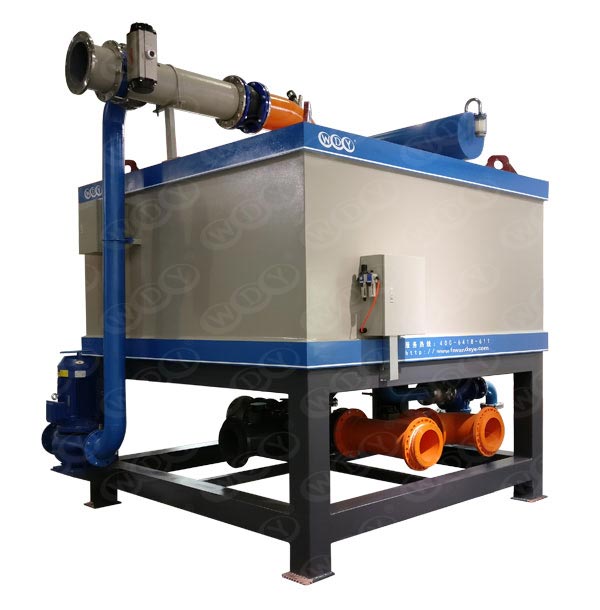
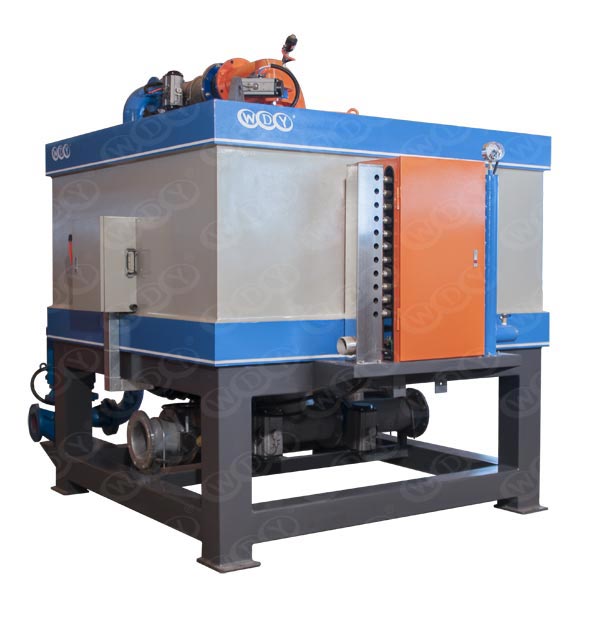
In magnetic separation:- Electromagnetic slurry separators and vertical ring high-gradient magnetic separators rely on soft magnetic components in their cores and yokes to concentrate and guide the magnetic field effectively.
– Soft magnetic materials allow rapid on/off switching of the field and support pulse or cycling modes used for automatic cleaning and regeneration of the separation matrix.
Hard (Permanent) Magnetic Materials
Hard magnetic materials, also called permanent magnetic materials, are difficult to magnetize initially but even more difficult to demagnetize once magnetized.
Their main characteristic is high coercivity, which enables them to retain strong magnetization without continuous external power.
Hard magnetic materials include:- Rare earth permanent magnetic materials such as neodymium-iron-boron and samarium-cobalt.
– Metal permanent magnetic materials based on iron, cobalt, and their alloys.
– Permanent magnetic ferrites, which are ceramic-based and often used where cost and corrosion resistance are critical.
In industrial iron removal and separation equipment:- Permanent magnetic separators, magnetic plates, magnetic grids, magnetic rods, and magnetic drums use hard magnetic materials to provide stable fields for capturing ferromagnetic and ferrimagnetic contaminants.
– Because they do not require continuous electrical power, permanent magnet systems are energy-saving, low maintenance, and highly reliable in continuous production environments.
Functional Magnetic Materials
Functional magnetic materials are designed to utilize specific magnetic effects beyond simple attraction or repulsion.
They are widely used in modern electronics, sensors, data storage, and precision industrial control.
Main categories of functional magnetic materials include:- Magnetostrictive materials that change shape or dimension when exposed to a magnetic field, useful in actuators and ultrasonic devices.
– Magnetic recording materials used in data storage systems, tapes, and hard disks.
– Magnetoresistance materials, including giant magnetoresistance and tunneling magnetoresistance structures used in read heads and magnetic sensors.
– Magnetic bubble materials, historically used for memory devices.
– Magneto-optical materials, which change optical properties under magnetic fields and serve in storage and modulation applications.
– Magnetic film materials and multilayers that combine specific magnetic behaviors with microelectronics integration.
While many functional materials are not directly used as bulk magnetic separators, they enable advanced monitoring, measurement, and intelligent control systems that can be integrated into modern separation lines to ensure performance consistency and quality traceability.
How Magnetic Properties Influence Magnetic Separation Performance
In real production environments, the magnetic behavior of particles directly influences separation efficiency, product purity, and overall operating cost.
– Ferromagnetic and ferrimagnetic impurities are easily captured by both permanent magnet and electromagnetic separators, even with moderate field intensities.
– Paramagnetic impurities require higher field strengths and high-gradient designs to generate sufficient magnetic forces for capture, especially when dealing with fine particles.
– Diamagnetic host materials such as many non-magnetic minerals, ceramic raw materials, or pharmaceutical excipients pass through the magnetic field with minimal interaction, which is ideal when the objective is to remove a small fraction of strongly magnetic contaminants.
Examples from key industries:- In mineral processing, strong magnetic iron-bearing minerals can be recovered as valuable products, while non-magnetic or weakly magnetic gangue is discarded or further refined.
– In ceramic production, magnetic separators are used to remove iron particles from raw materials and glazes, preventing black spots, pinholes, and color defects after firing.
– In pharmaceutical manufacturing, finely controlled magnetic separation removes metallic impurities to meet stringent purity, safety, and regulatory standards, often at very low contamination levels.
Industrial Case Example: Mining, Ceramics, and Pharmaceuticals
Practical applications show how understanding magnetic classifications leads to better process design and equipment selection.
Mining:- Ores typically contain mixtures of ferromagnetic, ferrimagnetic, paramagnetic, and non-magnetic minerals.
– High-gradient magnetic separators and wet or dry magnetic drums are used to recover valuable iron-bearing minerals and reduce impurities in concentrates.
– By adjusting field strength and matrix design, operators can target specific mineral phases and optimize recovery rates.
Ceramics:- Raw materials, grinding media, and processing equipment can introduce ferromagnetic and ferrimagnetic contaminants into ceramic powders and glazes.
– Permanent magnetic plates, grids, and electromagnetic slurry separators are applied at different stages of the production line to maintain high whiteness and prevent surface defects.
– Clean ceramic feedstock improves firing yield, reduces waste, and supports high-end product applications such as sanitary ware, tiles, and electronic ceramics.
Pharmaceuticals:- Metallic contamination, even at very low levels, can cause serious quality and safety problems in pharmaceutical powders, granules, and liquids.
– High-intensity, sanitary-grade magnetic filters and separators capture fine ferromagnetic and weakly paramagnetic particles without affecting the chemical properties of the product.
– Carefully engineered designs ensure easy cleaning, full traceability, and compliance with industry standards and regulatory audits.
Step-by-Step: Matching Magnetic Materials with Separation Equipment
To translate magnetic theory into practical process optimization, engineers can follow a structured selection approach.
1. Identify the magnetic behavior of the target particles. Determine whether contaminants or valuables are mainly ferromagnetic, ferrimagnetic, paramagnetic, or essentially non-magnetic, and clarify whether the bulk matrix is magnetic or non-magnetic.
2. Define particle size and process form. Clarify whether the material is handled as dry powder, granular bulk, or slurry, and measure particle size distribution, as fine particles may require higher gradients and optimized matrix designs for effective capture.
3. Select appropriate field intensity and gradient. Use permanent magnets or medium-intensity separators for strong magnetic particles, while high-gradient, high-intensity electromagnetic separators are preferred for weak magnetic particles or very fine contaminants.
4. Configure the separator type. Choose powder separators, drum separators, slurry separators, or vertical ring high-gradient machines according to process layout, capacity, and material characteristics.
5. Optimize operating parameters. Adjust feed rate, magnetic field strength, matrix type, flushing or cleaning cycles, and retention time based on test runs and quality targets to balance separation efficiency with energy consumption.
6. Implement monitoring and maintenance. Establish regular inspection routines, field strength checks, and cleaning schedules to maintain consistent magnetic performance and ensure long-term stability of separation efficiency.
Latest Trends in Magnetic Materials for Separation Technology
Advances in magnetic material science continue to improve the performance, efficiency, and compactness of magnetic separation and iron removal equipment.
– High-energy rare earth permanent magnets such as neodymium-iron-boron enable more compact but powerful permanent magnetic separators, expanding installation possibilities in limited spaces.
– Nanocrystalline and amorphous soft magnetic alloys offer lower core losses and higher permeability, supporting more efficient and precise electromagnetic separator designs, especially at high frequencies or rapidly changing fields.
– Improved understanding of multiphase ferrimagnetic and antiferromagnetic compounds allows researchers to tailor functional magnetic materials for sensors, monitoring devices, and smart control modules that can be integrated into separation systems.
These innovations support equipment with higher field strengths, lower energy consumption, and better process control, which are critical advantages in high-value industrial sectors such as advanced ceramics and pharmaceuticals.
Call to Action: Optimize Your Magnetic Separation with Expert Support
If your production line handles materials with complex magnetic behaviors in mining, ceramics, or pharmaceuticals, choosing the right combination of magnetic materials and separation equipment is essential for stable quality and cost-effective operation.
By partnering with a specialist manufacturer of magnetic separation and iron removal equipment, you can benefit from application-specific engineering, pilot testing, and customized system design aligned with your process requirements and target specifications.
Summary
Magnetism and magnetic materials form the scientific foundation of every magnetic separation and iron removal system used in modern industry.
By understanding the five core types of magnetism, recognizing the difference between weak and strong magnetic materials, and distinguishing soft, hard, and functional magnetic materials, engineers and production managers can make better decisions about equipment selection and process optimization.
When this theoretical knowledge is combined with practical industrial experience in sectors such as mining, ceramics, and pharmaceuticals, magnetic separation systems can deliver higher purity, better product consistency, and lower operating costs.
Contact us to get more information!
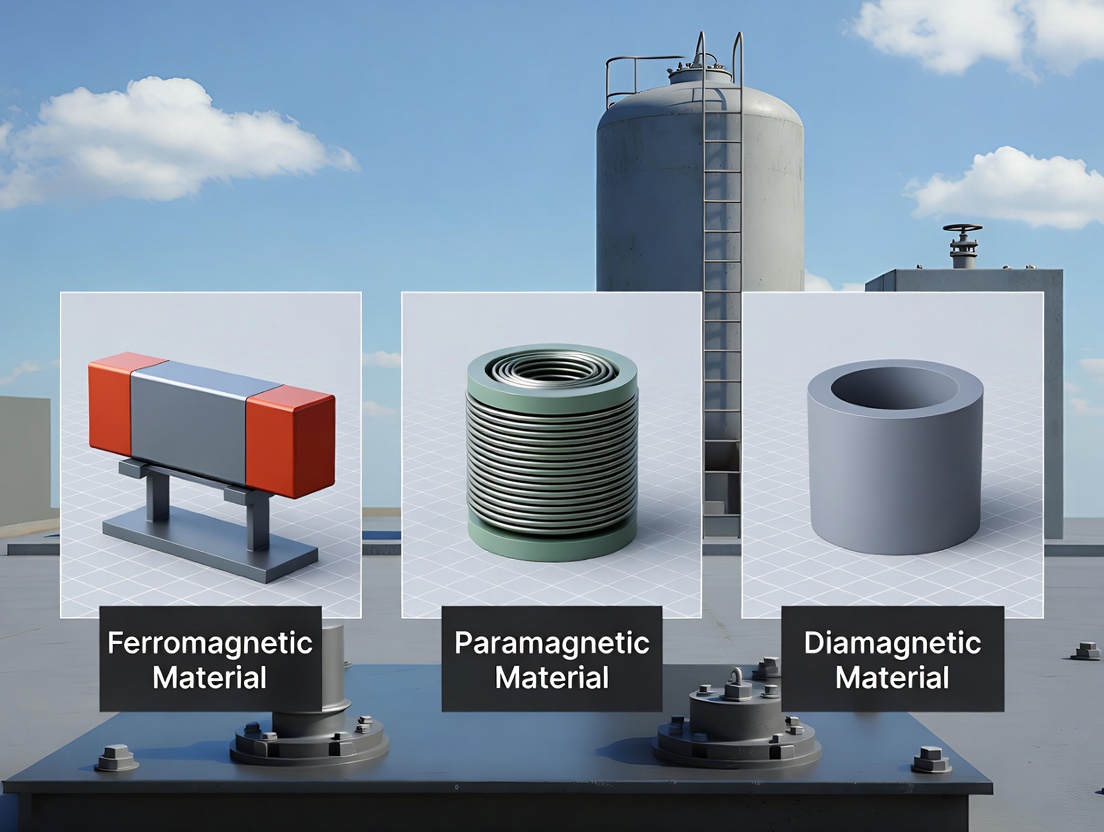
Frequently Asked Questions (FAQ)
1. Why do some “non-magnetic” materials still respond to strong magnetic fields?
Materials that are commonly described as “non-magnetic” are typically diamagnetic or paramagnetic, which means they have very small negative or positive magnetic susceptibilities.
In everyday fields this response is negligible, but in very strong or high-gradient fields the small forces become noticeable and can be used for fine separation or impurity removal in specialized equipment.
2. What is the difference between soft and hard magnetic materials in equipment design?
Soft magnetic materials are easy to magnetize and demagnetize, making them ideal for components such as cores in electromagnetic separators or transformers where the magnetic field is frequently switched or varied.
Hard magnetic materials, or permanent magnets, maintain their magnetization and are used in permanent magnetic separators, plates, and rods that do not require continuous power and offer stable long-term performance.
3. Can paramagnetic particles be removed as effectively as ferromagnetic particles?
Paramagnetic particles can be removed effectively, but they require higher magnetic field strengths and stronger gradients than ferromagnetic particles because their susceptibility is much weaker.
High-gradient electromagnetic separators and optimized matrix designs are commonly employed to generate sufficient magnetic forces to capture paramagnetic particles, especially when particle sizes are very fine.
4. How do magnetic properties affect equipment choice in ceramic production?
In ceramic production, ferromagnetic and ferrimagnetic impurities can cause black spots, pinholes, and color defects, so the choice of equipment focuses on stable removal of these contaminants at multiple stages.
Permanent magnetic plates and grids are often installed in dry conveying lines, while electromagnetic slurry separators are used in wet processes such as slip and glaze preparation, with the specific configuration depending on particle size, flow properties, and quality targets.
5. Why is understanding antiferromagnetism important if these materials are not strongly magnetic?
Understanding antiferromagnetism is important because it provides insight into how spins can be arranged and controlled in solids, which is central to many advanced functional materials and spintronic technologies.
Although bulk antiferromagnets are not used directly as separation targets, the principles behind them help scientists design improved sensors, memory devices, and control elements that can ultimately enhance the performance and reliability of industrial magnetic systems.
Citations:
1. https://www.greatmagtech.com/info/classification-of-magnetism-and-magnetic-mater-100194810.html
2. https://www.nde-ed.org/Physics/Magnetism/MagneticMatls.xhtml
3. https://cse.umn.edu/irm/2-classes-magnetic-materials
4. https://www.batterypowertips.com/what-are-the-six-kinds-of-magnetism-faq/
5. https://www.meadmetals.com/blog/types-of-magnetic-metals-list
6. https://www.magnummagnetics.com/blog/types-of-magnets/
7. https://magnummagnetics.com/blog/types-of-magnets/
8. https://en.wikipedia.org/wiki/Magnetism
9. https://www.hsmagnets.com/blog/magnetic-materials-types-of-magnetism-applications-and-origin-of-magnetism/
10. http://en.fswandaye.com
Hot Tags: Classes of Magnetic Materials, Types of Magnetic Materials, Ferromagnetic Paramagnetic Diamagnetic Materials, Soft and Hard Magnetic Materials, Magnetic Material Properties and Examples, Classification of Magnetic Substances, Magnetic Behavior of Materials, Ferromagnetism Paramagnetism Diamagnetism, Magnetic Permeability of Materials, Industrial Magnetic Materials Applications