Content Menu
● What Is a Rare Earth Roll Magnetic Separator?
>> Core Components of a Rare Earth Roll Separator
● Why Use Rare Earth Roll Magnetic Separators?
● How Does a Rare Earth Roll Magnetic Separator Work?
>> Step‑by‑Step Working Principle
● Rare Earth Roll vs Other Magnetic Separation Technologies
>> Main Technology Differences
● Typical Industrial Applications
>> 1. Mining and Mineral Processing
>> 2. Advanced Ceramics and Refractories
>> 3. Pharmaceutical and Fine Chemical Industries
>> 4. Food, Plastics, and Other Sectors
● Key Design Considerations for Rare Earth Roll Systems
>> Magnetic Field Strength and Gradient
● Practical Selection Guide: How to Choose the Right Rare Earth Roll Separator
>> Step‑by‑Step Selection Process
● Real‑World Use Case: Non‑Metallic Mineral Purification
● Best Practices for Operation and Maintenance
>> Cleaning and Magnet Protection
● Why Partner with a Specialized Magnetic Separation Manufacturer
>> Engineering and Application Expertise
● Summary
● FAQ
>> Q2. Can rare earth roll magnetic separators handle moist or sticky materials?
>> Q3. What particle size range is suitable for rare earth roll separation?
>> Q4. How often do rare earth roll magnetic separators need maintenance?
>> Q5. Are rare earth roll magnetic separators suitable for pharmaceutical and food applications?
Rare earth roll magnetic separators are critical for high‑purity processing in mining, ceramics, and pharmaceutical production, where even trace iron contamination can ruin product quality and damage equipment. As a specialist in magnetic separation and iron removal solutions, Foshan Wandaye Technology Co., Ltd. provides rare earth roll systems that deliver stable, long‑term performance on demanding production lines across multiple industries.
What Is a Rare Earth Roll Magnetic Separator?
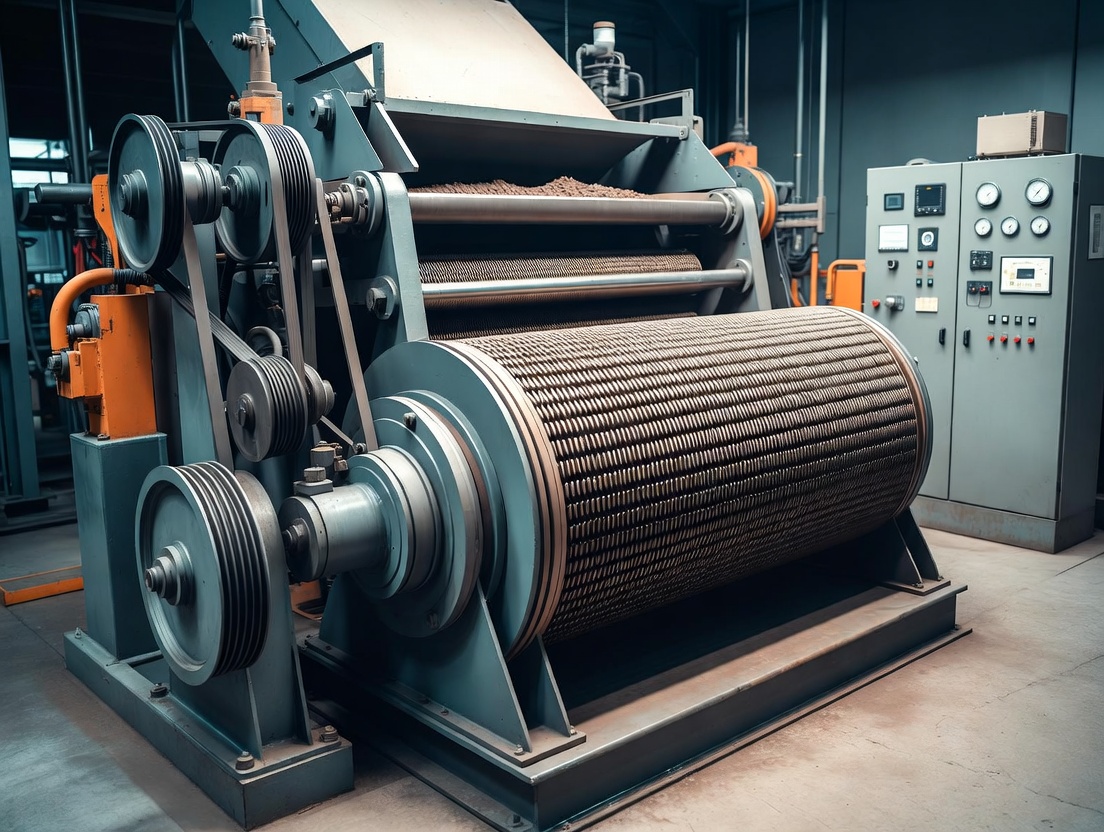
A rare earth roll magnetic separator is a high‑intensity, dry magnetic separation machine that uses powerful rare earth permanent magnets (typically neodymium‑iron‑boron) mounted on a rotating roll to attract and separate weakly magnetic particles from non‑magnetic bulk materials. It is particularly suitable for fine powders and granular products where traditional low‑intensity magnetic equipment cannot achieve the required iron removal efficiency and product purity.
Core Components of a Rare Earth Roll Separator
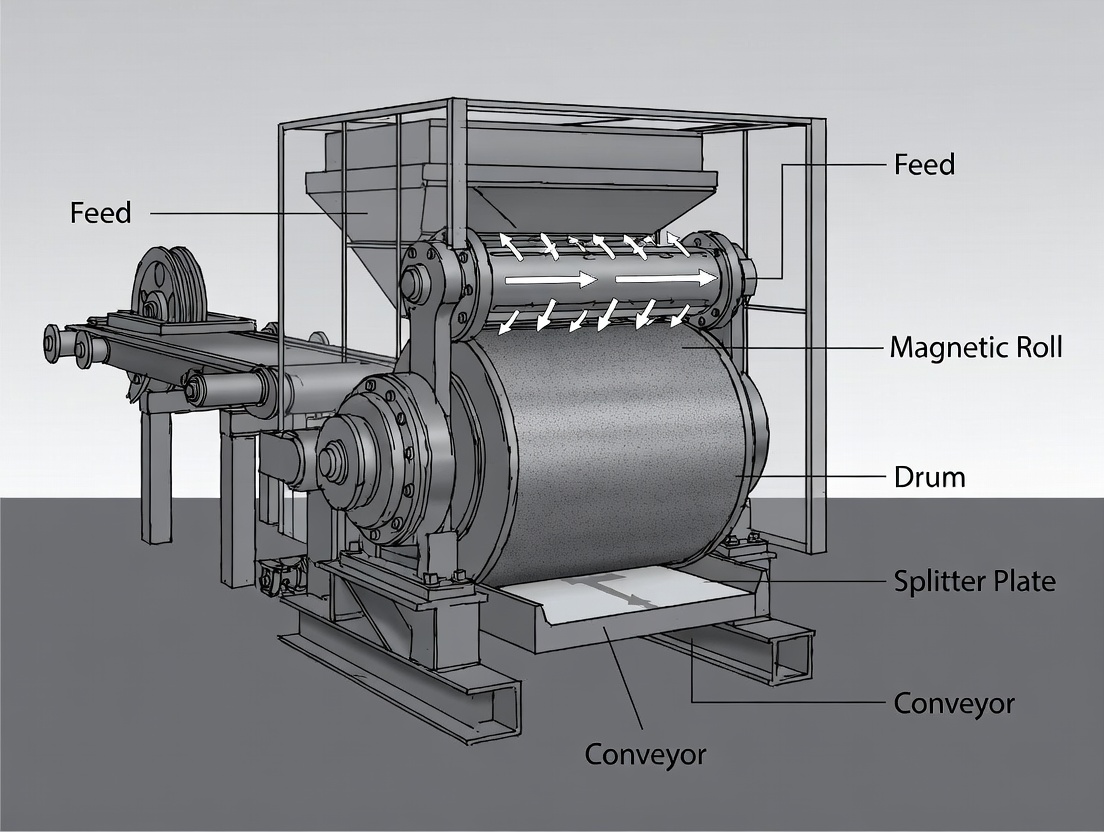
– Magnetic roll equipped with rare earth magnets arranged to produce a strong, high‑gradient magnetic field at the roll surface.
– Feeding system, often a vibratory feeder or precision chute, designed to create a thin, uniform layer of material entering the separation zone.
– Adjustable splitter blades positioned after the roll to separate the magnetic fraction from the non‑magnetic product stream.
– Machine frame, guards, and support structure that ensure mechanical stability, operator safety, and convenient access for inspection and cleaning.
Why Use Rare Earth Roll Magnetic Separators?
Rare earth roll magnetic separators offer a combination of high magnetic intensity, fine particle capability, and dry processing convenience that is difficult to match with other technologies. For manufacturers who must meet tight specifications on iron content, they provide a practical path to consistent, high‑purity output with reduced risk of contamination and equipment damage.
Key Performance Advantages
– Ultra‑high magnetic intensity: Rare earth magnets can generate surface fields many times stronger than conventional ferrite magnets, enabling efficient capture of very fine or weakly magnetic contaminants that would otherwise pass through the process.
– Dry processing capability: The equipment is ideal for dry mineral sands, ceramic powders, pigments, and pharmaceutical ingredients where moisture must be strictly controlled or where wet processing would introduce extra complexity.
– Improved product purity: By removing iron, stainless steel fragments, scale, and other metallic impurities, rare earth roll separators help producers achieve higher grades, more stable color, and better overall material performance.
– Equipment protection: Effective iron removal significantly reduces wear, blockages, and damage in downstream mills, classifiers, dryers, and packaging systems, lowering maintenance costs and unplanned downtime.
– Process stability: Once correctly configured, rare earth roll separators support steady, repeatable performance, providing the consistent quality needed for long‑term contracts and export markets.
How Does a Rare Earth Roll Magnetic Separator Work?
The separation principle is based on the difference in magnetic susceptibility between the target contaminants and the main product particles. Magnetic and paramagnetic particles experience a force in the magnetic field, while non‑magnetic particles are largely unaffected and follow a different trajectory.
Step‑by‑Step Working Principle
1. Uniform feeding
Material enters the separator through a controlled feeder, forming a thin, even layer on the feed section approaching the rotating magnetic roll. A stable, uniform feed layer is essential to maximize contact with the magnetic field and minimize product losses.
2. Magnetic attraction
As the material passes over or very near the roll surface, magnetic and weakly magnetic particles are attracted to the high‑intensity field at the roll and become pinned to its surface. Non‑magnetic particles are not significantly influenced by the field and begin to separate from the roll under gravity and inertial forces.
3. Transport on the roll
The rotating roll carries the captured magnetic fraction forward, away from the main product trajectory. The particles remain attached as long as they remain within the strong field region on the roll surface.
4. Separation by splitter
Downstream of the feed point, adjustable splitter blades are installed between the natural falling path of non‑magnetic material and the trajectory of material carried by the roll. Correct positioning of the splitters allows the machine to divert magnetic material into a separate discharge chute while allowing clean product to fall into the main outlet.
5. Magnetic release
As the roll rotates past the peak field region, the magnetic force acting on the captured particles diminishes. When the force is no longer sufficient to hold them on the surface, the particles fall off, passing behind the splitter into the designated magnetic fraction collection area.
Rare Earth Roll vs Other Magnetic Separation Technologies
In industrial practice, rare earth roll magnetic separators are used alongside several other types of magnetic separation equipment. Understanding how they differ helps engineers select the right combination for each process line.
Main Technology Differences
– Grate and grid magnets
These are installed in hoppers, chutes, and gravity pipelines. They are well suited for free‑flowing powders and granules and are often used as primary protection against ferromagnetic tramp metal. Their strength can be high, but their coverage is more localized compared with the focused, high‑gradient field on a rare earth roll.
– Drawer‑type iron removers
Drawer magnets place multiple magnetic grids in a housing through which material passes. They are widely used in food, plastics, and fine chemical industries for relatively easy‑flowing powders. Cleaning is usually manual or semi‑automatic, and they focus more on safety and general contamination control than on ultra‑fine separation.
– Plate magnets
Plate magnets are mounted above conveyors or inside chutes to remove larger ferrous pieces from bulk material. They are robust and cost‑effective for coarse products but are less suited for very fine or weakly magnetic contamination.
– Drum magnetic separators
Magnetic drum separators are commonly used for coarser materials, larger capacities, and applications such as ore beneficiation, slag processing, or metal recovery. Some designs can achieve high intensity, but the geometry favors different flow patterns than the thin‑layer, high‑gradient approach of the rare earth roll.
– Rare earth roll separators
Rare earth roll separators are optimized for fine, dry, and often high‑value products that demand low iron levels. They generate intense surface fields, work with thin material layers, and can be configured in multiple stages to achieve stringent purity and recovery targets.
Typical Industrial Applications
Rare earth roll magnetic separators are deployed wherever iron contamination, even at very low levels, can compromise quality, safety, or downstream processing. Their strengths are most visible in high‑value and high‑precision industries.
1. Mining and Mineral Processing
In mining and mineral processing, rare earth roll separators are widely used for the purification of non‑metallic minerals. Applications include the cleaning of quartz, feldspar, and kaolin used in glass, ceramics, and high‑purity fillers, where iron stains and discoloration are unacceptable. They also contribute to upgrading titanium‑bearing minerals, rare earth ores, and other weakly magnetic concentrates, improving the economic value of the ore body.
2. Advanced Ceramics and Refractories
Ceramic manufacturers rely on rare earth roll separators to remove iron and steel contamination from ceramic powders and bodies. Even tiny metallic particles can cause black spots, pinholes, or color defects after firing, leading to high scrap rates and customer complaints. By controlling iron content, producers achieve stable whiteness, consistent dielectric and mechanical properties, and improved product reliability in electronic ceramics, tiles, sanitary ware, and advanced refractories.
3. Pharmaceutical and Fine Chemical Industries
In pharmaceutical and fine chemical production, contamination control is closely tied to regulatory compliance and product safety. Rare earth roll separators can be integrated into hygienic, dust‑controlled environments to remove small metallic particles from active ingredients, excipients, and fine chemical powders. This reduces the risk of foreign matter incidents, protects milling and mixing equipment, and supports the validation of critical control points in the quality management system.
4. Food, Plastics, and Other Sectors
While grate magnets, drawer magnets, and rotary magnetic separators are common in food and plastics processing, rare earth roll separators can be used when extremely fine contamination must be removed from dry, free‑flowing materials. Examples include specialty additives, color masterbatches, and powdered ingredients that require both high flowability and strict cleanliness. In these cases, the rare earth roll acts as a precision finishing step, complementing upstream safety magnets.
Key Design Considerations for Rare Earth Roll Systems
Correct design and specification are crucial to achieving the desired separation results. When evaluating a rare earth roll solution, engineers should focus on field strength, feed characteristics, and configuration details that match their process conditions.
Magnetic Field Strength and Gradient
– High‑energy neodymium‑iron‑boron magnets are typically used to deliver very strong surface fields for the roll. The intensity directly affects the ability to capture weakly magnetic and ultra‑fine particles.
– Field gradient, which describes how quickly the magnetic field changes over distance, is equally important. A high gradient near the roll surface is essential for attracting small particles that have low mass and low magnetic moment.
– For particularly demanding applications, multi‑pole magnet assemblies and optimized pole configurations are used to generate strong, localized fields that maximize separation efficiency.
Feed Characteristics
– Particle size distribution: Finer particles are often more difficult to handle but can be efficiently separated if the feed system achieves good dispersion and minimal agglomeration.
– Bulk density and flowability: Products with poor flowability may require conditioning steps, such as drying, screening, or adding flow aids, before entering the separator.
– Moisture content: Excess moisture promotes sticking, clumping, and bridging, all of which reduce the effectiveness of the separator. Keeping the product sufficiently dry is a key design target.
Separator Configuration
– Single‑stage versus multi‑stage arrangements: A single pass may be enough for moderate purity targets, whereas multi‑stage configurations are preferred when both high recovery and ultra‑low iron levels are required.
– Splitter design and positioning: Splitter blades must be carefully adjusted and locked into place. Slight changes in angle or position can significantly alter the balance between product loss and contamination removal.
– Integration with upstream and downstream equipment: The separator should be placed where material is in the right condition and where access for cleaning and maintenance is feasible, such as after drying and screening and before final storage or packing.
Practical Selection Guide: How to Choose the Right Rare Earth Roll Separator
To help engineers and buyers move from theory to implementation, the following practical selection guide can serve as a simple checklist when evaluating new equipment or upgrading existing lines.
Step‑by‑Step Selection Process
1. Define product and contamination characteristics
Identify the base material, such as quartz, feldspar, kaolin, ceramic powder, pigment, or pharmaceutical ingredient. Determine the type of contaminants that must be removed, including tramp iron, stainless steel, scale, or weakly magnetic minerals, as well as their size range and typical loading.
2. Set purity and capacity targets
Clarify the maximum allowable iron or metallic content in the final product, expressed in ppm or percentage. At the same time, define the required throughput, usually in kilograms per hour or tons per hour, and confirm available installation space and height in the plant.
3. Assess process conditions
Review process temperature, ambient humidity, dust control, and cleaning procedures. Identify where in the process the material is dry, well‑classified, and free‑flowing, as this point is often the best location for the rare earth roll separator. Decide whether cleaning needs to be manual, semi‑automatic, or fully automated.
4. Choose core design parameters
Select appropriate roll diameter and width based on throughput and particle behavior. Choose magnet grade and field intensity that match the difficulty of the contamination. Decide how many stages are needed and design splitter positions to achieve the desired trade‑off between product recovery and impurity removal.
5. Validate with testing
Whenever possible, send samples for laboratory or pilot‑scale testing. Trial runs allow optimization of roll speed, feed rate, splitter settings, and other parameters before full‑scale investment, reducing technical risk and ensuring realistic expectations.
Real‑World Use Case: Non‑Metallic Mineral Purification
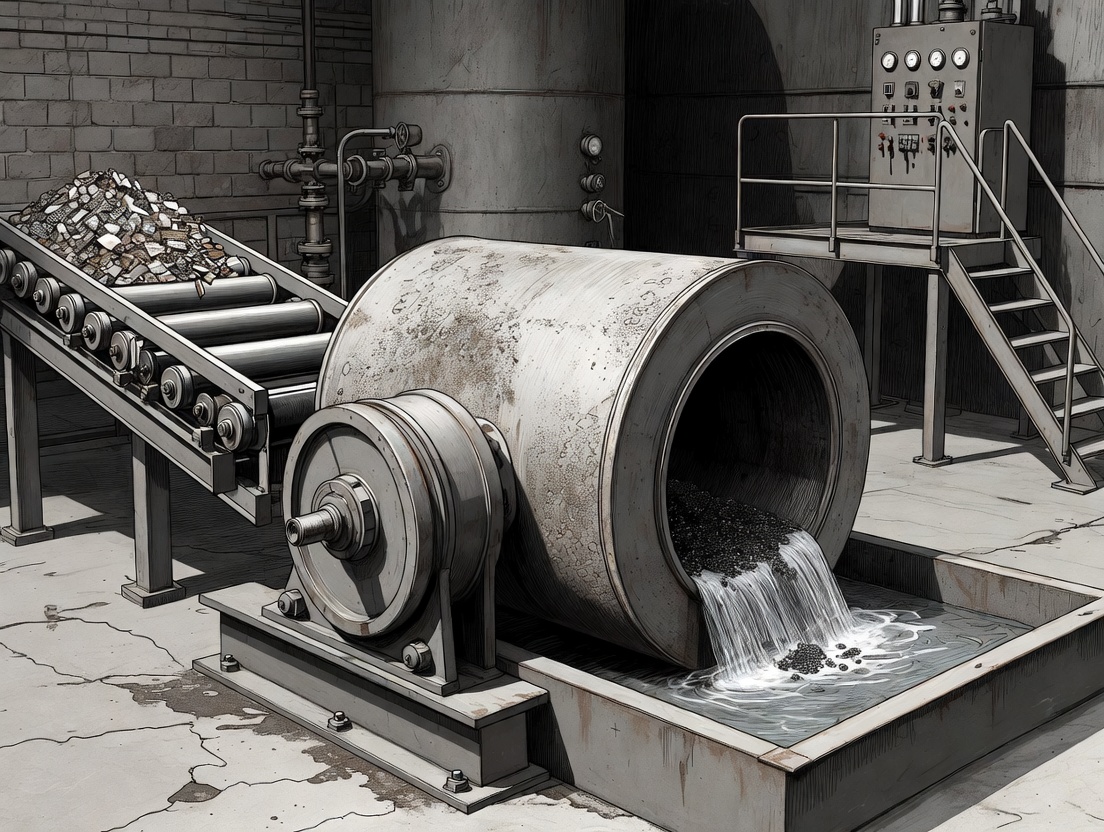
To illustrate the impact of a well‑designed rare earth roll system, consider a typical non‑metallic mineral processing plant producing high‑whiteness quartz and feldspar for glass and ceramic applications. The plant faces strict customer specifications on iron content and color, with even small deviations leading to product rejection.
Application Background
The raw material contains natural iron minerals and picks up additional contamination from handling, crushing, and conveying equipment. Conventional low‑intensity magnetic separators remove coarse ferromagnetic pieces but leave behind fine and weakly magnetic particles that still affect color and transparency. As production volumes grow, the cost of reprocessing and quality complaints becomes increasingly significant.
Rare Earth Roll Solution
The plant introduces a multi‑stage rare earth roll separator line after drying and classification. Material is fed in a controlled, thin layer onto the first roll, where the majority of weakly magnetic particles are removed. Subsequent stages focus on fine cleaning, targeting the smallest contaminants. Process engineers adjust feeder settings, roll speed, and splitter positions for each product grade to achieve the best combination of purity and yield.
Results Achieved
After optimization, iron content in the final product consistently meets or exceeds the most demanding customer specifications. Visible color defects are significantly reduced, allowing the plant to offer higher‑grade products and strengthen its competitive position in international markets. At the same time, reduced contamination lowers wear and plugging in downstream equipment, contributing to more stable production and lower maintenance costs.
Best Practices for Operation and Maintenance
Long‑term efficiency and reliability depend on disciplined operating practices and planned maintenance routines. Properly managed, rare earth roll separators offer many years of stable performance with minimal unplanned downtime.
Daily and Routine Checks
– Verify that the material feed is stable and forms a uniform layer across the entire width of the roll. Changes in feed behavior are often the first sign of upstream issues.
– Inspect splitter positions to ensure they have not shifted due to vibration or accidental impact. Locking mechanisms should be tight and secure.
– Check that product and magnetic fraction collection areas are not overflowing and that conveying systems downstream are functioning normally.
Cleaning and Magnet Protection
– Regularly remove collected magnetic material from discharge points to prevent build‑up and unwanted recycling of contaminants back into the product stream.
– Keep exposed machine surfaces, especially near the feed and discharge, free of dust and residue that might interfere with material flow or obstruct visual inspection.
– Protect magnets from impact, abrasion, and corrosion. In harsh environments, consider appropriate coatings or housings to extend magnet life and preserve field strength.
Process Optimization Tips
– Adjust roll speed and feed rate to balance throughput and separation quality. Slower roll speeds often improve capture of fine contaminants but must be matched to process capacity needs.
– When raw material sources or suppliers change, re‑evaluate separator settings. Different ore bodies or powder formulations may respond differently to the same configuration.
– Use periodic testing of product and reject streams to verify that iron levels remain within specification and to detect any gradual drift in performance.
Why Partner with a Specialized Magnetic Separation Manufacturer
Selecting and integrating a rare earth roll magnetic separator is not only about buying a machine. It is about designing a complete solution that fits the process, product, and long‑term production strategy. Partnering with an experienced manufacturer helps ensure that each of these aspects is addressed in a coordinated way.
Engineering and Application Expertise
A specialized supplier can provide application engineers who understand mining, ceramics, and pharmaceutical processes and who can translate purity targets into concrete design parameters. This includes helping you choose magnet strengths, roll sizes, staging arrangements, and control strategies that align with your existing equipment and future plans. Such collaboration reduces the risk of under‑ or over‑specification and enhances the return on investment.
Complete Product Portfolio
Beyond rare earth roll separators, a comprehensive portfolio may include high‑gradient electromagnetic slurry separators, electromagnetic vertical ring machines, powder magnetic separators, permanent magnetic separators, magnetic plates, iron‑removal cabinets, and magnetic rods. By combining these technologies, it is possible to design multi‑stage systems that handle both wet and dry materials, covering everything from coarse tramp iron removal to ultra‑fine finishing.
Lifecycle Support
A strong partner offers services that extend beyond initial installation. These services may include spare parts supply, field commissioning, operator training, planned maintenance support, troubleshooting, and system upgrades. With proper lifecycle support, the rare earth roll separator can continue to deliver consistent performance even as process conditions and product requirements evolve.
Summary
Rare earth roll magnetic separators have become indispensable tools for achieving high‑purity, low‑iron production in industries such as mining, ceramics, and pharmaceuticals. By combining intense rare earth magnetic fields, controlled thin‑layer feeding, and precise splitter adjustment, they remove fine and weakly magnetic contaminants that other technologies often miss. When correctly selected, installed, and maintained, they not only improve product quality but also protect downstream equipment and enhance overall process efficiency.
Contact us to get more information!
FAQ
Q1. What is the main difference between a rare earth roll magnetic separator and a conventional drum magnetic separator?
A rare earth roll magnetic separator is specifically designed for dry, fine, and often weakly magnetic particles, using a high‑intensity rare earth magnetic roll and thin material layers to achieve strong separation. Conventional drum separators are typically used for coarser or strongly magnetic materials and may operate in wet or dry modes, with different flow patterns and lower field strengths in many cases.
Q2. Can rare earth roll magnetic separators handle moist or sticky materials?
Rare earth roll magnetic separators perform best with dry, free‑flowing powders and granular products. Moist or sticky materials tend to clump, bridge, or adhere to machine surfaces, which reduces contact with the magnetic field and lowers separation efficiency. In practice, pre‑drying, screening, or conditioning is usually required before feeding such materials into the separator.
Q3. What particle size range is suitable for rare earth roll separation?
These separators excel at handling fine particles, often down to a few microns, provided that the feed system can disperse them into a thin and uniform layer. Coarser particles can also be treated, but the greatest advantage over other magnetic technologies appears in the fine and weakly magnetic range where high‑gradient fields are most beneficial.
Q4. How often do rare earth roll magnetic separators need maintenance?
Maintenance frequency depends on the specific application and operating environment, but routine tasks are generally straightforward. Daily or weekly checks typically include inspecting the feed distribution, splitter positions, and collection areas, as well as removing accumulated magnetic material. With proper design and regular care, major interventions and component replacements are relatively infrequent.
Q5. Are rare earth roll magnetic separators suitable for pharmaceutical and food applications?
When designed with appropriate materials, surface finishes, dust control, and cleanability features, rare earth roll separators can be integrated into pharmaceutical and food processing environments. They are normally used in combination with other magnetic devices, such as grate or drawer magnets, to build a layered contamination control strategy that meets both performance and hygiene requirements.
Citations:
1. https://buntingmagnetics.com/blog/explanation-of-rare-earth-roll-magnetic-separator
2. https://en.fswandaye.com
3. http://www.fswandaye.com
4. https://www.wdymagnetic.com/zh/news/industry-information
5. https://tymagnets.com
Hot Tags: Rare Earth Roll Separator Explained, Rare Earth Magnetic Roll Separator, High Intensity Magnetic Roll Separator, Rare Earth Roller Separator Working Principle, Magnetic Roll Separator for Mineral Processing, Rare Earth Magnetic Separation Technology, Induced Roll Separator Operation, Rare Earth Roll Separator Applications, High Gradient Magnetic Roll Separator, Magnetic Roll Separator for Fine Particle Separation