Content Menu
● How expert buyers evaluate iron separator suppliers
● Indonesia’s role in the iron separator value chain
● Selection criteria for this “Top Suppliers” list
● Top iron separator manufacturers and suppliers for Indonesia
>> 1. Foshan Wandaye Technology Co., Ltd. (China, strong presence in Indonesia and Asia)
>> 2. Kumar Magnet Industries (India, magnetic separator manufacturers in Indonesia)
>> 3. Permanent Magnet Ltd. (PML) – Magnetic Separator in Indonesia
>> 4. Indonesia‑based magnetic separator suppliers and distributors
>> 5. Global manufacturers targeting Indonesia through projects
● Snapshot comparison of key supplier types for Indonesia
● Technical considerations when sourcing iron separators
>> Key iron separator types for Indonesia‑related projects
>> Materials, standards and environmental compliance
● Common pitfalls and an “insider” risk that rarely appears online
● Practical buyer’s guide for sourcing into Indonesia
>> 1. Shortlisting and due diligence
>> 2. Technical and sample verification
>> 3. Logistics and import into Indonesia
● Industry data points to support your business case
● Conclusion and next steps (CTA)
● FAQ – advanced questions from real buyers
>> 1. How can I verify whether a supplier’s ISO or CE certificate is genuine and still valid?
>> 4. How do I protect my project from receiving refurbished iron separators sold as new?
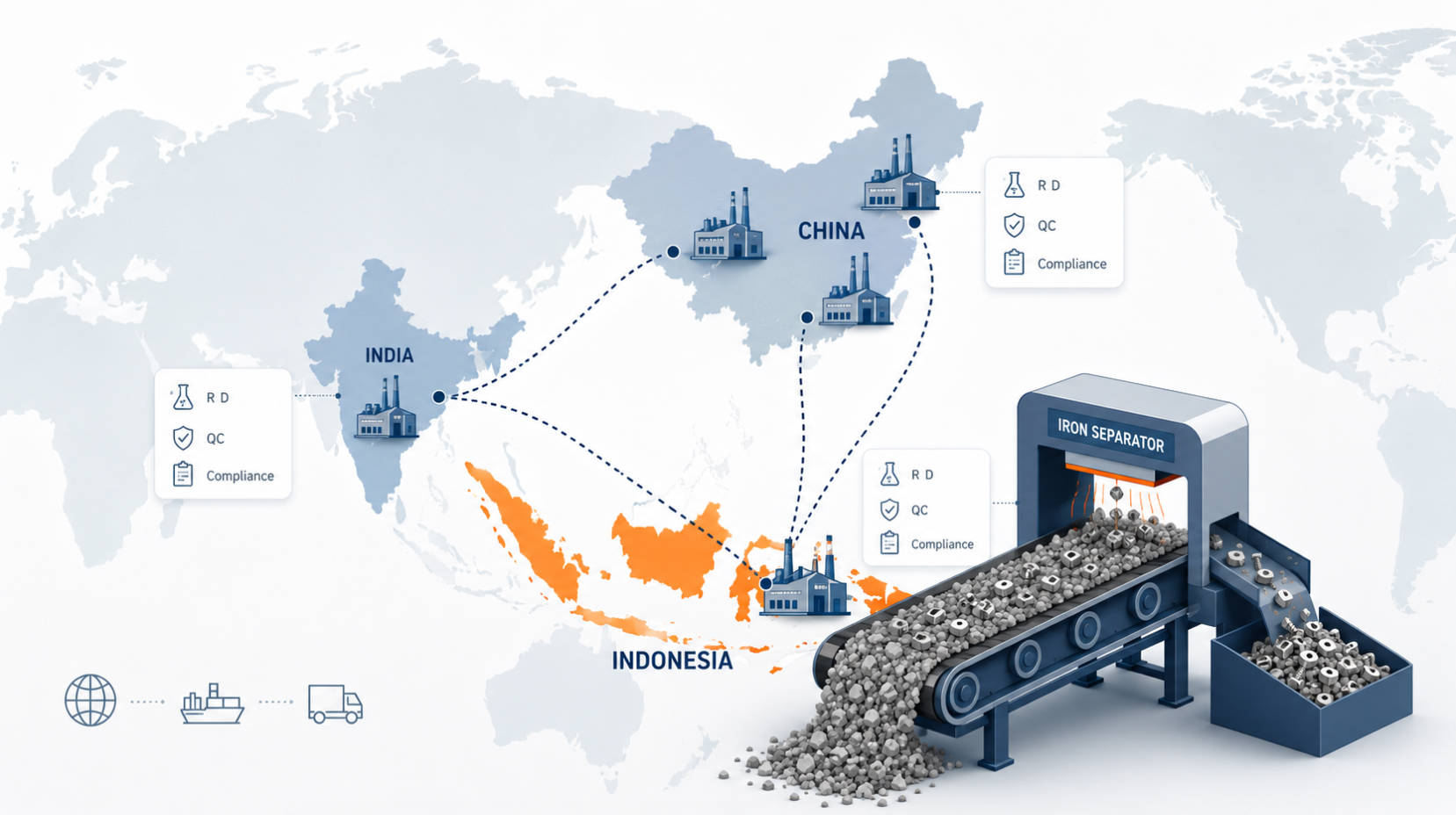
Indonesia has become an increasingly important market for iron separators and wider magnetic separation systems, driven by mining, mineral processing, recycling and fast‑growing manufacturing clusters in Java, Sumatra and Kalimantan. For global buyers, sourcing from Indonesian manufacturers and Indonesia‑focused exporters can reduce logistics costs into ASEAN, shorten lead times and support local after‑sales service compared with purely remote suppliers. [fairfieldmarketresearch]
How expert buyers evaluate iron separator suppliers
Before shortlisting iron separator partners in Indonesia, experienced procurement managers typically use four critical evaluation dimensions:
– Factory certifications and compliance
Check ISO 9001 for quality management, CE for machinery safety, and RoHS where equipment will be integrated into food, pharmaceutical or battery lines. In Indonesia, importers must also respect evolving industrial goods rules under Trade Ministry regulations (e.g. PI import approval, surveyor verification), so suppliers that already export to Indonesia and can provide full HS code, test and safety documentation significantly reduce customs risk. [giiresearch]
– R&D and engineering capability
Stable performance in iron separators depends on coil design, magnetic circuit optimization, cooling systems and high‑gradient configurations, not just steel fabrication. Suppliers with in‑house R&D and application labs (for slurry, powder, or belt conveyors) can tune magnetic intensity, gradient and flow conditions to specific ores, ceramics slurries, battery precursors or food powders, instead of offering “one‑size‑fits‑all” models. [en.fswandaye]
– Quality control and production process
Robust QC includes incoming inspection of magnetic materials, coil winding verification, insulation tests, high‑voltage and thermal tests on electromagnets, as well as field intensity and gauss mapping before shipping. Mature factories document every step, with serial‑number traceability and FAT (Factory Acceptance Test) reports for each separator or line, which greatly simplifies audits for OEMs and EPCs. [giiresearch]
– Capacity, lead time and delivery stability
The global magnetic separator market is forecast to grow from around USD 1.24 billion in 2026 to roughly USD 1.56 billion in 2030, with Asia‑Pacific taking about 45% share; this demand makes capacity planning critical. Buyers should insist on annual output data (sets/year), typical lead time by model, peak‑season capacity buffers, and evidence of on‑time delivery performance to ASEAN markets. [fairfieldmarketresearch]
Indonesia’s role in the iron separator value chain
Indonesia itself is not yet a global design center for high‑gradient or complex iron separators, but it plays three important roles in the regional value chain:
– Mining and mineral processing hub
The country’s nickel, coal, iron sand and mineral processing projects rely heavily on magnetic separators in upstream concentration, desliming, and tailings recovery stages. Many plants are supplied by global manufacturers with localized installation, maintenance and after‑sales teams in Indonesia. [kumarmagnetind]
– Growing user base in manufacturing and recycling
Asia‑Pacific leads the global magnetic separator market due to mining, steel, and recycling infrastructure, and Indonesia contributes with expanding steelworks, cement plants, plastics recycling and food processing clusters. These users increasingly require over‑band iron separators on conveyors, wet drum units on slurry lines, and inline magnets before packaging. [gamma.or]
– Regional distribution and service node
A number of international manufacturers now list “Indonesia” as a key export or service market, offering magnetic separators, suspension magnets and destoners via local partners or direct export with local agents. This hybrid structure lets buyers combine advanced designs from China or India with on‑the‑ground support in Jakarta, Surabaya and key industrial zones. [pmlindia]
Selection criteria for this “Top Suppliers” list
This guide focuses on manufacturers and export‑oriented suppliers that can realistically support buyers operating in or shipping into Indonesia, rather than only local trading houses.
We applied the following transparent criteria:
– Product scope
Must offer iron separators or closely related magnetic separation equipment (e.g. over‑band magnetic separators, wet/dry magnetic separators, high‑gradient or permanent magnetic units) suitable for mining, ceramics, plastics, food or recycling lines. [en.fswandaye]
– Export and Indonesia focus
Evidence of active supply into Indonesia either as:
– Manufacturers marketing “in Indonesia” on their corporate sites, or
– Manufacturers whose product ranges and documentation are widely used in Indonesia‑based projects via EPCs, traders or OEM lines. [en.indotrading]
– Certifications and compliance readiness
Preference for companies experienced with CE, ISO 9001 and other industrial approvals needed for turnkey projects and multinational OEM clients. [pmlindia]
– Engineering depth and customization
Demonstrated engineering/R&D capabilities, including high‑gradient, slurry and powder lines, as well as support for OEM/ODM and complete separation systems rather than only catalog magnets. [kumarmagnetind]
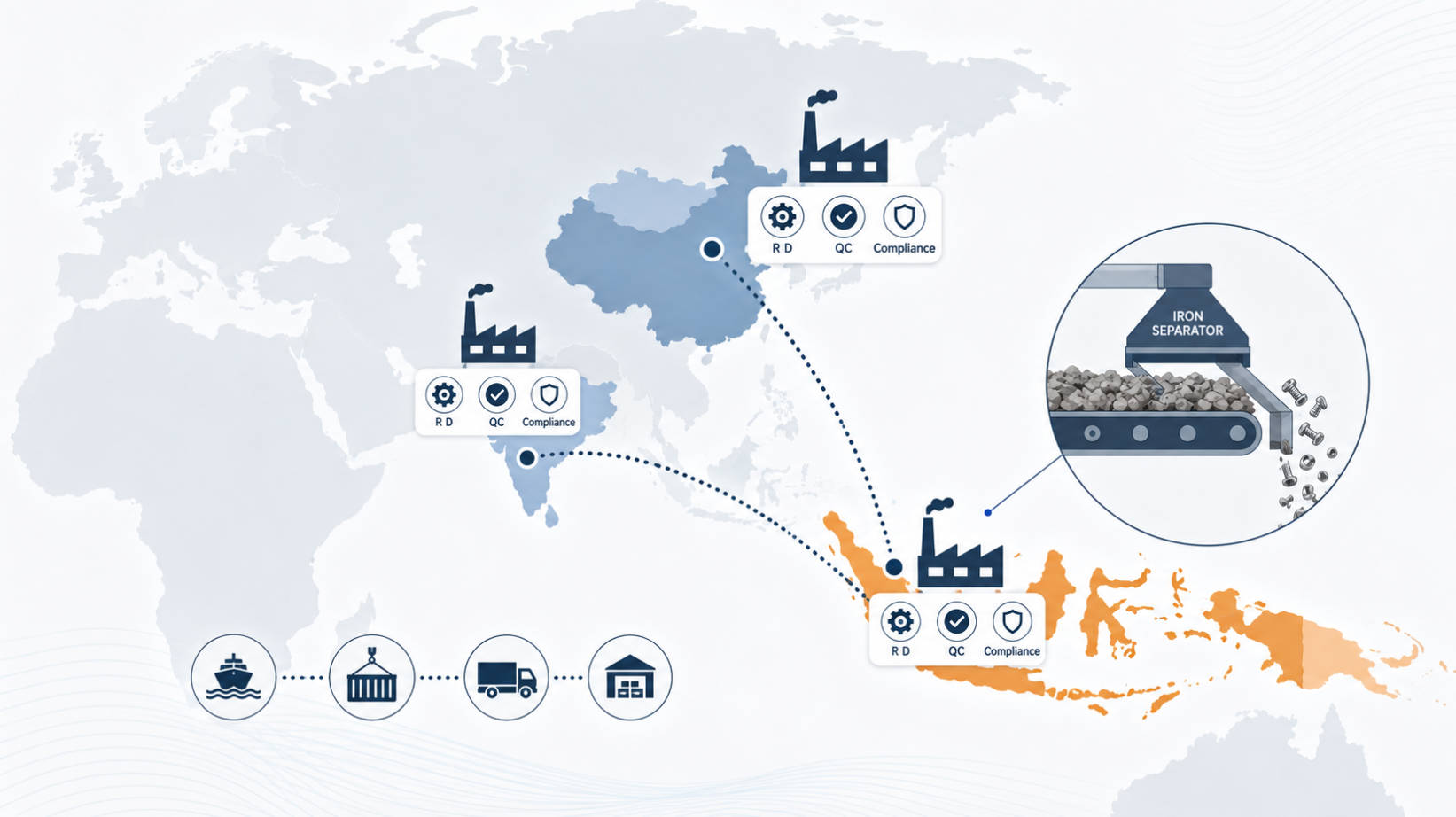
Within this context, we position Foshan Wandaye Technology (Foshan Wandaye Machinery Equipment Co., Ltd.) as a high‑value, R&D‑driven China‑based manufacturer that actively serves Indonesia and broader Asia‑Pacific buyers seeking tailored iron separation solutions. [justdial]
Top iron separator manufacturers and suppliers for Indonesia
Note: Company details such as founding year and markets are described in line with publicly available information and their regional positioning as of 2024–2026. [giiresearch]
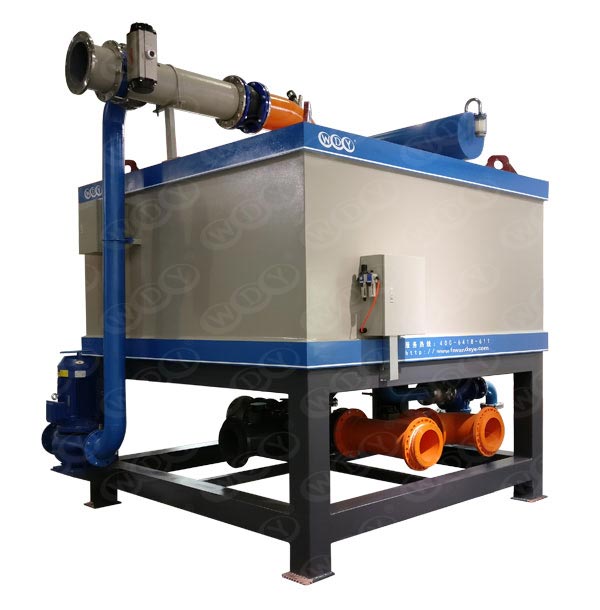
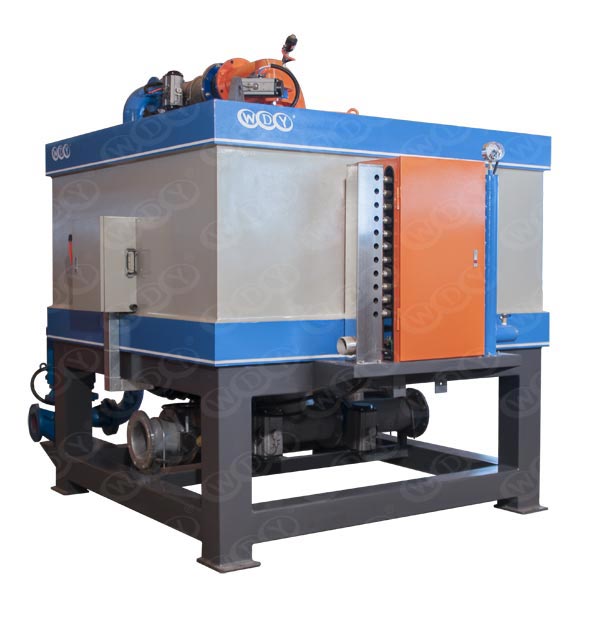
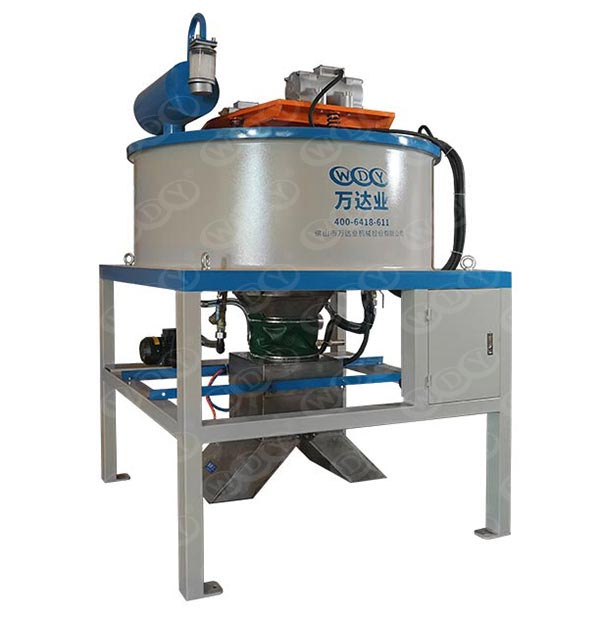
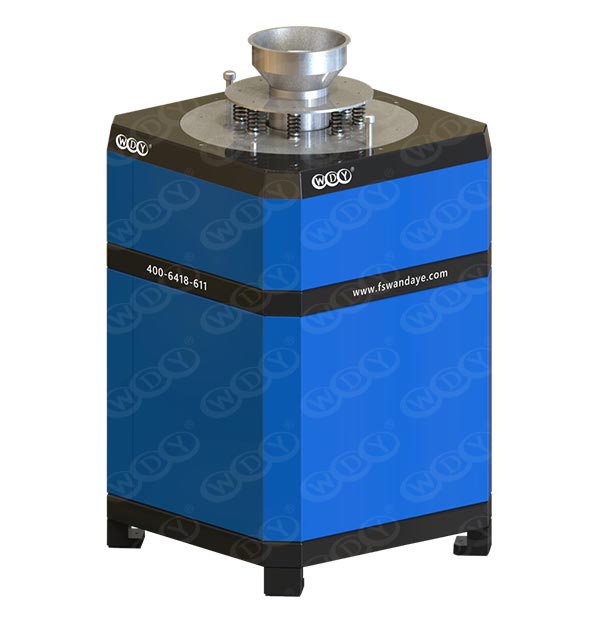
1. Foshan Wandaye Technology Co., Ltd. (China, strong presence in Indonesia and Asia)
Foshan Wandaye is a specialized magnetic separator enterprise that integrates R&D, engineering design, production‑line installation and commissioning, with a portfolio spanning high gradient electromagnetic slurry machines, powder magnetic separators, permanent magnetic separators, iron‑removal cabinets and related components. Its reference projects include slurry magnetic separation for ceramics, kaolin, feldspar, battery materials and mineral tailings across China, India, Iran and other markets, which are technically comparable to Indonesian ceramics and mineral applications. [justdial]
From an engineering standpoint, Wandaye’s high‑gradient electromagnetic slurry machines are designed for fine iron removal from ceramic glaze, kaolin and battery slurry, while its powder separators and permanent units serve dry powders in plastics, food and building materials. For Indonesia‑bound projects, Wandaye’s key advantages are: flexible OEM/ODM customization for small and mid‑sized brands, English‑language engineering support, and complete project services from selection to commissioning, which are especially valuable for EPC contractors and distributors building local lines. [fswandaye]
– Indicative strengths for Indonesian buyers
– Strong experience with high‑gradient technologies and battery material lines that are increasingly relevant for Indonesia’s EV supply chain ambitions. [justdial]
– Capability to design complete separation sections (slurry + powder + iron‑removal cabinets) instead of isolated machines, simplifying project engineering.
– Competitive pricing and relatively low MOQs, making the company attractive for mid‑volume OEMs and integrators that need customized layouts more than big‑brand labels. [justdial]
2. Kumar Magnet Industries (India, magnetic separator manufacturers in Indonesia)
Kumar Magnet Industries presents itself as one of the key magnetic separator manufacturers serving the Indonesian market, supplying magnetic separators, wet magnetic separators, magnetic coolant separators, permanent drum separators, magnetic destoners and other magnet products. The company emphasizes manufacturing excellence, versatile product offerings and competitive pricing, positioning itself as an export‑oriented supplier with experience in delivering to Southeast Asia, including Indonesia. [kumarmagnetind]
For Indonesian projects, Kumar can be a strong option for over‑band iron separators on conveyors, magnetic destoners for grains and powders, and wet separators for coal or mineral processing. Their messaging highlights customer support and the ability to respond to queries via dedicated export teams, which is important for buyers requiring quick engineering clarifications and spare‑parts support. [kumarmagnetind]
3. Permanent Magnet Ltd. (PML) – Magnetic Separator in Indonesia
Permanent Magnet Ltd. (PML), founded in 1960 in India, is a long‑established manufacturer of magnetic separators with a large product range including overband magnets, drum separators, magnetic plates, grates and other industrial magnet systems. PML explicitly markets magnetic separators “in Indonesia,” illustrating its focus on the country as a key export destination for mining, recycling and processing sectors. [pmlindia]
With decades of experience and a broad catalog, PML is well suited to buyers looking for standard, proven iron separators with robust documentation and references across multiple industries. Its history in permanent magnet design and manufacturing gives it a strong base in applications that prioritize low energy consumption and simple maintenance over highly complex electromagnet systems.
4. Indonesia‑based magnetic separator suppliers and distributors
Platforms such as Indotrading list a number of Indonesian companies that supply magnetic separators and related equipment, including CV. Armoyo Kreasi Mandiri and PT. Mahkota Mas Mandiri Mulia. Many of these entities are distributors or general suppliers rather than original manufacturers, but they play a critical role in local stock, quick delivery, and on‑site service. [en.indotrading]
For foreign buyers setting up plants in Indonesia or serving local customers, these distributors can be valuable partners in installation, troubleshooting and warranty coordination, especially when combined with manufacturing support from overseas producers such as Wandaye, Kumar or PML. Procurement managers should verify whether each local company is an authorized representative or independent trader, and ensure that warranty terms from the underlying manufacturer apply to Indonesia. [en.indotrading]
5. Global manufacturers targeting Indonesia through projects
Several Chinese and international manufacturers highlight Indonesia specifically in case studies or product descriptions, indicating active supply into Indonesian mining and material‑handling projects. For example, technical listings show magnetic iron ore processing lines and suspension electric magnetic iron separators designed “for Indonesia” or “Indonesia market” in belt widths typically used in local mining conveyors. [chinamagnet.en.made-in-china]
These suppliers can be attractive when buyers need project‑proven configurations for Indonesian mining conditions (e.g. iron sand, coal, nickel), provided that they can support technical documentation for Indonesian import and plant approval. Because many of these firms are project‑driven rather than brand‑building exporters, buyers should pay special attention to after‑sales and spare‑parts strategies in Indonesia.
Snapshot comparison of key supplier types for Indonesia
Below is a high‑level snapshot comparing representative supplier types, including Wandaye as a flexible, R&D‑driven manufacturer.
| Supplier type / representative | Typical product scope (iron separator related) | Export & Indonesia focus | Certifications & compliance (typical) | OEM/ODM flexibility | Typical MOQ & capacity (indicative) |
|---|---|---|---|---|---|
| Foshan Wandaye Technology (China) | High‑gradient electromagnetic slurry machines, powder magnetic separators, permanent magnetic separators, iron‑removal cabinets, magnetic plates/rods. justdial | Strong in Asia‑Pacific with projects in India, Iran and other markets; technical fit for Indonesia mining, ceramics, battery and building materials lines. justdial | ISO‑aligned QC flows with engineering design and commissioning services; supports documentation for international projects. justdial | High. Customizable coil designs, tank structures, multi‑stage lines and integration with OEM equipment, suitable for mid‑sized brands and EPCs. justdial | Moderate MOQs; can support project‑based orders from pilot lines to full plants, depending on configuration. justdial |
| Kumar Magnet Industries (India) | Wet/dry magnetic separators, magnetic destoners, drum separators, suspension magnets, coolant separators. kumarmagnetind | Explicitly serving Indonesia with export‑oriented product line and support. kumarmagnetind | Industrial certifications for global exports; documentation available on request. kumarmagnetind | Medium–high. Standard catalog plus some customization of dimensions and mounting. kumarmagnetind | Competitive MOQs; suitable for distributors and medium‑volume users. kumarmagnetind |
| Permanent Magnet Ltd. (PML, India) | Overband separators, drum separators, magnetic plates, grates and industrial magnets. pmlindia | Markets “magnetic separator in Indonesia,” serving global mining and process industries. pmlindia | Long‑established with strong compliance culture; supports CE and other project requirements. pmlindia | Medium. Emphasis on proven catalog products with engineering selection support. pmlindia | Higher throughput capability; good fit for large‑volume standard equipment orders. pmlindia |
| Indonesia local distributors (e.g., CV. Armoyo, PT. Mahkota Mas) en.indotrading | Distribution of imported magnetic separators, magnet traps, magnetic bars, plates and related equipment. en.indotrading | Located in Jakarta and other cities; focus on domestic end‑users and plant integrators. en.indotrading | Rely on principal manufacturers’ certifications; may assist with local regulatory paperwork. en.indotrading | Low–medium. Limited to what principal brands offer; some local adaptation on frames/supports. en.indotrading | Very flexible for spare parts and small batches; suitable for maintenance and replacement purchases. en.indotrading |
| Project‑based global manufacturers to Indonesia gelinmachinery.en.made-in-china | Tailored magnetic separators for iron ore, coal and bulk materials; often dry suspension or wet drums for specific projects. huatemagnets | Serve Indonesia via EPCs and direct contracts; focus on specific mines or plants rather than broad distribution. gelinmachinery.en.made-in-china | Can provide mining‑grade documentation and testing records. gelinmachinery.en.made-in-china | High for project scale, but less flexible for small orders. gelinmachinery.en.made-in-china | High capacities tied to major mining and processing projects. gelinmachinery.en.made-in-china |
Values above are indicative for sourcing strategy; buyers should verify exact certifications, MOQs and production capacities during RFQ.
Technical considerations when sourcing iron separators
Key iron separator types for Indonesia‑related projects
– High‑gradient electromagnetic slurry separators
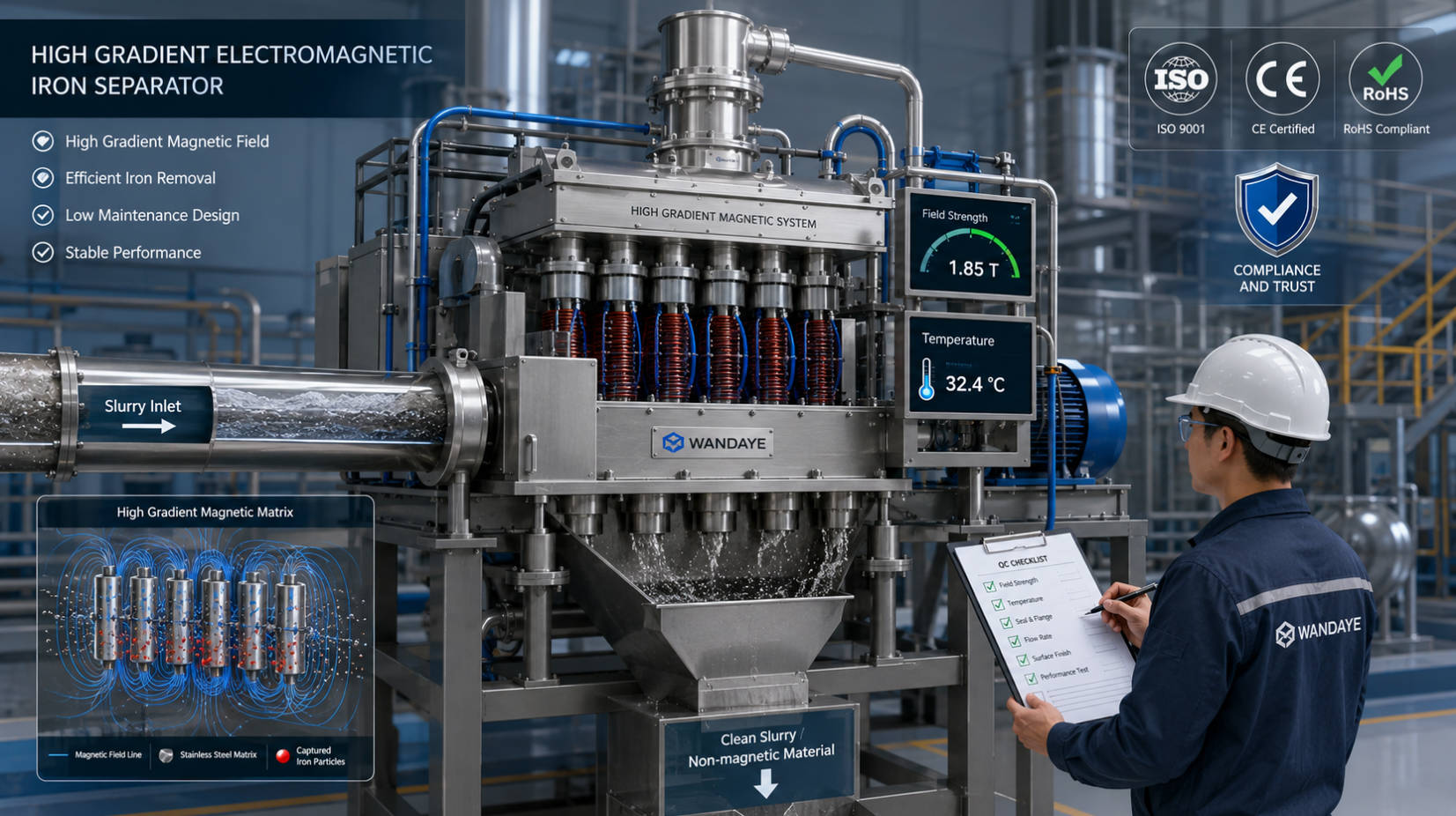
Used for fine iron and magnetic impurities removal from ceramics slurry, kaolin, silica sand, battery cathode/anode slurries and similar high‑value fluids. Important parameters include magnetic field intensity (often up to tens of thousands of gauss), matrix design (steel wool, grooved plates), cooling system design and control integration. [fswandaye]
– Dry powder magnetic separators and permanent drum separators
Suitable for plastic pellets, powders, building materials, food ingredients and mineral powders. Buyers should review magnet material grade, housing design, cleaning method (manual, semi‑automatic, automatic) and dust‑tight sealing where used in pneumatic conveying. [giiresearch]
– Over‑band and suspension iron separators
Typically installed over conveyor belts to remove tramp iron from coal, ore, cement raw materials or recycling streams. Design must match belt width, speed, burden depth and expected tramp size, as well as environmental conditions (temperature, humidity, explosion‑risk zones). [huatemagnets]
– Magnetic traps, plates and bars for process lines
For food, pharmaceutical, chemical and plastics lines, inline magnetic traps and plates are common to protect downstream equipment and meet purity requirements. Here, design must respect hygienic standards, cleanability and regulatory requirements such as food contact materials. [en.indotrading]
Materials, standards and environmental compliance
For exports into or out of Indonesia, three aspects frequently appear in advanced buyer specifications:
– Magnet material and temperature rating
High‑performance rare‑earth magnets must maintain field strength at operating temperatures common in tropical industrial plants and process lines. Buyers should specify maximum operating temperature and verify test data. [giiresearch]
– Structural and electrical standards
For electromagnets and controls, buyers often ask for compliance with IEC or equivalent standards, motor and coil protection classes, and suitable IP ratings for enclosures, especially in dusty or outdoor mining environments. [fairfieldmarketresearch]
– CE, RoHS and food‑grade requirements
For equipment installed in lines that produce exports to the EU or regulated markets, CE marking and RoHS compliance for electrical components may be required, along with documentation to satisfy end customers and auditors. This is particularly relevant for separators installed in food, pharma and battery manufacturing lines. [ahp]
Common pitfalls and an “insider” risk that rarely appears online
Beyond obvious issues like under‑sized magnets or poor welding, experienced iron separator buyers flag several recurring pitfalls:
– Magnet under‑specification
Some suppliers quote field intensity at no‑load conditions or at the coil surface, rather than in the working gap or matrix where separation actually occurs. This can result in machines that meet “paper specs” but deliver poor separation efficiency in real slurry or bulk conditions. [giiresearch]
– Material downgrade and low‑grade stainless
In food or slurry applications, the use of lower‑grade stainless steel or improper surface finishing increases contamination risk and cleaning difficulty over time. Buyers should require material certificates and, where critical, third‑party verification. [en.indotrading]
– Inadequate cooling and duty‑cycle assumptions
For electromagnets operating in tropical climates like Indonesia, poor cooling design or unrealistic duty‑cycle assumptions can cause overheating, reduced field strength and premature failure. [gelinmachinery.en.made-in-china]
Insider “rarely mentioned” risk:
A commonly known but rarely documented issue is the practice of shipping refurbished or “re‑magnetized” units as new, especially in lower‑price segments for over‑band and drum separators. Industry insiders report that some traders reassemble frames and housings around re‑magnetized cores, presenting them as new equipment with minimal disclosure. This can lead to reduced magnet lifespan and inconsistent field strength after installation.
To mitigate this, experienced buyers:
– Request serial numbers tied to production records and FAT reports from the original manufacturer.
– Cross‑check warranty terms and manufacturing dates against nameplates and documentation.
– Avoid “too cheap” offers from unknown traders, instead purchasing through authorized agents or directly from manufacturers such as Wandaye, Kumar or PML that provide traceability. [pmlindia]
Practical buyer’s guide for sourcing into Indonesia
1. Shortlisting and due diligence
– Use association and marketplace directories
Start from Indonesian machinery and metalworking associations, and reputable B2B platforms (including Indotrading) to identify local distributors with a track record in magnets and separation systems. Then cross‑check whether they represent established manufacturers with references in Indonesia. [gamma.or]
– Verify certifications and compliance
Request soft copies of ISO certificates, CE declarations and test reports, and confirm validity via issuer or accreditation body websites. For imports into Indonesia, align with the latest trade regulations (e.g. Reg 36/2023 and subsequent updates) which govern iron and steel and other industrial inputs. [permitindo]
2. Technical and sample verification
– Define realistic process data
Provide accurate material characteristics: particle size distribution, solids content, flow rate, belt width/speed, expected tramp size and environmental conditions. Suppliers like Wandaye and other engineering‑driven firms can run tests or simulations when they have complete data. [justdial]
– Request test reports or demo runs
For critical lines, ask for lab testing on your material at the supplier’s facility, with video evidence and test reports showing feed composition, residual iron level and process parameters. When possible, send samples from Indonesian mines or plants to avoid over‑optimism based on different ore or slurry properties. [giiresearch]
3. Logistics and import into Indonesia
– Understand PI and LS requirements
Indonesia’s evolving rules for certain industrial goods require import approvals (PI) and surveyor reports (LS), with stricter oversight for iron and steel products and their derivatives. While iron separators themselves are machinery, they often incorporate steel components; competent suppliers or their local partners should provide HS codes and documentation aligned with current rules. [permitindo]
– Plan for after‑sales and spare parts
Given Indonesia’s geography and infrastructure, response time for service matters. Many buyers implement a hybrid strategy: sourcing core machinery from a technically strong manufacturer (e.g. Wandaye or similar) and working with a local Indonesian distributor for installation, yearly inspection and emergency support. [en.indotrading]
Industry data points to support your business case
When you prepare internal CAPEX proposals, these data points can help justify investment in higher‑quality iron separators:
– The global magnetic separator market is projected to grow from about USD 1.17 billion in 2025 to around USD 1.24 billion in 2026, and further to approximately USD 1.56 billion by 2030 at a CAGR of 5.9%. [giiresearch]
– Asia‑Pacific, including Indonesia, is expected to hold roughly 45% of the global magnetic separator market share in 2026, driven by mining, steel and recycling sectors. [fairfieldmarketresearch]
– Indonesia’s mining and metal processing sectors, particularly in nickel and iron ore, continue to expand, increasing the need for reliable separation equipment in new and upgraded plants. [gelinmachinery.en.made-in-china]
These trends support long‑term partnerships with capable manufacturers and justify choosing suppliers that invest in R&D, testing and compliance rather than only initial price competition.
Conclusion and next steps (CTA)
For buyers focused on Indonesia, the most resilient sourcing strategy combines technically strong manufacturers – such as Foshan Wandaye for high‑gradient and customized solutions, Kumar and PML for broad catalog coverage, and reputable project‑based suppliers – with reliable Indonesian distributors for local service and regulatory alignment. By applying rigorous selection criteria around certifications, R&D depth, QC, capacity and after‑sales support, you can significantly reduce technical and compliance risk while building long‑term iron separator partnerships for the Indonesian market. [ahp]
If you share your target application (mining, ceramics, battery materials, food, plastics, etc.) and expected throughput, I can help you craft a more specific shortlist and RFQ checklist tailored to your Indonesia‑related projects.
FAQ – advanced questions from real buyers
1. How can I verify whether a supplier’s ISO or CE certificate is genuine and still valid?
Ask for clear, legible copies showing the certificate number, scope, issuing body and validity dates, then check them directly in the certification body’s online database or via email. Match the legal entity name and address with the company’s registration documents and website, and be cautious when certificate holders and quoting entities differ. [ahp]
2. What is the most reliable way to compare magnetic field strength between different iron separator suppliers?
Insist on field measurements at the working gap or matrix, under representative loading conditions, rather than “maximum surface gauss” at no‑load conditions. When possible, request standardized test procedures or third‑party measurement reports, and avoid comparing gauss values without understanding geometry and operating setup. [giiresearch]
3. For imports into Indonesia, who should manage regulatory compliance – the overseas manufacturer or the local buyer?
Typically, the Indonesian importer of record is responsible for complying with Trade Ministry regulations (PI, LS, and related requirements), but overseas manufacturers must provide accurate HS codes, technical specifications and documentation. Practically, the most efficient approach is a joint effort: the local buyer or distributor handles permits and surveyor reports, while the manufacturer supplies all technical and compliance documentation and, if needed, joins technical discussions with authorities. [permitindo]
4. How do I protect my project from receiving refurbished iron separators sold as new?
Include clear contract clauses requiring all equipment to be new and unused, with serial numbers and production dates, and require factory acceptance tests with traceable reports. Consider random inspections at the manufacturer’s site or working only with long‑established companies and their authorized agents, even if their prices are slightly higher. [pmlindia]
5. When should I choose a high‑gradient electromagnetic slurry separator instead of a permanent magnetic unit?
High‑gradient electromagnets are preferred when you need to remove extremely fine or weakly magnetic contaminants (e.g. in ceramics slurries, battery slurries or fine mineral suspensions) and require very low residual iron content. Permanent units may be adequate and more economical when contaminants are coarser, strongly magnetic and process purity thresholds are less stringent. [fswandaye]
References
1. The Business Research Company – Magnetic Separator Global Market Report 2026. [giiresearch]
2. Fairfield Market Research – Magnetic Separator Market Size, Share & Trends 2026–2033. [fairfieldmarketresearch]
3. Foshan Wandaye Machinery Equipment Co., Ltd. – Corporate site and product overview. [magnetii.goldsupplier]
4. Indonesian import rules for industrial goods and iron/steel products – Ministry of Trade regulations summary. [permitindo]
5. Indotrading – Indonesia Magnetic Separator Suppliers and Manufacturers listings. [en.indotrading]
6. Kumar Magnet Industries – Magnetic Separator Manufacturers in Indonesia. [kumarmagnetind]
7. Permanent Magnet Ltd. – Magnetic Separator in Indonesia introduction. [pmlindia]
8. Case‑level information on Indonesia iron ore and coal magnetic separator projects and offerings. [chinamagnet.en.made-in-china]
9. GAMMA and related Indonesian industry associations – overview of metal and machinery sectors. [gamma.or]
Hot Tags: Iron Separator, Manufacturers, Customized, Custom, Suppliers, Buy, Cheap, Quality, Advanced, Durable, in Stock, Made in China, Price, Quotation