Content Menu
● What Is Electrostatic Separation of Minerals?
● A Brief History of Electrostatic Beneficiation
● Core Principles: Conductors vs Non-Conductors
● How an Electrostatic Separator Works
● Example Application: Separating Pyrite from Silica Sand
● Key Separation Variables and Process Control
>> Equipment and Operating Variables
● Minerals Separated Using ElectroStatic Technology
● Combined Mineral Separation: Electrostatic and Magnetic Methods
>> Typical Flowsheet for Beach Sand Processing
● Environmental and Operational Advantages
● Design and Operating Best Practices
● When to Choose Electrostatic Separation
● Testing, Project Evaluation, and Expert Support
● A Changing Future for Mineral Processing
● Summary
>> 1. What types of minerals are best suited to electrostatic separation?
>> 2. Do electrostatic separators require water or flotation reagents?
>> 3. What particle size range is suitable for electrostatic mineral separation?
>> 4. Can electrostatic separation be combined with magnetic separation in the same plant?
>> 5. How much material can an industrial ElectroStatic Separator process?
Electrostatic separation of minerals is a dry, energy-efficient, and environmentally friendly technology that uses differences in electrical conductivity to split mixed mineral streams into valuable products and waste. It is increasingly important as mining, ceramics, and other process industries face declining ore grades, stricter regulations, and water scarcity. By combining electrostatic separation with high‑intensity magnetic separation, operators can design flexible flowsheets that recover more value from complex ores while reducing water and reagent consumption.
What Is Electrostatic Separation of Minerals?
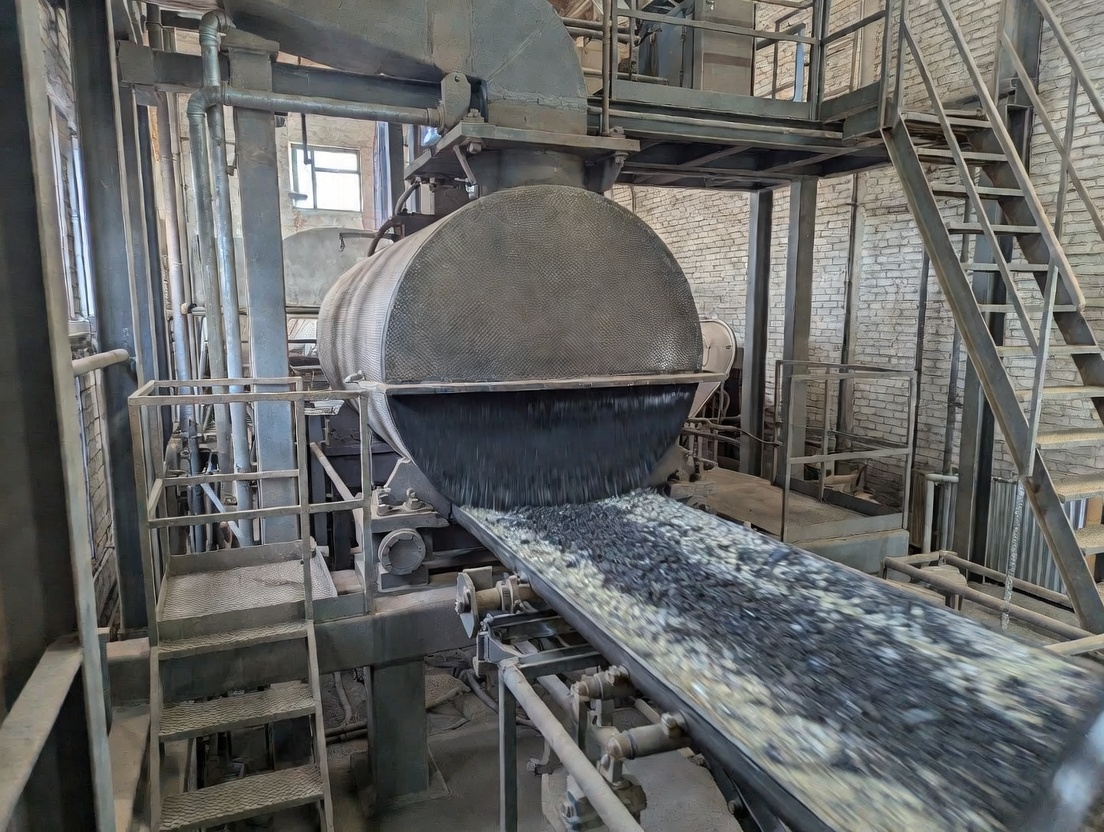
Electrostatic separation is a dry beneficiation method in which mineral particles are exposed to a high-voltage electric field and separated according to whether they are conductors or non-conductors (dielectrics). In practical mineral processing, this means that a mixed feed can be split into a conductive fraction that loses its charge rapidly and a non-conductive fraction that tends to retain its charge and stay attached to grounded surfaces. The result is a cleaner, higher-grade mineral product with less reliance on water-based processes and chemical reagents.
Because it is a dry technology, electrostatic separation is especially attractive for plants located in arid regions, for operations that wish to avoid complex tailings dams, and for flowsheets where water quality or availability is a critical constraint. It also lends itself well to modular plant design and to retrofitting into existing circuits that already include crushing, screening, and magnetic separation equipment.
A Brief History of Electrostatic Beneficiation
Electrostatic phenomena were described as early as 600–700 B.C., when people observed that amber rubbed with fur would attract light objects such as hair. The word “electrostatic” is derived from the ancient Greek word “electron,” meaning amber. Over the past 140+ years, these basic observations have been translated into industrial-scale processes for separating and upgrading materials.
Electrostatic beneficiation of dry granular plant-based food materials has been studied for more than a century, with one of the earliest patents for electrostatic separation of wheat flour middlings filed in 1880. In the late 1890s, Thomas Edison designed an electrostatic separator to recover non-magnetic iron ore from sand-like particles without using water. His equipment allowed a thin film of dry particles to pass over an electrically charged drum, exploiting differences in conductivity.
During the Gold Rush in the Ortiz Mountains near Santa Fe, New Mexico, Edison noticed that gold particles would adhere to a charged drum while sand was repelled. This observation led to the first patented gold concentrator using electrostatic principles. Electrostatic separation became popular in mineral processing in the early 1900s but lost ground to froth flotation, which allowed efficient separation of very fine particles in a slurry. Today, however, the drive to reduce chemical usage and water consumption has renewed interest in dry electrostatic separation for minerals and industrial raw materials.
Core Principles: Conductors vs Non-Conductors
Every mineral species exhibits specific electrostatic properties that determine how it behaves in an external electric field. For the purpose of electrostatic separation, minerals are typically classified into two broad groups: conductors and non-conductors (dielectrics). This simple classification underpins the operation of modern ElectroStatic Separators used in mining, ceramics, and other industries.
Conductive minerals, including most sulphides and some metallic minerals, easily transfer electrical charge to an earthed (grounded) surface. When they are exposed to a high-voltage field and brought into contact with a grounded roll or plate, they rapidly lose their charge. Non-conductive minerals such as many silicates and oxides retain charge for longer periods. They are attracted to and “pinned” on the earthed surface through a phenomenon known as the image charge effect, which is at the heart of electrostatic mineral separation.
How an Electrostatic Separator Works
A typical industrial ElectroStatic Separator consists of several coordinated components designed to control how particles are presented to the electric field and how separated fractions are collected. A vibratory feeder delivers a controlled, even flow of material onto an earthed stainless-steel roll rotating at a pre-set speed. An electrode assembly, located at an angle (commonly around 20° from vertical), applies a high voltage—often in the range of 20–30 kilovolts—to charge the particles as they leave the feeder and approach the roll.
Once particles are under the influence of both the electric field and the rotating roll, their behavior diverges. Conductive particles quickly lose their charge to the earthed roll and are ejected by centrifugal force into a separate collection zone. Non-conductive particles, by contrast, retain an induced image charge that keeps them pinned to the roll surface for longer. These non-conductors travel further around the roll before they are removed by a mechanical brush or scraper. Adjustable splitter plates and chutes downstream of the roll allow the operator to collect distinct product streams and fine-tune the cut point between conductive and non-conductive fractions.
Example Application: Separating Pyrite from Silica Sand
A classic demonstration of electrostatic mineral separation is the separation of conducting Pyrite (FeS₂) from non-conducting Silica Sand (SiO₂). In this scenario, a mixture of pyrite and silica powders is fed via a vibratory feeder onto an earthed stainless-steel roll that revolves at a controlled speed. The material passes through a high-voltage zone created by an electrode assembly positioned at approximately 20° from the vertical, charging the particles as they fall onto the roll.
As the composite feed travels on the roll, two distinct behaviors can be observed. Conductive pyrite particles rapidly lose their charge to the grounded roll. Once neutralized, they are affected primarily by centrifugal force and are thrown off the roll into a designated “conductor” collection area. Non-conductive silica particles experience an image charge effect that keeps them attached to the roll surface, causing them to follow the roll around its circumference. Eventually, a brush or scraper dislodges the silica into a separate “non-conductor” collection chute. This simple example illustrates how subtle differences in electrical behavior can be harnessed to generate distinct, saleable mineral products.
Key Separation Variables and Process Control
The mineralogy of the feed dictates how an ElectroStatic Separator should be configured for optimum performance. To define the best operating window, controlled laboratory tests are typically carried out in specialized facilities such as Bunting’s Centre of Excellence near Birmingham in the UK. These tests identify the key parameters required to meet specific separation objectives, whether that is maximizing recovery, improving grade, or achieving a particular impurity specification.
Several major variable groups must be considered and balanced: material characteristics, machine settings, and atmospheric conditions. Each group influences how efficiently the separator can discriminate between conductive and non-conductive particles, and how cleanly the products can be recovered. Fine-tuning these variables on the basis of test work is essential for achieving robust plant performance in real-world operation.
Material-Related Variables
The physical properties of the feed strongly affect electrostatic separation performance. Some of the most critical characteristics include:
– Particle size distribution: Electrostatic separators typically operate most effectively on material with a controlled particle size range, often from greater than 4 mm down to below 100 microns, depending on the design. Oversized particles may not charge or travel correctly, while excessive fines can lead to dusting, agglomeration, and misplacement of particles.
– Moisture content: A low moisture content in the feed is essential. Excess moisture can cause particles to be sticky, form clumps, or develop conductive bridges between grains, all of which reduce the ability to charge and separate them effectively. Drying and conditioning steps before electrostatic separation are therefore a common requirement.
– Surface condition and cleanliness: Coatings, surface oxidation, or adhered dust can alter a mineral’s effective conductivity and its interaction with the electric field. Proper feed preparation, including screening, de-dusting, or pre-cleaning, helps to ensure that the intrinsic electrostatic properties of each mineral are expressed clearly during separation.
Equipment and Operating Variables
In addition to material attributes, the way the ElectroStatic Separator is configured has a direct impact on separation efficiency. Important machine-level variables include:
– Applied voltage: The high-voltage level determines the strength of the electric field and the degree of charging. Operating in the correct voltage range is critical; too low, and particles may not charge sufficiently, too high, and undesirable discharges or arcing can occur.
– Roll speed: The rotation speed of the earthed roll controls residence time, centrifugal force, and the balance between mechanical and electrostatic forces acting on particles. Optimizing roll speed ensures that conductive particles have enough time to lose their charge, while non-conductors remain pinned until they are deliberately removed.
– Splitter plate position: Adjustable splitter plates determine where the boundary lies between product streams. Small changes in splitter position can significantly affect product grade and recovery, making careful optimization and regular checking essential.
– Electrode position and geometry: The distance between the electrode and the roll, as well as the angle at which the electrode is mounted, influence the charging efficiency of particles. Correct positioning ensures uniform exposure to the electric field and consistent separation performance across the width of the roll.
– Atmospheric conditions: Low humidity is preferred for electrostatic separation, as high ambient moisture can reduce charge retention and cause particles to adhere to surfaces unpredictably. Many industrial separators incorporate heaters or environmental controls to maintain favorable conditions around the equipment.
Minerals Separated Using ElectroStatic Technology
The range of minerals that can be treated by electrostatic separation is broad. What matters most is the presence of a significant difference in electrical conductivity between the mineral of interest and the surrounding gangue or impurities. Many sulphide minerals, certain metallic phases, and some industrial minerals behave as conductors, while a large variety of silicate and oxide minerals are predominantly non-conductive.
Although the full list of applicable minerals is extensive, typical examples include mixtures of sulphides with silica, heavy mineral sands containing zircon, rutile, and silica, and industrial mineral deposits where quartz must be separated from conductive impurities. These mineral mixes are particularly well suited to ElectroStatic Separators because the technology can generate clean, dry products without the need for water-based flotation or dense media separation, thereby simplifying both plant design and environmental management.
Combined Mineral Separation: Electrostatic and Magnetic Methods
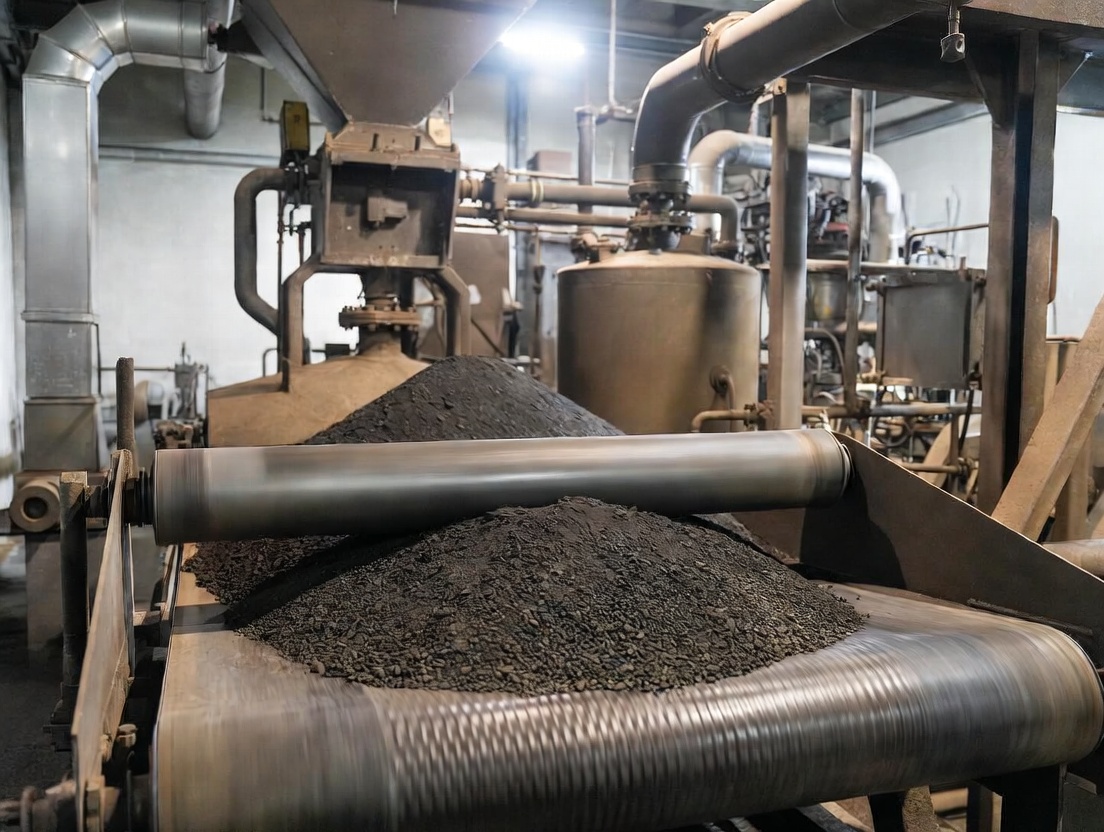
ElectroStatic Separators are often deployed alongside high-intensity magnetic separators as part of a combined mineral separation solution. This integrated approach is especially effective when processing complex beach sands and heavy mineral deposits that contain both magnetic and non-magnetic, conductive and non-conductive phases. Using multiple separation mechanisms in sequence allows engineers to build a stepwise flowsheet in which each unit operation targets a particular mineral group.
In a simple example, an Induced Magnetic Roll or Rare Earth Roll Separator is used for primary separation to remove para- and ferromagnetic minerals such as ilmenite, garnet, and monazite. These magnetically susceptible minerals are concentrated into one or more magnetic product streams. The remaining non-magnetic fraction still contains a mixture of high-value minerals such as zircon and rutile, as well as silica and other gangue. This non-magnetic fraction is then treated by an ElectroStatic Separator that discriminates between conductive and non-conductive species.
Typical Flowsheet for Beach Sand Processing
A representative beach sands processing flowsheet might follow these stages:
1. Mining and initial screening: Raw beach sand is mined and screened to remove oversize material and debris, creating a stable feed for downstream processing.
2. High-intensity magnetic separation: Induced Magnetic Roll or Rare Earth Roll separators extract magnetic and paramagnetic minerals, typically including ilmenite, garnet, and monazite, which form valuable concentrate streams.
3. Electrostatic separation: The non-magnetic fraction is fed to an ElectroStatic Separator, which splits it into conductive and non-conductive products. Zircon and rutile can often be separated from silica and other gangue during this step, based on differences in electrical behavior.
4. Product cleaning and blending: The resulting product streams may undergo further cleaning, refining, or blending to meet customer specifications for size, purity, and chemistry. In some plants, multiple passes of magnetic and electrostatic separation are used to achieve very high product grades.
In a beach sands plant, a 1.5 m wide ElectroStatic Separator typically processes between 3 and 5 tonnes per hour of feed material. This relatively compact equipment footprint, combined with dry operation, makes electrostatic separation an appealing solution when designing or upgrading mineral sands facilities.
Environmental and Operational Advantages
Modern mineral processors face mounting challenges: lower-grade ore bodies, higher energy prices, stricter environmental standards, and increased community expectations. Within this context, electrostatic separation offers several key advantages that align with long-term sustainability goals and cost control. Because it is a dry technology, it inherently reduces the need for large process water circuits and tailings dams, mitigating one of the largest environmental and social risks associated with mineral processing.
Electrostatic separation also minimizes or eliminates the use of chemical reagents commonly associated with froth flotation and other wet processes. This reduction in reagent consumption decreases operating costs, simplifies waste treatment, and can enhance the environmental profile of a project. When used in conjunction with magnetic separation and other physical separation techniques, electrostatics form part of a multi-stage solution capable of maximizing resource recovery while respecting water and environmental constraints.
Design and Operating Best Practices
To translate the theoretical benefits of electrostatic separation into consistent industrial performance, plant designers and operators must follow a set of practical best practices. These guidelines cover everything from feed preparation to long-term maintenance and process optimization, and they are typically refined through test programs and commissioning experience.
First, feed conditioning is critical. Material should be adequately dried, screened, and handled so that it is free-flowing and evenly distributed across the feed width of the vibratory feeder. Uniform presentation to the roll helps ensure that all particles experience comparable electric field conditions. It also reduces the risk of localized overloading, which can decrease separation efficiency and cause uneven wear on mechanical components.
Second, it is important to undertake controlled test work before specifying and purchasing full-scale equipment. Laboratory and pilot-scale ElectroStatic Separators allow engineers to measure how a particular ore responds to changes in voltage, roll speed, splitter position, and other variables. These results are then used to build process models, size equipment, and forecast performance under plant conditions. Early test work can significantly de-risk capital investment by clarifying expected recovery and product grade ranges.
Third, atmospheric control around the separator should not be overlooked. In humid climates, the use of heaters, enclosures, or local environmental control helps maintain low humidity and stable operation. Regular inspection and cleaning of electrodes, rolls, and brushes are essential to avoid build-up of dust or oxidation that might otherwise impair charging efficiency and reduce the accuracy of separations.
When to Choose Electrostatic Separation
Electrostatic separation is particularly attractive in scenarios where water is scarce or expensive, or where strict environmental regulations limit the use of certain chemicals. Operations in deserts, remote regions, or areas with fragile ecosystems often prioritize dry processing technologies. By reducing water intake and simplifying tailings management, electrostatic separation contributes to more sustainable, lower-risk project designs.
The technology is also an excellent choice when the feed contains a clear mix of conductive and non-conductive minerals, and when there is a strong economic incentive to separate them. This is the case in many heavy mineral sands deposits, industrial mineral operations, and base metal tailings retreatment projects. Electrostatic units can be integrated into new plants or retrofitted into existing flowsheets, providing additional recovery from streams that might previously have been discarded or sold at a lower value.
Testing, Project Evaluation, and Expert Support
Because each mineral deposit is unique, successful implementation of electrostatic separation begins with a structured evaluation process. The first step is detailed sample characterization, including mineralogical analysis to identify which minerals are conductive or non-conductive and how they are associated in the ore. This information guides decisions about whether electrostatic separation is appropriate and what separation goals are realistic.
Next, a laboratory test program is carried out to measure how representative samples respond to various operating conditions. These tests provide empirical data on recovery, grade, and mass balance under different combinations of voltage, roll speed, feed rate, and splitter positions. Process engineers then use these data to design a flowsheet that integrates electrostatic separation with magnetic separation, gravity concentration, or flotation as required. In many projects, pilot or demonstration-scale runs help to validate lab findings and refine design parameters before full-scale installation.
Specialist equipment suppliers and test centers, such as the Bunting Centre of Excellence, offer comprehensive support throughout this journey. Their services often include test campaign design, detailed reporting, flowsheet recommendations, and guidance on equipment selection and sizing. Close collaboration between mine operators, process engineers, and equipment manufacturers helps ensure that electrostatic separation delivers its full value in terms of performance, reliability, and environmental benefits.
A Changing Future for Mineral Processing
Mineral processors have never faced greater pressure to innovate. Lower-quality reserves, the need to reprocess waste and tailings, and strict environmental and social expectations all require more sophisticated processing solutions. Electrostatic separation, often combined with magnetic separation and other physical processes, offers a powerful toolset for addressing these challenges while maintaining economic viability.
As regulatory frameworks evolve and stakeholders demand greater transparency around water use, emissions, and land disturbance, dry separation technologies are likely to play an increasingly central role in project design. Electrostatic separation’s ability to recover value from low-grade ores and existing waste streams provides a pathway to improved resource efficiency and reduced environmental impact. For operations willing to invest in high-quality test work and engineering, it represents a robust, future-ready option for mineral beneficiation.
Summary
Electrostatic separation of minerals is a mature yet increasingly important technology in modern mineral processing. By exploiting differences in electrical conductivity, ElectroStatic Separators can deliver high-grade products in a dry, low-reagent flowsheet that complements high-intensity magnetic separation and other physical methods. From historical developments under pioneers like Thomas Edison to current integrated beach sand operations, electrostatic separation has demonstrated its value in a wide range of applications.
Success with electrostatic separation depends on proper feed preparation, detailed test work, careful control of equipment variables, and thoughtful flowsheet integration. When these elements are in place, the technology offers substantial environmental and operational advantages, including reduced water usage, lower chemical consumption, and the ability to recover value from challenging or previously neglected resources. For operators and engineers designing the next generation of mineral processing plants, electrostatic separation provides a flexible, sustainable option that aligns well with both economic and environmental objectives.
Contact us to get more information!
Frequently Asked Questions
1. What types of minerals are best suited to electrostatic separation?
Electrostatic separation works best on feeds that contain a meaningful contrast in electrical conductivity between mineral species. This usually means mixtures of conductive minerals, such as many sulphides or certain metallic phases, and non-conductive minerals like silica, zircon, rutile, and other silicates or oxides. The greater the difference in conductivity between valuable minerals and gangue, the more effective the separation is likely to be. Comprehensive mineralogical analysis during the evaluation phase helps determine whether electrostatic separation is technically and economically justified for a particular deposit.
2. Do electrostatic separators require water or flotation reagents?
No. Electrostatic separation is a dry process and does not rely on process water or large volumes of flotation reagents. This is one of its most significant advantages compared with traditional wet beneficiation methods. While some operations may still use water in upstream crushing or screening steps, the electrostatic separation stage itself is designed to operate with dry, free-flowing material. As a result, plants using electrostatic separation typically have simpler water management systems and face fewer challenges related to reagent supply and tailings treatment.
3. What particle size range is suitable for electrostatic mineral separation?
Electrostatic separators generally perform best on controlled particle size ranges. Many commercial systems treat material between a few millimetres and around 100 microns, though the exact limits depend on the design of the separator and the nature of the ore. Particles that are too large may not charge or adhere effectively to the roll, while very fine particles can be prone to dusting, agglomeration, and erratic trajectories. During laboratory test work, engineers identify the optimal size range for a given ore and may recommend screening or classification steps to ensure that only suitably sized material is fed to the separator.
4. Can electrostatic separation be combined with magnetic separation in the same plant?
Yes. Electrostatic separation is frequently combined with high-intensity magnetic separation in integrated flowsheets, especially for beach sands and other complex mineral deposits. Magnetic separators are typically used first to remove para- and ferromagnetic minerals, producing magnetic concentrates and a non-magnetic residue. The non-magnetic fraction is then treated by ElectroStatic Separators, which split it into conductive and non-conductive products. This multi-stage approach enables efficient recovery of multiple valuable mineral species from a single feed and allows operators to fine-tune product quality at each stage of the process.
5. How much material can an industrial ElectroStatic Separator process?
The throughput of an ElectroStatic Separator depends on several factors, including the width of the machine, the particle size distribution, the density of the feed, and the required separation performance. As a general reference, a 1.5 m wide ElectroStatic Separator processing beach sands will often handle between 3 and 5 tonnes of material per hour. Larger units, multiple parallel separators, or optimized feed conditions can increase overall plant capacity. During the design phase, equipment manufacturers work with operators to size the separators correctly based on test work, production targets, and product quality requirements.
Citations:
1. https://buntingmagnetics.com/blog/electrostatic-separation-of-minerals
Hot Tags: Electrostatic Mineral Separation, Electrostatic Separator for Minerals, High Voltage Electrostatic Separation, Dry Electrostatic Separation Process, Mineral Beneficiation Electrostatic Method, Electrostatic Separation Equipment, Conductive and Nonconductive Mineral Separation, Electrostatic Separator Mining Industry, Triboelectric Separation of Minerals, Electrostatic Separation Technology