Content Menu
● What Is Metal Contamination in Processed Vegetables?
● Why Magnetic Separation and Metal Detection Are Essential
● Step‑by‑Step Metal Removal Strategy for Vegetable Processing Lines
>> Stage 1 – Incoming Raw Vegetables and Primary Cleaning
>> Stage 2 – Washing, Trimming, and Pre‑Cutting
>> Stage 3 – Dicing and Handling of Small Vegetables and Fruit
>> Stage 4 – Sizing, Final Magnetic Separation, and Pre‑Packing Detection
>> Stage 5 – Final Pack Inspection and Quality Release
● Key Magnetic Separation and Metal Detection Technologies for Vegetables
● Design Best Practices: Achieving High Separation Efficiency
>> Optimizing Magnet Installations
>> Setting Up Metal Detectors for Vegetable Products
● Compliance, Standards, and Food Safety Programs
● Case Insights and Practical Lessons from Food Processing
● Practical Implementation Checklist for Vegetable Processors
● Action Call: Strengthen Your Vegetable Line Metal Control
● Summary
>> Q1. Why can’t I rely on metal detectors alone?
>> Q2. Do I still need magnets if my main concern is stainless steel?
>> Q3. How often should magnets and metal detectors be inspected and tested?
>> Q4. Will magnets damage delicate vegetables such as soft fruits or salad ingredients?
>> Q5. What metal detection targets should I set for my vegetable products?
Vegetable and fruit processors face constant pressure to keep products free from metal contamination while protecting delicate produce and controlling costs. This comprehensive guide explains how to design and optimize a magnetic separation and metal detection system to remove metal from processed vegetables, from raw incoming product to final packed goods, in line with modern food safety and retailer expectations.
Properly planned magnetic separation and metal detection not only prevent costly recalls, but also protect downstream equipment, reduce unplanned downtime, and strengthen customer trust. By combining technical best practices with robust verification and documentation, vegetable processors can build a reliable barrier against metal hazards across the entire production line.
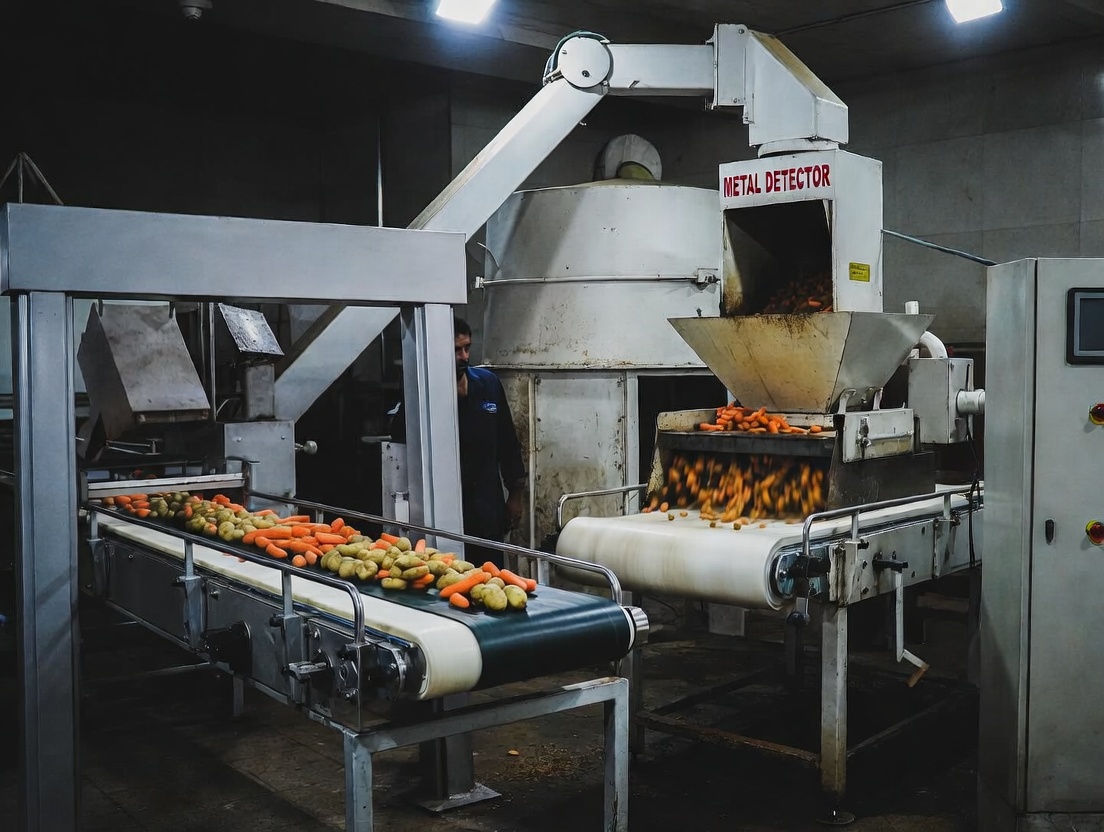
What Is Metal Contamination in Processed Vegetables?
Processed vegetables and fruits can pick up metal at many stages of the supply chain, from field to finished pack. Understanding where this metal originates is the first step to designing an effective control strategy.
Common metal contamination sources include:
– Field contamination from broken agricultural tools, wires, nails, fencing fragments, or tractor components carried in with harvested crops
– Upstream handling issues such as damage in bulk transport, conveyor wear, loading and unloading operations, and storage silos or bins
– Processing equipment wear from screens, slicers, dicers, knives, pumps, valves, vibratory conveyors, and screw conveyors
– Maintenance activities where bolts, nuts, welding off‑cuts, shavings, and even tools are accidentally left in or fall into the product stream
Typical metal types found in vegetable processing lines include:
– Ferrous metals: iron and carbon steel fragments, chips, and rust flakes
– Non‑ferrous metals: aluminum, brass, and copper from components, fittings, and certain types of packaging
– Stainless steel: blades, screens, and machine parts, often weakly magnetic or non‑magnetic, and sometimes more difficult to detect
Even small particles can damage equipment, pierce packaging, or pose serious food safety risks, leading to product complaints, regulatory action, and reputational damage. For processors supplying retailers or export markets, robust metal control is now a basic requirement rather than a differentiator.
Why Magnetic Separation and Metal Detection Are Essential
No single technology can remove all kinds of metal contamination reliably under real production conditions. That is why food processors increasingly deploy both magnetic separators and metal detectors at multiple points in the line.
Magnetic separators are most effective for:
– Capturing ferrous metal contaminants, including very fine iron or steel particles
– Holding magnetic stainless steels and certain partially magnetic alloys when high‑intensity designs are used
– Reducing the overall metal load early in the process, easing the burden on downstream inspection equipment
Metal detectors are essential because they:
– Detect ferrous, non‑ferrous, and stainless‑steel contaminants, including metals that magnets cannot hold
– Provide a programmable, auditable control point with automatic rejection of contaminated product
– Support clear, verifiable performance limits within HACCP and other food safety plans
When used together, magnetic separation and metal detection provide stronger protection than either technology alone:
– Magnets remove most ferrous contamination early, so the metal detector rejects less product, minimizing waste and rework
– Metal detectors act as a final safeguard against non‑magnetic stainless steel and non‑ferrous metals that may still be present
Food manufacturing guidelines, retailer codes of practice, and GFSI‑aligned standards widely encourage the use of multiple control points with magnets and metal detectors to manage metal hazards effectively.
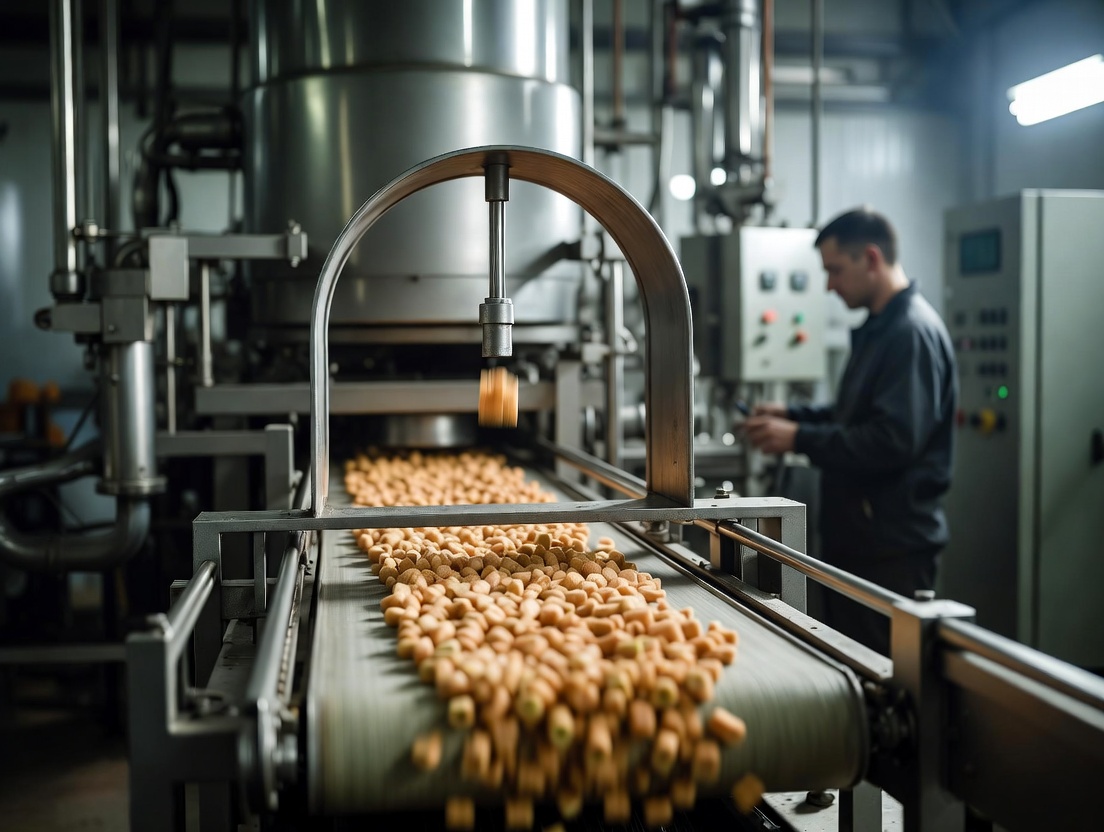
Step‑by‑Step Metal Removal Strategy for Vegetable Processing Lines
The most effective systems are designed around the actual process flow. The following step‑by‑step strategy shows how to place magnetic separators and metal detectors through a typical processed vegetable line, from raw intake to final packing.
Stage 1 – Incoming Raw Vegetables and Primary Cleaning
At intake, raw vegetables often arrive with soil, stones, plant debris, and occasional metal fragments originating in the field or during transport. Removing large tramp metal at this early stage protects downstream equipment and reduces the risk of major contamination incidents.
Recommended controls at the intake stage:
– Suspended plate magnets installed above belt conveyors carrying whole vegetables to capture larger ferrous pieces before washing or mechanical cleaning
– Magnetic head pulleys at the end of belts, where appropriate, to automatically discharge captured ferrous contaminants away from the product stream
– Grate or magnetic chutes placed in gravity drops for associated dry ingredients or inclusions that may enter the line near intake
At this stage, the priority is coarse metal removal without damaging fragile produce or restricting flow. Equipment must be easy to clean and accessible for routine inspection, since outdoor or semi‑outdoor environments often introduce more contamination and debris.
Stage 2 – Washing, Trimming, and Pre‑Cutting
During washing and trimming, metal can originate from pumps, spray systems, and cutting tools that experience wear over time. Wash water loops also represent a potential route for circulating fine metallic particles if not properly controlled.
Effective measures for this stage include:
– Magnetic liquid traps or pipeline magnets installed in wash water circuits and recirculating systems to capture rust, scale, and fine ferrous particles before they re‑enter the product
– Plate magnets with tapered steps mounted so that vegetables pass close to the magnetic field while sliding over smooth surfaces, minimizing bruising while maximizing capture
– Thoughtful positioning of magnets before and after high‑wear components such as cutters, slicers, or peelers to intercept metal at the point of generation
By controlling metal in water circuits and trimming operations, processors limit the spread of small, hard‑to‑detect particles that may otherwise be distributed throughout the product mass.
Stage 3 – Dicing and Handling of Small Vegetables and Fruit
Diced vegetables and small pieces are especially vulnerable to contamination from cutting equipment, particularly if blades, screens, or dicing components chip or fracture. Because the product size is smaller, metal fragments can be similar in size to the diced pieces, making them more difficult to notice visually.
Critical controls for diced products:
1. Install a metal detector directly after the dicer to capture small ferrous, non‑ferrous, and stainless‑steel pieces, including broken blade fragments. Configure this unit with an automatic reject system such as an air blast, flap, or drop gate to remove only contaminated product while maintaining throughput.
2. Where process water is used to transport or mix small pieces, place pipeline magnets or magnetic liquid traps on the water line before it re‑enters the product flow. This prevents rust or ferrous debris from utilities and pipework entering the product stream.
3. After water mixing, reintegrate the diced pieces into the main flow so they pass subsequent magnets and detectors along with larger product, ensuring they receive the same level of protection.
Correctly positioned equipment at this stage allows rapid detection of blade failure or equipment damage, enabling fast corrective action and minimizing the volume of product affected.
Stage 4 – Sizing, Final Magnetic Separation, and Pre‑Packing Detection
After trimming and dicing, vegetables are often sorted on shaker tables or screens into different size fractions. This stage provides an excellent opportunity for high‑intensity magnetic separation and targeted metal detection before packaging.
Best‑practice configuration for this step:
– Feed each sized fraction over a plate magnet with tapered steps for intensive ferrous removal, especially for small and uniform particles that respond well to strong magnetic fields
– Immediately follow the plate magnet with a high‑sensitivity metal detector to detect residual ferrous, non‑ferrous, and stainless‑steel contamination not captured magnetically
– Adjust detector sensitivity to account for product effect, moisture, and temperature while still meeting required detection limits established in the HACCP or customer specification
This combination substantially reduces the risk that metal will reach the packing stage and provides strong documentation for internal QA, customer audits, and certification bodies.
Stage 5 – Final Pack Inspection and Quality Release
Even after upstream controls, many food safety programs require a final metal check on packed products. This control point is usually defined as a Critical Control Point in HACCP plans and is frequently highlighted in customer or retailer requirements.
Typical final inspection arrangements:
– A tunnel‑style metal detector installed on the packaging conveyor, inspecting sealed bags, cans, pouches, or trays of vegetables
– Automatic rejection devices (pusher, drop gate, diverter, or air blast) that isolate contaminated packs and route them into a lockable reject bin for investigation
– Integration with production monitoring systems so that rejects, test results, and alarm events are logged with time stamps and batch data for traceability
By combining final pack inspection with upstream magnetic separation and in‑process metal detectors, processors create a layered metal defense that is far more robust than any single device.
Key Magnetic Separation and Metal Detection Technologies for Vegetables
Different points in the line demand different equipment types. Choosing the right technology and configuration is essential for reaching the desired food safety and quality outcomes.
Major equipment categories for vegetable processing include:
– Suspended plate magnets above conveyors to remove large tramp ferrous metals from whole vegetables at intake and pre‑cleaning
– Magnetic head pulleys at belt discharge points for automatic separation of ferrous metals without extra moving parts
– Magnetic chutes and step plate magnets in gravity flows, where product falls under gravity or slides over a surface
– Magnetic liquid traps or pipeline magnets installed in wash water, brines, sauces, or vegetable slurries to capture fine particles
– Tunnel metal detectors used for both in‑process checks and final pack inspection on conveyors
– Free‑fall or gravity metal detectors for bulk ingredients or frozen vegetables dropping through vertical pipes or chutes
Each technology type has its own strengths, limitations, and installation requirements, so correct selection and positioning must be based on product state, flow characteristics, plant layout, and the level of protection expected by customers.
Design Best Practices: Achieving High Separation Efficiency
To get maximum performance from magnets and metal detectors in vegetable plants, processors must pay careful attention to installation, product flow, equipment selection, and ongoing maintenance and verification. Poorly installed or maintained devices can give a false sense of security while allowing significant contamination to pass unchecked.
Optimizing Magnet Installations
Magnet performance is highly dependent on distance, product burden, and flow characteristics. A strong magnet installed in the wrong position may be less effective than a correctly sized magnet in an optimized location.
Practical tips for magnet optimization:
– Keep the product stream as close as possible to the magnet surface; magnetic force drops rapidly with distance, especially for smaller or weaker particles
– Maintain a uniform, shallow bed depth over plate magnets and magnetic grates so metal is exposed to the magnetic field and not shielded by product
– Use tapered‑step plate designs where the product moves quickly; the step provides a physical ledge that helps trap and hold ferrous particles against wipe‑off
– Specify magnet strength and material grade according to the application; high‑intensity rare‑earth magnets are often needed for fine contamination and for capturing weakly magnetic stainless steel
– Design easy‑clean and quick‑clean systems so operators can safely remove collected metal without contaminating product or requiring long stoppages
Routine cleaning and periodic validation are crucial. If magnets are not cleaned, built‑up contamination can eventually detach, re‑entering the product and undermining the purpose of the equipment.
Setting Up Metal Detectors for Vegetable Products
Metal detector performance depends on proper installation, correct configuration, and regular testing. Moist or salty vegetable products can create a “product effect” signal that, if not properly compensated, may reduce sensitivity or generate false rejects.
Key setup considerations for vegetable lines:
– Product effect management: use detector product‑learning features to account for moisture, temperature, salt content, and product orientation
– Aperture size: smaller apertures generally allow higher sensitivity, so select the smallest practical opening that suits your product size and conveyor
– Reject mechanism: match the reject system to pack format and throughput; delicate packs may require gentler or slower reject methods to avoid damage
– Testing procedures: test at defined frequencies using certified ferrous, non‑ferrous, and stainless‑steel test pieces of known size, placing them in representative product positions (leading, center, trailing)
– Environmental control: minimize electrical interference, vibration, and large metal objects near the detector to prevent false signals or reduced performance
Detectors should be fully integrated into your quality management system, with alarms, tests, faults, and rejects recorded and reviewed regularly to identify trends and potential improvements.
Compliance, Standards, and Food Safety Programs
Magnetic separation and metal detection are central elements of modern food safety systems. They are often highlighted by regulators, auditors, and retailer technical standards as critical tools for controlling physical hazards in ready‑to‑eat and minimally processed vegetable products.
Key points for vegetable processors:
– Integrate magnets and metal detectors as Critical Control Points (CCPs) or Critical Quality Points (CQPs) in your HACCP plan, depending on risk assessment
– Document hazard analyses, equipment specifications, critical limits, monitoring procedures, and corrective actions for each magnet and detector
– Align equipment design and validation practices with recognized guidelines, including industry magnet standards, retailer codes of practice, and certification scheme requirements
– Maintain detailed records of magnet performance checks, metal detector validation tests, maintenance activities, and investigations of any metal incidents
– Train operators and QA teams to understand the rationale behind each control point so they can respond appropriately when deviations occur
A documented, risk‑based strategy for metal control is crucial for customer confidence, export market access, and long‑term brand protection.
Case Insights and Practical Lessons from Food Processing
Real‑world projects in food manufacturing demonstrate that optimized magnetic separation and metal detection can significantly improve product purity and audit outcomes when tailored to specific processes.
Illustrative lessons that apply to vegetable processing include:
– Custom magnetic chute designs with high‑intensity neodymium magnets have been used in legume and seed plants to capture very fine iron particles with minimal product loss, showing the value of engineering magnets around actual product behavior
– Multi‑point installations in baby food and infant nutrition facilities highlight how magnets can be placed strategically in line to remove contamination from particularly sensitive products before packing
– High‑volume ingredient or bakery plants have successfully combined plate magnets and free‑flow magnetic separators with metal detectors to maintain continuous operation while controlling metal contamination in dry and semi‑dry products
These experiences demonstrate that performance depends not only on the strength of the magnets or detectors themselves, but also on correct positioning, line integration, cleaning accessibility, and operator training.
Practical Implementation Checklist for Vegetable Processors
To upgrade or design your metal control system for vegetable processing, use the following high‑level checklist as a practical starting point:
1. Map all process steps
– Document the complete flow from raw intake to final packing, including all conveyors, elevators, pumps, dicers, fillers, and storage vessels.
2. Identify high‑risk zones
– Focus on areas with cutting, grinding, high mechanical stress, or known wear points, such as dicers, screens, vibratory equipment, and transfer points.
3. Select and position magnets
– Choose suspended plate magnets, magnetic head pulleys, chutes, grates, or pipeline traps based on product state (whole, diced, dry, liquid) and the space available.
4. Add metal detectors at key points
– Install metal detectors after high‑risk operations and before final packing to provide both in‑process and final control, with appropriate reject systems.
5. Define CCP/CQP limits and testing
– Set target detection sizes for ferrous, non‑ferrous, and stainless steel for each detector, define acceptable magnet performance thresholds, and schedule routine checks.
6. Train operators and maintain equipment
– Ensure that staff can clean magnets safely, perform detector tests, record results, and respond to alarms or non‑conformances according to your procedures.
7. Review and optimize annually
– Analyze reject statistics, customer complaints, audit findings, and maintenance records to refine equipment placement, sensitivity settings, and inspection frequencies.
Action Call: Strengthen Your Vegetable Line Metal Control
To protect your brand, customers, and equipment, you need a well‑designed combination of magnetic separation and metal detection tailored to your vegetable products, process layout, and regulatory environment. Now is an ideal time to review your current line, identify any blind spots, and plan upgrades where needed.
Start by defining clear metal contamination targets based on your risk assessment, customer requirements, and export standards. Then, work with a specialist supplier to select food‑grade magnetic separators and metal detectors, determine optimal installation points, and establish robust testing and documentation routines. A systematic, data‑driven approach will help you reduce metal‑related incidents, improve audit performance, and demonstrate a strong commitment to food safety across your processed vegetable portfolio.
Summary
Metal contamination is a critical hazard in processed vegetable and fruit lines, arising from fields, equipment wear, maintenance activities, and process utilities. Magnetic separation and metal detection work best when deployed together in a layered system, from raw intake and washing to dicing, sizing, and final pack inspection. By selecting appropriate equipment, optimizing installation, and embedding magnets and detectors into a documented HACCP framework, vegetable processors can significantly reduce the risk of metal reaching consumers, avoid costly recalls, and maintain a strong reputation in competitive markets.
Contact us to get more information!
Frequently Asked Questions
Q1. Why can’t I rely on metal detectors alone?
Metal detectors are excellent for detecting a wide range of metals in finished or semi‑finished products, but they do not physically remove contamination. If you use only metal detectors, a high level of ferrous contamination may trigger frequent rejects, leading to waste, rework, and operational disruption. By installing magnets upstream to remove most ferrous particles, you reduce the overall metal load, making metal detectors more efficient and minimizing the amount of good product discarded with contaminated packs.
Q2. Do I still need magnets if my main concern is stainless steel?
Yes. While stainless steel is often considered non‑magnetic, some grades and mixed‑metal components are weakly magnetic and can be captured by high‑intensity rare‑earth magnets. In addition, magnets help remove ferrous contamination that would otherwise contribute to wear, micro‑damage, or additional hazards. Metal detectors then provide the complementary function of detecting non‑magnetic stainless steel and non‑ferrous metals that magnets cannot hold, giving more complete coverage of all metal risks.
Q3. How often should magnets and metal detectors be inspected and tested?
Inspection and testing frequency should be defined by your risk assessment, HACCP plan, and customer or retailer requirements. Many vegetable processors test metal detectors several times per shift and at product changeovers using certified test pieces of ferrous, non‑ferrous, and stainless steel. Magnets are typically verified at least annually for strength and condition, with additional checks after major maintenance or process changes. Regular visual inspections, cleaning records, and documented tests provide evidence that your equipment continues to perform as intended.
Q4. Will magnets damage delicate vegetables such as soft fruits or salad ingredients?
Correctly designed and installed magnets should not damage delicate products. Plate magnets and chutes used in vegetable processing are usually built with smooth, food‑grade surfaces and carefully engineered angles to allow produce to slide gently across them. Tapered‑step designs can improve metal capture while maintaining a low impact on the product. When planning installations, always consider product fragility, line speed, and the potential for bruising or damage, and choose magnet types and locations that balance protection with product quality.
Q5. What metal detection targets should I set for my vegetable products?
Detection targets depend on product type, pack format, process risk, and customer specifications. Many processors aim for low‑millimeter detection levels for ferrous, non‑ferrous, and stainless‑steel contaminants in packed vegetables, verifying these targets using certified test pieces placed in representative positions within the product. Work with your equipment supplier and quality team to define realistic but robust detection limits that reflect actual plant conditions, then document them as critical limits in your HACCP plan along with the frequency of testing and corrective actions.
References
2. https://buntingmagnetics.com/blog/getting-metal-out-of-processed-vegetables
4. https://www.greatmagtech.com/info/magnetic-separators-in-food-industry-102835002.html
5. https://www.magnattackglobal.com/blog/explaining-food-processing-regulations/
6. https://www.sollau.com/article/separation-of-iron-particles-from-legumes-and-oilseeds-case-study
8. https://www.sciencedirect.com/science/article/pii/S0015188206708928
9. https://www.newfoodmagazine.com/news/41571/28-line-magnets-remove-metal-baby-food/
11. https://approtec.com/case-study/magnetic-separation-to-maintain-food-purity/
Hot Tags: Magnetic Separation in Food Processing, Metal Detection in Processed Vegetables, Removing Metal Contamination from Food, Food Grade Magnetic Separators, Industrial Metal Detectors for Food Industry, Ferrous Metal Removal in Vegetable Processing, Food Safety Metal Contamination Control, Magnetic Grate Separator for Food Processing, HACCP Metal Detection Systems, Preventing Metal Fragments in Packaged Vegetables