Content Menu
● What Is Magnetic Separation In Mining?
● Why Mining Operations Rely On Magnetic Separation
>> 1. Protecting Critical Equipment
>> 2. Upgrading Iron Ore And Ferrous Minerals
>> 3. Purifying Industrial Minerals
● Core Types Of Magnetic Separators Used In Mining
>> Major Separator Types And Where They Fit
● Where Magnetic Separation Sits In The Mining Flowsheet
● Latest Trends In Mining Magnetic Separation
>> 1. High‑Gradient And Rare‑Earth Systems
>> 2. Intelligent, IoT‑Enabled Separators
>> 3. Deep Integration With Sustainability Goals
● Practical Steps To Optimize Magnetic Separation In A Mine
>> Step 1: Analyze Your Ore And Impurities
>> Step 2: Map The Flowsheet And Risk Points
>> Step 3: Select The Right Separator Combination
>> Step 4: Optimize Operating Parameters
>> Step 5: Maintain, Monitor, And Upgrade
● Why Powder And Permanent Magnetic Separators Matter Today
● Call To Action: Turn Your Ore Into Clean, High‑Value Product
● FAQ
>> FAQ 1: What Is The Main Purpose Of Magnetic Separation In Mining?
>> FAQ 2: How Do Powder Magnetic Separators Differ From Conventional Units?
>> FAQ 3: Can Magnetic Separation Replace Flotation Or Gravity Methods?
>> FAQ 4: What Industries Beyond Mining Use Magnetic Separation?
>> FAQ 5: How Do I Know If I Need High‑Gradient Or Intelligent Magnetic Separators?
As a mining process engineer who has spent years commissioning magnetic separators in real plants, I’ve seen how a well‑designed magnetic separation circuit can literally decide whether a deposit is profitable or not. From tramp metal removal to ultra‑clean iron concentrates, modern powder magnetic separators and permanent magnetic separators now sit at the heart of efficient, low‑carbon mining operations. [buntingmagnetics]
What Is Magnetic Separation In Mining?
In mining, magnetic separation is a method that uses magnetic field differences to separate magnetic or weakly magnetic minerals from non‑magnetic gangue. By exposing the ore stream to a magnetic field, magnetic particles are attracted and retained, while non‑magnetic particles pass through, creating a cleaner concentrate. [greatmagtech]
Typical mining applications include:
– Removing tramp iron before crushing and grinding. [mainlandmachinery]
– Recovering iron‑bearing minerals such as magnetite, hematite, and ferrosilicon. [gme-magnet]
– Upgrading non‑metallic ores (quartz, feldspar, kaolin, silica sand) by removing iron contaminants. [fswandaye]
From an operator’s point of view, magnetic separation is often the “silent insurance policy” that protects equipment, improves recovery, and stabilizes product quality shift after shift. [dingsmagnets]
Why Mining Operations Rely On Magnetic Separation
1. Protecting Critical Equipment
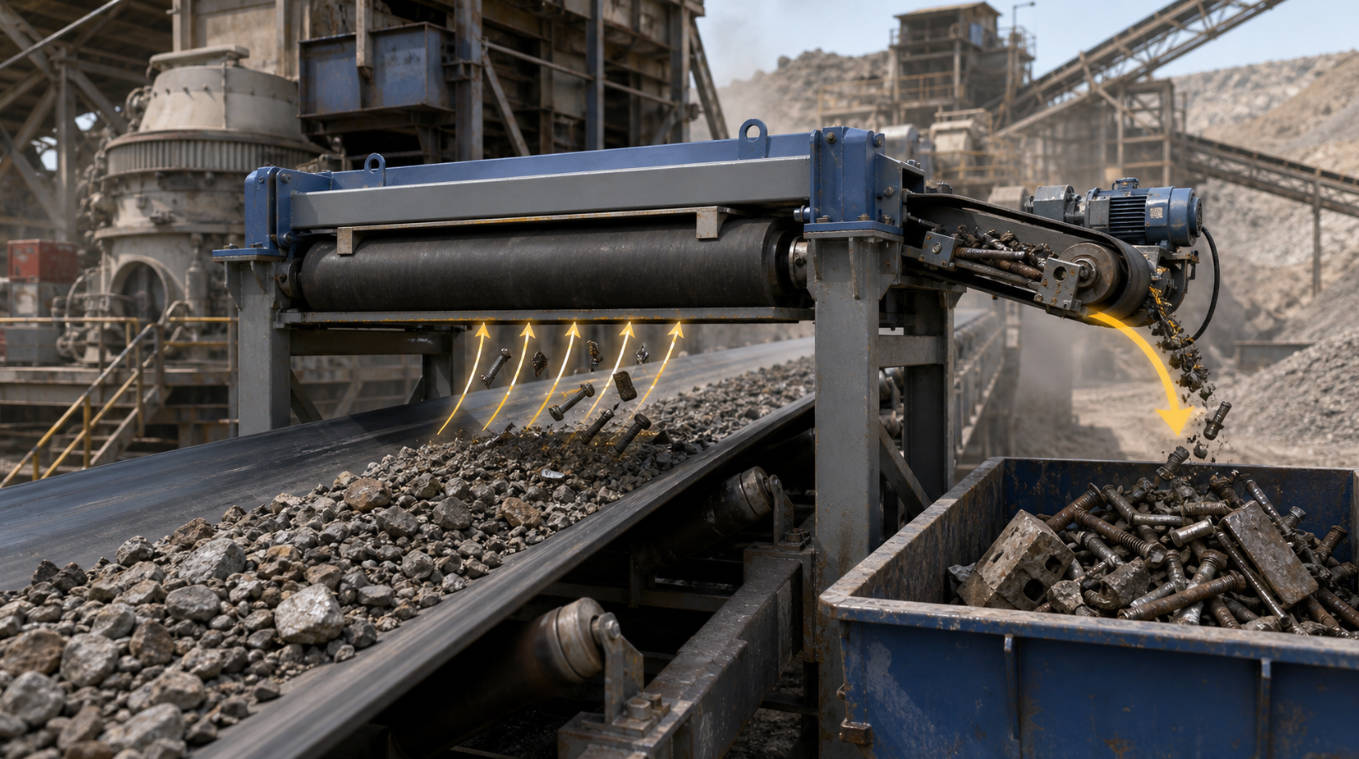
In almost every mine I visit, the first magnetic separator sits upstream of the crusher to capture tramp steel from loaders, drill rods, and broken wear parts. Removing this metal early: [buntingmagnetics]
– Prevents catastrophic crusher and conveyor damage.
– Reduces unplanned downtime and maintenance costs.
– Improves plant safety by cutting the risk of mechanical failures. [mainlandmachinery]
Overhead permanent magnets and electromagnetic separators are common here, especially in aggregate and bulk mining operations. [dingsmagnets]
2. Upgrading Iron Ore And Ferrous Minerals
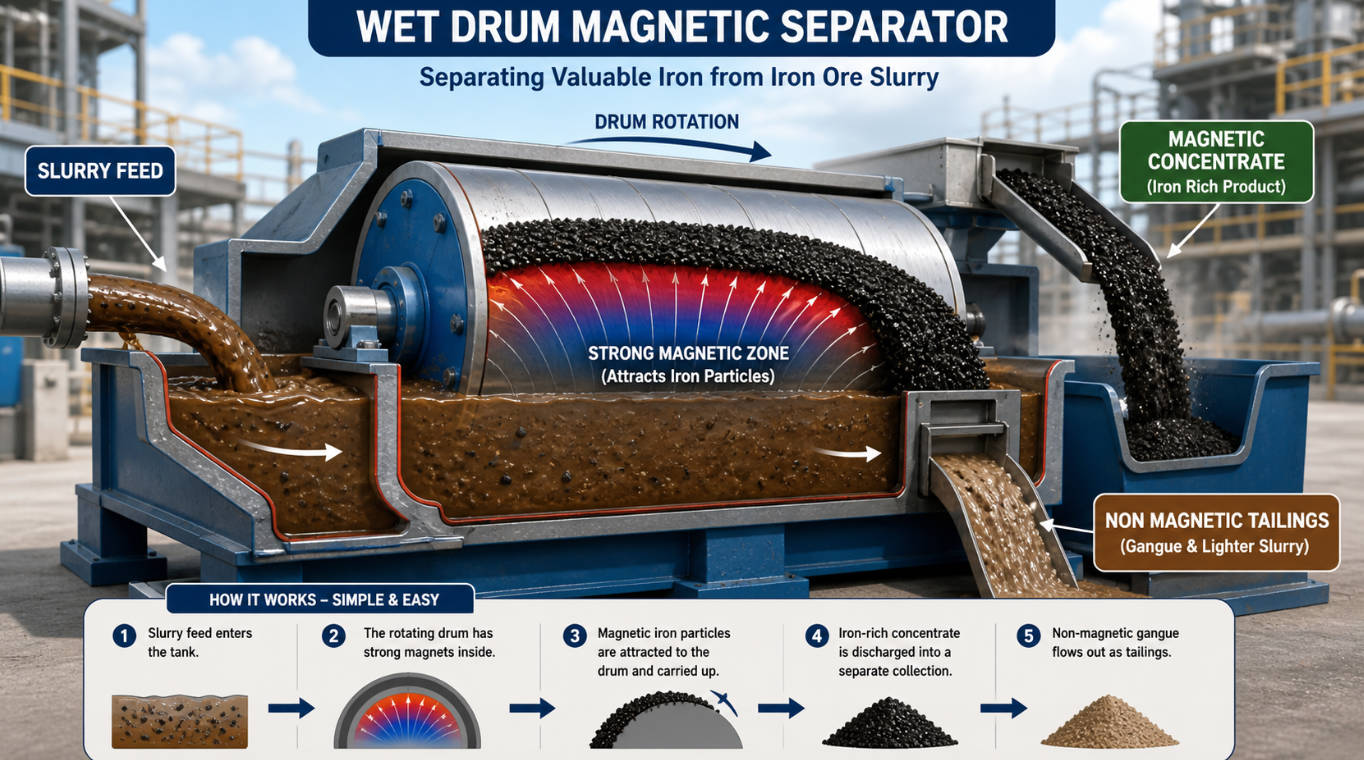
In iron ore beneficiation circuits, magnetic separation is a core step after grinding and classification. Common roles include: [gme-magnet]
– Recovering magnetite and hematite from finely ground ore. [minejxsc]
– Separating ferrosilicon in dense media circuits for recycling. [imt-inc]
– Producing a high‑grade iron concentrate for pelletizing or sintering. [gme-magnet]
Low‑intensity magnetic separators (LIMS) handle strongly magnetic minerals, while high‑gradient magnetic separators (HGMS) target weakly magnetic particles. [imt-inc]
3. Purifying Industrial Minerals
Beyond base metals, high‑intensity powder magnetic separators are now critical in non‑metallic mining sectors. For example: [wdymagnetic]
– Quartz and silica sand: removing iron staining to meet glass and solar‑grade specifications. [fswandaye]
– Feldspar and kaolin: eliminating iron‑bearing impurities that reduce ceramic whiteness and firing performance. [wdymagnetic]
– Battery materials: achieving ultra‑low iron levels in cathode and anode powders for lithium battery production. [wdymagnetic]
These applications typically rely on high‑intensity dry powder separators and slurry‑type electromagnetic units with fine matrix elements. [wdymagnetic]
Core Types Of Magnetic Separators Used In Mining
From a plant design perspective, choosing the right separator type is more important than choosing a brand name. Below is a practical, operator‑oriented overview. [greatmagtech]
Major Separator Types And Where They Fit
| Separator Type | Operating Mode | Typical Use In Mining | Key Advantages |
|---|---|---|---|
| Low‑Intensity Magnetic Separator (LIMS) | Wet | Strongly magnetic minerals (e.g., magnetite) in iron ore beneficiation. buntingmagnetics | High throughput, robust, low operating cost. |
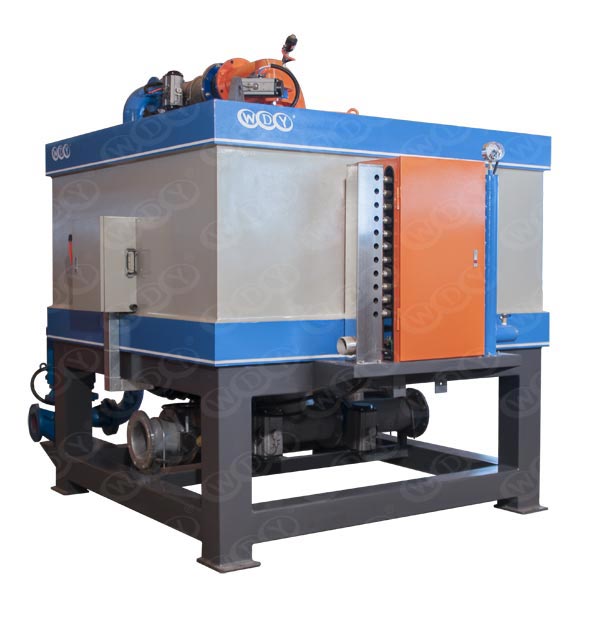
| High‑Gradient Magnetic Separator (HGMS) | Wet or dry | Weakly magnetic minerals and ultra‑fine impurities in industrial minerals. gme-magnet | Captures ultra‑fine and weakly magnetic particles. |
| Wet Drum Magnetic Separator | Wet | Recovering magnetite and ferrosilicon from slurry streams. imt-inc | Continuous operation, excellent in dense media circuits. |
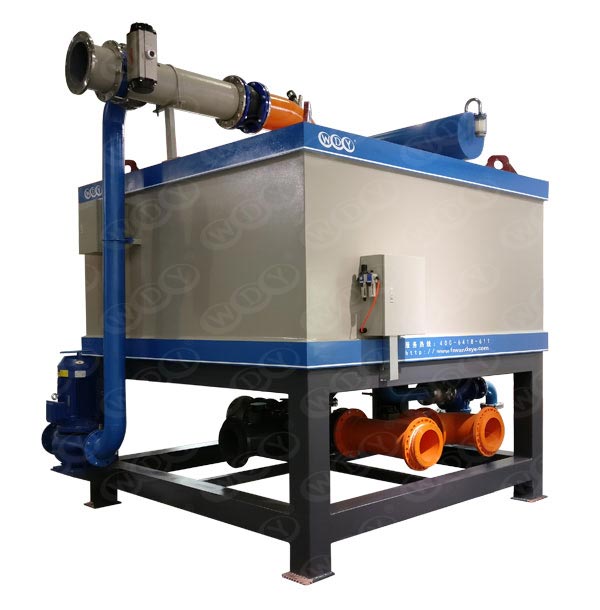
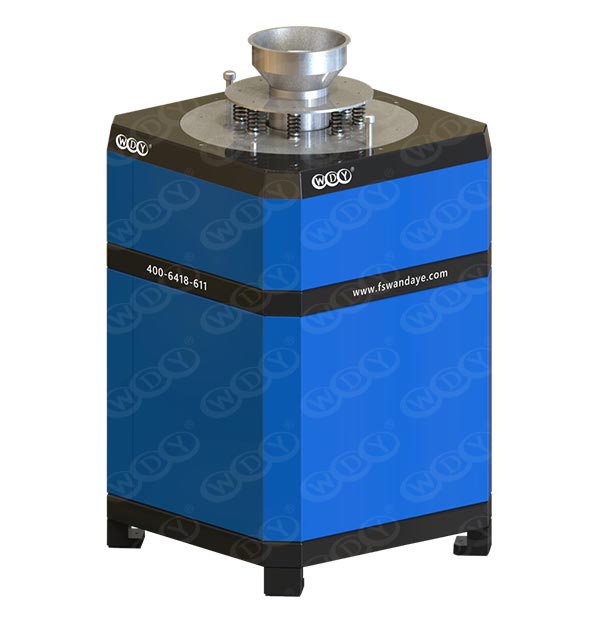
| Powder Magnetic Separator | Dry | Fine powders (quartz, feldspar, ceramics, battery materials). fswandaye | High field gradients, ultra‑clean powder products. |
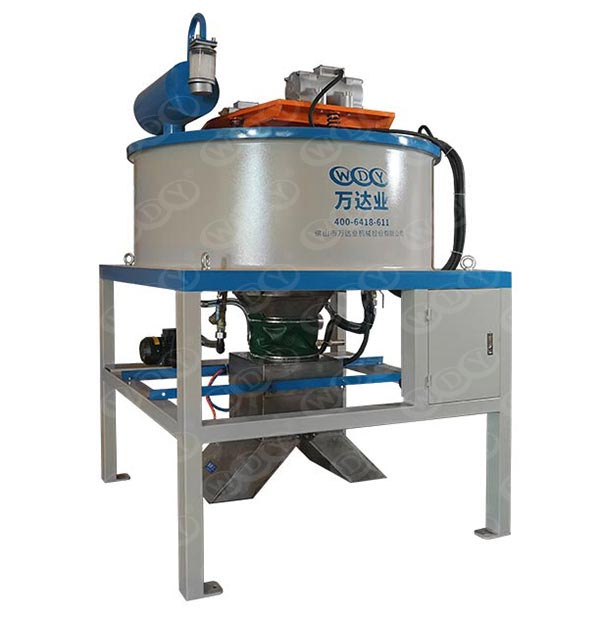
| Permanent Magnetic Separator | Dry or inline | Tramp metal removal on conveyors and chutes. buntingmagnetics | No power required, low maintenance, simple installation. |
In my experience, combining a permanent magnetic separator for tramp removal with a high‑intensity powder separator for product purification gives the most robust performance in modern processing plants. [buntingmagnetics]
Where Magnetic Separation Sits In The Mining Flowsheet
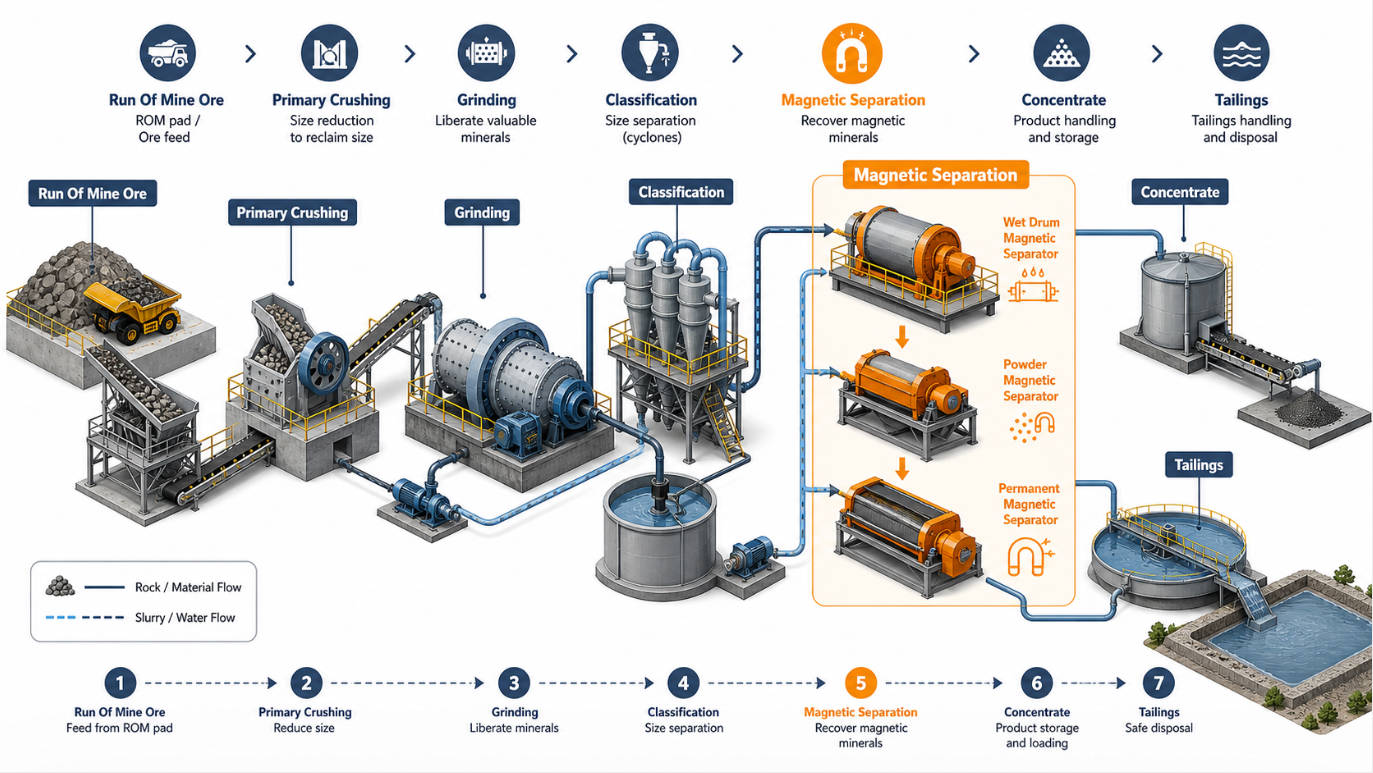
A typical magnetic separation layout in a mining operation looks like this. [greatmagtech]
1. Run‑of‑Mine (ROM) Feed
– Raw ore arrives with rock, clay, and metallic debris.
2. Primary Crushing & Screening
– Overhead permanent magnets remove tramp steel before or after the primary crusher. [mainlandmachinery]
3. Secondary / Tertiary Crushing & Grinding
– Additional magnetic protection may be installed on critical conveyors or mill feed belts. [dingsmagnets]
4. Classification (Cyclones or Screens)
– Material is split into size fractions suitable for wet or dry magnetic separation. [gme-magnet]
5. Magnetic Separation Circuit
– Wet drum or LIMS units recover magnetic minerals from slurry.
– HGMS or powder magnetic separators remove fine iron impurities or upgrade weakly magnetic fractions. [imt-inc]
6. Concentrate & Tailings Handling
– Magnetic concentrate is dewatered and sent to further processing or direct sale.
– Non‑magnetic tailings are either discarded or processed using flotation or gravity separation. [buntingmagnetics]
This integrated approach keeps equipment safe, boosts recovery, and consistently delivers products that meet downstream specifications. [imt-inc]
Latest Trends In Mining Magnetic Separation
From recent projects and industry reports, several technology trends are reshaping how mines deploy magnetic separation. [magnetact]
1. High‑Gradient And Rare‑Earth Systems
New separator designs use rare‑earth magnets and advanced matrix materials to generate stronger, more selective fields. This enables: [gme-magnet]
– Recovery of weakly magnetic minerals that older equipment could not capture.
– Lower residual iron levels in industrial minerals and battery materials. [minejxsc]
– Finer particle separation with improved energy efficiency.
High‑gradient powder and slurry separators are now standard in high‑purity quartz, ceramics, and battery‑material circuits. [imt-inc]
2. Intelligent, IoT‑Enabled Separators
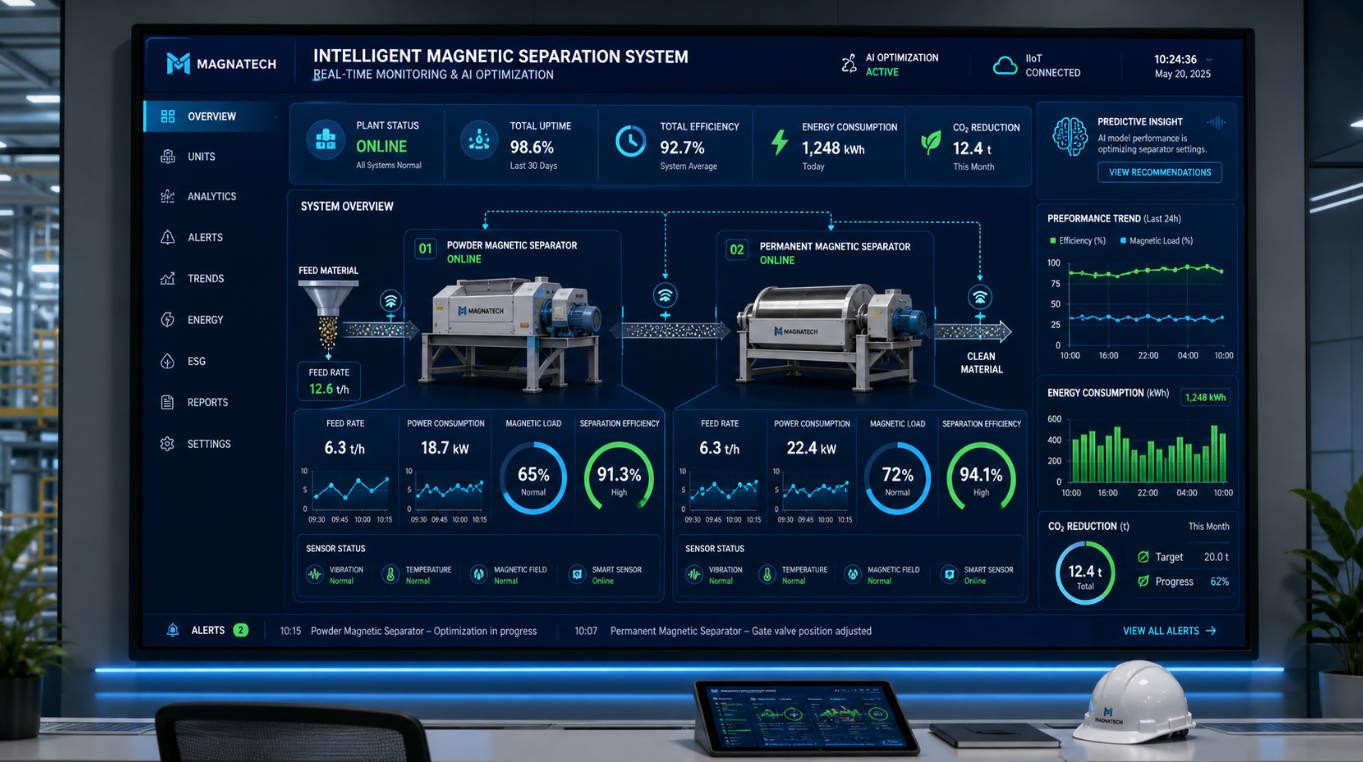
Several manufacturers are integrating IoT sensors and smart controls into magnetic separators. These systems monitor: [magnetact]
– Feed rate, magnetic load, and matrix saturation.
– Power consumption and cooling performance.
– Separation efficiency in real time.
By feeding this data into plant control systems, operators can adjust belt speed, vibration, and flushing cycles to maintain peak performance and detect issues before failures occur. [magnetact]
3. Deep Integration With Sustainability Goals
Magnetic separation is also becoming a key enabler of low‑carbon and circular mining strategies. Efficient magnetic circuits: [minejxsc]
– Reduce chemical reagent consumption by improving upstream purity.
– Lower energy use in grinding and downstream processes by removing oversize metals early. [mainlandmachinery]
– Support recycling and re‑processing of tailings by recovering residual metal values. [imt-inc]
For ESG‑driven projects, demonstrating these gains in energy, water, and reagent savings is now essential during feasibility studies. [wdymagnetic]
Practical Steps To Optimize Magnetic Separation In A Mine
Based on field experience across iron ore, ceramics, and battery‑material plants, the following step‑by‑step framework consistently improves results. [imt-inc]
Step 1: Analyze Your Ore And Impurities
– Test magnetic susceptibility across size fractions and mineral species.
– Identify which impurities (e.g., iron oxides, stainless steel, scale) cause the most value loss.
– Determine whether they are strongly magnetic, weakly magnetic, or only present as ultra‑fine particles.
Step 2: Map The Flowsheet And Risk Points
– Mark all potential tramp metal entry points and high‑value equipment (crushers, mills, screens).
– Identify streams where a small increase in purity delivers large value (e.g., iron grade, whiteness index, battery metal purity).
Step 3: Select The Right Separator Combination
– Use permanent magnetic separators for tramp metal protection on conveyors and chutes. [dingsmagnets]
– Deploy wet drum or LIMS units for bulk magnetite or ferrosilicon recovery in slurry streams. [gme-magnet]
– Choose powder magnetic separators and high‑gradient systems for fine, high‑value products and ultra‑low impurity targets. [fswandaye]
Step 4: Optimize Operating Parameters
Key adjustable variables include:
– Feed rate and layer thickness on belts and drums.
– Magnetic field strength and gradient.
– Matrix type, flushing frequency, and vibration amplitude.
Fine‑tuning these parameters based on lab tests and pilot trials can dramatically increase recovery and product cleanliness. [gme-magnet]
Step 5: Maintain, Monitor, And Upgrade
– Implement routine inspections for belt wear, matrix clogging, and cooling performance.
– Track separation performance indicators (magnetic content in tailings, iron in product, power draw).
– Plan upgrades to high‑gradient or intelligent separators where the ROI is clear. [magnetact]
Why Powder And Permanent Magnetic Separators Matter Today
For modern mines producing not just bulk ores but also high‑value powders for glass, ceramics, environmental materials, and batteries, advanced powder magnetic separators and permanent magnetic separators are indispensable. [wdymagnetic]
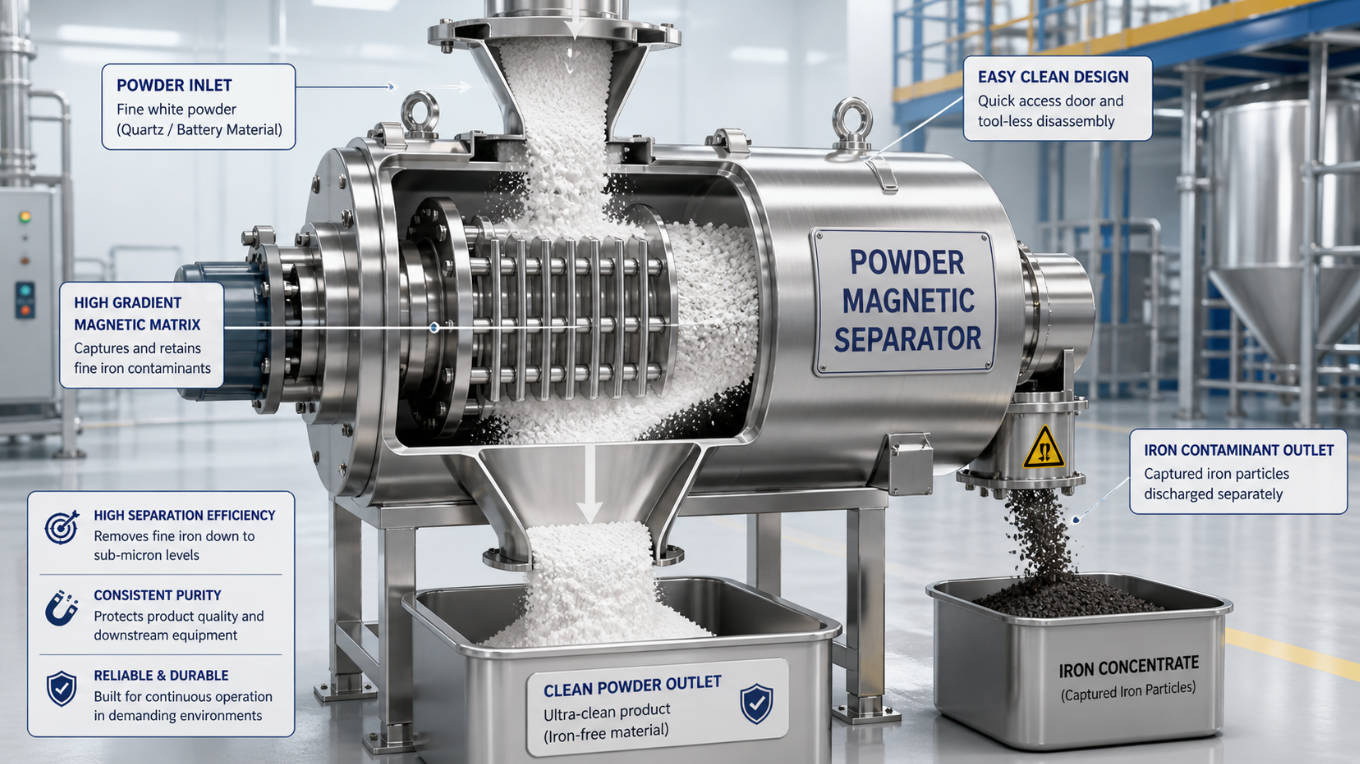
From an expert standpoint, their key advantages are:
– Precision purification of fine powders with high field gradients and optimized matrix design.
– Reliable tramp metal protection without continuous power consumption.
– Flexibility to serve multiple industries from the same mining asset, including ceramics, glass, environmental protection, plastics, rubber, and battery materials. [fswandaye]
Manufacturers with deep R&D experience and turnkey project capability can assist mines from process design and lab testing through to line installation and commissioning, ensuring that the chosen magnetic technology aligns with ore characteristics and downstream customer requirements. [wdymagnetic]
Call To Action: Turn Your Ore Into Clean, High‑Value Product
If your mining operation is struggling with equipment damage, low recovery, or inconsistent product purity, it is time to reassess your magnetic separation strategy. Modern powder magnetic separators and permanent magnetic separators can unlock higher yields, cleaner products, and more stable, sustainable production.
Consider partnering with a specialized magnetic separator manufacturer that combines R&D, engineering design, and turnkey line installation experience to evaluate your ore, design a tailored separation circuit, and support commissioning and long‑term optimization. [wdymagnetic]
FAQ
FAQ 1: What Is The Main Purpose Of Magnetic Separation In Mining?
The main purpose is to separate magnetic or weakly magnetic minerals from non‑magnetic material, protecting equipment and upgrading ore quality. This includes removing tramp metal, recovering valuable iron‑bearing minerals, and purifying industrial minerals for high‑value applications. [greatmagtech]
FAQ 2: How Do Powder Magnetic Separators Differ From Conventional Units?
Powder magnetic separators are designed specifically for dry, fine powders, using high‑intensity fields and optimized matrix structures to capture ultra‑fine iron impurities. Conventional wet drum or LIMS units, by contrast, focus on coarser, strongly magnetic minerals in slurry streams. [imt-inc]
FAQ 3: Can Magnetic Separation Replace Flotation Or Gravity Methods?
Magnetic separation rarely replaces other methods entirely; instead, it complements gravity, flotation, and chemical processes. By removing magnetic impurities early, magnetic separation reduces reagent consumption, stabilizes downstream circuits, and improves final product quality. [minejxsc]
FAQ 4: What Industries Beyond Mining Use Magnetic Separation?
In addition to mining, magnetic separation is widely used in ceramics, glass, plastics, rubber, environmental protection, pharmaceuticals, food, and battery materials to ensure ultra‑low metal contamination. These applications often rely on high‑intensity powder and liquid separators to protect product quality and processing equipment. [gme-magnet]
FAQ 5: How Do I Know If I Need High‑Gradient Or Intelligent Magnetic Separators?
You should consider high‑gradient or intelligent separators if you face tighter purity requirements, weakly magnetic impurities, ultra‑fine particle sizes, or strong ESG/efficiency targets. Lab testing, pilot trials, and consultation with experienced magnetic separation experts will help quantify the ROI and select the appropriate technology level for your plant. [magnetact]
References
1. Bunting Magnetics – “Magnetic Separation in Mining and Mineral Processing”. [buntingmagnetics]
2. Great Magtech – “How Does Magnetic Separation Work in Mining?”. [greatmagtech]
3. GME Magnet – “How Does Magnetic Separation Use in Mining Work”. [gme-magnet]
4. Mainland Machinery – “Magnetic Separation in the Mining Industry”. [mainlandmachinery]
5. Wikipedia – “Magnetic Separation”. [en.wikipedia]
6. Innovative Magnetic Technologies – “Innovations in Magnetic Technology”. [imt-inc]
7. Innovative Magnetic Technologies – “Wet Drum Magnetic Separators Explained”. [imt-inc]
8. Foshon Wandaye Technology Co., Ltd. – Company and product information (magnetic separators for non‑metallic minerals and powders). [fswandaye]
9. JXSC – “The Role of Magnetic Separation in Diverse Industries”. [minejxsc]
10. MagnetAct – “5 Transformative Trends in Intelligent Magnetic Separation”. [magnetact]
11. GME Magnet – “Different Types of Magnetic Separators and Their Applications”. [gme-magnet]
12. Wandaye Magnetics – “Magnetic Separation in Modern Mining and Mineral Processing – An Expert’s Perspective”. [wdymagnetic]
13. Dings Company – “Magnetic Separation for Mining and Aggregate Production”. [dingsmagnets]
14. MagnetAct – “7 Must‑Know Trends Shaping the Future of Magnetic Separation”. [magnetact]
Hot Tags: Mining Magnets, Manufacturers, Customized, Custom, Suppliers, Buy, Cheap, Quality, Advanced, Durable, in Stock, Made in China, Price, Quotation