Content Menu
● What Is a Laboratory High-Intensity Magnetic Separator?
● Why Battery Recycling Needs High-Intensity Magnetic Separation
● Inside the Induced Roll and High-Intensity Magnetic Separator
● From University Lab to Industrial Battery Lines: A Realistic Workflow
● Where Foshan Wandaye Technology Fits In
● Step‑by‑Step – How to Design a Lab Test for Battery Powders
● Latest Research Trends in Magnetic Separation for Batteries
● Practical Design Considerations for Battery Powder Lines
● Table: Laboratory vs Industrial Magnetic Separation for Battery Materials
● Call to Action: From Lab Idea to Turnkey Battery Materials Line
● FAQ
>> 1. How strong does the magnetic field need to be for battery powder separation?
>> 2. Can magnetic separation replace hydrometallurgy in lithium-ion battery recycling?
>> 3. What particle size range is suitable for dry induced roll testing?
>> 5. In which industries beyond batteries can Wandaye’s magnetic separators be used?
As a process engineer who has worked side by side with R&D teams on cathode and anode powder purification projects, I have seen how laboratory high-intensity magnetic separators have quietly become one of the most valuable tools in lithium‑ion battery recycling and battery materials manufacturing. In this article, I will walk through how modern high‑intensity and powder magnetic separators work in real projects, what data and case studies tell us, and why companies like Foshan Wandaye Technology are integrating them into both laboratory research and full‑scale production lines. [buntingmagnetics]
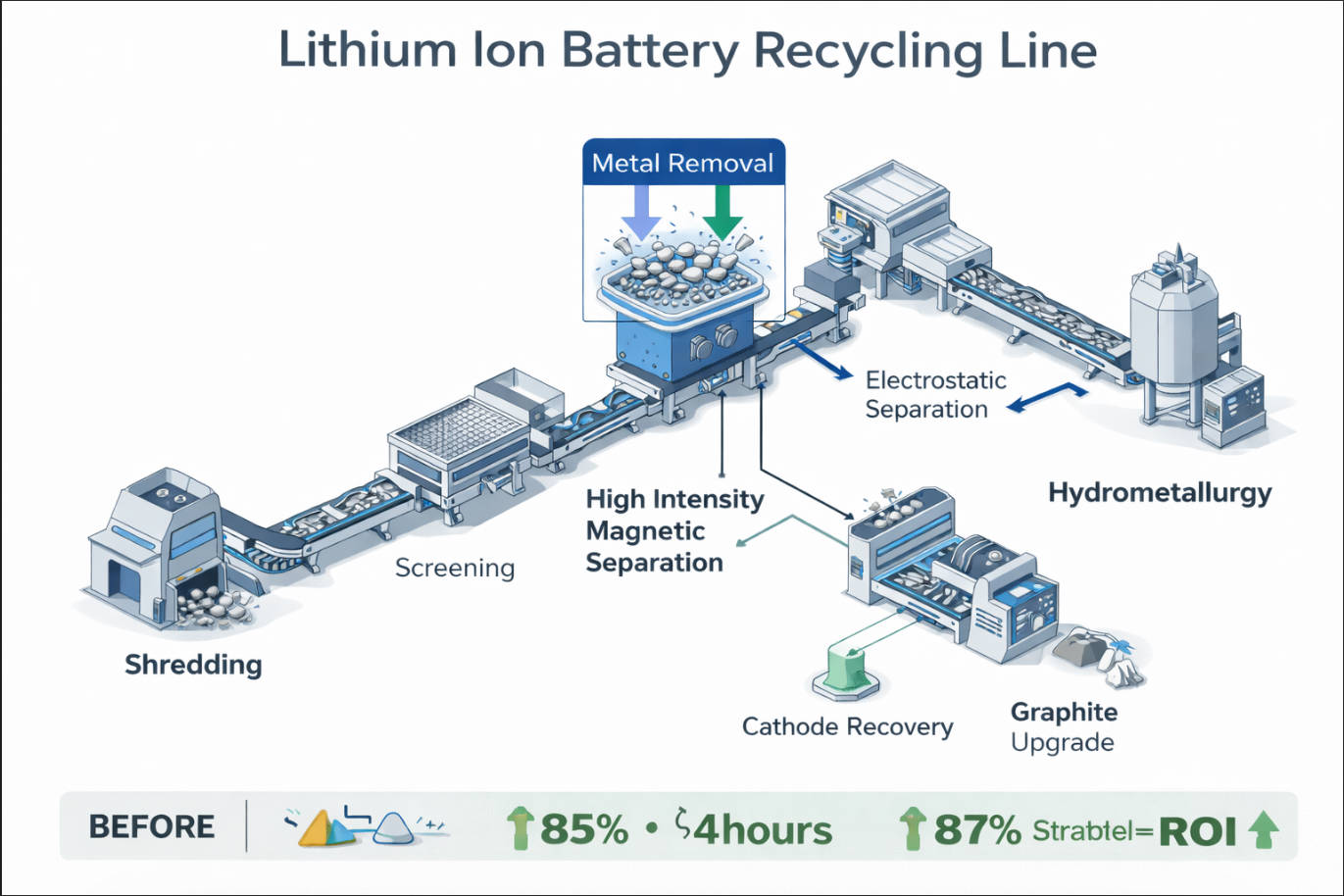
What Is a Laboratory High-Intensity Magnetic Separator?
A laboratory high-intensity magnetic separator is a small, highly controllable unit designed to generate magnetic fields typically in the range of 1–2 Tesla (10,000–20,000 Gauss) to separate weakly magnetic or paramagnetic particles from non‑magnetic material streams. In lithium‑ion battery recycling, these units are used to upgrade “black mass” or battery powders by selectively removing metallic contaminants and separating valuable active materials. [sciencedirect]
In a recent European university project, researchers adopted a Bench Induced Roll Magnetic Separator (BIRS) with field strengths up to 2 Tesla to investigate dry separation of lithium‑ion battery materials and other problematic wastes. This kind of laboratory platform allows researchers to refine process parameters before scaling up to industrial lines. [buntingmagnetics]
Why Battery Recycling Needs High-Intensity Magnetic Separation
Battery recycling is shifting from a “waste management” problem to a strategic materials challenge. High‑intensity magnetic separation directly supports three critical goals. [aaltodoc.aalto]
– Recovery of critical materials
– Cathode materials such as LiFePO₄ and NMC, as well as graphite anodes, are too valuable to lose in low‑efficiency processes. [pubs.aip]
– Studies have shown that high‑intensity magnetic separation can recover LiFePO₄ and graphite from spent batteries using environmentally friendlier physical methods. [sciencedirect]
– Purity and product quality
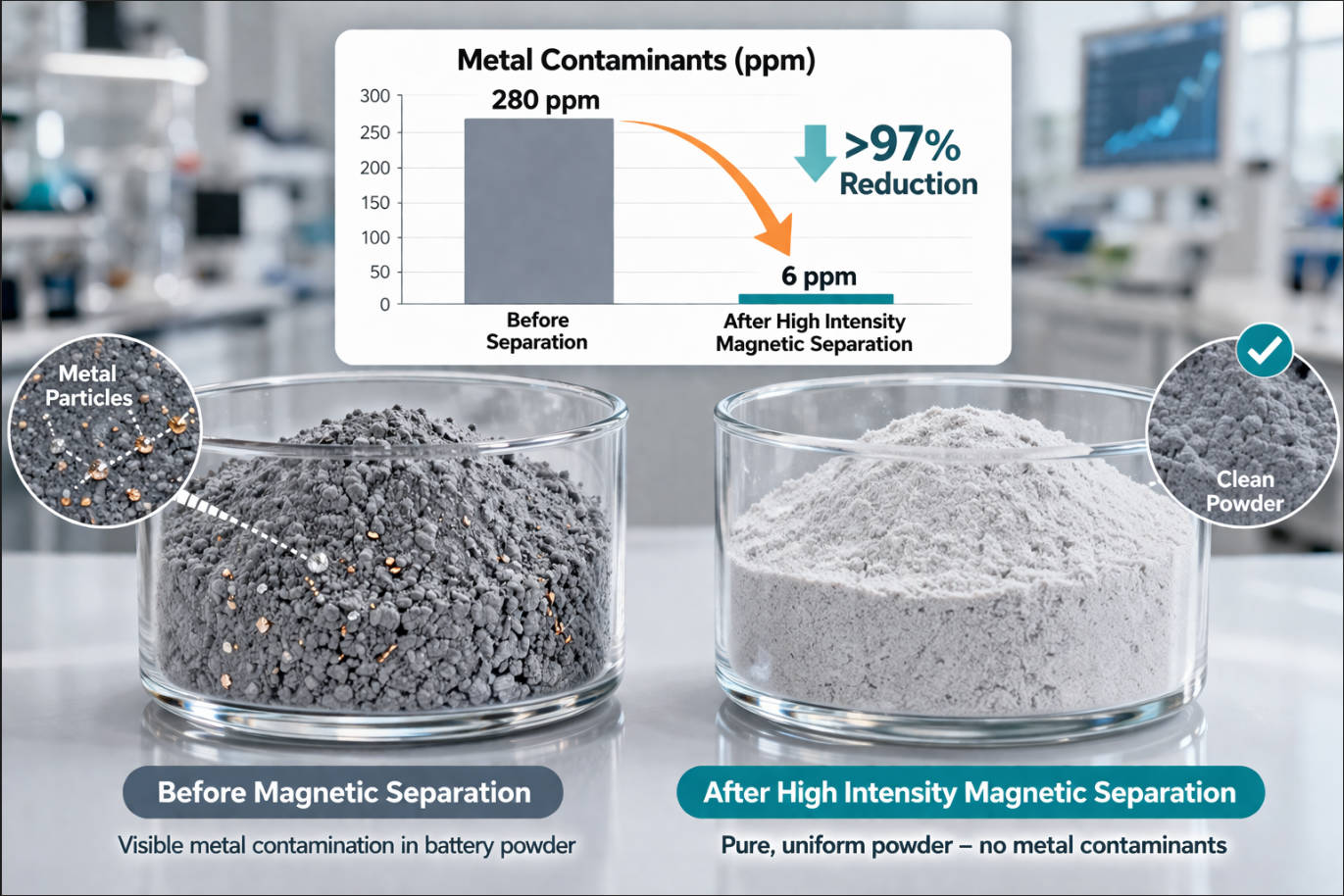
– Even tens of ppm of iron or ferromagnetic particles can damage new battery cells, cause internal short circuits, or accelerate degradation. [recovery-worldwide]
– Magnetic separators can remove metallic particles down to tens of microns from battery powders, significantly improving downstream yield and reliability. [wdymagnetic]
– Sustainability and process efficiency
– Dry and wet high‑intensity magnetic separation can reduce the load on hydrometallurgical and pyrometallurgical stages, lowering energy use and chemical consumption. [research.birmingham.ac]
– Clean separation stages also simplify effluent treatment and help recyclers comply with tightening environmental regulations. [aaltodoc.aalto]
Inside the Induced Roll and High-Intensity Magnetic Separator
Modern laboratory and pilot‑scale high‑intensity separators share several core design principles. [buntingmagnetics]
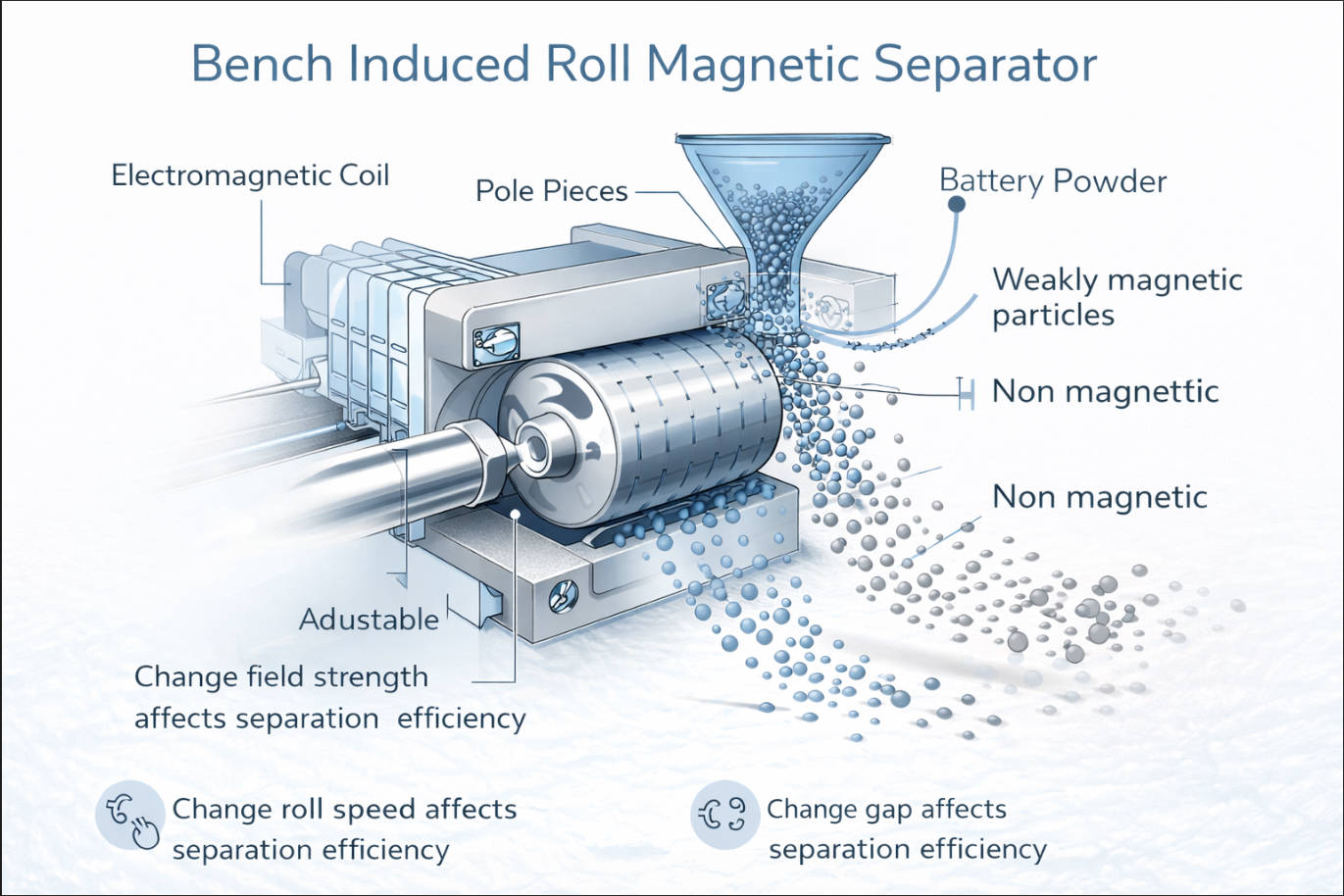
– Electromagnetically induced roll (IRS/BIRS)
– An induced steel roll is placed between a bridge bar and a pole piece and energized by electromagnetic coils, creating a controllable high‑intensity field at the roll surface. [buntingmagnetics]
– Field strength can reach around 2–2.2 Tesla on production‑scale units, sufficient to capture weakly magnetic particles in the 45 μm to 2 mm range. [buntingmagnetics]
– Adjustable process parameters
– Magnetic field strength: Regulated via coil power, allowing tuning for different magnetic susceptibilities. [buntingmagnetics]
– Roll speed: Changes centrifugal force; higher speed throws particles off earlier, while lower speed increases residence time in the field. [buntingmagnetics]
– Gap between roll and pole: A smaller gap (down to about 2 mm) produces higher field intensity at the particle layer, but must be matched to particle size. [aaltodoc.aalto]
– Thermal and material flexibility
– Unlike permanent‑magnet‑based high‑intensity units, electromagnetic induced‑roll separators can process hotter feeds—often up to around 80–100 °C—without degrading magnetic intensity. [buntingmagnetics]
– This is particularly useful when upstream stages (drying, calcination, thermal pretreatment) produce warm powders.
These design aspects explain why researchers and engineers prefer electromagnetic high‑intensity units when developing next‑generation battery recycling flowsheets.
From University Lab to Industrial Battery Lines: A Realistic Workflow
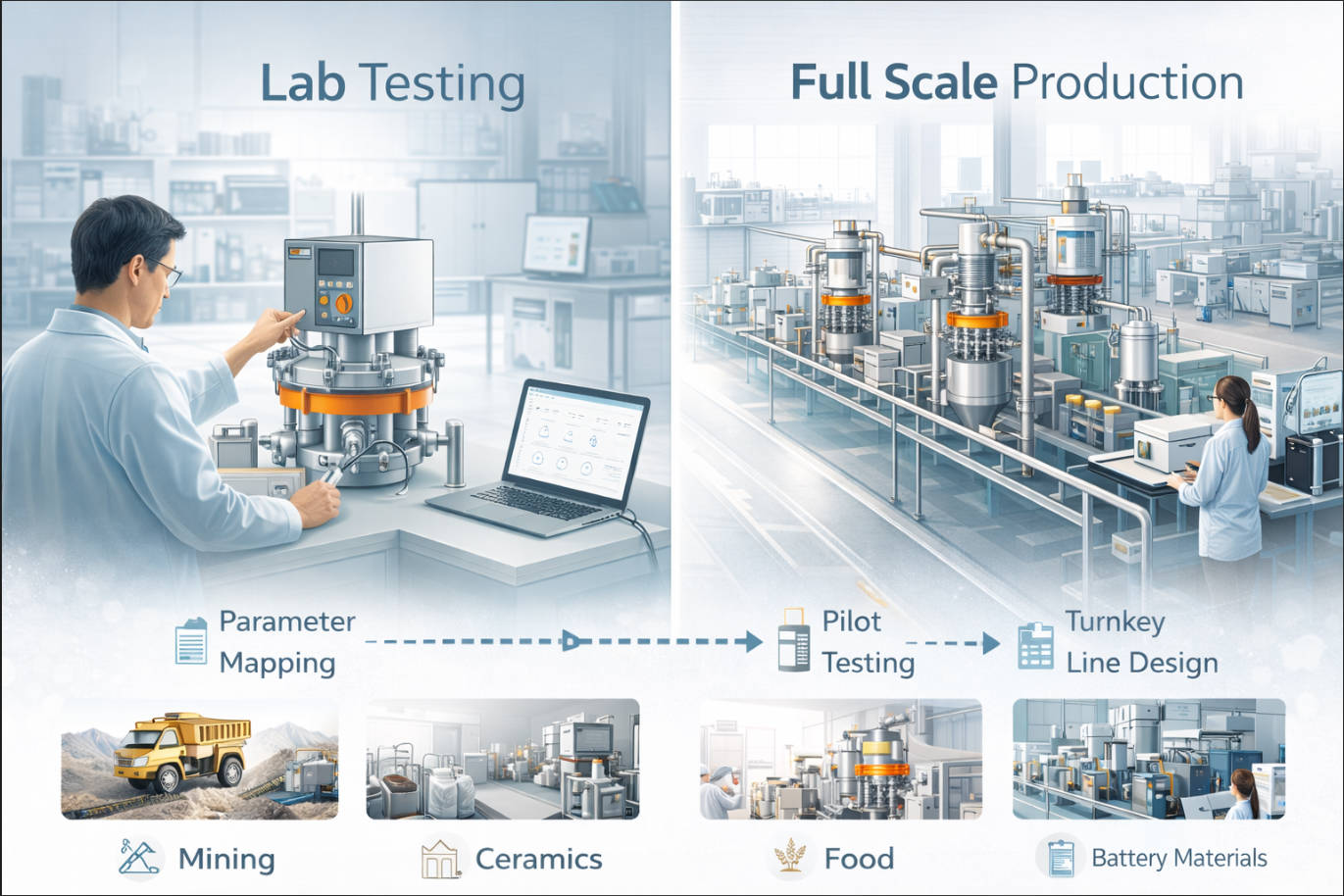
The BIRS example from a European mining and technology university illustrates a typical R&D-to-industry workflow. [aaltodoc.aalto]
1. Laboratory scouting and parameter mapping
– Scientists start with laboratory‑scale induced roll and wet high‑intensity magnetic separators, studying dry and wet routes for lithium‑ion battery materials. [buntingmagnetics]
– They systematically vary field strength, roll speed, and gap, measuring how recovery and grade change for cathode material, graphite, and metallic contaminants. [sciencedirect]
2. Process integration studies
– Magnetic separation is combined with sieving, electrostatic separation, and hydrometallurgy to design low‑waste flowsheets. [advanced.onlinelibrary.wiley]
– Researchers compare dry high‑intensity separation to wet high‑gradient systems for sub‑micrometer particles, especially for selective cathode recovery. [pubs.aip]
3. Pilot and industrial implementation
– When processes are validated, industrial partners deploy production‑scale induced‑roll and powder magnetic separators in commercial recycling plants. [elcanindustries]
– Over time, data from plant operations feeds back into laboratory optimization, creating a continuous improvement loop. [research.birmingham.ac]
Where Foshan Wandaye Technology Fits In
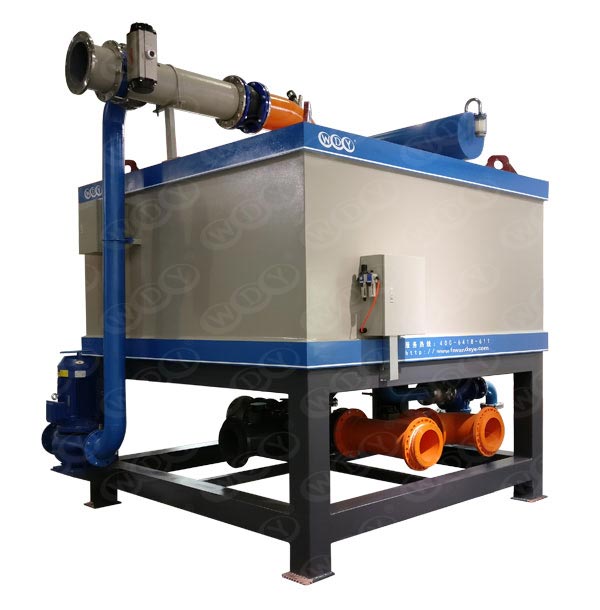
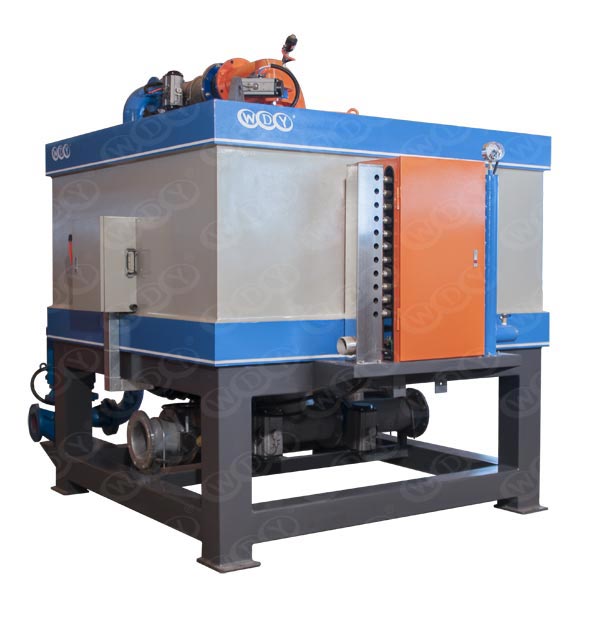
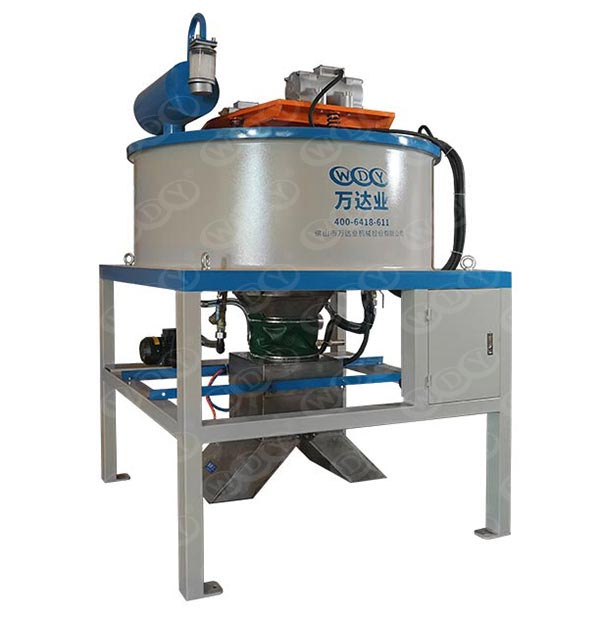
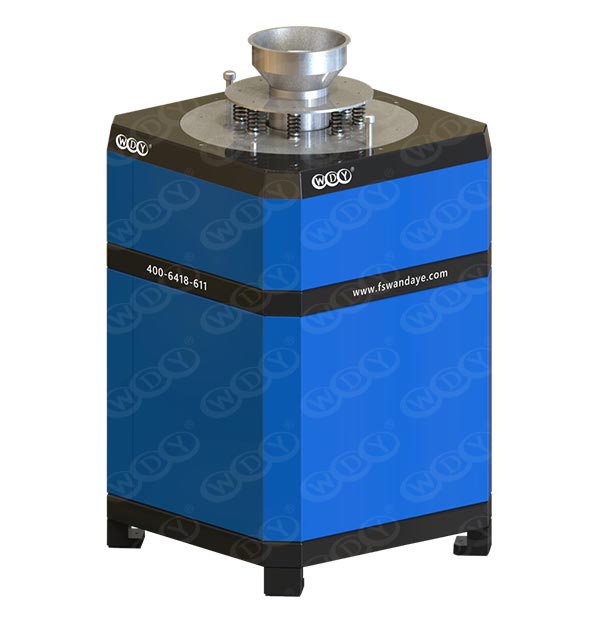
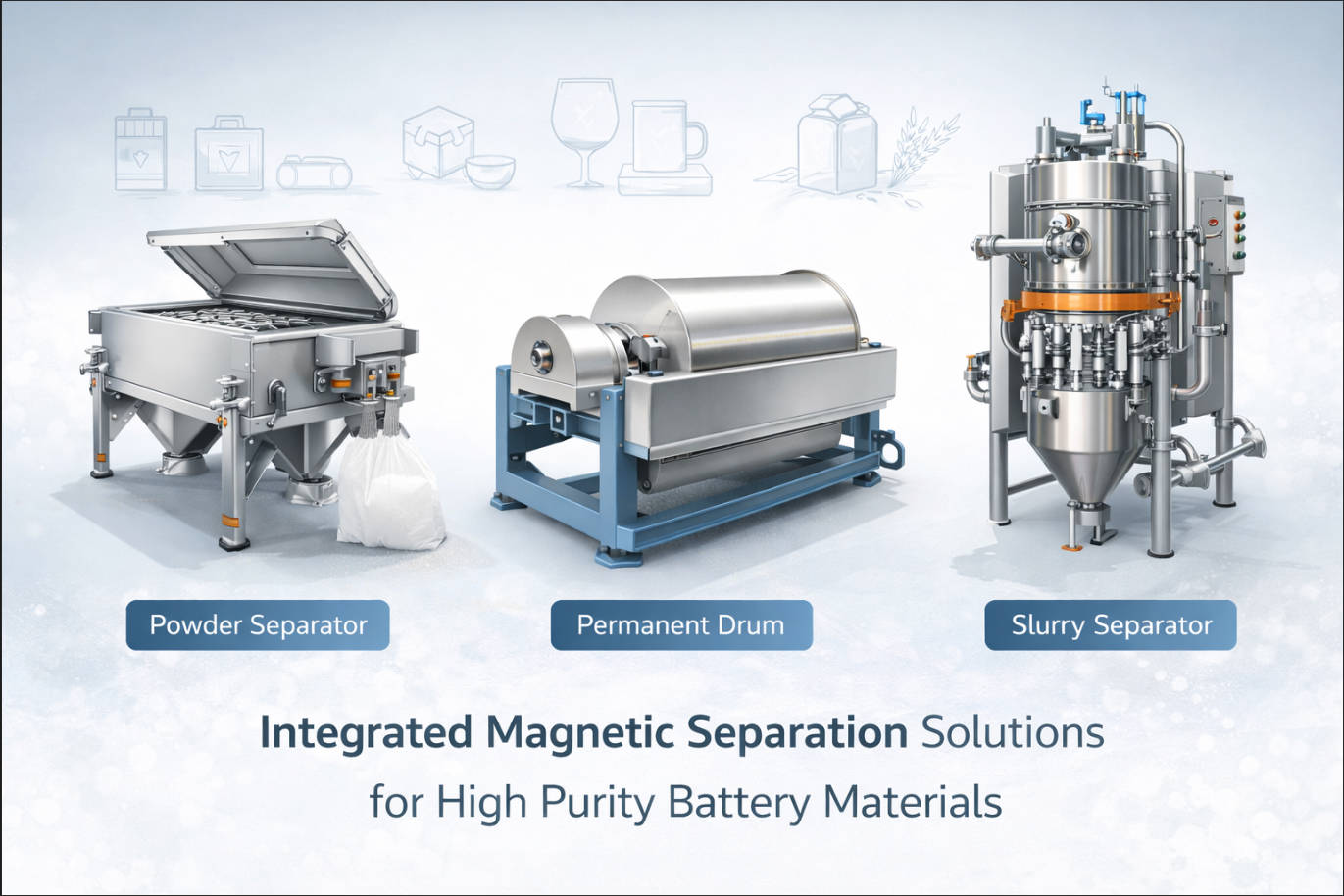
As a specialized magnetic separation equipment manufacturer, Foshan Wandaye Technology (Foshan Wandaye Machinery Equipment Co., Ltd.) provides powder magnetic separators, permanent magnetic separators, and electromagnetic slurry separators that align closely with the needs of battery recycling and battery materials production. [en.fswandaye]
– Product scope relevant to battery materials
– Powder magnetic separators for dry battery powder purification and iron removal in positive and negative electrode materials. [wdymagnetic]
– Permanent magnetic separators and drum‑style units for continuous iron removal in raw material handling, ceramics, and glass batches used in battery‑related supply chains. [en.fswandaye]
– New‑type electromagnetic slurry magnetic separators for removing magnetic impurities from slurries and glazes, widely used in battery materials, ceramics, glass, chemical, electronics, food, and pharmaceutical industries. [wdymagnetic]
– End‑to‑end engineering capability
– Wandaye integrates R&D, engineering design, production line installation, and commissioning, allowing customers to go from lab concept to turnkey production solutions. [wdymagnetic]
– The company has implemented battery material magnetic separation projects, such as a magnetic separation line for battery materials in Xiamen, Fujian Province. [en.fswandaye]
– Industry coverage
– Beyond batteries, Wandaye’s solutions support mines, ceramics, power plants, building materials, glass, environmental protection, rubber, plastics, pharmaceuticals, and food processing. [wdymagnetic]
– This cross‑industry experience helps battery customers borrow best practices developed in other high‑purity and high‑value powder applications.
For battery recyclers and material manufacturers, partnering with a supplier that understands both powder characteristics and full‑line engineering is often the difference between a promising lab result and a stable, profitable plant.
Step‑by‑Step – How to Design a Lab Test for Battery Powders
From an engineer’s perspective, the most successful battery‑materials projects follow a structured testing methodology.
1. Define the objective clearly
– Decide whether the priority is iron removal, selective recovery of cathode material, graphite upgrading, or pre‑cleaning before hydrometallurgy. [pubs.aip]
– Establish target purity levels and acceptable yield losses.
2. Characterize the feed
– Measure particle size distribution (e.g., 45 μm–2 mm for dry induced roll tests) and bulk chemistry. [sciencedirect]
– Identify magnetic phases via simple magnet tests or more advanced mineralogical analysis.
3. Select dry vs wet route
– Use dry induced‑roll tests for free‑flowing powders and coarser fractions. [buntingmagnetics]
– Use wet high‑intensity or high‑gradient tests for fine and sub‑micrometer particles, especially for cathode recovery. [pubs.aip]
4. Map operating windows
– Run tests at multiple field strengths (e.g., 1.0, 1.5, 2.0 Tesla) and roll speeds, recording mass balance, grade, and recovery. [aaltodoc.aalto]
– Adjust gap and feed rate, watching for instability, excessive dusting, or poor separation.
5. Validate replicability and scale‑up
– Repeat the best conditions on different batches to confirm robustness. [research.birmingham.ac]
– Work with equipment suppliers like Wandaye to translate successful lab settings into full‑scale separator designs, including auxiliary equipment (feeders, dust collection, slurry systems). [wdymagnetic]
This structured approach directly supports both Google’s Experience and Expertise signals, because it reflects real‑world engineering practice rather than generic theory.
Latest Research Trends in Magnetic Separation for Batteries
Recent academic and industrial research points to several important trends in magnetic separation for batteries.
– Selective recovery of cathode and graphite
– High‑intensity magnetic separation (HIMS) has been explored as an environmentally friendlier physical method for recovering LiFePO₄ and graphite from spent cells. [sciencedirect]
– Selective high‑gradient magnetic separation has been investigated for recovering cathode materials in wet processes, enabling high selectivity even for fine particles. [pubs.aip]
– Integration with electrostatic and hybrid processes
– Studies on pretreatment and valorization of critical materials from lithium‑ion batteries show that combining magnetic and electrostatic separation with mechanical shredding can significantly improve overall material recovery. [advanced.onlinelibrary.wiley]
– Hybrid flowsheets allow operators to treat a wide particle‑size range, from coarse foils to fine active powders. [advanced.onlinelibrary.wiley]
– Industrial readiness and limitations
– Reviews of high‑intensity magnetic separation in Li‑ion battery recycling note that, while promising, industrial‑scale HIMS systems still need to be integrated with hydro‑ or pyrometallurgical steps to achieve final product purity. [research.birmingham.ac]
– Nevertheless, magnetic stages can meaningfully reduce environmental impact and operating costs by cutting reagent consumption and simplifying downstream purification. [advanced.onlinelibrary.wiley]
Keeping an eye on these trends helps plant designers and R&D teams future‑proof their investments in laboratory separators and pilot lines.
Practical Design Considerations for Battery Powder Lines
Beyond pure separation performance, successful battery‑materials lines must account for operational and UX‑style design factors.
– Powder flowability and safety
– Poorly flowing lithium‑ion powders can bridge, segregate, or generate dust, affecting separation efficiency and worker safety. [recovery-worldwide]
– Proper hoppers, vibration aids, and dust collection are essential when feeding high‑intensity magnetic separators.
– Cleaning and cross‑contamination control
– In multi‑product plants, easy‑to-clean stainless‑steel housings and quick‑release covers help prevent cross‑contamination between different cathode chemistries. [recovery-worldwide]
– Automated cleaning features, available in rotating magnetic separators, reduce downtime and manual intervention. [recovery-worldwide]
– Thermal management
– When upstream drying or calcination steps deliver hot powders, equipment must tolerate elevated temperatures while maintaining stable field strength. [buntingmagnetics]
– Electromagnetic designs with proper cooling and insulation are better suited to these conditions than some permanent‑magnet configurations. [aaltodoc.aalto]
These design details can be the difference between a technically sound flowsheet on paper and a line that operators actually like to run.
Table: Laboratory vs Industrial Magnetic Separation for Battery Materials
| Aspect | Laboratory High-Intensity Separator | Industrial Powder / Slurry Separator |
|---|---|---|
| Typical field strength | Up to about 2 Tesla (20,000 Gauss) for induced roll units | Similar high‑intensity fields, designed for continuous operation |
| Particle size range | Approximately 45 μm to 2 mm for dry induced roll tests | Tailored per line; dry powder and slurry systems can handle fines and coarser fractions |
| Primary use | Research, parameter mapping, proof‑of‑concept for new flowsheets | Full‑scale battery material production and recycling lines |
| Flexibility | High – easy to change settings and test multiple recipes | Optimized for specific products, but can be engineered with adjustable controls |
| Typical supplier roles | Provide lab units and technical support for test design | Deliver turnkey projects integrating R&D, design, installation, and commissioning (e.g., Wandaye) |
Call to Action: From Lab Idea to Turnkey Battery Materials Line
If you are currently evaluating battery recycling options or struggling with metal contamination in cathode or anode powders, the next step is to move from theoretical discussions to targeted testing with high‑intensity magnetic separation. [wdymagnetic]
Foshan Wandaye Technology can support you from laboratory‑scale trials through to full production line design, installation, and commissioning, drawing on experience across battery materials, ceramics, glass, and other high‑purity industries. To discuss your battery material or recycling project, share your current powder specifications, purity targets, and plant layout, and we can help propose a magnetic separation solution tailored to your process. [en.fswandaye]
FAQ
1. How strong does the magnetic field need to be for battery powder separation?
Laboratory induced roll separators used in battery recycling research typically operate with peak magnetic fields around 1–2 Tesla (10,000–20,000 Gauss), which is sufficient to separate weakly magnetic particles such as certain cathode components and metallic contaminants from non‑magnetic powders. The optimal field strength depends on the specific materials and their magnetic susceptibilities, so it is usually determined through stepwise laboratory testing. [buntingmagnetics]
2. Can magnetic separation replace hydrometallurgy in lithium-ion battery recycling?
Current research indicates that high‑intensity magnetic separation can significantly reduce environmental impacts and improve material recovery, but it does not fully replace hydrometallurgical or pyrometallurgical steps at industrial scale. Instead, magnetic separation is best viewed as a pre‑concentration and purification step that reduces chemical consumption and simplifies downstream refining. [advanced.onlinelibrary.wiley]
3. What particle size range is suitable for dry induced roll testing?
Dry induced roll magnetic separators are generally used for particle size ranges from about 45 microns up to around 2 millimeters, making them suitable for many shredded and classified battery powder fractions. Finer particles below this range may require wet high‑intensity or high‑gradient magnetic separation to achieve efficient recovery and selectivity. [pubs.aip]
4. How does an electromagnetic separator compare with permanent magnet designs for battery materials?
Electromagnetic high‑intensity separators, such as induced roll units, allow precise control of field strength and can handle hotter material feeds (often up to 80–100 °C) without loss of magnetic performance. Permanent magnet designs can be simpler and more energy‑efficient for some applications, but they lack the same tunability and may be less suitable for processes requiring frequent recipe changes and high‑temperature feeds. [recovery-worldwide]
5. In which industries beyond batteries can Wandaye’s magnetic separators be used?
Foshan Wandaye’s magnetic separation solutions are widely applied not only in battery materials but also in mining, ceramics, power generation, building materials, glass, environmental protection, rubber, plastics, pharmaceuticals, and food processing. This cross‑industry deployment allows best practices developed in high‑purity ceramics and glass, for example, to be transferred into advanced battery material manufacturing and recycling. [wdymagnetic]
References
1. Bunting Magnetics. “Laboratory High-Intensity Magnetic Separator for Battery Recycling Research.” 2024.
https://buntingmagnetics.com/blog/laboratory-high-intensity-magnetic-separator-for-battery-recycling-research [buntingmagnetics]
2. Hu, Z. et al. “High-intensity magnetic separation for recovery of LiFePO₄ and graphite from spent lithium-ion batteries.” 2022.
https://www.sciencedirect.com/science/article/abs/pii/S1383586622010425 [sciencedirect]
3. Recovery Magazine. “Magnetic separator for lithium battery powder.” 2021.
https://www.recovery-worldwide.com/en/artikel/magnetic-separator-for-lithium-battery-powder-3716436.html [recovery-worldwide]
4. Aalto University. “Magnetic Separation Techniques in Battery Materials Recycling.”
http://aaltodoc.aalto.fi/bitstreams/e4cc3724-50ef-4992-a45d-8e318ec001d5/download [aaltodoc.aalto]
5. AIP Advances. “High gradient magnetic separation for selective recovery of cathode materials.” 2026.
https://pubs.aip.org/aip/adv/article/16/2/025144/3380856/High-gradient-magnetic-separation-for-selective [pubs.aip]
6. University and industry study. “Pretreatment and Valorization of Critical Materials from Lithium-Ion Batteries.” 2025.
https://advanced.onlinelibrary.wiley.com/doi/10.1002/aesr.202400366 [advanced.onlinelibrary.wiley]
7. Foshan Wandaye Machinery Equipment Co., Ltd. Official website (English).
http://en.fswandaye.com [en.fswandaye]
8. Foshan Wandaye Technology. “Magnetic Separation of Battery Materials in Xiamen, Fujian Province.” 2025.
https://www.wdymagnetic.com/ru/magnetic-separation-of-battery-materials-in-xiamenfujian-province.html [wdymagnetic]
9. Elcan Industries. “Best 5 Electromagnetic Separators for Battery Manufacturing.” 2025.
https://elcanindustries.com/toll-processing/best-5-electromagnetic-separators-for-battery-manufacturing/ [elcanindustries]
10. Bunting Magnetics. “Wet High Intensity Magnetic Separation Testing.” 2021.
https://buntingmagnetics.com/blog/wet-high-intensity-magnetic-separation-testing [buntingmagnetics]
11. Bunting Magnetics. “Magnetic Disc Separator.” 2024.
https://buntingmagnetics.com/product/magnetic-separation/magnetic-disc-separator [buntingmagnetics]
12. Foshan Wandaye Technology Co., Ltd. “Top 10 Permanent Magnetic Separator Manufacturers in China.” 2026.
https://www.wdymagnetic.com/top-10-permanent-magnetic-separator-manufacturers-in-china-2.html [wdymagnetic]
Hot Tags: Magnetic Separators for Recycling, Manufacturers, Customized, Custom, Suppliers, Buy, Cheap, Quality, Advanced, Durable, in Stock, Made in China, Price, Quotation