Content Menu
● How to Evaluate a Qualified Magnetic Roller Separator Supplier
● Turkmenistan’s Position in the Magnetic Separator Value Chain
● Market Outlook and Technical Context for Magnetic Roller Separators
● Transparent Selection Criteria for This “Top Suppliers” Shortlist
● Top Magnetic Roller Separator Manufacturers Serving Turkmenistan
>> 1. Kumar Magnet Industries (India)
>> 2. Eriez Manufacturing Company (US) – Global Reference Supplier
>> 3. Bunting Magnetics (US/UK) – Systems for Recycling and Process Industries
>> 4. LONGi Magnet (China) – High‑Capacity Mining and Bulk Handling
>> 5. Shandong Huate Magnet Technology (China) – Advanced HGMS Solutions
>> 6. Goudsmit Magnetics (Netherlands) – High‑End Industrial and Food Applications
● Supplier Comparison: Capacity, MOQ and Certifications
● Buyer’s Guide: How to Verify and Work with Magnetic Roller Separator Suppliers
>> Step 1 – Technical Specification and RFQ Preparation
>> Step 2 – Factory and Certification Verification
>> Step 3 – Lab or Pilot Testing
>> Step 4 – Contract and Acceptance Tests
>> Step 5 – Logistics and Installation
● Common Pitfalls and “Internal” Risk‑Avoidance Tips
● Conclusion and Recommended Next Steps
● FAQ: Advanced Questions Procurement Managers Often Ask
>> 1. How can I verify whether a supplier’s ISO 9001 or ISO 14001 certificate is still valid?
>> 2. What is the difference between single, double and multi‑roller separators in practical terms?
>> 3. How do I quantify magnetic performance beyond just “gauss value”?
>> 5. How do I design a test protocol to compare multiple suppliers fairly?
How to Evaluate a Qualified Magnetic Roller Separator Supplier
Before looking at individual manufacturers, professional buyers should apply a clear, documented supplier evaluation framework. For magnetic roller separators used in mining, ceramics, food, plastics and battery materials, the following dimensions are critical: [mintest-global]
– Factory certifications and compliance:
– ISO 9001 and (when relevant) ISO 14001/ISO 45001 indicate basic quality, environmental and safety systems.
– For Turkmenistan, alignment with GOST and Turkmen national standards (TDS) and use of accredited bodies under “Turkmenstandartlary” reduces customs and inspection risk. [mintest-global]
– R&D capability and engineering depth:
– Ability to design high‑gradient rollers, rare‑earth magnet circuits and application‑specific pole patterns.
– Evidence: in‑house design team, CFD/FEA use, track record in complex applications (ultra‑fine mineral processing, lithium cathode/anode materials, high‑purity food lines). [wiseguyreports]
– Quality control and traceability:
– Material traceability for magnet grades, stainless steel batches, and critical components.
– Standardized FAT (Factory Acceptance Test) for gauss level, separation efficiency, and belt tracking before shipment.
– Delivery reliability and installed‑base feedback:
– On‑time delivery rate over the last 12 months and stock of critical spares in the region.
– References from mines, ceramic plants or food factories in Central Asia or CIS.
– After‑sales and OEM/ODM support:
– Ability to localize designs for Turkmenistan’s standards, ambient conditions, and languages (Turkmen/Russian documentation). [mintest-global]
– Engineering response time (e.g., drawing turnaround in 3–5 working days), remote commissioning support, and flexible low‑volume customization for new product lines.
These criteria are what differentiate a long‑term strategic partner from a trading company simply re‑labelling generic equipment.
Turkmenistan’s Position in the Magnetic Separator Value Chain
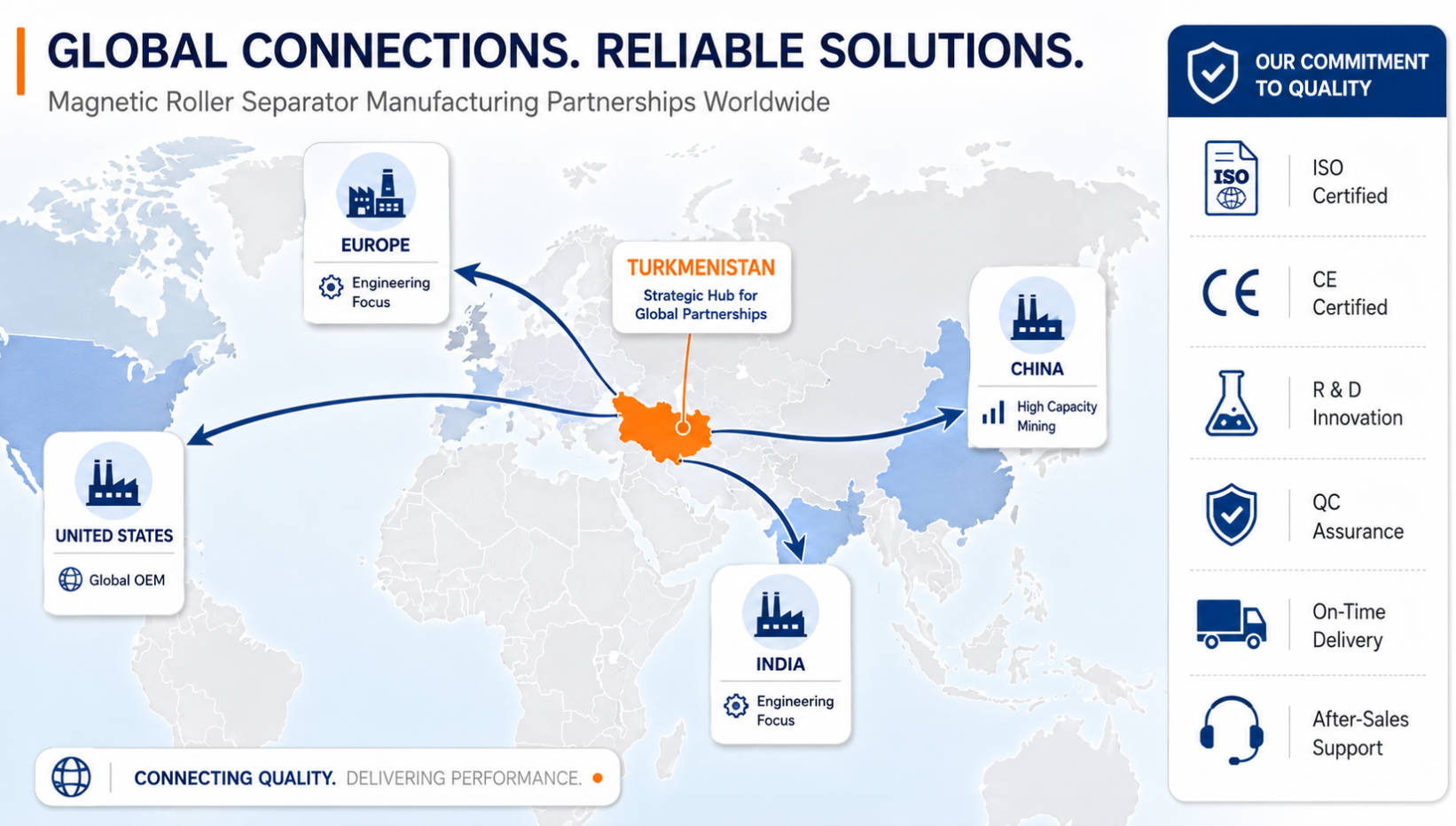
Turkmenistan is not yet a global manufacturing hub for magnetic roller separators, but it is an important downstream application market, particularly in natural gas‑linked chemicals, construction materials and selected mining segments. Its standards and certification framework is gradually aligning with international norms, which shapes how foreign equipment is specified and purchased. [wiseguyreports]
Product certification and conformity assessment are supervised by the Main State Standards Service “Turkmenstandartlary”, which oversees compliance with Turkmen national standards (TDS) and GOST requirements. For foreign‑made separators, this typically means: [mintest-global]
– Providing test reports, hygiene or safety certificates where applicable, and translated documentation (often Russian is required for technical files). [mintest-global]
– Ensuring labels and manuals comply with Turkmen or Russian language expectations, with English as a secondary language. [mintest-global]
Because most high‑end magnetic roller separators are manufactured in regions like Europe, China, India and Japan, Turkmen buyers commonly source from global OEMs that can engineer for local compliance rather than from purely domestic producers. [marketsandmarkets]
Market Outlook and Technical Context for Magnetic Roller Separators
Globally, the magnetic roller separator market is expected to grow from about 549.1 million USD in 2025 to roughly 1.5 billion USD by 2035, reflecting an estimated CAGR of around 10.6%. Growth is driven by: [wiseguyreports]
– Increasing demand in mineral processing and recycling as countries push for resource recovery and stricter environmental regulations. [marketresearchfuture]
– Tighter quality standards in food, pharmaceuticals and advanced materials, where fine ferrous contamination must be removed at very high efficiency. [marketresearchfuture]
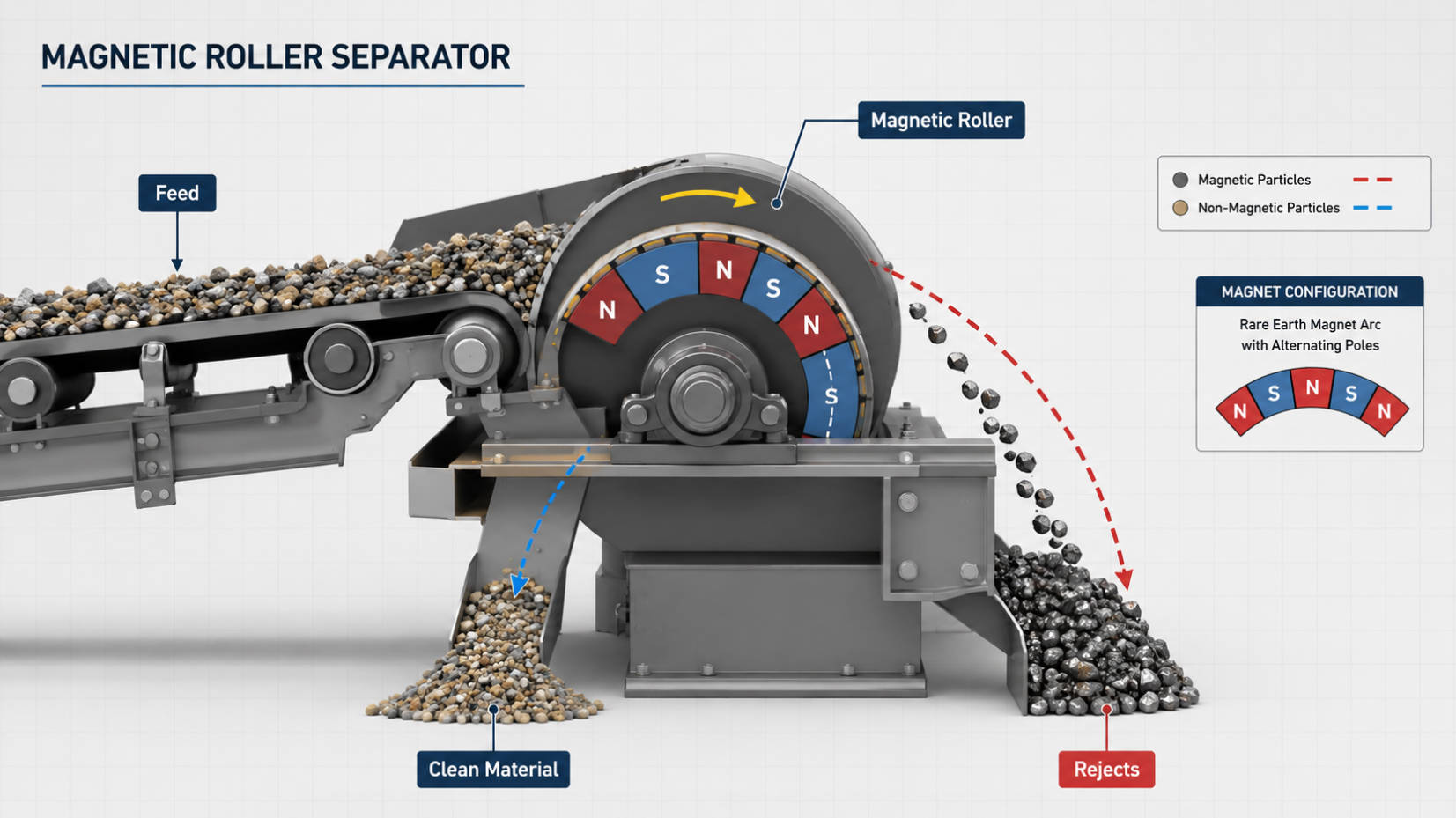
From a technical perspective, modern magnetic roller separators feature:
– High‑intensity rare‑earth circuits (typically NdFeB in N35–N52 or equivalent grades), enabling separation of weakly magnetic particles like hematite or roasted ores. [wiseguyreports]
– Single, double or multi‑roller configurations to handle different throughput levels and separation stages; multi‑roller systems are used where very high purity and multiple cleaning stages are needed. [wiseguyreports]
– Operation modes ranging from manual to fully automatic systems integrated into PLC/SCADA, with automatic cleaning and monitoring increasingly common in large plants. [wiseguyreports]
In Turkmenistan‑focused projects (mineral processing, building materials, food imports and packaging), buyers often favor permanent magnetic roller separators because they combine low operating costs with high reliability, provided that magnets and mechanical construction meet international standards. [marketresearchfuture]
Transparent Selection Criteria for This “Top Suppliers” Shortlist
Because there are few globally recognized magnetic roller separator OEMs physically based in Turkmenistan, this guide focuses on manufacturers with proven ability to supply, install or support magnetic roller separators for Turkmenistan and broader Central Asia/CIS projects. The shortlist is built using the following transparent criteria: [kumarmagnet]
1. Core specialization in magnetic separation (with specific magnetic roller or high‑intensity roller products in the catalog). [kumarmagnet]
2. Export capability to Turkmenistan or nearby markets (experience with CIS or GOST‑linked countries, or explicit marketing to Turkmenistan). [marketsandmarkets]
3. Documented standards and certifications such as ISO 9001 and CE; for food or pharma applications, ability to supply equipment designed to meet HACCP and related hygiene expectations. [marketsandmarkets]
4. Track record in mining, ceramics, building materials or food sectors, which match the dominant applications in Turkmenistan’s industrial base. [marketresearchfuture]
5. OEM/ODM capability and engineering support for customized roller designs, installation layout and commissioning. [en.fswandaye]
Within this framework, Wandaye Technology is positioned as a flexible, R&D‑driven OEM particularly attractive for medium‑size brands and project‑based integrators. [fswandaye]
Top Magnetic Roller Separator Manufacturers Serving Turkmenistan
> Note: Company profiles below are written from a buyer’s due‑diligence perspective, highlighting founding background, technical focus, export capacity and suitability for Turkmenistan projects.
1. Kumar Magnet Industries (India)
Kumar Magnet Industries actively promotes high‑intensity roller type magnetic separators for Turkmenistan, highlighting itself among the top suppliers for this specific market. Its portfolio covers high‑gradient roller separators, drum separators and allied magnet equipment for minerals, food and recycling. [kumarmagnet]
– Core strengths:
– Focus on high‑intensity roller designs for fine mineral and industrial applications. [kumarmagnet]
– Experience supplying to multiple international markets, including Central Asian buyers who require robust construction for dusty, high‑temperature environments. [kumarmagnet]
– Typical certifications and markets:
– Commonly serves mining, ceramics and recycling sectors; buyers should request current ISO and CE documentation valid for their industry. [kumarmagnet]
– Suitable for Turkmenistan projects where on‑site mechanical capability is available and the plant team can handle standard installation with remote engineering support.
2. Eriez Manufacturing Company (US) – Global Reference Supplier
Eriez is frequently cited as one of the global leaders in magnetic separation, with a broad portfolio that includes high‑intensity magnetic rollers and dry magnetic separators. It is not Turkmenistan‑specific, but its systems are often specified in large‑scale mining and processing projects worldwide. [marketsandmarkets]
– Core strengths:
– Strong R&D, extensive test facilities and multiple patents on high‑gradient separation. [marketsandmarkets]
– Particularly suitable for large, EPC‑driven projects where process guarantees and performance testing are crucial.
– Typical certifications and markets:
– Supplies to mining, food, chemical and recycling clients across North America, Europe, Asia and other regions. [marketresearchfuture]
– Robust documentation for CE, ATEX (selected models) and industry‑specific compliance, which can help with Turkmenistan conformity assessment when routed via local agents.
3. Bunting Magnetics (US/UK) – Systems for Recycling and Process Industries
Bunting Magnetics is listed among the notable magnetic separator manufacturers globally, offering drum, pulley and high‑intensity magnetic systems. For Turkmenistan, Bunting is relevant for projects in recycling, metal packaging and food processing that require Western‑standard documentation. [marketsandmarkets]
– Core strengths:
– Strong product lines for recycling plants, waste‑to‑energy facilities and food‑grade separation. [marketsandmarkets]
– Engineering capability to integrate magnetic rollers with conveyors, feeders and metal detection systems.
– Typical certifications and markets:
– Supplies primarily to Europe and North America, but works with integrators worldwide; hence Central Asian projects can be supported through regional partners. [marketsandmarkets]
– Emphasis on CE conformity and hygienic design for food and pharma applications.
4. LONGi Magnet (China) – High‑Capacity Mining and Bulk Handling
LONGi Magnet, listed as one of the key magnetic separator companies, has a strong presence in mining, steel and coal sectors, with a range of dry and wet magnetic separators suitable for bulk ores and industrial minerals. Its high‑capacity roller and drum systems can be attractive for Turkmen mines and big material handling projects. [marketsandmarkets]
– Core strengths:
– High‑throughput magnetic separation lines and strong integration with conveyors and feeders. [marketsandmarkets]
– Experience supplying to multiple Belt and Road markets, which often have similar regulatory and infrastructure profiles to Turkmenistan.
– Typical certifications and markets:
– Serves mining and heavy industry clients in China, Asia, Africa and CIS; can provide CE/ISO documentation for export. [marketsandmarkets]
– Suitable for buyers looking for large‑scale lines with in‑person commissioning teams from Asia.
5. Shandong Huate Magnet Technology (China) – Advanced HGMS Solutions
Shandong Huate Magnet Technology is another China‑based magnetic separator specialist identified in industry reports, with products spanning high‑gradient magnetic separators, vertical ring separators and roller units. It is often targeted at mining, ceramics and non‑metallic mineral processing. [marketsandmarkets]
– Core strengths:
– Deep specialization in mineral processing applications, including ultra‑fine iron removal from feldspar, quartz and kaolin. [marketsandmarkets]
– Ability to provide complete separation circuits (feeders, control systems, magnetic stages).
– Typical certifications and markets:
– Significant export activity across Asia, CIS and Europe; can provide CE and ISO certificates and test reports that support Turkmenstandartlary conformity assessment. [mintest-global]
– Strong choice when Turkmen projects involve non‑metallic minerals and require high‑recovery processing.
6. Goudsmit Magnetics (Netherlands) – High‑End Industrial and Food Applications
Goudsmit Magnetics, referenced among global magnetic separator companies, offers engineered magnet systems for industrial, food, and recycling uses. It is a suitable reference for Turkmen buyers seeking European‑standard design and documentation for critical process lines. [marketsandmarkets]
– Core strengths:
– Emphasis on hygienic design, cleanability and integration into food and pharmaceutical production lines. [marketsandmarkets]
– Cooperation with testing/certification organizations for compliance and validation. [wiseguyreports]
– Typical certifications and markets:
– Strong CE and food‑related compliance documentation; widely used in Europe and global export markets. [marketsandmarkets]
– Commercially attractive for niche, high‑value Turkmen projects where total lifecycle cost and compliance are more important than lowest CAPEX.
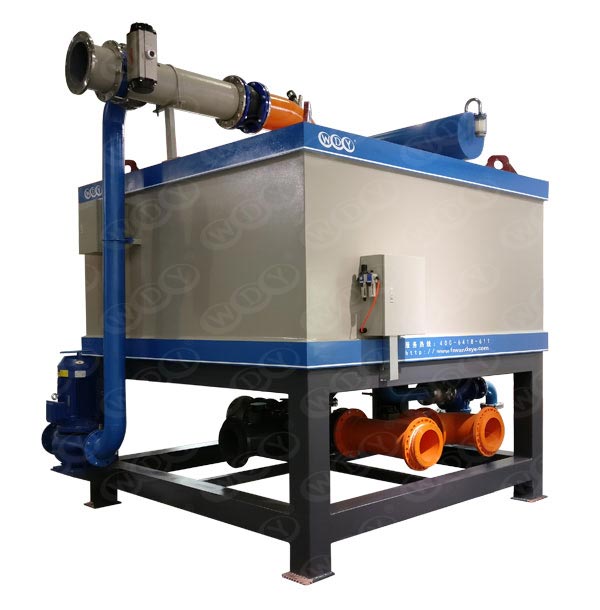
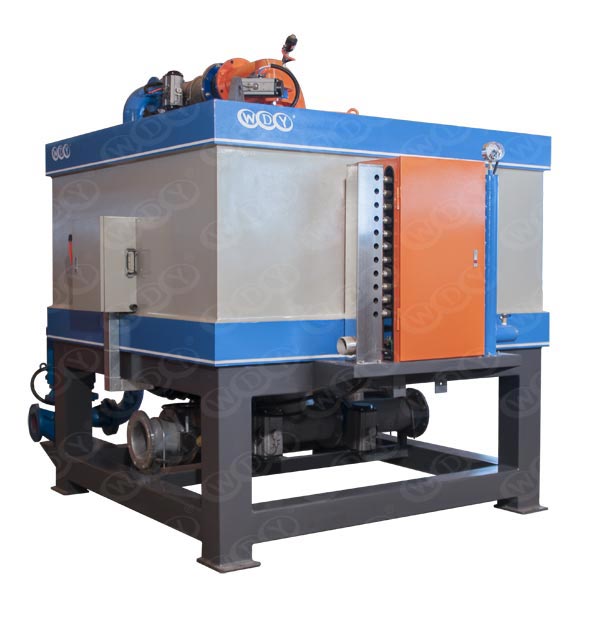
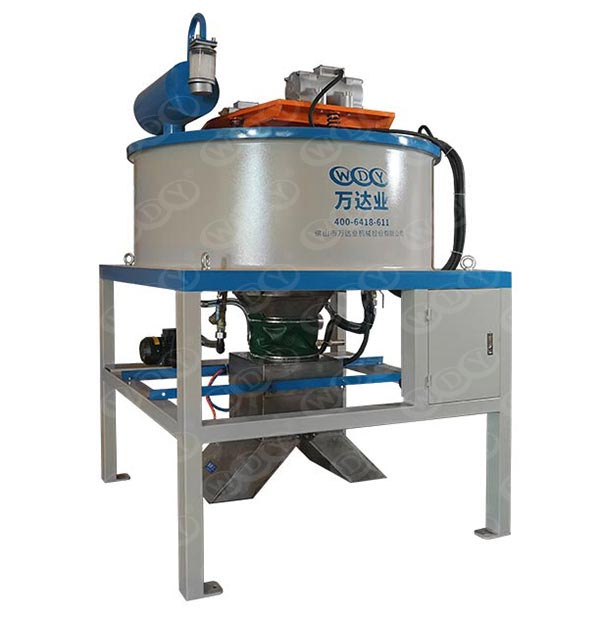
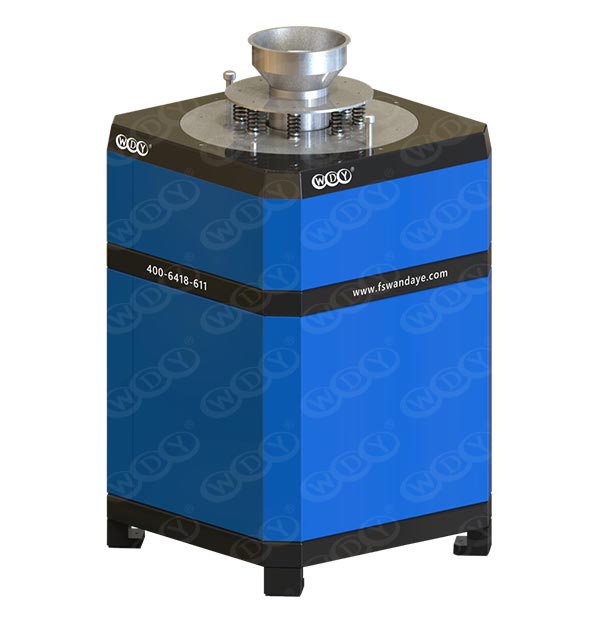
7. Wandaye Technology (Foshan Wandaye Machinery Equipment Co., Ltd., China) – Flexible, R&D‑Driven OEM Partner
Foshan Wandaye Machinery Equipment Co., Ltd. is a professional magnetic separator enterprise that integrates R&D, engineering design, production‑line installation and commissioning services. Its product portfolio covers high‑gradient electromagnetic separators, permanent magnetic separators, powder iron removers and various magnetic components used by ceramics, mining, glass, plastics, food and battery materials manufacturers. [fswandaye]
– Core strengths for Turkmenistan buyers:
– High cost‑performance and strong customization: Wandaye positions itself as a flexible OEM/ODM supplier, tailoring magnetic roller separators and related systems to the specific material characteristics and process requirements of mid‑size brands and plant integrators. [en.fswandaye]
– Application‑driven R&D: With in‑house R&D and engineering teams, the company supports lab‑scale testing and application engineering for industries such as ceramics, non‑metallic minerals and new energy materials, which overlap with the needs of Turkmen construction and processing sectors. [fswandaye]
– Full project support: Wandaye undertakes engineering design, on‑site installation guidance and commissioning, which helps overseas buyers bridge the gap between equipment procurement and stable line ramp‑up. [en.fswandaye]
– OEM/ODM and service characteristics:
– Capable of providing customized roller dimensions, magnetic circuit designs and multi‑stage configurations to match existing plant layouts, including retrofits into older lines. [fswandaye]
– Offers responsive communication and ongoing technical support via multilingual teams, which is particularly useful when coordinating with EPC contractors or local Turkmen partners. [en.fswandaye]
For Turkmenistan‑oriented projects, Wandaye is especially suitable for:
– Ceramic raw materials, quartz and feldspar processing that require high‑gradient separation.
– Medium‑scale plants seeking a balance between performance, customization depth and budget, rather than “one‑size‑fits‑all” catalog equipment.
Supplier Comparison: Capacity, MOQ and Certifications
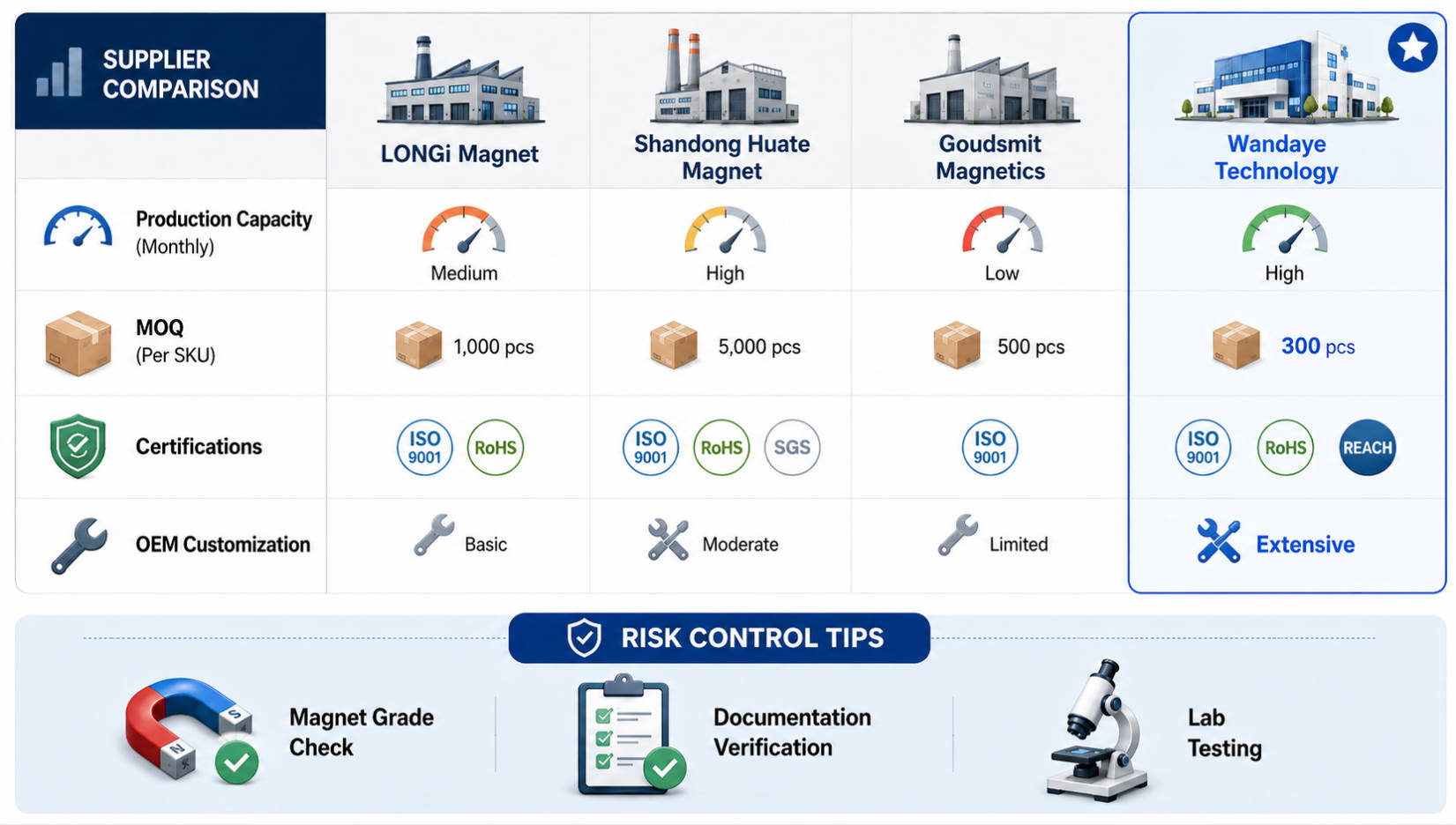
Below is a high‑level comparative snapshot based on publicly available information and typical positioning in the market. Values should be verified directly with each supplier for a specific RFQ.
| Supplier | Indicative production focus | Typical project size & MOQ (indicative) | Typical certifications & notes |
|---|---|---|---|
| Kumar Magnet Industries | High‑intensity roller separators for minerals and industrial materials. kumarmagnet | Often supports small to mid‑size projects; MOQs can start from a single customized unit, subject to specification. kumarmagnet | Commonly offers ISO/CE for export; buyers should check latest certificates and performance test reports for Turkmenistan projects. kumarmagnet |
| Eriez | Large‑scale magnetic separation systems including high‑intensity rollers. marketsandmarkets | Strong in large, multi‑line projects; often works through EPCs, with engineered systems rather than small, one‑off units. marketsandmarkets | Robust global compliance (ISO, CE and other sector‑specific approvals); strong documentation for regulatory audits. marketsandmarkets |
| Bunting Magnetics | Recycling, process, and food‑grade separators, including magnetic rollers. marketsandmarkets | Wide range: from single units for packaging/food plants to full recycling lines. marketsandmarkets | CE and food‑industry relevant standards; good technical files for conformity assessment in Turkmenistan. marketsandmarkets |
| LONGi Magnet | High‑capacity mining and bulk handling separators (drum, roller, etc.). marketsandmarkets | Focus on high‑throughput lines and multi‑unit projects in mining and heavy industry. marketsandmarkets | ISO/CE for export markets; strong references in Belt and Road countries, which can reassure Turkmen buyers. marketsandmarkets |
| Shandong Huate Magnet | HGMS and roller systems for non‑metallic minerals and mining. marketsandmarkets | Often supplies full separation circuits for mineral plants, mid‑ to large‑scale. marketsandmarkets | Export‑oriented with CE/ISO; can support documentation needs for GOST/Turkmenstandartlary compliance. marketsandmarkets |
| Goudsmit Magnetics | High‑end industrial and food‑grade magnet systems. marketsandmarkets | Project‑oriented; typical MOQs are engineered systems or small series of high‑value components. marketsandmarkets | Strong CE and hygiene‑related documentation; good match where audits are strict. marketsandmarkets |
| Wandaye Technology | R&D‑driven OEM of magnetic separators for ceramics, minerals, food and battery materials. fswandaye | Very flexible: supports one‑off customized separators up to full lines; well suited to SME and mid‑size brand needs. fswandaye | Provides international‑market quality systems; buyers should request up‑to‑date ISO/CE certificates and detailed performance test data for each project. fswandaye |
For Turkmenistan, where import certification and technical documentation are tightly controlled, buyers should place additional weight on suppliers’ ability to supply detailed test reports, translated manuals and conformity files that align with local requirements. [mintest-global]
Buyer’s Guide: How to Verify and Work with Magnetic Roller Separator Suppliers
Step 1 – Technical Specification and RFQ Preparation
– Define material characteristics: particle size distribution, bulk density, moisture content and magnetic susceptibility (if available).
– Clarify process targets: required Fe content before and after separation, throughput (t/h), and available footprint/headroom for the separator.
– Request that each supplier provides a preliminary process proposal (single vs multi‑roller, magnet intensity, belt speed, number of passes) and an estimated separation curve or test report.
Step 2 – Factory and Certification Verification
– Ask for scanned copies of ISO 9001 certificates and any relevant CE declarations; verify certificate numbers with the issuing bodies’ online databases or by direct email. [mintest-global]
– For Turkmenistan, ensure the supplier understands that product certification and, in some cases, hygiene/sanitary conformity may be required, especially for food‑related equipment. [mintest-global]
– Cross‑check that the factory name on the certificate matches the name on the proforma invoice and technical drawings (an internal “grey area” is when traders use certificates from an unrelated factory).
Step 3 – Lab or Pilot Testing
– When the application is critical (e.g., high‑value minerals, food powders, lithium materials), send bulk samples to shortlisted suppliers for lab or pilot‑scale testing.
– Request test protocols detailing feed characteristics, machine settings and measured Fe content at each stage; this is an important part of performance guarantees.
Step 4 – Contract and Acceptance Tests
– Include Factory Acceptance Test (FAT) clauses that specify minimum gauss level on the roller surface, target separation efficiency and acceptable mechanical tolerances.
– For Turkmenistan deliveries, align on who is responsible for local certification steps and the provision of Russian/Turkmen documentation to satisfy Turkmenstandartlary. [mintest-global]
Step 5 – Logistics and Installation
– Confirm packing standard (wooden crates, vacuum‑sealed magnets if required, anti‑corrosion treatment) and specify Incoterms that reflect Turkmenistan’s inland logistics (often via neighboring ports and overland routes).
– Require an installation and commissioning checklist plus remote or on‑site guidance; suppliers like Wandaye explicitly provide design, installation and debugging services that reduce on‑site risk. [fswandaye]
Common Pitfalls and “Internal” Risk‑Avoidance Tips
Beyond the obvious risks (price and delivery time), experienced buyers of magnetic roller separators routinely encounter several hidden issues:
1. Magnet grade downgrading after sample approval
– Internally, it is well known in the industry that some low‑tier factories may send samples built with high‑grade NdFeB magnets (e.g., N52) and then quietly switch to cheaper grades (e.g., N35 or even ferrite hybrids) in bulk production.
– How to avoid:
– Specify the magnet grade and temperature rating in the contract, not only in the drawing.
– Require the supplier to provide third‑party test reports or allow random gauss‑level checking at your appointed inspection agency before shipment.
2. Thin stainless steel shells and low mechanical safety factor
– Some producers reduce shell thickness and shaft dimensions to cut costs, which leads to premature fatigue or deformation under high loads and belt tension.
– How to avoid:
– Include minimum thickness requirements and material grades (e.g., SUS304 or 316L) in the technical specification.
– Ask for simplified FEA or at least design calculations for maximum allowable belt tension and rotational speed.
3. Unclear separation performance guarantees
– Suppliers often promise “high efficiency” without quantifying recovery rate or residual Fe content.
– How to avoid:
– Insist on performance indices (e.g., “Fe reduced from 0.3% to ≤0.05% at X t/h”) in the contract, backed by lab or pilot tests.
4. Under‑rated bearings and sealing in dusty or hot environments
– In Central Asian climates and mining environments, insufficient sealing leads to dust ingress and premature bearing failures.
– How to avoid:
– Require IP ratings and high‑temperature bearing specifications; for desert climates, ask for additional sealing and cooling options.
5. Documentation gaps at Turkmen customs
– A frequent practical issue is delayed customs clearance due to missing or mismatched certificates, labels or manuals.
– How to avoid:
– Align early on label language, HS codes, and which party will coordinate conformity assessment with Turkmenstandartlary; ensure the technical passport and manuals are available in Russian/Turkmen before shipment. [mintest-global]
These “inside” practices are rarely discussed in marketing materials but significantly affect lifecycle cost and project risk.
Conclusion and Recommended Next Steps
For Turkmenistan buyers, choosing a magnetic roller separator supplier is less about finding a purely domestic manufacturer and more about selecting an experienced global OEM that can provide technically robust equipment plus complete documentation and support for local conformity requirements. Large, complex mining and process projects may lean toward established global players like Eriez, Bunting, LONGi, Goudsmit or Huate, while medium‑scale and highly customized lines can benefit from R&D‑oriented OEMs such as Wandaye Technology that offer strong engineering support and flexible OEM/ODM services. [en.fswandaye]
Actionable next steps for procurement managers are:
1. Shortlist 3–5 suppliers aligned with your process sector and Turkmenistan compliance needs.
2. Issue a detailed RFQ with material data, performance targets and documentation requirements.
3. Conduct comparative lab or pilot tests and verify all certificates with their issuing bodies.
4. Integrate FAT, performance guarantees and local certification responsibilities into your contract.
FAQ: Advanced Questions Procurement Managers Often Ask
1. How can I verify whether a supplier’s ISO 9001 or ISO 14001 certificate is still valid?
Most accredited certification bodies publish online databases where you can search by certificate number, company name and scope. Cross‑check that the certificate’s legal entity, address and business scope match the factory you are dealing with, and confirm expiry dates; where no public database exists, email the certification body directly with a scan of the document. [mintest-global]
2. What is the difference between single, double and multi‑roller separators in practical terms?
Single‑roller units are suited to moderate purity upgrades and lower throughput, while double‑roller designs allow sequential cleaning stages in one compact footprint and higher overall recovery. Multi‑roller systems are used when extremely low residual Fe is required, often in high‑value applications like battery materials or ultra‑white quartz, but they demand more precise control of feed and operating conditions. [wiseguyreports]
3. How do I quantify magnetic performance beyond just “gauss value”?
While surface gauss is important, you also need to consider the magnetic field gradient, depth of field (how far into the material the field remains effective) and the residence time of particles at the roller surface. A reliable supplier should provide test data or simulations that show separation curves (recovery vs. particle size and feed rate) rather than only quoting peak gauss. [wiseguyreports]
4. For food‑grade applications, what additional requirements should magnetic roller separators meet in Turkmenistan projects?
In addition to global requirements like hygienic design and cleanability, Turkmenistan imposes sanitary certification for imported food‑related products, with tests conducted or recognized by the State Sanitary and Epidemiological Inspectorate. Equipment must be accompanied by conformity certificates and product descriptions in Russian or Turkmen, and design features (weld quality, dead‑zone avoidance) must support HACCP implementation. [mintest-global]
5. How do I design a test protocol to compare multiple suppliers fairly?
Use identical material samples, feed preparation, and operating parameters (belt speed, feed rate, splitter settings) across all tests, and define clear metrics such as residual Fe content, yield, and energy consumption per ton. Ensure each supplier reports not only the final numbers but also the test conditions and machine setup, then rank suppliers based on a weighted scorecard that reflects your project priorities (purity, throughput, power, CAPEX, documentation completeness). [wiseguyreports]
References
1. WiseGuyReports – Global Magnetic Roller Separator Market Research Report: Forecast to 2035 (market size, growth forecasts, type and application insights).
https://www.wiseguyreports.com/reports/magnetic-roller-separator-market [wiseguyreports]
2. Market Research Future – Magnetic Separator Market Size, Share & Industry Report 2035 (global magnetic separator market data, regional dynamics, permanent vs. rare‑earth trends).
https://www.marketresearchfuture.com/reports/magnetic-separator-market-32198 [marketresearchfuture]
3. MarketsandMarkets – Top Companies List of Magnetic Separator Industry (list of major magnetic separator manufacturers worldwide).
https://www.marketsandmarkets.com/ResearchInsight/magnetic-separator-market.asp [marketsandmarkets]
4. Kumar Magnet Industries – High Intensity Roller Type Magnetic Separator in Turkmenistan (supplier marketing Turkmenistan for high‑intensity rollers).
https://www.kumarmagnet.com/turkmenistan/high-intensity-roller-type-magnetic-separator.html [kumarmagnet]
5. Mintest – Product certification in Turkmenistan / certification of conformity (overview of Turkmenstandartlary, GOST/TDS, sanitary and labeling requirements).
http://mintest-global.com/sertifikatsiya-produktsii/turkmenistan/ [mintest-global]
6. Foshan Wandaye Machinery Equipment Co., Ltd. – About Us (company profile, R&D and engineering‑driven magnetic separator manufacturing).
http://en.fswandaye.com/About-Us/ [en.fswandaye]
7. Foshan Wandaye Technology – Chinese‑language site describing magnetic separator products and company capabilities.
http://www.fswandaye.com [fswandaye]
8. Future Market Insights – Magnetic Separator Market – Global Industry Analysis Report 2036 (industry trends and regional outlook).
https://www.futuremarketinsights.com/reports/global-magnetic-separator-market [futuremarketinsights]
Hot Tags: Magnetic Roller Separator, Manufacturers, Customized, Custom, Suppliers, Buy, Cheap, Quality, Advanced, Durable, in Stock, Made in China, Price, Quotation