Content Menu
● What Is Magnetic Separation and Why It Matters
● How Magnetic Separation Works: The Fundamentals
>> Magnetic Field and Material Response
● Core Types of Magnetic Separators and Their Roles
>> Common Equipment Architectures
● Key Industrial Applications of Magnetic Separation
>> Mining and Mineral Processing
>> Ceramics, Glass and Building Materials
>> Environmental, Recycling and Waste
>> New Energy and Battery Materials
● Market Trends: Why Magnetic Separation Is a Strategic Investment
● Advantages and Limitations of Magnetic Separation
● New Developments: Automation, AI and High‑Intensity Magnets
>> Automation and AI Integration
>> Sustainability and Energy Efficiency
● Practical Selection Guide for Powder Magnetic Separators
>> Step 1: Understand Your Material and Contamination
>> Step 2: Define Performance Targets
>> Step 3: Select Equipment Type and Position
>> Step 4: Think Lifetime, Not Just Purchase Price
>> Ceramic Powder Purification
>> Positive/Negative Electrode Material Lines
● Call to Action: Turning Magnetic Separation into a Competitive Advantage
>> 1. How do I choose between a powder magnetic separator and a general magnetic separator?
>> 2. How often should magnetic separators be inspected and cleaned?
>> 3. Can magnetic separation handle both dry powders and slurries?
>> 4. Is magnetic separation enough to guarantee metal‑free products?
>> 5. How is the magnetic separator market expected to evolve?
Magnetic separation has quietly become one of the most critical technologies for clean, efficient and safe powder processing in industries from mining and ceramics to batteries and food. [futuremarketinsights]
As someone who has spent years working with process engineers and quality managers in powder plants, I’ve seen that the difference between an average production line and a world‑class line often comes down to how intelligently they design and operate their magnetic separation system.
In this guide, I’ll walk through how magnetic separation actually works, where it delivers the highest ROI, what has changed in the last few years, and how specialized solutions such as powder magnetic separators and permanent magnetic separators from providers like Foshan Wandaye Technology Co., Ltd. can be applied across real production environments. [fswandaye]
What Is Magnetic Separation and Why It Matters
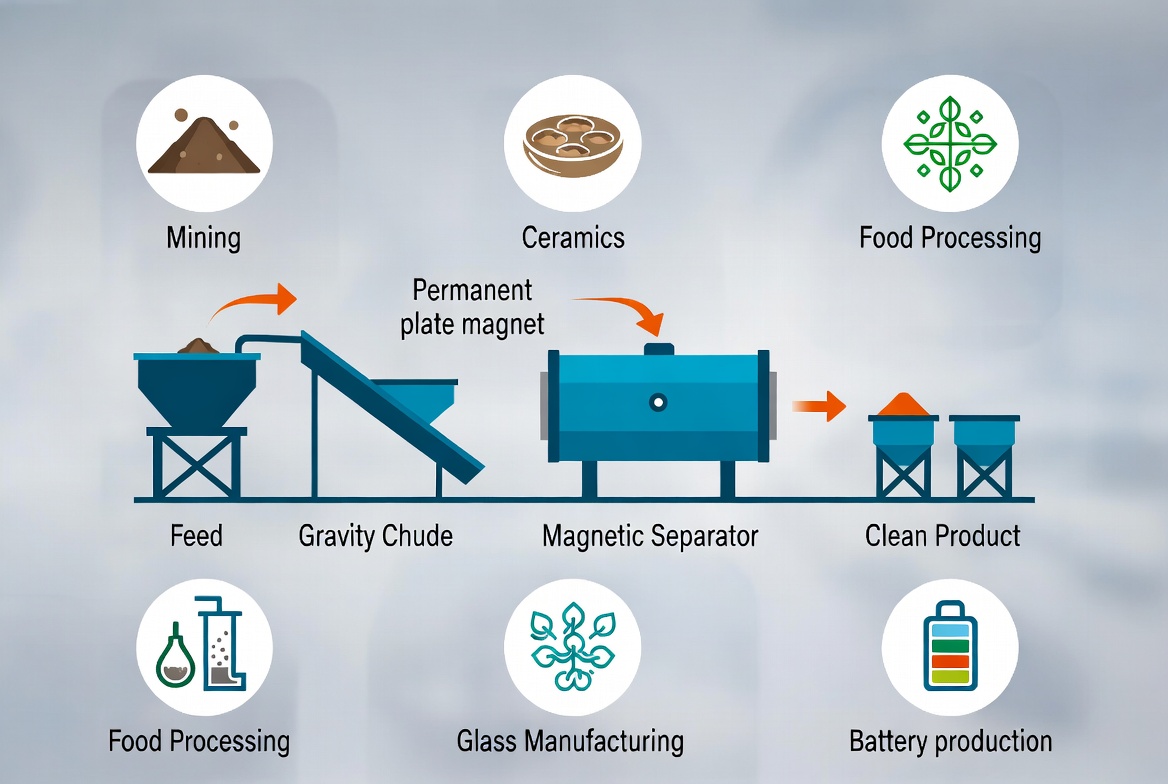
At its core, magnetic separation is the process of removing magnetic or weakly magnetic particles (typically iron or steel) from non‑magnetic materials—powders, slurries or bulk solids—using a magnetic field. [futuremarketinsights]
Unlike many “nice‑to‑have” technologies, magnetic separation directly affects product purity, equipment protection and regulatory compliance in sectors such as food, pharmaceuticals, ceramics, mining, and advanced battery materials. [futuremarketinsights]
From a business perspective, users deploy magnetic separation to:
– Protect critical equipment (mills, crushers, screener decks, extruders) from tramp iron damage. [futuremarketinsights]
– Increase product value by reducing metallic contamination to ppm or ppb levels, especially in high‑purity powders and chemicals. [futuremarketinsights]
– Comply with safety and hygiene standards in food, pharmaceuticals and medical materials where even tiny metal fragments are unacceptable. [futuremarketinsights]
How Magnetic Separation Works: The Fundamentals
Magnetic separation relies on the interaction between magnetic fields, magnetic materials, and particle motion.
Types of Magnets Used
– Permanent magnets (e.g., NdFeB, ferrite): Provide a constant magnetic field without power; widely used in permanent magnetic separators for powder lines due to low operating cost and long life.
– Electromagnets: Generated by running current through coils; allow adjustable field strength and on/off control, making them suitable for heavy‑duty or variable‑duty applications. [futuremarketinsights]
Magnetic Field and Material Response
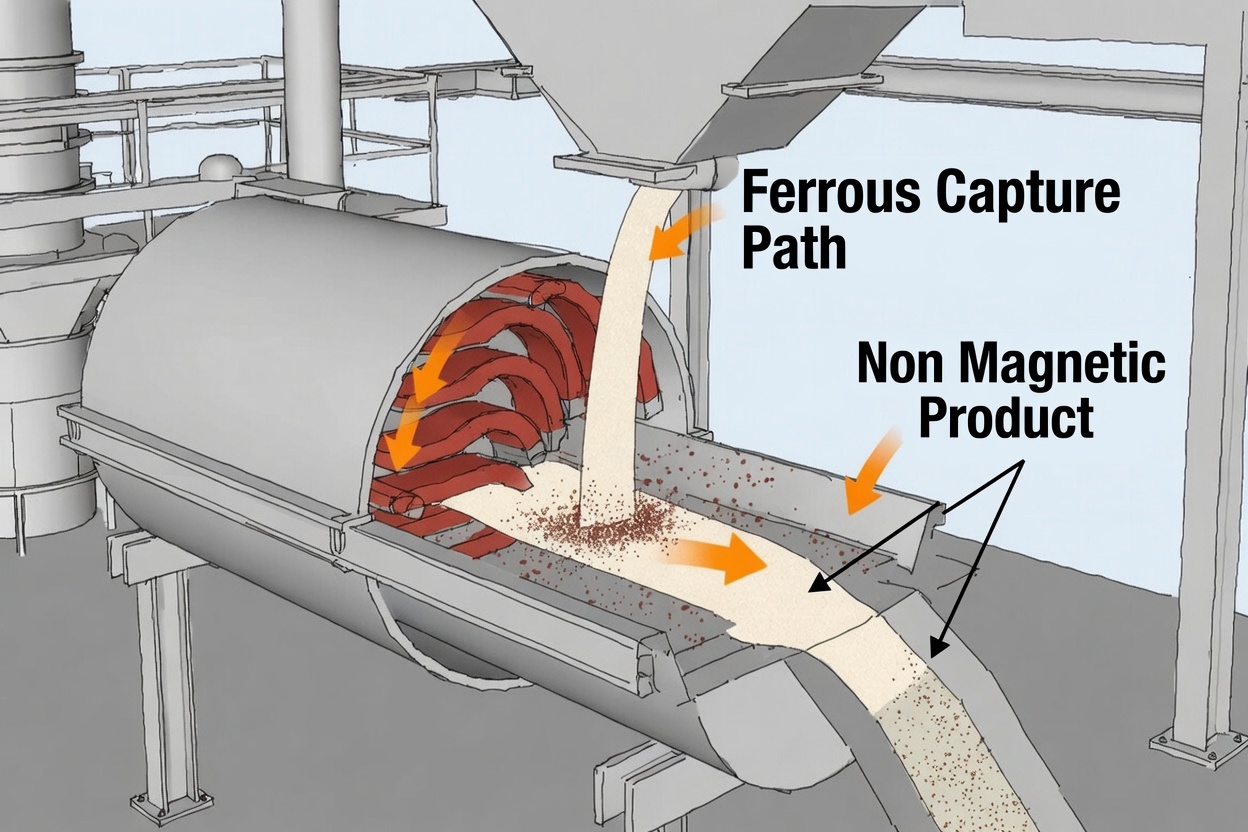
When a mixture of particles passes through a magnetic field:
– Ferromagnetic and strongly paramagnetic particles (iron, some Fe‑bearing minerals) are attracted and captured on the magnet surface or within a magnetic matrix. [minejxsc]
– Non‑magnetic or very weakly magnetic particles (e.g., many plastics, silica, quartz) pass through with minimal influence. [minejxsc]
Separation efficiency depends on:
– Magnetic field strength and gradient
– Particle size and shape
– Material throughput rate and flow pattern
– Physical design of the separator (drum, belt, plate, grate, etc.) [elcanindustries]
Core Types of Magnetic Separators and Their Roles
Modern plants rarely use just one magnetic separator; they deploy a combination of equipment types tailored to specific locations in the process. [elcanindustries]
Common Equipment Architectures
– Drum magnetic separators
– Rotating drum with internal magnets that continuously capture ferrous material from bulk flows. [futuremarketinsights]
– Widely used in mining, recycling and high‑throughput powder handling; drum units are projected to hold about 30% of magnetic separator product share around 2026. [futuremarketinsights]
– Overband / belt separators
– Magnets positioned over a conveyor belt to remove tramp iron before crushers, mills or screens. [futuremarketinsights]
– Essential in mining, aggregate, and scrap recycling lines to prevent catastrophic equipment failures. [futuremarketinsights]
– Magnetic plate and grate separators
– Fixed plates or grate bars installed in chutes or drawers to intercept ferrous particles in gravity or low‑velocity flows. [buntingmagnetics]
– Common in food, ceramics and chemical powders where frequent manual cleaning and inspection are required. [greatmagtech]
– Roll and high‑gradient separators
– Used in fine mineral and industrial powder applications where weakly magnetic particles must be removed at high efficiency, often with strong field gradients. [sciencedirect]
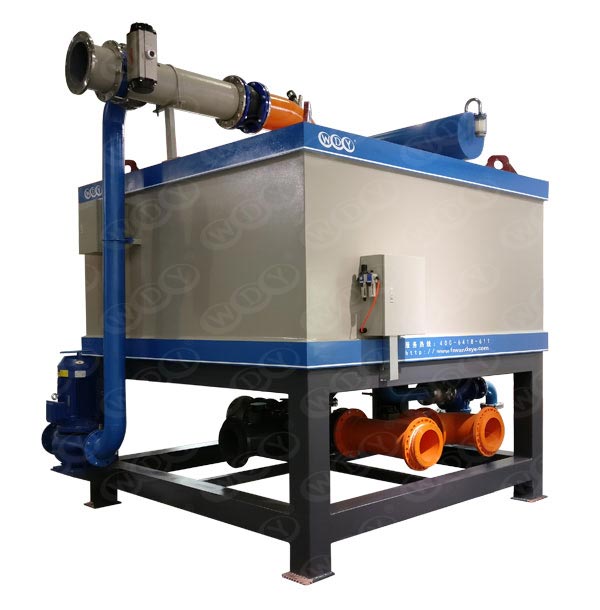
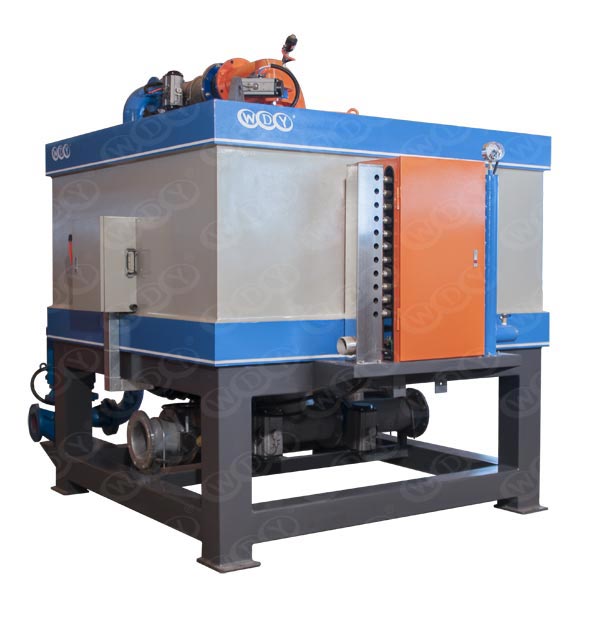
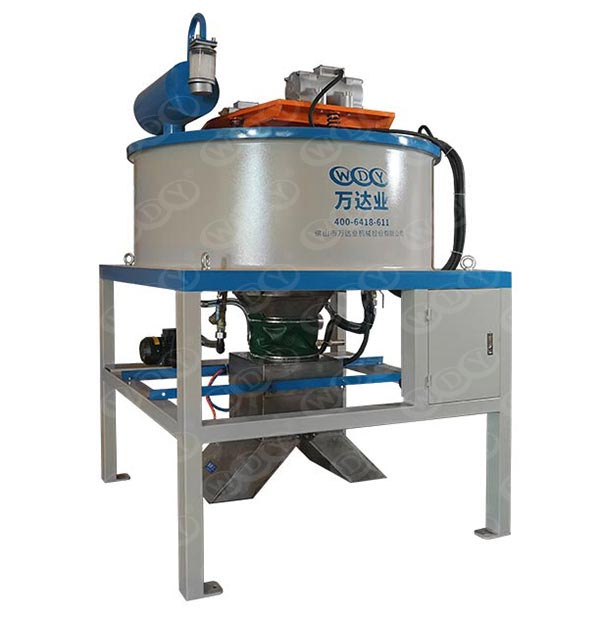
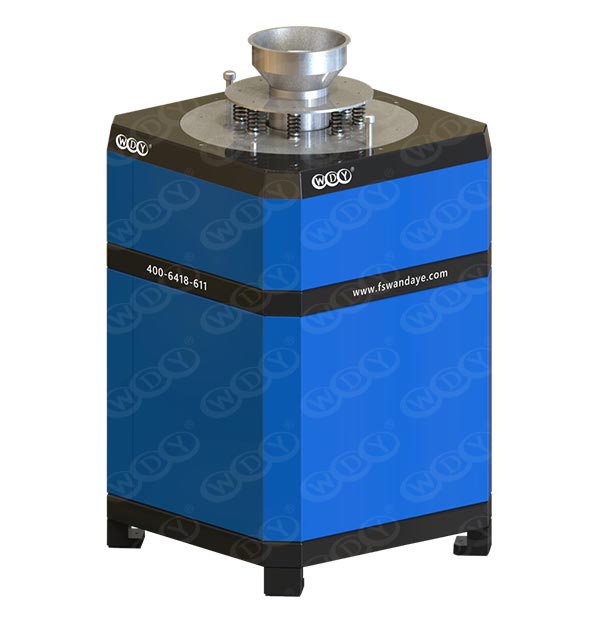
In powder processing environments, powder magnetic separators and permanent magnetic separators are typically integrated into gravity chutes, pneumatic conveying systems, silo discharge points and fine grinding circuits to continuously capture iron contamination. [fswandaye]
Key Industrial Applications of Magnetic Separation
Magnetic separation has become deeply embedded in modern process flows across a wide range of industries. [futuremarketinsights]
Mining and Mineral Processing
– Used for iron ore beneficiation and removal of weakly magnetic impurities from industrial minerals such as quartz and feldspar. [futuremarketinsights]
– The mining and mineral processing segment is estimated to account for around 40% of magnetic separator application share by 2026, underpinning the technology’s importance in ore upgrading. [grandviewresearch]
– High‑gradient and wet drum separators are used to increase recovery while minimizing loss of valuable minerals. [sciencedirect]
Ceramics, Glass and Building Materials
– Magnetic separation prevents iron staining and defects in ceramic tiles, sanitaryware and glass by removing tiny iron particles from raw powders such as kaolin, feldspar and silica sand. [futuremarketinsights]
– High‑purity magnetic separation is a differentiator for manufacturers targeting premium, defect‑free products. [grandviewresearch]
Food and Pharmaceuticals
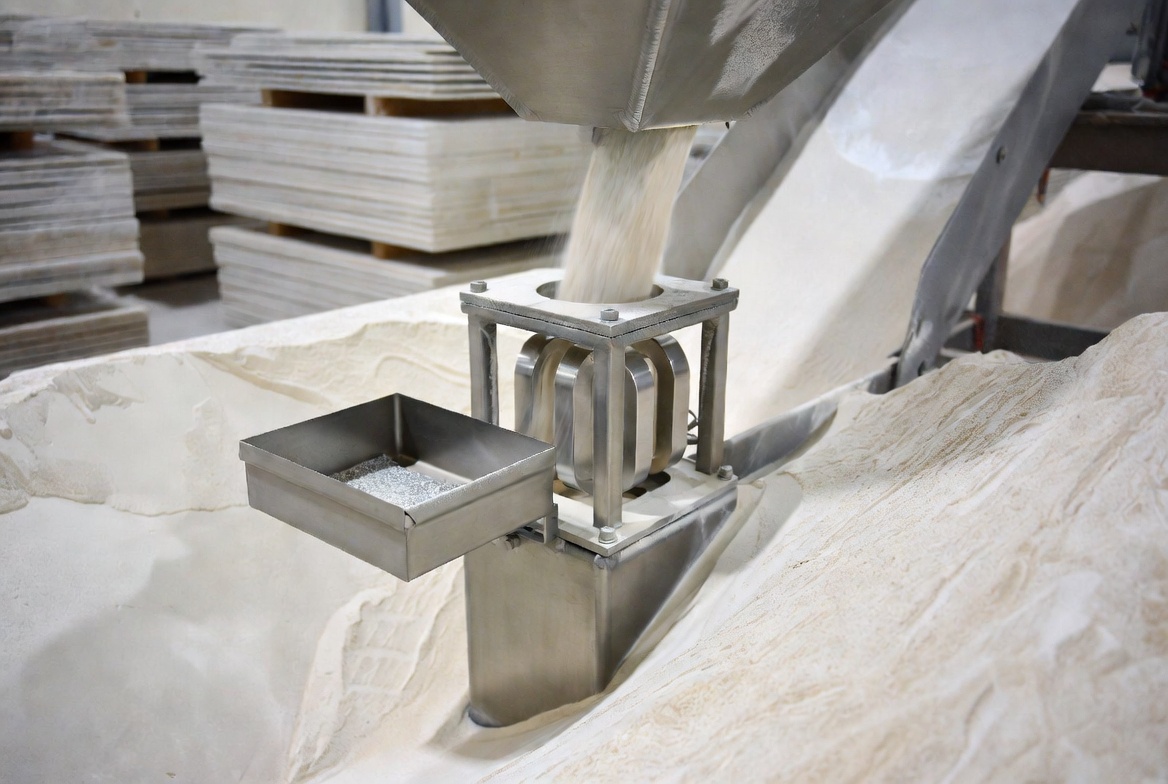
– Installed to remove metal fragments from grains, powders, liquids and slurries, supporting Hazard Analysis and Critical Control Point (HACCP) programs and global food safety standards. [greatmagtech]
– Plate and grate magnets are commonly used to protect consumers and sensitive downstream equipment in food and pharma plants. [greatmagtech]
Environmental, Recycling and Waste
– Magnetic separators recover ferrous metals (steel, iron) from mixed waste streams, improving recycling yields and protecting shredders from tramp metal. [minejxsc]
– Recycling applications are one of the fastest‑growing segments due to stricter quality rules and circular‑economy policies. [magneticseparatormarketsharemarkettrendsandforecastsfrom2021.docs.apiary]
New Energy and Battery Materials
– In positive and negative electrode materials production (cathode/anode powders), even microscopic iron particles can trigger short circuits or performance degradation. [minejxsc]
– Powder magnetic separators are therefore integrated at multiple points—mixing, grinding, classification—to maintain ultra‑low metal contamination levels. [elcanindustries]
Market Trends: Why Magnetic Separation Is a Strategic Investment
Recent market analyses show that magnetic separators are no longer seen as simple accessories but as production‑risk control equipment that protect throughput and quality. [futuremarketinsights]
– The global magnetic separator market is estimated around USD 1.58 billion in 2026, with a projected CAGR of about 5% from 2026 to 2036, driven by mining, recycling and high‑purity processing uses. [futuremarketinsights]
– Dry magnetic separation, particularly relevant to powders and bulk solids, is expected to account for roughly 60% of separation type share by 2026, highlighting the growing preference for low‑water, easily retrofittable solutions. [futuremarketinsights]
For operators of powder, ceramic, glass or advanced material lines, this trend reinforces that investing in modern separators is aligned with broader industry shifts toward higher recovery, safety and sustainability. [grandviewresearch]
Advantages and Limitations of Magnetic Separation
Major Advantages
– High efficiency and throughput
Magnetic separation can handle large volumes while achieving high levels of ferrous removal, often with minimal pressure drop or flow disruption. [greatmagtech]
– Lower operating cost
Once installed, permanent magnetic separators consume little to no energy, and even electromagnets can be optimized to reduce operating cost compared with many alternative separation methods. [greatmagtech]
– Sustainability benefits
By enabling effective recycling of metals and reducing waste, magnetic separation contributes to lower landfill usage and supports circular‑economy practices. [greatmagtech]
Practical Limitations
– Non‑magnetic materials
Non‑magnetic or very weakly magnetic materials cannot be captured effectively, so magnetic separation must often be combined with other methods (screening, air classification, optical sorting). [sciencedirect]
– Fine particle and moisture challenges
Extremely fine or sticky particles and high‑moisture feeds can reduce capture efficiency or cause buildup on magnet surfaces, requiring careful design and cleaning strategies. [sciencedirect]
– Maintenance and training
Accumulated contamination can reduce effective field exposure, and improper cleaning or handling can damage both magnets and process equipment, demanding operator training and regular checks. [africanmagnets]
New Developments: Automation, AI and High‑Intensity Magnets
The last decade has transformed how magnetic separation systems are designed, monitored and serviced. [futuremarketinsights]
Stronger, Smarter Magnets
– Advanced magnetic materials such as NdFeB and SmCo have increased separator strength and compactness, enabling higher intensity for fine particles and weakly magnetic minerals. [sciencedirect]
– High‑gradient and ultra‑large platforms have been introduced for handling low‑grade ores and complex feeds, illustrating an industry push toward higher recovery at lower grades. [futuremarketinsights]
Automation and AI Integration
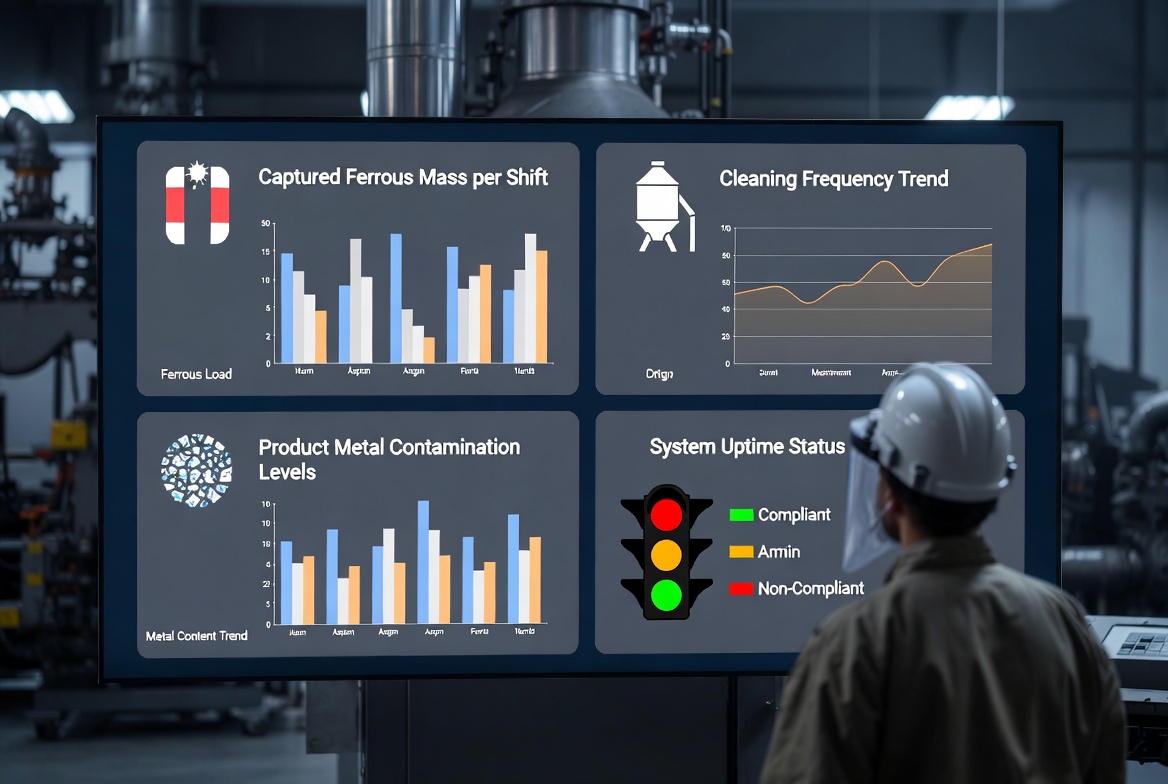
– Sensors and AI‑driven controls now allow real‑time optimization of separation, predicting maintenance needs and minimizing downtime. [linkedin]
– Users can track ferrous load, cleaning cycles and field performance, turning magnetic separators into data‑rich assets rather than passive components. [linkedin]
Sustainability and Energy Efficiency
– Eco‑friendly magnetic materials and low‑energy designs are increasingly prioritized, sometimes combined with renewable energy sources and recycling of magnet components. [sciencedirect]
For producers using powder magnetic separators and permanent magnetic separators, these trends open the door to smarter, more resilient production lines—particularly in sectors like mining, ceramics, glass, environmental protection, plastics and advanced energy materials. [grandviewresearch]
Practical Selection Guide for Powder Magnetic Separators
From an engineering and QA perspective, selecting the “strongest magnet available” is rarely the right approach. The ideal choice comes from matching equipment to actual process conditions. [africanmagnets]
Step 1: Understand Your Material and Contamination
– Material type: powder (e.g., quartz, feldspar, kaolin), granules, pellets, or slurry. [elcanindustries]
– Particle size and distribution: fine vs coarse powders require different magnetic field strengths and gradients. [minejxsc]
– Contamination type: tramp iron, wear debris from equipment, or process‑related Fe‑bearing phases. [greatmagtech]
Step 2: Define Performance Targets
– Maximum acceptable metal content in the final product (ppm or mg/kg).
– Critical control points where contamination must be minimized (e.g., before milling, before packaging, before critical forming or sintering steps). [greatmagtech]
Step 3: Select Equipment Type and Position
– Use drum or belt separators for high‑volume bulk flows upstream (e.g., raw ore, batch feed). [futuremarketinsights]
– Use plate or grate magnets at gravity chutes, silo discharges, mixing stations, and final inspection positions. [buntingmagnetics]
– For slurries or wet processes (e.g., ceramic slurries, waste‑water from steel or power plants), choose wet magnetic or slurry separators with suitable cleaning mechanisms. [fswandaye]
Step 4: Think Lifetime, Not Just Purchase Price
– Evaluate wear life, ease of cleaning, and access for maintenance; cheap equipment that fails early or is hard to clean often costs more over time. [africanmagnets]
– Check if your supplier provides application support, testing, and on‑site commissioning, especially for complex powder or mineral lines. [futuremarketinsights]
Application
While individual user cases differ, several patterns appear repeatedly across plants where magnetic separation delivers strong ROI. [minejxsc]
Ceramic Powder Purification
A ceramic tile manufacturer processing feldspar and kaolin powders installs a powder magnetic separator upstream of fine milling and another unit at the final powder silo discharge. [futuremarketinsights]
Results typically include:
– Reduced product rejects due to iron spots and color defects
– Longer life of milling media and liners
– More stable firing behavior due to cleaner feed
Positive/Negative Electrode Material Lines
In battery material production, permanent magnetic separators are placed in the grinding and classification section to remove iron introduced by wear of mechanical components. [minejxsc]
This setup:
– Reduces risk of short circuits in cells
– Improves consistency of electrochemical performance
– Supports compliance with strict customer specifications for impurity levels
Call to Action: Turning Magnetic Separation into a Competitive Advantage
For manufacturers in mining, ceramics, glass, environmental protection, plastics, pharmaceuticals, food or positive/negative electrode materials, magnetic separation is no longer optional—it is a strategic lever for quality, safety and profitability. [grandviewresearch]
If your current line struggles with:
– Intermittent metal contamination complaints
– Frequent equipment damage from tramp iron
– Difficulty meeting high‑purity or export specifications
then a focused upgrade of your powder magnetic separator or permanent magnetic separator solution—supported by application engineering and field‑tested designs—can deliver measurable improvements in yield, downtime and customer satisfaction. [fswandaye]
Frequently Asked Questions
1. How do I choose between a powder magnetic separator and a general magnetic separator?
Powder magnetic separators are specifically optimized for fine, often cohesive powders, with flow channels and magnet arrangements designed to minimize bridging and dead zones. [elcanindustries]
General magnetic separators may work for coarser materials but often underperform on fine powders, resulting in inconsistent capture and more frequent blockages. [minejxsc]
2. How often should magnetic separators be inspected and cleaned?
Inspection frequency depends on contamination load and criticality, but many plants adopt daily or shift‑based checks in food, pharma and battery lines, and at least weekly checks in mining and ceramics. [africanmagnets]
Field‑strength checks every six months are recommended to ensure magnets remain above about 80% of their original strength, triggering re‑magnetization or replacement if necessary. [africanmagnets]
3. Can magnetic separation handle both dry powders and slurries?
Yes; dry magnetic separation is widely used for powders and bulk solids, and is projected to account for around 60% of separation type share by 2026. [elcanindustries]
For slurries, wet drum and slurry separators are used to continuously collect and discharge magnetic particles, particularly in mineral processing and waste‑water treatment lines. [fswandaye]
4. Is magnetic separation enough to guarantee metal‑free products?
Magnetic separation dramatically reduces ferrous contamination but should be part of a multi‑barrier strategy, which may include sieving, metal detection, X‑ray or optical inspection depending on risk level. [buntingmagnetics]
For ultra‑high purity requirements, especially in electronics and pharmaceuticals, combining multiple technologies and strong QA oversight is standard practice. [greatmagtech]
5. How is the magnetic separator market expected to evolve?
The market is projected to grow from about USD 1.58 billion in 2026 to around USD 2.40 billion by 2036, at a CAGR of roughly 5%. [futuremarketinsights]
Growth is driven by iron ore beneficiation, stricter recycling and food safety requirements, and high‑purity sectors such as ceramics, glass and advanced chemicals adopting more advanced separation packages. [grandviewresearch]
References
1. Great Magtech. “Understanding Magnetic Separation Solutions – Knowledge.”
https://www.greatmagtech.com/info/understanding-magnetic-separation-solutions-102763488.html
2. Future Market Insights. “Magnetic Separator Market | Global Industry Analysis Report.”
https://www.futuremarketinsights.com/reports/global-magnetic-separator-market [futuremarketinsights]
3. JXSC Mine Machinery. “The Role of Magnetic Separation in Diverse Industries.”
https://www.minejxsc.com/blog/what-is-magnetic-seperation/ [minejxsc]
4. Bunting Magnetics. “Magnetic Separators and Magnetic Separation Equipment.”
https://buntingmagnetics.com/blog/magnetic-separators [buntingmagnetics]
5. African Magnets. “Magnetic Separation in the Oil and Gas Industry.”
https://africanmagnets.com/magnetic-separation-in-the-oil-and-gas-industry/ [africanmagnets]
6. Great Magtech. “How Industrial Magnetic Separators Benefit Material Processing.”
https://www.greatmagtech.com/info/how-industrial-magnetic-separators-benefit-mat-103508746.html [greatmagtech]
7. Elcan Industries. “Magnetic Separation Equipment for Dry Powders.”
https://elcanindustries.com/toll-processing/magnetic-separation/ [elcanindustries]
8. FOSHAN WANDAYE Technology Co., Ltd. Official Site (磁选机 – 磁选设备 – 除铁设备 – 除铁器).
http://www.fswandaye.com [fswandaye]
9. Grand View Research. “Magnetic Separation in Mining Market | Industry Report, 2033.”
https://www.grandviewresearch.com/industry-analysis/magnetic-separation-mining-market-report [grandviewresearch]
10. Market Research Future. “Magnetic Separator Market Size, Share & Industry Report 2035.”
https://www.marketresearchfuture.com/reports/magnetic-separator-market-32198 [marketresearchfuture]
Hot Tags: Magnetic Separation, Electromagnet, Manufacturers, Customized, Custom, Suppliers, Buy, Cheap, Quality, Advanced, Durable, in Stock, Made in China, Price, Quotation