Content Menu
● What Is Magnetic Separation?
● Basic Principles: How Magnetic Separation Actually Works
>> Magnetic properties of materials
>> Process mechanics in a separator
● Common Magnetic Separation Techniques Used in Industry
>> Magnetic filters and grate magnets
>> High‑gradient magnetic separation (HGMS)
● Factors That Determine Separation Efficiency
● Powder Magnetic Separators in Non‑Metallic Minerals and Ceramics
● Permanent Magnetic Separators for Continuous Protection
● Real-World Industry Applications
● How to Select the Right Magnetic Separator for Your Line
● Best Practices to Maximize Efficiency and Reliability
● Where to Place Magnetic Separators in Your Process Flow
● Why Work With a Specialist Manufacturer Like Foshan Wandaye
● Call to Action: Turn Magnetic Separation Into a Competitive Advantage
● FAQs About Magnetic Separation and Magnetic Separators
>> 1. What is the main advantage of magnetic separation over other purification methods?
>> 2. How do I know if I need high‑gradient magnetic separation (HGMS)?
>> 3. What is the difference between permanent and electromagnetic magnetic separators?
>> 4. How often should magnetic separators be cleaned and inspected?
>> 5. Can magnetic separation help me meet environmental and sustainability targets?
As someone who has spent years helping ceramics, mineral and battery-material plants debug contamination problems on site, I can say this: magnetic separation is one of the simplest, cheapest and most reliable ways to protect product quality and equipment uptime. In this guide, I’ll walk through magnetic separation techniques from a practitioner’s and manufacturer’s perspective, and show how modern powder magnetic separators and permanent magnetic separators fit into real production lines. [src.sk]
What Is Magnetic Separation?
Magnetic separation is a physical process that uses magnetic fields to separate magnetic or weakly magnetic particles from non-magnetic material in a bulk stream such as powder, slurry or mixed waste. Instead of changing the chemistry of your material, you are using magnetic force to pull out ferrous or paramagnetic contaminants and, in some cases, to concentrate valuable magnetic minerals. [hilarispublisher]
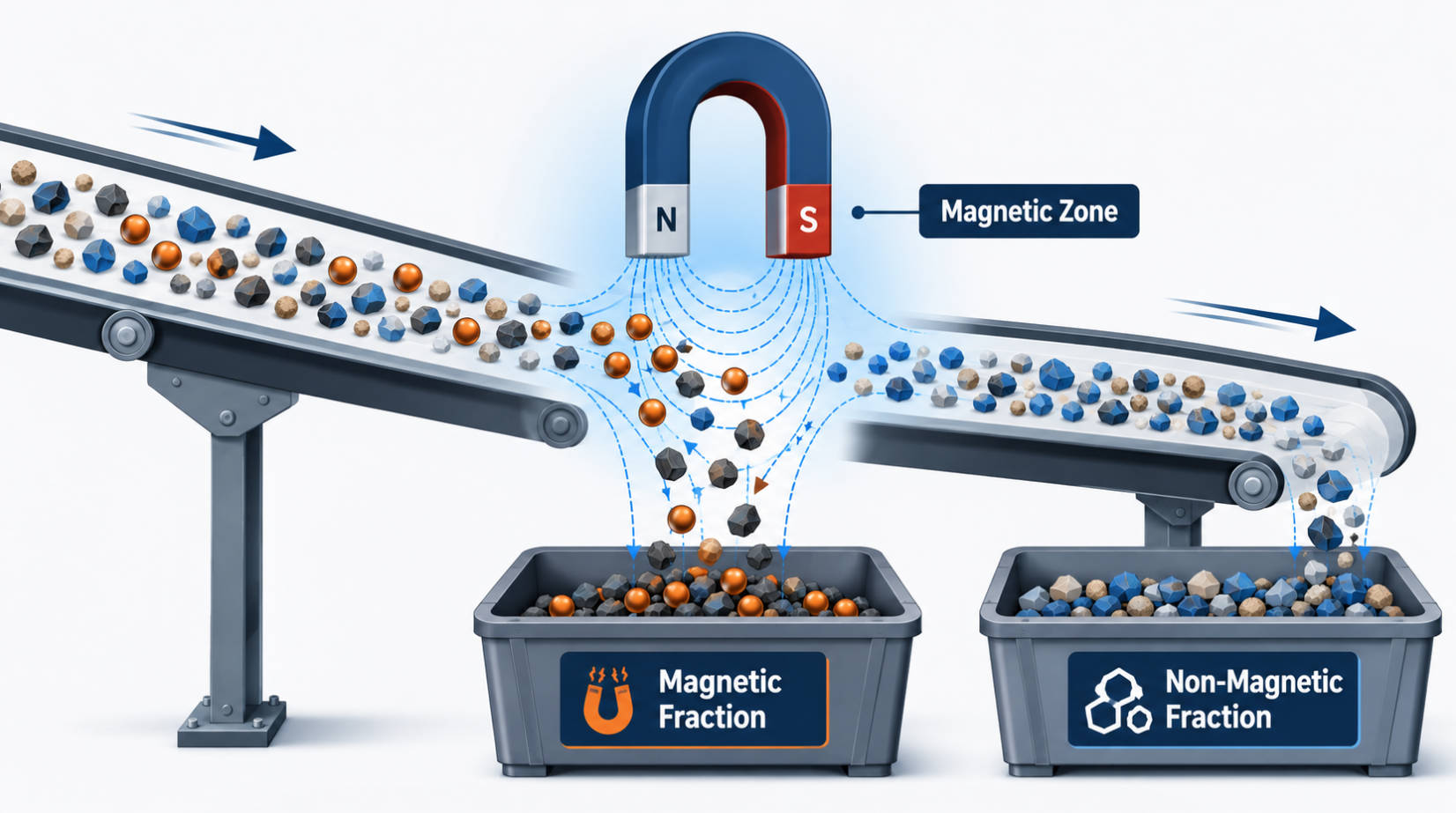
Across mining, ceramics, glass, plastics, food, pharmaceuticals and battery materials, operators use magnetic separation to achieve three outcomes: [hilarispublisher]
– Remove ferrous contamination (e.g., iron filings, steel fragments, rust) to protect downstream equipment and reduce product defects.
– Upgrade ore or non-metallic minerals by separating magnetic phases from gangue to improve grade and recovery. [pmc.ncbi.nlm.nih]
– Improve environmental performance by cleaning waste streams and reducing metal load before disposal or further treatment. [src.sk]
Because the process is non-destructive, properly designed separator lines can run continuously with low operating cost, which explains why so many modern plants treat magnetic separation as a basic hygiene step in their process design. [hilarispublisher]
Basic Principles: How Magnetic Separation Actually Works
At the heart of every magnetic separation application are three concepts: magnetic field strength, magnetic susceptibility of the particles, and residence time in the field. [pmc.ncbi.nlm.nih]
Magnetic properties of materials
Bulk solids and slurries passing through your line contain particles that fall into three broad categories: [pmc.ncbi.nlm.nih]
– Ferromagnetic: Strongly attracted, can become magnets themselves (iron, nickel, some steels).
– Paramagnetic: Weakly attracted (e.g., aluminum, some mineral phases).
– Diamagnetic: Weakly repelled (e.g., water, many organic materials, some oxides).
Two quantities matter in practice: [pmc.ncbi.nlm.nih]
– Magnetization: How strongly a material responds inside a given magnetic field.
– Magnetic susceptibility: How easily a material becomes magnetized.
Ferromagnetic contamination is relatively easy to capture with low to medium field strengths, while weakly paramagnetic impurities in non-metallic minerals or battery powders typically require high‑gradient magnetic separation (HGMS). [pmc.ncbi.nlm.nih]
Process mechanics in a separator
Regardless of separator type, the sequence is similar:
1. Feed enters the magnetic zone via chute, vibratory feeder or pump (for slurry).
2. Magnetic field acts on particles; magnetic particles experience a lateral force toward the magnet surface, while non-magnetic material follows its inertial or gravitational path.
3. Collection and discharge: Captured magnetic particles are held on the matrix (drum surface, grate, ring, rods) until they are discharged into a separate bin; non-magnetic product continues to the next process step.
The strength and gradient of the field, particle size and shape, flow rate, temperature and any non-magnetic coating on particles all affect capture efficiency, which is why real-world commissioning always involves fine-tuning feed rate, gap and cleaning frequency. [pmc.ncbi.nlm.nih]
Common Magnetic Separation Techniques Used in Industry
As a manufacturer, we see that most customer applications can be solved with a smart combination of several core separator types, each optimized for a specific duty. [hilarispublisher]
Drum magnetic separators
Drum magnetic separators use a stationary magnetic system with a rotating shell, creating a continuous separation of magnetic particles from a falling or conveyed stream. [hilarispublisher]
– Typical uses:
– Pre-concentration in mining and mineral processing.
– Removal of ferrous contaminants from bulk powders and granules in recycling and building materials. [src.sk]
– Process sequence:
– Feed is presented onto the drum surface.
– Magnetic particles are held on the shell and carried further, while non-magnetic material falls away.
– A splitter separates the magnetic and non-magnetic discharge streams.
Magnetic roll separators
Magnetic roll separators use high‑intensity magnetic rolls to generate strong localized fields for separating fine or weakly magnetic particles. [pmc.ncbi.nlm.nih]
– Typical uses:
– Beneficiation of non-metallic minerals (e.g., feldspar, quartz) by removing iron-bearing phases.
– Recovery of magnetic fractions from tailings in mineral sands and industrial minerals. [src.sk]
– Advantage: Stronger field at the roll surface, better suited to small particles and tight grade requirements.
Magnetic filters and grate magnets
Magnetic filters and grate (grid) separators act like magnetic sieves for powders or liquids, catching small ferrous particles as the product flows through.
– Typical uses:
– Fine powders in ceramics, plastics, food and pharmaceuticals.
– Slurries and liquid lines in chemicals and wastewater treatment. [pmc.ncbi.nlm.nih]
– Often configured as magnetic rods or magnetic plates in housings, tailored to existing pipelines and hoppers. [hilarispublisher]
High‑gradient magnetic separation (HGMS)
HGMS systems use a powerful external field and a fine magnetic matrix (steel wool, expanded metal, or specially designed rings) to generate high field gradients that can capture even very fine or weakly magnetic particles. [pmc.ncbi.nlm.nih]
– Typical uses:
– Purification of non-metallic minerals (kaolin, quartz, feldspar).
– Battery cathode/anode materials where trace iron can cause serious performance issues.
– Pharmaceutical and biotech purification in specialized designs. [hilarispublisher]
– Benefit: High capture efficiency for sub‑10 µm contaminants when properly designed and controlled. [pmc.ncbi.nlm.nih]
Magnetic traps for liquids
Magnetic liquid traps are in-line housings with powerful magnetic elements that remove ferrous particles from pumped liquids and slurries.
– Typical uses:
– Chemical plants and wastewater treatment.
– Food and beverage lines (e.g., sauces, dairy) where steel wear particles must be captured. [pmc.ncbi.nlm.nih]
Factors That Determine Separation Efficiency
In real plant audits, we see the same efficiency problems repeat across industries, and they often trace back to a few controllable variables. [src.sk]
– Magnetic field intensity and gradient: If the field is too weak for the particle size and susceptibility, contaminants will slip through; high‑gradient designs are essential for fine powders and weakly magnetic impurities. [pmc.ncbi.nlm.nih]
– Particle size and morphology: Fine, irregular particles respond differently than coarse, rounded ones; smaller particles usually need stronger fields and slower flow.
– Flow rate and particle concentration: High throughput is attractive, but if material passes the magnetic zone too quickly, residence time is insufficient, reducing capture efficiency. [src.sk]
– Temperature and coatings: Elevated temperatures can change magnetic properties, and non-magnetic coatings (e.g., surface treatments, binders) can reduce effective susceptibility and make capture harder. [pmc.ncbi.nlm.nih]
When we design or retrofit lines at Foshan Wandaye, we start by testing the customer’s actual material—particle size distribution, contamination level, temperature and carrier medium—using pilot separators in our laboratory. This allows us to specify appropriate powder magnetic separators, slurry electromagnetic separators, or permanent magnetic separators with realistic performance guarantees for that process window. [hilarispublisher]
Powder Magnetic Separators in Non‑Metallic Minerals and Ceramics
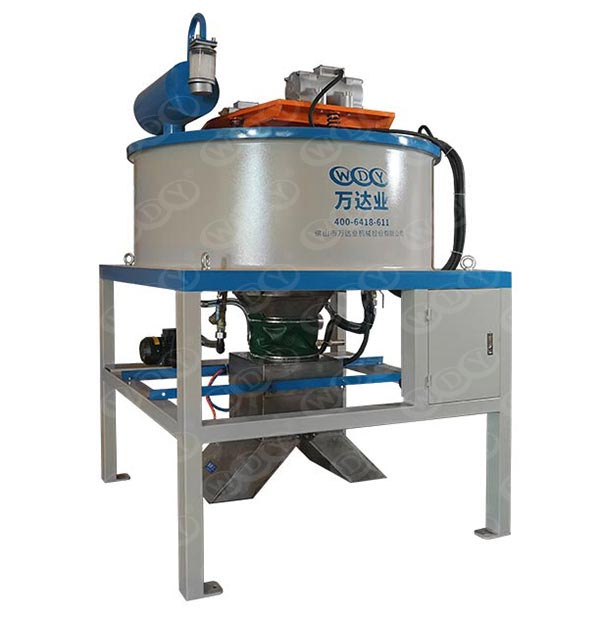
Powder magnetic separators are engineered specifically for dry powder handling, where dust control, flowability and segregation are constant concerns. [hilarispublisher]
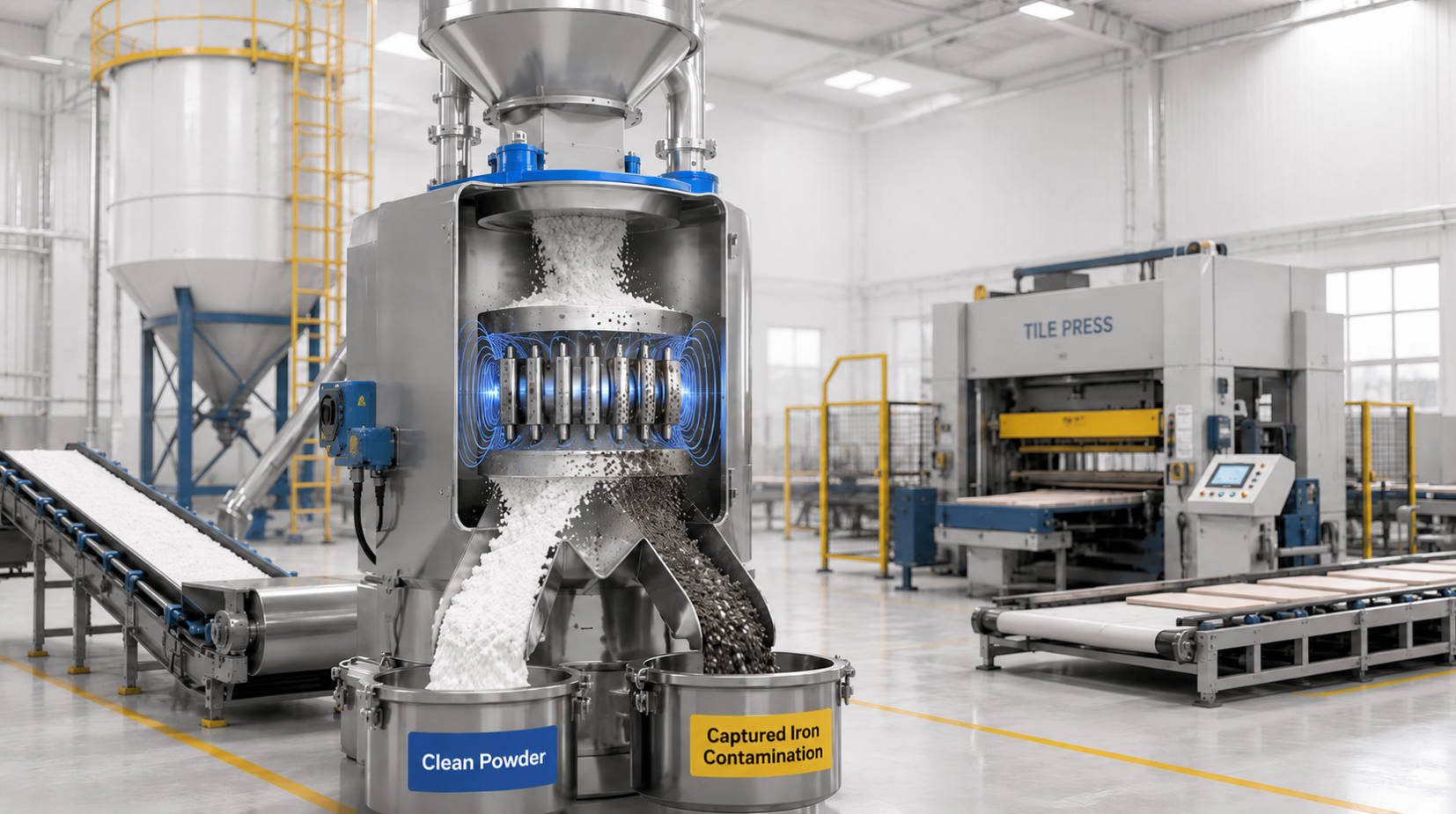
In ceramics, glass and non-metallic mineral lines, the main objectives are usually: [src.sk]
– Reduce Fe₂O₃ content in raw materials (e.g., quartz, feldspar, kaolin) to meet color and transparency specifications.
– Prevent black specks and pinholes in tiles and sanitaryware by capturing steel wear particles and tramp iron.
– Protect downstream mills and classifiers from metal damage and unplanned downtime.
Modern high‑gradient powder separators from manufacturers such as Foshan Wandaye use vertical ring or belt-type magnetic circuits combined with advanced control systems: [hilarispublisher]
– Optimized magnetic circuit design to increase field strength while saving up to 25% energy compared to previous-generation equipment. [hilarispublisher]
– Intelligent control with remote monitoring, predictive maintenance alerts and cloud data logging to keep capture performance stable over time. [hilarispublisher]
– Flexible configurations to integrate above conveyors, under silos or in closed-loop pneumatic conveying systems.
From a plant manager’s perspective, the most tangible ROI comes from fewer customer complaints about color defects, longer maintenance intervals for mills and classifiers, and more stable kiln performance due to consistent feed quality. [src.sk]
Permanent Magnetic Separators for Continuous Protection
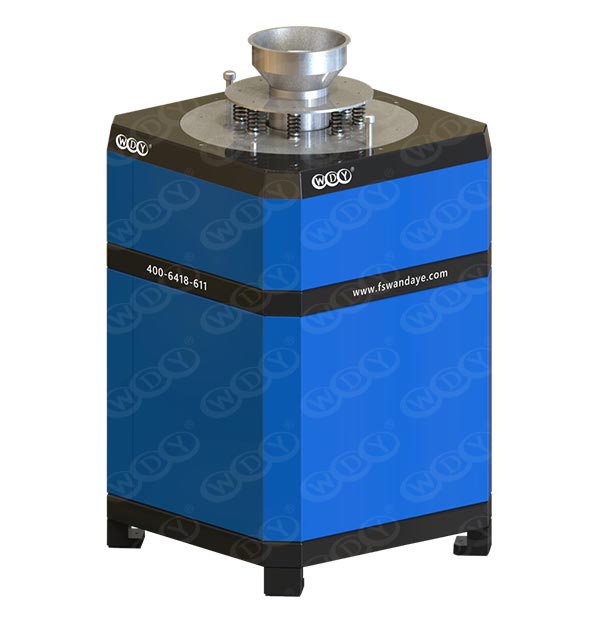
Permanent magnetic separators provide low‑energy, low‑maintenance protection in many powder and bulk solid lines. [hilarispublisher]
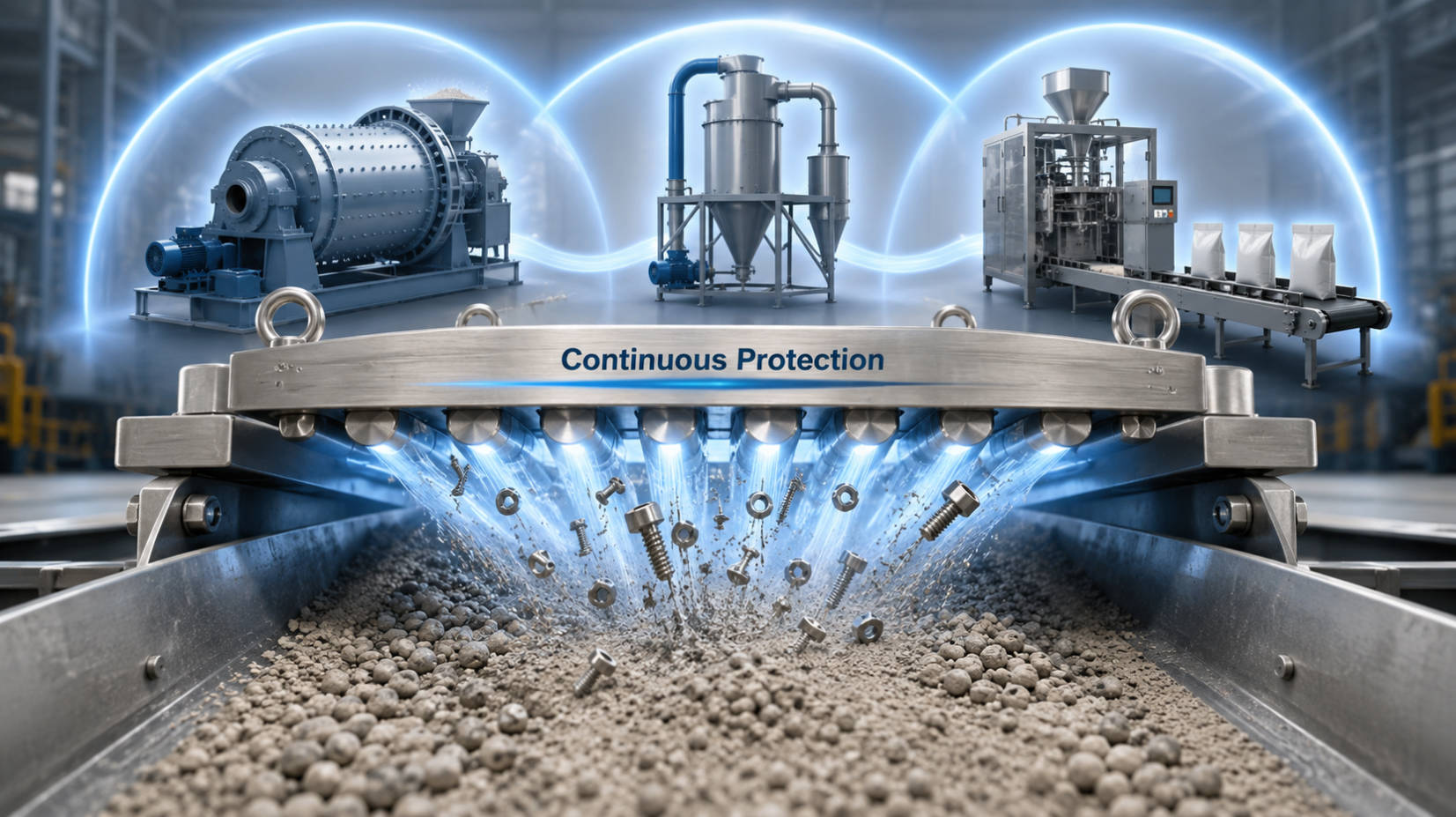
Key practical advantages include:
– No power supply required for the magnetic field, reducing operating cost and simplifying installation.
– Stable long-term performance when you select high-coercivity magnet materials and proper mechanical design.
– Simple manual or automatic cleaning, depending on whether you choose self‑cleaning or conventional designs. [hilarispublisher]
Common permanent devices include magnetic plates, magnetic grids, magnetic rods and iron-removal cabinets, which can be tailored to hoppers, chutes and ducts in ceramics, plastics, food and chemical plants. For highly contaminated streams or applications with abrasive material, many operators use permanent separators as a first line of defense, followed by higher-intensity electromagnetic units for final polishing. [src.sk]
Real-World Industry Applications
From my work with plants in the Pearl River Delta and abroad, several patterns appear across industries using powder and permanent magnetic separators. [src.sk]
– Mining and mineral processing: Magnetic drums and HGMS units remove magnetic gangue or recover magnetic minerals before flotation, lowering reagent consumption and tailings volumes. [src.sk]
– Ceramics and glass: Powder separators and grids protect presses and kilns by removing steel fragments from raw materials and body mixes, directly improving surface finish and yield. [src.sk]
– Battery cathode/anode materials: High‑gradient powder separators are used to reduce trace iron contamination that can trigger short circuits or capacity fade in lithium-ion cells. [pmc.ncbi.nlm.nih]
– Food and pharmaceuticals: Magnetic filters and traps in powder and liquid lines help maintain HACCP compliance by removing ferrous contamination, often mandated by auditors and brand owners. [pmc.ncbi.nlm.nih]
– Environmental protection and recycling: Overband magnets and drum separators recover steel from MSW and industrial waste streams, improving recycling rates and reducing landfill metal load. [src.sk]
Foshan Wandaye has deployed lines not only across China’s domestic market, including Guangdong’s Pearl River Delta industrial cluster, but also in countries such as Vietnam, India, Iran, Egypt and Malaysia, which face similar contamination and product quality challenges. [hilarispublisher]
How to Select the Right Magnetic Separator for Your Line
From an engineer’s standpoint, choosing a separator is less about the catalog and more about aligning equipment capability with your process constraints and quality targets. [src.sk]
Below is a practical selection overview:
| Application scenario | Recommended separator types | Key decision factors |
|---|---|---|
| Dry powders (ceramics, quartz, feldspar, battery powders) | Powder magnetic separator, magnetic grids/rods | Required Fe reduction, particle size, throughput, moisture content hilarispublisher |
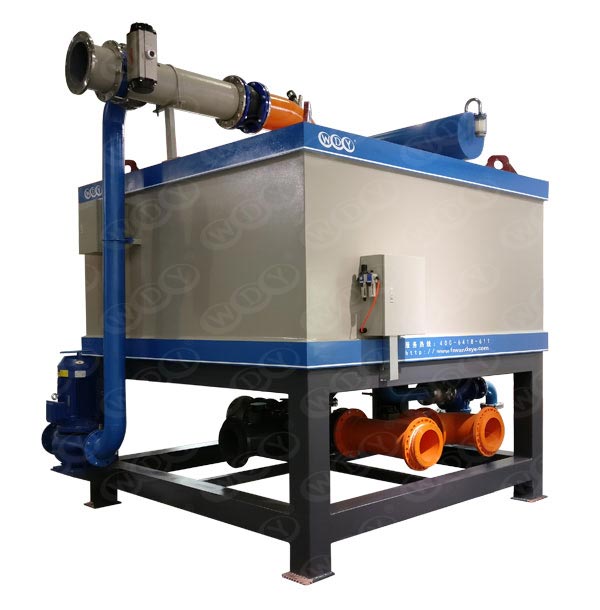
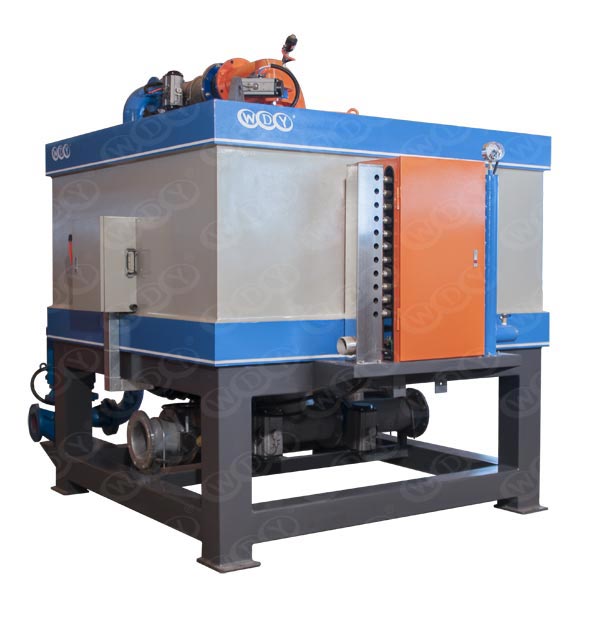
| Slurries (kaolin, ceramic slips, mineral slurries) | High-gradient slurry electromagnetic separator, magnetic traps | Solids content, viscosity, required cut size, cleaning method hilarispublisher |
| Bulk solids handling (cement, building materials, plastics) | Permanent overband magnets, drum separators, magnetic plates | Lump size, belt width, installation space, tramp iron load src.sk |
| Food and pharma powders | High‑intensity magnetic grids and filters | Compliance standards, risk level, cleanability and documentation pmc.ncbi.nlm.nih |
In our own projects, we usually follow this step-by-step approach: [src.sk]
1. Define quality targets (e.g., maximum Fe content, allowed defect rate).
2. Characterize the material (particle size distribution, bulk density, flow behavior, moisture, temperature).
3. Map process layout and constraints (available space, existing equipment, cleaning windows).
4. Run lab or pilot tests with actual material on several separator options.
5. Engineer the full line (including feeding, dust control and automation) and plan commissioning with measurable KPIs.
Best Practices to Maximize Efficiency and Reliability
Plants that consistently get high performance from their magnetic separators typically apply a few simple but disciplined practices. [developers.google]
– Keep feed stable: Use controlled feeders or pumps to maintain a uniform layer thickness through the magnetic zone, instead of intermittent surges.
– Match separator to particle size: Fine particles and weakly magnetic contaminants call for higher field gradients and longer residence times; do not rely on low-intensity plates alone. [pmc.ncbi.nlm.nih]
– Schedule cleaning and inspection: Implement standard operating procedures for cleaning cycles, wear inspection and magnet strength checks, and log them for audits. [developers.google]
– Integrate with process control: Connect modern separators’ remote monitoring to plant SCADA or MES to track trends in contamination load and detect anomalies early. [hilarispublisher]
– Train operators: Involve line operators in basic magnet safety, cleaning methods and fault diagnostics; many performance losses come from bypassed or incorrectly cleaned units. [developers.google]
At Foshan Wandaye, we have moved many of these practices into the equipment design itself through remote monitoring, intelligent alarms and cloud-based performance dashboards, which help keep field performance aligned with laboratory test results over years of operation. [hilarispublisher]
Where to Place Magnetic Separators in Your Process Flow
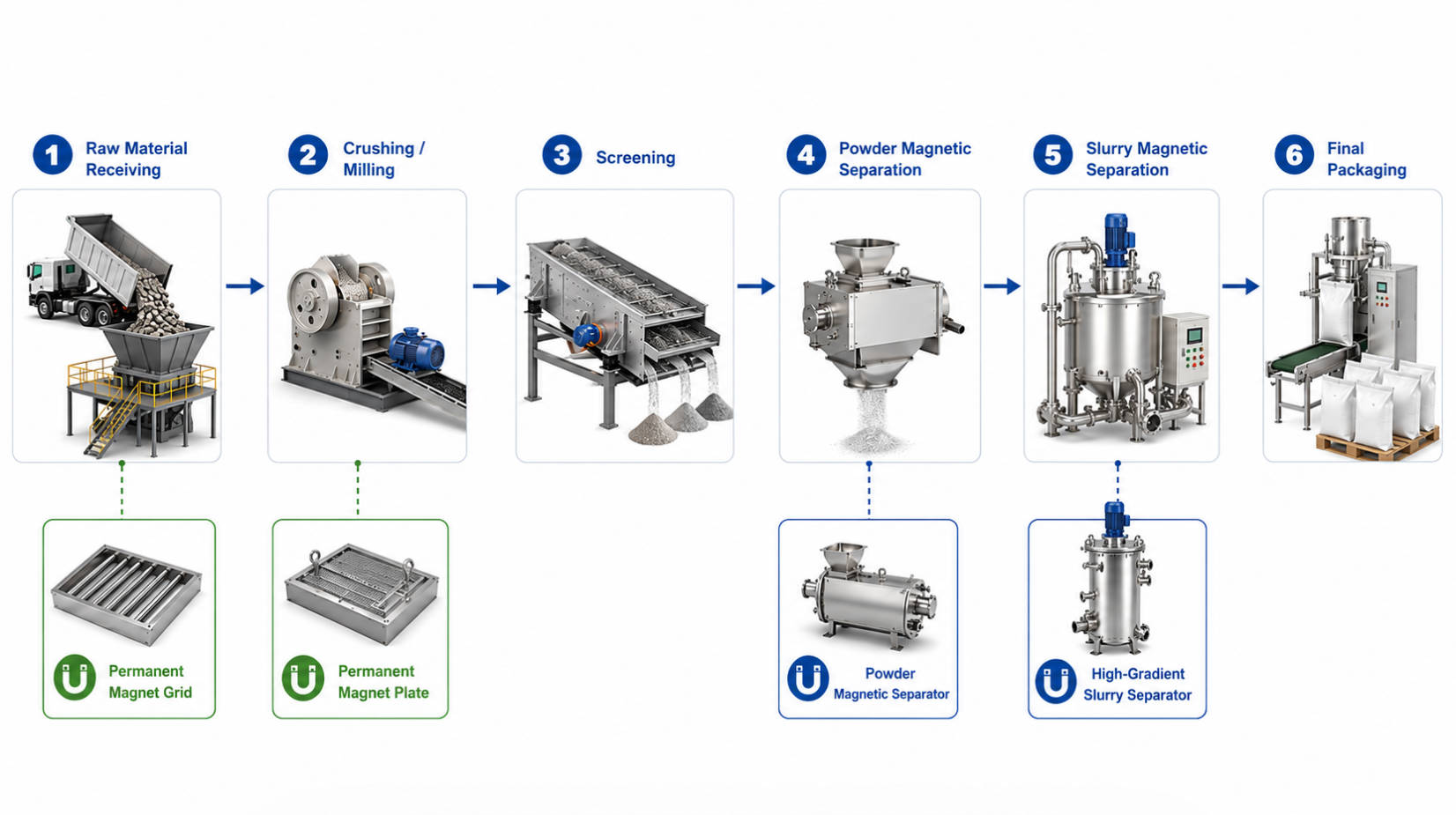
Even a high-performance separator will under‑deliver if it is installed in the wrong point of the line. From an engineering design perspective, strategic placement is as important as model selection. [src.sk]
Typical effective installation points include:
– Upstream of grinding and milling: Capture tramp iron before it damages high-value mills and classifiers.
– After coarse screening or classification: Remove liberated magnetic impurities when they are easiest to separate.
– Before high-value finishing steps such as spray drying, pressing, sintering or packaging, where contamination is most costly.
– In recycle loops (e.g., regrind or rework streams) that tend to accumulate metal fragments over time.
A full line solution may combine several devices—for example, a permanent overband magnet on the feed belt, a drum separator after crushing, and a high‑gradient powder separator before final storage—to achieve both equipment protection and high product purity. [src.sk]
Why Work With a Specialist Manufacturer Like Foshan Wandaye
From a user’s point of view, the difference between a generic magnet and a professionally engineered magnetic separator system shows up in long-term reliability, energy consumption and support quality. [developers.google]
Foshan Wandaye Machinery Equipment Co., Ltd. is a national high-tech enterprise focused exclusively on magnetic separation, integrating R&D, engineering design, production-line installation and commissioning services. Our portfolio covers high‑gradient electromagnetic slurry separators, powder magnetic separators, permanent magnetic separators, vertical ring separators, magnetic plates, iron-removal cabinets and magnetic rods, among others. [hilarispublisher]
Key strengths for industrial users include: [wdymagnetic]
– Proven installations across mines, ceramics, electricity, building materials, glass, environmental protection, rubber, plastics, medicine, food, and anode/cathode materials, both in China and in export markets such as Vietnam, India, Iran, Egypt and Malaysia.
– A lab and pilot line capable of ore testing, mineral analysis, process design and whole‑line plant engineering for kaolin, potassium-sodium feldspar, quartz sand and other non-metallic minerals. [hilarispublisher]
– A product development concept of “High‑efficient – Energy‑saving – Environmental‑protection – Smart”, with the latest generation separators delivering up to 25% energy savings versus previous designs and a roadmap towards 30%. [hilarispublisher]
For plants facing tailings utilization or environmental restoration challenges, Wandaye also offers integrated tailings utilization schemes and environmental improvement technologies, aligning process design with emerging sustainability regulations and ESG expectations. [hilarispublisher]
Call to Action: Turn Magnetic Separation Into a Competitive Advantage
If you are designing a new line or struggling with contamination on an existing one, now is the right time to review your magnetic separation strategy. Instead of treating magnets as an afterthought, involve a specialist manufacturer early in process design, run proper material tests and specify separators as core process equipment rather than accessories. [developers.google]
To discuss a real project, share your material specs and quality targets, and request lab testing or a tailored line layout, you can contact Foshan Wandaye Machinery Equipment Co., Ltd. directly at export2@fswandaye.com or via the contact details on the official website. An experienced engineering team can help you build a magnetic separation solution that is efficient, energy‑saving and future‑proof. [hilarispublisher]
FAQs About Magnetic Separation and Magnetic Separators
1. What is the main advantage of magnetic separation over other purification methods?
Magnetic separation is a non‑destructive technique that removes metal contaminants without altering the chemical or physical properties of the base material, which is critical for sensitive ceramics, food and battery materials. It also offers relatively low operating costs, continuous operation and straightforward integration into existing lines. [pmc.ncbi.nlm.nih]
2. How do I know if I need high‑gradient magnetic separation (HGMS)?
You should consider HGMS when you need to remove very fine or weakly magnetic impurities, such as trace iron in quartz or battery cathode powders, or when conventional permanent magnets do not achieve your Fe specification. Lab testing of your actual material on a pilot HGMS unit is the most reliable way to confirm the required field intensity and matrix configuration. [pmc.ncbi.nlm.nih]
3. What is the difference between permanent and electromagnetic magnetic separators?
Permanent magnetic separators use built‑in magnets to generate a constant field with no external power, making them simple and energy‑free to operate. Electromagnetic separators use coils powered by electricity to achieve higher field strengths and can often be adjusted or switched off for cleaning, which is useful in high‑contamination or fine-particle applications. [pmc.ncbi.nlm.nih]
4. How often should magnetic separators be cleaned and inspected?
Cleaning frequency depends on contamination load and risk level, but for most industrial powders and slurries, separators should be cleaned on a regular schedule (from several times per shift in heavy contamination to weekly in cleaner lines), with documented inspections of magnet strength and mechanical integrity. High‑risk applications like food or pharma typically follow stricter HACCP or audit-driven schedules. [developers.google]
5. Can magnetic separation help me meet environmental and sustainability targets?
Yes, effective magnetic separation can reduce metal loading in waste streams, recover valuable metallic fractions for recycling and improve overall process efficiency, all of which support environmental and ESG goals in mining, recycling and process industries. Some suppliers, including Foshan Wandaye, also offer integrated tailings utilization and environmental improvement solutions aligned with modern regulatory requirements. [src.sk]
References
1. Hilaris Publisher – Magnetic Separation: A Comprehensive Overview
<https://www.hilarispublisher.com/open-access/magnetic-separation-a-comprehensive-overview-98873.html> [hilarispublisher]
2. Saskatchewan Research Council – How Magnetic Separation Optimizes Sorting and Process Design
<https://www.src.sk.ca/blog/how-magnetic-separation-optimizes-sorting-and-process-design> [src.sk]
3. NCBI – Working principle and application of magnetic separation for biomedical diagnostic at high- and low-field
<https://pmc.ncbi.nlm.nih.gov/articles/PMC5071813/> [pmc.ncbi.nlm.nih]
4. Google Search Central – Creating helpful, reliable, people-first content
<https://developers.google.com/search/docs/fundamentals/creating-helpful-content> [developers.google]
5. Foshan Wandaye Machinery Equipment Co., Ltd. – About Us
<http://en.fswandaye.com/About-Us/> [hilarispublisher]
6. Great Magtech – What Is the Magnetic Separation Technique?
<https://pt.greatmagtech.com/info/what-is-the-magnetic-separation-technique-92506105.html>
7. Foshan Wandaye Technology Co., Ltd. – Top 10 Magnetic Particle Separator Manufacturers in China
<https://www.wdymagnetic.com/top-10-magnetic-particle-separator-manufacturers-in-china.html> [wdymagnetic]
Hot Tags: Magnetic Separator, Electromagnet, Manufacturers, Customized, Custom, Suppliers, Buy, Cheap, Quality, Advanced, Durable, in Stock, Made in China, Price, Quotation