Content Menu
● 1. Who Is Foshan Wandaye Technology Co., Ltd.?
● 2. What Is a Magnetic Separator for Eppendorf Tubes?
● 3. Key Components of a Magnetic Separator for Eppendorf Tubes
● 4. How Magnetic Separator Technology Works in Eppendorf Tubes
>> 4.1 Advantages of magnetic separation in small tubes
● 5. Typical Applications of Magnetic Separator for Eppendorf Tubes
>> 5.1 DNA and RNA purification
>> 5.2 Protein and antibody purification
>> 5.3 Cell and exosome isolation
>> 5.4 Sample cleanup in high‑throughput assays
>> 5.5 Small‑scale process development
● 6. Design Considerations for Magnetic Separator for Eppendorf Tubes
>> 6.1 Magnetic field strength and gradient
>> 6.2 Tube angle and pellet position
>> 6.3 Capacity and workflow throughput
>> 6.4 Compatibility with automation
>> 6.5 Material selection and chemical resistance
● 7. Why Laboratories Choose Magnetic Separator for Eppendorf Tubes
>> 7.1 Time savings and simplified protocols
>> 7.2 Higher recovery and reduced sample loss
>> 7.3 Scalability from research to production
>> 7.4 Cleaner workspaces and reduced equipment load
● 8. How Foshan Wandaye Technology Co., Ltd. Supports Magnetic Separator Users
>> 8.1 Engineering support and customization
>> 8.2 Application guidance and training
>> 8.3 From industrial to laboratory magnetic separator solutions
● 9. Best Practices When Using Magnetic Separator for Eppendorf Tubes
● 10. Practical Workflow Example Using Magnetic Separator for Eppendorf Tubes
● 11. Ideas for Visual and Media Enhancements
● FAQ
>> Q1. What sizes of Eppendorf tubes are compatible with a magnetic separator?
>> Q2. Can a magnetic separator for Eppendorf tubes be used with any magnetic bead kit?
>> Q3. How long does it take for beads to separate in a magnetic separator?
>> Q4. What safety considerations apply when using magnetic separator devices?
>> Q5. How does a magnetic separator compare with centrifugation for small‑volume separations?
Foshan Wandaye Technology Co., Ltd. is a specialized manufacturer dedicated to the research, design, and production of magnetic separator equipment, serving mining, ceramics, pharmaceutical, and biotechnology laboratories that use Eppendorf tubes and microcentrifuge tubes for precision separation workflows.
By combining high‑performance permanent magnets with smart rack and stand designs, Foshan Wandaye Technology Co., Ltd. provides magnetic separator solutions that help laboratories handle tiny sample volumes efficiently, safely, and reproducibly.
1. Who Is Foshan Wandaye Technology Co., Ltd.?
Foshan Wandaye Technology Co., Ltd. focuses on magnetic separator and iron‑removal equipment across multiple industries, including mining, ceramics, and pharmaceutical production, and extends its engineering experience into laboratory‑scale magnetic separator products.
Decades of work with high‑gradient magnetic separator systems, drum separators, and pipeline magnetic separator designs give the company a strong foundation for developing compact magnetic separator tools suitable for Eppendorf tubes with demanding reliability requirements.
In addition to large industrial magnetic separator solutions, Foshan Wandaye Technology Co., Ltd. can provide custom fixtures, housings, and racks tailored to 1.5 mL and 2.0 mL microcentrifuge tubes, PCR tubes, and other common lab plastics used in nucleic acid and protein separation workflows.
This integration of industrial‑scale magnetic separator expertise with laboratory‑scale devices helps end users achieve high capture efficiency and fast separation times even in very small volumes.
2. What Is a Magnetic Separator for Eppendorf Tubes?
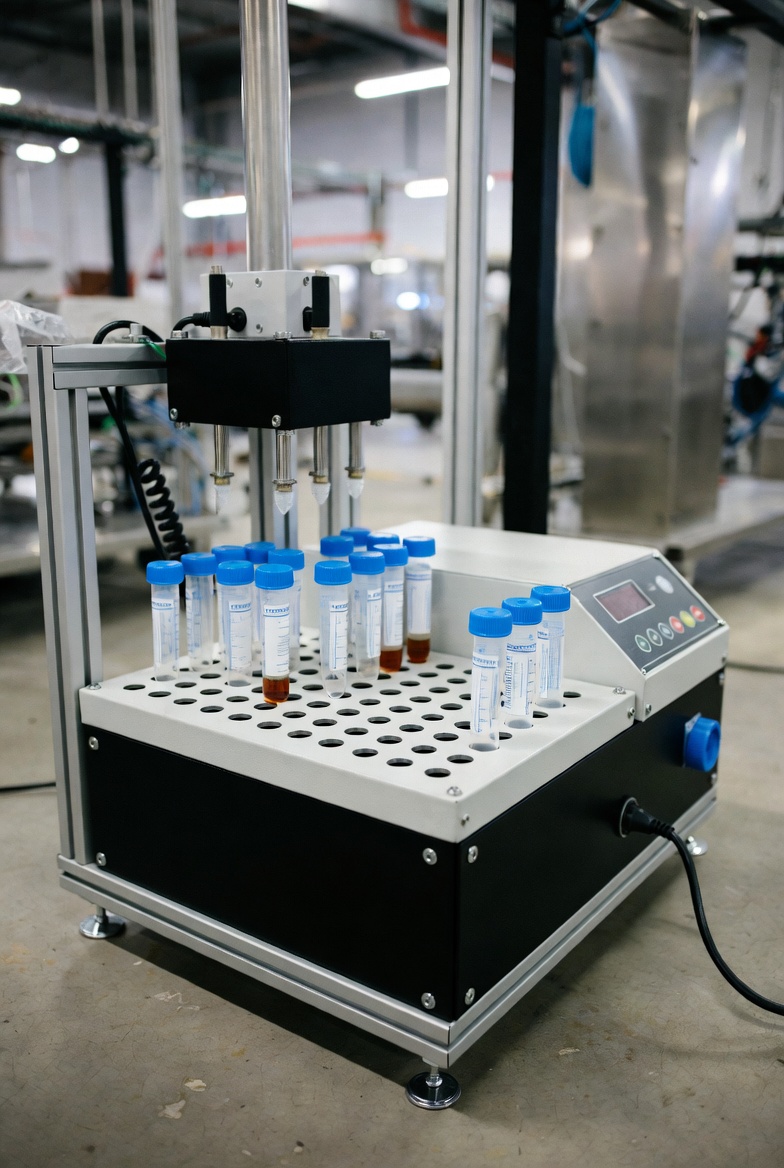
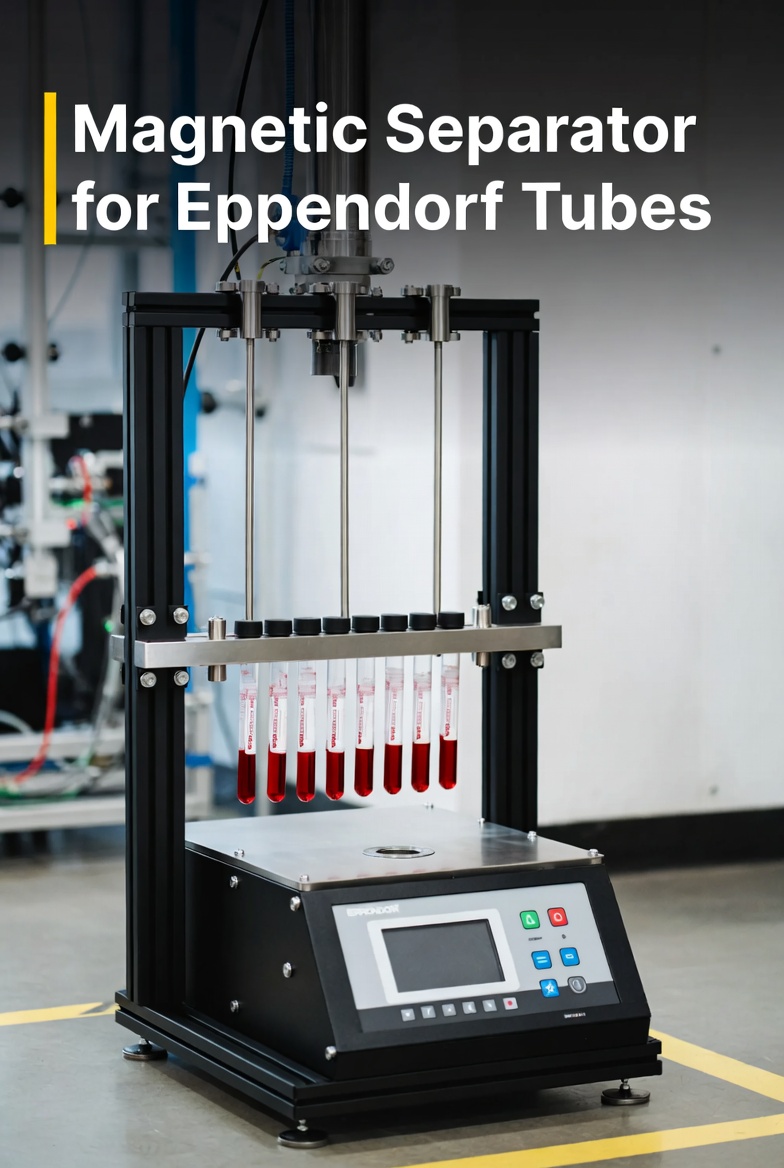
A magnetic separator for Eppendorf tubes is a small rack, stand, or holder that incorporates strong permanent magnets to pull magnetic beads or particles to the side or bottom of 1.5 mL or 2.0 mL microcentrifuge tubes, which are often referred to as Eppendorf tubes in the laboratory.
The magnetic separator holds multiple tubes in fixed positions while the magnetic field concentrates the beads into a tight pellet so that supernatant can be removed without losing material.
Typical microcentrifuge tube magnetic separator racks can hold from 6 to 16 tubes at once and are compatible with a range of working volumes, usually from about 10 µL up to 2,000 µL.
By changing the geometry and strength of the magnets, a magnetic separator can be optimized for fast bead capture, easy visual inspection of pellets, and minimal disturbance of the pellets during pipetting.
3. Key Components of a Magnetic Separator for Eppendorf Tubes
A laboratory magnetic separator designed for Eppendorf tubes generally consists of several key elements that determine performance, durability, and user experience.
3.1 Magnet system
The heart of any magnetic separator is a magnet system that provides a strong and stable magnetic field, usually implemented with rare earth NdFeB magnets arranged along the tube positions.
The magnetic separator design determines whether beads are pulled to the tube bottom, the side wall, or a specific height, which influences pellet shape and how easily supernatant can be aspirated.
3.2 Tube rack body
The tube rack portion of the magnetic separator is typically made of robust plastic, acrylic, or anodized aluminum, with precisely machined holes or sleeves that match standard 1.5 mL and 2.0 mL Eppendorf tubes.
The rack holds the tubes at a defined angle so that the magnetic separator can produce a clear pellet location, improving pipetting accuracy and reducing sample loss.
3.3 Base and ergonomics
Many commercial magnetic separator racks include a base plate that houses the magnets and provides a stable footprint with rubber feet to prevent slipping on the bench.
Some systems use removable racks that can be lifted off the magnet base for vortexing or mixing, then returned to the base to resume magnetic separator action in a controlled way.
3.4 Capacity and format
Magnetic separator designs for Eppendorf tubes vary in capacity, from 6‑position microfuge tube racks to 12‑position or 16‑position models that can handle higher throughput.
In addition to standard Eppendorf tubes, related magnetic separator products support PCR strips, 0.2 mL PCR tubes, 5 mL centrifuge tubes, and 15 or 50 mL conical tubes, giving laboratories a compatible suite of tools across formats.
4. How Magnetic Separator Technology Works in Eppendorf Tubes
The working principle of a magnetic separator for microcentrifuge tubes is based on the interaction between a magnetic field and magnetic beads or particles suspended in a liquid sample.
When the tubes are placed in the magnetic separator, the beads migrate along the field gradient and accumulate at the nearest point on the tube wall or bottom where the magnetic field is strongest.
In nucleic acid purification, magnetic beads are coated with functional groups that selectively bind DNA or RNA in the presence of binding buffers, allowing the magnetic separator to collect only the molecule of interest while impurities remain in solution.
Once the beads are captured by the magnetic separator, the user can remove the supernatant, wash the pellet with appropriate buffers, and finally elute the purified nucleic acid from the beads.
4.1 Advantages of magnetic separation in small tubes
Using a magnetic separator instead of centrifugation in small Eppendorf tubes offers several advantages, including fewer pipetting steps, reduced risk of cross‑contamination, and the ability to scale protocols up or down easily.
Magnetic separator workflows are also well suited to automation and high‑throughput processing because they rely on simple physical positioning rather than complex mechanical motion.
5. Typical Applications of Magnetic Separator for Eppendorf Tubes
Magnetic separator products that accommodate Eppendorf tubes are widely used in modern life science laboratories for a variety of sample preparation and cleanup tasks.
5.1 DNA and RNA purification
One of the most common applications of a microcentrifuge tube magnetic separator is the purification of DNA or RNA using paramagnetic beads after PCR or other amplification methods.
The magnetic separator allows rapid and efficient cleanup of nucleic acids, producing high‑purity material suitable for downstream sequencing, cloning, or qPCR.
5.2 Protein and antibody purification
Magnetic beads can also be coated with antibodies or affinity ligands to capture specific proteins from complex mixtures, and a magnetic separator in Eppendorf tube format provides a convenient platform for these enrichment steps.
For example, immunoprecipitation experiments often rely on a magnetic separator to isolate protein–antibody complexes before analysis by electrophoresis or mass spectrometry.
5.3 Cell and exosome isolation
Magnetic separator racks for Eppendorf tubes are useful for small‑volume cell isolation, where magnetic beads conjugated to antibodies bind to particular cell types or vesicles that can then be separated using a static magnetic field.
These workflows are popular in immunology, stem cell research, and extracellular vesicle studies that require gentle handling and high selectivity.
5.4 Sample cleanup in high‑throughput assays
Magnetic bead‑based cleanup in Eppendorf tubes, supported by magnetic separator racks, is increasingly used in ELISA, enzymatic reactions, and other biochemical assays that need consistent washing steps.
The magnetic separator provides a uniform, reproducible way to remove unbound reagents without centrifugation, which saves time and simplifies automation.
5.5 Small‑scale process development
Process development groups in biopharmaceutical and diagnostic companies often screen binding buffers, bead chemistries, and elution conditions in Eppendorf tubes before scaling to larger formats.
A flexible magnetic separator that accepts standard tubes makes it easy to run many small experiments in parallel while using the same core separation principle that will be used later at production scale.
6. Design Considerations for Magnetic Separator for Eppendorf Tubes
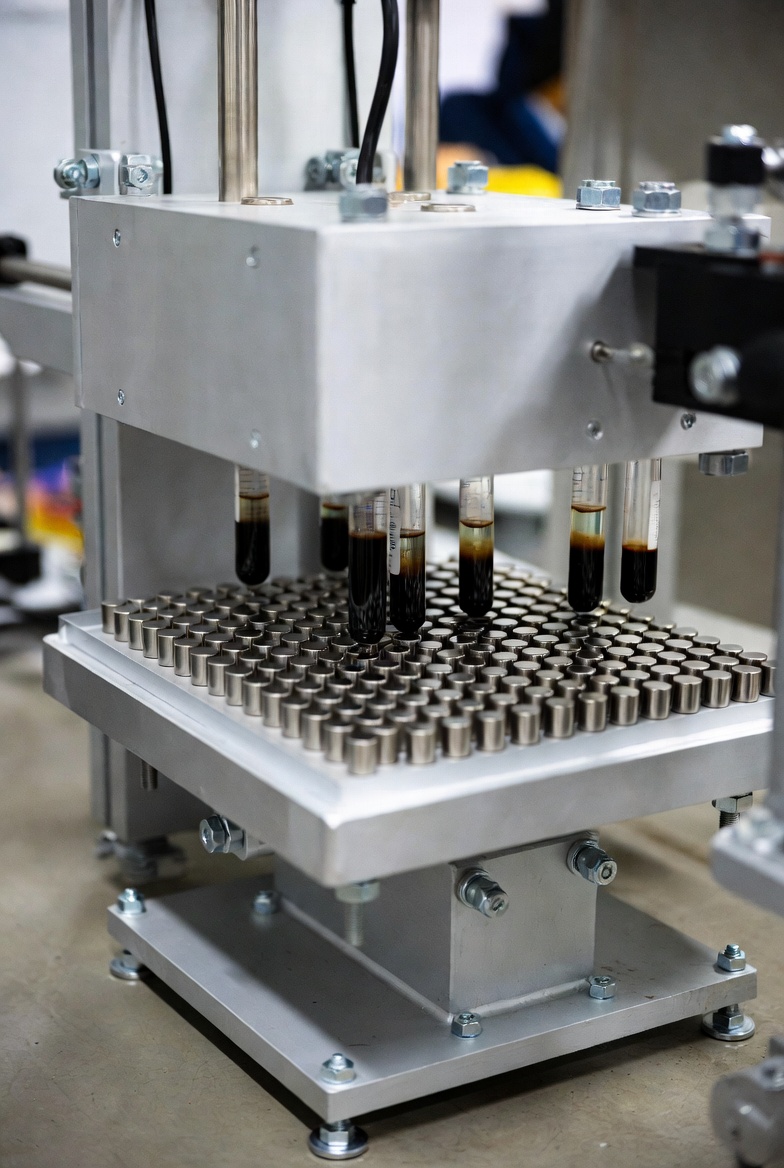
When selecting or designing a magnetic separator for Eppendorf tubes, several technical factors influence performance and suitability for specific workflows.
6.1 Magnetic field strength and gradient
Effective capture of magnetic beads in small volumes requires not only strong magnetic fields but also appropriate field gradients, which determine how quickly and tightly beads are pulled to the tube wall.
A well‑designed magnetic separator uses optimized magnet sizes, shapes, and positions to produce fast separation without trapping beads in inaccessible locations where pipette tips cannot reach easily.
6.2 Tube angle and pellet position
The angle at which Eppendorf tubes sit in the magnetic separator affects pellet geometry and how easily a pipette tip can reach the supernatant without disturbing the beads.
Many microfuge tube magnetic separator racks tilt the tubes slightly so that beads are drawn to the back wall while the user aspirates from the front wall, reducing pellet disruption and improving recovery.
6.3 Capacity and workflow throughput
Laboratories should match magnetic separator capacity to their throughput, choosing between compact 6‑tube racks for small experiments and larger 12‑ or 16‑position racks for routine screening work.
For even higher throughput, related magnetic separator devices exist for 24‑tube racks, 96‑well PCR plates, and deep‑well plates, which complement Eppendorf tube racks in multi‑step workflows.
6.4 Compatibility with automation
If a laboratory uses pipetting robots or automated platforms, the magnetic separator for Eppendorf tubes must fit within deck layouts and maintain consistent tube positions for robotic access.
Some magnetic separator racks are specifically designed with standardized footprints and heights to integrate into automated systems for nucleic acid extraction, immunoassays, or sample preparation for next‑generation sequencing.
6.5 Material selection and chemical resistance
The body of a magnetic separator rack is often exposed to alcohols, chaotropic salts, detergents, and other common reagents used in DNA, RNA, and protein purification.
Choosing chemically resistant plastics or coated metals helps ensure that the magnetic separator remains structurally stable and easy to clean over many cycles of use.
7. Why Laboratories Choose Magnetic Separator for Eppendorf Tubes
Magnetic separator solutions tailored to Eppendorf tubes are popular because they enhance efficiency, precision, and reproducibility in critical laboratory workflows.
7.1 Time savings and simplified protocols
Using a magnetic separator avoids multiple centrifugation steps, allowing researchers to perform binding, washing, and elution directly in the same tubes with fewer handling operations.
This simplification shortens protocol time, reduces user fatigue, and lowers the chance of sample mixing or labeling mistakes across many tubes.
7.2 Higher recovery and reduced sample loss
Because a magnetic separator keeps beads concentrated at a defined spot inside Eppendorf tubes, it is easier to control pipetting and leave pellets undisturbed, which improves yield.
This is particularly important for low‑volume or precious samples where every microliter matters and losses during transfers or centrifugation would be unacceptable.
7.3 Scalability from research to production
Magnetic separator workflows can be scaled from a few Eppendorf tubes in a research laboratory to dozens or hundreds of samples in a semi‑automated setup, using similar principles and reagents.
This scalability allows organizations to develop methods at bench scale and later implement them in more complex, higher‑throughput environments without changing the basic magnetic separator concept.
7.4 Cleaner workspaces and reduced equipment load
Relying more on a bench‑top magnetic separator and less on centrifuges reduces traffic around shared spinning equipment and helps keep workflows at the bench.
In busy laboratories, this can ease scheduling conflicts, reduce maintenance requirements on centrifuges, and improve overall efficiency during peak usage periods.
8. How Foshan Wandaye Technology Co., Ltd. Supports Magnetic Separator Users
Foshan Wandaye Technology Co., Ltd. brings a full‑solution mindset to magnetic separator products for Eppendorf tubes, from product selection to process optimization.
8.1 Engineering support and customization
Leveraging experience with large magnetic separator equipment, Foshan Wandaye Technology Co., Ltd. can help laboratories specify magnet strengths, rack geometries, and materials that best match their beads and protocols.
Custom magnetic separator racks can be configured for different tube sizes, combinations of tube and plate formats, or integration into automated platforms used in diagnostics, pharmaceutical development, or academic research.
8.2 Application guidance and training
Beyond hardware, Foshan Wandaye Technology Co., Ltd. can advise users on optimizing binding times, wash steps, and elution conditions for DNA, RNA, protein, or cell‑based applications that rely on magnetic separator technology.
This combination of magnetic separator hardware and application knowledge helps laboratories achieve consistent and robust results, even when handling challenging or low‑abundance samples.
8.3 From industrial to laboratory magnetic separator solutions
Because the company supplies large‑scale magnetic separator and iron removal systems to mining, ceramics, and pharmaceutical production lines, it understands how separation performance affects process quality and efficiency.
That experience feeds back into the design and support of laboratory magnetic separator products, giving users confidence that small Eppendorf tube devices follow the same rigorous engineering principles as full‑size industrial systems.
9. Best Practices When Using Magnetic Separator for Eppendorf Tubes
Following good practices ensures that a magnetic separator delivers maximum performance in daily laboratory work.
1. Match bead volume and magnet strength so that pellets form quickly without excessive aggregation that might trap contaminants or make resuspension difficult.
2. Always orient tubes consistently in the magnetic separator rack to keep pellet positions predictable for pipetting and minimize accidental pellet aspiration.
3. Allow sufficient settling time after placing tubes in the magnetic separator before removing supernatant, especially in viscous solutions or when bead concentration is low.
4. Keep the magnetic separator clean and dry to avoid corrosion or contamination that could affect sensitive biomolecules or interfere with visual inspection of pellets.
5. Validate new bead kits or buffers with your specific magnetic separator and Eppendorf tubes, checking recovery, purity, and reproducibility before committing to large experimental series.
10. Practical Workflow Example Using Magnetic Separator for Eppendorf Tubes
A typical DNA cleanup protocol using a magnetic separator for Eppendorf tubes follows a simple bind–wash–elute structure.
1. The user adds magnetic beads and binding buffer to a PCR reaction or DNA solution in a 1.5 mL Eppendorf tube and mixes thoroughly to ensure that DNA contacts the bead surface.
2. The tube is placed in a magnetic separator rack, and within a short time the beads form a visible pellet at the side or bottom of the tube while the supernatant becomes clear.
3. The supernatant is carefully aspirated without disturbing the pellet, and one or more wash buffers are added and removed while the tube remains in or briefly leaves the magnetic separator.
4. After washing, the beads are briefly air‑dried to remove residual alcohol, then an elution buffer is added, the beads are resuspended, and the tube is placed in the magnetic separator again.
5. Once the beads pellet for the final time, the eluate containing purified DNA is transferred to a new tube, and the magnetic separator step is complete.
This same basic approach can be adapted to RNA purification, protein enrichment, antibody pulldown, or cell isolation, with the magnetic separator providing the core separation step while reagents and conditions change according to the application.
11. Ideas for Visual and Media Enhancements
To help users understand magnetic separator operation in Eppendorf tubes more intuitively, several visual and media elements can be incorporated into training materials or web content.
– A schematic illustration showing an Eppendorf tube inside a magnetic separator rack, with beads being pulled to the tube wall and a pipette removing supernatant.
– A step‑by‑step diagram for a DNA cleanup protocol, highlighting stages where the tube enters and exits the magnetic separator and where pellets form.
– A cross‑section illustration of the magnet arrangement inside a microcentrifuge tube magnetic separator, indicating field gradients and the final pellet position.
– A short video demonstration of placing tubes into a bench‑top magnetic separator, waiting for bead capture, and then aspirating and washing pellets in real time to show correct pipetting technique.
– An animated explanation comparing traditional spin‑column cleanup with magnetic separator bead‑based cleanup in Eppendorf tubes, emphasizing time savings and automation compatibility.
Such visuals and videos make it easier for new operators to learn how to use a magnetic separator correctly and help laboratories standardize best practices across teams.
12. Conclusion
Magnetic separator devices designed for Eppendorf tubes provide an efficient, scalable, and user‑friendly way to perform bead‑based separations for DNA, RNA, proteins, and cells in modern laboratories.
By using carefully engineered magnet systems, optimized tube angles, and robust rack structures, a magnetic separator delivers fast bead capture, precise pellet positioning, and minimal sample loss in 1.5 mL and 2.0 mL microcentrifuge tubes.
Foshan Wandaye Technology Co., Ltd. applies deep experience from industrial magnetic separator systems to the laboratory environment, supporting users with customized racks, engineering guidance, and application know‑how.
For laboratories seeking to upgrade from centrifugation or improve the efficiency of their bead‑based protocols, adopting a dedicated magnetic separator for Eppendorf tubes is a practical step towards higher throughput, better reproducibility, and easier automation.
Contact us to get more information!
FAQ
Q1. What sizes of Eppendorf tubes are compatible with a magnetic separator?
Most microcentrifuge tube magnetic separator racks are designed for 1.5 mL and 2.0 mL tubes, which are the most common Eppendorf tube sizes in molecular biology laboratories.
Some magnetic separator products also accommodate smaller 0.5 mL tubes or use adapters that allow a single rack to support different tube diameters and formats.
Q2. Can a magnetic separator for Eppendorf tubes be used with any magnetic bead kit?
In general, a magnetic separator can work with many commercially available magnetic bead kits, as long as the beads are sufficiently responsive to the magnetic field and the tube format matches the rack.
However, it is important to validate performance because different bead sizes, coatings, and buffer systems may respond differently to a given magnetic separator configuration and separation time.
Q3. How long does it take for beads to separate in a magnetic separator?
Under typical conditions, magnetic beads in Eppendorf tubes pellet within a few seconds to a couple of minutes once placed in a suitable magnetic separator.
The exact time depends on bead properties, viscosity, volume, and the magnetic field strength and gradient of the specific magnetic separator used in the workflow.
Q4. What safety considerations apply when using magnetic separator devices?
Magnetic separator racks contain strong magnets, so users should keep sensitive electronic devices and magnetically encoded cards away from the work area to avoid damage.
In addition, tubes should be securely seated in the magnetic separator to prevent spills during pipetting, and standard laboratory personal protective equipment such as gloves and eye protection should always be used.
Q5. How does a magnetic separator compare with centrifugation for small‑volume separations?
A magnetic separator eliminates the need for repeated centrifugation and decanting steps, simplifying workflows and reducing mechanical stress on delicate samples and biomolecules.
While centrifugation remains useful for some applications, magnetic separator technology is often faster, more scalable, and better suited to automation and multi‑well formats, especially in high‑throughput settings.
Citations:
1. https://www.thermofisher.com/us/en/home/brands/product-brand/dynal/magnets.html
2. https://www.permagenlabware.com/product-category/magnetic-separation-racks/
3. https://www.nanomicronspheres.com/how-do-magnetic-pcr-clean-up-beads-work/
4. https://hudsonlabautomation.com/magnetic-bead-separation-functions-and-automation-requirements/
5. https://pmc.ncbi.nlm.nih.gov/articles/PMC7080036/
6. https://www.raybiotech.com/microcentrifuge-tube-magnetic-separator-32-position-801-209
7. https://www.4es-usa.com/products/magnetic-racks
8. https://maxisci.com/16-hole-magnetic-rack-for-0-5ml-1-5ml-and-2-0ml-centrifuge-tubes/
9. https://www.thomassci.com/p/microcentrifuge-tube-magnet-separation-rack
10. https://www.belart.com/bel-art-f19900-0002-magnetic-bead-separation-rack-for-1-5-to-2-0ml-microcentrifuge-tubes.html
11. https://ozbiosciences.com/magnetic-devices-for-magnetofection/72-magnetic-separation-racks.html
12. https://www.cellsignal.com/products/chip-kits-reagents/6-tube-magnetic-separation-rack/7017
13. https://www.magbiogenomics.com/magstrip-magnet-stand.html
14. https://www.magbiogenomics.com/latest/post/what-are-magnetic-beads-and-how-do-they-work-for-isolation-of-biomolecules
15. https://omegabiotek.com/a-guide-to-magnetic-bead-based-nucleic-acid-extraction/
16. https://www.nvigen.com/dna-clean-up/
Hot Tags: Magnetic Separator For Eppendorf Tubes, Eppendorf Tube Magnetic Rack, Magnetic Bead Separation For Microtubes, PCR Tube Magnetic Separator, Lab Magnetic Separation Rack, Magnetic Stand For Microcentrifuge Tubes, Nucleic Acid Extraction Magnetic Rack, Magnetic Bead Purification System, 1.5ml Tube Magnetic Separator, Laboratory Magnetic Tube Holder