Content Menu
● What Happened at Junction City Mining?
● How the Overband Magnet Actually Works
● Why This Case Matters for Modern Mines and Quarries
● Beyond Overband Magnets: Powder and Permanent Magnetic Separation Across Industries
● Expert Comparison: Overband vs Powder Magnetic Separators
● Quantifying ROI and Risk Reduction
● Choosing the Right Magnet Technology in 2026
● Applying Quarry Lessons to Ceramics, Glass, and Battery Materials
● Practical Implementation Checklist for Plant Engineers
● Where Foshan Wandaye Fits In
● FAQs
>> 1. How do I decide between an overband magnet and a powder magnetic separator?
>> 2. Can permanent magnetic separators handle high‑capacity mining conveyors?
>> 3. How small a metal particle can modern powder separators remove?
>> 4. Are magnetic separators suitable for food and pharmaceutical applications?
>> 5. What makes Foshan Wandaye different from other magnetic separator suppliers?
When I first walked a granite quarry conveyor line years ago, I saw exactly the problem that Junction City Mining in Georgia wanted to solve: dangerous tramp iron riding quietly on a belt toward very expensive crushers. As a magnetic separation specialist working with powder and permanent magnetic separators at Foshan Wandaye Technology Co., Ltd., I see the Junction City case as more than a single installation – it is a blueprint for how mines, quarries, ceramics plants, and battery-material producers should rethink tramp metal control in 2026. [buntingmagnetics]
What Happened at Junction City Mining?
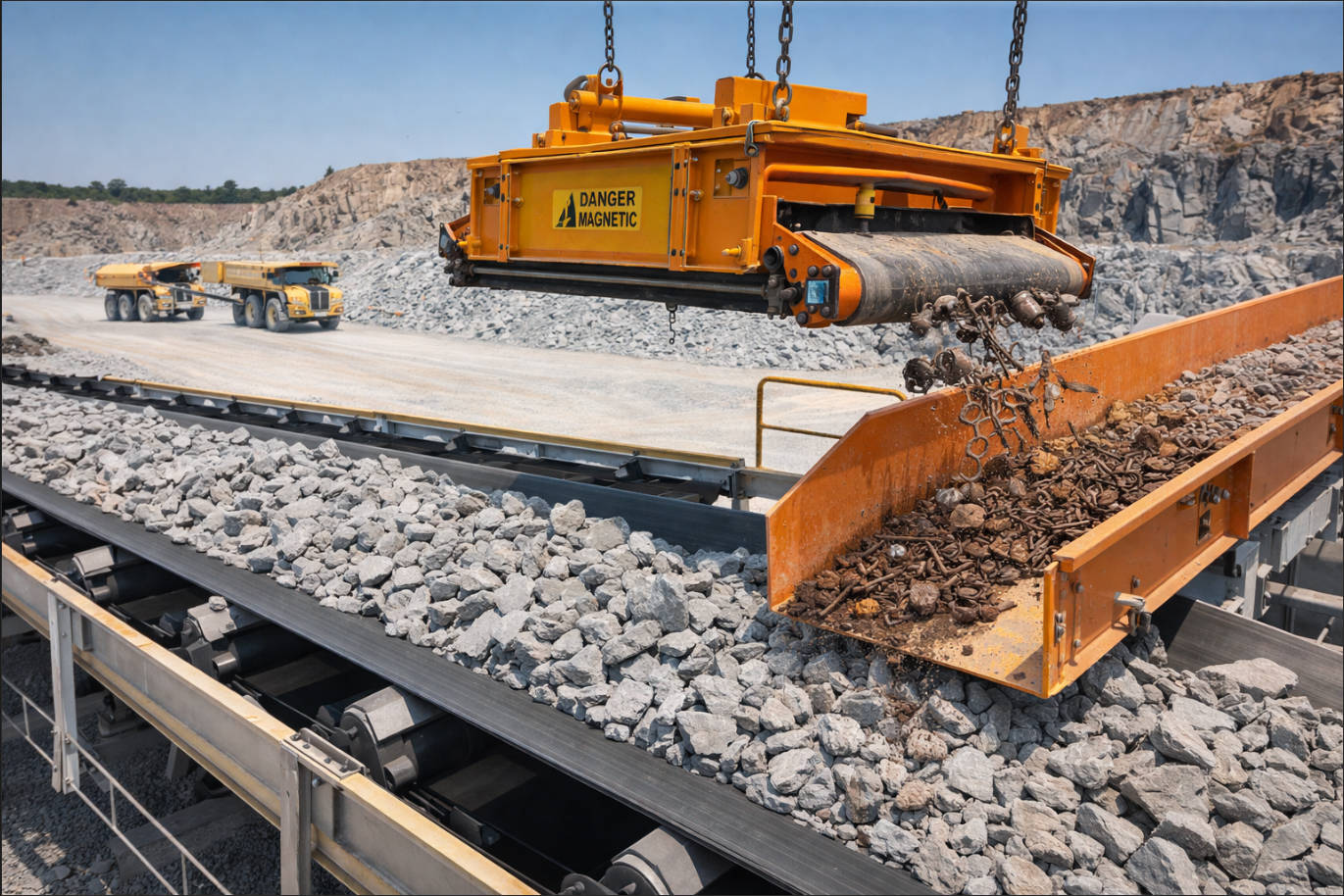
The Georgia quarry is one of the largest aggregate operations in the region, feeding highways and infrastructure projects across the Southeast. Like many high-throughput sites, they were pushing 4–500 tons of crushed granite per hour on a main conveyor when a familiar risk emerged: tramp ferrous metal hidden in the burden. [buntingmagnetics]
– Wear parts, broken bolts, and scrap were riding the belt unnoticed. [buntingmagnetics]
– Each piece had the potential to crack crusher rotors, damage screens, and contaminate finished product. [buntingmagnetics]
– Product quality and plant uptime were both at risk, even with downstream inspection.
After an on‑site survey, engineers proposed a permanent overband crossbelt magnet designed specifically for the Junction City conveyor geometry and burden depth. The selected model, a PCB1206‑EL crossbelt separator with a 36″ wide auxiliary belt, now routinely lifts 11 kg (15–25 lb) lumps of metal at a time out of the granite flow before they reach critical equipment. [buntingmagnetics]
How the Overband Magnet Actually Works
From an engineer’s viewpoint, an overband magnet is a simple but extremely robust system. In the Junction City setup, a permanent magnet block is mounted in a heavy‑duty steel frame above the main conveyor. [buntingmagnetics]
Key operating steps:
1. Magnetic capture – As the burden passes under the frame, ferrous pieces are attracted up through the conveyed granite toward the magnet block. [buntingmagnetics]
2. Transfer – A self‑cleaning crossbelt with vulcanized cleats runs across the face of the magnet. [buntingmagnetics]
3. Discharge – Captured metal is carried laterally away and dropped into a waste collection area, keeping the magnet face clean and maintaining separation efficiency. [buntingmagnetics]
Because the unit is self‑cleaning, the quarry avoids frequent stoppages to manually remove metal from the magnet surface, which is a major cause of downtime with simpler suspended magnets. Correct positioning – typically at a right angle to belt travel and at a defined suspension height – is critical to performance, as Bunting and other manufacturers emphasize in their installation guidance. [buntingmagnetics]
Why This Case Matters for Modern Mines and Quarries
From my experience, what Junction City Mining did is exactly what many plants avoid until after a serious incident: they proactively engineered out a known risk. [buntingmagnetics]
Three lessons stand out:
– 1. Reliability beats repair – Replacing a crusher shaft or screen deck after tramp metal damage is far more expensive than specifying a robust overband magnet up‑front. [buntingmagnetics]
– 2. Quality is a competitive differentiator – For a quarry whose aggregates go into interstate highways, iron contamination is simply not acceptable, and the overband magnet directly protects product quality. [buntingmagnetics]
– 3. Long‑term ROI is measurable – In similar mines, overband magnets protect millions of tons of ore annually; one gold mine overband in Finland shields equipment while processing about 2.7 million tons per year. [buntingmagnetics]
When we design Powder Magnetic Separators and Permanent Magnetic Separators at Foshan Wandaye for mining clients, we increasingly position them as core reliability assets rather than accessories. The Junction City project underscores exactly why. [wdymagnetic]
Beyond Overband Magnets: Powder and Permanent Magnetic Separation Across Industries
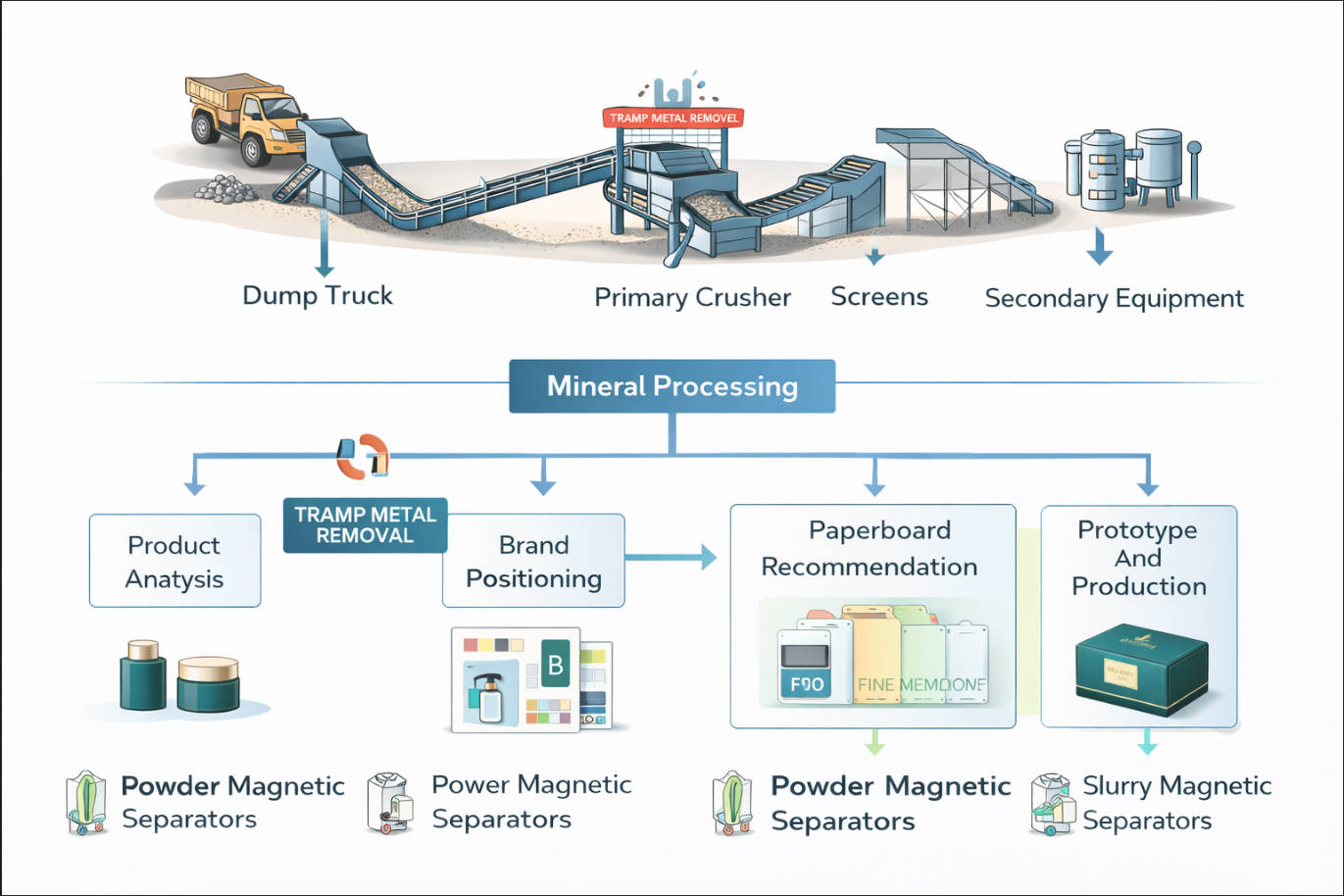
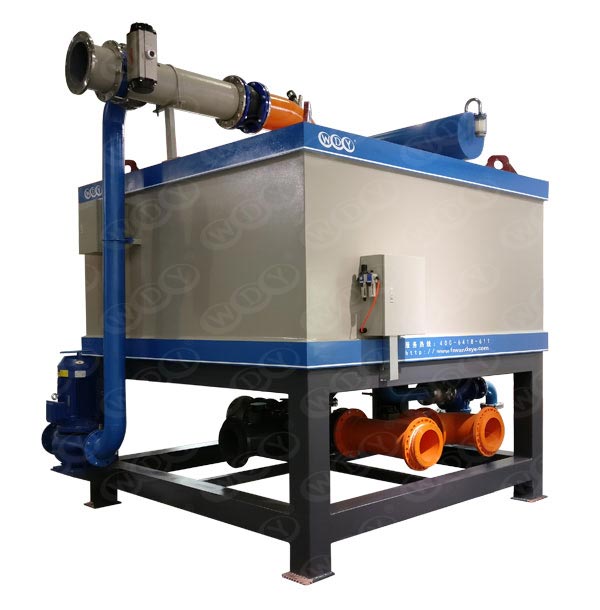
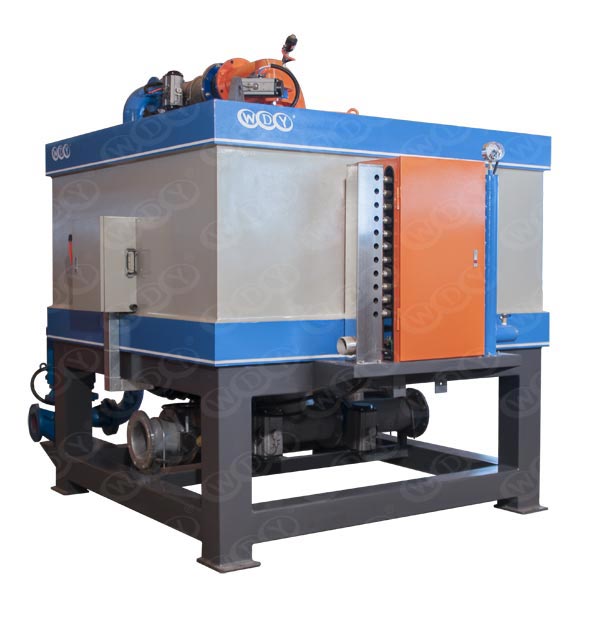
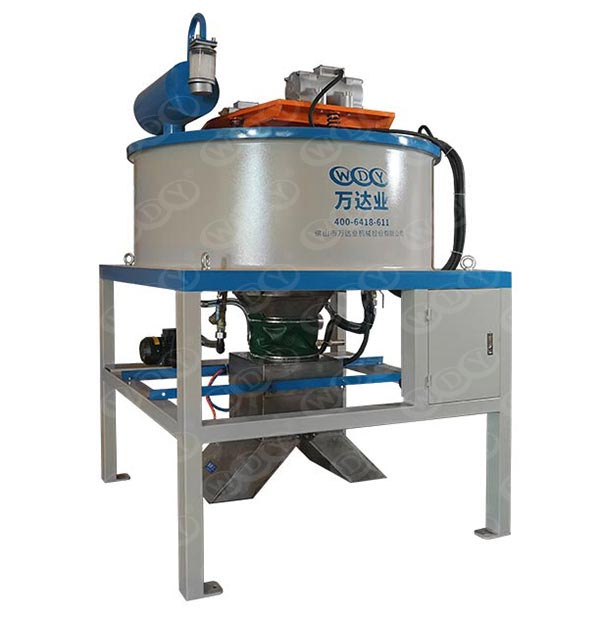
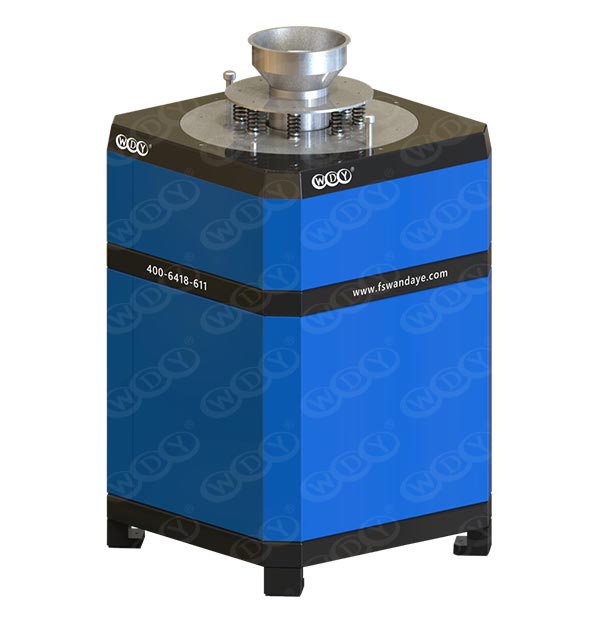
Foshan Wandaye Technology Co., Ltd. is a specialized magnetic separator manufacturer integrating R&D, engineering design, production‑line installation, and commissioning. Our portfolio includes high‑gradient electromagnetic slurry machines, powder magnetic separators, and permanent magnetic separators, along with magnetic plates, rods, and iron‑removal cabinets. [en.fswandaye]
These solutions are widely applied in:
– Mines and quarries – Removing tramp metal before crushing and grinding. [buntingmagnetics]
– Ceramics, porcelain, and glass – Eliminating iron particles that cause burning, pinholes, and color defects. [goudsmitmagnetics]
– Plastics and rubber – Protecting extruders and injection screws from metallic fines. [dingsmagnets]
– Food and pharmaceuticals – Removing ferrous contamination to meet stringent safety standards. [goudsmitmagnetics]
– Battery anode and cathode materials – Deferrizing powders like lithium compounds and graphite to prevent short circuits and safety issues. [en.fswandaye]
In powders, magnetic separators installed in‑line or at gravity drops can remove particles as small as tens of microns, with some high‑gradient designs for ceramics capturing down to about 30 µm or even around 1 µm in highly specialized systems. For free‑flowing granular products, grate magnets and rotary grate magnets provide efficient internal separation without needing to reach through a deep burden. [sollau]
Expert Comparison: Overband vs Powder Magnetic Separators
From a plant‑design perspective, overband magnets like the Junction City unit and powder magnetic separators serve different but complementary roles.
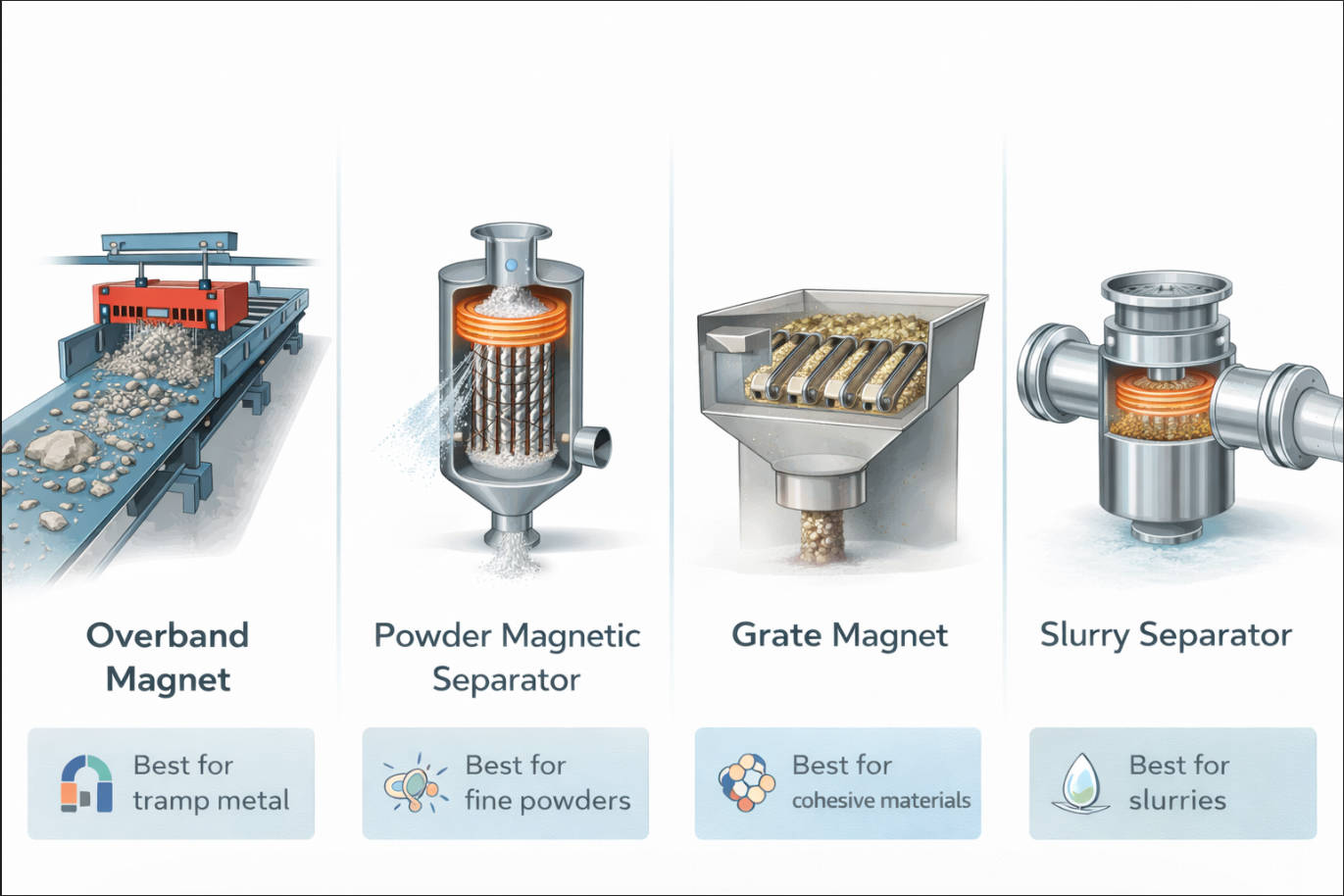
Magnetic Separation Options for Mines and Processors
| Solution type | Best location | Typical material | Main benefit | Notes |
|---|---|---|---|---|
| Overband / crossbelt magnet | Above conveyors | Crushed rock, ore, bulk aggregates | Removes large tramp iron before crushers and screens | Often self‑cleaning with cleated belt. buntingmagnetics |
| Permanent suspended magnet | Above conveyors or chutes | Lower burden depth conveyors | Simple tramp metal protection | May require manual cleaning. buntingmagnetics |
| Powder magnetic separator | Gravity drops, pipeline, feeders | Fine non‑metallic powders, battery materials, pigments | High‑efficiency removal of fine ferrous and weakly magnetic particles | Uses high‑gradient or multi‑row magnet grids. goudsmitmagnetics |
| Grate / rotary grate magnet | Hoppers, inlets, slow flows | Cohesive powders, ceramics, flour, gypsum | Internal grid captures small contaminants uniformly | Rotary designs prevent bridging and improve flow. sollau |
| High‑gradient slurry magnetic separator | Wet slurries, glazes, mineral pulps | Ceramics slurry, mineral slurries | Ultra‑fine iron removal with matrix cassettes | Combines magnetic capture with mechanical sieving. goudsmitmagnetics |
In a modern plant, we often combine an overband magnet on the primary conveyor with powder or grate separators deeper in the process line, especially where product purity or downstream equipment life is critical. [sollau]
Quantifying ROI and Risk Reduction
Many original case studies stop at the technical story; as a plant decision‑maker, you need the economic logic. Drawing on industry case data for overband magnets and high‑throughput conveyors, several patterns are clear. [buntingmagnetics]
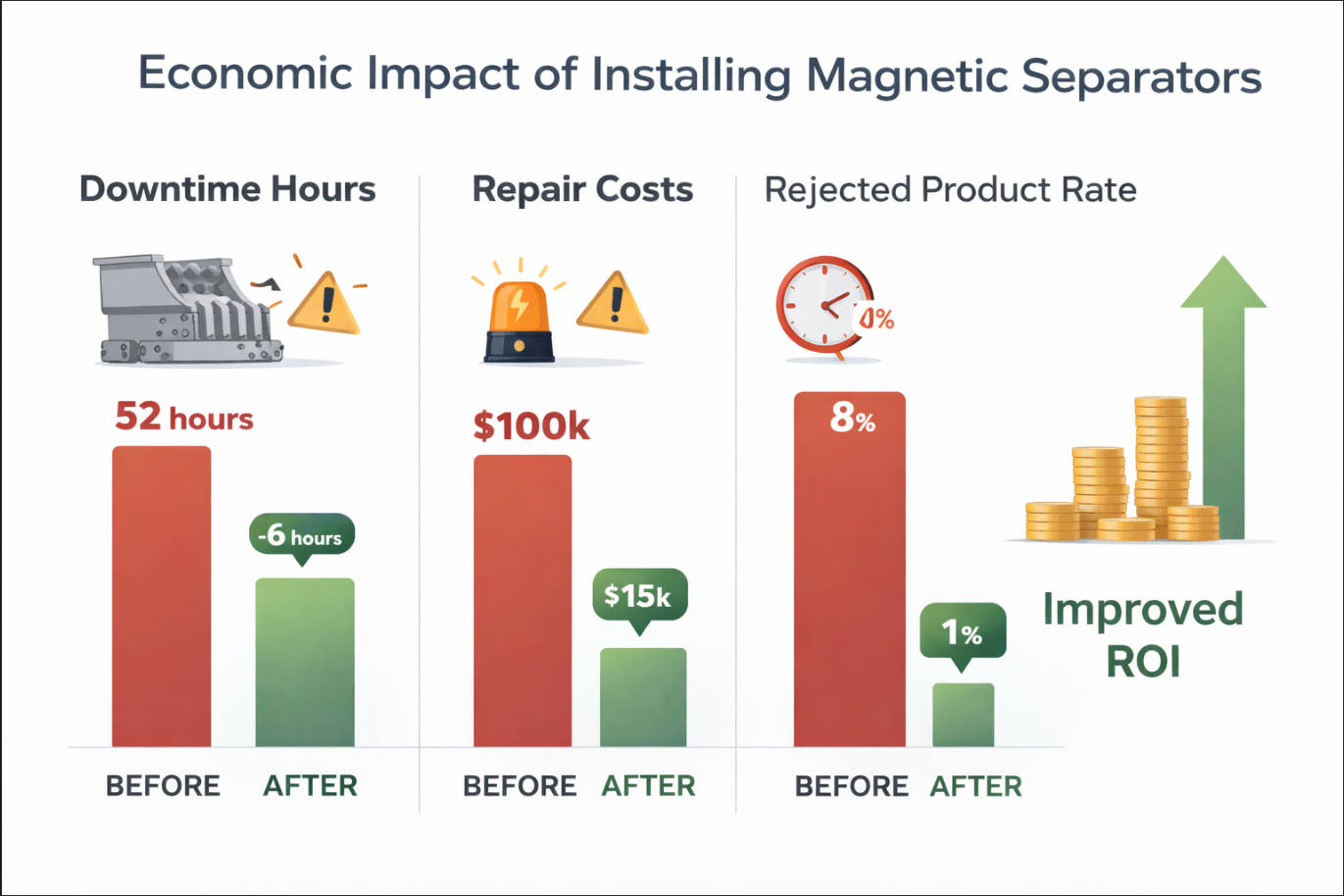
Typical cost drivers without magnetic protection:
– Unplanned crusher shutdown after tramp iron damage (lost production hours).
– Emergency spare‑parts orders and rush maintenance labor.
– Quality complaints or rejected batches due to metal contamination.
In heavy mining and coal‑handling operations, large overbands routinely protect throughputs of thousands of tons per hour; for example, ElectroMax overbands installed at a U.S. coal terminal remove tramp ferrous metal from about 5,000 tons per hour at high belt speed. [buntingmagnetics]
When we model ROI for clients, we typically consider:
1. Baseline incident frequency – How often has tramp metal already caused stoppages or damage?
2. Cost per incident – Lost tonnage, repair parts, and overtime.
3. Residual risk after installing a properly sized overband or powder separator.
Even conservative models usually show payback periods measured in months, not years, especially in high‑capacity mines and mineral plants. [buntingmagnetics]
Choosing the Right Magnet Technology in 2026
Since the original Junction City project, the technology landscape has shifted. Operators today must choose among permanent overbands, electro overbands, high‑gradient powder separators, and hybrid solutions. [buntingmagnetics]
Key selection factors I recommend focusing on:
– Burden depth and belt width – Deep, wide burdens often benefit from stronger fields (e.g., electro overbands) or larger permanent units. [buntingmagnetics]
– Metal type and size – Large, strongly magnetic pieces suit overbands; fine iron and weakly magnetic contaminants require high‑gradient powder or slurry separators. [goudsmitmagnetics]
– Duty cycle and power availability – Permanent magnets minimize energy use and complexity; electro magnets offer controllable field strength at the cost of power and cooling requirements. [buntingmagnetics]
– Product purity requirements – Ceramics, battery materials, and food inevitably need specialized powder or slurry systems in addition to bulk tramp metal protection. [dingsmagnets]
Recent industry analysis comparing electro versus permanent overbands for aggregate conveyors provides a practical decision framework based on throughput, belt speed, and operating constraints. In my own projects, we often combine a permanent overband for primary tramp protection with energy‑efficient powder magnetic separators downstream where fine cleaning is critical, particularly in multi‑product plants. [buntingmagnetics]
Applying Quarry Lessons to Ceramics, Glass, and Battery Materials
At first glance, crushed granite and fine ceramic glaze seem worlds apart, but the physics of metal contamination is the same. Ceramics and glass producers use magnetic separators to prevent discoloration, specks, and structural defects caused by iron contamination, sometimes as small as micron‑scale particles. [sollau]
Likewise, in battery anode and cathode manufacturing, metal contamination can lead not just to quality loss but to safety hazards if metallic particles trigger internal short circuits. Here, high‑gradient powder separators and slurry systems are paired with carefully designed process flows: [en.fswandaye]
– Upstream – Overbands or plate magnets on bulk raw material conveyors.
– Mid‑process – Powder separators and grate magnets at transfer points, sieves, and mixers. [en.fswandaye]
– Final polishing – Slurry separators in coating lines, or final powder polishing before packaging. [goudsmitmagnetics]
In each of these industries, the same core lesson from Junction City applies: treat magnetic separation as a strategic process step, not as an afterthought.
Practical Implementation Checklist for Plant Engineers
If you are considering an upgrade similar to Junction City Mining or planning a powder magnetic separation line, this is the practical sequence I advise based on current best practices and documented case studies. [buntingmagnetics]
1. Audit the full material flow
– Map every conveyor, chute, hopper, and transfer point.
– Identify where tramp metal enters (mining, maintenance, raw material handling).
2. Classify contamination
– Separate coarse tramp metal risks (bolts, tools, liner fragments) from fine contamination (swarf, iron dust, weakly magnetic particles).
3. Select technologies by location
– Overband or suspended magnets on main conveyors before crushers, screens, and sensitive equipment.
– Powder or grate separators on gravity drops and dosing points for fine or high‑value products.
4. Engineer installation details
– Confirm belt width, burden depth, and suspension height for overbands. [buntingmagnetics]
– Ensure powder separators are sized for flow rates and material characteristics (bulk density, cohesiveness). [dingsmagnets]
5. Plan maintenance and monitoring
– Implement inspection routines for magnet cleaning, belt tracking, and performance logging. [buntingmagnetics]
– Tie separator performance into quality metrics (metal counts, product defects, scrap rates).
When we work with clients globally, this structured approach consistently leads to lower downtime, higher throughput, and measurable quality gains across mining, ceramics, plastics, food, and battery materials lines. [en.fswandaye]
Where Foshan Wandaye Fits In
Foshan Wandaye Machinery Equipment Co., Ltd. is a NEEQ‑listed enterprise (stock code: 833886) focused on magnetic separation solutions across dry powders, slurries, and bulk flows. Our main product range includes: [en.fswandaye]
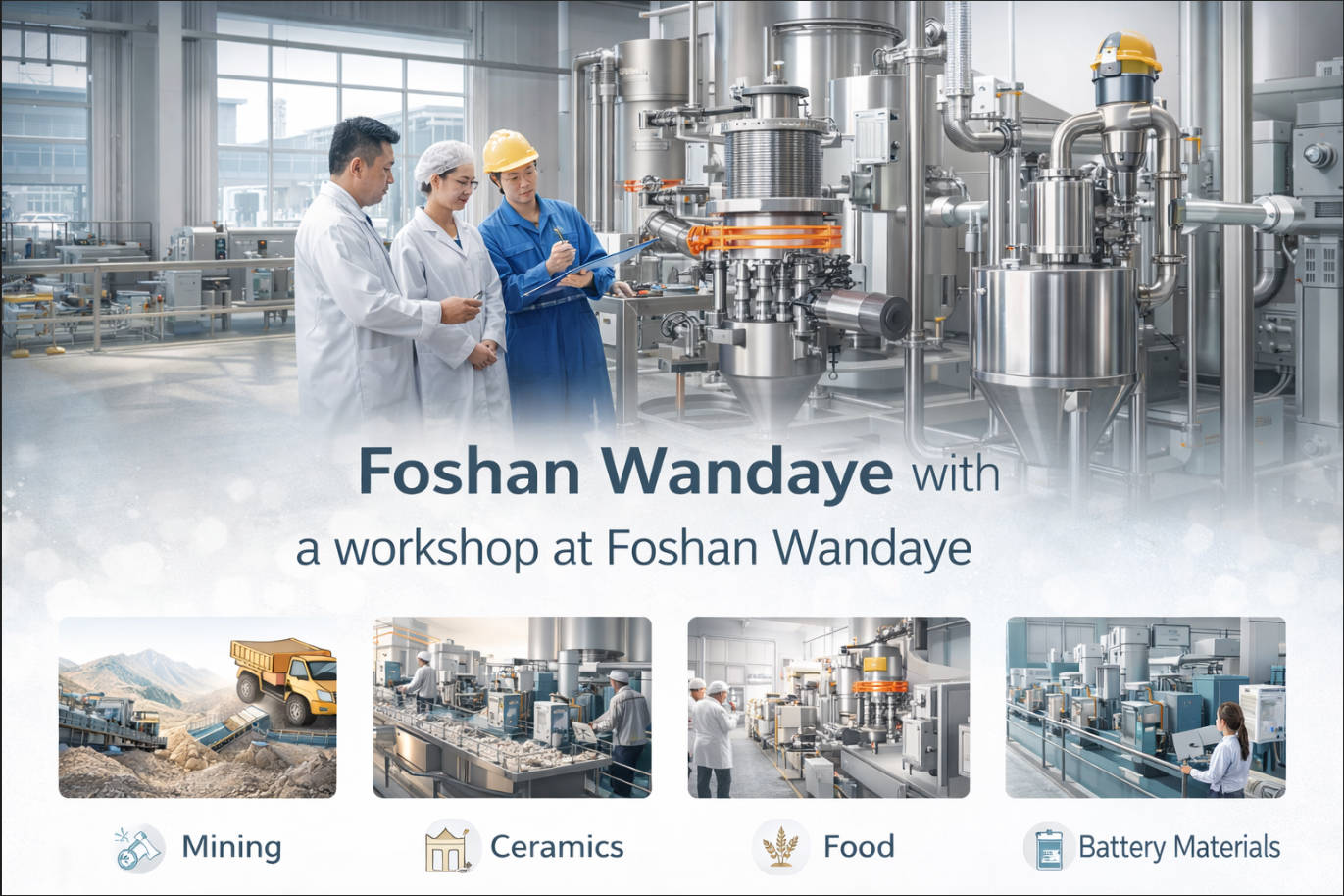
– Powder Magnetic Separators for fine mineral powders, battery materials, and technical ceramics. [wdymagnetic]
– Permanent Magnetic Separators and plates for conveyors, chutes, and gravity drops in mining, cement, and glass. [wdymagnetic]
– High‑gradient electromagnetic slurry machines for ceramic glazes, mineral slurries, and ultra‑fine purification. [en.fswandaye]
– Complementary devices such as magnetic rods, iron‑removal cabinets, and magnetic plates for modular system design. [en.fswandaye]
Our systems are already in use across mines, ceramics, electricity, building materials, glass, environmental protection, rubber, plastics, medicine, food, and anode/cathode material production, giving us broad cross‑industry experience to bring to your project. [en.fswandaye]
Clear Call to Action
If your mine, quarry, ceramics plant, plastics facility, or battery‑material line is still relying on luck and manual inspection to avoid tramp metal, the Junction City Mining experience shows there is a better, proven path. To evaluate overband magnet or powder magnetic separator solutions tailored to your conveyor layout and product characteristics, you can contact Foshan Wandaye for an engineering‑driven assessment, including process audits, equipment sizing, and projected ROI. [wdymagnetic]
FAQs
1. How do I decide between an overband magnet and a powder magnetic separator?
Use an overband magnet when your primary goal is to remove large tramp metal from bulk material on conveyors, especially before crushers or screens. Choose a powder magnetic separator when you need to capture fine ferromagnetic or weakly magnetic particles in powders, glazes, or slurries, typically to improve product purity or meet safety standards. Many plants install both types at different stages of the process. [sollau]
2. Can permanent magnetic separators handle high‑capacity mining conveyors?
Yes. Properly sized permanent overband or crossbelt magnets have been successfully installed on high‑capacity conveyors handling hundreds of tons per hour in aggregate and mining operations. The key is matching the magnet’s width, field strength, and suspension height to belt width, burden depth, and belt speed. [buntingmagnetics]
3. How small a metal particle can modern powder separators remove?
High‑gradient powder and slurry magnetic separators used in ceramics and advanced materials can remove iron particles down to around 30 µm, with some specialized systems capturing contamination near the 1 µm range. The actual performance depends on magnet strength, matrix design, and process conditions such as flow rate and viscosity. [goudsmitmagnetics]
4. Are magnetic separators suitable for food and pharmaceutical applications?
Yes. Grate magnets, rotary grate magnets, and high‑gradient separators are widely applied in food and pharmaceutical processing lines for flours, sugars, starches, and fine powders. These systems are designed with hygienic construction and smooth surfaces to meet regulatory and cleaning requirements while reliably removing ferrous contamination. [dingsmagnets]
5. What makes Foshan Wandaye different from other magnetic separator suppliers?
Foshan Wandaye combines R&D, engineering design, production‑line installation, and commissioning under one roof, which allows us to deliver integrated systems rather than isolated components. Our experience spans mines, ceramics, glass, battery materials, plastics, and food, and we offer both powder magnetic separators and permanent magnetic separators, along with high‑gradient slurry machines and modular accessories to build complete, optimized separation lines. [wdymagnetic]
References
1. Bunting Magnetics – “Junction City Mining Installs Overband Magnet in US Quarry.”
<https://buntingmagnetics.com/blog/junction-city-mining-installs-overband-magnet-in-us-quarry> [buntingmagnetics]
2. Bunting Magnetics – “The Bunting Custom-Designed Permanent Crossbelt Separator Helps Pave the Way.”
<https://buntingmagnetics.com/blog/the-bunting-custom-designed-permanent-crossbelt-separator-helps-pave-the-way> [buntingmagnetics]
3. Bunting Magnetics – “Solving Quarrying and Mining Tramp Metal Problems.”
<https://buntingmagnetics.com/blog/solving-quarrying-and-mining-tramp-metal-problems> [buntingmagnetics]
4. Bunting Magnetics – “Magnetic Separators for Mineral Processing.”
<https://buntingmagnetics.com/blog/magnetic-separators-for-mineral-processing> [buntingmagnetics]
5. Bunting Magnetics – “3 Overband Magnet Installation Problems.”
<https://buntingmagnetics.com/blog/3-overband-magnet-installation-problems> [buntingmagnetics]
6. Bunting Magnetics – “120 ElectroMax Overbands Sold in Five Years.”
<https://buntingmagnetics.com/blog/120-electromax-overbands-sold-in-five-years> [buntingmagnetics]
7. Bunting Magnetics – “Choosing the Right Permanent Crossbelt Magnet for Aggregate and Mining.”
<https://buntingmagnetics.com/blog/choosing-the-right-permanent-crossbelt-magnet-for-aggregate-and-mining> [buntingmagnetics]
8. Bunting Magnetics – “Electro vs Permanent Overband Magnets: Choosing the Right Solution for Aggregate Conveyors.”
<https://buntingmagnetics.com/blog/electro-vs-permanent-overband-magnets-choosing-the-right-solution-for-aggregate-conveyors> [buntingmagnetics]
9. Goudsmit Magnetics – “Magnetic Separators for Ceramics, Minerals and Salt.”
<https://www.goudsmitmagnetics.com/en-us/applications-magnet-filters-for-ceramic-minerals-and-salt> [goudsmitmagnetics]
10. SOLLAU – “Magnetic Separators Used in the Production of Porcelain and Ceramics.”
<https://www.sollau.com/magnetic-separators-for-the-ceramic-and-glass-industry> [sollau]
11. Dings – “Grate Magnet – Powders & Granules.”
<https://dingsmagnets.com/products/grate-magnet> [dingsmagnets]
12. Foshan Wandaye – Company Profile.
<https://www.wdymagnetic.com> [wdymagnetic]
13. Foshan Wandaye – About Us.
<http://en.fswandaye.com/About-Us/> [en.fswandaye]
14. Foshan Wandaye – Magnetic Separation Projects.
<http://en.fswandaye.com> [en.fswandaye]
Hot Tags: How to Set Up Magnetic Quarry, Junction City Mining, Junction City Mining Company, Manufacturers, Customized, Custom, Suppliers, Buy, Cheap, Quality, Advanced, Durable, in Stock, Made in China, Price, Quotation