Content Menu
● What Is a Cross Belt Magnetic Separator?
● Working Principle in Practice
● Permanent vs Electromagnetic Cross Belt Separators
● Why Cross Belt Separation Matters Industrially
>> 1. Protecting Critical Equipment
>> 2. Ensuring Product Purity and Customer Trust
>> 3. Supporting Safety and Regulatory Compliance
● From Bulk to Powders: The Role of Powder Magnetic Separators
● Key Industrial Applications and Expert Insights
>> Mining, Aggregates, and Minerals
>> Ceramics, Glass, and Building Materials
>> Plastics, Rubber, and Recycling
>> Energy, Power, and Environmental Systems
● Latest Trends in Magnetic Separation Technology
● Practical Selection Guide for Engineers
● How Foshan Wandaye Adds Value
● Call to Action: Design Your Magnetic Separation Solution
● FAQs
>> 1. How does a cross belt magnetic separator improve overall plant efficiency?
>> 2. When should I choose a permanent cross belt magnet instead of an electromagnetic one?
>> 3. Why are powder magnetic separators necessary if I already use cross belt magnets?
>> 4. In which industries do cross belt magnetic separators deliver the highest ROI?
>> 5. How can Foshan Wandaye support the design and optimization of my separation system?
Cross belt magnetic separators have become critical safeguards and quality‑assurance tools across mining, ceramics, plastics, power, construction materials, glass, environmental protection, rubber, pharmaceuticals, food, and battery materials production. As an engineer working with high‑purity non‑metallic minerals and powders, I have seen well‑designed cross belt and powder magnetic separators directly reduce downtime, prevent catastrophic equipment damage, and unlock higher product quality for demanding customers. [greatmagtech]
What Is a Cross Belt Magnetic Separator?
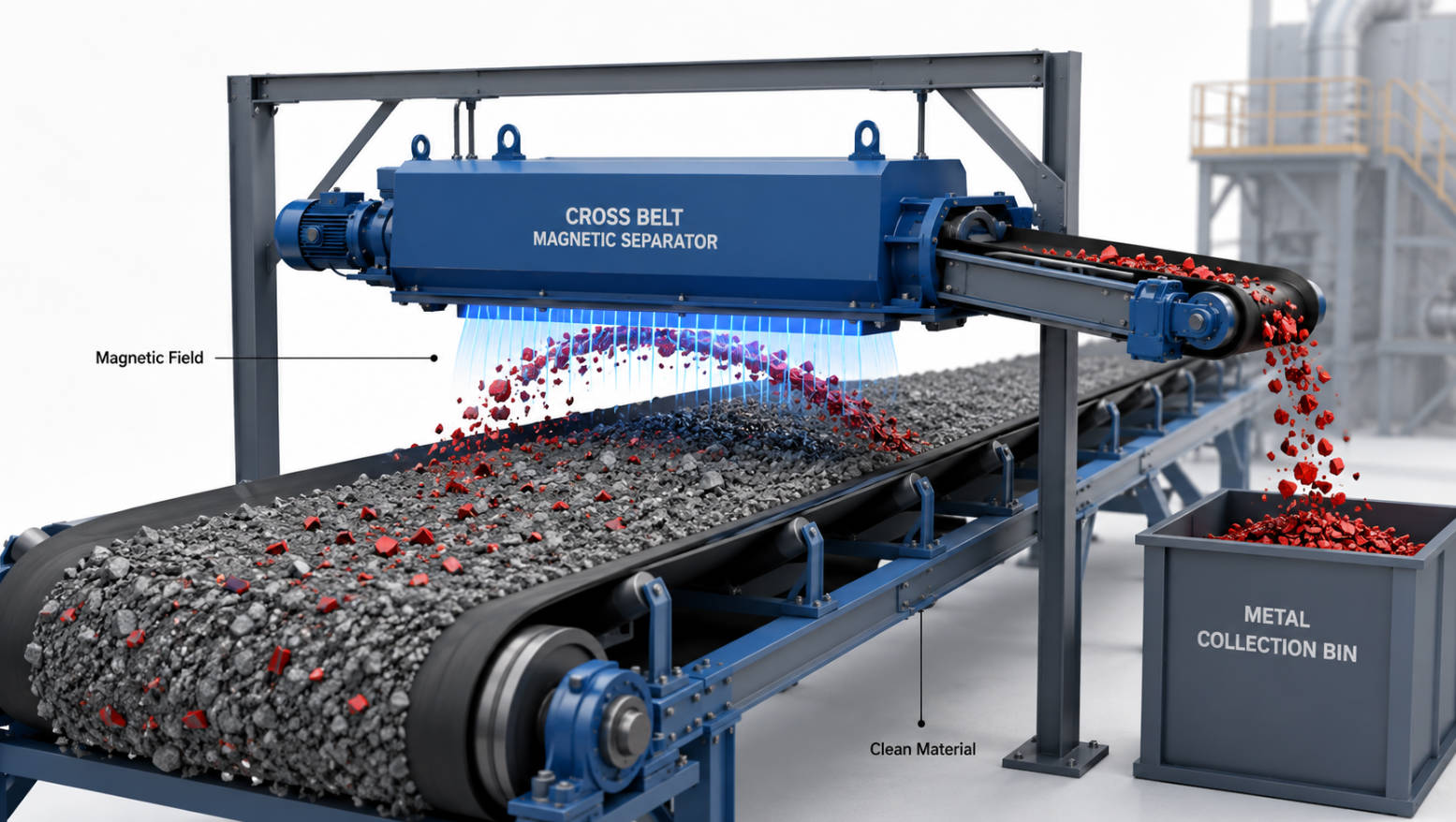
A cross belt magnetic separator (also called an overband magnet) is installed above a conveyor and mounted perpendicular to the belt to automatically extract ferrous contaminants from material flows. The unit combines a powerful permanent magnet or electromagnet with a self‑cleaning conveyor belt that continuously carries captured tramp metal away from the main material stream. [imt-inc]
In real industrial lines, cross belt magnets are placed over feeders, transfer points, and critical conveyors to intercept bolts, wear parts, wire, and iron filings before they reach crushers, mills, classifying equipment, or packaging systems. This design turns what used to be a manual, risky inspection task into an automated and predictable protection system. [buntingmagnetics]
Working Principle in Practice
At a technical level, cross belt separators operate on magnetic attraction applied to a moving material bed. [greatmagtech]
1. Bulk material travels on a conveyor through the magnetic field generated by the overband separator. [imt-inc]
2. Ferromagnetic particles (tramp iron, steel, iron powder agglomerates) are attracted upward toward the magnet and held against the separator’s moving belt. [greatmagtech]
3. The self‑cleaning belt transports these captured contaminants beyond the main material flow and discharges them into a collection bin. [imt-inc]
4. Clean, non‑magnetic material continues on the main conveyor for further processing and packaging. [greatmagtech]
From an operator’s point of view, the separator works silently in the background: reject bins fill with metal, while production remains stable and unscheduled stops become rare. This is especially valuable when upstream feed quality is inconsistent or sourced from recycling, demolition, or low‑grade ore. [eaglecrusher]
Permanent vs Electromagnetic Cross Belt Separators
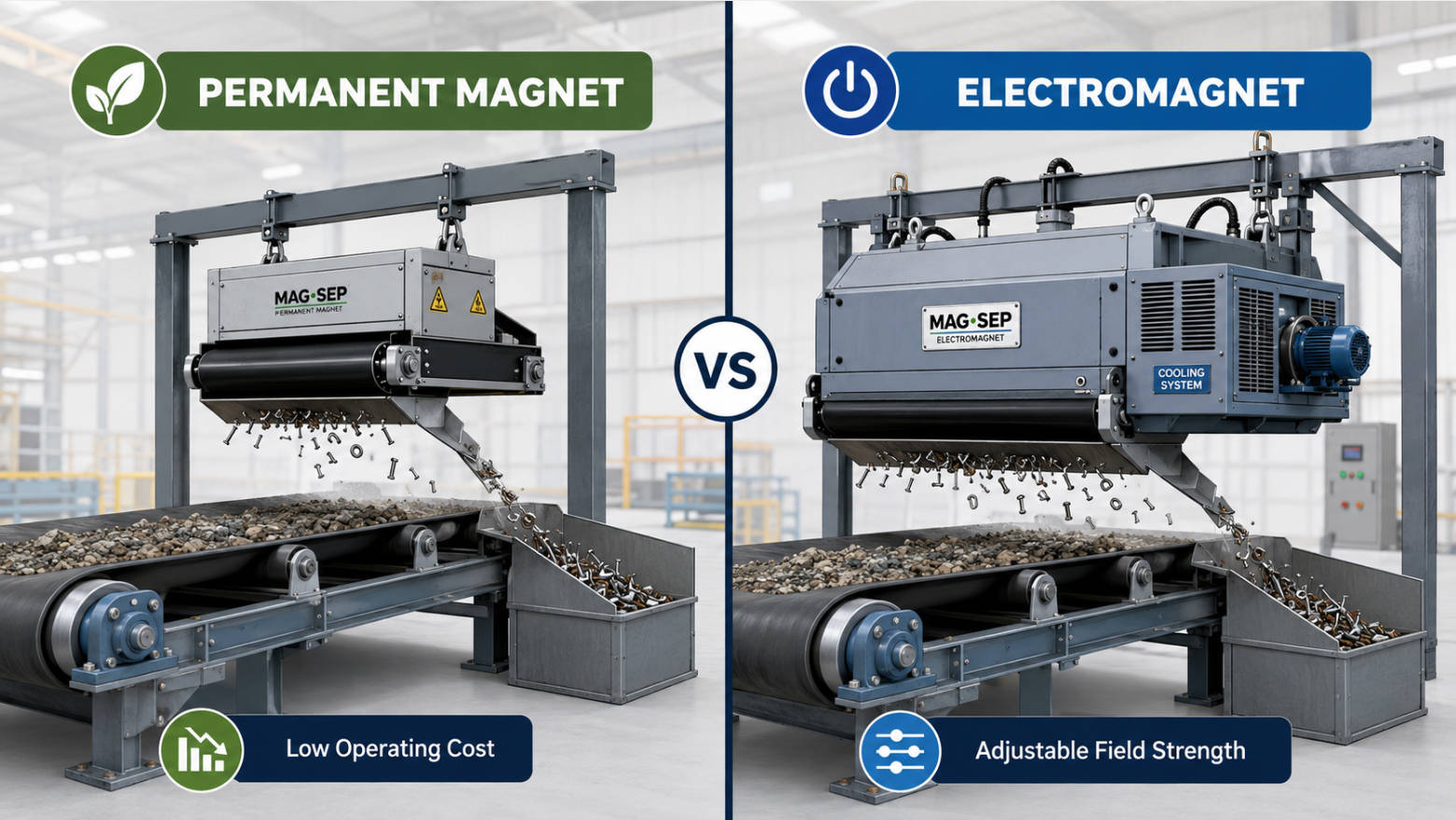
Both permanent and electromagnetic designs are widely adopted, and the choice depends on material characteristics, required field strength, and operating economics. [douglasmanufacturing]
Key Differences
| Design type | How it generates magnetism | Typical strengths & use cases | Energy & maintenance profile |
|---|---|---|---|
| Permanent cross belt | High‑energy permanent magnet blocks (ferrite, rare‑earth) create a constant field. greatmagtech | Ideal for most tramp‑metal removal on conveyors in mining, aggregate, recycling, and basic mineral processing. buntingmagnetics | No power to energize the magnet, low operating cost; only mechanical parts need maintenance. imt-inc |
| Electromagnetic cross belt | Coil energized by DC power produces a controllable high‑intensity field. greatmagtech | Best for heavy, deep burden layers or when variable field control is needed for difficult or weakly magnetic contaminants. greatmagtech | Requires continuous electrical power and regular cooling/coil inspection; higher CAPEX and OPEX but more flexible. imt-inc |
From a lifecycle‑cost perspective, permanent designs usually provide the best ROI for typical tramp‑metal protection, while electromagnets become attractive when you must reach deeper burden levels or handle particularly challenging materials, such as thick construction waste or very high throughput mining conveyors. [buntingmagnetics]
Why Cross Belt Separation Matters Industrially
Across industries, cross belt magnets deliver three core categories of value: equipment protection, product purity, and safety & compliance. [vecoplanllc]
1. Protecting Critical Equipment
Unremoved tramp iron can:
– Crack crusher housings and break crusher teeth in aggregate and mining plants. [douglasmanufacturing]
– Damage grinder and mill internals in ceramics, glass, and battery materials processing. [buntingmagnetics]
– Tear conveyor belts or puncture screens, leading to unplanned downtime and emergency maintenance. [buntingmagnetics]
In practice, even a single large bolt or an off‑cut tool steel fragment can result in hours of stoppage and costly repairs, while a cross belt separator intercepts that same piece for a fraction of the cost. [douglasmanufacturing]
2. Ensuring Product Purity and Customer Trust
In industries like plastics, rubber, ceramics, food, and pharmaceuticals, metallic contamination is both a quality and brand reputation risk. [buntingmagnetics]
– Plastic and rubber processors use cross belt magnets to keep regrind and virgin pellets free from metal, protecting extruders and injection molding machines and ensuring smooth surfaces in final parts. [vecoplanllc]
– Food and pharma producers integrate magnetic separation in HACCP and GMP programs to meet stringent internal and regulatory standards. [buntingmagnetics]
– Ceramic and glass manufacturers rely on upstream tramp‑metal removal to maintain whiteness, transparency, mechanical properties, and firing yield. [fswandaye]
Once a customer experiences black specks, pinholes, or unexpected metal particles, they often demand upgraded quality controls—and cross belt magnets become one of the fastest upgrades you can deploy. [douglasmanufacturing]
3. Supporting Safety and Regulatory Compliance
Metal contamination is also a safety hazard:
– Sharp metal fragments can injure operators during manual inspections or cleaning. [douglasmanufacturing]
– In food and feed, metal pieces can cause consumer injury and force expensive recalls. [buntingmagnetics]
– Regulatory frameworks and buyer audits increasingly expect documented metal removal steps in critical lines. [buntingmagnetics]
By automating metal capture, cross belt separators help plants satisfy internal safety policies and external audits while providing traceable procedures and inspection logs. [douglasmanufacturing]
From Bulk to Powders: The Role of Powder Magnetic Separators
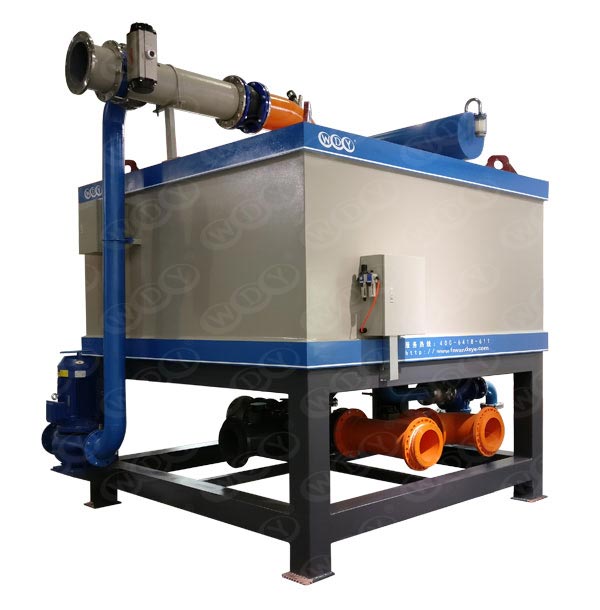
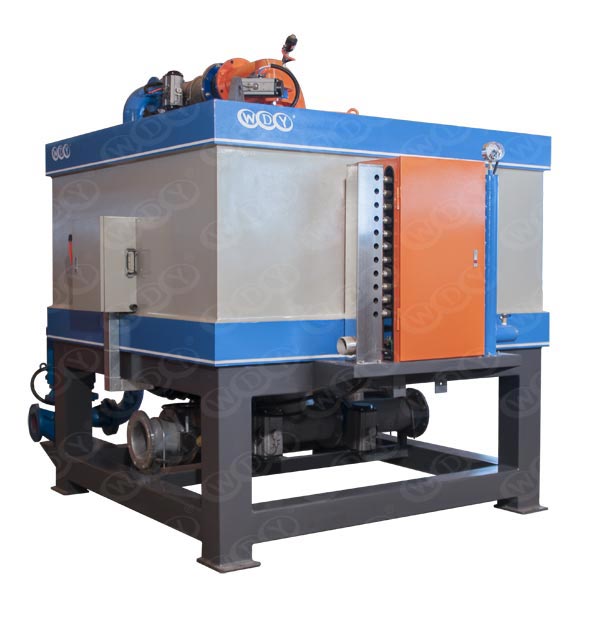
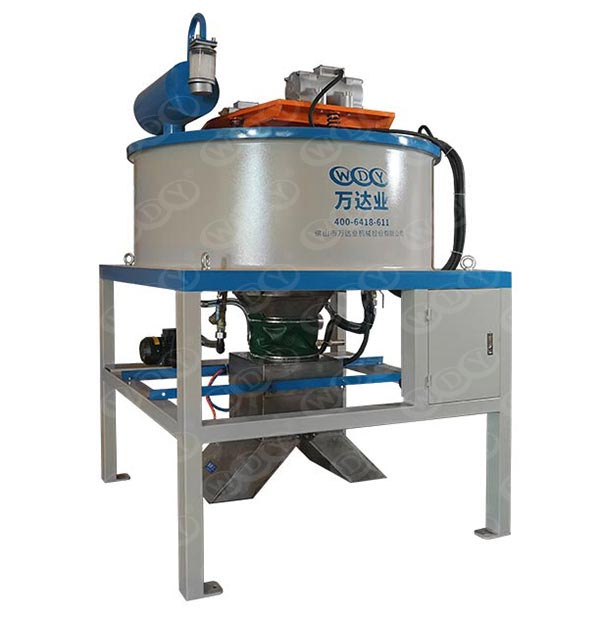
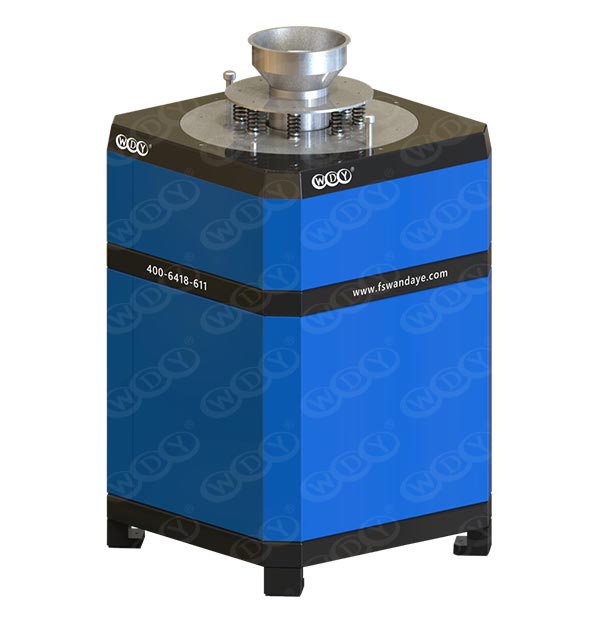
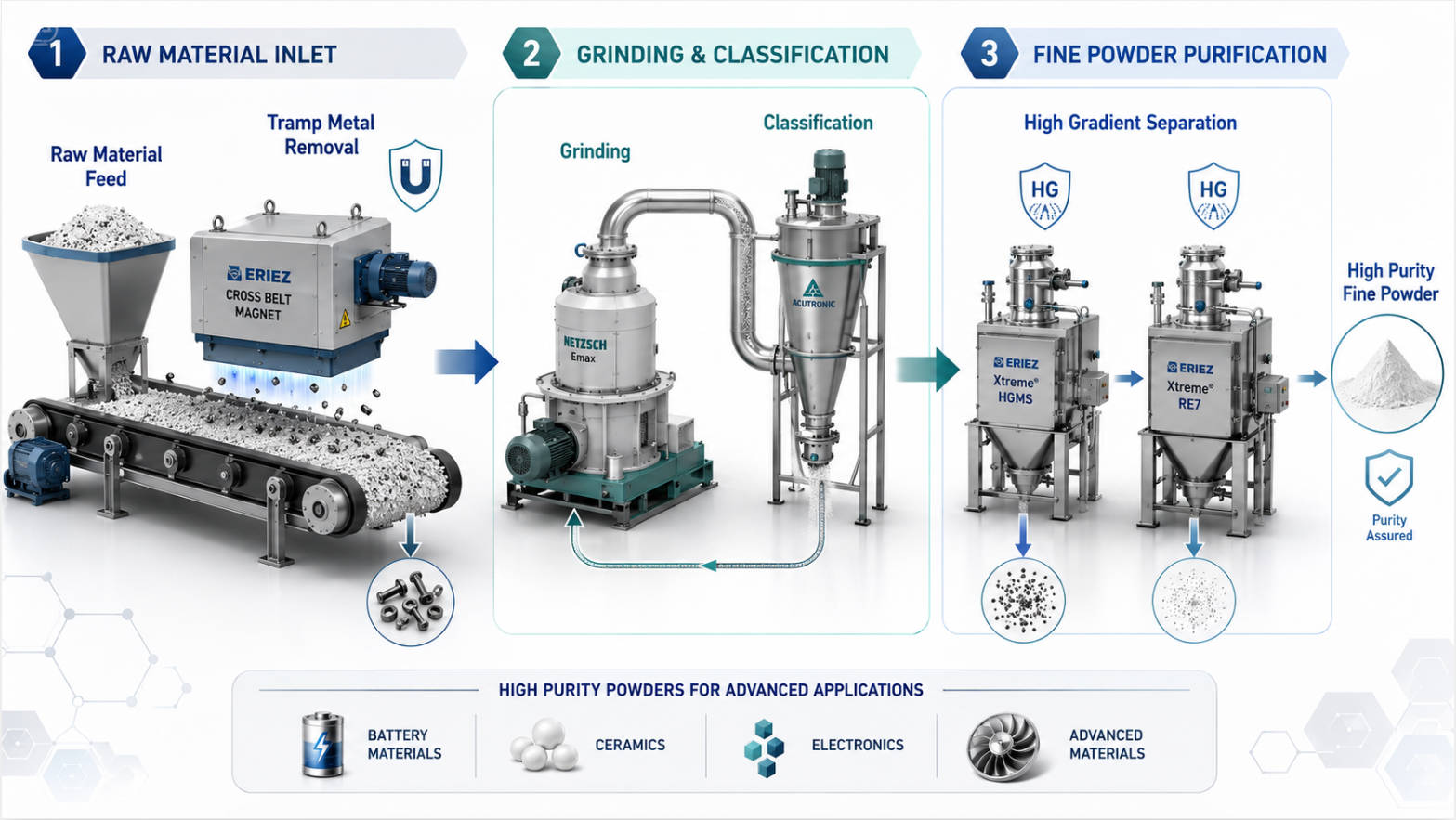
While cross belt magnets target tramp metal on conveyors, powder magnetic separators focus on fine and ultra‑fine contaminants in dry and wet powders—an area where Foshan Wandaye has deep technical experience. [en.fswandaye]
In non‑metallic mineral and battery materials lines, we see two typical patterns:
– Many plants first install cross belt magnets at raw feed and recycling points to remove coarse ferrous debris. [buntingmagnetics]
– As they move up in market positioning (e.g., high‑purity quartz, advanced ceramics, Li‑ion cathode/anode materials), they then deploy high‑gradient powder and slurry magnetic separators to capture micron‑scale iron, titanium, and other magnetic impurities that cross belt units cannot remove. [sciencedirect]
Advanced powder separators, such as high‑gradient dry and slurry systems, deliver:
– Higher magnetic field gradients and optimized contact patterns between powder and magnetic media, allowing removal of fine contaminants. [fswandaye]
– Adjustable field intensity to tune performance for different materials (quartz, feldspar, kaolin, battery powders, etc.). [sciencedirect]
– Integrated dispersion and feeding systems to avoid powder agglomeration and ensure uniform separation. [fswandaye]
This combined architecture—cross belt + high‑gradient powder separation—is now common in modern high‑purity powder production. [sciencedirect]
Key Industrial Applications and Expert Insights
As a practitioner supporting customers from mining through advanced materials, I see cross belt and powder magnetic separators in several characteristic application clusters. [fswandaye]
Mining, Aggregates, and Minerals
– Mounted above primary and secondary crusher feed conveyors to intercept drill rods, bucket teeth, and off‑cuts. [imt-inc]
– Integrated with screens and transfer points to reduce belt damage and ensure more stable plant throughput. [buntingmagnetics]
– Combined with high‑gradient units for beneficiation and purification of non‑metallic ores like quartz, feldspar, and kaolin. [fswandaye]
Ceramics, Glass, and Building Materials
– Tramp‑metal removal from sand, cullet, and raw minerals upstream of grinding and glazing. [fswandaye]
– Fine iron removal from powders to improve whiteness, strength, and firing consistency in advanced ceramics and tiles. [buntingmagnetics]
– Protection of milling media and spray‑drying nozzles from metal wear particles. [buntingmagnetics]
Plastics, Rubber, and Recycling
– Removal of ferrous contaminants from shredded plastics and rubber granulate before extruders and calenders. [vecoplanllc]
– Protection of sorting equipment and eddy‑current separators in mixed recycling lines. [eaglecrusher]
– Quality assurance for recycled pellets destined for high‑end packaging, automotive, and electrical applications. [vecoplanllc]
Energy, Power, and Environmental Systems
– Metal removal from coal and biomass conveyors feeding power plants to protect pulverizers and boilers. [buntingmagnetics]
– Integration in waste‑to‑energy and construction & demolition recycling lines to recover ferrous metals and reduce slag contamination. [eaglecrusher]
– Use in black powder and particle removal from fluids and gases, supporting cleaner processes and reduced emissions. [energiesmedia]
Latest Trends in Magnetic Separation Technology
Recent advances in magnetic separation are reshaping expectations for efficiency and product quality, especially in fine powders and high‑value materials. [energiesmedia]
1. High‑gradient and centrifugal dry separation
Research and industrial practice have demonstrated that optimized media geometry and centrifugal forces significantly improve separation efficiency for fine magnetic minerals and metal wear particles. These designs reduce carry‑over and increase recovery even in challenging fine particle ranges. [sciencedirect]
2. Integration with process control and sensors
Operators increasingly connect cross belt magnets and fine powder separators to plant SCADA/DCS systems, logging current, temperature, and tramp‑metal collection events. This supports predictive maintenance, root‑cause analysis, and continuous improvement. [douglasmanufacturing]
3. Application‑specific engineering
Suppliers like Foshan Wandaye focus on application‑tailored designs—for example, machines optimized for quartz sand, new energy battery cathode/anode powders, or ceramic raw materials—with specific field strength, feeding, and cleaning strategies. This specialization often yields measurable improvements in product brightness, conductivity, or electrochemical performance. [magnetii.goldsupplier]
Practical Selection Guide for Engineers
When we help customers select cross belt and powder magnetic separators, we typically walk through a clear, application‑driven checklist. [imt-inc]
1. Define the separation objective
– Tramp‑metal protection only (macro‑scale contaminants).
– Product purification (fine and ultra‑fine contaminants).
– Both, in different process stages.
2. Characterize the material and process
– Bulk density, particle size distribution, moisture.
– Belt width, speed, and burden depth. [imt-inc]
– Temperature and chemical environment.
3. Choose magnet type and layout
– Permanent cross belt for standard tramp‑metal removal with minimal energy cost. [vecoplanllc]
– Electromagnetic cross belt for deep burden or highly variable loads requiring adjustable field strength. [imt-inc]
– High‑gradient powder/slurry separators for fine purification stages. [fswandaye]
4. Engineer mechanical integration
– Correct suspension height and belt alignment to maximize capture while avoiding contact with material. [buntingmagnetics]
– Adequate space for service access and safe metal disposal.
– Guarding and safety interlocks according to local regulations. [buntingmagnetics]
5. Plan inspection and maintenance routines
– Regular checks of belt tracking, tension, motor, and gearbox. [imt-inc]
– Scheduled cleaning and bin emptying, with basic logging of metal collection events. [douglasmanufacturing]
– Performance audits, especially when feed sources or process parameters change. [buntingmagnetics]
How Foshan Wandaye Adds Value
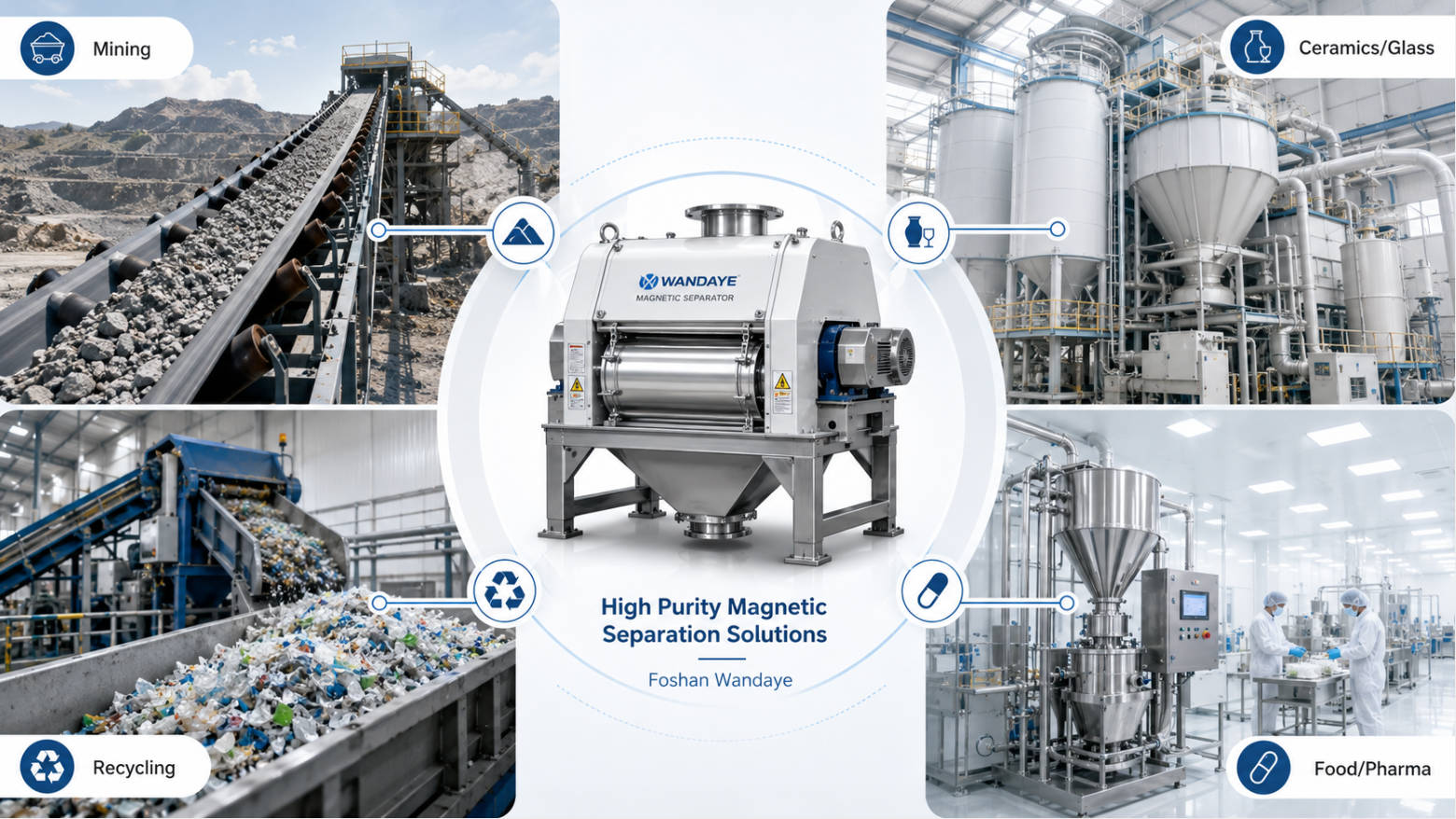
Foshan Wandaye Technology Co., Ltd. is a specialized R&D and manufacturing enterprise focused on magnetic separation equipment, including powder magnetic separators, permanent magnetic separators, and high‑gradient electromagnetic slurry machines. The company provides integrated services from process design and equipment selection to on‑site installation, commissioning, and after‑sales support for customers in mining, ceramics, power, building materials, glass, environmental protection, rubber, plastics, pharmaceuticals, food, and battery materials. [facebook]
Drawing on field feedback, Wandaye continually refines magnetic circuit design, media configuration, and automatic control systems to address real production challenges such as fine iron and titanium removal in powders, capacity expansion without quality loss, and energy‑efficient operation. For customers upgrading from basic tramp‑metal protection to high‑purity powder production, Wandaye can help design end‑to‑end magnetic separation layouts, combining cross belt units with advanced powder and slurry separators tailored to specific materials. [en.fswandaye]
Call to Action: Design Your Magnetic Separation Solution
If you are planning a new production line or upgrading an existing one for higher purity, longer equipment life, or better safety, now is the right time to review your magnetic separation strategy. By combining cross belt magnetic separators for tramp‑metal removal with high‑gradient powder and slurry separators for fine purification, you can significantly reduce risk, increase yield, and strengthen your market competitiveness. [sciencedirect]
To discuss a tailored solution for your mining, ceramics, glass, plastics, food, pharmaceutical, or battery materials project, you can contact Foshan Wandaye Technology Co., Ltd. through their official website or sales channels for application evaluation, equipment selection, and on‑site technical support. A brief conversation with a specialist often reveals hidden bottlenecks—and practical steps to unlock cleaner, safer, and more profitable production. [fswandaye]
FAQs
1. How does a cross belt magnetic separator improve overall plant efficiency?
By continuously removing tramp iron from conveyor flows, cross belt magnets prevent damage to crushers, mills, screens, and belts, which reduces unplanned downtime and maintenance costs while stabilizing production throughput. [imt-inc]
2. When should I choose a permanent cross belt magnet instead of an electromagnetic one?
Permanent cross belt magnets are typically the best choice for standard tramp‑metal removal with moderate burden depths, delivering reliable separation with no energy cost for magnet excitation and relatively low maintenance requirements. Electromagnetic versions are preferred when you need deeper magnetic penetration or adjustable field strength for heavy or highly variable loads. [vecoplanllc]
3. Why are powder magnetic separators necessary if I already use cross belt magnets?
Cross belt magnets mainly capture coarse tramp metal on conveyors, while powder separators target fine and ultra‑fine contaminants that directly affect product purity, color, strength, and performance in ceramics, glass, food, pharma, and battery materials. Using both stages together provides comprehensive protection and enhanced product quality. [sciencedirect]
4. In which industries do cross belt magnetic separators deliver the highest ROI?
The fastest payback is usually seen in mining and aggregates, construction & demolition recycling, ceramics and glass, plastics and rubber recycling, and food/feed processing, where equipment protection and product purity are critical to profitability and brand reputation. [eaglecrusher]
5. How can Foshan Wandaye support the design and optimization of my separation system?
Foshan Wandaye offers application evaluation, magnetic circuit design, custom equipment selection (including powder, permanent, and high‑gradient magnetic separators), as well as process line layout, installation, and commissioning services for multiple industries. This end‑to‑end approach helps ensure that magnetic separation is fully aligned with your production, quality, and compliance goals. [facebook]
References
1. Great Magtech. “The Industrial Significance of Cross Belt Magnetic Separators.” [https://www.greatmagtech.com/info/the-industrial-significance-of-cross-belt-magn-91335542.html] [greatmagtech]
2. Bunting Magnetics. “Three Things to Consider When Installing Crossbelt Magnets.” [https://buntingmagnetics.com/blog/three-things-to-consider-when-installing-crossbelt-magnets] [buntingmagnetics]
3. Douglas Manufacturing. “Maximizing Conveyor Efficiency and Equipment Protection with Magnetic Separators.” [https://www.douglasmanufacturing.com/maximizing-conveyor-efficiency-and-equipment-protection-with-magnetic-separators/] [douglasmanufacturing]
4. Bunting Magnetics. “Separating Fine Iron from Powders.” [https://buntingmagnetics.com/blog/separating-fine-iron-from-powders] [buntingmagnetics]
5. Foshan Wandaye Machinery Equipment Co., Ltd. Official Website. Company and product information, including powder and high‑gradient magnetic separators. [http://en.fswandaye.com] [en.fswandaye]
6. Industrial Magnetics & related suppliers. Cross Belt & Overband Magnetic Separators product pages. [https://www.imt-inc.com/products/cross-belt-separators/] [imt-inc]
7. Eagle Crusher. “Inline & Cross‑Belt Magnets: What’s the Deal?” [https://eaglecrusher.com/magnets-whats-the-deal/] [eaglecrusher]
8. Academic and technical literature on advanced dry magnetic separation, including centrifugal dry magnetic separation (cDMS). Example: “Centrifugal dry magnetic separation of fine magnetic minerals.” [https://www.sciencedirect.com/science/article/abs/pii/S0032591024003747] [sciencedirect]
9. Black powder and particle removal solutions showing the role of magnetic separation in fluids and environmental protection. [https://energiesmedia.com/article/magnetic-separation-technology-enhances-safety-and-preserves-the-environment-at-no-expense-to-] [energiesmedia]
10. Vecoplan and similar suppliers. Cross‑belt magnet separator application notes. [https://www.vecoplanllc.com/cross-belt-magnet] [vecoplanllc]
Hot Tags: Cross Belt Magnetic Separator, Electromagnet, Manufacturers, Customized, Custom, Suppliers, Buy, Cheap, Quality, Advanced, Durable, in Stock, Made in China, Price, Quotation