Content Menu
● Understanding Permanent Magnetic Filters
● How Permanent Magnetic Filters Work
● Key Components and Technical Features
● Common Types of Permanent Magnetic Filters
>> Tube Magnets and Grate Magnets (Hopper Applications)
>> Drawer Magnets (Dry Powder and Granular Lines)
>> Magnetic Liquid Traps / Magnetic Filters (Pipeline Installations)
● Industrial Applications and Use Cases
● Benefits Compared to Conventional Filters
● Market Trends and Industry Outlook
● Expert Guidance on Installation Best Practices
● Maintenance and Cleaning Procedures
● Environmental and Safety Benefits
● Why Work with Foshan Wandaye Technology Co., Ltd.?
● Practical Selection Checklist for Engineers
● Call to Action: Optimize Your Magnetic Filtration Strategy
>> 1. What is the difference between a magnetic filter and a magnetic separator?
>> 2. How often should permanent magnetic filters be cleaned?
>> 3. Can permanent magnetic filters remove non-magnetic particles?
>> 4. Are permanent magnetic filters suitable for food and pharmaceutical applications?
>> 5. What should I consider when choosing a supplier for magnetic filters?
Permanent magnetic filters and separators have quietly become one of the most cost-effective tools for protecting equipment, improving product quality, and meeting stricter environmental standards in modern factories. Drawing on hands-on experience in industrial filtration and magnetic separation, this guide explains how permanent magnetic filters work, where they create the most value, and how manufacturers like Foshan Wandaye Technology Co., Ltd. can help you engineer the right solution for your production line. [linkedin]
Understanding Permanent Magnetic Filters
Permanent magnetic filters are devices that use high-intensity magnets to remove ferromagnetic particles—such as iron and steel—from liquids, slurries, powders, and even gases. They are typically installed in hoppers, ports, or pipelines before critical components like pumps, heat exchangers, and valves to prevent wear, clogging, and contamination. [jaytech]
Unlike disposable barrier filters, permanent magnetic filters rely on magnetic field strength (flux density) rather than pore size to capture contaminants, which makes them highly efficient even for particles below 1 micron. For industrial applications, flux densities can reach 12,000 gauss and higher, far beyond everyday magnets like refrigerator magnets at 60–80 gauss. [linkedin]
How Permanent Magnetic Filters Work
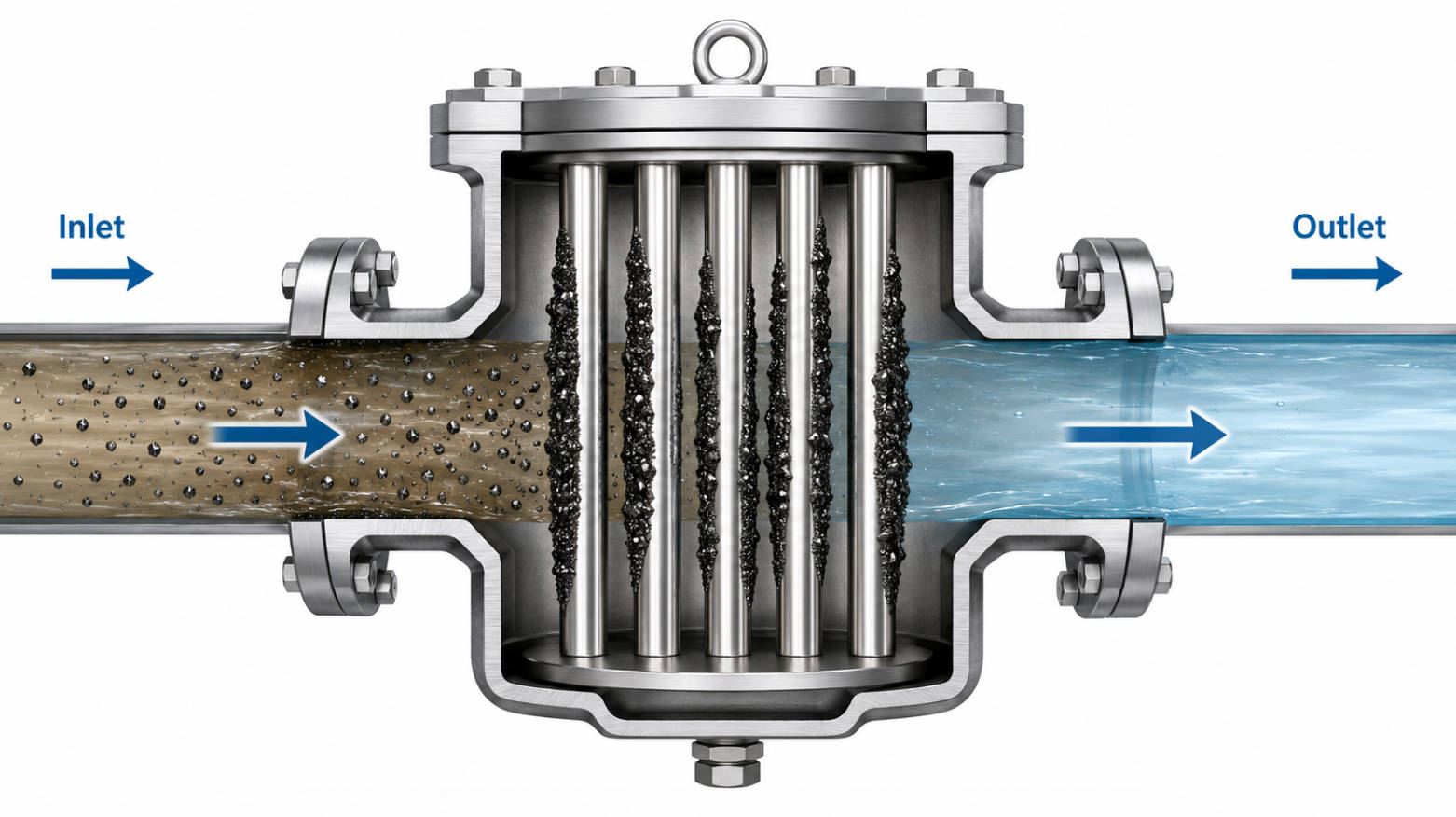
From an engineering perspective, permanent magnetic filters follow a simple three-step mechanism. [linkedin]
1. Magnetic field generation
High-performance magnets (often NdFeB rare-earth magnets) create a strong and non-uniform magnetic field around rods, plugs, or cartridges. [linkedin]
2. Ferromagnetic particle capture
As fluid or bulk material flows past the magnetic elements, ferrous and paramagnetic particles are attracted and held on the magnetic surface due to the magnetic gradient and flux density. [linkedin]
3. Retention and cleaning
Captured particles remain on the rods or plugs until the system is stopped and the magnetic filter is removed or cleaned, either manually or via self-cleaning mechanisms. [linkedin]
Because the magnetic force acts directly on particles, flow is generally not interrupted, and pressure drops remain low compared to conventional filters with very fine mesh ratings. This makes magnetic filtration especially attractive in high-viscosity or high-solids environments where barrier filters tend to clog quickly. [linkedin]
Key Components and Technical Features
Modern permanent magnetic filters integrate several design features that directly influence performance and service life. [linkedin]
– Magnetic rods or cores
Typically made from NdFeB (neodymium-iron-boron) for high flux density and stable performance. [linkedin]
– Smooth stainless-steel housing
Polished, corrosion-resistant surfaces minimize fouling and make cleaning faster. [linkedin]
– High magnetic intensity
Many industrial filters operate at or above 12,000 gauss, with some designs reaching 28,000 gauss for special applications. [linkedin]
– Particle size range
Effective removal of particles from 0.5 to 60 micrometers, including contaminants invisible to the naked eye. [linkedin]
– High adsorption capacity
Magnetic force can be 5–20 times stronger than standard industrial magnets, improving capture efficiency. [linkedin]
From a practical standpoint, this combination of high magnetic intensity and smooth process surfaces is what allows permanent magnetic filters to run for long intervals with minimal maintenance while still protecting downstream equipment. [linkedin]
Common Types of Permanent Magnetic Filters
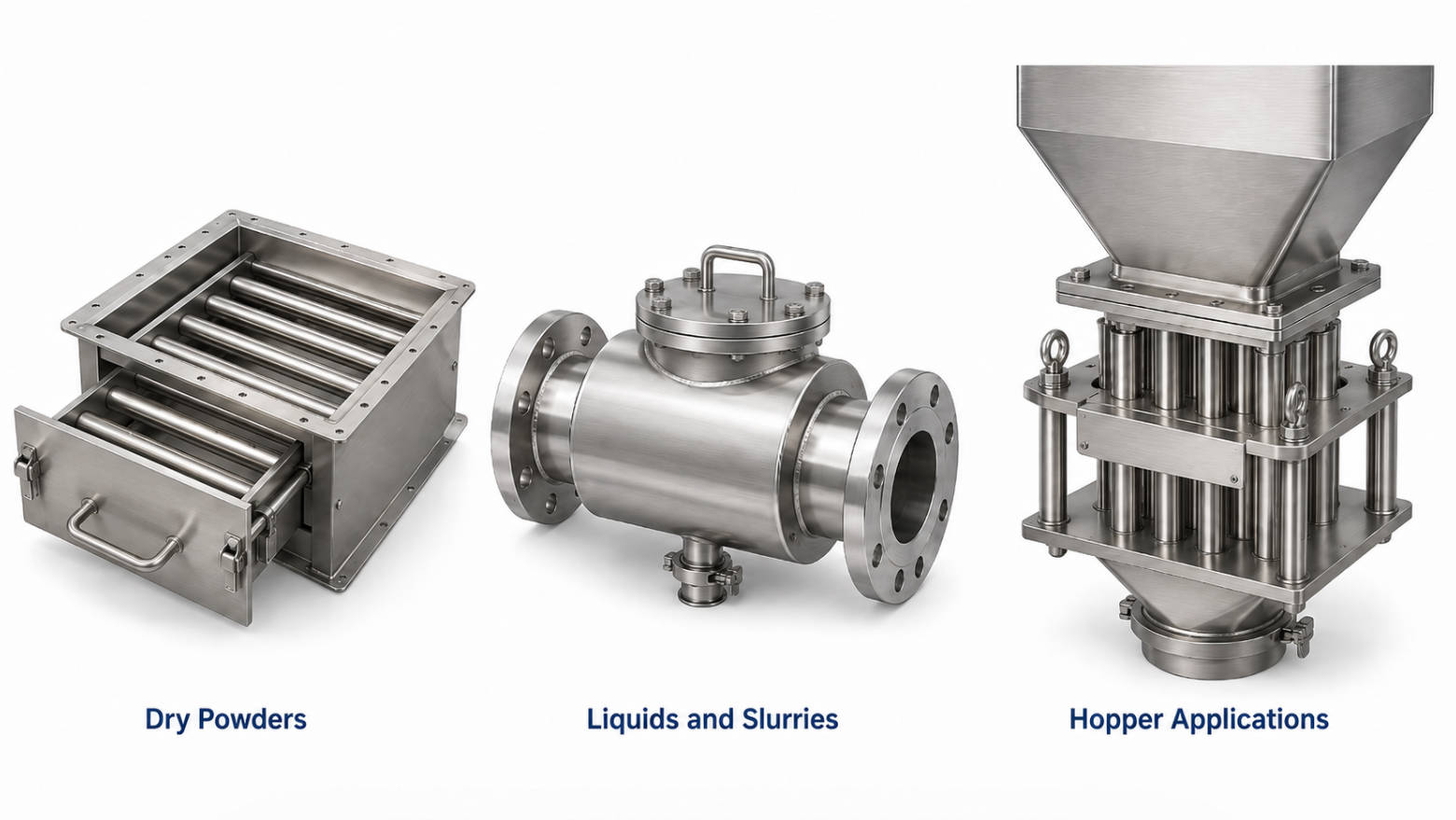
In real-world plants, permanent magnetic filters appear in several configurations, each suited to a specific flow condition or medium. [jaytech]
Tube Magnets and Grate Magnets (Hopper Applications)
Tube magnets are stainless-steel-encapsulated rods arranged in frames or grids—often called grate magnets—to create a dense magnetic field as bulk materials pass through. [linkedin]
– Installed in hoppers, storage bins, and chutes
– Ideal for granules, powders, and pellets
– Widely used in ceramics, plastics, chemicals, and food processing [linkedin]
Drawer Magnets (Dry Powder and Granular Lines)
Drawer magnets are essentially multi-layered grate magnets inside a housing, designed so material flows over each magnetic layer in sequence. [linkedin]
– Strong performance for granular and dry powdery materials
– Common in mining, ceramics, plastics, dyes, and food production [linkedin]
– Easy drawer-style access improves maintenance and cleaning
Magnetic Liquid Traps / Magnetic Filters (Pipeline Installations)
Magnetic liquid traps—often simply called magnetic filters—are installed directly in process pipelines carrying liquids or slurries. [jaytech]
– Designed to withstand temperatures up to 350 °C in many industrial models [linkedin]
– Used in chemicals, slurry, hydraulic oil, coolants, and food-grade liquids [linkedin]
– Available in in-line and T-type configurations for flexible integration
From the viewpoint of a process engineer, this variety allows you to build a complete magnetic filtration strategy that covers both wet and dry process steps from raw materials to final product. [fswandaye]
Industrial Applications and Use Cases
Permanent magnetic filters are now standard in many industries that must control metallic contamination for quality, safety, or regulatory reasons. [fortunebusinessinsights]
– Mining and mineral processing
Removal of iron and weakly magnetic minerals to improve ore grade and protect downstream grinding equipment. [atmsh]
– Ceramics and glass
Eliminating iron contamination from clays, feldspar, quartz, and glazes to avoid defects such as black spots or reduced whiteness. [fswandaye]
– Building materials and cement
Protecting crushers, mills, and conveying equipment from tramp iron and wear.
– Power generation
Filtering metallic particles from cooling water, lubricating oil, and boiler feed systems to prevent fouling and corrosion. [jaytech]
– Rubber and plastics
Removing metallic contaminants from granules and powders to protect extruders, molds, and final product quality. [linkedin]
– Food and pharmaceuticals
Capturing iron filings and stainless-steel fragments to comply with HACCP and other safety standards. [linkedin]
– Environmental and wastewater treatment
Removing iron, manganese, and other metallic ions from groundwater and industrial effluents to meet discharge limits and reduce environmental risk. [jaytech]
Manufacturers like Foshan Wandaye Technology Co., Ltd. integrate permanent magnetic separators into complete production lines, covering slurry purification, powder separation, and iron removal for both ferrous and non-ferrous industries. [en.fswandaye]
Benefits Compared to Conventional Filters
From both an operator and management perspective, permanent magnetic filters deliver a combination of technical and economic advantages. [jaytech]
– Higher capture efficiency for fine particles
Magnetic filters remove contaminants below 1 micron, whereas many barrier filters struggle below 5 microns. [linkedin]
– Lower operating costs
Permanent magnets do not consume energy for magnetization and are reusable, reducing replacement and disposal costs. [linkedin]
– Stable flow and low pressure drop
The absence of tight mesh structures helps avoid sudden pressure drops or back pressure that can trigger process alarms. [linkedin]
– Improved equipment reliability
Removing ferromagnetic particles lowers wear on pumps, valves, and bearings, reducing unplanned downtime. [jaytech]
– Extended oil and fluid life
By preventing catalytic oxidation of oils and coolants, magnetic filters help maintain fluid properties longer. [linkedin]
– Environmental benefits
Captured metallic contaminants can often be recycled rather than disposed of as hazardous waste. [linkedin]
In my experience, the return on investment often appears first in maintenance KPIs: fewer filter changes, fewer breakdowns, and more stable process performance—especially in high-load systems like CNC machining, hydraulic systems, and slurry pipelines. [linkedin]
Market Trends and Industry Outlook
The global magnetic separator market is projected to grow from around 1.13 billion USD in 2026 to approximately 1.85 billion USD by 2034, at a compound annual growth rate of about 6.4%. Within this market, dry permanent magnetic separators and high-gradient magnetic systems are seeing strong demand, driven by tighter regulatory standards and resource efficiency goals. [finance.yahoo]
This growth is particularly visible in:
– Battery materials and cathode/anode production, where ultra-low iron contamination is critical
– Non-metallic minerals like quartz, feldspar, and kaolin, used in electronics, glass, and ceramics
– Recycling and circular economy applications, where magnetic separation enables more efficient material recovery [finance.yahoo]
In this context, Chinese manufacturers such as Foshan Wandaye are increasingly supplying integrated magnetic separation solutions to global customers, blending R&D, engineering design, line installation, and commissioning services. [ramato.en.ec21]
Expert Guidance on Installation Best Practices
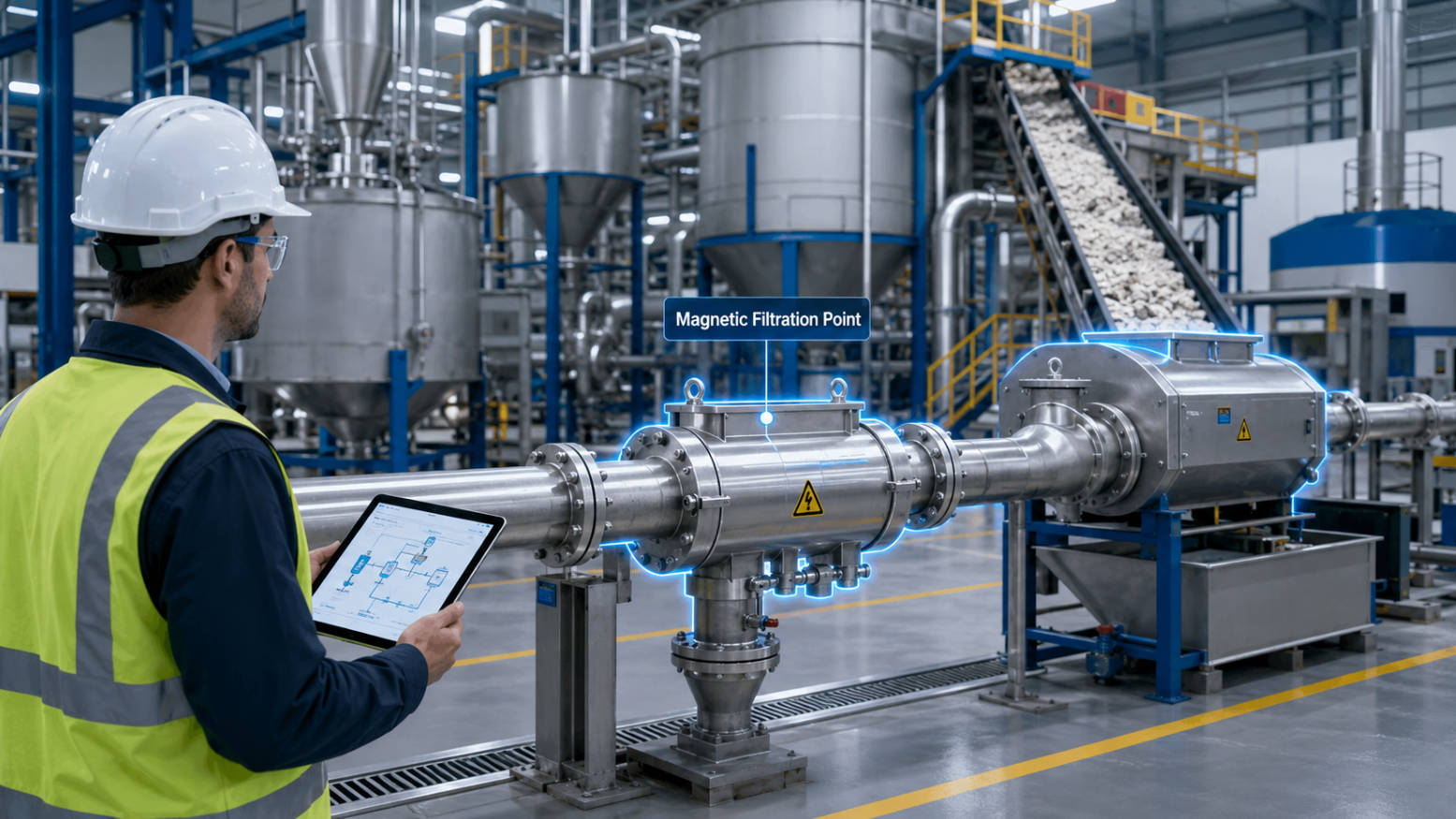
Proper installation is crucial to getting real-world performance from permanent magnetic filters. Based on field projects, these practices consistently deliver better results: [jaytech]
1. Place filters before critical components
Install magnetic filters upstream of pumps, heat exchangers, valves, or sensitive equipment to intercept contaminants before they cause damage. [jaytech]
2. Use the right configuration for the medium
– Grate/drawer magnets for dry powders and granules
– Inline magnetic traps for liquids and slurries
– Rod magnets in tanks or canisters for batch processes [jaytech]
3. Account for flow rate and viscosity
For high-viscosity fluids, reduce flow rates or use larger housings to ensure sufficient contact time with the magnetic field. [linkedin]
4. Maintain accessibility for maintenance
Install filters where operators can easily remove rods, plugs, or drawers for cleaning—ideally with isolation valves and bypass lines. [jaytech]
5. Integrate with existing filtration
Magnetic filters often work best in combination with conventional filters, capturing ferrous particles and reducing loading on downstream cartridge or bag filters. [jaytech]
Maintenance and Cleaning Procedures
A key advantage of permanent magnetic filters is straightforward maintenance, but consistency is vital. [greatmagtech]
Basic cleaning procedure (manual systems): [greatmagtech]
1. Shut down and cool the system; ensure lock-out/tag-out is in place for safety.
2. Depressurize the line and drain fluid from the filter housing if necessary. [greatmagtech]
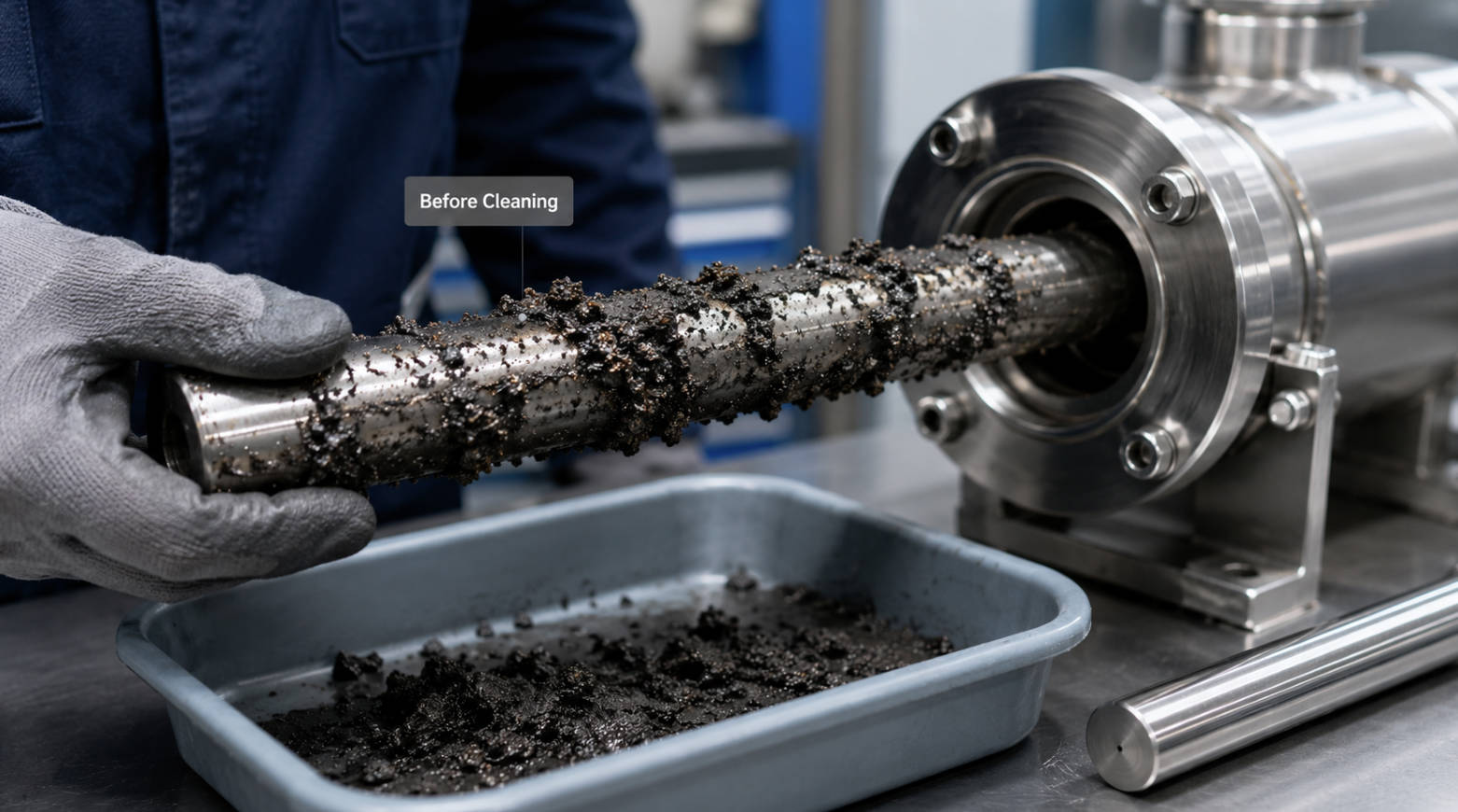
3. Unscrew or open the filter housing and carefully remove the magnetic rods or plugs. [linkedin]
4. Rinse the rods and filter screens with clean water or compatible cleaning fluid to remove iron, rust, and sediments. [greatmagtech]
5. Dry the components, reassemble, and check for leaks once the system is restarted. [greatmagtech]
For most industrial systems, six- to twelve-month intervals are typical, but high-load environments—such as heavily contaminated coolants or abrasive slurries—may require more frequent inspections. Creating and following a formal maintenance checklist significantly improves consistency and safety. [greatmagtech]
Environmental and Safety Benefits
From an environmental engineer’s perspective, permanent magnetic filtration plays a dual role: protection and prevention. [jaytech]
– Protection of water quality
Groundwater and industrial wastewater often contain iron, steel, manganese, and other metallic salts that affect taste, odor, and downstream treatment. [linkedin]
– Prevention of equipment corrosion
Metallic ions contribute to boiler and heat exchanger corrosion and can poison ion-exchange resins in water treatment systems. [linkedin]
– Reduced hazardous waste
Captured metallic particles can be recovered as single-material waste streams, which are easier to recycle and less costly to dispose of. [linkedin]
For companies pursuing ESG goals and cleaner production, integrating permanent magnetic filters is a relatively low-cost step that delivers measurable environmental benefits. [fortunebusinessinsights]
Why Work with Foshan Wandaye Technology Co., Ltd.?
As a specialized magnetic separation equipment manufacturer, Foshan Wandaye Technology Co., Ltd. combines R&D, engineering design, production line installation, and commissioning services into a single solution for customers in mining, ceramics, power, building materials, glass, environmental protection, rubber, plastics, pharmaceuticals, food, and battery material industries. [en.fswandaye]
Working with an experienced OEM brings several advantages:
– Application-specific design for your product and process conditions
– Integrated high-gradient electromagnetic and permanent magnetic solutions for both slurry and powder applications [en.fswandaye]
– On-site installation and debugging to ensure performance meets specification [fswandaye]
– Long-term technical support for upgrades, maintenance, and process optimization
For manufacturers seeking to upgrade product purity, reduce equipment failures, and meet export quality standards, partnering with a dedicated magnetic separator supplier can significantly shorten project timelines and reduce risk. [ramato.en.ec21]
Practical Selection Checklist for Engineers
When I work with maintenance or process teams on specifying permanent magnetic filters, we typically walk through a short checklist:
1. Medium type
Is it slurry, liquid, powder, or gas? What is the viscosity and solids content?
2. Temperature and pressure
Maximum operating conditions, especially for hot slurries or high-pressure pipelines. [linkedin]
3. Target particle size and concentration
What is the typical and maximum contamination level? Are you targeting sub-micron particles?
4. Material compatibility
Required stainless-steel grade, sealing materials, and sanitary design (food/pharma). [linkedin]
5. Layout and access
Available space in the line, need for quick-release housings, or sanitary clamps.
6. Integration with existing filters
How the magnetic filter will work with existing mesh, bag, or cartridge filters. [jaytech]
This systematic approach helps align technical specifications, budget, and maintenance capabilities before a purchase decision is made.
Call to Action: Optimize Your Magnetic Filtration Strategy
If your plant is facing issues such as frequent pump failures, unexplained product defects, or rising filter costs, it may be time to revisit your filtration strategy and integrate permanent magnetic filters or separators at critical points in your process. [jaytech]
To explore a tailored solution:
– Audit your current contamination hotspots and equipment failure history
– Identify key process lines where magnetic filtration can add immediate value
– Consult with a specialist like Foshan Wandaye Technology Co., Ltd. to design and implement a magnetic separation system optimized for your applications [en.fswandaye]
A relatively small investment in the right magnetic filtration technology can pay back quickly in reduced downtime, improved product quality, and stronger environmental compliance. [fortunebusinessinsights]
Frequently Asked Questions
1. What is the difference between a magnetic filter and a magnetic separator?
A magnetic filter is typically installed in a fluid or slurry pipeline to remove fine ferromagnetic particles, whereas a magnetic separator is a broader term covering equipment that separates magnetic from non-magnetic materials in both dry and wet processes. Many permanent magnetic separators integrate filter-like elements but may also include belts, drums, or high-gradient matrices for bulk material processing. [finance.yahoo]
2. How often should permanent magnetic filters be cleaned?
Cleaning frequency depends on contamination level, flow rate, and operating environment, but many plants follow a 6–12 month interval for standard systems. High-load applications, such as heavily contaminated coolants or slurry lines, may require monthly or even weekly inspections to maintain optimal performance. [greatmagtech]
3. Can permanent magnetic filters remove non-magnetic particles?
Permanent magnetic filters are primarily designed for ferromagnetic and weakly magnetic particles, such as iron and some stainless steels. Non-magnetic particles (like sand or plastic) are not directly captured unless they adhere to magnetic particles, so a hybrid system combining magnetic and conventional filtration is often recommended. [jaytech]
4. Are permanent magnetic filters suitable for food and pharmaceutical applications?
Yes, many permanent magnetic filters are designed with sanitary stainless-steel housings, smooth surfaces, and clean-in-place (CIP) compatibility, making them suitable for food and pharmaceutical processes. However, it is critical to select models that comply with relevant hygiene regulations and industry guidelines in your target market. [jaytech]
5. What should I consider when choosing a supplier for magnetic filters?
Key factors include technical expertise, range of products (high-gradient, permanent, wet, and dry separators), ability to provide engineering design and line integration, and after-sales support. Working with a specialist manufacturer like Foshan Wandaye allows you to combine R&D, customization, and on-site commissioning in a single project. [ramato.en.ec21]
References
1. Great Magtech, “Understanding Permanent Magnetic Filters in Industrial Processes.”
https://www.greatmagtech.com/info/understanding-permanent-magnetic-filters-in-in-90883076.html [linkedin]
2. Great Magtech, “Understanding Magnetic Filters for Industrial Applications.”
https://www.greatmagtech.com/info/understanding-magnetic-filters-for-industrial-102796503.html [greatmagtech]
3. Jaytech Water Solutions, “Magnetic Filtration.”
https://www.jaytech.com/blogs/post/magnetic-filtration [jaytech]
4. Foshan Wandaye Machinery Equipment Co., Ltd., Official Website.
http://www.fswandaye.com [fswandaye]
5. Foshan Wandaye Machinery Equipment Co., Ltd., Company Profile.
http://en.fswandaye.com/About-Us/ [en.fswandaye]
6. Fortune Business Insights, “Magnetic Separator Market Size, Share, Trends Report, 2034.”
https://www.fortunebusinessinsights.com/magnetic-separator-market-109810 [fortunebusinessinsights]
7. Market analyses and industry news on high-gradient and dry permanent magnetic separators.
https://www.linkedin.com/pulse/dry-permanent-magnetic-separator-market-size-trends-3rh8f [linkedin]
https://finance.yahoo.com/sectors/technology/articles/high-gradient-magnetic-separators-market-132400710.html [finance.yahoo]
Hot Tags: Permanent Magnetic, Electromagnet, Manufacturers, Customized, Custom, Suppliers, Buy, Cheap, Quality, Advanced, Durable, in Stock, Made in China, Price, Quotation