Content Menu
● How to evaluate iron separator suppliers
● Singapore’s position in the iron separator value chain
● Our selection criteria for top suppliers
● Top iron separator manufacturers and suppliers
>> 1. Kumar Magnet Industries (India → Singapore)
>> 2. Guan Yu Machinery (Taiwan) – Vibratory screens and iron removers
>> 3. Foshan Wandaye Technology Co., Ltd. (China) – R&D‑driven high‑gradient specialist
>> 4. Regional OEMs for food‑grade and high‑gauss separators
>> 5. Engineering integrators and distributors in Singapore
● Key technical factors for iron separator procurement
● Capacity, MOQ and certifications overview
● Industry pain points and how to avoid them
>> Insider “avoid‑the‑pit” guideline rarely stated online
● Buyer’s guide: from qualification to delivery
>> How to verify if ISO and CE certificates are still valid
● Conclusion and call to action
● Frequently asked advanced questions (FAQ)
>> Q1. How can I verify whether a supplier’s ISO 9001 certificate is genuine and not expired?
>> Q2. What is the most reliable way to compare magnetic strength between different iron separators?
Iron separator manufacturers and suppliers in Singapore serve a small but very demanding market driven by electronics, metal recycling, food processing and high‑purity industrial applications. For global procurement managers, Singapore is often used as a quality and logistics hub, while core magnetic separation equipment is frequently sourced from specialized manufacturers in China and other regional clusters. [6wresearch]
How to evaluate iron separator suppliers
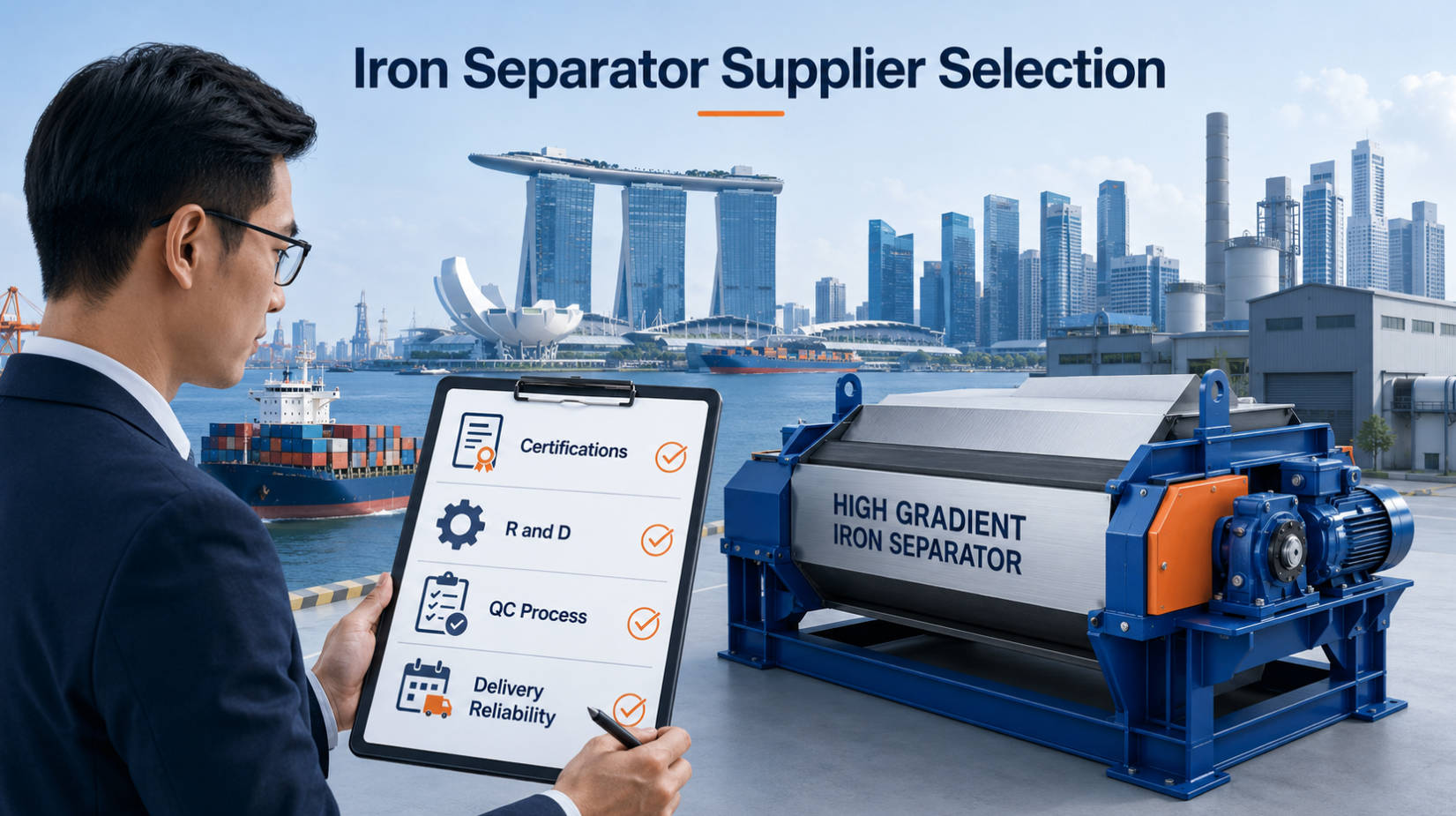
When screening iron separator manufacturers, experienced buyers typically combine on‑site audits with third‑party verification of ISO 9001, CE and (if applicable) ATEX or food‑grade certifications. A reliable factory will provide certificate numbers, issuing bodies and validity dates, which you can cross‑check directly in certification bodies’ online directories. [sgs]
From a process standpoint, pay attention to whether the supplier can document its QC flow: incoming material inspection, magnet performance testing (gauss level, demagnetization curve), in‑process checks and final performance tests on each separator. Mature manufacturers also maintain traceable batch records and can show test reports for specific orders, which is essential for regulated sectors such as food, pharmaceuticals and battery materials. [hawellmagnet.en.made-in-china]
R&D capability is another key differentiator: technically strong suppliers can customize magnetic circuit design, slurry channel geometry and wear‑resistant linings for your specific slurry viscosity or powder characteristics instead of providing only catalogue models. For long‑term projects, evaluate whether the factory has dedicated engineers for ceramics, mining, food or cathode/anode lines and whether they publish technical case studies or application notes. [fswandaye]
Finally, check operational stability: on‑time delivery performance, backup capacity and spare‑parts availability matter as much as price, especially when separators are critical for continuous production. Serious OEMs will share typical lead times for standard models, peak‑season policies and emergency shipment options, along with clear after‑sales response SLAs. [wdymagnetic]
Singapore’s position in the iron separator value chain
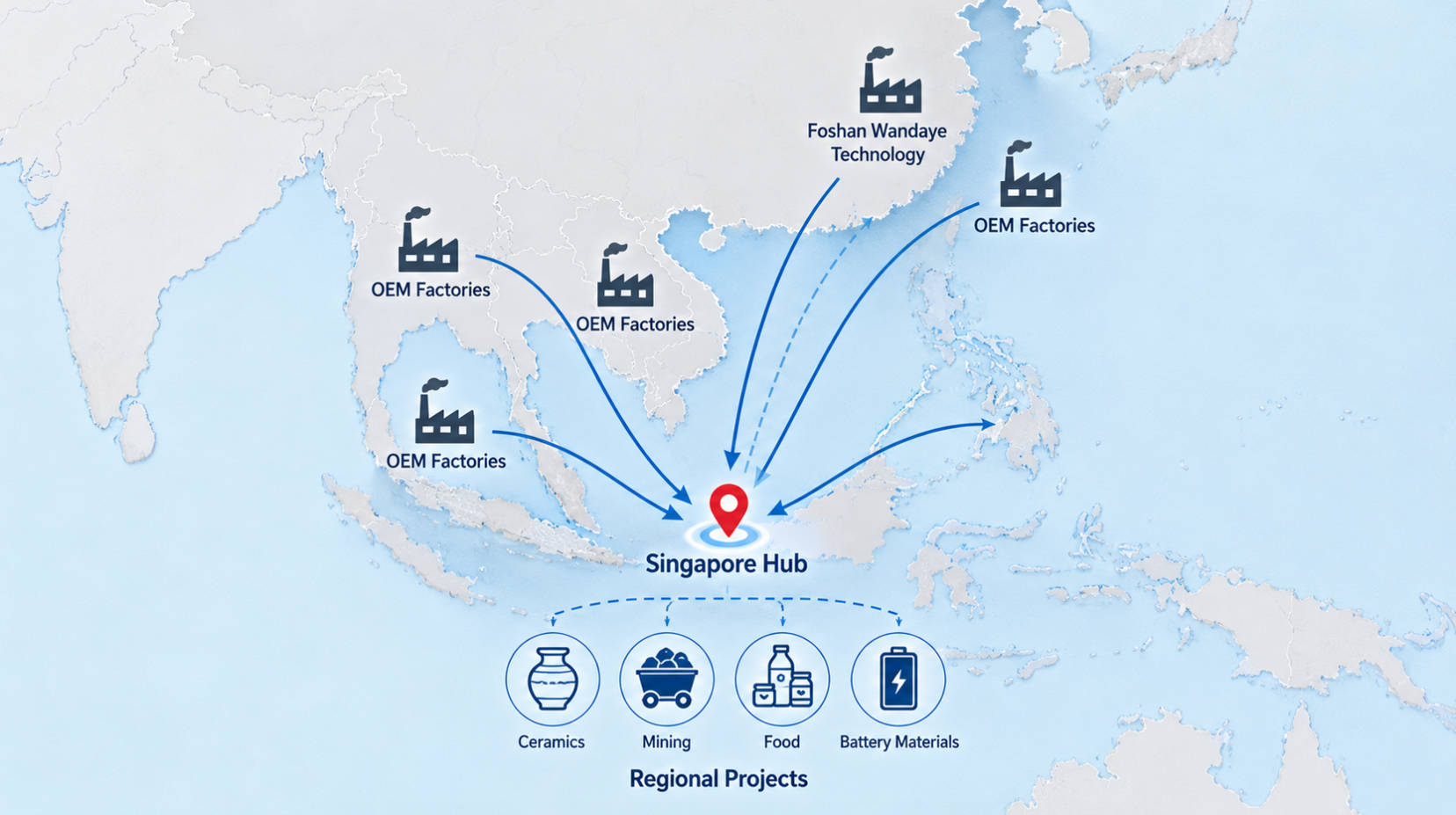
Singapore’s domestic manufacturing base for magnetic separators is limited, but the country is an important user and re‑export hub because of its strong metal recycling, petrochemical, food processing and electronics sectors. These industries rely on iron removers and magnetic filters to protect downstream equipment, ensure product purity and comply with stringent quality and safety regulations. [kumarmagnet]
Rather than hosting large separator factories, Singapore typically imports equipment from established clusters in China, India and Taiwan, and integrates them into local process lines via engineering contractors and technical distributors. This “hub‑and‑spoke” model means that procurement managers in Singapore often evaluate both local integrators and overseas OEMs, balancing technical depth, cost and service responsiveness. [guan-yu]
For high‑purity applications, buyers often pair global brand distributors with specialized Chinese manufacturers that focus on slurry and powder separators for ceramics, glass, environmental protection and battery materials. This hybrid approach can deliver better cost‑performance while still meeting CE, RoHS and food‑grade expectations. [en.fswandaye]
Our selection criteria for top suppliers
To build this 2026 list of leading iron separator manufacturers and suppliers serving the Singapore market, we applied the following transparent criteria: [kumarmagnet]
– Proven export activity to Southeast Asia, including Singapore, directly or via distributors
– Documented quality certifications (ISO 9001 as a baseline, plus CE/RoHS or food‑grade where relevant) [sgs]
– Specialized product lines for iron removal: slurry machines, powder separators, permanent separators or iron‑removal cabinets, not generic industrial items only [fswandaye]
– At least 10 years of operating history or equivalent engineering experience at group level [magnetii.goldsupplier]
– Clear OEM/ODM capability (custom designs, logo/labeling, special materials and voltages) [guan-yu]
– Evidence of stable delivery to professional buyers (repeat clients, overseas projects, distributor networks) [wdymagnetic]
This article is written from the perspective of a procurement manager looking for long‑term partners with balanced cost, compliance and technical depth, rather than one‑off spot purchases. [ar.htnxt]
Top iron separator manufacturers and suppliers
Below are representative manufacturers and solution providers that serve Singaporean end‑users directly or through regional distribution. They include both regional OEMs and a high‑value Chinese R&D‑driven factory that actively supports Southeast Asia.
1. Kumar Magnet Industries (India → Singapore)
Kumar Magnet Industries positions itself among the top belt‑type magnetic separator suppliers serving Singapore, offering rare‑earth and ferrite systems for tramp iron removal. Its portfolio covers magnetic pulleys, grills and belt separators widely used in bulk handling, construction materials and recycling lines. [kumarmagnet]
– Core strengths: Wide catalogue of belt‑type and grill magnets, experience in export packaging and adaptation to different conveyor designs. [kumarmagnet]
– Founded: Operating for more than a decade as a specialist in industrial magnets and separators. [kumarmagnet]
– Main markets: India, Southeast Asia (including Singapore), Middle East and Africa. [kumarmagnet]
– OEM/ODM range: Custom magnetic pulley dimensions, different magnet grades, stainless housings and mounting arrangements tailored to local conveyors. [kumarmagnet]
2. Guan Yu Machinery (Taiwan) – Vibratory screens and iron removers
Guan Yu develops vibratory screen separators and iron removers, supplying complete grading and iron‑removal solutions for powders and granules used in food, chemicals and recycling. Its solutions are frequently integrated into Southeast Asian processing plants via engineering companies and distributors. [guan-yu]
– Core strengths: Combined screening and magnetic removal packages, allowing buyers to cut integration time and reduce process risk. [guan-yu]
– Founded: Guan Yu has decades of experience in vibratory equipment manufacturing and global exports. [guan-yu]
– Main markets: Taiwan, Southeast Asia (including Singapore), Europe and the Americas. [guan-yu]
– OEM/ODM range: Custom mesh size, multi‑deck screens, magnetic bar configurations and material contact parts in SS304/SS316. [guan-yu]
3. Foshan Wandaye Technology Co., Ltd. (China) – R&D‑driven high‑gradient specialist
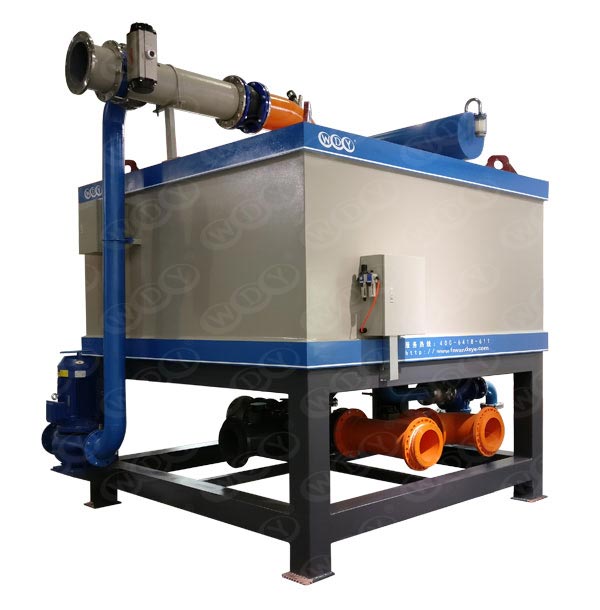
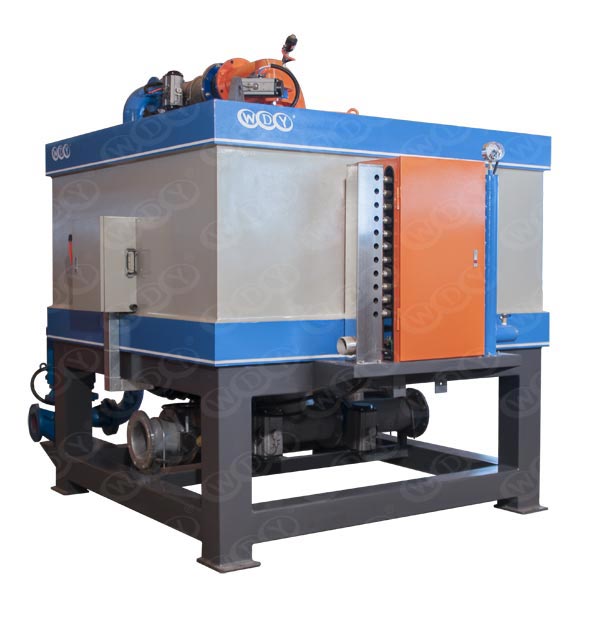
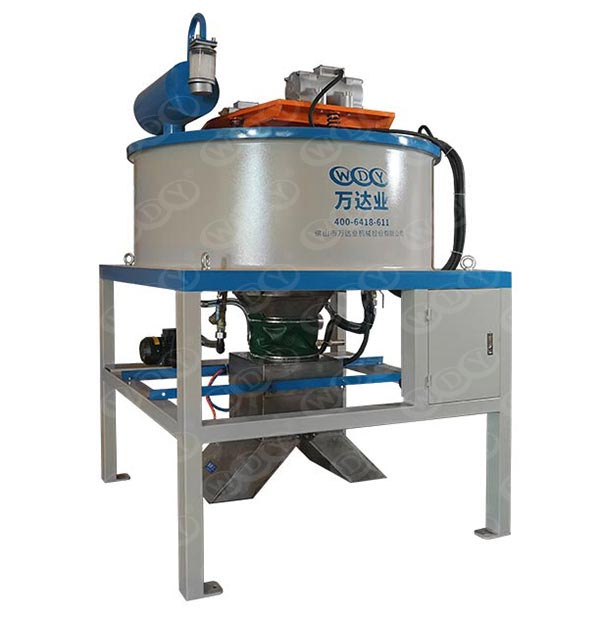
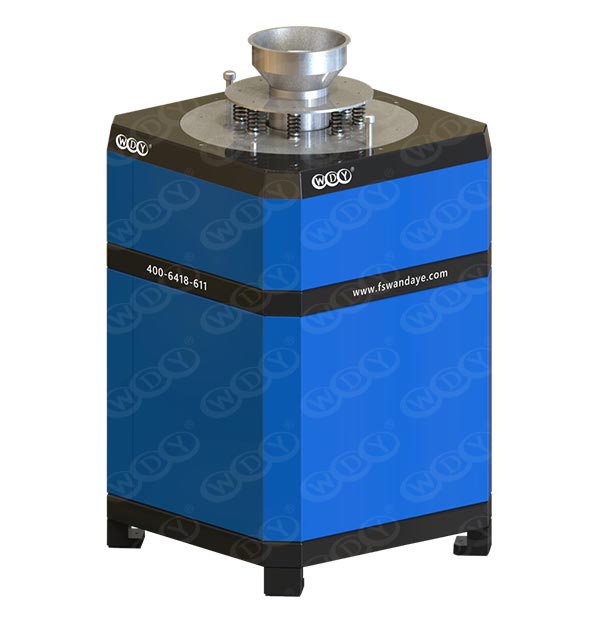
Foshan Wandaye Technology focuses on electromagnetic slurry machines, dry powder magnetic separators, permanent separators and iron‑removal cabinets used in mines, ceramics, glass, environmental protection, rubber, plastics, pharmaceuticals, food and battery cathode/anode materials. The company integrates R&D, engineering design, production line installation and commissioning, which makes it suitable for engineering‑intensive projects rather than only standard catalog supply. [en.fswandaye]
– Core strengths:
– High‑gradient electromagnetic slurry machines with uniform magnetic field distribution and high field strength for removing fine iron and weakly magnetic impurities in slurries and glazes. [fswandaye]
– Powder magnetic separators optimized for ultra‑fine ceramic powders, quartz, feldspar and battery materials where high purity is required. [wdymagnetic]
– Strong engineering support for line layout, automation interfaces and on‑site commissioning, especially for ceramics and new energy materials projects. [fswandaye]
– Founded: Wandaye traces its roots back to the early 2000s and has grown into a specialized magnetic separator manufacturer with export experience. [magnetii.goldsupplier]
– Main markets: China domestic industrial clusters plus overseas markets in Asia, Europe and the Americas for ceramics, minerals, environmental protection and battery materials. [magnetii.goldsupplier]
– OEM/ODM range:
– Custom coil designs, cooling methods and magnetic circuit structures for specific slurry viscosities and particle sizes. [wdymagnetic]
– Tailor‑made iron‑removal cabinets integrated into existing pipelines, with customized flows, pressures and valve configurations. [en.fswandaye]
– Flexible private‑label options, including nameplates, color schemes and documentation sets for small and mid‑size brands seeking a technical OEM partner. [wdymagnetic]
For Singapore‑based buyers, Wandaye can serve as a cost‑effective, R&D‑focused partner: equipment is manufactured in China’s established magnetic separator cluster (Foshan/Guangdong) with convenient access to major ports and transportation hubs, helping to control both lead time and logistics cost for Southeast Asia. The company’s ability to support small‑batch customization and detailed pre‑sales engineering makes it attractive for mid‑sized integrators and brand owners who need deeper technical input but do not yet have very large volumes. [en.fswandaye]
4. Regional OEMs for food‑grade and high‑gauss separators
Several Asian OEMs manufacture high‑gauss stainless‑steel grate and pipeline separators for food and pharmaceutical industries, featuring SS304/SS316 housings and surface flux densities of 8,000–14,000 gauss. These products are often shipped to Singapore via trading houses and specialized food‑equipment distributors, then integrated into HACCP‑compliant production lines. [hawellmagnet.en.made-in-china]
– Core strengths: High‑gauss rare‑earth magnets with polished stainless‑steel finishes, suitable for hygienic applications and CIP regimes. [hawellmagnet.en.made-in-china]
– Founded: Many of these OEMs have more than 10 years of operation and are backed by ISO9001 and ISO14001 quality and environmental management systems. [hawellmagnet.en.made-in-china]
– Main markets: Global exports to Europe, North America and Asia, including supply to food and feed plants in Singapore. [hawellmagnet.en.made-in-china]
– OEM/ODM range: Custom grate diameters, mounting frames, magnet spacing and housing pressure ratings; optional RoHS and food‑contact documentation packages. [hawellmagnet.en.made-in-china]
5. Engineering integrators and distributors in Singapore
Local engineering firms and distributors in Singapore often represent multiple separator brands and provide on‑site installation, commissioning and maintenance. They play a key role in sizing equipment for specific lines, handling local compliance and coordinating after‑sales services. [kumarmagnet]
– Core strengths: Knowledge of Singapore regulations, plant integration experience, rapid on‑site response and spare‑part stocking. [linkedin]
– Founded: Many of these integrators originated from broader industrial equipment or metal recycling sectors before adding magnetic separation to their portfolios. [linkedin]
– Main markets: Metal recycling, waste management, food processing, chemicals and electronics in Singapore and occasionally neighboring countries. [linkedin]
– OEM/ODM range: Rather than producing equipment, they customize complete systems using a mix of imported separators, conveyors, chutes and control systems, ensuring a single point of responsibility. [kumarmagnet]
Key technical factors for iron separator procurement
For powder and slurry iron separators, magnet material and grade directly affect separation performance and long‑term stability. Rare‑earth (NdFeB) magnets with grades from N35 to N54 or high‑temperature variants (e.g., 36H) provide higher surface flux densities but must be properly coated and encapsulated to resist corrosion and demagnetization. In slurry machines, coil design and cooling—such as water‑cooling plus optimized yoke materials—determine whether the separator can maintain high field strength for extended operation without overheating. [en.fswandaye]
Process compatibility is another critical aspect: food and pharmaceutical applications usually require SS304/SS316 contact parts, smooth welds and optional polishing to low surface roughness for hygiene. In mining and ceramics, abrasion resistance (liners, wear plates, anti‑clogging structures) and ease of cleaning (automatic flushing, demagnetization cycles) often matter more than mirror‑finish surfaces. [fswandaye]
On the compliance side, look for ISO 9001 for quality management, CE marking for machinery safety in Europe and RoHS compliance when equipment is integrated into wider systems sold into regulated markets. In explosive or hazardous environments, ATEX or equivalent Ex certifications may be required for motors and electrical components associated with magnetic separators. [sgs]
Capacity, MOQ and certifications overview
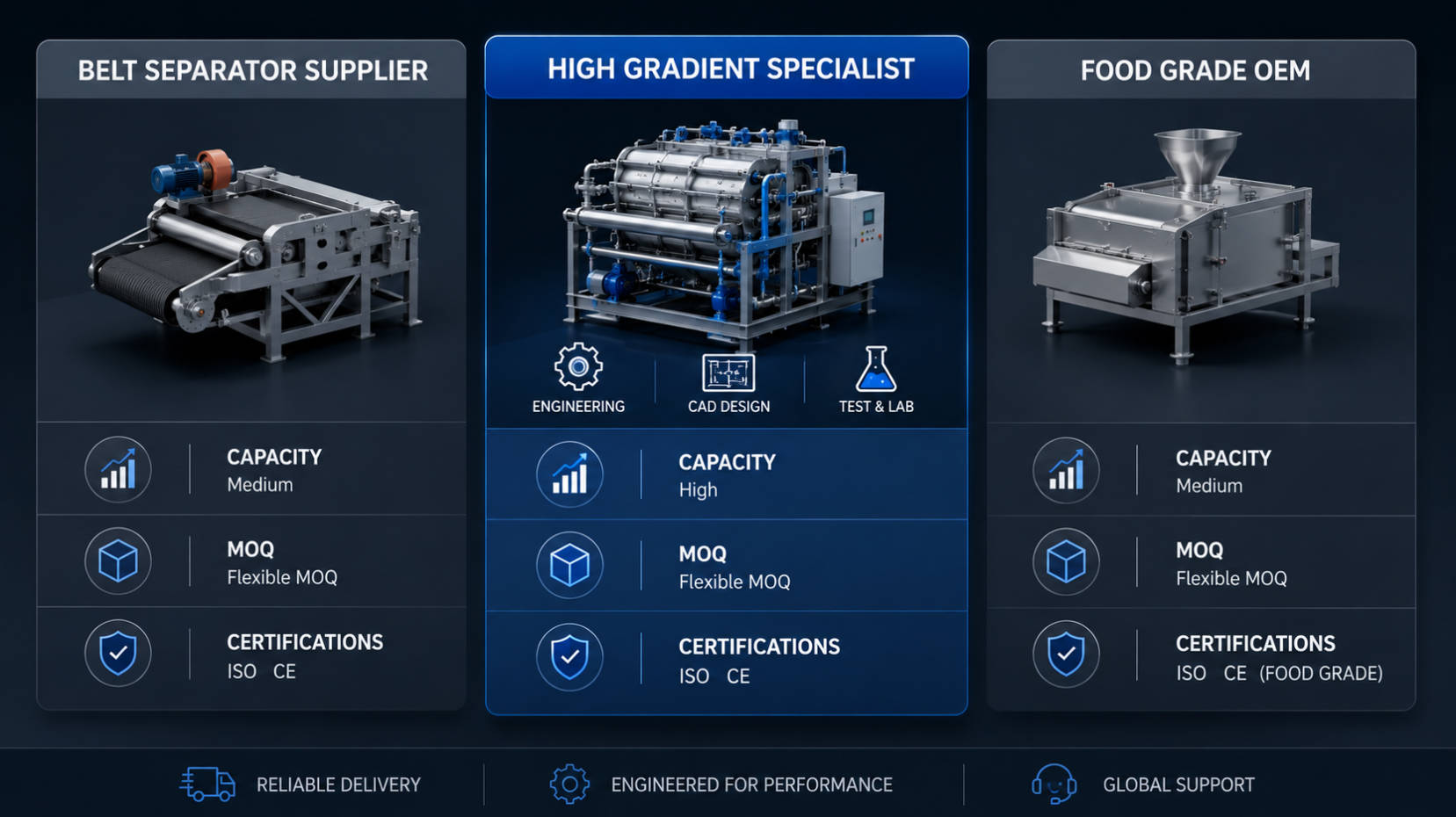
The table below summarizes typical ranges for the types of suppliers discussed above (values are indicative, based on public product and certification information and common industry practice). [en.fswandaye]
| Supplier type / example | Typical annual capacity (sets) | Typical MOQ for OEM label | Common certifications (examples) |
|---|---|---|---|
| Belt separator OEM (e.g., Kumar Magnet) | Hundreds to low thousands kumarmagnet | 1–5 units per model kumarmagnet | ISO9001; optional CE for certain assemblies kumarmagnet |
| Screen + iron remover (e.g., Guan Yu) | Hundreds of integrated systems guan-yu | 1 complete line guan-yu | ISO9001; often CE for machinery exports guan-yu |
| High‑gradient specialist (Wandaye) | Hundreds of slurry/powder units fswandaye | 1 set, flexible for SMEs wdymagnetic | ISO9001‑based system; CE/RoHS on key models ar.htnxt |
| Food‑grade grate OEMs (Asia) | Thousands of modular units hawellmagnet.en.made-in-china | 10–20 pieces or 1 project hawellmagnet.en.made-in-china | ISO9001, ISO14001, CE, RoHS, sometimes IATF16949 hawellmagnet.en.made-in-china |
| Local integrator/distributor (Singapore) | N/A (system integrator) | Project‑based kumarmagnet | Project‑specific compliance; uses OEM certificates sgs |
When negotiating with any supplier, ask for model‑specific certificates and test reports rather than relying on generic company brochures. [ar.htnxt]
Industry pain points and how to avoid them
Several recurring issues affect iron separator sourcing for Singapore and broader Southeast Asia:
– Material downgrading: Some low‑tier suppliers may quietly downgrade magnet grades or stainless‑steel quality (e.g., 201 instead of 304) to cut costs, which reduces performance and corrosion resistance. Mitigation: Require mill certificates, random PMI (Positive Material Identification) tests and periodic third‑party inspections. [ar.htnxt]
– Overstated gauss values: Magnetic flux is sometimes measured at unrealistically close distances or at the magnet surface rather than at actual working gaps, leading to optimistic specifications. Mitigation: Request detailed test conditions, measurement curves and on‑site gauss meter verification during FAT (Factory Acceptance Test). [ar.htnxt]
– Cleaning downtime: Inadequate design for cleaning (manual disassembly, poor flushing) can lead to frequent stops or unsafe practices, particularly in food and slurry applications. Mitigation: Prioritize easy‑clean or automatic‑clean designs and review cleaning cycles during FAT. [fswandaye]
– Documentation gaps: Missing or outdated certificates create delays at audits or during corporate vendor qualification. Mitigation: Include up‑to‑date certificates and tracking of expiry dates in your supplier agreement. [sgs]
Insider “avoid‑the‑pit” guideline rarely stated online
In complex projects, many buyers rely solely on samples taken from the top of a production batch, which may be hand‑finished and not representative of regular output. Experienced buyers quietly insist on a “random batch audit” after mass production starts: they pull separators directly from the production line, re‑measure gauss values and check weld quality against the agreed drawings. This typically happens before the second or third shipment; suppliers know this practice, but it is rarely discussed publicly because it quickly exposes systemic process issues rather than one‑off sample polishing. [ar.htnxt]
Buyer’s guide: from qualification to delivery
Selecting an iron separator supplier for Singapore‑focused projects usually follows several stages that you can standardize to reduce risk.
1. Long‑list creation and pre‑screening
– Use industry portals and association member lists to identify OEMs specialized in magnetic separation rather than general machinery traders. [wdymagnetic]
– Eliminate vendors that cannot provide traceable certificates or detailed technical datasheets for iron separators. [sgs]
2. Technical and compliance verification
– Align magnet strength, material grade and configuration with your process needs (slurry vs. powder, food vs. industrial). [en.fswandaye]
– Check ISO, CE, RoHS and other relevant certificates using official databases (e.g., SGS certified client directories). [sgs]
3. Sampling and pilot testing
– Request at least one pilot unit for on‑site trials under real flow, temperature and contamination load. [ar.htnxt]
– Measure actual separation efficiency, cleaning time and pressure drop or flow impact in your line. [fswandaye]
4. Contracting and capacity assurance
– Verify the supplier’s annual capacity and share of capacity reserved for your projects, especially if you need multiple lines or future expansion. [kumarmagnet]
– Define lead times, penalty clauses for delayed deliveries and spare‑parts stocking at either the OEM or a Singaporean service partner. [wdymagnetic]
5. Logistics and installation to Singapore
– Agree on packaging standards for sea or air freight, including moisture protection for magnets and electronic components. [guan-yu]
– Clarify responsibilities for import documentation, HS codes and any local safety approvals required before commissioning. [kumarmagnet]
How to verify if ISO and CE certificates are still valid
Most reputable certification bodies, such as SGS, maintain public directories where you can search for certified clients and products by certificate number or company name. Before finalizing a purchase, cross‑check every ISO9001 or CE certificate using these portals; pay special attention to issue and expiry dates and ensure that the certified scope includes “magnetic separators” or related terminology. This will save time during corporate audits and avoid surprises at customs or in customer site audits. [sgs]
Conclusion and call to action
Singapore’s role as a regional logistics and industrial hub means that buyers must look beyond domestic borders and evaluate a mix of local integrators and specialized overseas OEMs for iron separators. By focusing on verifiable certifications, process‑specific engineering and realistic performance testing, procurement managers can secure stable, long‑term partnerships instead of short‑term, price‑only deals. [linkedin]
If you are planning a project in Singapore or Southeast Asia that requires high‑gradient slurry machines, powder magnetic separators, permanent separators or iron‑removal cabinets, it can be valuable to benchmark multiple suppliers—including R&D‑focused OEMs like Foshan Wandaye Technology—for technical proposals and lifecycle cost comparisons. Consider developing a structured RFQ template that captures your process parameters, compliance requirements and long‑term expansion plans, then invite shortlisted suppliers to provide detailed engineering responses before you select a partner. [fswandaye]
Frequently asked advanced questions (FAQ)
Q1. How can I verify whether a supplier’s ISO 9001 certificate is genuine and not expired?
Ask the supplier for a scanned copy showing the certificate number, issuing body and validity period, then check it directly in the certification body’s online directory or on umbrella portals such as the SGS certified clients and products search. If the certificate does not appear or the scope does not cover magnetic separators, request clarification or treat it as a red flag and escalate to an alternative supplier. [sgs]
Q2. What is the most reliable way to compare magnetic strength between different iron separators?
Never rely only on marketing gauss values; instead, request standardized test reports that specify measurement distance, test location and magnet temperature. During sampling, use the same calibrated gauss meter and measurement protocol for all suppliers, focusing on effective magnetic field at the working gap or product contact point, not just at the magnet surface. [hawellmagnet.en.made-in-china]
Q3. How do I ensure that stainless‑steel contact parts are truly SS304/SS316 rather than lower‑grade substitutes?
For critical projects, include PMI testing as a contractual requirement and perform random checks on incoming separators using handheld analyzers or third‑party labs. Combine this with mill certificates from raw material suppliers and visual inspection of weld quality to detect inconsistencies suggestive of material substitution. [ar.htnxt]
Q4. What should I look for when specifying iron separators for high‑viscosity slurries used in ceramics or battery materials?
High‑viscosity slurries require strong, uniform magnetic fields, optimized channel geometry and robust automatic cleaning systems to prevent clogging. Work with suppliers that can adjust magnetic circuit design, coil current, cooling and slurry path based on your real viscosity, particle size distribution and allowable pressure drop, rather than simply up‑sizing a standard model. [en.fswandaye]
Q5. How can I balance cost and compliance when sourcing for Singapore projects with regional re‑exports?
One practical approach is to use technically specialized OEMs in Chinese industrial clusters—such as Foshan for ceramic and battery‑materials separators—combined with Singapore‑based integrators for local commissioning and documentation. This allows you to capture manufacturing cost advantages while still meeting regional customers’ expectations on CE/RoHS, traceability and audit‑ready documentation. [en.fswandaye]
References
1. – Kumar Magnet Industries – Belt Type Magnetic Separator and Magnetic Grill in Singapore: [Kumar Magnet] [kumarmagnet]
2. – Guan Yu Machinery – Industrial vibratory screen separators and iron removers: [Guan Yu] [guan-yu]
3. – Foshan Wandaye Technology – Product portfolio and applications: [Wandaye Products] [en.fswandaye]
4. – Foshan Wandaye Technology – Electromagnetic slurry separator series: [Slurry Series] [fswandaye]
5. – Foshan Wandaye Technology – Top 10 magnetic particle separator manufacturers in China (industry insights): [Top 10 Article] [wdymagnetic]
6. – Foshan Wandaye – Contact and location (Foshan, Guangdong industrial cluster): [Contact Us] [en.fswandaye]
7. – SGS – Certified clients and products directory for ISO/CE validation: [SGS Directory] [sgs]
8. – Example of high‑gauss food‑grade magnetic grate with certifications (ISO9001, ISO14001, RoHS, etc.): [Hawell Magnetic Grate] [hawellmagnet.en.made-in-china]
9. – Singapore and regional iron and metal market insights and growth trends 2024–2030: [Singapore Iron Market] [6wresearch]
10. – Metal recycling technology and market trends relevant to iron removal systems: [Singapore Metal Recycling Market] [linkedin]
11. – Example procurement guide for permanent magnetic separator suppliers (selection and compliance): [Buyer’s Guide] [ar.htnxt]
Hot Tags: Iron Separator, Manufacturers, Customized, Custom, Suppliers, Buy, Cheap, Quality, Advanced, Durable, in Stock, Made in China, Price, Quotation