Content Menu
● What Is a Magnetic Separator?
● Why Magnetic Separation Matters in Modern Manufacturing
● How Does a Magnetic Separator Work?
● Main Types of Magnetic Separators and Their Uses
>> 1. Permanent Magnetic Separator
>> 2. Electromagnetic Separator
>> 4. Suspension Magnets and Over‑belt Magnets
>> 5. Magnetic Grids, Rods, and Housed Grids
● Dry vs Wet Magnetic Separation: Which Is Right for You?
● Real-World Applications Across Industries
● Primary vs Secondary Magnetic Separation
● How to Choose the Right Magnetic Separator
● Best Practices for Operation, Testing, and Compliance
● Where to Place Magnetic Separators in the Line
● Call to Action: Designing a Separator System That Fits Your Line
● FAQs
>> 1. What is the basic working principle of a magnetic separator?
>> 2. What are the main types of magnetic separators used in industry?
>> 3. Can magnetic separators handle wet materials like slurry or glaze?
>> 4. How often should magnetic separators be tested and maintained?
>> 5. How do I know if I need primary or secondary magnetic separation—or both?
As someone who has spent years working with powder magnetic separators and permanent magnetic separators on real production lines, I can tell you this: a well‑selected magnetic separator quietly protects your product quality, your equipment, and your profit margin every single day. Understanding how these machines really work—and how to choose the right one—is now a critical skill for engineers, QA managers, and plant leaders in mining, ceramics, battery materials, food, and many other industries. [buntingmagnetics]
What Is a Magnetic Separator?
A magnetic separator is an industrial device that uses a magnetic field to remove ferromagnetic and paramagnetic contaminants—such as iron filings, stainless steel fragments, or worn machine parts—from powders, slurries, and bulk materials. By capturing these particles before they enter downstream processes or finished products, it safeguards equipment, reduces downtime, and ensures regulatory compliance in sensitive industries like food, pharmaceuticals, and new‑energy materials. [eclipsemagnetics]
From my experience working with powder lines and slurry systems, a well‑engineered separator can often catch contaminants that traditional sieves and filters simply miss, especially ultra‑fine iron in ceramic powders or lithium‑battery cathode materials. This is why leading manufacturers treat magnetic separation as a core critical control point rather than an optional accessory. [fswandaye]
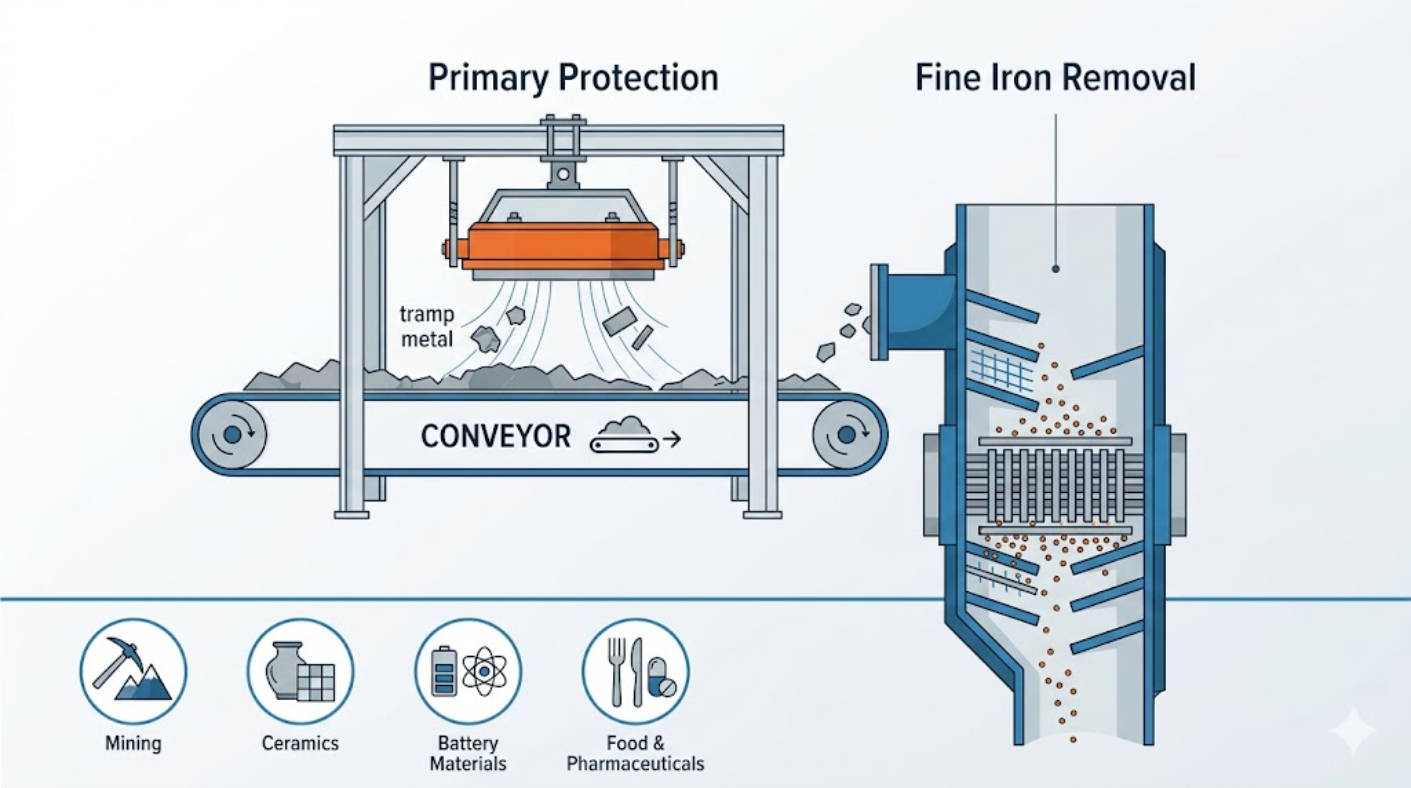
Why Magnetic Separation Matters in Modern Manufacturing
In real production environments, metal contamination is not theoretical—it is inevitable. Wear on grinders, pumps, conveyors, and mixers continually generates small metal particles, even in carefully maintained plants. If you work with high‑value or high‑risk products, those particles quickly turn into quality claims, recalls, or equipment failures. [csidesigns]
Key reasons manufacturers invest in advanced magnetic separators include: [buntingmagnetics]
– Product safety and compliance in food, pharma, and nutraceuticals.
– Protection of high‑value equipment such as mills, jet mills, and spray dryers.
– Improved yield in mining and mineral processing by recovering magnetic minerals.
– Purity upgrades for ceramics, glass, and battery materials where tiny iron content can ruin performance or color.
In industries like ceramics or lithium battery cathode/anode production, I have seen customers cut defects and customer complaints dramatically once they properly designed magnetic control points into their lines, especially for fine powders and slurries. [buntingmagnetics]
How Does a Magnetic Separator Work?
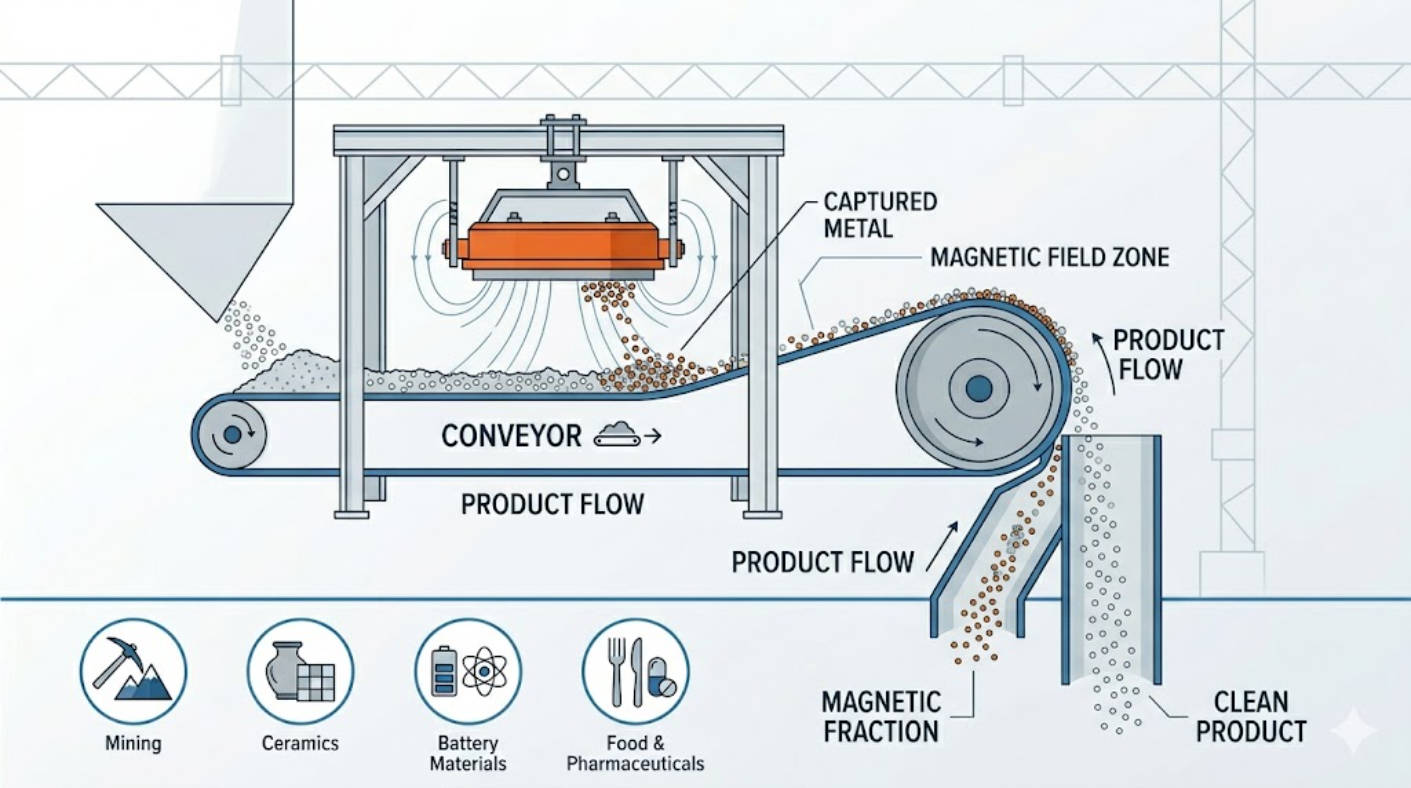
Although there are many designs, the fundamental working principle of a magnetic separator is straightforward:
1. Magnetic field generation
A permanent magnet or electromagnet creates a strong magnetic field in a defined separation zone. The intensity and gradient of this field determine how effectively the device can capture fine and weakly magnetic particles. [gme-magnet]
2. Material feed through the field
Product—powder, granules, flakes, slurry, or liquid—flows through or over the separator via a chute, pipeline, or conveyor belt. At this point, both clean material and ferromagnetic contaminants are mixed together. [eclipsemagnetics]
3. Magnetic attraction and capture
Magnetic and weakly magnetic particles are attracted into the high‑gradient zones of the field and held on the surface of magnetic elements (rods, grids, drums, or plates). Non‑magnetic materials simply continue through the process. [buntingmagnetics]
4. Discharge of cleaned product
The cleaned product exits the separator with significantly reduced metal contamination, going on to downstream processes such as milling, mixing, or packaging. [eclipsemagnetics]
5. Release and removal of captured metal
Captured metal is removed either manually (by wiping rods or plates after de‑energizing) or automatically (via rotating drums, self‑cleaning belts, or pneumatically actuated systems). In the case of eddy current separators, the separation happens by repulsive forces instead of attraction, but the goal—clean product—is the same. [gme-magnet]
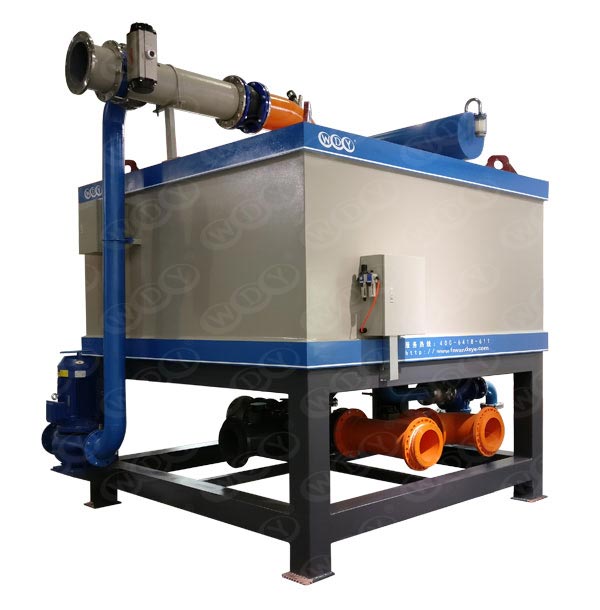
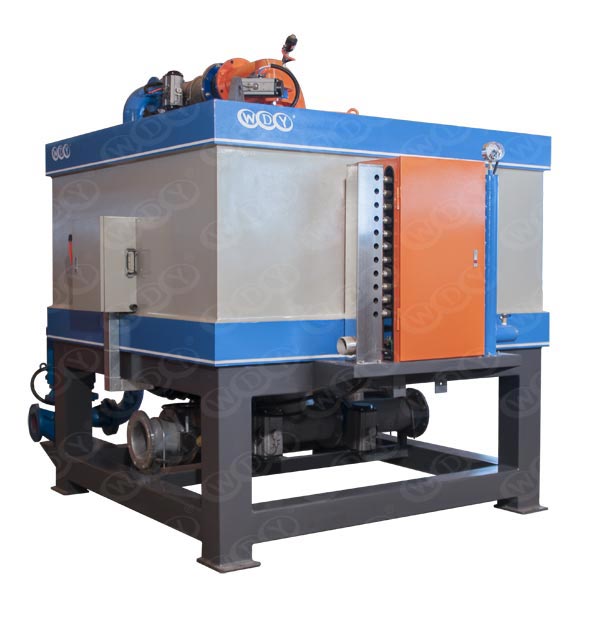
In wet applications, such as ceramic slurry or battery‑material slurries, high‑gradient wet magnetic separators use dense matrices and strong magnetic fields to pull out fine iron from a flowing liquid phase, often achieving much higher capture efficiency than dry methods. [patents.google]
Main Types of Magnetic Separators and Their Uses
Below is a practical overview of commonly used magnetic separator types, with a focus on where they make sense in real plants. [guangdar]
1. Permanent Magnetic Separator
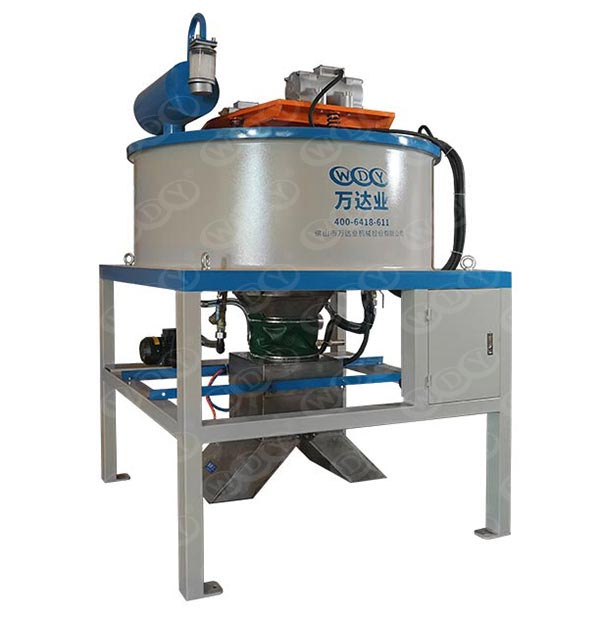
Permanent magnetic separators use high‑energy permanent magnets (often rare‑earth such as NdFeB) to create a stable magnetic field without external power. [guangdar]
Typical forms include:
– Magnetic bars and grids for hoppers and chutes.
– Plate magnets above conveyors.
– Drum magnets for continuous bulk separation.
They are widely used in mining, ceramics, plastics, rubber, glass, and building materials, especially where power supply is limited or running costs must be minimized. [buntingmagnetics]
2. Electromagnetic Separator
An electromagnetic separator uses a wire coil energized with current to generate a strong, controllable magnetic field. [gme-magnet]
– The field can be switched on/off and adjusted, making it suitable for heavy‑duty or variable applications.
– These are often used above conveyors handling ores, coal, or bulk raw materials, and in slurry applications where precise control is needed. [buntingmagnetics]
Electromagnetic systems are common in large mining operations and high‑capacity material‑handling lines where tramp iron loads are significant. [gme-magnet]
3. Drum Magnetic Separator
A drum magnetic separator consists of a rotating drum with a stationary magnet inside. [guangdar]
– As the drum rotates, magnetic particles are pulled onto its surface and carried out of the product stream.
– Non‑magnetic materials fall away under gravity or continue on the conveyor.
These are widely used in mining, mineral processing, and recycling to process large tonnages of ore or secondary materials. [buntingmagnetics]
4. Suspension Magnets and Over‑belt Magnets
Suspension magnets are mounted above conveyors to capture tramp iron from bulk materials such as coal, aggregates, and minerals. [eclipsemagnetics]
– They protect downstream crushers, mills, and screens from serious damage.
– Versions include permanent and electromagnetic, with either manual or self‑cleaning belt removal of collected metal. [buntingmagnetics]
5. Magnetic Grids, Rods, and Housed Grids
For powders, granules, and small free‑fall streams, grid and rod separators provide high‑intensity, high‑gradient fields. [guangdar]
– Typically installed in hoppers, chutes, or inline housings.
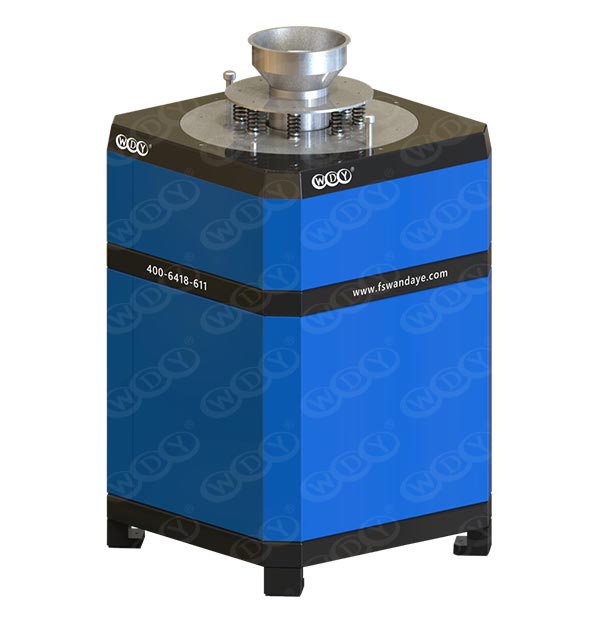
– Very effective for fine iron removal from ceramics, glass powders, plastics, and food ingredients. [fswandaye]
For a company like Foshan Wandaye, powder magnetic separators and slurry magnetic separators are standard solutions in these scenarios, especially where ultra‑low iron content is required for high‑white ceramics or high‑purity battery materials. [linkedin]
6. Eddy Current Separator
An eddy current separator is designed specifically for non‑ferrous metals such as aluminum and copper. [buntingmagnetics]
– The system uses a fast‑rotating magnetic drum to induce eddy currents in conductive non‑ferrous metals.
– These induced currents create opposing magnetic fields, generating a repulsive force that throws non‑ferrous metals away from the non‑metallic stream. [gme-magnet]
This technology is a staple in modern recycling plants, where it separates aluminum cans or copper from plastics and glass. [buntingmagnetics]
Dry vs Wet Magnetic Separation: Which Is Right for You?
One of the practical decisions I help customers with most often is choosing between dry and wet magnetic separation. Your choice shapes everything from layout to maintenance routines. [guangdar]
Dry Magnetic Separation
Best for:
– Free‑flowing powders, granules, pellets, and flakes.
– Bulk materials on conveyors (ore, coal, clinker, aggregates).
Advantages: [eclipsemagnetics]
– No process water required.
– Simpler mechanical design and easier integration.
– Suitable for high throughput and coarse tramp metal removal.
Limitations:
– Can struggle with very fine particles or dusty, cohesive powders.
– Efficiency drops when material forms bridges or clumps.
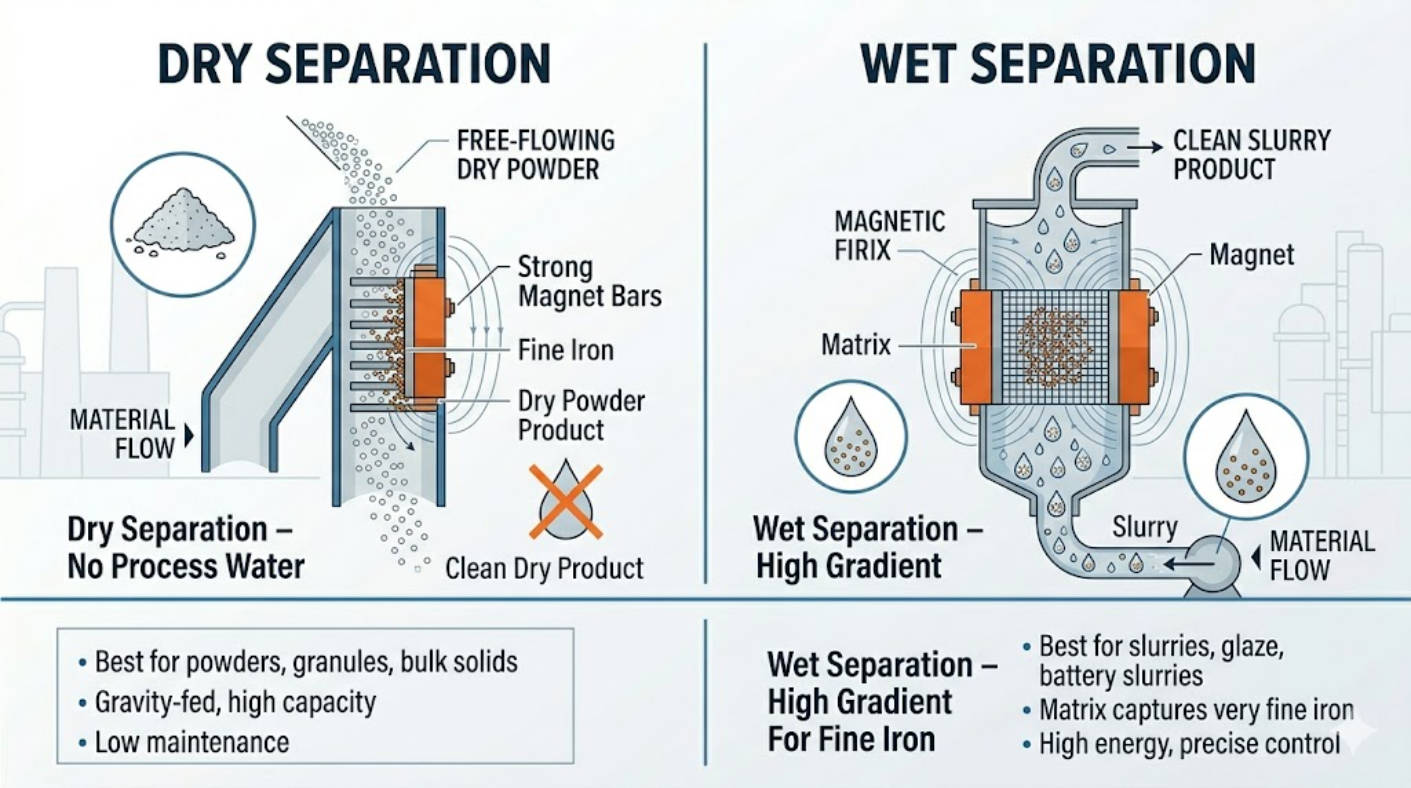
Wet Magnetic Separation
Best for:
– Slurries, suspensions, and glaze (e.g., ceramic slurry, battery slurries).
– Ultrafine materials where high gradient is critical.
Advantages: [patents.google]
– Better contact between particles and magnetic field due to fluid medium.
– Superior capture of ultra‑fine iron and weakly magnetic particles.
Limitations:
– Requires pumps, tanks, and process water management.
– Higher complexity and tighter maintenance requirements.
In high‑value segments like ceramics and cathode/anode materials, wet electromagnetic slurry separators have become a de‑facto standard at key points to guarantee extremely low iron content and stable downstream processing. [fswandaye]
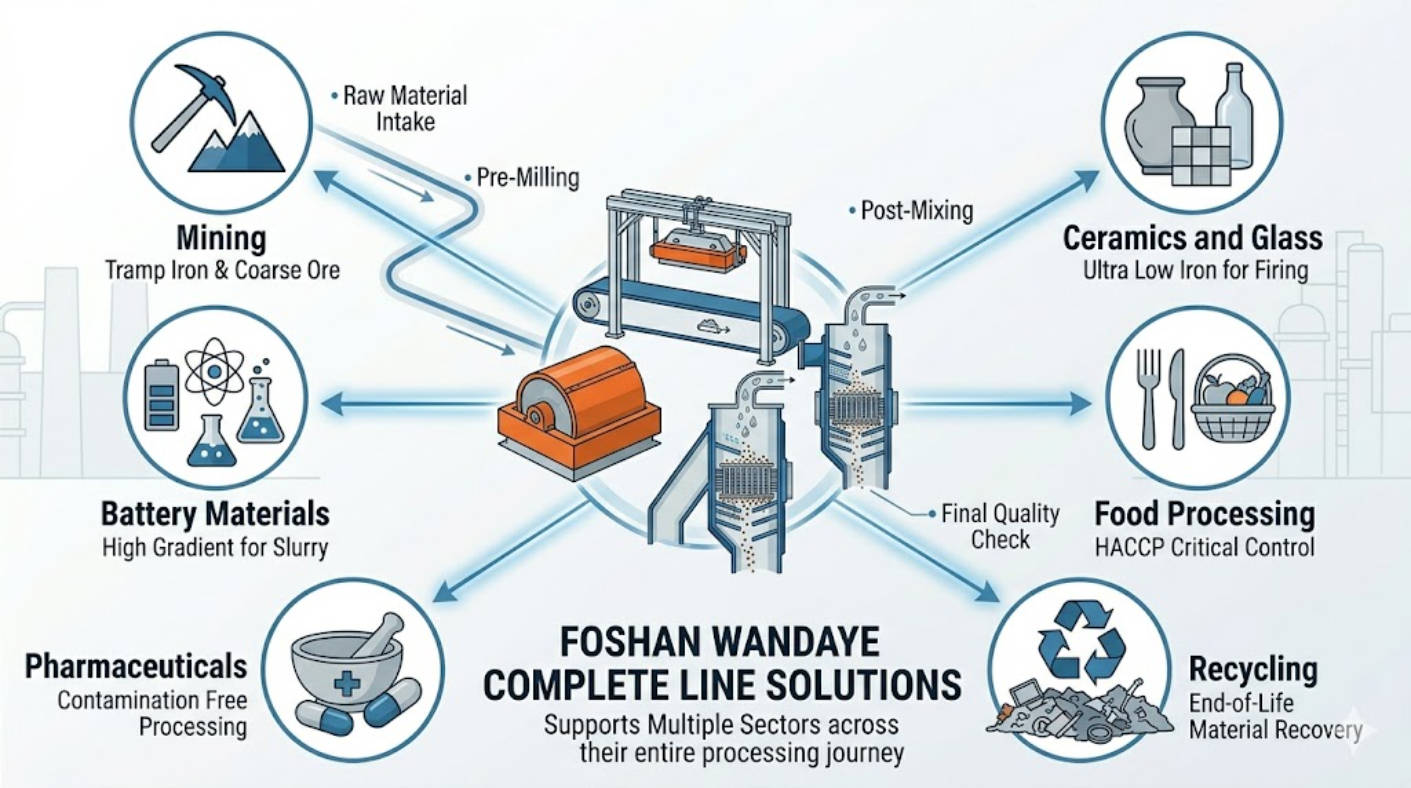
Real-World Applications Across Industries
Magnetic separators are now embedded across a wide range of verticals, often as part of HACCP plans, quality‑assurance frameworks, or ISO‑driven process controls. [csidesigns]
Here are some of the most important application areas:
– Mining and mineral processing: Recovery of magnetite, hematite, and other magnetic minerals; tramp iron removal from crushed ore; feed protection for mills and crushers. [buntingmagnetics]
– Ceramics and glass: Removal of iron from kaolin, feldspar, quartz, glaze, and glass batch materials to avoid black spots, color shifts, and strength issues. [fswandaye]
– Battery and new energy materials: Ultra‑low iron control for cathode and anode powders, improving electrochemical performance and reducing risk of internal short circuits. [fswandaye]
– Food and beverage: Metal fragment control in cereals, flour, sugar, snacks, and liquid foods as part of HACCP‑based critical control points. [csidesigns]
– Pharmaceuticals and chemicals: Protection of sensitive processes and prevention of metal particle contamination in APIs and specialty chemicals. [csidesigns]
– Recycling and waste management: Recovery of ferrous and non‑ferrous metals from municipal solid waste, electronic waste, and construction debris. [gme-magnet]
Manufacturers like Foshan Wandaye combine R&D, engineering design, line installation, and commissioning to deliver complete magnetic separation solutions across these industries, rather than just supplying standalone machines. [linkedin]
Primary vs Secondary Magnetic Separation
When I audit a plant, I usually map magnetic devices into two functional layers: [csidesigns]
| Separation layer | Main purpose | Typical equipment | Typical location |
|---|---|---|---|
| Primary separation | Protect equipment from large tramp metal | Suspension magnets, over‑belt magnets, drum separators | Bulk intakes, pre‑crushers, before mills eclipsemagnetics |
| Secondary/finishing separation | Achieve product purity and quality | Grids, rods, high‑intensity powder separators, wet high‑gradient separators | Mid‑process, final inspection points, packaging lines eclipsemagnetics |
Designing a robust system usually means combining both layers, not choosing one or the other. This layered approach significantly reduces the risk that a single failure point leads to contamination or equipment damage. [eclipsemagnetics]
How to Choose the Right Magnetic Separator
Choosing the right separator is not about reading a catalog; it is about matching the physics of your product to the physics of the machine. When I guide customers through this process, we typically drill into these questions: [guangdar]
1. What is the material state?
– Dry powder, granules, or flakes.
– Slurry, glaze, or viscous liquid.
2. What are the contamination characteristics?
– Ferrous, weakly magnetic stainless steel, or non‑ferrous.
– Particle size range and expected loading levels.
3. Where will the separator be installed?
– Gravity‑fed chute, pneumatic line, pump line, or belt conveyor. [eclipsemagnetics]
– How much space and access do you have for inspection and cleaning?
4. What performance level is required?
– Regulatory or customer limits for metal content.
– Target iron ppm in products such as ceramic powders or battery materials. [fswandaye]
5. What standards and regulations apply?
– HACCP, food‑safety codes, or specific customer audit requirements. [csidesigns]
– Industry‑specific guidelines for equipment hygiene and validation.
A typical outcome might be: primary over‑belt magnets for tramp metal protection, followed by high‑intensity powder magnetic separators on fine raw materials, and wet high‑gradient electromagnetic separators on critical slurries, especially in ceramics, glass, or battery‑material lines. [buntingmagnetics]
Best Practices for Operation, Testing, and Compliance
From an operational standpoint, the performance of a magnetic separator depends as much on maintenance and verification as it does on initial design. [magnattackglobal]
To keep systems compliant and effective, leading plants typically:
– Test magnetic strength regularly using calibrated pull‑test equipment, especially in food and pharma applications. [magnattackglobal]
– Implement documented cleaning procedures, including safe lock‑out/tag‑out steps for electromagnetic units and clear schedules for manual or automatic cleaning. [magnattackglobal]
– Verify installation points against HACCP plans and risk assessments to ensure all credible contamination paths are controlled. [csidesigns]
– Train operators and maintenance staff to recognize early signs of failure, such as unexpected metal accumulation in downstream filters or screens. [hubindustrial]
Manufacturers who invest in this discipline typically see fewer foreign‑body incidents, more stable process performance, and stronger outcomes in customer audits. [magnattackglobal]
Where to Place Magnetic Separators in the Line
Strategic placement is one of the easiest ways to extract more value from your existing equipment without major capital expense. Commonly effective locations include: [eclipsemagnetics]
– Raw material intake: Catch contamination before it enters silos or blending systems.
– Pre‑ and post‑milling: Protect mills and then clean up any wear debris generated by grinding.
– Pre‑mixers and post‑mixers: Ensure homogeneous batches meet purity requirements.
– Before critical forming steps: For example, before spray dryers, extruders, or presses in ceramics and battery plants. [fswandaye]
– Final quality‑inspection points: Just before packaging or silo loading for shipment.
A staged, multi‑point approach often outperforms a single “big” separator in both contamination control and ROI. [csidesigns]
Call to Action: Designing a Separator System That Fits Your Line
If you are planning to upgrade an existing line or design a new plant, this is the right time to think about magnetic separation as a system, not just a component. Combining powder magnetic separators, permanent magnetic separators, and wet electromagnetic separators intelligently can elevate both quality and throughput.
For complex applications—such as high‑purity ceramics, glass, or positive/negative electrode materials—working with a supplier that offers R&D, engineering design, onsite installation, and commissioning helps you avoid trial‑and‑error and reach stable performance faster. Consider conducting a contamination survey and inviting a specialist review before finalizing your equipment list; often, a few well‑placed separators can reshape your risk profile and strengthen your competitive position. [linkedin]
FAQs
1. What is the basic working principle of a magnetic separator?
A magnetic separator uses a magnetic field to attract and hold ferromagnetic or weakly magnetic particles while allowing non‑magnetic material to pass through. The captured metal is then removed manually or via automatic cleaning mechanisms. [guangdar]
2. What are the main types of magnetic separators used in industry?
Common industrial types include permanent magnetic separators, electromagnetic separators, drum separators, suspension magnets, magnetic grids/rods, and eddy current separators for non‑ferrous metals. Each type targets specific material states and contamination profiles. [gme-magnet]
3. Can magnetic separators handle wet materials like slurry or glaze?
Yes. Wet high‑gradient and slurry magnetic separators are specifically designed for liquids and slurries, offering high capture efficiency for very fine iron and weakly magnetic particles in ceramics, glass, and battery materials. [patents.google]
4. How often should magnetic separators be tested and maintained?
In regulated industries, magnetic separators are typically checked at defined intervals using calibrated test methods and cleaned according to documented SOPs. The exact frequency depends on risk level, contamination load, and audit requirements. [magnattackglobal]
5. How do I know if I need primary or secondary magnetic separation—or both?
If your main risk is large tramp metal damaging equipment, you need primary separators such as suspension or over‑belt magnets. If your priority is product purity and ultra‑fine iron removal, you will also need secondary high‑intensity powder or wet separators, often in multiple locations. [buntingmagnetics]
References
1. Great Magtech. “What is the Magnetic Separator Working Principle.” Knowledge Center.[page:1]
2. Bunting. “Magnetic Separators and Magnetic Separation Equipment.” Bunting Blog.[Link]
3. GME Magnet. “Magnetic Separators: Principles and Everyday Applications.”[Link]
4. Eclipse Magnetics. “Guide to Magnetic Separation.”[Link]
5. Guangdar. “Guide to Magnetic Separator: Definition and Working Principle.”[Link]
6. Magnattack. “How To Ensure Magnetic Separators Meet Compliance Standards.”[Link]
7. Magnattack. Magnetic Separators Product Manual.[Link]
8. Foshan Wandaye Technology. “Electromagnetic Slurry Magnetic Separator Series.”[Link]
9. Wandaye / PTMS Magnetic Separator (China). Company profile.[Link]
10. Bunting. “Magnetic Separators for Mineral Processing: Types & Applications.”[Link]
11. Tech‑Clarity. “Best Practices for Developing Industrial Equipment.”[Link]
12. LinkedIn. “5 Best Practices for Upgrading Industrial Equipment.”[Link]
13. HUB Industrial. “Designing Effective Hands‑On Training for New Industrial Equipment.”[Link]
Hot Tags: Magnetic Separator, Electromagnet, Manufacturers, Customized, Custom, Suppliers, Buy, Cheap, Quality, Advanced, Durable, in Stock, Made in China, Price, Quotation