Content Menu
● How We Evaluate High-Quality Iron Separator Suppliers
● Myanmar’s Role in the Iron Separator Value Chain
● Selection Criteria for This “Top Manufacturers and Suppliers in Myanmar” List
● Top Iron Separator Manufacturers and Suppliers Serving Myanmar
>> 1. Kumar Magnet Industries (Myanmar-Focused Supply)
>> 2. Regional Asia-Pacific Magnetic Separator OEMs
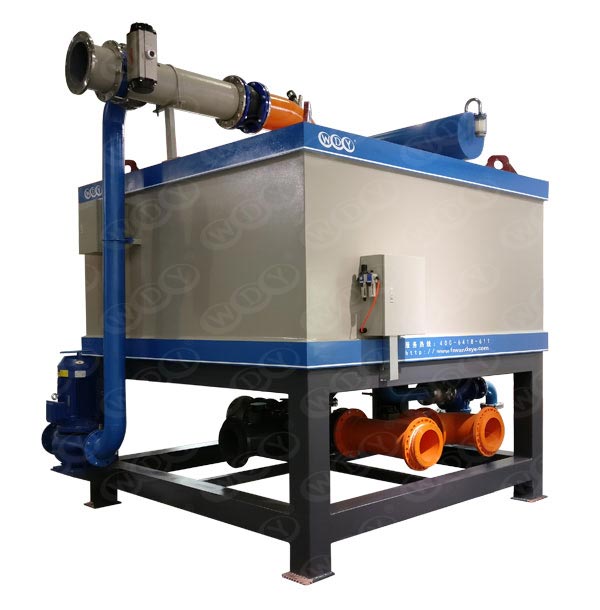
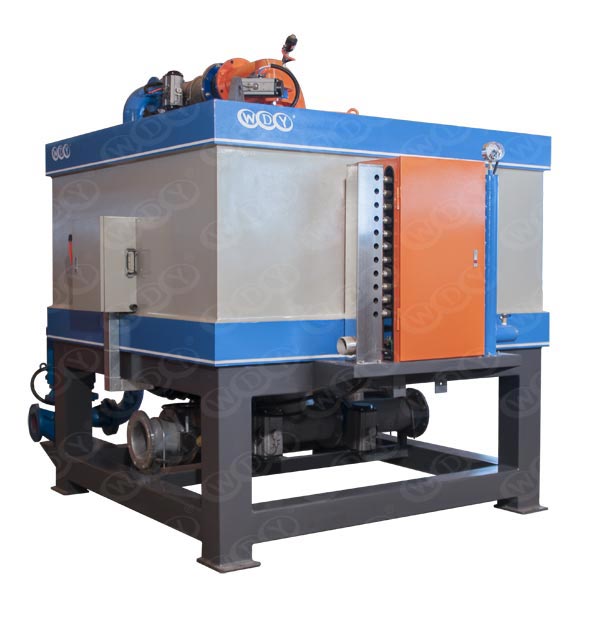
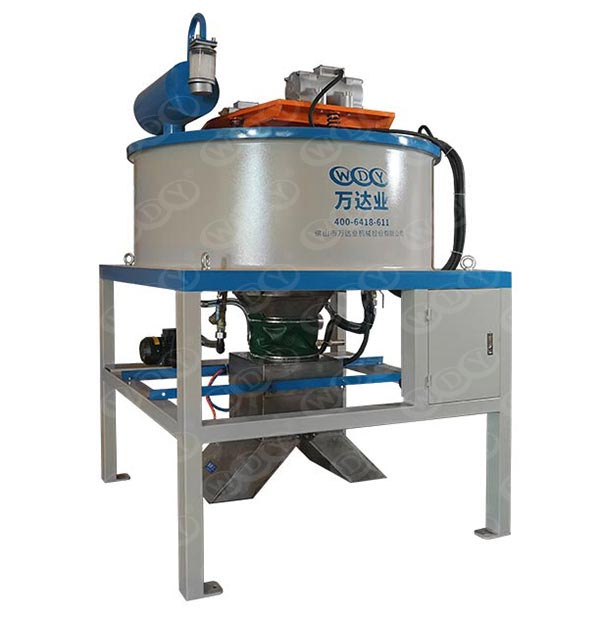
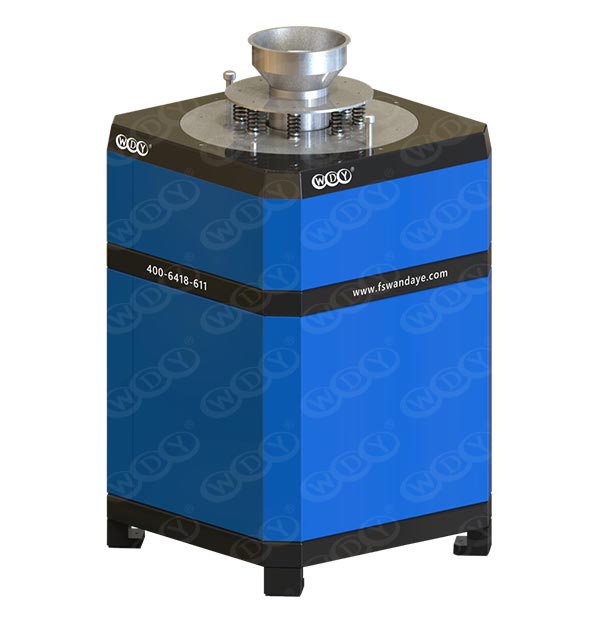
>> 3. Foshan Wandaye Technology
>> 4. Engineering-Focused System Integrators and EPCs
>> 5. Specialized Food and Pharmaceutical Magnetic Separator Suppliers
● Technical Aspects of Iron Separators: What Buyers Should Check
● Key Comparison: Capacity, MOQ and Certifications
● Industry Pain Points and “Internal” Pitfalls to Avoid
● Buyer’s Guide: How to Verify Suppliers and Manage Projects
>> Verify Factory Legitimacy and Certifications
>> Logistics and Import Considerations for Myanmar
● Conclusion and Call to Action
● FAQ
>> 1. How can I verify if a supplier’s ISO certificate is still valid?
>> 2. What is the best way to test iron separator performance on my actual material?
>> 3. How do I ensure that the magnets used in production match the approved sample?
>> 4. What should I check when evaluating OEM/ODM capability for private-label iron separators?
>> 5. How can I reduce downtime risk for iron separators in remote Myanmar locations?
>> References
Myanmar’s demand for iron separators and magnetic separation solutions is rising steadily as the country’s mining, recycling, and food industries modernize and tighten quality control standards. At the same time, most advanced magnetic separator manufacturing capacity remains concentrated in regional hubs such as China and India, so many Myanmar buyers rely on a mix of local distributors and overseas OEMs to secure stable, compliant supply. [kumarmagnet]
How We Evaluate High-Quality Iron Separator Suppliers
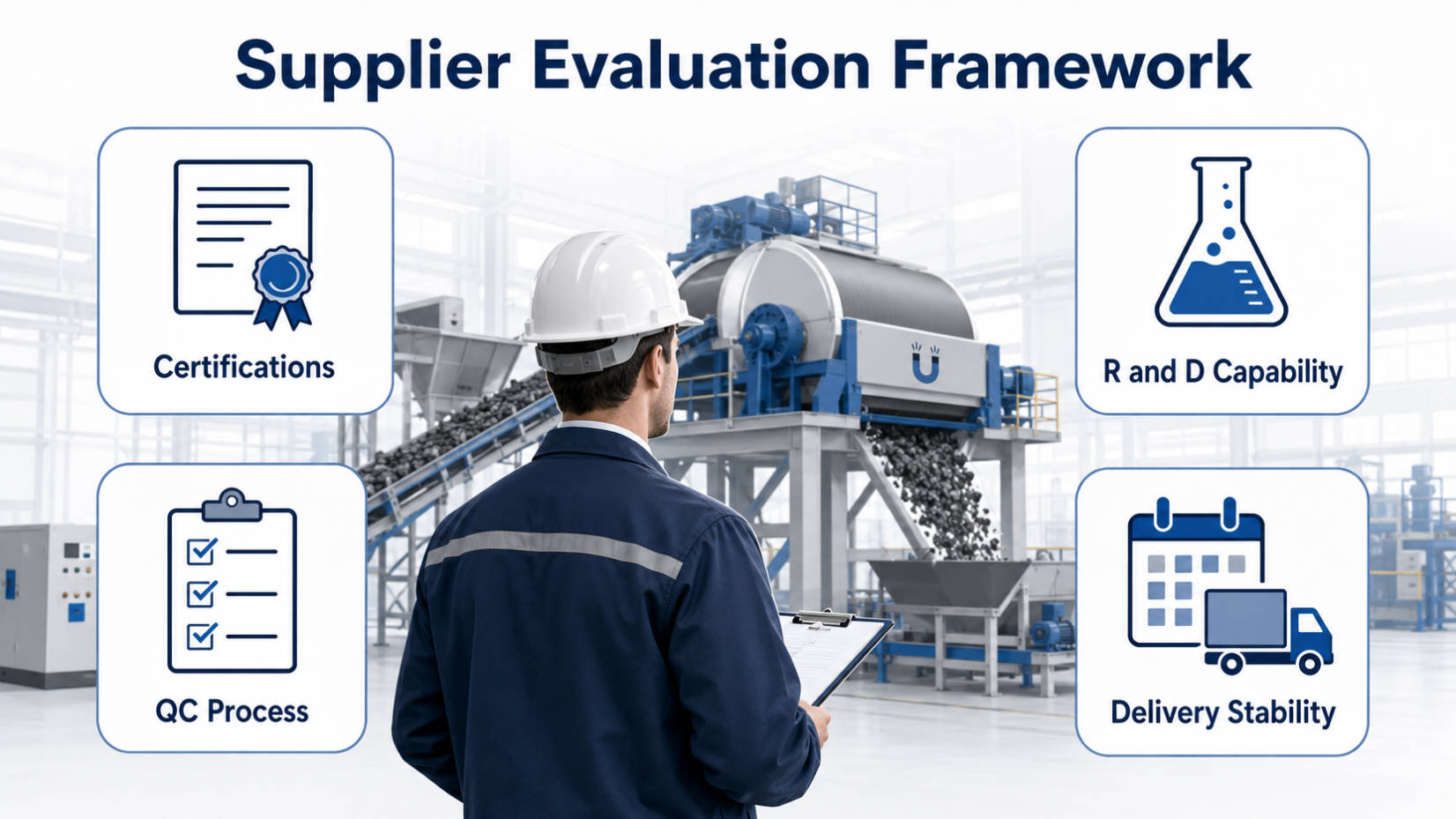
For professional buyers, the real challenge is not only finding a supplier, but identifying a partner that can support stable production, long-term maintenance, and compliance in multiple markets. In this guide, we apply a transparent, procurement‑oriented framework: [kumarmagnet]
– Factory certifications and compliance:
– ISO 9001/14001 for quality and environmental management, CE and RoHS for key export markets, industry‑specific food‑grade certifications where applicable. [wits.worldbank]
– R&D depth and engineering capability:
– Ability to design high‑gradient, high‑temperature and special‑purpose iron separators, provide application engineering (such as mineral testing and process design), and support continuous product improvement. [stratviewresearch]
– QC systems and process traceability:
– Incoming material inspection, full‑process inspection (welding, magnet assembly, coil winding), final performance tests (magnetic flux density, leakage, temperature rise), and batch traceability. [wits.worldbank]
– Production capacity and delivery stability:
– Coverage of both standard models and customized projects, proven export experience, and the ability to maintain lead times even when export logistics are volatile. [stratviewresearch]
– OEM/ODM flexibility:
– Support for private‑labeling, customized dimensions, mounting interfaces, control systems, documentation (user manuals, drawings, test reports) in English and other languages. [us.metoree]
This methodology is designed for procurement managers who must balance cost, technical fit, risk control, and long‑term lifecycle cost of iron separator installations. [kumarmagnet]
Myanmar’s Role in the Iron Separator Value Chain
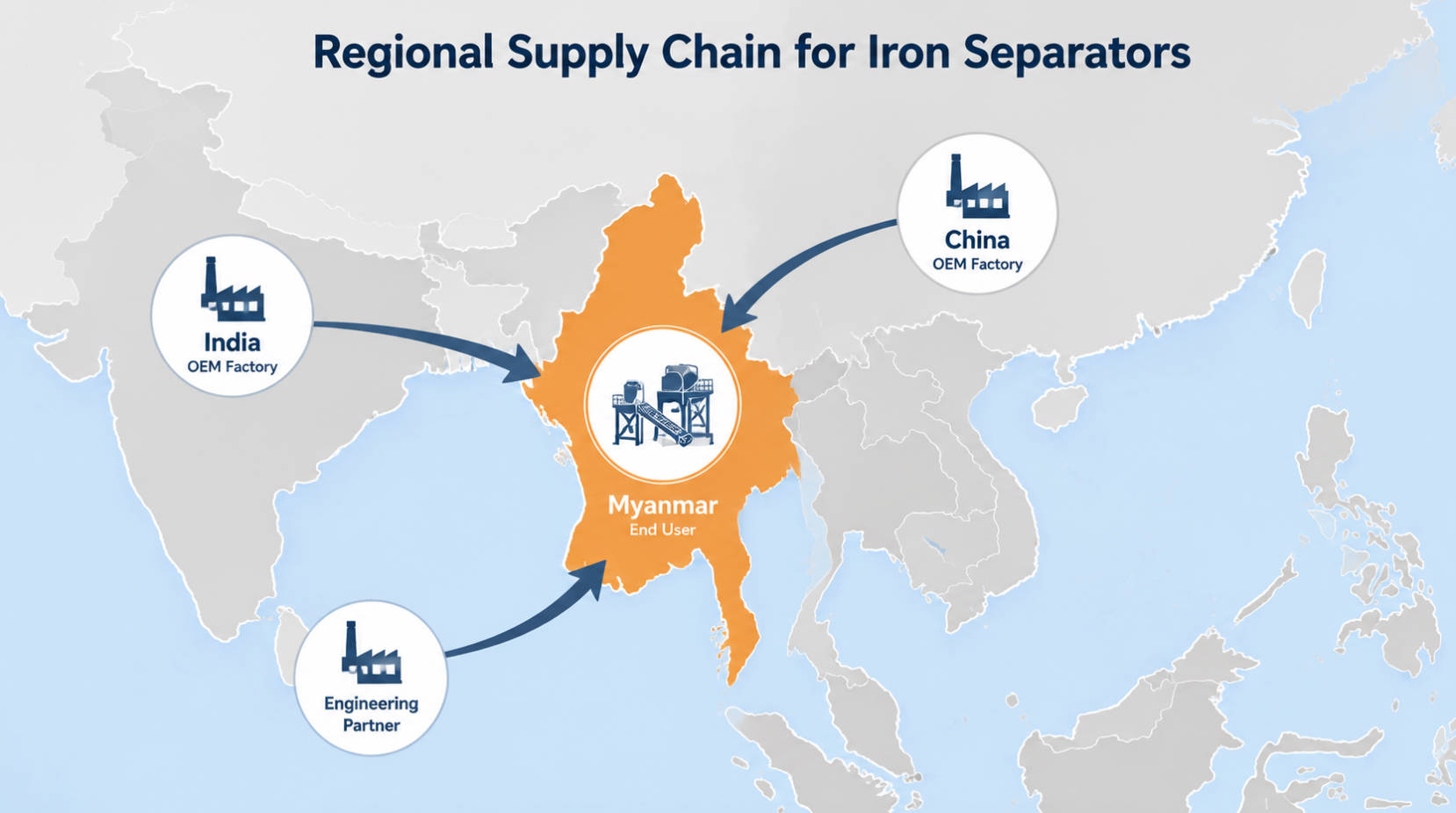
Myanmar is a mineral‑rich country with significant deposits of tin, tungsten, copper, rare earths and other ores, which has driven demand for magnetic separation in mining and processing lines. However, domestic manufacturing of advanced magnetic separators is still limited; instead, the market relies heavily on imports of equipment and turnkey systems from regional hubs such as China, India, and other Asia‑Pacific countries. [pubs.usgs]
According to trade and market analyses, Asia‑Pacific remains the largest and fastest‑growing magnetic separator market globally, driven by mining, recycling and food industries, with China playing a central role as an equipment production base. For Myanmar buyers, this means that the most competitive combination often involves working with regional manufacturers that have proven export capability and local channels or service partners in Myanmar. [marketreportanalytics]
Selection Criteria for This “Top Manufacturers and Suppliers in Myanmar” List
Because Myanmar has very few large‑scale domestic iron separator OEMs, this list focuses on suppliers and manufacturers that are actively serving the Myanmar market through direct export, regional offices, or distributor networks. The evaluation criteria include: [kumarmagnet]
– Active sales or distribution into Myanmar (project references, local agents, or Myanmar‑specific product pages). [kumarmagnet]
– Technical breadth of iron separator portfolio: drum, overband, chute, pipeline, high‑gradient, wet and dry types for mining, ceramics, food, plastics and recycling. [marketreportanalytics]
– Compliance footprint: CE, SGS, ISO 9001/14000, and sector‑specific standards where applicable. [us.metoree]
– Service model for Myanmar buyers: technical consultation, remote commissioning, spare parts supply, and support for local installers. [wits.worldbank]
– OEM/ODM and engineering capability: particularly important for system integrators and brands targeting Southeast Asia. [us.metoree]
Within this framework, we highlight a mix of:
– International manufacturers with Myanmar‑oriented offerings
– Regional Asia‑Pacific OEMs with strong export capabilities
– Representative engineering‑driven factories like Foshan Wandaye Technology that supply high‑value, customizable solutions for Myanmar buyers
Top Iron Separator Manufacturers and Suppliers Serving Myanmar
1. Kumar Magnet Industries (Myanmar-Focused Supply)
Kumar Magnet Industries presents itself as one of the top magnetic separator manufacturers actively serving Myanmar, with a dedicated product page tailored for Myanmar buyers. The company offers a broad range of magnetic separators for solids and liquids, targeting industries such as dairy, food, textiles, chemicals, plastics, grain and milling, oil and recycling. [kumarmagnet]
– Founded / Markets: Established Indian manufacturer with export presence in multiple countries, including Myanmar. [kumarmagnet]
– Core strengths:
– Wide standard product range for industrial and food applications
– Emphasis on durable construction and compliance with international quality expectations
– OEM/ODM capability: Supports customized specifications (size, configuration) to fit different line layouts, and supplies at “industry‑leading prices” with conventional export packaging for safe transit to Myanmar. [kumarmagnet]
For Myanmar buyers needing relatively standard overband, drawer, and inline magnetic separators, Kumar Magnet is a practical option with existing experience shipping into the country. [kumarmagnet]
2. Regional Asia-Pacific Magnetic Separator OEMs
While not headquartered in Myanmar, several Asia‑Pacific OEMs dominate the regional supply chain and are frequently specified for Myanmar mining and processing projects. Market research indicates that equipment‑type magnetic separators (drums, overbands, eddy current systems) hold the largest share, driven by mining, recycling, ceramics and plastics industries. [stratviewresearch]
Typical characteristics of these regional OEMs include:
– Large installed base: Multiple project references across Southeast Asia in mining, cement, recycling, and food industries. [marketreportanalytics]
– Strong R&D and technology: Development of high‑efficiency, energy‑saving separators and alignment with tightening environmental regulations. [marketreportanalytics]
– Project‑oriented support: Ability to design complete separation modules including feeders, chutes, controls and monitoring systems for integrated lines. [stratviewresearch]
For Myanmar procurement managers, these OEMs are often accessed via EPC contractors, trading houses, or specialized process integrators based in neighboring countries (e.g., Thailand, China, India). [stratviewresearch]
3. Foshan Wandaye Technology
Foshan Wandaye Technology is a China‑based magnetic separator manufacturer with a strong R&D and engineering focus, and active exports to Southeast Asia, including Vietnam, India, Iran, Egypt and Malaysia. As a National Equities Exchange and Quotations (NEEQ) listed company since 2015 (stock code: 833886), Wandaye integrates R&D, engineering design, production‑line installation and commissioning services.
– Founded / Markets: Established in 2002 and headquartered in Guangdong, China, with equipment widely applied in the Pearl River Delta and exported to multiple countries.
– Product portfolio:
– High‑gradient electromagnetic slurry machines
– Powder magnetic separators and permanent magnetic separators
– Electromagnetic vertical ring machines, magnetic plates, iron‑removal cabinets, magnetic rods and related solutions for non‑metallic ore, ceramics, glass, building materials, environmental protection, plastics, food, medicine and battery materials.
– Certifications and compliance:
– Adheres to ISO 9001 and ISO 14000, and complies with CE and SGS quality standards, which is critical for buyers selling into EU and other regulated markets.
Positioning for Myanmar buyers
Wandaye takes a high‑efficiency, energy‑saving, environmental‑protection, smart product development concept, having developed equipment with approximately 25% energy savings compared with previous generation machines. The company also integrates remote monitoring, maintenance, intelligent reporting and cloud processing, which supports stable performance and easier oversight for overseas installations.
From a buyer’s perspective, Wandaye is particularly attractive for:
– Cost‑effective, R&D‑driven solutions:
– Competitive pricing compared with European and Japanese brands, with a strong engineering backbone and lab facilities capable of mineral analysis, non‑metallic ore testing and process design.
– OEM/ODM depth and flexibility:
– Customizes powder and permanent magnetic separators to buyer branding (labels, documentation, color schemes), as well as adapts to different process requirements (kaolin, feldspar, quartz sand, battery materials, etc.).
– Service to small and medium brands:
– Provides tailored plant erection and investment schemes, making it a fit for mid‑size regional brands or integrators that require engineering support but do not have in‑house process design capabilities.
For Myanmar procurement managers seeking a high value‑for‑money partner capable of supporting OEM projects and complex process lines, Wandaye is a strong candidate, especially for ceramic, glass, non‑metallic minerals and powder processing lines.
4. Engineering-Focused System Integrators and EPCs
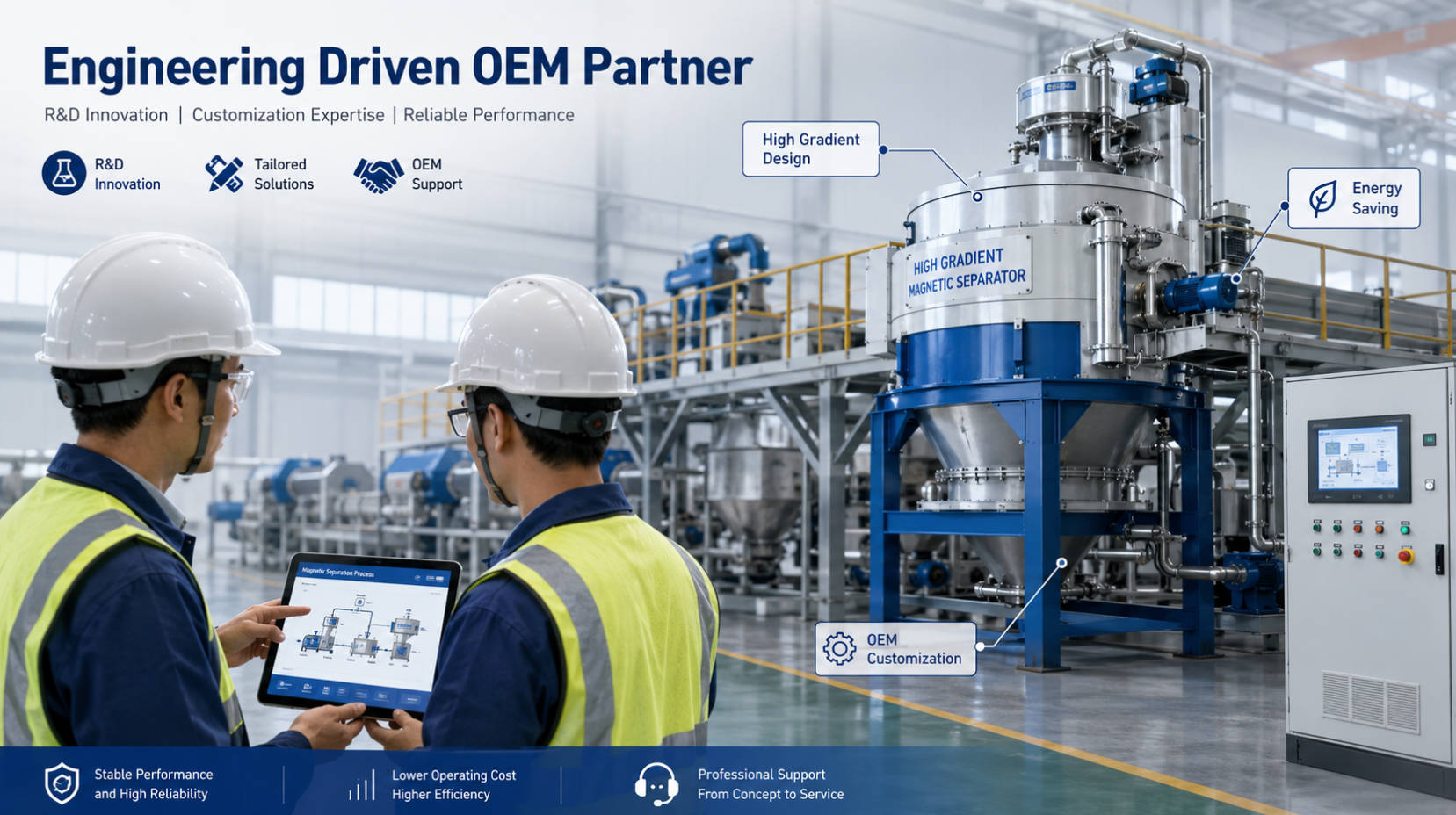
In Myanmar, many iron separator installations are supplied not directly by OEM factories but through engineering, procurement and construction (EPC) contractors and system integrators. These companies design complete processing plants (mining, cement, aggregate, recycling) and select magnetic separators from regional OEMs based on technical and commercial fit. [6wresearch]
Key characteristics:
– Local or regional presence: Offices in Yangon or surrounding ASEAN hubs, allowing on‑site surveys, commissioning and after‑sales support. [6wresearch]
– Vendor‑agnostic sourcing: Ability to source from multiple OEMs (India, China, Europe) to match project budgets and technical requirements. [marketreportanalytics]
– Compliance and documentation: Assistance in compiling CE, test reports, welding procedures and quality records for regulatory submissions. [marketreportanalytics]
Although they are not manufacturers in the strict sense, for many Myanmar buyers these integrators are the effective suppliers, as they take responsibility for performance guarantees, integration and lifecycle support. [6wresearch]
5. Specialized Food and Pharmaceutical Magnetic Separator Suppliers
For food, beverage and pharmaceutical producers in Myanmar, specialized suppliers provide sanitary‑grade iron separators that meet HACCP and international hygiene standards. These suppliers may be global brands or regional manufacturers with polished stainless steel finishes, quick‑release designs, and documentation aligned with food safety audits. [stratviewresearch]
Typical offerings include:
– Grate magnets, bullet magnets and pipeline separators designed for CIP (clean‑in‑place) cleaning
– Hygienic designs with full stainless steel construction and smooth welds
– Traceable materials and full documentation packages required by global food brands [stratviewresearch]
Because Myanmar’s food export markets increasingly demand high levels of safety and traceability, procurement managers often prioritize suppliers with proven track records in international food plants. [tradingeconomics]
Technical Aspects of Iron Separators: What Buyers Should Check
Beyond catalog specifications, professional buyers should verify several critical technical dimensions before committing to a supplier: [marketreportanalytics]
– Magnet material and grade:
– Neodymium (NdFeB) vs. ferrite magnets, with clear specification of grade and maximum operating temperature.
– Magnetic flux density:
– Gauss levels at specific distances, verified by test reports, to ensure effective separation for your particle size and throughput.
– Mechanical design and protection:
– Housing thickness, wear lining (ceramic, rubber), IP rating for electrical components in harsh environments.
– Compliance and safety:
– CE marking, RoHS compliance (particularly for equipment entering EU supply chains), and alignment with local regulations in Myanmar or destination markets. [stratviewresearch]
These factors directly influence both separation efficiency and lifecycle cost, particularly in mining and high‑abrasion applications common in Myanmar projects. [pubs.usgs]
Key Comparison: Capacity, MOQ and Certifications
The following table summarizes typical positioning of different supplier types serving the Myanmar iron separator market. It is intended as a practical reference rather than a ranking.
| Supplier type / Example role | Typical production capacity (per year, standard units) | Usual MOQ for OEM projects | Typical certifications and strengths |
|---|---|---|---|
| India‑based manufacturer supplying Myanmar (e.g., Kumar Magnet) | Medium volume; broad standard catalog for general industry applications. kumarmagnet | Often flexible for standard units; OEM branding usually from 5–10 units per model. kumarmagnet | Focus on cost‑competitive solutions with robust construction; alignment with general industrial quality expectations; experience shipping to Myanmar. kumarmagnet |
| China‑based high‑tech OEM (e.g., Foshan Wandaye Technology) | Medium to high, including high‑gradient and custom systems for mining, ceramics, glass and battery materials. wits.worldbank | Very flexible for customized projects; supports small‑batch OEM/ODM for niche brands and system integrators. wits.worldbank | ISO 9001, ISO 14000, CE and SGS; strong R&D, energy‑saving designs, intelligent monitoring; strong in engineering support and process design. us.metoree |
| Large Asia‑Pacific OEMs (regional leaders) | High capacity with multiple product lines; capable of supporting major mining and recycling projects. stratviewresearch | Higher MOQ for fully customized OEM projects; standard products often available from single units. stratviewresearch | Broad compliance footprint, experienced in multi‑country projects, comprehensive documentation and service networks; often higher price point. stratviewresearch |
| System integrators / EPC contractors in Myanmar | Not manufacturing themselves; capacity depends on selected OEM partners. kumarmagnet | Project‑based; MOQ defined by project scope rather than unit count. kumarmagnet | Strong in project integration, local installation, and regulatory support; useful for buyers lacking in‑house engineering. 6wresearch |
Industry Pain Points and “Internal” Pitfalls to Avoid
Buying iron separators for Myanmar projects often involves cross‑border sourcing, which introduces specific risks. Industry insiders repeatedly mention several common pitfalls:
– Materials downgraded after approval:
– In some cases, suppliers submit high‑grade magnet samples for initial approval but switch to lower‑grade magnets or thinner housings during mass production to cut costs.
– Mitigation: Request batch‑specific magnetic flux test reports, verify magnet grade certificates from upstream magnet suppliers, and perform random Gauss testing on arrival. [marketreportanalytics]
– Over‑promised capacity and under‑rated motors:
– Equipment is sometimes specified for higher throughput than the actual design can handle, leading to belt slip, overheating or reduced separation efficiency at real‑world loads.
– Mitigation: Ask for performance curves, reference installations with similar throughput, and include performance guarantees in contracts. [stratviewresearch]
– Lack of spare parts strategy:
– Buyers focus on CAPEX and ignore availability of critical spares (belts, bearings, coils), leading to extended downtime when parts must be imported.
– Mitigation: Confirm spare parts stock and lead times, and include an initial spare parts package in the purchase order. [6wresearch]
Internal “not often discussed” insider tip:
In many cross‑border deals, the real technical capability lies in the engineering team, not the sales front. Internally, experienced buyers often insist on a direct online session with the supplier’s chief engineer before finalizing a contract, using it as a stress test to verify:
– How clearly the engineer understands your process conditions (ore type, particle size, temperature, moisture, line layout).
– Whether they provide specific, technically grounded recommendations rather than generic promises.
If a supplier refuses or repeatedly delays technical calls, or only lets sales staff answer engineering questions, many insiders treat that as a red flag and reduce the technical risk rating for that vendor. This practice is widely followed in project procurement but rarely stated explicitly in public marketing. [wits.worldbank]
Buyer’s Guide: How to Verify Suppliers and Manage Projects
Verify Factory Legitimacy and Certifications
– Check registration and certification:
– Request copies of ISO 9001/14001, CE, SGS and other certificates, and verify them with issuing bodies where possible. [us.metoree]
– Audit or third‑party inspection:
– For larger orders, consider third‑party audits covering welding qualifications, QC procedures and test equipment. [marketreportanalytics]
Sample and Pilot Testing
– Obtain application‑specific samples:
– For powder or slurry applications, send representative material to the supplier’s lab for testing and request detailed test reports, including separation efficiency and residual iron content. [wits.worldbank]
– Pilot line validation:
– For high‑value projects, install one unit first as a pilot, verify performance under real‑world conditions, and only then roll out to full capacity. [kumarmagnet]
Contract and Documentation
– Performance and warranty clauses:
– Define target separation efficiency, operating envelope and penalties for failure to meet key parameters. [marketreportanalytics]
– Technical dossiers:
– Require full documentation (drawings, wiring diagrams, user manuals, maintenance schedules) in English, plus spare parts lists with clear part numbers. [stratviewresearch]
Logistics and Import Considerations for Myanmar
– Route and lead time planning:
– Coordinate shipping routes via nearby ports (e.g., Thailand, Singapore) and factor in customs clearance time for large equipment. [tradingeconomics]
– Packaging and transit protection:
– Ensure robust packaging for heavy and magnetized equipment, including corrosion protection and demagnetization considerations where applicable. [kumarmagnet]
Conclusion and Call to Action
Myanmar’s growing mining, recycling and food industries are driving steady demand for reliable iron separation solutions, but the most suitable partners often sit in regional hubs rather than within the country’s borders. By evaluating suppliers on certifications, R&D capability, QC systems, delivery stability and OEM/ODM flexibility—and by leveraging engineering‑driven manufacturers such as Foshan Wandaye Technology—professional buyers can secure long‑term, compliant and cost‑effective supply for their projects. [us.metoree]
If you are planning an iron separator project in Myanmar or Southeast Asia and need support comparing suppliers, designing process lines or evaluating OEM options, you can engage directly with engineering‑driven manufacturers or experienced integrators to obtain tailored proposals and test plans. [6wresearch]
FAQ
1. How can I verify if a supplier’s ISO certificate is still valid?
Ask the supplier for scanned copies of their ISO certificates, including certificate number and issuing body, then cross‑check directly on the certification body’s website or through its verification portal. If the certificate cannot be found or expiry dates are inconsistent, treat the supplier as high risk and request clarification or an updated audit report. [us.metoree]
2. What is the best way to test iron separator performance on my actual material?
Send representative material samples (same particle size distribution, moisture and temperature) to the supplier’s testing lab and request a detailed test report with separation efficiency and residual iron content. Additionally, consider ordering a pilot unit and running it on‑site under real operating conditions to verify throughput and separation performance. [wits.worldbank]
3. How do I ensure that the magnets used in production match the approved sample?
In your contract, specify magnet grade, maximum operating temperature and minimum Gauss at a defined distance, and require batch‑specific magnet inspection certificates from the supplier’s magnet vendor. Implement incoming inspection with a Gauss meter on delivered units and reserve the right to reject or rework units if they do not meet agreed specifications. [stratviewresearch]
4. What should I check when evaluating OEM/ODM capability for private-label iron separators?
Confirm whether the supplier can provide customized nameplates, color schemes, documentation in your brand name, and design adaptations (mounting, electrical compatibility, local standards). Also verify their experience working with other OEM clients and their ability to maintain confidentiality on drawings and process know‑how. [us.metoree]
5. How can I reduce downtime risk for iron separators in remote Myanmar locations?
Work with suppliers or integrators that can pre‑define a critical spare parts list and supply an initial stock with the first shipment. Ensure that local technicians receive basic training, and explore remote monitoring or diagnostic options offered by more advanced suppliers such as Wandaye, which can shorten troubleshooting time. [6wresearch]
References
1. 6Wresearch – Myanmar Magnetic Separator Market (2025–2031) Outlook (market drivers, constraints and trade statistics). [kumarmagnet]
2. Kumar Magnet Industries – Magnetic Separator in Myanmar (supplier information and Myanmar‑specific offerings). [kumarmagnet]
3. Foshan Wandaye Machinery Equipment Co., Ltd. – About Us (company profile, products, R&D concept and applications). [wits.worldbank]
4. Metoree – Foshan Wandaye Technology Co., Ltd. (founding year, certification and product scope). [us.metoree]
5. Stratview Research – Magnetic Separator Market Analysis (2023–2028) (global and Asia‑Pacific market trends). [stratviewresearch]
6. Market Report Analytics – Exploring Magnetic Metal Separation Equipment Market Evolution 2025–2033 (market drivers and growth projections). [marketreportanalytics]
7. World Bank WITS – Myanmar Trade Summary (export and import structure). [wits.worldbank]
8. Trading Economics – Myanmar Exports (macro‑level export data). [tradingeconomics]
9. USGS – The Mineral Industry of Burma (Myanmar) 2020–2021 (mineral resource context). [pubs.usgs]
Hot Tags: Iron Separator, Manufacturers, Customized, Custom, Suppliers, Buy, Cheap, Quality, Advanced, Durable, in Stock, Made in China, Price, Quotation