Content Menu
● How to Evaluate a High‑Quality Iron Separator Supplier
● Thailand’s Position in Iron Separator Manufacturing
● Selection Criteria for This “Top Suppliers in Thailand” List
● Top Iron Separator Manufacturers and Suppliers Serving Thailand
>> 1. Bunting Magnetics Co. (Thailand) Ltd.
>> 2. Eriez Manufacturing Co. (Thailand) Ltd.
>> 3. Kumar Magnet Industries (Supplying into Thailand)
>> 4. Permanent Magnets Ltd. (PML) – Serving Thailand
>> 5. Sumitomo (FINEMAG) via Yamada Machine Tool (Thailand)
>> 7. Other Global Brands Active in ASEAN with Thai Footprint
● Supplier Comparison: Capacity, MOQ, and Certifications
● Technical Considerations When Sourcing Iron Separators
● Buyer’s Guide: How to Source Iron Separators from Thailand and ASEAN
>> Verifying Factory and Certifications
>> Contracting, Logistics, and After‑Sales
● Conclusion and Call to Action
● FAQs
>> 1. How can I verify whether a supplier’s ISO 9001 certificate is genuine and not expired?
How to Evaluate a High‑Quality Iron Separator Supplier
For global procurement managers, the biggest risk in sourcing iron separators is not price, but variability in quality, documentation, and delivery performance. A robust supplier evaluation framework should at minimum cover:
– Factory certifications and compliance
– Verify ISO 9001 for quality management and, where relevant, ISO 14001 for environmental management, issued by accredited certification bodies rather than “self‑certified” claims. [iso]
– Check CE, RoHS, or food‑grade certifications when separators are used in food, pharma, or battery material lines.
– R&D and engineering capability
– Ability to design high‑gradient magnetic circuits, optimize magnetic flux density, and tailor separators for specific slurries, powders, and process constraints (temperature, pH, viscosity).
– In‑house simulation and testing (e.g., FEM magnetic field analysis, pilot‑scale test loops) is a good indicator of maturity.
– QC process and traceability
– Documented incoming material inspection (magnet grade verification), process inspection (welding, coil insulation, pressure tests), and final functional tests (magnetic field strength, leak tests, no‑load temperature rise).
– Batch‑level traceability for critical components, especially coils, magnet blocks, and contact parts.
– Capacity, lead time, and delivery reliability
– Stable export record and the ability to produce standard units in 30–45 days and customization in 45–60 days for most industrial ranges, depending on complexity (wet HGMS vs. basic permanent drum).
– Clear project scheduling and buffer stock for critical spares in Thailand or nearby ASEAN hubs.
– OEM/ODM experience and documentation
– Experience supplying private‑label equipment, especially to EU, US, and East Asian customers, with multilingual documentation, drawing standards, and NDA/IP protection processes.
A supplier that can demonstrate evidence in all of these dimensions is far more likely to provide consistent, long‑term performance than one competing solely on unit price.
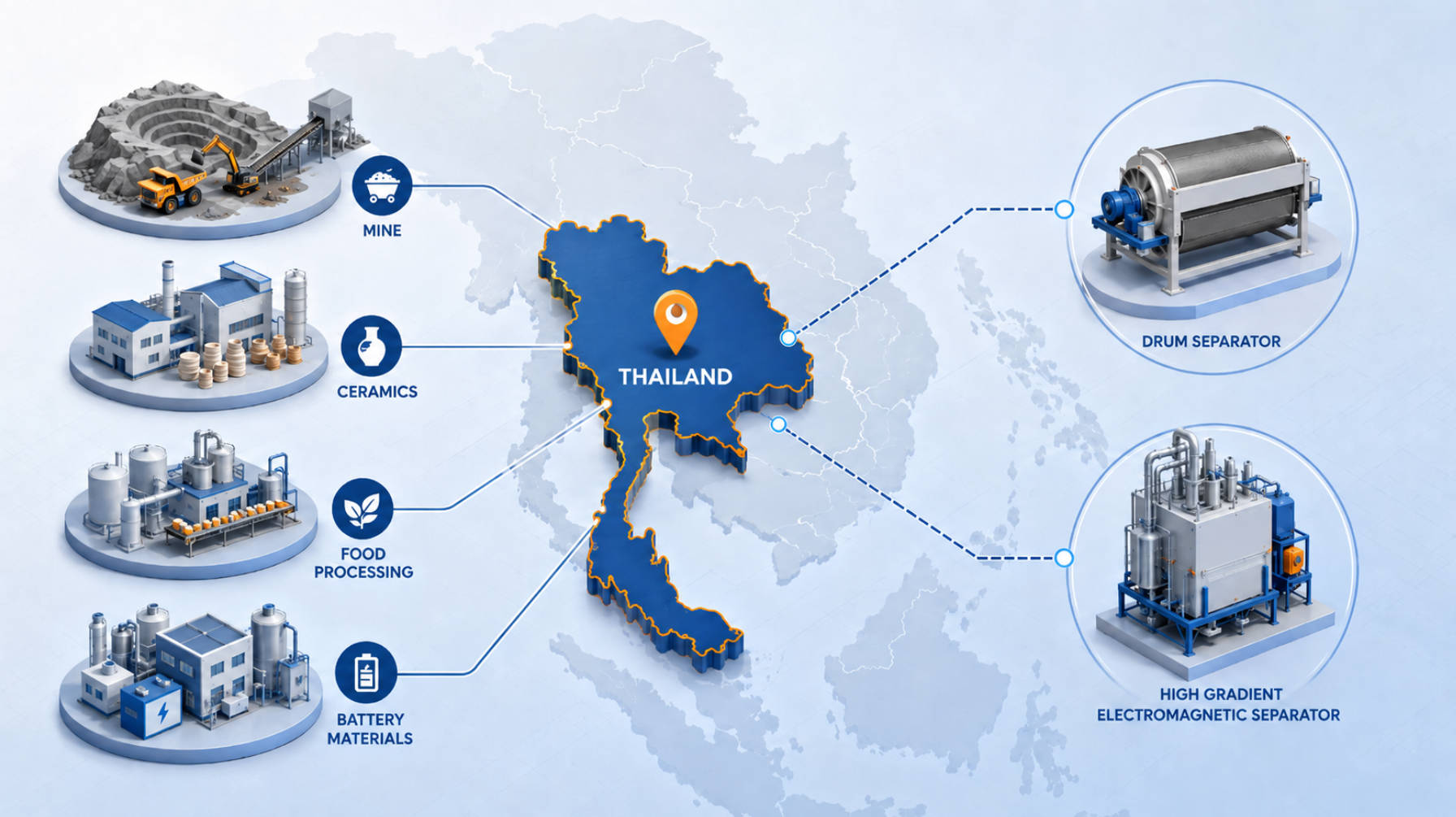
Thailand’s Position in Iron Separator Manufacturing
Thailand is not yet a global magnet manufacturing base, but it is an important application and integration hub for magnetic separators within ASEAN. According to ASEAN market analysis, the regional magnetic separator market is projected to grow from about USD 82 million in 2025 to USD 122.6 million by 2035, at a CAGR of roughly 4.1%, with Thailand among the leading demand centers. Thailand’s growth is tied to:
– Automotive, electronics, and industrial manufacturing
– Thailand is a key vehicle assembly and component production hub where ferrous contamination control is critical in casting, machining, and welding lines, driving demand for drum, overband, and coolant separators. [kumarmagnet]
– Recycling, logistics, and food processing
– Tightening environmental regulations and circular‑economy policies in ASEAN are pushing Thai recyclers, e‑waste processors, and food/beverage plants to adopt higher‑efficiency magnetic separation systems to ensure product purity and regulatory compliance. [kumarmagnet]
As a result, Thailand combines local assembly, distribution and service (including Thai subsidiaries of global brands) with imported high‑performance separators from China, Japan, Europe, and the US. This ecosystem gives buyers access to both global technologies and Thai‑side engineering and after‑sales support. [elcanindustries]
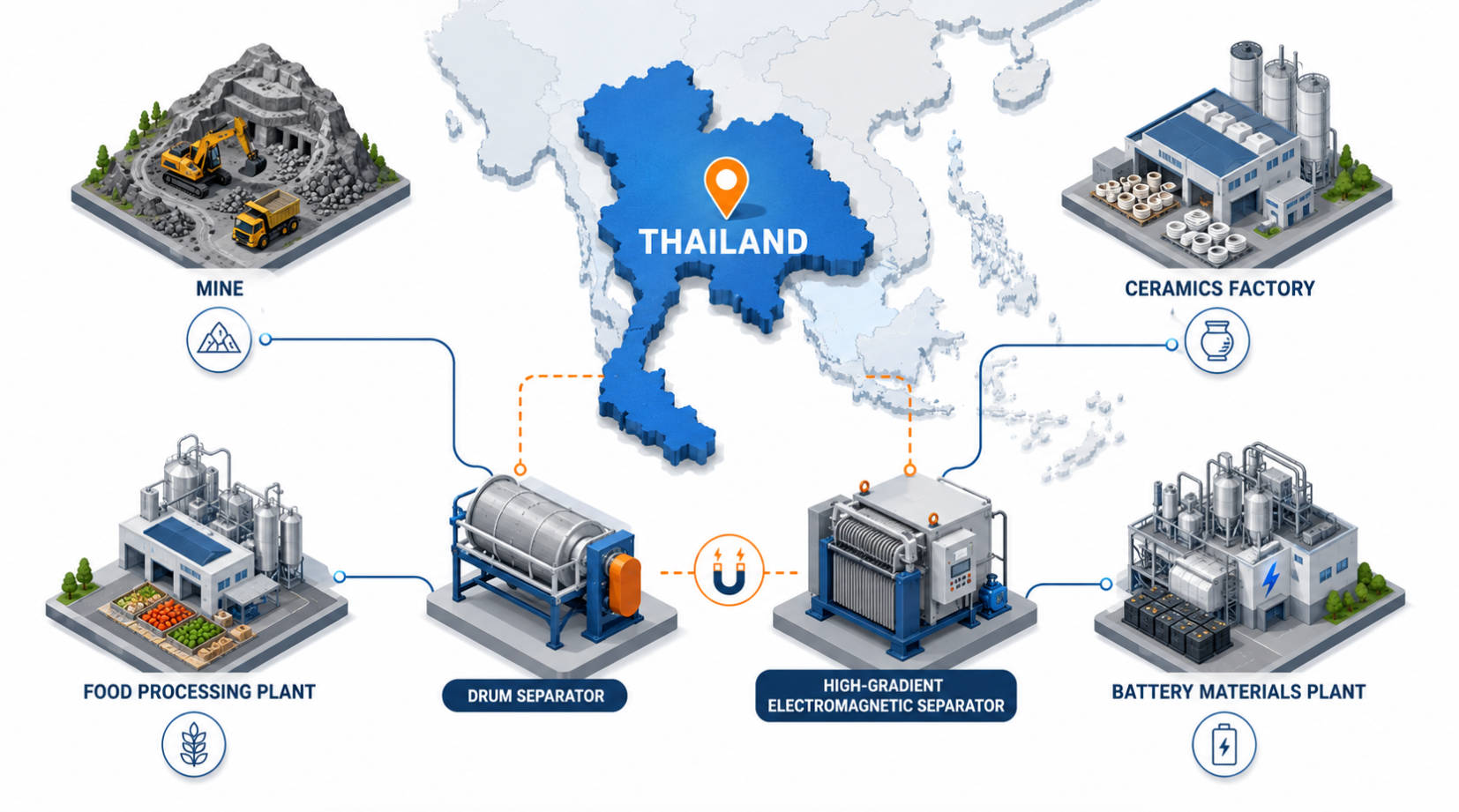
Selection Criteria for This “Top Suppliers in Thailand” List
To build a list that is genuinely useful for professional buyers, we apply transparent criteria:
– Proven involvement in Thailand’s magnetic separator market (local legal entity, distributor, or consistent export into Thailand’s mining, recycling, food, or machinery sectors). [kumarmagnet]
– Ability to provide iron separators or closely related magnetic separation systems (drum, overband, roller, coolant, HGMS) suitable for mines, ceramics, glass, plastics, food, or battery materials. [wdymagnetic]
– Evidence of exporting or serving international clients (significant for global OEM/ODM collaboration). [elcanindustries]
– Certifications and quality systems such as ISO 9001, plus optional CE and food‑grade/ATEX where applicable (verified via certificates or statements from company or certification guidance). [iso]
– Track record of R&D or engineering depth in permanent or electromagnetic separators, including high‑intensity and high‑gradient solutions. [elcanindustries]
The companies below are grouped into:
1. Thailand‑based or Thailand‑operating brands
2. Global manufacturers active in Thailand
3. A China‑based R&D‑driven OEM/ODM partner (Wandaye Technology) that frequently supports Thai and wider ASEAN buyers with high‑gradient and powder‑type separators. [en.fswandaye]
Top Iron Separator Manufacturers and Suppliers Serving Thailand
1. Bunting Magnetics Co. (Thailand) Ltd.
Bunting Magnetics operates in Thailand as part of its global network, supplying magnetic separation equipment for mining, recycling, food, and general industrial applications. Its Thailand business focuses on magnetic drums, overband separators, and metal detection systems used in bulk handling and process lines. [kumarmagnet]
– Founded: 1959 (global); Thai operations established as a regional hub later to serve ASEAN. [kumarmagnet]
– Core strengths: Broad product portfolio, strong engineering support, and experience integrating separation equipment into complex material‑handling systems. [elcanindustries]
– Main markets: Mining, recycling, food, plastics, and aggregate industries.
– OEM/ODM: Provides customized solutions, tailored magnet circuits, and integration with customer control systems, typically under the Bunting brand but with options for project‑based customization.
2. Eriez Manufacturing Co. (Thailand) Ltd.
Eriez, a well‑known name in magnetic separation, operates a Thai entity focused on process industries. The Thailand magnetic separator market report explicitly cites Eriez Manufacturing Co. (Thailand) Ltd. as a key player in local magnetic separation adoption. [kumarmagnet]
– Founded: 1942 (global); Thai presence established to serve mining, food, and recycling clusters. [kumarmagnet]
– Core strengths: Wide range of permanent and electromagnetic separators, including wet drums, high‑intensity separators, and metal detectors. Known for stable performance and strong application engineering. [kumarmagnet]
– Main markets: Mining, recycling, food & beverage, and general process industries in Thailand.
– OEM/ODM: Typically focuses on system integration rather than white‑label, but offers deep application engineering and custom configurations.
3. Kumar Magnet Industries (Supplying into Thailand)
Kumar Magnet Industries, headquartered in India, is recognized as a manufacturer of magnetic separation systems and has documented sales into Thailand. It produces magnetic drums, overband separators, and customized magnetic systems. [wdymagnetic]
– Founded: 1986 (approximate; widely recognized as a long‑established manufacturer). [elcanindustries]
– Core strengths: Competitive pricing, robust steel structures, and a broad portfolio of permanent magnetic separators tailored for mining, ceramics, and recycling applications. [elcanindustries]
– Main markets: India, ASEAN (including Thailand), Middle East, and Africa. [kumarmagnet]
– OEM/ODM: Capable of supplying customized sizes and mounting configurations, often supporting regional distributors who integrate the equipment into local plants.
4. Permanent Magnets Ltd. (PML) – Serving Thailand
Permanent Magnets Ltd. (PML) is an Indian manufacturer with a long history in permanent magnetic products and magnetic separators, and it explicitly lists supply into the Thailand market. PML offers a wide range of magnetic separators for bulk solids, liquids, and powders. [pmlindia]
– Founded: 1960. [pmlindia]
– Core strengths: Strong expertise in permanent magnet design, wide catalog of standard products, and cost‑effective solutions for general industrial applications. [pmlindia]
– Main markets: India, Southeast Asia including Thailand, plus Middle East and Africa. [pmlindia]
– OEM/ODM: Offers custom designs and private‑label products for engineering companies and system integrators.
5. Sumitomo (FINEMAG) via Yamada Machine Tool (Thailand)
FINEMAG is a magnetic separator brand of Sumitomo Heavy Industries Finetec. In Thailand, it is represented by Yamada Machine Tool (Thailand) (YMTT), which handles sales and after‑sales service as the exclusive distributor for FINEMAG magnetic separators. [ymtt.co]
– Founded: Sumitomo Heavy Industries traces back to the 19th century; FINEMAG is a specialized brand for coolant and fine‑chip separation. [ymtt.co]
– Core strengths: High‑precision magnetic coolant separators used on machine tools and grinding lines, widely adopted in automotive and precision machining plants. [ymtt.co]
– Main markets: Automotive, metalworking, and precision parts manufacturers in Thailand and broader ASEAN. [ymtt.co]
– OEM/ODM: Focuses on branded solutions with deep customization at the application level (flow rate, fineness of separation, tank integration) rather than pure white‑labeling.
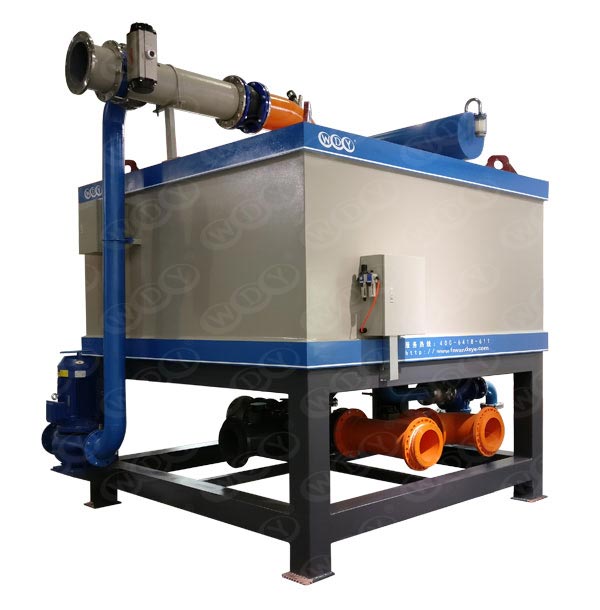
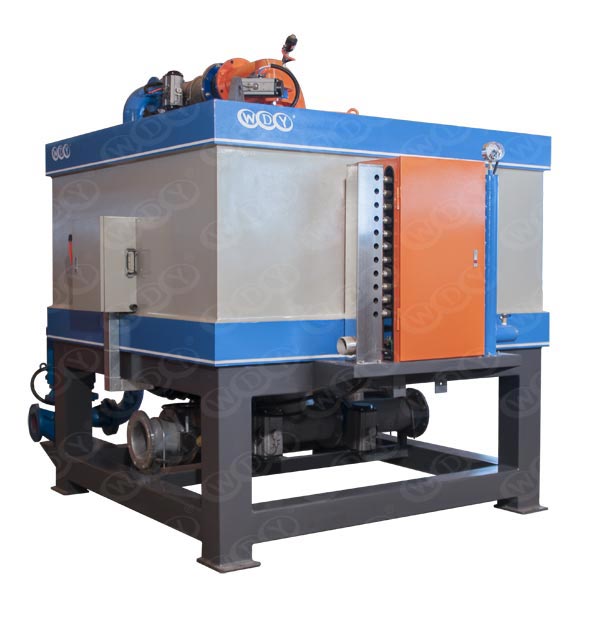
6. Wandaye Technology (Foshan Wandaye Machinery Equipment Co., Ltd.) – R&D‑Driven OEM Partner for Thai Buyers
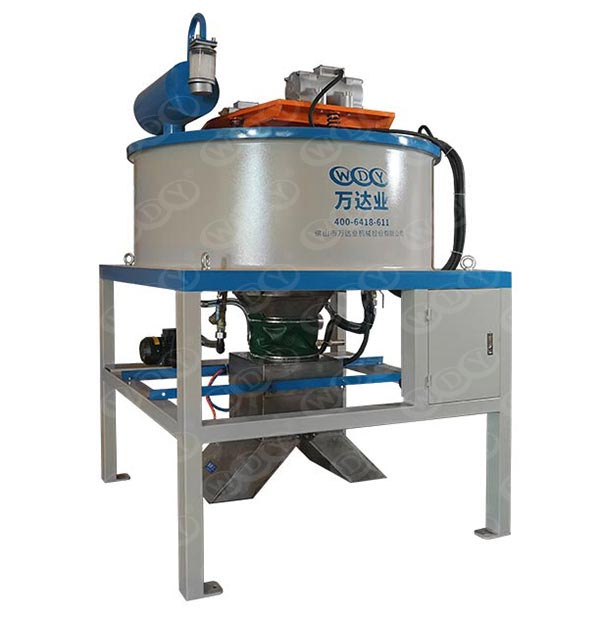
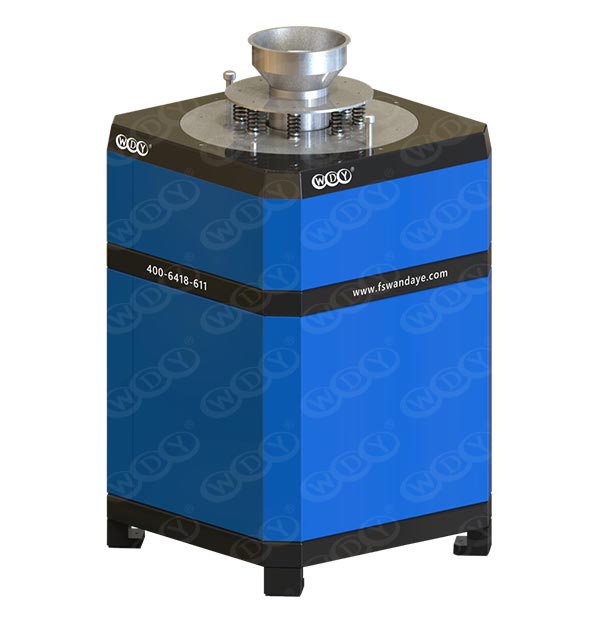
Foshan Wandaye Machinery Equipment Co., Ltd. (Wandaye Technology) is a China‑based specialist in high‑gradient electromagnetic slurry machines, powder magnetic separators, permanent magnetic separators, and iron‑removal cabinets. It integrates R&D, engineering design, production line installation, and commissioning, serving industries such as ceramics, glass, chemicals, electronics, food, and battery materials. [fswandaye]
– Founded: Active as a specialized magnetic separator manufacturer since the 2010s, with a dedicated factory in Foshan, Guangdong. [en.fswandaye]
– Core strengths:
– High‑gradient electromagnetic slurry separators and powder magnetic separators optimized for fine iron removal in ceramic slurries, glazes, silica, quartz, and battery cathode/anode materials. [fswandaye]
– Emphasis on R&D, including iterative optimization of magnetic field intensity and gradient for high‑viscosity slurries.
– Turnkey capability from engineering design to on‑site commissioning, which reduces integration risk for overseas buyers. [en.fswandaye]
– Main markets: China domestic clusters (ceramics in Foshan, electronics, new energy materials) and exports to ASEAN, Europe, and other regions where high‑purity powders and slurries are required. [fswandaye]
– OEM/ODM:
– Particularly suitable for small and mid‑size brands or distributors looking for high‑performance but cost‑competitive separators.
– Flexible in branding, color schemes, interface languages, and partial design customization, while providing strong technical communication support in English and Chinese. [en.fswandaye]
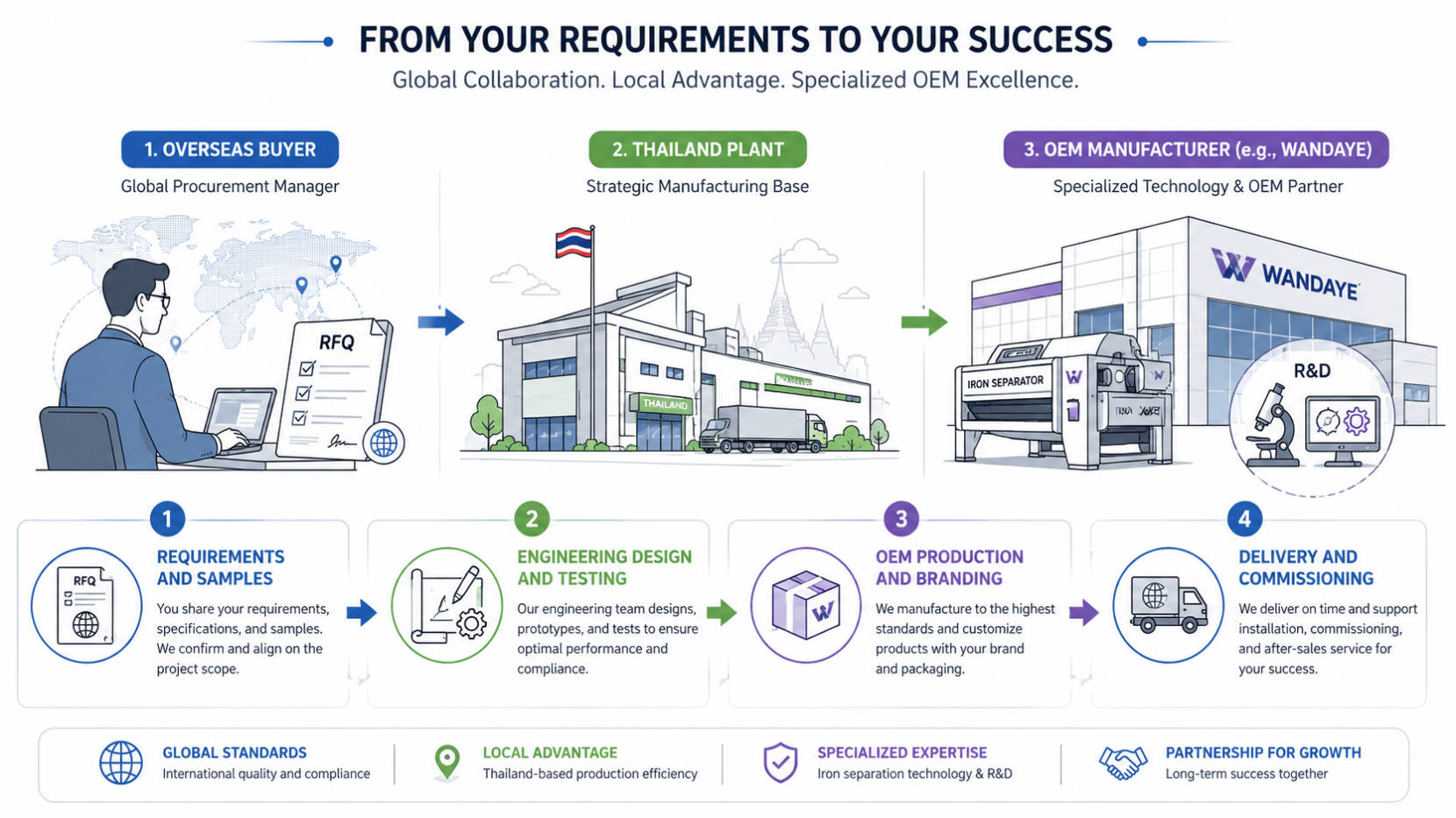
For Thai buyers who require high‑gradient or slurry‑type iron separators but lack local R&D capability, Wandaye can act as a behind‑the‑scenes OEM partner, while localized service is handled either by the buyer’s in‑house engineering team or local automation integrators.
7. Other Global Brands Active in ASEAN with Thai Footprint
The ASEAN magnetic separator market is significantly influenced by global manufacturers such as LONGi Magnet and Nippon Magnetics, which hold notable shares in the regional market (estimated 20–25% and 15–20% respectively). These companies supply to Thailand through distributors and project‑based imports.
– LONGi Magnet Co., Ltd. – Focus on high‑intensity WHIMS, LIMS, and dry drum separators, strong in mining and mineral processing.
– Nippon Magnetics, Inc. – Known for advanced magnetic technologies and precision separation, often used in electronics and high‑purity applications. [elcanindustries]
Although they may not have large stand‑alone factories in Thailand, their equipment is widely present in ASEAN projects, including Thai mining, recycling, and electronics lines. [kumarmagnet]
Supplier Comparison: Capacity, MOQ, and Certifications
Below is an indicative comparison based on publicly available information, typical regional practice, and ASEAN market data; buyers should always confirm exact figures during RFQ.
| Supplier / Brand | Typical Product Focus (for Thailand) | Relative Capacity (Export/Project Scale) | Typical MOQ for Standard Units | Common Certifications / Standards* |
|---|---|---|---|---|
| Bunting Magnetics (Thailand) | Drum, overband, plate, metal detectors for mining, recycling, food | Medium–high; supports multi‑line projects in Thailand and ASEAN kumarmagnet | Often 1 unit for standard catalog items | ISO 9001 at group level; CE and food‑grade designs for relevant products (buyer to verify per project) kumarmagnet |
| Eriez Manufacturing (Thailand) | Permanent and electromagnetic separators, wet drums, high‑intensity units | High; global capacity with Thai project support, suitable for large industrial complexes kumarmagnet | 1 unit for standard; higher MOQ for specials | ISO 9001; CE/ATEX options depending on product line kumarmagnet |
| Kumar Magnet Industries | Permanent drum, overband, and custom magnetic systems exported to Thailand | Medium; strong in batch exports for mining/ceramics lines kumarmagnet | Often 1–2 units; project‑based | ISO 9001 common; CE for selected products (to be certificate‑checked) kumarmagnet |
| Permanent Magnets Ltd. (PML) | Permanent magnetic separators for powders/bulk materials | Medium–high; large global catalog, frequent exports to SE Asia pmlindia | 1 unit for catalog products | ISO 9001; compliance with CE on many separators for export markets (verify current docs) pmlindia |
| FINEMAG via YMTT (Thailand) | Magnetic coolant separators for machine tools | Medium; focused on high‑value coolant systems rather than large bulk lines ymtt.co | Often 1 unit per machine | Japanese‑origin design; typically CE for export; machine‑tool OEM standards ymtt.co |
| Wandaye Technology | High‑gradient electromagnetic slurry machines, powder and permanent separators, iron‑removal cabinets | Medium–high; specialized in ceramics, glass, new energy materials with strong project experience in China and exports en.fswandaye | Flexible; can support low MOQs (even 1 unit) for small brands and distributors | ISO‑based quality management; CE/RoHS available on selected lines for export; detailed QC records available on request en.fswandaye |
| LONGi Magnet / Nippon Magnetics (into Thailand) | WHIMS/LIMS, high‑intensity and specialty separators | High; suited to large mining and industrial projects across ASEAN elcanindustries | Project‑based; often multiple units per line | ISO 9001; CE/other industry‑specific approvals as required iso |
Certification lines summarize typical practice inferred from market reports and manufacturer profiles; always check the latest certificates directly with the supplier or accredited registries. [iso]
Technical Considerations When Sourcing Iron Separators
Key Technology Dimensions
When evaluating iron separators for mining, ceramics, food, or battery material applications, procurement teams should focus on:
– Magnet type and intensity
– Permanent separators (ferrite, NdFeB) are robust and energy‑free but offer fixed field strength.
– Electromagnetic and high‑gradient systems enable higher flux densities and adjustable fields, critical for removing weakly magnetic or ultra‑fine contaminants. [elcanindustries]
– Wet vs. dry configuration
– Wet high‑intensity separators (e.g., high‑gradient slurry machines) are best for removing fine iron from slurries such as ceramic glaze, kaolin, silica, and battery slurries. [fswandaye]
– Dry drum or roller separators suit powders and granular materials such as quartz sand, iron ore, and plastic flakes. [magnetsmanufacturer]
– Materials and hygienic design
– For food and pharma, 304/316L stainless contact surfaces, fully‑welded housings, polished internals, and tool‑less cleaning are essential for hygiene and compliance.
– In mining, wear resistance (liners, ceramic tiles) and structural robustness matter more than surface finish.
– Control and integration
– For modern Thai plants moving toward Industry 4.0, separators should support PLC integration, remote monitoring, and basic diagnostics.
– AI/IoT integration is emerging in ASEAN, particularly in high‑tech and recycling plants, enabling predictive maintenance and energy optimization.
Market and Growth Context
Understanding the macro context helps justify supplier choices internally:
– The global magnetic separator market is projected to grow from about USD 5.8 billion in 2025 to nearly USD 8.9 billion by 2035, at a ~4.37% CAGR. [marketresearchfuture]
– ASEAN’s magnetic separator market, where Thailand is a core contributor, is expected to grow from USD 82 million in 2025 to USD 122.6 million by 2035, with Thailand’s market CAGR around 4.2%.
This growth is driven by stricter environmental regulations, increased emphasis on recycling, and higher quality requirements in automotive, electronics, and battery industries. [kumarmagnet]
Hidden Industry Pitfalls
Seasoned buyers in magnetic separation repeatedly encounter a few non‑obvious traps that are rarely mentioned in marketing materials:
– Over‑stated magnetic field strength
– Some suppliers quote peak field (on pole surface) under ideal laboratory conditions, which can be 20–30% higher than real working field in the product zone.
– Request field mapping data and, for critical lines, actual pull‑test or Gaussmeter readings in your material layer thickness.
– Magnet grade substitution
– A common cost‑cutting tactic is to use lower‑grade NdFeB or ferrite magnets than specified. This is hard to see visually but leads to faster performance decay.
– Ask for magnet batch certificates and, in large projects, random third‑party testing of magnet blocks.
– Coil insulation and cooling corners cut
– In electromagnetic separators, under‑spec insulation or insufficient cooling (water/air) leads to higher failure rates after a few years.
– Review coil temperature‑rise test reports and ask for the design operating temperature and duty cycle.
– “Fake” or expired certifications
– Some manufacturers publish ISO/CE logos without valid, accredited certificates. ISO itself does not certify companies; certification is done via independent, accredited bodies. [iso]
– Always cross‑check certificate details on the certification body’s website or via national accreditation bodies.
– Under‑designed cleaning and maintenance access
– In food and battery lines, inadequate access for cleaning magnets (particularly in tight chutes) leads to contamination risk and higher downtime.
– During design review, insist on 3D models with clear access space and cleaning procedures, not just static product photos.
Procurement managers who systematically block these hidden risks in RFQs, sample inspection, and FAT (Factory Acceptance Test) avoid a large share of lifecycle failures and recall risks.
Buyer’s Guide: How to Source Iron Separators from Thailand and ASEAN
Verifying Factory and Certifications
– ISO and accreditation verification
– Ask suppliers to provide ISO 9001/14001 certificates and note the certification body and accreditation mark. [iso]
– Use the certification body’s online directory or the International Accreditation Forum’s resources (via national accreditation bodies) to confirm authenticity and validity. [iso]
– On‑site or third‑party audits
– For strategic suppliers, conduct or commission audits focusing on QC procedures, magnet handling, coil manufacturing, welding, and pressure testing.
– Check test equipment calibration status and QC records for recent batches.
Sample and Pilot Testing
– Request application‑specific samples
– For slurry and powder applications, send your actual material (slurry, powder, granules) with typical particle size distribution and iron contamination data.
– Ask for before‑/after‑test reports showing iron content reduction, throughput, and operating parameters.
– Pilot or rental units
– For large projects, consider pilot units installed at your Thai plant or at a local integrator’s test facility.
– This is particularly useful when working with high‑gradient slurry machines or complex battery materials.
Contracting, Logistics, and After‑Sales
– Contract structure
– In addition to Incoterms, define acceptance criteria (iron removal efficiency, throughput, noise, temperature rise) and on‑site commissioning support.
– Align warranty terms with actual operating hours and maintenance cycles.
– Logistics
– For imports into Thailand or from Thailand to other countries, ensure proper packing (shock‑resistant for magnet blocks, coil moisture protection) and HS code classification for smooth customs clearance. [kumarmagnet]
– For heavy equipment, clarify on‑site unloading and lifting responsibilities.
– Spare parts and service
– Require a recommended spare parts list covering magnets, coils, bearings, seals, and sensors for at least 2–3 years of operation.
– Evaluate the supplier’s response time and local stock (directly in Thailand or at regional hubs).
Conclusion and Call to Action
Thailand’s iron separator ecosystem combines global brands, specialized Japanese coolant solutions, regional manufacturers, and R&D‑driven OEM partners like Wandaye Technology, giving buyers a broad spectrum of options from high‑capacity mining lines to high‑purity slurry applications. By applying rigorous selection criteria—focusing on certifications, R&D strength, QC procedures, and real‑world performance data—procurement managers can significantly reduce lifecycle risk and total cost of ownership. [en.fswandaye]
If you are planning or upgrading an iron separation project linked to Thai production or ASEAN sourcing, consider shortlisting 2–3 Thailand‑active brands for on‑site support, and at least one high‑gradient specialist such as Wandaye for performance‑critical slurry or powder lines. Start with a clear RFQ that defines your contamination levels, process conditions, and certification targets, then request application‑specific testing and detailed technical proposals before committing to a long‑term partnership. [wdymagnetic]
FAQs
1. How can I verify whether a supplier’s ISO 9001 certificate is genuine and not expired?
Ask for a high‑resolution scan of the certificate, then verify the certificate number, company name, and validity period on the issuing certification body’s website or via the national accreditation body’s directory. ISO itself does not certify organizations, so ignore any “certified by ISO” claims and focus on accredited third‑party bodies. [iso]
2. What is the most reliable way to compare magnetic field strength between different iron separators?
Do not rely solely on catalog Gauss figures measured at the magnet surface. Request magnetic field distribution data and, where possible, have the supplier perform pull tests or flux measurements at the actual working gap and material thickness relevant to your process, using standardized test pieces. [elcanindustries]
3. For ceramic slurry or battery cathode material, should I choose a permanent or electromagnetic separator?
For fine, weakly magnetic contaminants in high‑viscosity slurries, high‑gradient electromagnetic separators are generally preferred because they can deliver higher, adjustable field strengths and gradients, improving capture efficiency and allowing better cleaning cycles. Permanent systems may be used as pre‑cleaners but often cannot achieve the same residual iron levels. [fswandaye]
4. How do I determine whether a separator design will meet my country’s food safety or ATEX requirements?
Request detailed design drawings and material lists, along with evidence of previous installations in similar regulatory environments (e.g., EU food plants). Confirm that material certificates (304/316L, gaskets) and electrical components comply with the applicable EN, IEC, or ATEX standards, and consider involving a notified body or specialized consultant for critical applications. [iso]
5. What is a realistic lead time I should plan for when ordering customized iron separators for a Thai plant?
For standard catalog units, many suppliers can ship within 4–8 weeks, depending on stock and configuration. For customized systems (especially high‑gradient slurry machines or large drum/overband units), plan for 8–12 weeks including engineering approval, with additional time for shipping and on‑site installation. Adding a buffer for factory testing and any design iterations is recommended. [kumarmagnet]
References
1. – ASEAN Magnetic Separator Market Size & Trends 2025–2035, Future Market Insights. [Link]
2. – Thailand Magnetic Separator Market (2025–2031), 6Wresearch. [Link] [kumarmagnet]
3. – ISO – Certification (Guidance on ISO certification and accreditation). [Link] [iso]
4. – Foshan Wandaye Machinery Equipment Co., Ltd. – Company profile. [Link] [en.fswandaye]
5. – Wandaye product information – Electromagnetic slurry separators. [Link] [fswandaye]
6. – Global Magnetic Separator Market Size & Industry Report. [Link] [marketresearchfuture]
7. – Kumar Magnet Industries – Magnetic separation systems for Thailand. [Link] [kumarmagnet]
8. – Permanent Magnets Ltd. (PML) – Magnetic Separator in Thailand. [Link] [pmlindia]
9. – Yamada Machine Tool (Thailand) – FINEMAG magnetic separator distributor. [Link] [ymtt.co]
10. – Elcan Industries – Overview of top magnetic separator manufacturers (global). [Link] [elcanindustries]
11. – Wandaye content on ASEAN/Laos market and Thailand‑related supply. [Link] [wdymagnetic]
Hot Tags: Iron Separator, Manufacturers, Customized, Custom, Suppliers, Buy, Cheap, Quality, Advanced, Durable, in Stock, Made in China, Price, Quotation